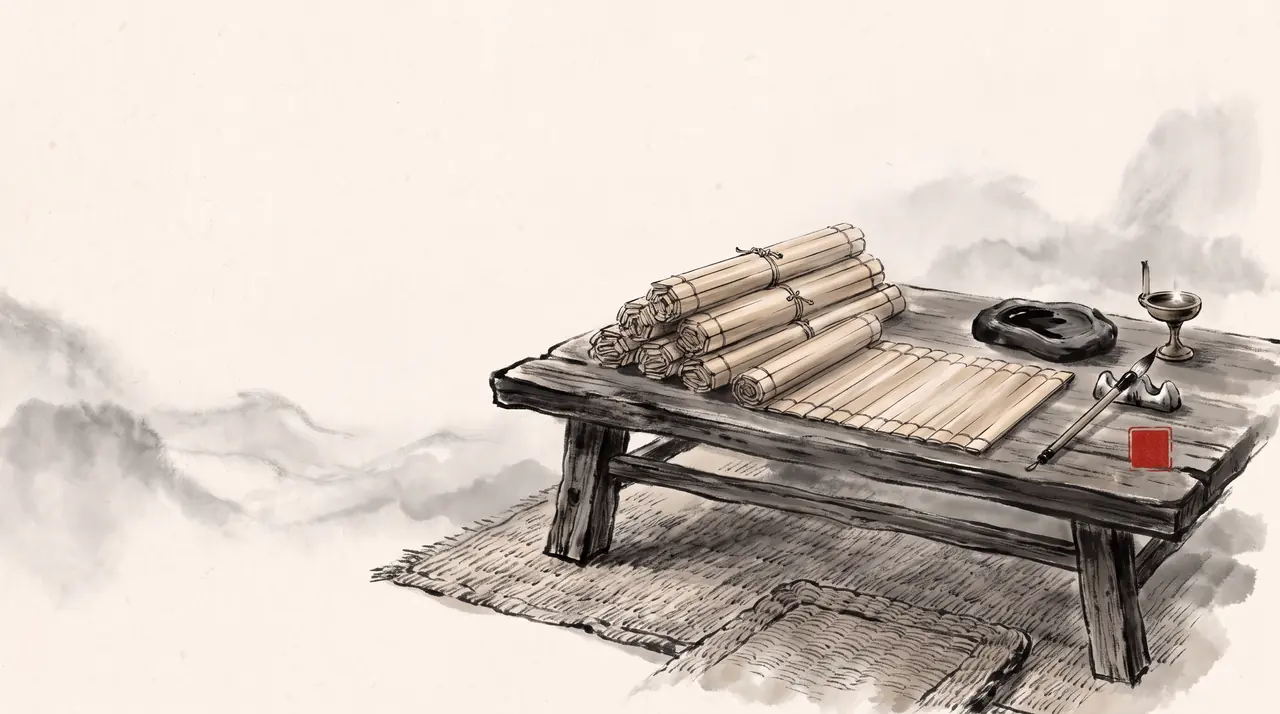
What is the Shiji?
A history of ancient China compiled by Sima Qian of the Former Han, and one of its most influential works.
What kind of book it is
The Shiji (Records of the Grand Historian) covers about three thousand years, from the legendary Yellow Emperor down to the reign of Emperor Wu of the Han, the author's own time. It has 130 volumes and is thought to have been completed around 90 BCE.
Its original title is believed to have been "The Grand Historian's Book". The word shiji first meant historical records in general, and later became the name of this work.
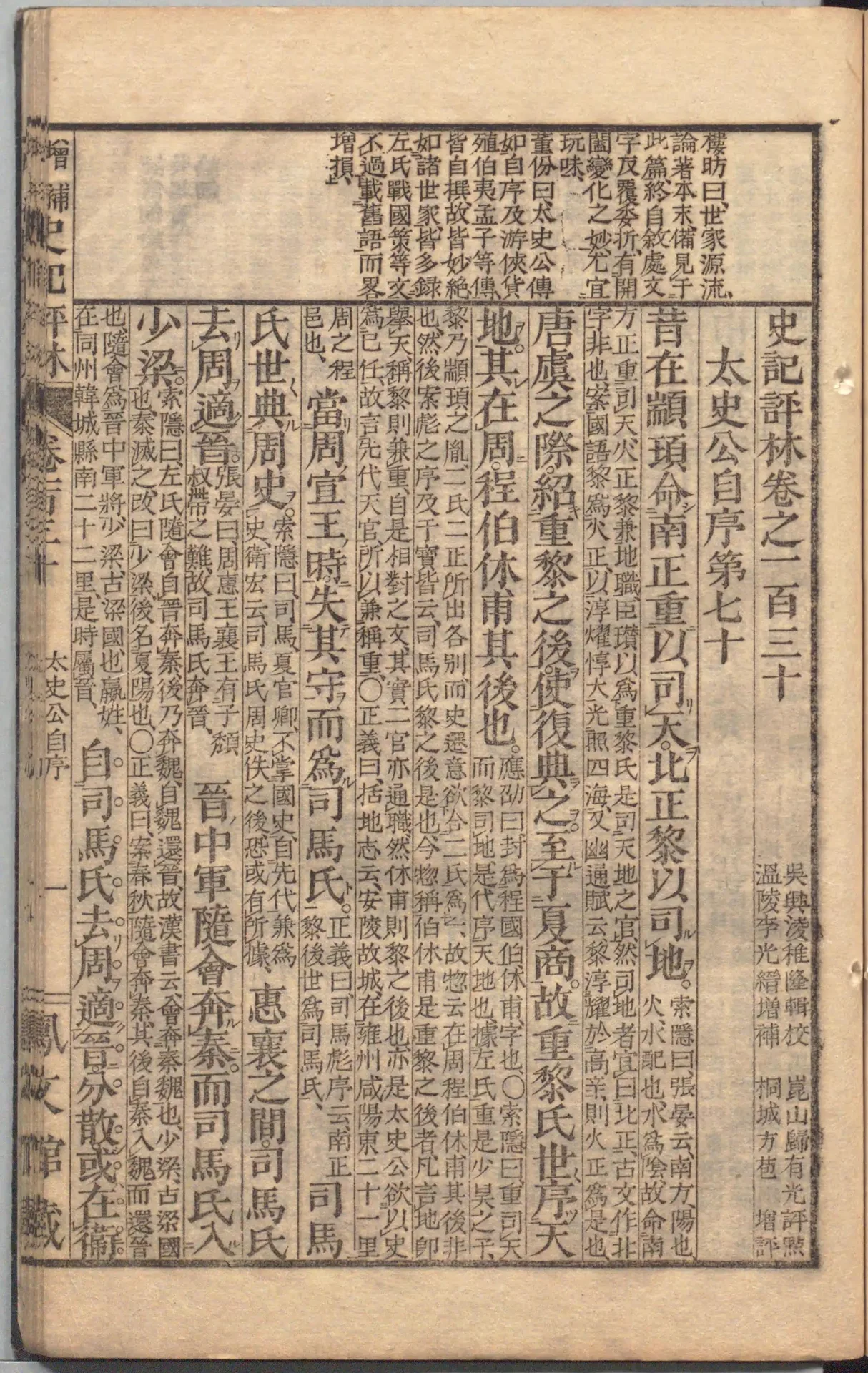
Why it is still read
It tells the lives of kings and generals, but also of assassins, merchants, scholars and wandering knights, each as a story of its own. For this reason it has been read as literature as well as history.
Sima Qian did not only collect facts. He asked why people acted as they did, and whether Heaven rewards the good. These questions still draw readers two thousand years later.
Structure
The 130 volumes are divided into five kinds of chapters. See "The five parts" for details.