Annals · Vol. 8
Basic Annals of Emperor Gaozu 高祖本紀
The Son of the Red Emperor 赤帝子斬之
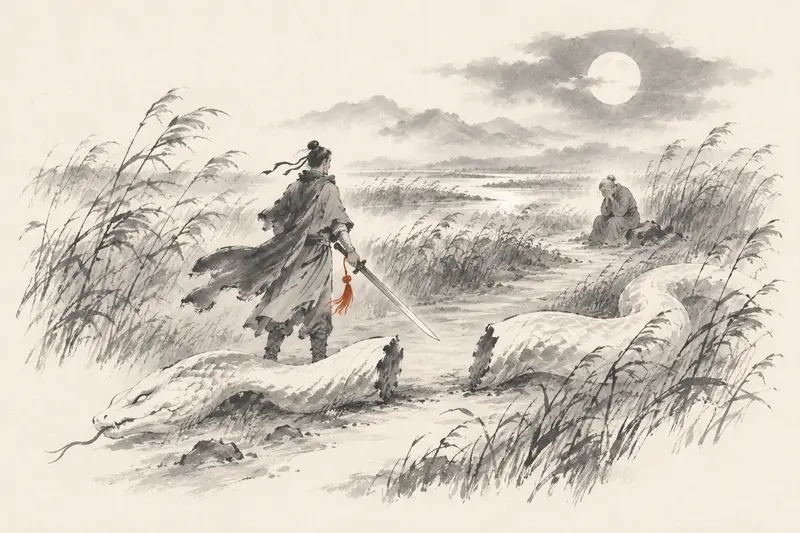
The early life of Liu Bang, Gaozu, founder of Han. Born, it was said, after his mother met a dragon by a marsh, Liu Ji was a station head who neglected the family's work and loved wine and women; when he lay drunk a dragon was seen above him, and the wine shops tore up his debts each year. Watching the First Emperor pass, he sighed, "This is what a real man should be!" He walked into a banquet with a card claiming a gift of ten thousand cash, though he had not a coin, and the face-reader Lord Lü was so taken with him that he gave him his daughter, the future Empress Lü. Having let a gang of labourers escape, he fled into the marshes; one night he cut down a great snake across his path, and an old woman wept that the son of the White Emperor had been slain by the son of the Red Emperor. When the First Emperor spoke of a Son of Heaven's aura in the southeast, he hid in the hills, but Empress Lü always found him by the cloud above him. When Chen Sheng rose, the elders of Pei killed their magistrate and welcomed Liu Ji, who after declining again and again became Lord of Pei under red banners.
This page has the scene "The Son of the Red Emperor" from this volume, not the whole volume.
Audio
The audio is synthetic speech.
Video
Passage 1
Original
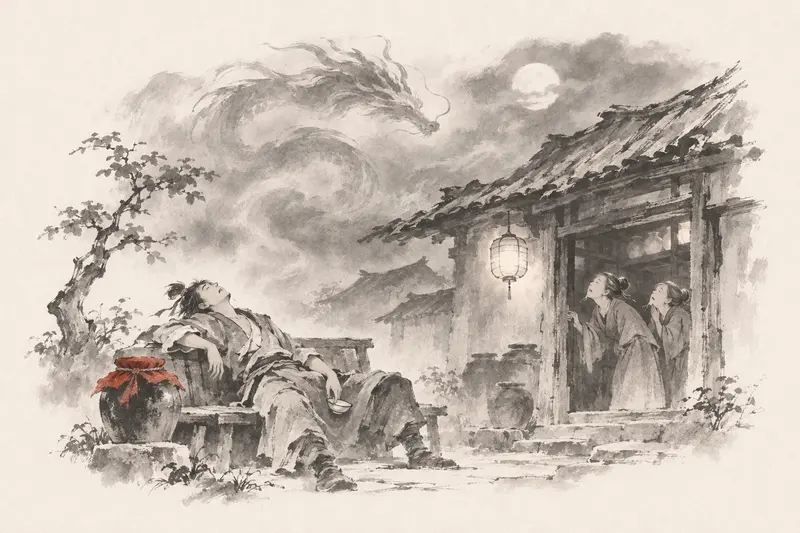
高祖,沛豐邑中陽里人,姓劉氏,字季。父曰太公,母曰劉媼。其先劉媼嘗息大澤之陂,夢與神遇。是時雷電晦冥,太公往視,則見蛟龍於其上。已而有身,遂產高祖。高祖為人,隆準而龍顏,美須髯,左股有七十二黑子。仁而愛人,喜施,意豁如也。常有大度,不事家人生產作業。及壯,試為吏,為泗水亭長,廷中吏無所不狎侮,好酒及色。常從王媼、武負貰酒,醉臥,武負、王媼見其上常有龍,怪之。高祖每酤留飲,酒讎數倍。及見怪,歲竟,此兩家常折券棄責。高祖常繇咸陽,縱觀,觀秦皇帝,喟然太息曰:「嗟乎,大丈夫當如此也!」
Kundoku (Japanese reading)
高祖は、沛の豊邑中陽里の人なり。姓は劉氏、字は季。父を太公と曰い、母を劉媼と曰う。其の先、劉媼嘗て大沢の陂に息い、夢に神と遇う。是の時雷電晦冥なり。太公往きて視れば、則ち蛟竜を其の上に見る。已にして身有り、遂に高祖を産む。高祖人と為り、隆準にして竜顔、須髯美しく、左股に七十二の黒子有り。仁にして人を愛し、施しを喜び、意豁如たり。常に大度有り、家人の生産作業を事とせず。壮なるに及び、試みられて吏と為り、泗水の亭長と為る。廷中の吏狎侮せざる所無く、酒及び色を好む。常に王媼・武負に従いて酒を貰り、酔いて臥すれば、武負・王媼其の上に常に竜有るを見て、之を怪しむ。高祖酤いて留まり飲む毎に、酒の讎ること数倍なり。怪を見るに及び、歳竟われば、此の両家常に券を折りて責を棄つ。高祖常て咸陽に繇し、縦観して、秦の皇帝を観る。喟然として太息して曰く、「嗟乎、大丈夫当に此くの如くなるべきなり」と。
Japanese
高祖は沛県豊邑の中陽里の人で、姓は劉、字は季という。父は太公、母は劉媼と呼ばれた。むかし劉媼が大きな沢の堤で休んでいると、夢で神に出会った。そのとき雷が鳴り稲妻が走って、あたりは真っ暗になった。太公が様子を見に行くと、劉媼の上に竜がいるのが見えた。まもなく劉媼はみごもり、高祖を生んだ。高祖は鼻が高く、竜のような顔立ちで、ひげが美しく、左のももに七十二のほくろがあった。思いやりがあって人を愛し、人に施すのが好きで、心が広かった。いつも大きな度量があり、家の仕事や稼ぎには身を入れなかった。大人になると、試しに役人に取り立てられて泗水の亭長(宿場の長)となったが、役所の役人で彼にからかわれない者はなく、酒と女を好んだ。いつも王媼と武負の店で酒をつけで飲み、酔って寝ていると、武負と王媼はその上にいつも竜がいるのを見て、不思議に思った。高祖が店に居座って飲むたびに、酒は何倍も売れた。この不思議を見てから、二軒の店は年の暮れになると、いつも証文を割って貸しを帳消しにした。高祖は以前、労役で咸陽に行ったとき、自由な見物が許され、秦の始皇帝の行列を見た。高祖は深くため息をついて言った。「ああ、男たるもの、こうでなくてはならない」。
English
Gaozu was a man of Zhongyang village in Feng township, Pei county. His surname was Liu and his courtesy name Ji. His father was called the Venerable Sire and his mother the Old Dame Liu. Once, long before, the Old Dame was resting on the bank of a great marsh when she dreamed that she met a god. At that moment there was thunder and lightning and the sky went dark. The Venerable Sire went to look and saw a scaly dragon above her. Soon she was with child, and she gave birth to Gaozu. Gaozu had a high-bridged nose and a dragon-like face, with a fine beard, and on his left thigh there were seventy-two black moles. He was kind and loved people, enjoyed giving things away, and was open-hearted. He was always broad-minded and did not bother with the work of making a living for his family. When he grew up he was tried out as an official and became head of the Sishui station; there was not an official in the county office he did not tease and make fun of. He loved wine and women. He often drank on credit at the shops of Old Dame Wang and Mother Wu, and when he lay there drunk, Mother Wu and Old Dame Wang saw that there was always a dragon above him and thought it strange. Whenever Gaozu stayed to drink, the shop sold several times as much wine. After they had seen the marvel, at the end of each year the two shops would break the tallies and cancel his debts. Once, when Gaozu was doing labour service in Xianyang, the people were allowed to watch the First Emperor of Qin pass by. Gaozu sighed deeply and said: "Ah! This is what a real man should be!"
Notes (JA)
- 季: 末の子を表す字。史記の本文には、劉邦の名(邦)は出てこない。
- 亭長: 十里ごとに置かれた宿場(亭)の長。治安も受け持った。
- 券を折る: 貸し借りの証文(割符)を割り、借金を帳消しにすること。
- 大丈夫当に此くの如くなるべきなり: 同じ始皇帝を見て、項羽は「彼取って代わるべし」と言った(007-julu の章)。二人の言葉の違いがよく比べられる。
Notes (EN)
- Ji (季): a name meaning "youngest son." The Shiji never gives his personal name, Bang.
- Station head (亭長): head of a post station, set every ten li, also responsible for keeping order.
- Breaking the tallies: splitting the wooden records of debt, so cancelling them.
- "This is what a real man should be!": Xiang Yu, seeing the same emperor, said "He can be replaced" (chapter 007-julu); the two remarks are often compared.
Idioms from this passage: A real man should be like that 大丈夫当に此くの如くなるべし
Word notes
- mole/moʊl/noun
a small dark spot on the skin
In the text: “seventy-two black moles”
Similar words: spot — a small mark · birthmark — a mark on the skin from birth
- credit/ˈkrɛdɪt/noun
an arrangement to pay later for what you buy
In the text: “drank on credit”
Similar words: tab — a bill to pay later; informal · loan — money borrowed
Passage 2
Original
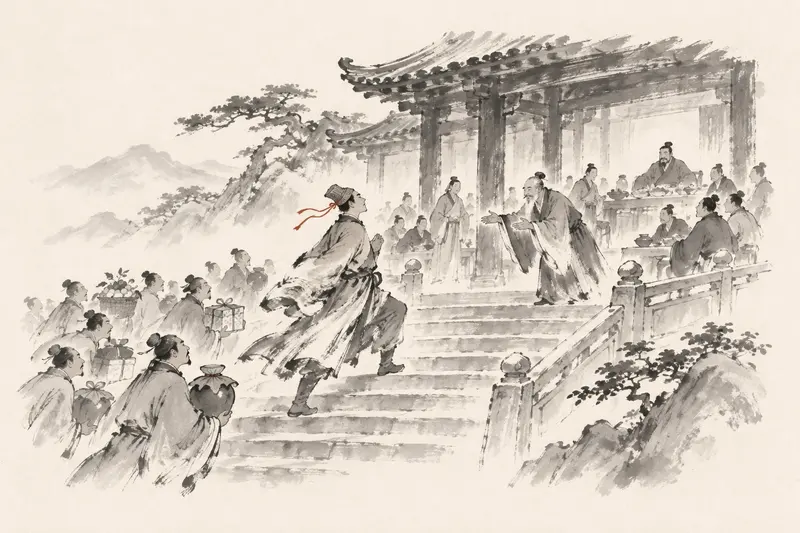
單父人呂公善沛令,避仇從之客,因家沛焉。沛中豪桀吏聞令有重客,皆往賀。蕭何為主吏,主進,令諸大夫曰:「進不滿千錢,坐之堂下。」高祖為亭長,素易諸吏,乃紿為謁曰「賀錢萬」,實不持一錢。謁入,呂公大驚,起,迎之門。呂公者,好相人,見高祖狀貌,因重敬之,引入坐。蕭何曰:「劉季固多大言,少成事。」高祖因狎侮諸客,遂坐上坐,無所詘。酒闌,呂公因目固留高祖。高祖竟酒,後。呂公曰:「臣少好相人,相人多矣,無如季相,願季自愛。臣有息女,願為季箕帚妾。」酒罷,呂媼怒呂公曰:「公始常欲奇此女,與貴人。沛令善公,求之不與,何自妄許與劉季?」呂公曰:「此非兒女子所知也。」卒與劉季。呂公女乃呂后也,生孝惠帝、魯元公主。
Kundoku (Japanese reading)
単父の人呂公沛の令に善し。仇を避けて之に従いて客となり、因りて沛に家す。沛中の豪桀吏、令に重客有りと聞き、皆往きて賀す。蕭何主吏たり、進むるを主る。諸大夫に令して曰く、「進むること千銭に満たざる者は、之を堂下に坐せしめよ」と。高祖亭長為り、素より諸吏を易んず。乃ち紿りて謁を為りて「賀銭万」と曰い、実は一銭をも持たず。謁入る。呂公大いに驚き、起ちて、之を門に迎う。呂公は、好んで人を相す。高祖の状貌を見て、因りて之を重敬し、引きて入れて坐せしむ。蕭何曰く、「劉季は固より大言多く、事を成すこと少なし」と。高祖因りて諸客を狎侮し、遂に上坐に坐して、詘する所無し。酒闌にして、呂公因りて目して固く高祖を留む。高祖酒を竟えて、後る。呂公曰く、「臣少くして好んで人を相し、人を相すること多し。季の相に如くは無し。願わくは季自愛せよ。臣に息女有り。願わくは季の箕帚の妾と為さん」と。酒罷み、呂媼呂公を怒りて曰く、「公始め常に此の女を奇とし、貴人に与えんと欲す。沛の令公に善く、之を求むれども与えず。何ぞ自ら妄りに許して劉季に与うる」と。呂公曰く、「此れ児女子の知る所に非ざるなり」と。卒に劉季に与う。呂公の女は乃ち呂后なり。孝恵帝・魯元公主を生む。
Japanese
単父の人呂公は沛の県令と仲がよく、仇をさけて県令のもとに身を寄せ、そのまま沛に住みついた。沛の有力者や役人たちは、県令に大事な客が来たと聞いて、皆お祝いに出かけた。蕭何は主吏として、祝いの品の受付を取りしきっていた。蕭何は大夫たちに言った。「祝い金が千銭に満たない方は、座敷の下に座ってください」。高祖は亭長で、ふだんから役人たちを見くびっていたので、うその名刺に「祝い金一万銭」と書いたが、実は一銭も持っていなかった。名刺が差し出されると、呂公はたいへん驚き、立ち上がって門まで迎えに出た。呂公は人相見が好きで、高祖の顔つきを見ると、たいへん敬って、奥に招き入れて座らせた。蕭何が言った。「劉季はもともと大口ばかりで、やりとげることは少ない男です」。高祖はそこで客たちをからかい、とうとう上座に座って、少しも遠慮しなかった。酒宴が終わりかけると、呂公は目くばせして、しきりに高祖を引きとめた。高祖は最後まで飲んで、あとに残った。呂公は言った。「わたしは若いころから人相見が好きで、多くの人を見てきましたが、あなたほどの相の人はいません。どうか自分を大切になさってください。わたしには娘がいます。どうかあなたの妻にしていただきたい」。酒宴が終わると、呂公の妻が怒って言った。「あなたはいつもこの娘を特別に思って、身分の高い人にやろうと言っていたではありませんか。沛の県令があなたと親しくて、娘を求めても与えなかったのに、どうして勝手に劉季なんかにやる約束をするのですか」。呂公は言った。「これは女子どもの分かることではない」。そしてとうとう劉季に嫁がせた。呂公の娘こそ、のちの呂后である。恵帝と魯元公主を生んだ。
English
Lord Lü of Shanfu was on good terms with the magistrate of Pei. To escape an enemy he went to stay with the magistrate as his guest, and so settled in Pei. When the leading men and officials of Pei heard that the magistrate had an important guest, they all went to offer congratulations. Xiao He, as chief clerk, was in charge of receiving the gifts. He told the gentlemen: "Those whose gift is less than a thousand cash will sit below the hall." Gaozu, a station head who had always looked down on the officials, wrote a false card saying "Congratulations: ten thousand cash," though in fact he did not have a single coin. When the card was taken in, Lord Lü was astonished, rose and went to meet him at the gate. Lord Lü was fond of reading faces. When he saw Gaozu's looks, he treated him with great respect and led him in to a seat. Xiao He said: "Liu Ji is full of big talk but seldom gets anything done." At that Gaozu made fun of all the guests, took the seat of honour and did not give way to anyone. When the drinking was nearly over, Lord Lü caught his eye and pressed him to stay. Gaozu drank to the end and stayed behind. Lord Lü said: "Since I was young I have loved reading faces, and I have read a great many, but none like yours. I hope you will take good care of yourself. I have a daughter. I would like her to be your wife, to hold your dustpan and broom." When the party was over, Lord Lü's wife was angry with him and said: "You always thought this girl was special and meant to give her to someone of rank. The magistrate of Pei, your good friend, asked for her and you refused him. Why have you rashly promised her to Liu Ji?" Lord Lü said: "This is not something women and children understand." And in the end he gave her to Liu Ji. Lord Lü's daughter was the future Empress Lü, who bore Emperor Hui and Princess Luyuan.
Notes (JA)
- 単父: 今の山東省にあった県。
- 主吏: 県の役人の長。蕭何はのちに漢の宰相となる(053-xiao-he の章)。
- 謁: 名刺。竹や木の札に名を書いた。
- 箕帚の妾: ちりとりとほうきを持つ女。自分の娘をへりくだって言う言い方。
- 呂后: 009-empress-lu の章。
Notes (EN)
- Shanfu: a county in present-day Shandong.
- Chief clerk (主吏): the head of the county clerks; Xiao He later became chancellor of Han (chapter 053).
- Card (謁): a slip of bamboo or wood bearing one's name.
- To hold your dustpan and broom (箕帚妾): a humble way of offering one's daughter in marriage.
- Empress Lü: chapter 009.
Word notes
- astonished/əˈstɒnɪʃt/adjective
very surprised
In the text: “Lord Lü was astonished”
Similar words: amazed — very surprised · stunned — too surprised to react
- respect/rɪˈspɛkt/noun
a feeling that someone deserves to be treated well
In the text: “treated him with great respect”
Similar words: esteem — high regard · regard — attention and respect
Passage 3
Original
高祖為亭長時,常告歸之田。呂后與兩子居田中耨,有一老父過請飲,呂后因餔之。老父相呂后曰:「夫人天下貴人。」令相兩子,見孝惠,曰:「夫人所以貴者,乃此男也。」相魯元,亦皆貴。老父已去,高祖適從旁舍來,呂后具言客有過,相我子母皆大貴。高祖問,曰:「未遠。」乃追及,問老父。老父曰:「鄉者夫人嬰兒皆似君,君相貴不可言。」高祖乃謝曰:「誠如父言,不敢忘德。」及高祖貴,遂不知老父處。高祖為亭長,乃以竹皮為冠,令求盜之薛治之,時時冠之,及貴常冠,所謂「劉氏冠」乃是也。
Kundoku (Japanese reading)
高祖亭長為りし時、常て告帰して田に之く。呂后両子と田中に居りて耨る。一老父有り、過りて飲を請う。呂后因りて之に餔す。老父呂后を相して曰く、「夫人は天下の貴人なり」と。両子を相せしむ。孝恵を見て、曰く、「夫人の貴き所以の者は、乃ち此の男なり」と。魯元を相するに、亦た皆貴し。老父已に去り、高祖適々旁舎より来たる。呂后具さに客の過る有りて、我が子母を相して皆大いに貴しとするを言う。高祖問う。曰く、「未だ遠からず」と。乃ち追いて及び、老父に問う。老父曰く、「郷者の夫人・嬰児は皆君に似たり。君の相は貴きこと言うべからず」と。高祖乃ち謝して曰く、「誠に父の言の如くんば、敢えて徳を忘れず」と。高祖貴きに及び、遂に老父の処を知らず。高祖亭長為りしとき、乃ち竹皮を以て冠と為し、求盗をして薛に之きて之を治めしめ、時時之を冠す。貴きに及びて常に冠す。所謂「劉氏冠」乃ち是れなり。
Japanese
高祖が亭長だったころ、休みをもらって田畑に帰ったことがあった。呂后は二人の子と田で草取りをしていた。一人の老人が通りかかって飲み物を求めたので、呂后は食事をふるまった。老人は呂后の人相を見て言った。「奥さまは天下の貴いお方です」。呂后が二人の子を見てもらうと、老人は恵帝を見て言った。「奥さまが貴くなられるのは、この男の子のおかげです」。魯元公主を見ても、やはり貴い相だと言った。老人が去ったあと、ちょうど高祖が隣の家からやって来た。呂后は、客が通りかかって、自分と子どもたちを皆たいへん貴い相だと言ったことを話した。高祖がどこへ行ったかとたずねると、呂后は「まだ遠くへは行っていません」と言った。高祖は追いかけて追いつき、老人にたずねた。老人は言った。「さきほどの奥さまとお子さまは、皆あなたに似ておられます。あなたの相は、言葉にできないほど貴いものです」。高祖は礼を言った。「本当にご老人の言うとおりになったら、このご恩は決して忘れません」。高祖が貴い身分になってから、とうとう老人の行方は分からなかった。高祖は亭長のとき、竹の皮で冠を作ることを考え、求盗(盗賊を取りしまる役人)を薛へやって作らせ、ときどきかぶっていた。貴い身分になってからもいつもかぶっていた。いわゆる「劉氏冠」がこれである。
English
When Gaozu was a station head, he once took leave and went home to the fields. Empress Lü was weeding in the field with their two children. An old man passed by and asked for a drink, and she gave him something to eat. The old man read her face and said: "Madam, you are one of the noblest people in the realm." She had him read the children's faces too. Seeing the future Emperor Hui, he said: "What will make you noble, madam, is this boy." He read Princess Luyuan's face, and she too was noble. After the old man had gone, Gaozu happened to come over from a neighbouring house. Empress Lü told him all about the visitor who had read their faces and said that mother and children would all be greatly honoured. Gaozu asked where he was. "He cannot have gone far," she said. Gaozu ran after him, caught up with him and asked. The old man said: "The lady and the children I saw just now all resemble you. Your own face is noble beyond words." Gaozu thanked him and said: "If it truly turns out as you say, I will never forget your kindness." When Gaozu rose to honour, no one could ever find the old man. When Gaozu was a station head, he had a bamboo-bark cap made: he sent a constable to Xue to make it, and he wore it from time to time. After he rose to honour he always wore it. This is what is called the "Liu clan cap."
Notes (JA)
- 両子: のちの恵帝と魯元公主。
- 求盗: 亭に置かれた、盗賊を取りしまる役。
- 劉氏冠: 竹の皮で作った冠。のちに、高い爵位の者だけがかぶれる冠とされた。
Notes (EN)
- The two children: the future Emperor Hui and Princess Luyuan.
- Constable (求盜): the officer at a station who chased robbers.
- Liu clan cap (劉氏冠): a cap of bamboo bark, later reserved for men of high rank.
Word notes
- weed/wiːd/verb
to pull out unwanted plants
In the text: “was weeding in the field”
Similar words: hoe — loosen soil and cut weeds · clear — remove what is in the way
- resemble/rɪˈzɛmbəl/verb
to look like someone
In the text: “all resemble you”
Similar words: look like — the everyday phrase · take after — be like a parent
Passage 4
Original
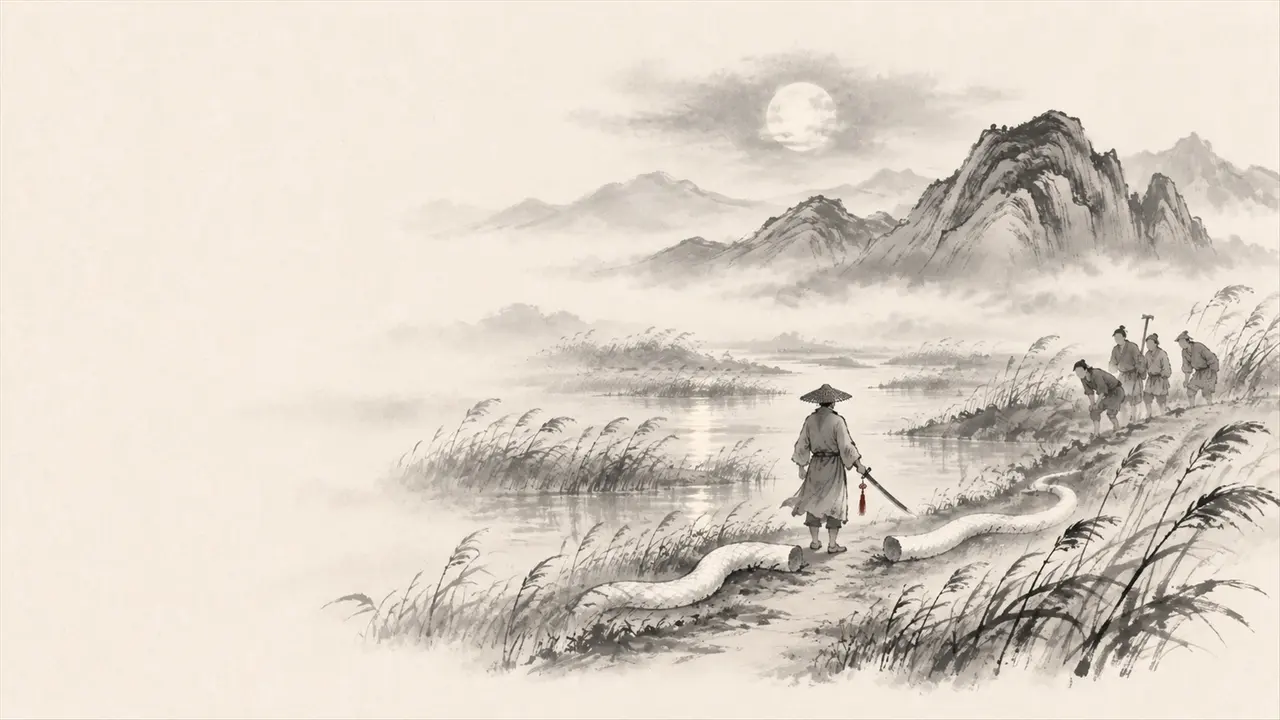
高祖以亭長為縣送徒酈山,徒多道亡。自度比至皆亡之,到豐西澤中,止飲,夜乃解縱所送徒。曰:「公等皆去,吾亦從此逝矣!」徒中壯士願從者十餘人。高祖被酒,夜徑澤中,令一人行前。行前者還報曰:「前有大蛇當徑,願還。」高祖醉,曰:「壯士行,何畏!」乃前,拔劍擊斬蛇。蛇遂分為兩,徑開。行數里,醉,因臥。後人來至蛇所,有一老嫗夜哭。人問何哭,嫗曰:「人殺吾子,故哭之。」人曰:「嫗子何為見殺?」嫗曰:「吾,白帝子也,化為蛇,當道,今為赤帝子斬之,故哭。」人乃以嫗為不誠,欲告之,嫗因忽不見。後人至,高祖覺。後人告高祖,高祖乃心獨喜,自負。諸從者日益畏之。
Kundoku (Japanese reading)
高祖亭長を以て県の為に徒を酈山に送る。徒多く道に亡ぐ。自ら度るに至る比には皆之を亡わん。豊の西の沢中に到り、止まりて飲み、夜乃ち送る所の徒を解き縦つ。曰く、「公等皆去れ。吾も亦た此より逝かん」と。徒中の壮士従わんと願う者十余人。高祖酒を被り、夜沢中を径し、一人をして前に行かしむ。前に行く者還り報じて曰く、「前に大蛇有りて径に当たる。願わくは還らん」と。高祖酔いて、曰く、「壮士行く。何をか畏れん」と。乃ち前み、剣を抜きて撃ちて蛇を斬る。蛇遂に分かれて両と為り、径開く。行くこと数里、酔いて、因りて臥す。後人来たりて蛇の所に至るに、一老嫗有りて夜哭す。人何ぞ哭すると問う。嫗曰く、「人吾が子を殺す。故に之を哭す」と。人曰く、「嫗の子何為れぞ殺さるる」と。嫗曰く、「吾が子は、白帝の子なり。化して蛇と為り、道に当たる。今赤帝の子之を斬る。故に哭す」と。人乃ち嫗を以て誠ならずと為し、之を告げんと欲す。嫗因りて忽ち見えず。後人至り、高祖覚む。後人高祖に告ぐ。高祖乃ち心に独り喜び、自ら負む。諸々の従う者日に益々之を畏る。
Japanese
高祖は亭長として、県のために労役の人夫を酈山へ送ることになった。人夫の多くが途中で逃げてしまった。高祖は、着くころには皆逃げてしまうだろうと考え、豊の西の沢まで来ると、止まって酒を飲み、夜になって送っていた人夫たちを解き放した。そして言った。「皆、行ってしまえ。わたしもここから姿を消そう」。人夫の中から、ついて行きたいという若者が十人あまり出た。高祖は酒に酔ったまま、夜の沢の小道を進み、一人を先に行かせた。先に行った者が戻って言った。「前に大蛇がいて道をふさいでいます。引き返しましょう」。高祖は酔っていて言った。「男が行くのだ。何を恐れることがある」。そして前に進み、剣を抜いて蛇を斬った。蛇は二つに切れて、道が開けた。数里進むと、酔いが回って横になって寝てしまった。あとから来た者が蛇のいた所まで来ると、一人の老婆が夜の中で泣いていた。わけをたずねると、老婆は言った。「人がわたしの子を殺したので、泣いているのです」。「おばあさんの子は、なぜ殺されたのか」。老婆は言った。「わたしの子は白帝の子で、蛇に姿を変えて道にいたのですが、いま赤帝の子に斬られてしまいました。だから泣いているのです」。人々は老婆がうそをついていると思ってとがめようとしたが、老婆はふっと消えてしまった。あとから来た者たちが追いついたとき、高祖は目を覚ました。皆がこのことを話すと、高祖は心の中でひそかに喜び、自信を深めた。従う者たちは、日ごとに高祖を恐れ敬うようになった。
English
As station head, Gaozu was sent by the county to escort a gang of labourers to Mount Li. Many of them ran away on the road. Reckoning that by the time he arrived they would all have gone, he stopped at a marsh west of Feng to drink, and at night he set free the men he was escorting. "Go, all of you," he said. "I too will disappear from here." Among the labourers, a dozen or so strong young men asked to follow him. Gaozu, full of wine, took a path through the marsh at night and sent one man ahead. The man came back and said: "There is a great snake lying across the path ahead. Let us go back." Gaozu, drunk, said: "When a brave man walks, what is there to fear?" He went forward, drew his sword and cut the snake in two. The two halves fell apart and the path was open. After going a few li, overcome by the wine, he lay down to sleep. When those who came after reached the place of the snake, there was an old woman weeping in the night. They asked her why she was weeping. "Someone has killed my son," she said, "and so I weep." "Why was your son killed?" they asked. She said: "My son was the son of the White Emperor. He had turned into a snake and was lying across the road. Now the son of the Red Emperor has cut him down. That is why I weep." The men thought she was lying and were about to take her to task, but she suddenly vanished. When the others caught up, Gaozu woke. They told him what had happened, and Gaozu was secretly delighted and grew more sure of himself. His followers held him in greater awe every day.
Notes (JA)
- 酈山: 始皇帝の陵墓が作られていた山。多くの人夫が集められた。
- 白帝・赤帝: 方角と色を受け持つ天の神。白帝は西の秦を、赤帝は秦を倒す劉邦を表すとされ、天命の予言と解された。
- 原文の「欲告之」は、『漢書』では「欲苦之」(痛めつけようとした)となっている。
- 漢の旗が赤いのは、この話による(第7節)。
Notes (EN)
- Mount Li: where the First Emperor's tomb was being built with vast gangs of labour.
- White Emperor and Red Emperor: heavenly gods of the directions and colours; white stood for Qin in the west, red for Liu Bang, who would overthrow it. The story was read as a prophecy of Heaven's mandate.
- Where the Shiji has 欲告之 ("about to take her to task"), the History of the Former Han has 欲苦之 ("about to beat her").
- This is why the banners of Han were red (passage 7).
Word notes
- escort/ɪˈskɔːrt/verb
to go with someone to guard or guide them
In the text: “to escort a gang of labourers”
Similar words: accompany — go with · guard — protect or watch over
- vanish/ˈvænɪʃ/verb
to disappear suddenly
In the text: “she suddenly vanished”
Similar words: disappear — go out of sight · fade — slowly become less visible
Passage 5
Original
秦始皇帝常曰「東南有天子氣」,於是因東游以厭之。高祖即自疑,亡匿,隱於芒、碭山澤巖石之閒。呂后與人俱求,常得之。高祖怪問之。呂后曰:「季所居上常有雲氣,故從往常得季。」高祖心喜。沛中子弟或聞之,多欲附者矣。
Kundoku (Japanese reading)
秦の始皇帝常に曰く、「東南に天子の気有り」と。是に於いて因りて東游して以て之を厭う。高祖即ち自ら疑い、亡げ匿れ、芒・碭の山沢の巌石の間に隠る。呂后人と倶に求め、常に之を得たり。高祖怪しみて之を問う。呂后曰く、「季の居る所の上には常に雲気有り。故に従い往きて常に季を得たり」と。高祖心に喜ぶ。沛中の子弟或いは之を聞き、附かんと欲する者多し。
Japanese
秦の始皇帝はいつも「東南の方角に天子の気がある」と言い、それを封じるために東へ巡行した。高祖は自分のことではないかと疑い、逃げ隠れて、芒山と碭山の山や沢の岩の間に隠れた。呂后は人と一緒に探しに行くと、いつも高祖を見つけ出した。高祖が不思議に思ってたずねると、呂后は言った。「あなたのいる所の上には、いつも雲気(めでたいしるしの雲)がかかっています。だからそれを目当てに行けば、いつもあなたが見つかるのです」。高祖は心の中で喜んだ。沛の若者たちの中にはこれを聞いて、高祖につき従いたいと願う者が多くなった。
English
The First Emperor of Qin used to say: "In the southeast there is the aura of a Son of Heaven." So he travelled east to suppress it. Gaozu suspected it might be about him, so he fled and hid among the rocks of the hills and marshes of Mang and Dang. Empress Lü, searching with others, always found him. Gaozu thought this strange and asked her how. She said: "Above the place where you are, there is always a cloud of vapour. So I follow it, and always find you." Gaozu was pleased at heart. Some of the young men of Pei heard of it, and many wanted to join him.
Notes (JA)
- 天子の気: 天子となる者のいる所に立ちのぼるとされた雲気。
- 芒・碭: 沛の西にあった山と沢。
- 竜の子、白蛇、雲気と、劉邦には不思議な話が重ねて語られる。漢の天下が天命によるものだと示す話として書かれている。
Notes (EN)
- Aura of a Son of Heaven (天子氣): a vapour believed to rise above a future emperor.
- Mang and Dang: hills and marshes west of Pei.
- Dragon birth, white snake, cloud of vapour: Sima Qian gathers the marvels told of Liu Bang, stories meant to show that Han ruled by Heaven's mandate.
Word notes
- aura/ˈɔːrə/noun
a special glow or feeling that seems to surround someone
In the text: “the aura of a Son of Heaven”
Similar words: air — the feeling a person gives · halo — a ring of light around the head
- suppress/səˈprɛs/verb
to stop something by force
In the text: “to suppress it”
Similar words: crush — put down completely · quell — end a revolt or a feeling
Passage 6
Original
秦二世元年秋,陳勝等起蘄,至陳而王,號為「張楚」。諸郡縣皆多殺其長吏以應陳涉。沛令恐,欲以沛應涉。掾、主吏蕭何、曹參乃曰:「君為秦吏,今欲背之,率沛子弟,恐不聽。願君召諸亡在外者,可得數百人,因劫眾,眾不敢不聽。」乃令樊噲召劉季。劉季之眾已數十百人矣。
Kundoku (Japanese reading)
秦の二世元年秋、陳勝等蘄に起こり、陳に至りて王たり、号して「張楚」と為す。諸郡県皆多く其の長吏を殺して以て陳渉に応ず。沛の令恐れ、沛を以て渉に応ぜんと欲す。掾・主吏の蕭何・曹参乃ち曰く、「君は秦の吏為り。今之に背かんと欲し、沛の子弟を率いんとするも、恐らくは聴かざらん。願わくは君諸々の亡げて外に在る者を召せ。数百人を得べし。因りて衆を劫かさば、衆敢えて聴かざらず」と。乃ち樊噲をして劉季を召さしむ。劉季の衆已に数十百人なり。
Japanese
秦の二世皇帝の元年(前209年)の秋、陳勝らが蘄で兵を挙げ、陳まで来て王となり、「張楚」と名のった。各地の郡や県では、多くの者が長官を殺して陳渉に呼応した。沛の県令は恐れ、沛を挙げて陳渉に呼応しようとした。県の役人の蕭何と曹参は言った。「あなたは秦の役人です。いま秦に背いて沛の若者を率いようとしても、従わないでしょう。どうか、逃げて外にいる者たちを呼び集めてください。数百人は集まるはずです。それで民をおどせば、民は従わないわけにいきません」。そこで樊噲に劉季を呼びに行かせた。劉季の仲間はすでに数十人から百人ほどになっていた。
English
In the autumn of the first year of the Second Emperor of Qin, Chen Sheng and others rose at Qi, reached Chen and made himself king, calling his state "Zhang Chu." In many commanderies and counties the people killed their officials to join Chen She. The magistrate of Pei was afraid and wanted to bring Pei over to Chen She. His clerks Xiao He and Cao Can said: "You are an official of Qin. If you now turn against Qin and try to lead the young men of Pei, I fear they will not follow you. Call in all the fugitives who are out in the countryside: you can get several hundred men. With them you can cow the people, and they will not dare disobey." So he sent Fan Kuai to call Liu Ji. Liu Ji's band already numbered several dozen, nearly a hundred.
Notes (JA)
- 陳勝: 秦に対して最初に大反乱を起こした農民(048-chen-sheng の章)。字の渉で陳渉とも呼ばれる。
- 蕭何・曹参: 沛の役人で、のちに漢の宰相となる(053-xiao-he、054-cao-can の章)。
- 樊噲: 沛で犬の肉を売っていた人。呂后の妹を妻とした(095-fan-kuai の章)。
Notes (EN)
- Chen Sheng: the farmer who began the great rising against Qin (chapter 048); also called Chen She.
- Xiao He and Cao Can: clerks of Pei who later became chancellors of Han (chapters 053 and 054).
- Fan Kuai: a dog butcher of Pei, married to Empress Lü's younger sister (chapter 095).
Word notes
- fugitive/ˈfjuːdʒɪtɪv/noun
a person who is running away, especially from the law
In the text: “Call in all the fugitives”
Similar words: runaway — one who has run away · outlaw — a person outside the law
- cow/kaʊ/verb
to frighten someone into obeying
In the text: “you can cow the people”
Similar words: intimidate — frighten into doing something · daunt — make someone lose courage
As a verb, cow has nothing to do with the animal.
Passage 7
Original
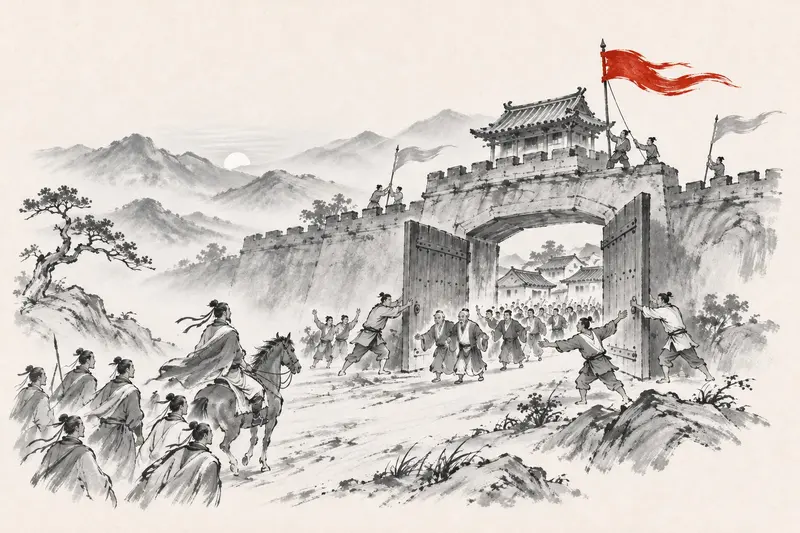
於是樊噲從劉季來。沛令後悔,恐其有變,乃閉城城守,欲誅蕭、曹。蕭、曹恐,踰城保劉季。劉季乃書帛射城上,謂沛父老曰:「天下苦秦久矣。今父老雖為沛令守,諸侯并起,今屠沛。沛今共誅令,擇子弟可立者立之,以應諸侯,則家室完。不然,父子俱屠,無為也。」父老乃率子弟共殺沛令,開城門迎劉季,欲以為沛令。劉季曰:「天下方擾,諸侯并起,今置將不善,壹敗塗地。吾非敢自愛,恐能薄,不能完父兄子弟。此大事,願更相推擇可者。」蕭、曹等皆文吏,自愛,恐事不就,後秦種族其家,盡讓劉季。諸父老皆曰:「平生所聞劉季諸珍怪,當貴,且卜筮之,莫如劉季最吉。」於是劉季數讓。眾莫敢為,乃立季為沛公。祠黃帝,祭蚩尤於沛庭,而釁鼓旗,幟皆赤。由所殺蛇白帝子,殺者赤帝子,故上赤。於是少年豪吏如蕭、曹、樊噲等皆為收沛子弟二三千人,攻胡陵、方與,還守豐。
Kundoku (Japanese reading)
是に於いて樊噲劉季に従いて来たる。沛の令後に悔い、其の変有らんことを恐れ、乃ち城を閉じて城守し、蕭・曹を誅せんと欲す。蕭・曹恐れ、城を踰えて劉季に保る。劉季乃ち帛に書きて城上に射て、沛の父老に謂いて曰く、「天下秦に苦しむこと久し。今父老沛の令の為に守ると雖も、諸侯並び起こり、今沛を屠らん。沛今共に令を誅し、子弟の立つべき者を択びて之を立て、以て諸侯に応ぜば、則ち家室完からん。然らずんば、父子倶に屠られん。為すこと無からん」と。父老乃ち子弟を率いて共に沛の令を殺し、城門を開きて劉季を迎え、以て沛の令と為さんと欲す。劉季曰く、「天下方に擾れ、諸侯並び起こる。今将を置くこと善からざれば、壹敗して地に塗れん。吾敢えて自ら愛しむに非ず。能の薄くして、父兄子弟を完うする能わざらんことを恐るるなり。此れ大事なり。願わくは更に相推して可なる者を択べ」と。蕭・曹等は皆文吏にして、自ら愛しみ、事の就らずして、後に秦其の家を種族せんことを恐れ、尽く劉季に譲る。諸父老皆曰く、「平生聞く所の劉季の諸々の珍怪は、当に貴かるべし。且つ之を卜筮するに、劉季の最も吉なるに如くは莫し」と。是に於いて劉季数々譲る。衆敢えて為る莫し。乃ち季を立てて沛公と為す。黄帝を祠り、蚩尤を沛の庭に祭りて、鼓旗に釁る。幟は皆赤し。殺す所の蛇は白帝の子、殺す者は赤帝の子なるに由りて、故に赤を上ぶ。是に於いて少年豪吏の蕭・曹・樊噲等の如きは、皆為に沛の子弟二三千人を収め、胡陵・方与を攻め、還りて豊を守る。
Japanese
こうして樊噲は劉季を連れて戻ってきた。ところが沛の県令は後悔し、変事が起こるのを恐れて、城門を閉じて立てこもり、蕭何と曹参を殺そうとした。蕭何と曹参は恐れて、城壁を越えて逃げ、劉季のもとに身を寄せた。劉季は絹に手紙を書いて城の上に射こみ、沛の長老たちに呼びかけた。「天下は長い間秦に苦しめられてきた。いま長老たちが沛の県令のために城を守っても、諸侯が次々に兵を挙げているから、やがて沛は皆殺しにされるだろう。いま沛の皆で県令を討ち、若者の中から立てるべき者を選んで立て、諸侯に呼応すれば、家族は無事でいられる。そうしなければ、親も子も皆殺しにされ、何にもならない」。長老たちは若者を率いて県令を殺し、城門を開いて劉季を迎え、沛の長にしようとした。劉季は言った。「天下はいま乱れ、諸侯が次々に兵を挙げている。いま指導者をまちがえれば、一度負けただけで、皆の命が地にまみれることになる。わたしは自分の身を惜しむのではない。力が足りず、皆さんの家族を守りきれないことを恐れるのだ。これは大事なことだ。どうか改めて、ふさわしい者を推して選んでほしい」。蕭何や曹参たちは文官で、自分の身がかわいく、事が成らなかったときに、のちに秦に一族を皆殺しにされることを恐れて、皆劉季に譲った。長老たちも皆言った。「ふだんから聞いている劉季の不思議な話からすれば、きっと貴い身分になる人だ。それに占ってみても、劉季ほど吉と出る者はいない」。劉季は何度も辞退したが、ほかに引き受けようとする者はいなかった。そこで劉季を立てて沛公とした。黄帝を祭り、沛の役所の庭で蚩尤(戦の神)を祭って、いけにえの血を太鼓と旗に塗った。旗はすべて赤だった。斬った蛇が白帝の子で、斬った者が赤帝の子だったので、赤を尊んだのである。こうして蕭何・曹参・樊噲のような若者や有力な役人たちが、皆で沛の若者二、三千人を集め、胡陵と方与を攻め、戻って豊を守った。
English
So Fan Kuai came back with Liu Ji. But the magistrate of Pei had changed his mind; afraid of trouble, he shut the city gates, held the walls and meant to kill Xiao He and Cao Can. They fled in fear over the wall and took refuge with Liu Ji. Liu Ji wrote a message on silk and shot it over the wall to the elders of Pei: "The realm has long suffered under Qin. Even if you elders hold the city for the magistrate, the lords are rising everywhere and will soon slaughter Pei. If the people of Pei now join together to kill the magistrate, choose a fit man from among your sons and set him up to answer the lords, your families will be safe. If not, fathers and sons will be slaughtered together, and to no purpose." So the elders led their young men to kill the magistrate, opened the gates to welcome Liu Ji and wanted to make him magistrate. Liu Ji said: "The realm is in turmoil and the lords are rising everywhere. If you choose the wrong leader now, one defeat will leave you all in the dust. I am not trying to save myself; I only fear I am not able enough to keep your families safe. This is a great matter. I beg you to choose again, someone better fitted." Xiao He, Cao Can and the others were all clerks who cared for their own skins; afraid that if the venture failed Qin would wipe out their families, they all deferred to Liu Ji. The elders all said: "From all the wonders we have heard about Liu Ji, he is sure to rise high. And when we divined about it, no one came out as lucky as Liu Ji." Liu Ji declined again and again, but no one else dared take it on, so they made him Lord of Pei. They sacrificed to the Yellow Emperor and to Chiyou in the courtyard of the Pei offices, and smeared the drums and banners with the blood of the offerings. The banners were all red: because the snake he had killed was the son of the White Emperor, and the one who killed it the son of the Red Emperor, they honoured red. Then the young men and leading officials such as Xiao He, Cao Can and Fan Kuai gathered two or three thousand young men of Pei for him, attacked Huling and Fangyu, and came back to hold Feng.
Notes (JA)
- 帛: 絹の布。手紙を書いて矢に結び、城の上に射こんだ。
- 壹敗して地に塗る: 一度の負けで地にまみれる。「一敗地に塗る」として、立ち直れないほどの大敗のたとえになった。
- 沛公: 楚の地方では、県の長を「公」と呼んだ。
- 蚩尤: 黄帝と戦ったとされる戦の神。
- 赤: 漢が赤を尊ぶのは、白蛇の話による(第4節)。
Notes (EN)
- Silk (帛): the message was written on cloth and shot over the wall tied to an arrow.
- "One defeat will leave you in the dust" (壹敗塗地): became a saying for a total, irrecoverable defeat.
- Lord of Pei (沛公): in Chu the head of a county was called "lord."
- Chiyou: a war god said to have fought the Yellow Emperor.
- Red: Han honoured red because of the white snake (passage 4).
Idioms from this passage: One defeat smears you in the dirt 一敗地に塗る
Word notes
- turmoil/ˈtɜːrmɔɪl/noun
a state of great confusion and trouble
In the text: “The realm is in turmoil”
Similar words: chaos — complete disorder · upheaval — a sudden, violent change
- defer/dɪˈfɜːr/verb
to let someone else lead or decide out of respect
In the text: “they all deferred to Liu Ji”
Similar words: yield — give way · submit — accept another's authority