Annals · Vol. 10
The Basic Annals of Emperor Wen 孝文本紀
The Emperor Who Ended Mutilation 除肉刑與遺詔
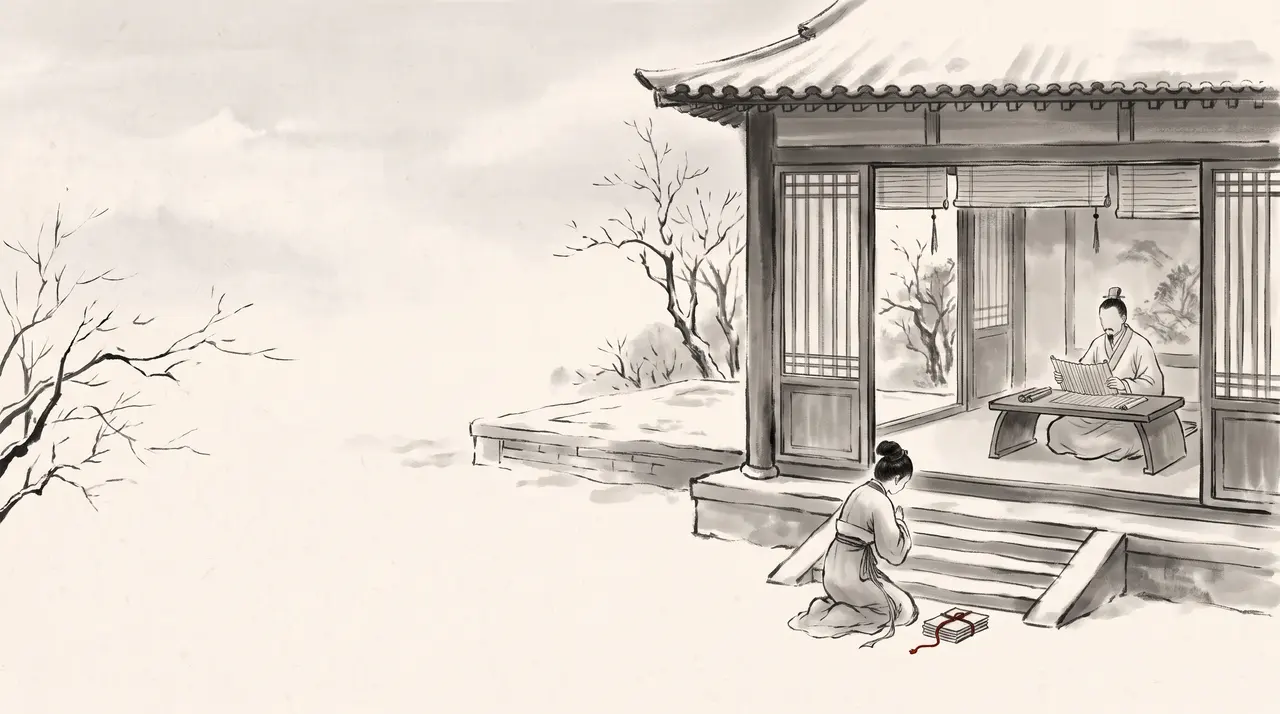
The story of Emperor Wen, the fifth emperor of the Han. After the fall of the Lü clan, the ministers in the capital invited Liu Heng, King of Dai, to be emperor. Most of his advisers suspected a trap, but his commandant Song Chang argued that the Liu family's hold on the realm was secure, and the tortoise shell gave the lucky sign of the "great crossing", so Liu Heng went to Chang'an and, after much hesitation, took the throne. As emperor he abolished the laws that punished a criminal's whole family, and the crime of speaking ill of the emperor. When a Qi official, Chunyu Yi, was sentenced to mutilation, his youngest daughter Tiying wrote to offer herself as a government slave so that her father could make a fresh start; moved, Emperor Wen abolished mutilating punishments altogether. In twenty-three years he added nothing to his palaces and parks, and gave up building a terrace when he learned it would cost as much as ten ordinary families owned. On his deathbed he left a will forbidding long mourning and a costly funeral. Sima Qian asks: "Was this not humanity?"
This page has the scene "The Emperor Who Ended Mutilation" from this volume, not the whole volume.
Audio
The audio is synthetic speech.
Video
Passage 1
Original
孝文皇帝,高祖中子也。高祖十一年春,已破陳豨軍,定代地,立為代王,都中都。太后薄氏子。即位十七年,高后八年七月,高后崩。九月,諸呂呂產等欲為亂,以危劉氏,大臣共誅之,謀召立代王,事在呂后語中。
Kundoku (Japanese reading)
孝文皇帝は、高祖の中子なり。高祖の十一年春、已に陳豨の軍を破り、代の地を定め、立ちて代王と為り、中都に都す。太后薄氏の子なり。即位して十七年、高后の八年七月、高后崩ず。九月、諸呂呂産等乱を為して以て劉氏を危うくせんと欲す。大臣共に之を誅し、謀りて代王を召し立てんとす。事は呂后の語の中に在り。
Japanese
孝文皇帝は、高祖の中ほどの息子である。高祖の十一年の春、陳豨の軍を破って代の地を平定すると、代王に立てられ、中都を都とした。母は薄氏で、のちの薄太后である。代王となって十七年目、高后(呂后)の八年七月に呂后が亡くなった。九月、呂産ら呂氏の一族が乱を起こして劉氏を危うくしようとしたので、大臣たちはともに呂氏を討ち、相談して代王を迎えて皇帝に立てることにした。このいきさつは呂太后本紀に書いてある。
English
Emperor Wen was a middle son of Gaozu. In the spring of Gaozu's eleventh year, when the army of Chen Xi had been crushed and the land of Dai pacified, he was made King of Dai, with his capital at Zhongdu. His mother was Lady Bo. In the seventeenth year of his reign as king, in the seventh month of Empress Lü's eighth year, Empress Lü died. In the ninth month Lü Chan and the other Lü plotted rebellion to bring down the Liu, but the great ministers joined together and destroyed them, and resolved to summon the King of Dai and make him emperor. The story is told in the annals of Empress Lü.
Notes (JA)
- 中子: 長男でも末子でもない、中ほどの息子。文帝は高祖の四男とされる。
- 代: 今の山西省北部から河北省北西部の地。匈奴と接する辺境の国。
- 薄氏: 文帝の母、薄姫。高祖の寵愛をあまり受けなかったので、呂后の迫害を免れた。
- 呂氏が滅ぼされたいきさつは呂太后本紀に書かれている(009-empress-lu の章)。
Notes (EN)
- A middle son (中子): Emperor Wen was Gaozu's fourth son.
- Dai (代): a frontier kingdom in northern Shanxi, facing the Xiongnu.
- Lady Bo (薄氏): little favoured by Gaozu, she escaped Empress Lü's jealousy.
- The fall of the Lü is told in the Basic Annals of Empress Lü (chapter 009).
Word notes
- pacify/ˈpæsəˌfaɪ/verb
to bring peace to a place by ending fighting
In the text: “the land of Dai pacified”
Similar words: calm — make quiet · subdue — bring under control
- resolve/rɪˈzɑlv/verb
to decide firmly to do something
In the text: “resolved to summon the King of Dai”
Similar words: decide — make up your mind · determine — settle on
Passage 2
Original
中尉宋昌進曰:「群臣之議皆非也。夫秦失其政,諸侯豪桀并起,人人自以為得之者以萬數,然卒踐天子之位者,劉氏也,天下絕望,一矣。高帝封王子弟,地犬牙相制,此所謂盤石之宗也,天下服其彊,二矣。漢興,除秦苛政,約法令,施德惠,人人自安,難動搖,三矣。夫以呂太后之嚴,立諸呂為三王,擅權專制,然而太尉以一節入北軍,一呼士皆左袒,為劉氏,叛諸呂,卒以滅之。此乃天授,非人力也。今大臣雖欲為變,百姓弗為使,其黨寧能專一邪?方今內有朱虛、東牟之親,外畏吳、楚、淮南、瑯邪、齊、代之彊。方今高帝子獨淮南王與大王,大王又長,賢聖仁孝,聞於天下,故大臣因天下之心而欲迎立大王,大王勿疑也。」
Kundoku (Japanese reading)
中尉宋昌進みて曰く、「群臣の議は皆非なり。夫れ秦其の政を失い、諸侯豪桀並び起こり、人人自ら以為えらく之を得んと者は万を以て数う。然れども卒に天子の位を践む者は、劉氏なり。天下望みを絶つ、一なり。高帝子弟を王に封じ、地は犬牙相制す。此れ所謂盤石の宗なり。天下其の彊きに服す、二なり。漢興りて、秦の苛政を除き、法令を約し、徳恵を施し、人人自ら安んじ、動揺し難し、三なり。夫れ呂太后の厳を以て、諸呂を立てて三王と為し、権を擅にし制を専らにす。然り而して太尉一節を以て北軍に入り、一たび呼べば士皆左袒し、劉氏の為にして諸呂に叛き、卒に以て之を滅ぼす。此れ乃ち天の授くるなり、人力に非ざるなり。今大臣変を為さんと欲すと雖も、百姓為に使われず。其の党寧ぞ能く専一ならんや。方今、内には朱虚・東牟の親有り、外には呉・楚・淮南・瑯邪・斉・代の彊きを畏る。方今高帝の子は独り淮南王と大王とのみ。大王又長じ、賢聖仁孝にして、天下に聞こゆ。故に大臣天下の心に因りて大王を迎え立てんと欲す。大王疑うこと勿かれ」と。
Japanese
(都の大臣たちから迎えの使者が来ると、側近の張武らは「大臣たちはもと高帝の将軍で、謀略にたけています。迎えるというのは名目で、信用できません。病と称して様子を見るべきです」と言った。)中尉の宋昌が進み出て言った。「皆さんの意見はまちがっています。秦が政治を失ったとき、諸侯や豪傑が一斉に立ち、自分こそ天下を取れると思った者は一万を数えました。しかし最後に天子の位についたのは劉氏です。天下の者は、もう劉氏にかわる望みを捨てています。これが一つめです。高帝は子や弟たちを王に封じ、その領地は犬の牙のようにかみ合って、たがいにけん制しています。いわゆる盤石の一族で、天下はその強さに服しています。これが二つめです。漢が興って、秦のむごい政治をやめ、法令を簡単にし、恵みをほどこしたので、人々は安心して暮らし、簡単には動揺しません。これが三つめです。あの厳しい呂太后が呂氏三人を王に立て、権力をほしいままにしても、太尉(周勃)がしるしの節を一つ持って北軍に入り、一声かけると兵士は皆左肩を脱いで劉氏につき、呂氏に背いて、ついに呂氏を滅ぼしました。これは天の授けたもので、人の力ではありません。いま大臣が謀反を起こそうとしても、民はそのために動きません。大臣の仲間とて、一つにまとまれるでしょうか。いまは都の中に朱虚侯・東牟侯という劉氏の身内がいて、外には呉・楚・淮南・瑯邪・斉・代の強い国々があって、大臣たちはそれを恐れています。いま高帝の子で残っているのは、淮南王と大王だけです。しかも大王は年長で、賢く思いやりがあり、親孝行だと天下に知られています。だから大臣たちは天下の人々の心に従って、大王をお迎えしようとしているのです。どうか疑わないでください」。
English
The commandant Song Chang came forward and said: "Everyone's advice is wrong. When Qin lost its grip on government, lords and heroes rose up everywhere, and those who thought they could win the realm for themselves could be counted by the ten thousand. Yet the one who in the end took the throne of the Son of Heaven was the Liu. The realm has given up hope of anyone else: that is the first point. Emperor Gao made his sons and brothers kings, and their lands interlock like a dog's teeth, each holding the others in check. This is what is called a family as firm as a rock, and the realm bows to its strength: that is the second point. When the Han arose, it did away with the harsh government of Qin, made the laws simple and showed kindness, so that everyone is at peace and hard to stir up: that is the third point. Even with all Empress Lü's severity, though she made three of the Lü kings and seized all power for herself, the grand commandant walked into the Northern Army with a single token of office; at one shout the soldiers all bared their left shoulders for the Liu and turned against the Lü, and in the end destroyed them. That was the gift of Heaven, not the work of men. Now even if the great ministers wanted to rebel, the people would not do their bidding; and how could their party hold together? At present they have the Liu princes, the Marquises of Zhuxu and Dongmou, inside the capital, and outside they fear the strength of Wu, Chu, Huainan, Langya, Qi and Dai. Of Emperor Gao's sons only the King of Huainan and Your Highness are left, and Your Highness is the elder, known throughout the realm as wise, humane and a devoted son. That is why the great ministers, following the hearts of the realm, wish to invite you to the throne. Do not doubt it, Your Highness."
Notes (JA)
- 犬牙相制: 犬の牙のように領地がかみ合い、たがいにけん制し合うこと。
- 盤石之宗: 大きな岩のようにゆるがない一族。「盤石」の語のもと。
- 一節: 皇帝の使いであることを示すしるし一つ。周勃が北軍を握った場面(009-empress-lu、057-zhou-bo の章)。
- 朱虛・東牟: 朱虚侯劉章と東牟侯劉興居。高祖の孫で、呂氏討伐に加わった。
Notes (EN)
- Interlocking like a dog's teeth (犬牙相制): kingdoms placed so that each checks its neighbours.
- A family as firm as a rock (盤石之宗): the origin of the phrase "rock-solid".
- A single token (一節): the scene of Zhou Bo taking the Northern Army (chapters 009 and 057).
Idioms from this passage: As firm as a rock 盤石
Word notes
- interlock/ˌɪntərˈlɑk/verb
to fit together tightly, each part holding the others
In the text: “their lands interlock like a dog's teeth”
Similar words: mesh — fit together · dovetail — join neatly
- severity/səˈvɛrəti/noun
the quality of being very strict or harsh
In the text: “all Empress Lü's severity”
Similar words: harshness — being hard and cruel · sternness — strictness
Passage 3
Original
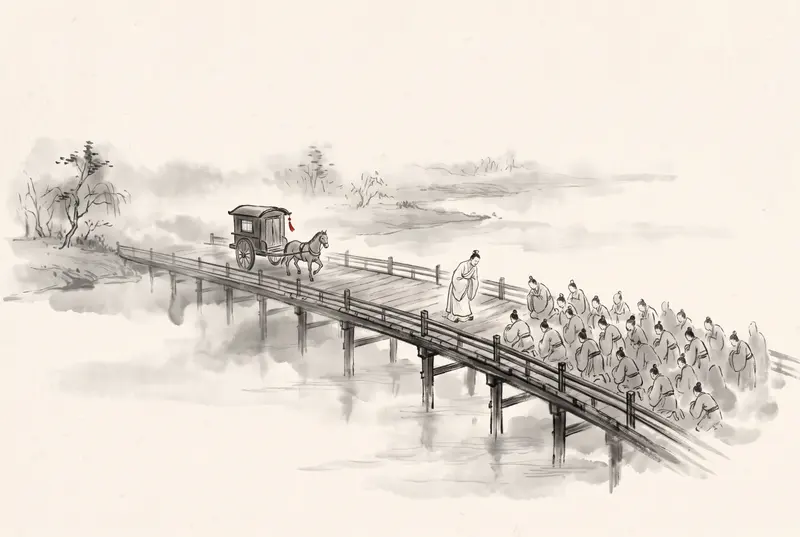
代王報太后計之,猶與未定。卜之龜,卦兆得大橫。占曰:「大橫庚庚,余為天王,夏啟以光。」代王曰:「寡人固已為王矣,又何王?」卜人曰:「所謂天王者乃天子。」於是代王乃遣太后弟薄昭往見絳侯,絳侯等具為昭言所以迎立王意。薄昭還報曰:「信矣,毋可疑者。」代王乃笑謂宋昌曰:「果如公言。」乃命宋昌參乘,張武等六人乘傳詣長安。至高陵休止,而使宋昌先馳之長安觀變。昌至渭橋,丞相以下皆迎。宋昌還報。代王馳至渭橋,群臣拜謁稱臣。代王下車拜。太尉勃進曰:「願請閒言。」宋昌曰:「所言公,公言之。所言私,王者不受私。」太尉乃跪上天子璽符。代王謝曰:「至代邸而議之。」遂馳入代邸。
Kundoku (Japanese reading)
代王、太后に報じて之を計るも、猶与として未だ定まらず。之を亀に卜するに、卦兆大横を得たり。占に曰く、「大横庚庚たり、余天王と為り、夏啓以て光あり」と。代王曰く、「寡人固より已に王たり。又何の王ぞ」と。卜人曰く、「所謂天王とは乃ち天子なり」と。是に於いて代王乃ち太后の弟薄昭を遣わして往きて絳侯に見えしむ。絳侯等具に昭の為に王を迎え立つる所以の意を言う。薄昭還りて報じて曰く、「信なり。疑うべき者毋し」と。代王乃ち笑いて宋昌に謂いて曰く、「果たして公の言の如し」と。乃ち宋昌に命じて参乗せしめ、張武等六人伝に乗りて長安に詣る。高陵に至りて休止し、而して宋昌をして先に馳せて長安に之きて変を観しむ。昌渭橋に至る。丞相以下皆迎う。宋昌還りて報ず。代王馳せて渭橋に至る。群臣拝謁して臣と称す。代王車を下りて拝す。太尉勃進みて曰く、「願わくは間言を請わん」と。宋昌曰く、「言う所公ならば、公に之を言え。言う所私ならば、王者は私を受けず」と。太尉乃ち跪きて天子の璽符を上る。代王謝して曰く、「代邸に至りて之を議せん」と。遂に馳せて代邸に入る。
Japanese
代王は母の薄太后に相談したが、まだ決めかねていた。亀の甲で占うと、「大横」という割れ目が出た。占いの言葉は「大横は堅くまっすぐ、我は天王となり、夏の啓のように栄える」だった。代王が「わたしはもう王だ。このうえ何の王になるのか」と言うと、占い師は「天王とは天子のことです」と答えた。そこで代王は太后の弟の薄昭を都へやって絳侯周勃に会わせた。周勃らは、王を迎えるわけをくわしく薄昭に話した。薄昭は帰ってきて「本当です。疑うことはありません」と報告した。代王は笑って宋昌に言った。「やはりあなたの言ったとおりだった」。そして宋昌を同じ車に乗せ、張武ら六人と駅伝の車で長安へ向かった。高陵まで来て休み、宋昌を先に長安へ走らせて様子をうかがわせた。宋昌が渭橋まで来ると、丞相以下の大臣たちが皆出迎えていた。宋昌がもどって報告すると、代王は渭橋まで車を走らせた。群臣は拝謁して臣下と名のった。代王も車を降りて礼を返した。太尉の周勃が進み出て「二人だけでお話ししたい」と言うと、宋昌が言った。「公のことなら、公の場で話されよ。私のことなら、王たる者は私事を受けない」。そこで周勃はひざまずいて天子の印を差し出した。代王は「代の屋敷に着いてから相談しよう」と辞退し、そのまま代の屋敷へ駆けこんだ。
English
The King of Dai told his mother and talked it over with her, but still hesitated and could not decide. He consulted the tortoise shell, and the crack showed the "great crossing". The reading said: "The great crossing, firm and straight; I shall be king of Heaven, and shine like Qi of Xia." The King of Dai said: "I am a king already. What other king could I be?" The diviner said: "The king of Heaven means the Son of Heaven." So the King of Dai sent Bo Zhao, his mother's brother, to see the Marquis of Jiang. The marquis and the others explained to Bo Zhao in full why they wanted to make the king emperor. Bo Zhao came back and reported: "It is true. There is nothing to doubt." Then the King of Dai laughed and said to Song Chang: "It is just as you said." He had Song Chang ride in his carriage, and with Zhang Wu and five others they went by post carriage to Chang'an. At Gaoling they stopped to rest, and he sent Song Chang galloping ahead to Chang'an to see what was happening. When Song Chang reached the Wei Bridge, the chancellor and all the ministers were there to meet him. Song Chang went back and reported, and the King of Dai drove on to the Wei Bridge. The ministers bowed before him and called themselves his subjects, and the King of Dai got down from his carriage and bowed in return. The grand commandant Zhou Bo came forward and said: "May I have a word in private?" Song Chang said: "If what you have to say is public, say it in public. If it is private, a king does not take private matters." So the grand commandant knelt and offered him the seals and tallies of the Son of Heaven. The King of Dai declined, saying: "Let us discuss it when we reach the Dai residence," and he drove on into the Dai residence.
Notes (JA)
- 大橫: 亀の甲を焼いてできた、横にまっすぐ走る割れ目。たいへんな吉兆とされた。
- 夏啓: 禹の子、啓。父の位を継いで夏王朝を世襲にした(002-xia の章)。
- 璽符: 天子の印と割り符。皇帝の位のしるし。
- このあと代王は、西に向かって三度、南に向かって二度辞退したのち、皇帝の位についた(ここでは省く)。
Notes (EN)
- The great crossing (大橫): a straight horizontal crack in the shell, a very lucky sign.
- Qi of Xia (夏啓): Yu's son, who inherited his father's throne (chapter 002).
- Seals and tallies (璽符): the tokens of the imperial office.
- After refusing three times facing west and twice facing south, he finally accepted the throne.
Word notes
- hesitate/ˈhɛzəˌteɪt/verb
to pause before acting because you are unsure
In the text: “still hesitated and could not decide”
Similar words: waver — be unable to decide · hold back — not act yet
- diviner/dɪˈvaɪnər/noun
a person who tries to tell the future by signs
In the text: “The diviner said”
Similar words: soothsayer — someone who foretells · fortune-teller — someone who reads the future
Passage 4
Original
十二月,上曰:「法者,治之正也,所以禁暴而率善人也。今犯法已論,而使毋罪之父母妻子同產坐之,及為收帑,朕甚不取。其議之。」有司皆曰:「民不能自治,故為法以禁之。相坐坐收,所以累其心,使重犯法,所從來遠矣。如故便。」上曰:「朕聞法正則民愨,罪當則民從。且夫牧民而導之善者,吏也。其既不能導,又以不正之法罪之,是反害於民為暴者也。何以禁之?朕未見其便,其孰計之。」有司皆曰:「陛下加大惠,德甚盛,非臣等所及也。請奉詔書,除收帑諸相坐律令。」
Kundoku (Japanese reading)
十二月、上曰く、「法は治の正なり。暴を禁じて善人を率いる所以なり。今法を犯して已に論ぜられたるに、而も罪毋き父母妻子同産をして之に坐せしめ、及び収帑と為す。朕甚だ取らず。其れ之を議せよ」と。有司皆曰く、「民自ら治むる能わず。故に法を為りて以て之を禁ず。相坐坐収は、其の心を累わせ、法を犯すを重からしむる所以なり。従りて来たる所遠し。故の如くするが便なり」と。上曰く、「朕聞く、法正しければ則ち民愨に、罪当たれば則ち民従うと。且つ夫れ民を牧して之を善に導く者は、吏なり。其れ既に導く能わず、又不正の法を以て之を罪す。是れ反って民を害して暴を為す者なり。何を以て之を禁ぜん。朕未だ其の便を見ず。其れ之を孰計せよ」と。有司皆曰く、「陛下大恵を加う。徳甚だ盛んなり。臣等の及ぶ所に非ざるなり。請う、詔書を奉じて、収帑諸相坐の律令を除かん」と。
Japanese
(即位した年の)十二月、文帝は言った。「法は政治のよりどころで、乱暴を禁じて善人を導くためのものだ。ところがいまは、法を犯した本人が裁かれたうえに、罪のない父母・妻子・兄弟までが連座して罰せられ、家族は官の奴隷にされている。わたしはまったく賛成できない。このことを議論せよ」。役人たちは皆言った。「民は自分で自分を治められません。だから法を作って禁じるのです。家族を連座させ、奴隷にとるのは、民に心配させて、法を犯すことを重く受け止めさせるためです。古くからのやり方ですので、今までどおりがよいと存じます」。文帝は言った。「法が正しければ民は誠実になり、罪が当を得ていれば民は従うと聞いている。そもそも民を治めて善に導くのは役人の務めだ。導くことができないうえに、正しくない法で罪をきせるのは、かえって民を傷つけ、乱暴を働くことになる。それでどうやって悪を禁じられるのか。わたしにはそのよさが分からない。よく考えよ」。役人たちは皆言った。「陛下は大きな恵みをほどこされ、その徳はまことに盛んで、わたしどもの及ぶところではありません。詔に従って、家族を奴隷にとる法と、連座の法をやめさせていただきます」。
English
In the twelfth month the emperor said: "Law is the foundation of government, the means of stopping violence and guiding good people. But now, when a man has broken the law and been sentenced, his innocent parents, wife, children and brothers and sisters are punished with him, and taken as government slaves. I do not approve of this at all. Discuss it." The officials all said: "The people cannot govern themselves, and so laws are made to restrain them. Punishing the family and taking them as slaves is a way of weighing on their hearts, so that they take breaking the law seriously. It has been done for a very long time. It is best to leave it as it is." The emperor said: "I have heard that when the law is just the people are honest, and when the punishment fits the crime the people obey. Besides, it is the officials who look after the people and guide them to the good. If they cannot guide them, and then punish them with unjust laws, they are themselves harming the people and doing violence. How will that stop crime? I do not see the good of it. Think it over carefully." The officials all said: "Your Majesty bestows great kindness, and your virtue is very great; we cannot reach it. We ask to carry out the edict and abolish the laws on taking families as slaves and on punishing relatives."
Notes (JA)
- 收帑: 罪人の妻子を官の奴隷として取り上げること。
- 相坐: 連坐。家族や近所の者まで同じ罪に問うこと。秦の商鞅が強めた制度(068-shang-yang の章)。
- 法正則民愨: 法が正しければ民は誠実になる。文帝の政治の考え方を示す言葉。
Notes (EN)
- Taking families as slaves (收帑) and punishing relatives (相坐): collective punishments strengthened under Shang Yang (chapter 068).
- When the law is just the people are honest (法正則民愨): Emperor Wen's view of the law in a sentence.
Word notes
- restrain/rɪˈstreɪn/verb
to stop someone from doing something
In the text: “laws are made to restrain them”
Similar words: curb — hold in check · control — keep within limits
- abolish/əˈbɑlɪʃ/verb
to officially end a law or system
In the text: “abolish the laws on taking families as slaves”
Similar words: do away with — get rid of · repeal — cancel a law
Passage 5
Original
上曰:「古之治天下,朝有進善之旌,誹謗之木,所以通治道而來諫者。今法有誹謗妖言之罪,是使眾臣不敢盡情,而上無由聞過失也。將何以來遠方之賢良?其除之。民或祝詛上以相約結而後相謾,吏以為大逆,其有他言,而吏又以為誹謗。此細民之愚無知抵死,朕甚不取。自今以來,有犯此者勿聽治。」
Kundoku (Japanese reading)
上曰く、「古の天下を治むるや、朝に進善の旌、誹謗の木有り。治道を通じて諫者を来たす所以なり。今法に誹謗妖言の罪有り。是れ衆臣をして敢えて情を尽くさざらしめ、而して上は由りて過失を聞く無きなり。将に何を以て遠方の賢良を来たさんとするや。其れ之を除け。民或いは上を祝詛して以て相約結し、而る後に相謾く。吏以て大逆と為す。其の他言有らば、而して吏又以て誹謗と為す。此れ細民の愚にして知る無くして死に抵るなり。朕甚だ取らず。今より以来、此れを犯す者有らば聴治する勿かれ」と。
Japanese
文帝は言った。「古の天子が天下を治めたときは、朝廷に、よい意見を述べる者のための旗と、政治の悪いところを書きこむ木の柱を立てた。政治の道を通わせ、いさめる者を招くためである。いまの法には、誹謗の罪と、人を惑わす言葉の罪がある。これでは臣下たちは思うことを言えず、上の者は自分の過ちを聞くすべがない。どうやって遠い地方の賢者を招けようか。この罪をやめよ。民のなかには、皇帝をのろって誓いを交わし、あとでたがいに裏切る者がいる。役人はそれを大逆の罪とし、ほかのことを言えば、また誹謗の罪とする。これは無知な庶民が、愚かさのために死刑になっているのだ。わたしはまったく賛成できない。今後は、このような罪を犯す者があっても、取り上げて裁いてはならない」。
English
The emperor said: "When the kings of old governed the realm, there was a banner at court for those who had good advice, and a post on which to write criticisms. This was how they kept the ways of government open and drew in those who would warn them. Now the law has crimes of slander and of uttering evil omens. This keeps the ministers from speaking their minds, and leaves the ruler no way of hearing of his mistakes. How then can we bring in men of worth from far away? Abolish these crimes. Sometimes the common people curse the emperor as part of a pact, and later break faith with one another; the officials treat this as high treason, and if they say anything else, the officials call that slander too. This is how ignorant common people come to be put to death for their foolishness. I do not approve of it at all. From now on, if anyone commits such a crime, do not hear the case."
Notes (JA)
- 誹謗之木: 政治の悪いところを書きこむために、交差点などに立てた木の柱。堯が立てたと伝えられ、のちの華表(華やかな石柱)の起こりとされる。
- 妖言: 不吉な予言や、人を惑わすうわさ。
- 始皇帝が「誹謗」を理由に学者を穴埋めにしたこと(006-unification の章)と対照的な政策。
Notes (EN)
- The post for criticisms (誹謗之木): a wooden post set up by the sage king Yao, said to be the origin of the ornamental pillars of later palaces.
- Evil omens (妖言): ominous prophecies and rumours.
- A sharp contrast with the First Emperor, who buried scholars for "slander" (chapter 006).
Word notes
- slander/ˈslændər/noun
a false statement that damages someone's reputation
In the text: “crimes of slander and of uttering evil omens”
Similar words: defamation — harming a good name · libel — written slander
- treason/ˈtrizən/noun
the crime of betraying your country or ruler
In the text: “treat this as high treason”
Similar words: betrayal — disloyalty · sedition — stirring up rebellion
Passage 6
Original
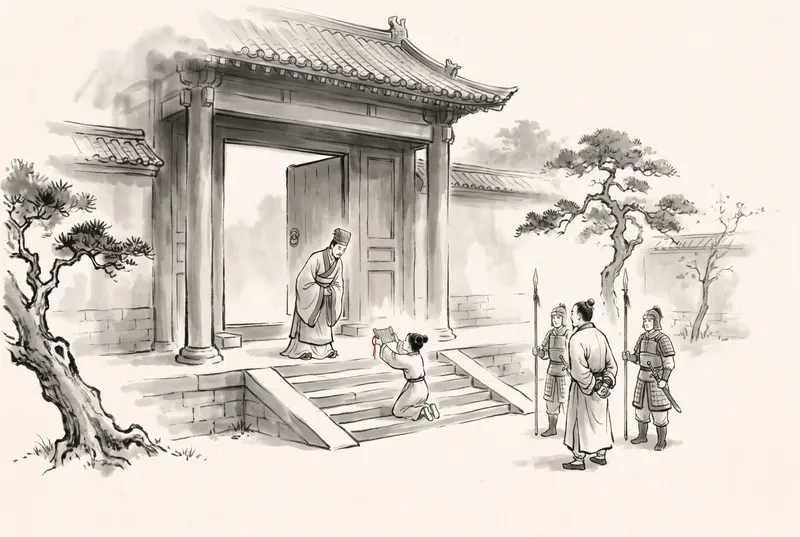
五月,齊太倉令淳于公有罪當刑,詔獄逮徙系長安。太倉公無男,有女五人。太倉公將行會逮,罵其女曰:「生子不生男,有緩急非有益也!」其少女緹縈自傷泣,乃隨其父至長安,上書曰:「妾父為吏,齊中皆稱其廉平,今坐法當刑。妾傷夫死者不可復生,刑者不可復屬,雖復欲改過自新,其道無由也。妾願沒入為官婢,贖父刑罪,使得自新。」書奏天子,天子憐悲其意,乃下詔曰:「蓋聞有虞氏之時,畫衣冠異章服以為僇,而民不犯。何則?至治也。今法有肉刑三,而姦不止,其咎安在?非乃朕德薄而教不明歟?吾甚自愧。故夫馴道不純而愚民陷焉。《詩》曰『愷悌君子,民之父母』。今人有過,教未施而刑加焉?或欲改行為善而道毋由也。朕甚憐之。夫刑至斷支體,刻肌膚,終身不息,何其楚痛而不德也,豈稱為民父母之意哉!其除肉刑。」
Kundoku (Japanese reading)
五月、斉の太倉令淳于公罪有りて刑に当たる。詔獄逮して長安に徙繋す。太倉公男無く、女五人有り。太倉公将に行きて逮に会わんとし、其の女を罵りて曰く、「子を生みて男を生まず。緩急有るも益有るに非ざるなり」と。其の少女緹縈自ら傷み泣き、乃ち其の父に随いて長安に至り、上書して曰く、「妾の父吏と為り、斉中皆其の廉平を称す。今法に坐して刑に当たる。妾傷む、夫れ死者は復た生くべからず、刑者は復た属くべからず。復た過ちを改め自ら新たにせんと欲すと雖も、其の道由る無きを。妾願わくは没入して官婢と為り、父の刑罪を贖い、自ら新たにするを得しめん」と。書天子に奏す。天子其の意を憐悲し、乃ち詔を下して曰く、「蓋し聞く、有虞氏の時、衣冠を画き章服を異にして以て僇と為し、而して民犯さずと。何となれば、至治なればなり。今法に肉刑三有り、而も姦止まず。其の咎安くにか在る。乃ち朕の徳薄くして教え明らかならざるに非ずや。吾甚だ自ら愧ず。故に夫の馴道純ならずして愚民陥る。詩に曰く『愷悌の君子は、民の父母』と。今人過ち有り、教え未だ施さずして刑加わる。或いは行いを改めて善を為さんと欲するも道由る毋し。朕甚だ之を憐れむ。夫れ刑は支体を断ち、肌膚を刻むに至り、終身息まず。何ぞ其れ楚痛にして不徳なるや。豈に民の父母たるの意に称わんや。其れ肉刑を除け」と。
Japanese
(文帝の十三年)五月、斉の太倉令(穀物倉の長官)の淳于公が罪を犯して刑罰を受けることになり、詔によって捕らえられ、長安の獄に送られることになった。太倉公には息子がなく、娘が五人いた。連行されるとき、太倉公は娘たちをののしって言った。「子を生んでも男が生まれなかった。いざというとき何の役にも立たない」。末娘の緹縈は悲しんで泣き、父について長安まで行き、上書した。「わたしの父は役人として、斉の人々から清く公平だとたたえられてきました。いま法にふれて刑罰を受けることになりました。わたしが悲しいのは、死んだ者は二度と生き返らず、体を切られた者は二度とつながらないことです。過ちを改めてやり直そうとしても、その道がありません。どうかわたしを官の婢にして、父の刑罰をつぐなわせ、父にやり直させてください」。上書が天子に届くと、天子はその心をあわれに思い、詔を下した。「聞くところでは、舜の時代には、罪人の衣服や冠に絵を描き、模様を変えるだけで罰とし、それでも民は罪を犯さなかった。政治が行き届いていたからである。いま法には三つの肉刑があるのに、悪事はやまない。その責任はどこにあるのか。わたしの徳が薄く、教えが明らかでないからではないか。わたしは深く恥じる。導き方が十分でないために、愚かな民が罪に落ちるのだ。『詩経』には『和らぎ楽しむ君子は、民の父母』とある。いま人に過ちがあれば、教えもしないうちに刑罰を加えている。行いを改めて善をなそうとしても、その道がない。わたしはこれをたいへんあわれに思う。刑罰は手足を断ち、肌を刻み、一生消えない。なんと痛ましく、徳にもとることか。これでどうして民の父母と言えようか。肉刑をやめよ」。
English
In the fifth month, Master Chunyu, the director of granaries of Qi, was found guilty of a crime and sentenced to mutilation. By imperial order he was arrested and sent to prison in Chang'an. Master Chunyu had no sons, but five daughters. As he was about to be taken away, he cursed his daughters: "I had children, but no sons. When there is trouble, you are no use at all." His youngest daughter, Tiying, wept in her grief. She followed her father to Chang'an and sent a letter to the throne: "My father has served as an official, and everyone in Qi praises his honesty and fairness. Now he has broken the law and is to be mutilated. What grieves me is that the dead cannot come back to life, and those who are mutilated cannot be made whole again. Even if he wishes to mend his ways and make a fresh start, there is no way for him to do it. I beg to be taken as a government slave to pay for my father's punishment, so that he can make a fresh start." When the letter reached the Son of Heaven, he was moved to pity by it, and sent down an edict: "I have heard that in the time of Shun, offenders were punished by having pictures painted on their clothes and caps and by wearing different colours, and yet the people did not commit crimes. Why? Because government was perfect. Now the law has three mutilating punishments, and still crime does not stop. Where does the fault lie? Is it not that my virtue is thin and my teaching unclear? I am deeply ashamed. Because the guidance is not pure, foolish people fall into crime. The Odes say: 'The kind and gentle lord is the father and mother of the people.' Now when people do wrong, punishment comes before any teaching has been given. Even if they wish to change their ways and do good, there is no path for them. I pity them greatly. These punishments cut off limbs and carve the skin, and they never end as long as a man lives. How painful, how lacking in virtue they are! How could they fit the idea of being father and mother to the people? Abolish the mutilating punishments."
Notes (JA)
- 淳于公: 名医として知られる倉公淳于意。この話は扁鵲倉公列伝にもある(105-bian-que の章)。
- 肉刑三: 顔に入れ墨をする黥、鼻を切る劓、足を切る刖(斬趾)の三つ。文帝はこれを笞打ちなどに改めた。
- 有虞氏: 舜のこと。罪人の衣服に絵を描いて罰とした「象刑」の伝説。
- 愷悌君子,民之父母: 『詩経』大雅の句。
Notes (EN)
- Master Chunyu (淳于公): the famous physician Chunyu Yi; the same story is in chapter 105.
- Three mutilating punishments (肉刑三): tattooing the face, cutting off the nose and cutting off the feet; Emperor Wen replaced them with flogging and hard labour.
- Painted clothes in the time of Shun (有虞氏): the legend of "symbolic punishments".
Word notes
- mutilation/ˌmjutəˈleɪʃən/noun
cutting off or badly damaging part of the body
In the text: “sentenced to mutilation”
Similar words: maiming — injuring for life · disfigurement — spoiling the body
- pity/ˈpɪti/noun
a feeling of sadness for someone who suffers
In the text: “he was moved to pity by it”
Similar words: compassion — kind concern · sympathy — sharing sorrow
Passage 7
Original
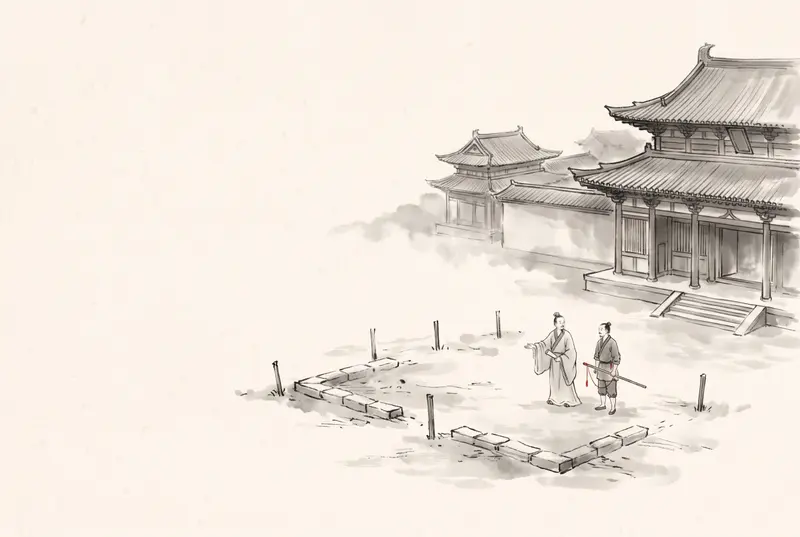
孝文帝從代來,即位二十三年,宮室苑囿狗馬服御無所增益,有不便,輒弛以利民。嘗欲作露臺,召匠計之,直百金。上曰:「百金中民十家之產,吾奉先帝宮室,常恐羞之,何以臺為!」上常衣綈衣,所幸慎夫人,令衣不得曳地,幃帳不得文繡,以示敦樸,為天下先。治霸陵皆以瓦器,不得以金銀銅錫為飾,不治墳,欲為省,毋煩民。南越王尉佗自立為武帝,然上召貴尉佗兄弟,以德報之,佗遂去帝稱臣。與匈奴和親,匈奴背約入盜,然令邊備守,不發兵深入,惡煩苦百姓。吳王詐病不朝,就賜幾杖。群臣如袁盎等稱說雖切,常假借用之。群臣如張武等受賂遺金錢,覺,上乃發御府金錢賜之,以愧其心,弗下吏。專務以德化民,是以海內殷富,興於禮義。
Kundoku (Japanese reading)
孝文帝代より来たり、即位すること二十三年、宮室苑囿狗馬服御、増益する所無し。不便なること有れば、輒ち弛めて以て民を利す。嘗て露台を作らんと欲し、匠を召して之を計らしむるに、直百金なり。上曰く、「百金は中民十家の産なり。吾先帝の宮室を奉ずるに、常に之を羞ずかしめんことを恐る。何ぞ台を以て為さんや」と。上常に綈衣を衣る。幸する所の慎夫人、衣をして地に曳くを得ざらしめ、幃帳文繡するを得ざらしめ、以て敦樸を示し、天下の先と為る。霸陵を治むるに皆瓦器を以てし、金銀銅錫を以て飾りと為すを得ず。墳を治めず。省を為さんと欲し、民を煩わす毋し。南越王尉佗自立して武帝と為る。然れども上尉佗の兄弟を召し貴び、徳を以て之に報ゆ。佗遂に帝を去りて臣と称す。匈奴と和親す。匈奴約に背きて入盗す。然れども辺をして備え守らしめ、兵を発して深く入らしめず。百姓を煩苦せしむるを悪めばなり。呉王詐りて病みて朝せず。就きて几杖を賜う。群臣袁盎等の如き、称説切なりと雖も、常に仮借して之を用う。群臣張武等の如き、賂遺の金銭を受け、覚わる。上乃ち御府の金銭を発して之に賜い、以て其の心を愧じしめ、吏に下さず。専ら務めて徳を以て民を化す。是を以て海内殷富にして、礼義に興る。
Japanese
孝文帝は代からやって来て、二十三年在位したが、宮殿・庭園・犬や馬・衣服や乗り物を、何一つ増やさなかった。民に不都合なことがあれば、すぐにゆるめて民のためにした。あるとき露台(屋根のない見晴らし台)を造ろうとして、大工を呼んで見積もらせると、百金かかるという。文帝は言った。「百金は中くらいの民の十軒分の財産だ。わたしは先帝から受けついだ宮殿に住んでいても、いつもそれを汚すのではないかと恐れている。台など造ってどうするのか」。文帝はいつも粗い厚絹の服を着ていた。寵愛する慎夫人にも、すそを地に引きずるような服を着させず、とばりにもししゅうをさせず、質素な手本を示して天下に先がけた。自分の墓の霸陵を造るのにも素焼きの器だけを使い、金・銀・銅・錫の飾りは許さず、盛り土もしなかった。費用を省いて、民をわずらわせまいとしたのである。南越王の尉佗が自ら武帝と名のったときも、文帝は尉佗の兄弟を呼んで重んじ、恩で報いた。尉佗はついに帝の号を捨てて臣と名のった。匈奴とは和親を結んだ。匈奴が約束を破って攻めこんで来ても、国境を守らせるだけで、兵を深く攻めこませなかった。民を苦しめるのを嫌ったからである。呉王が仮病を使って朝見に来なかったときも、ひじかけと杖を贈った。袁盎のような家臣は厳しい意見を言っても、いつも大目に見て用いた。張武のような家臣が賄賂を受け取ったことが分かっても、文帝は宮中の倉から金を出してかえって与え、本人に恥じ入らせて、役人に裁かせなかった。ひたすら徳によって民を教え導くことに努めた。そのため天下は豊かになり、礼儀が盛んになった。
English
Emperor Wen came from Dai and reigned for twenty-three years, and in all that time he added nothing to his palaces, parks, dogs and horses, clothes or carriages. Whenever something was a burden, he eased it at once to benefit the people. Once he thought of building an open terrace, and called in a builder to estimate the cost. It came to a hundred pieces of gold. The emperor said: "A hundred pieces of gold is what ten families of middling people own. Living in the palaces I inherited from the late emperor, I am always afraid of disgracing them. What would I want with a terrace?" The emperor always wore robes of coarse silk. He would not allow his favourite, Lady Shen, to wear robes that trailed on the ground, or to have embroidered curtains, so as to set an example of plainness for the whole realm. For his own tomb at Baling he used only pottery, and allowed no ornaments of gold, silver, copper or tin; he raised no mound, wishing to save expense and not to burden the people. When Zhao Tuo, the king of Southern Yue, proclaimed himself Emperor Wu, the emperor sent for Zhao Tuo's brothers and honoured them, repaying him with kindness, and in the end Zhao Tuo gave up the imperial title and called himself a subject. He made a peace of marriage with the Xiongnu. When the Xiongnu broke the treaty and raided, he had the frontier defended, but did not send armies deep into their land, because he hated to make the people suffer. When the king of Wu pretended to be ill and would not come to court, the emperor sent him an armrest and a walking stick. Ministers like Yuan Ang spoke very bluntly, yet he always made allowances and used them. When ministers like Zhang Wu were found to have taken bribes, the emperor gave them money from his own treasury, to shame them, and did not hand them over to the officials. He worked only to change the people through virtue. So all within the seas grew rich and prosperous, and rites and justice flourished.
Notes (JA)
- 綈衣: 厚手の粗い絹の衣。質素な衣服のしるし。
- 霸陵: 文帝の陵(今の西安市の東)。山を利用して盛り土をしなかった。
- 尉佗: 南越王趙佗。陸賈が使いして説いた(097-li-yiji-lu-jia の章)。
- 几杖: ひじかけと杖。老人へのいたわりのしるし。呉王劉濞はのちに呉楚七国の乱を起こす(106-liu-pi の章)。
Notes (EN)
- Coarse silk (綈衣): thick plain silk, a sign of frugality.
- Baling (霸陵): Emperor Wen's tomb east of Xi'an, cut into a hill without a raised mound.
- Zhao Tuo (尉佗): the king of Southern Yue whom Lu Jia had won over (chapter 097).
- The king of Wu, Liu Pi, later led the Rebellion of the Seven States (chapter 106).
Word notes
- terrace/ˈtɛrəs/noun
a raised flat platform, often outside a building
In the text: “building an open terrace”
Similar words: platform — raised flat area · balcony — raised floor outside
- bluntly/ˈblʌntli/adverb
in a direct way, without trying to be polite
In the text: “spoke very bluntly”
Similar words: frankly — openly and honestly · plainly — without softening
Passage 8
Original
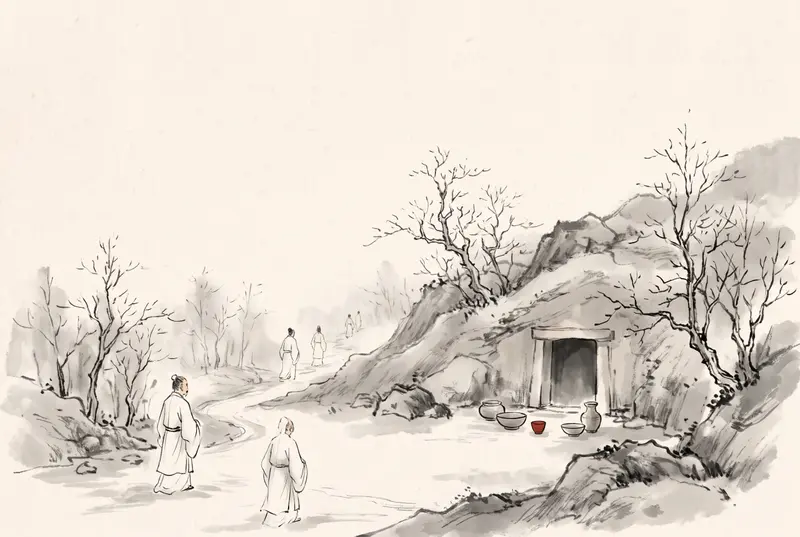
後七年六月己亥,帝崩於未央宮。遺詔曰:「朕聞蓋天下萬物之萌生,靡不有死。死者天地之理,物之自然者,奚可甚哀。當今之時,世咸嘉生而惡死,厚葬以破業,重服以傷生,吾甚不取。且朕既不德,無以佐百姓;今崩,又使重服久臨,以離寒暑之數,哀人之父子,傷長幼之志,損其飲食,絕鬼神之祭祀,以重吾不德也,謂天下何!朕獲保宗廟,以眇眇之身讬于天下君王之上,二十有餘年矣。賴天地之靈,社稷之福,方內安寧,靡有兵革。朕既不敏,常畏過行,以羞先帝之遺德;維年之久長,懼于不終。今乃幸以天年,得復供養于高廟。朕之不明與嘉之,其奚哀悲之有!
Kundoku (Japanese reading)
後七年六月己亥、帝未央宮に崩ず。遺詔に曰く、「朕聞く、蓋し天下万物の萌生するは、死有らざる靡しと。死は天地の理、物の自然なる者なり。奚ぞ甚だ哀しむべき。当今の時、世咸生を嘉して死を悪み、厚葬して以て業を破り、重服して以て生を傷る。吾甚だ取らず。且つ朕既に不徳にして、以て百姓を佐くる無し。今崩じて、又重服久臨して、以て寒暑の数を離らしめ、人の父子を哀しましめ、長幼の志を傷り、其の飲食を損じ、鬼神の祭祀を絶たしめ、以て吾が不徳を重ぬるは、天下に謂わんや。朕宗廟を保つを獲て、眇眇の身を以て天下の君王の上に託すること、二十有余年なり。天地の霊、社稷の福に頼りて、方内安寧にして、兵革有る靡し。朕既に不敏にして、常に行いを過ちて以て先帝の遺徳を羞ずかしめんことを畏る。維れ年の久長なる、終わらざらんことを懼る。今乃ち幸いに天年を以て、復た高廟に供養するを得たり。朕の不明にして与に嘉す。其れ奚ぞ哀悲すること之れ有らん。
Japanese
後元七年(前157年)六月己亥の日、文帝は未央宮で亡くなった。遺詔にはこうあった。「この世の万物は、生まれたものでいつか死なないものはない。死は天地の道理であり、物の自然なのだ。どうしてそれほど悲しむことがあろう。いまの世の人は皆、生を喜んで死を嫌い、手厚い葬儀をして財産をつぶし、長い喪に服して体をこわしている。わたしはまったく賛成できない。しかもわたしは徳が薄く、民を助けることもできなかった。いま死んだうえに、民に重い喪服を着せて長く泣かせ、寒さ暑さの中で苦しませ、人々の親子を悲しませ、老いも若きも心を痛め、食事を減らし、鬼神の祭りまで絶やさせては、わたしの不徳をいっそう重くするだけだ。それでどうして天下に顔向けできようか。わたしは宗廟を守ることができ、このちっぽけな身で天下の君王の上に二十年あまりも立った。天地の霊と国家の福のおかげで、国内は安らかで、戦もなかった。わたしは至らない身で、いつも過ちを犯して先帝の遺徳を汚すのではないかと恐れてきた。年月が長くなるにつれ、無事に終われないのではないかと心配していた。いま幸いにも天から与えられた寿命を全うし、高祖の廟でお仕えできるようになった。わたしのような至らない者にとって、喜ばしいことだ。何を悲しむことがあろうか」。
English
In the sixth month of the seventh year of the later era, the emperor died in the Weiyang Palace. His will said: "I have heard that of all the things that are born under heaven, there is none that does not die. Death is the law of Heaven and Earth, the natural course of things. Why grieve over it so much? In these times everyone delights in life and hates death; people ruin their fortunes with lavish funerals and harm their health with heavy mourning. I do not approve of it at all. Besides, I have lacked virtue and have not been able to help the people. Now that I am dead, to make them wear heavy mourning and wail for a long time, through cold and heat, grieving fathers and sons, hurting young and old, making them go without food and stop the sacrifices to the spirits, would only add to my lack of virtue. What could I say to the realm? I have been able to keep the ancestral temples, and have been placed, small as I am, above the lords and kings of the realm for more than twenty years. Thanks to the spirits of Heaven and Earth and the blessings of the altars of the state, all within the land has been at peace, without war. Being slow-witted, I have always feared that I would go astray and shame the virtue left to me by the late emperor. As the years went on, I feared I would not come to a good end. Now by good fortune I have lived out the years Heaven gave me, and can serve again in the temple of Gaozu. For one as dim as I, this is a happy thing. What is there to grieve about?"
Notes (JA)
- 遺詔: 皇帝が死に臨んで残す詔。このあと、喪は三日で明けてよい、嫁取りも祭りも禁じない、と細かく定めている(ここでは省く)。
- 天年: 天から与えられた寿命。
- 文帝の薄葬の遺詔は、のちの皇帝たちの手本とされた。
Notes (EN)
- The will (遺詔) goes on to say that mourning should last three days and that weddings and sacrifices are not to be forbidden (left out here).
- The years Heaven gave me (天年): one's natural span of life.
- Emperor Wen's plain funeral became a model for later rulers.
Word notes
- lavish/ˈlævɪʃ/adjective
very rich, costly or generous
In the text: “lavish funerals”
Similar words: extravagant — spending too much · sumptuous — splendid and costly
- astray/əˈstreɪ/adverb
away from the right path or good conduct
In the text: “I would go astray”
Similar words: off course — away from the right way · wrong — into error
Passage 9
Original
太史公曰:孔子言「必世然後仁。善人之治國百年,亦可以勝殘去殺」。誠哉是言!漢興,至孝文四十有餘載,德至盛也。廩廩鄉改正服封禪矣,謙讓未成於今。嗚呼,豈不仁哉!
Kundoku (Japanese reading)
太史公曰く、孔子言う、「必ず世にして然る後に仁なり。善人の国を治むること百年なれば、亦た以て残に勝ち殺を去るべし」と。誠なるかな是の言。漢興りて、孝文に至るまで四十有余載、徳至りて盛んなり。廩廩として正服封禅を改むるに郷うも、謙譲して今に成らず。嗚呼、豈に仁ならずや。
Japanese
太史公は言う。孔子は「天命を受けた王者でも、一代(三十年)たってはじめて仁の世が実現する。善人が百年国を治めれば、残虐な者に打ち勝ち、死刑をなくすこともできる」と言った。まことにそのとおりである。漢が興ってから孝文帝まで四十年あまり、徳はきわめて盛んになった。暦や衣服の色を改め、封禅の祭りを行うところまであと一歩だったが、謙虚に譲って、いまに至るまで行わなかった。ああ、なんと仁ではないか。
English
The Grand Historian says: Confucius said: "It takes a generation before humanity prevails. If good men governed a state for a hundred years, they could overcome cruelty and do away with killing." How true those words are! From the rise of the Han to Emperor Wen was over forty years, and virtue reached its height. He was on the point of changing the calendar and the colours of court dress and performing the great sacrifices to Heaven and Earth, but out of modesty he declined, and they were not done in his time. Ah! Was this not humanity?
Notes (JA)
- 必世然後仁: 『論語』子路篇の言葉。「世」は三十年。
- 封禪: 天子が泰山で天地を祭る最高の儀式(028-fengshan の章)。文帝は行わなかった。
- 司馬遷は、封禅を行った武帝と比べて、行わなかった文帝の謙虚さをたたえているとも読める。
Notes (EN)
- "It takes a generation" (必世然後仁): from the Analects; a generation was thirty years.
- The great sacrifices (封禪): the rites on Mount Tai (chapter 028), which Emperor Wen never performed.
- Read against Emperor Wu, who did perform them, the praise of Emperor Wen's modesty is pointed.
Word notes
- prevail/prɪˈveɪl/verb
to become widespread or win in the end
In the text: “before humanity prevails”
Similar words: triumph — win · win out — succeed at last
- modesty/ˈmɑdəsti/noun
not wanting to boast or claim too much
In the text: “out of modesty he declined”
Similar words: humility — not being proud · reserve — holding back