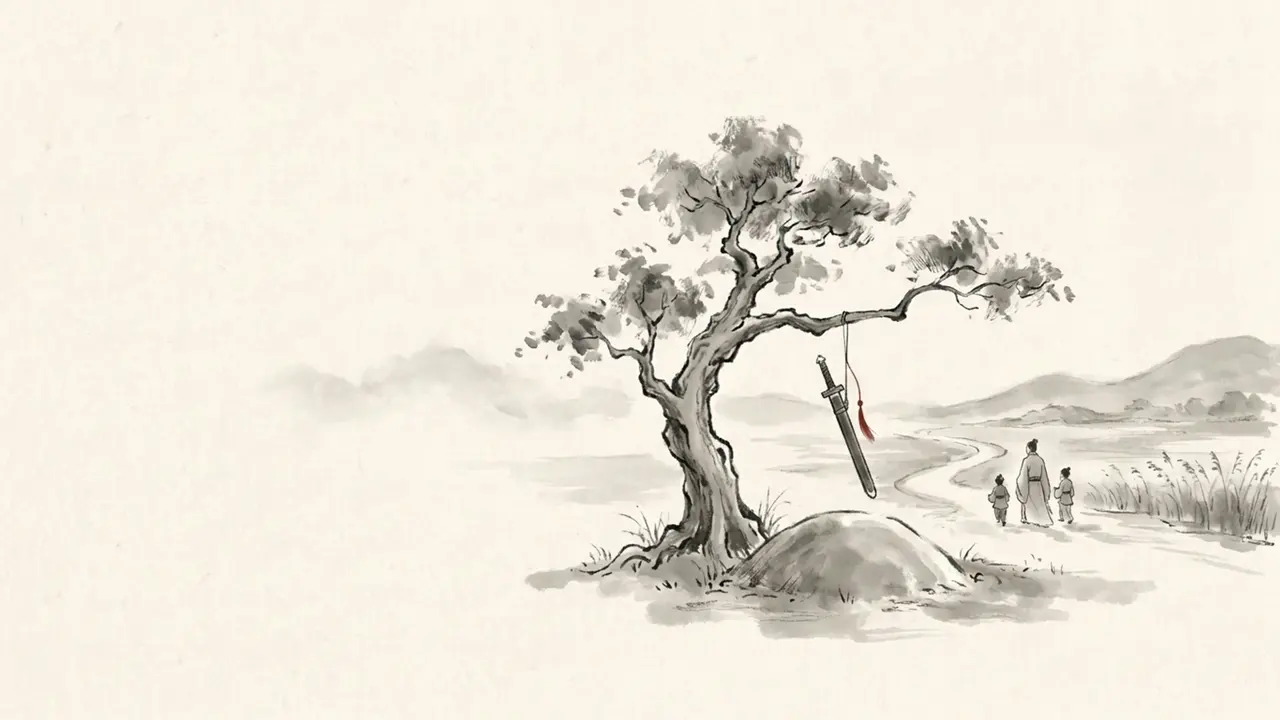
Hereditary Houses · Vol. 31
The Hereditary House of Taibo of Wu 吳太伯世家
Taibo Gives Up a Kingdom, and Jizha's Sword 太伯與季札
The beginnings of the southern state of Wu, and the story of the sage Jizha who was born there. Taibo, eldest son of King Tai of Zhou, learned that his father wished the succession to go to his youngest brother, Jili, and to Jili's son Chang, the future King Wen. So he went south with his brother Zhongyong to the lands of the Jing barbarians, tattooed his body and cut his hair to show that he could not be king. Moved by his righteousness, the people there made him their ruler, and the state of Wu was born. Centuries later Jizha, youngest son of King Shoumeng of Wu, refused the throne each time his brothers tried to give it to him, and went off to farm. On his embassies to other states he foresaw where their politics were heading. On his way home he found that the ruler of Xu, who had admired his sword, was dead, and he hung the sword on a tree by the grave, saying: "In my heart I had already given it to him." When his nephew Prince Guang had King Liao murdered by the assassin Zhuan Zhu and seized the throne, Jizha accepted him: "If the sacrifices go on and the people have a ruler, he is my lord." The chapter ends with Fuchai, Guang's son, defeated by Yue, regretting that he had not listened to Wu Zixu, and taking his own life.
This page has the scene "Taibo Gives Up a Kingdom, and Jizha's Sword" from this volume, not the whole volume.
Audio
The audio is synthetic speech.
Video
Passage 1
Original
吳太伯,太伯弟仲雍,皆周太王之子,而王季暦之兄也。季歴賢,而有聖子昌,太王欲立季暦以及昌,於是太伯、仲雍二人乃犇荊蠻,文身斷髮,示不可用,以避季暦。季暦果立,是爲王季,而昌爲文王。太伯之犇荊蠻,自號句吳。荊蠻義之,從而歸之千餘家,立爲吳太伯。
Kundoku (Japanese reading)
呉の太伯、太伯の弟仲雍は、皆周の太王の子にして、王季歴の兄なり。季歴賢にして、聖子昌有り。太王季歴を立てて以て昌に及ぼさんと欲す。是に於いて太伯・仲雍二人乃ち荊蛮に犇り、文身断髪して、用うべからざるを示し、以て季歴を避く。季歴果たして立つ。是れを王季と為し、而して昌を文王と為す。太伯の荊蛮に犇るや、自ら句呉と号す。荊蛮之を義とし、従いて之に帰する者千余家、立てて呉の太伯と為す。
Japanese
呉の太伯と、その弟の仲雍は、ともに周の太王の子で、王季歴の兄である。季歴は賢く、そのうえ聖人の資質をもつ子の昌がいた。太王は季歴を跡継ぎにして、ゆくゆくは昌に位を伝えたいと考えていた。そこで太伯と仲雍の二人は南方の荊蛮の地へ去り、体に入れ墨をし、髪を短く切って、自分たちは周の君主にはなれない身だと示し、季歴に位を譲った。はたして季歴が位について王季となり、昌は文王となった。太伯は荊蛮の地へ行くと、自ら句呉と名のった。荊蛮の人々はその義をたたえ、千あまりの家が従って身を寄せ、太伯を立てて呉の太伯とした。
English
Taibo of Wu and his younger brother Zhongyong were both sons of King Tai of Zhou and elder brothers of King Jili. Jili was a worthy man and had a son, Chang, who was a sage, and King Tai wished to make Jili his heir so that the throne would pass to Chang. So Taibo and Zhongyong fled to the Jing barbarians, tattooed their bodies and cut off their hair, to show that they were unfit to rule, and so made way for Jili. Jili did take the throne as King Ji, and Chang became King Wen. When Taibo went to the Jing barbarians he called himself Gouwu. The Jing barbarians thought him righteous, and more than a thousand families followed him and gave him their allegiance, making him Taibo of Wu.
Notes (JA)
- 太王: 古公亶父。周の祖先で、岐山のふもとに周を開いた。
- 荊蠻: 南方の長江流域の人々。中原から見た呼び名。
- 文身斷髮: 体に入れ墨をし、髪を短く切る。南方の風俗で、中原の礼儀から離れたことを示す。
- 孔子は太伯を「至徳」とたたえた(太史公の評)。
Notes (EN)
- King Tai (太王): Gugong Danfu, the ancestor who settled the Zhou people at the foot of Mount Qi.
- The Jing barbarians (荊蠻): the peoples of the Yangzi region, as seen from the central plain.
- Tattooed their bodies and cut off their hair (文身斷髮): southern customs, marking a break with the rites of the north.
Word notes
- allegiance/əˈlidʒəns/noun
loyalty to a ruler or cause
In the text: “gave him their allegiance”
Similar words: loyalty — faithfulness · fealty — a vassal's loyalty
- make way for/meɪk weɪ fɔr/phrase
to move aside so that someone else can take your place
In the text: “made way for Jili”
Similar words: step aside — withdraw · give way to — yield to
Passage 2
Original
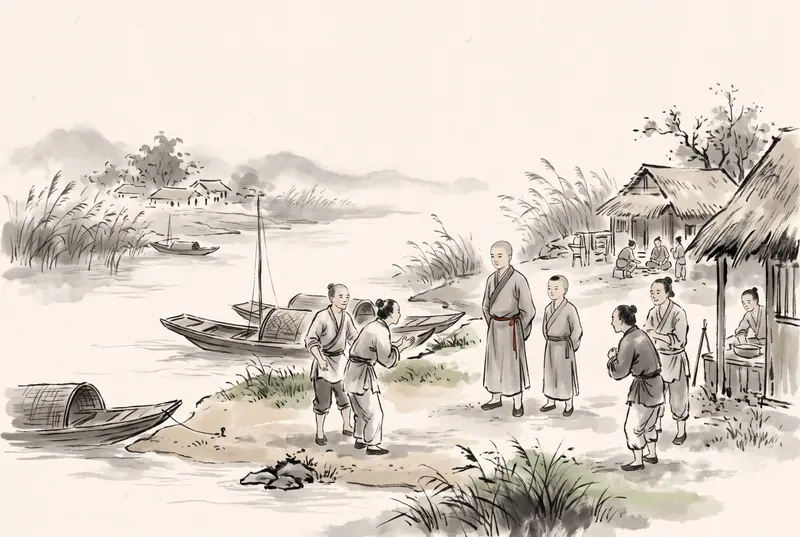
二十五年,王壽夢卒。壽夢有子四人,長曰諸樊,次曰餘祭,次曰餘眛,次曰季札。季札賢,而壽夢欲立之,季札讓不可,於是乃立長子諸樊,攝行事當國。王諸樊元年,諸樊已除喪,讓位季札。季札謝曰:「曹宣公之卒也,諸侯與曹人不義曹君,將立子臧,子臧去之,以成曹君,君子曰『能守節矣』。君義嗣,誰敢干君!有國,非吾節也。劄雖不材,原附於子臧之義。」吳人固立季札,季札棄其室而耕,乃舍之。秋,吳伐楚,楚敗我師。四年,晉平公初立。
Kundoku (Japanese reading)
二十五年、王寿夢卒す。寿夢に子四人有り。長を諸樊と曰い、次を餘祭と曰い、次を餘眛と曰い、次を季札と曰う。季札賢にして、寿夢之を立てんと欲す。季札譲りて可かず。是に於いて乃ち長子諸樊を立て、行事を摂して国に当たらしむ。 王諸樊の元年、諸樊已に喪を除き、位を季札に譲る。季札謝して曰く、「曹の宣公の卒するや、諸侯と曹人と曹君を不義とし、将に子臧を立てんとす。子臧之を去り、以て曹君を成す。君子曰く『能く節を守れり』と。君は義の嗣なり。誰か敢えて君を干さん。国を有つは、吾が節に非ざるなり。札不材なりと雖も、原わくは子臧の義に附かん」と。呉人固く季札を立てんとす。季札其の室を棄てて耕す。乃ち之を舎く。秋、呉楚を伐ち、楚我が師を敗る。四年、晋の平公初めて立つ。
Japanese
寿夢の二十五年、呉王寿夢が亡くなった。寿夢には四人の子がいた。長男を諸樊、次を餘祭、その次を餘眛、末子を季札という。季札は賢く、寿夢は彼を跡継ぎにしたいと思ったが、季札は譲って承知しなかった。そこで長男の諸樊を立てて、政務を代行させ、国を治めさせた。 諸樊の元年、諸樊は父の喪が明けると、位を季札に譲ろうとした。季札は辞退して言った。「曹の宣公が亡くなったとき、諸侯と曹の人々は、跡を継いだ曹君を正しくないとして、子臧を立てようとしました。子臧は国を去り、曹君の位を全うさせました。君子は『子臧はよく節を守った』と言いました。あなたは正しい跡継ぎです。誰があなたの位を侵せましょう。国を持つことは、私の守る節ではありません。私はふつつか者ですが、子臧の義にならいたいのです」。呉の人々はどうしても季札を立てようとしたが、季札は家を捨てて田畑を耕したので、ついにあきらめた。この年の秋、呉は楚を討ったが、楚にわが軍は敗れた。四年、晋の平公が即位した。
English
In his twenty-fifth year King Shoumeng died. He had four sons: the eldest Zhufan, the next Yuji, the next Yumei, and the youngest Jizha. Jizha was worthy, and Shoumeng had wanted to make him heir, but Jizha declined and would not accept. So the eldest son, Zhufan, was set up to take charge of affairs and rule the state. In the first year of King Zhufan, when the mourning was over, Zhufan offered the throne to Jizha. Jizha declined, saying: "When Duke Xuan of Cao died, the lords and the people of Cao thought the new ruler unrighteous and meant to set up Zizang instead. Zizang left the state so that the ruler of Cao could keep his place, and the gentlemen said: 'He was able to keep to his principles.' You are the rightful heir. Who would dare to usurp your place? To hold a state is not what my principles allow. Unworthy as I am, I wish to follow the example of Zizang." The people of Wu were determined to set Jizha up, but he left his house and went to farm, and they let him be. In the autumn Wu attacked Chu, and Chu defeated our army. In the fourth year Duke Ping of Jin first took the throne.
Notes (JA)
- 壽夢: 呉の第十九代の君主。初めて王を名のった。
- 子臧: 曹の公子。君主に立てられそうになると国を去り、節を守ったとたたえられた。
- 干: 侵す。
- 棄其室而耕: 家を捨てて畑を耕す。位を受けないという強い意思表示。
- 「楚敗我師」の「我」は呉をさす。この巻は呉の立場から書かれている。
Notes (EN)
- Shoumeng (壽夢): the first ruler of Wu to call himself king.
- Zizang (子臧): a prince of Cao who left the country rather than be made ruler in his brother's place.
- Went to farm (棄其室而耕): a firm refusal of the throne.
- "Our army" means Wu's: the chapter is written from Wu's point of view.
Word notes
- decline/dɪˈklaɪn/verb
to refuse politely
In the text: “Jizha declined, saying”
Similar words: turn down — refuse · excuse oneself — politely say no
- usurp/juˈsɜrp/verb
to take a position or power wrongly
In the text: “Who would dare to usurp your place?”
Similar words: seize — take by force · steal — take wrongly
Passage 3
Original
十三年,王諸樊卒。有命授弟餘祭,欲傳以次,必致國於季札而止,以稱先王壽夢之意,且嘉季札之義,兄弟皆欲致國,令以漸至焉。季札封於延陵,故號曰延陵季子。
Kundoku (Japanese reading)
十三年、王諸樊卒す。命有りて弟餘祭に授け、次を以て伝えて、必ず国を季札に致して止めんと欲す。以て先王寿夢の意に称い、且つ季札の義を嘉す。兄弟皆国を致さんと欲し、漸を以て至らしむ。季札延陵に封ぜらる。故に号して延陵季子と曰う。
Japanese
諸樊の十三年、王諸樊が亡くなった。諸樊は遺言で弟の餘祭に位を授け、兄弟の順に位を伝えて、最後には必ず季札に国を渡すように命じた。そうすることで先王寿夢の願いにかない、また季札の義をたたえようとしたのである。兄弟はみな季札に国を渡したいと願い、順を追って季札に回ってくるようにした。季札は延陵に封じられたので、延陵季子と呼ばれた。
English
In his thirteenth year King Zhufan died. He left orders that the throne should go to his brother Yuji and so pass from brother to brother, until it came at last to Jizha, in keeping with the wish of the late King Shoumeng and in honour of Jizha's righteousness. All the brothers wanted the state to go to Jizha, and so they arranged for it to reach him in due course. Jizha was enfeoffed at Yanling and so was called Jizi of Yanling.
Notes (JA)
- 欲傳以次: 兄から弟へ順に位を伝える。
- 延陵: 呉の町。今の江蘇省常州のあたり。
- 季子: 末子への敬称。
Notes (EN)
- From brother to brother (傳以次): so that the throne would come to the youngest in the end.
- Jizi (季子): "the youngest son", a respectful name.
Word notes
- in due course/ɪn du kɔrs/phrase
at the right time, eventually
In the text: “for it to reach him in due course”
Similar words: eventually — in the end · in time — sooner or later
Passage 4
Original
去魯,遂使齊。説晏平仲曰:「子速納邑與政。無邑無政,乃免於難。齊國之政將有所歸;未得所歸,難未息也。」故晏子因陳桓子以納政與邑,是以免於欒髙之難。去齊,使於鄭。見子産,如舊交。謂子産曰:「鄭之執政侈,難將至矣,政必及子。子爲政,愼以禮。不然,鄭國將敗。」去鄭,適衞。説蘧瑗、史狗、史鳅、公子荊、公叔發、公子朝曰:「衞多君子,未有患也。」
Kundoku (Japanese reading)
魯を去りて、遂に斉に使いす。晏平仲に説きて曰く、「子速やかに邑と政とを納れよ。邑無く政無くんば、乃ち難を免れん。斉国の政将に帰する所有らんとす。未だ帰する所を得ずんば、難未だ息まざるなり」と。故に晏子陳桓子に因りて以て政と邑とを納る。是を以て欒・高の難を免る。 斉を去りて、鄭に使いす。子産に見えて、旧交の如し。子産に謂いて曰く、「鄭の執政は侈る。難将に至らんとす。政必ず子に及ばん。子政を為さば、慎むに礼を以てせよ。然らずんば、鄭国将に敗れんとす」と。鄭を去りて、衛に適く。蘧瑗・史狗・史鰌・公子荊・公叔発・公子朝に説きて曰く、「衛は君子多し。未だ患い有らざるなり」と。
Japanese
(使者として諸国をめぐった季札は)魯を去って斉へ使いした。季札は晏平仲(晏嬰)に言った。「あなたは早く領地と政治の権限を返上なさい。領地も権限もなければ、わざわいを免れることができましょう。斉の政治は、いずれ誰かの手に落ち着くはずです。それが落ち着くまでは、争いはやみません」。そこで晏子は陳桓子を通じて政治の権限と領地を返上し、それで欒氏と高氏の内乱に巻きこまれずにすんだ。 斉を去って鄭へ使いし、子産に会うと、昔からの友人のように打ちとけた。季札は子産に言った。「鄭の執政はおごっていて、いずれわざわいが来るでしょう。そうなれば、政治は必ずあなたの手に回ってきます。あなたが政治をとるときは、礼によって慎重になさい。さもないと、鄭の国は滅びるでしょう」。鄭を去って衛へ行き、蘧瑗・史狗・史鰌・公子荊・公叔発・公子朝と話して言った。「衛には君子が多い。まだ心配はないでしょう」。
English
Leaving Lu, Jizha went on as envoy to Qi. He said to Yan Pingzhong: "Hand back your fief and your office at once. Without fief or office you will escape the coming troubles. The government of Qi is going to settle in someone's hands, and until it does there will be no end to the strife." So Yan Ying handed back his office and his fief through Chen Huanzi, and so escaped the troubles of the Luan and Gao families. Leaving Qi, he went as envoy to Zheng. When he met Zichan, they were like old friends. He said to Zichan: "The men who rule Zheng are extravagant. Trouble is coming, and the government will surely fall to you. When you govern, be careful and hold to the rites. If you do not, the state of Zheng will fall." Leaving Zheng, he went to Wey, and spoke with Qu Yuan, Shi Gou, Shi Qiu, Prince Jing, Gongshu Fa and Prince Chao. "Wey has many gentlemen," he said. "It will have no trouble yet."
Notes (JA)
- 晏平仲: 晏嬰。斉の名宰相(巻62)。
- 欒高之難: 斉の欒氏と高氏が起こした内乱。
- 子産: 鄭の名宰相。孔子にも尊敬された。
- 蘧瑗: 衛の賢人、蘧伯玉。孔子が尊敬した人物。
- この前の段(省略)で、季札は魯で周の音楽を聞き、各国の歌からその国の盛衰を言い当てた。
Notes (EN)
- Yan Pingzhong (晏平仲): Yan Ying, the great minister of Qi (vol. 62).
- Zichan (子産): the great statesman of Zheng, admired by Confucius.
- Qu Yuan (蘧瑗): Qu Boyu of Wey, another man Confucius admired (not the poet of Chu).
- In the omitted passage before this one, Jizha listened to the music of Zhou in Lu and judged the fortunes of each state from its songs.
Word notes
- strife/straɪf/noun
angry conflict
In the text: “no end to the strife”
Similar words: conflict — a fight · discord — disagreement
- extravagant/ɪkˈstrævəɡənt/adjective
spending or living far beyond what is wise
In the text: “The men who rule Zheng are extravagant”
Similar words: wasteful — using too much · lavish — rich and costly
Passage 5
Original
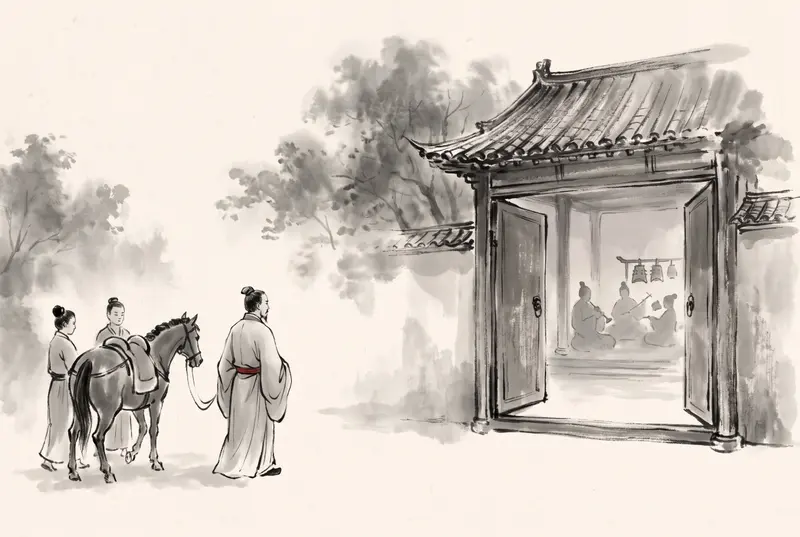
自衞如晉,將舍於宿,聞鍾聲,曰:「異哉!吾聞之,辯而不德,必加於戮。夫子獲罪於君以在此,懼猶不足,而又可以畔乎?夫子之在此,猶燕之巣於幕也。君在殯而可以樂乎?」遂去之。文子聞之,終身不聽琴瑟。適晉,説趙文子、韓宣子、魏獻子曰:「晉國其萃於三家乎!」將去,謂叔向曰:「吾子勉之!君侈而多良,大夫皆富,政將在三家。吾子直,必思自免於難。」
Kundoku (Japanese reading)
衛より晋に如く。将に宿に舎らんとして、鐘の声を聞きて曰く、「異なるかな。吾之を聞く、辯にして徳あらざれば、必ず戮を加えらると。夫子罪を君に獲て以て此に在り。懼るること猶お足らず。而るに又以て畔るべけんや。夫子の此に在るや、猶お燕の幕に巣くうがごときなり。君殯に在りて以て楽しむべけんや」と。遂に之を去る。文子之を聞きて、終身琴瑟を聴かず。 晋に適き、趙文子・韓宣子・魏献子に説きて曰く、「晋国其れ三家に萃まらんか」と。将に去らんとして、叔向に謂いて曰く、「吾子之を勉めよ。君侈りて良多く、大夫皆富む。政将に三家に在らんとす。吾子は直なり。必ず自ら難を免れんことを思え」と。
Japanese
衛から晋へ向かう途中、宿という町に泊まろうとしたとき、鐘の音が聞こえた。季札は言った。「おかしなことだ。口がうまくても徳がなければ、必ず罰を受けると聞いている。あの方(孫文子)は君主に罪を犯してここにいる。恐れつつしんでも足りないのに、楽しんでいてよいものか。あの方がここにいるのは、燕がはためく幕の上に巣を作るようなものだ。しかも主君の棺がまだ埋葬されずにあるのに、音楽を楽しむとは」。季札はそこに泊まらずに去った。孫文子はこれを聞いて、一生、琴や瑟の音楽を聴かなかった。 晋に着くと、趙文子・韓宣子・魏献子に言った。「晋の国は、いずれこの三家に集まるでしょう」。去るときには叔向に言った。「あなたはしっかりなさい。君主はおごっていて、すぐれた臣下は多く、大夫たちはみな富んでいる。政治はいずれ三家の手に移るでしょう。あなたはまっすぐな人だから、必ずわざわいを免れる手だてを考えておきなさい」。
English
From Wey he went on toward Jin. As he was about to put up at Su, he heard the sound of bells and said: "Strange! I have heard that a man who is clever but without virtue will surely meet punishment. This gentleman has offended his lord and is living here. Even fear would hardly be enough for him; how can he amuse himself? His being here is like a swallow nesting on a tent. And with his lord still lying unburied, how can he take pleasure in music?" So he left without staying. When Sun Wenzi heard of it, he never listened to the zither again as long as he lived. In Jin he spoke with Zhao Wenzi, Han Xuanzi and Wei Xianzi: "The state of Jin will gather into your three houses!" As he was leaving, he said to Shuxiang: "Take care, sir! Your lord is extravagant and has many good men, and the grandees are all rich. The government is going to pass to the three houses. You are an upright man; you must think how to keep yourself out of trouble."
Notes (JA)
- 宿: 衛の町の名。『左伝』などでは「戚」と書く。衛の孫文子の領地。
- 夫子: ここでは孫文子をさす。君主を追い出したことがあった。
- 燕之巢於幕: 燕が風に揺れる幕の上に巣を作る。きわめて危うい立場のたとえ。
- 君在殯: 主君(衛の献公)の棺がまだ埋葬されずにある。喪中に音楽を楽しむのは非礼。
- 晉國其萃於三家乎: 晋はのちに韓・魏・趙の三家に分かれた(前403年)。季札の予言は的中した。
Notes (EN)
- Su (宿): a town of Wey, written Qi (戚) in the Zuo Commentary; the fief of Sun Wenzi, who had once driven out his own ruler.
- A swallow nesting on a tent (燕之巢於幕): a picture of a dangerously unstable position.
- His lord still lying unburied (君在殯): music during mourning was a grave breach of the rites.
- "The state of Jin will gather into your three houses": Jin was in fact divided into Han, Wei and Zhao in 403 BCE.
Word notes
- offend/əˈfɛnd/verb
to do wrong to someone, making them angry
In the text: “has offended his lord”
Similar words: wrong — treat unfairly · insult — hurt by rudeness
- upright/ˈʌpˌraɪt/adjective
honest and moral
In the text: “You are an upright man”
Similar words: honest — truthful · principled — with strong morals
Passage 6
Original
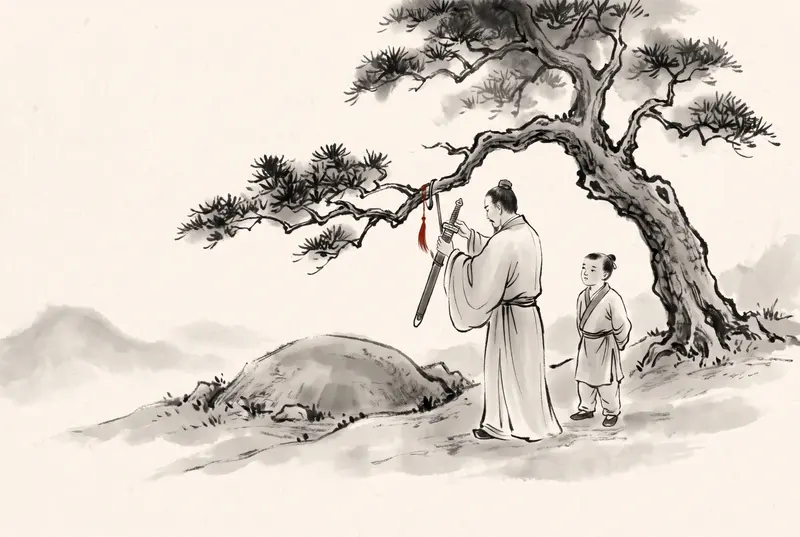
季札之初使,北過徐君。徐君好季札劍,口弗敢言。季札心知之,爲使上國,未獻。還至徐,徐君已死,於是乃解其寶劍,繋之徐君塚樹而去。從者曰:「徐君已死,尚誰予乎?」季子曰:「不然。始吾心已許之,豈以死倍吾心哉!」
Kundoku (Japanese reading)
季札の初めて使いするや、北のかた徐君に過る。徐君季札の剣を好むも、口に敢えて言わず。季札心に之を知るも、上国に使いせんが為に、未だ献ぜず。還りて徐に至れば、徐君已に死す。是に於いて乃ち其の宝剣を解き、之を徐君の冢樹に繋けて去る。従者曰く、「徐君已に死す。尚お誰にか予えん」と。季子曰く、「然らず。始め吾が心已に之を許せり。豈に死を以て吾が心に倍かんや」と。
Japanese
季札が初めて使者に出たとき、北へ向かう途中で徐の君主のもとに立ち寄った。徐の君主は季札の剣をたいそう気に入ったが、口に出しては言わなかった。季札は心の中でそれに気づいていたが、中原の国々へ使いに行く途中だったので(剣は使者の身なりに欠かせず)、まだ贈らなかった。帰りに徐に着くと、徐の君主はすでに亡くなっていた。そこで季札は自分の宝剣をはずし、徐の君主の墓の木に掛けて立ち去った。お供の者が言った。「徐の君主はもう亡くなりました。いったい誰に贈るのですか」。季子は言った。「そうではない。私は初めから、心の中で彼に贈ると決めていた。相手が死んだからといって、どうして自分の心にそむけようか」。
English
When Jizha first went out as envoy, he passed through Xu on his way north. The ruler of Xu admired Jizha's sword, but did not dare to say so. Jizha understood in his heart, but since he was going as envoy to the states of the central plain, he did not yet give it to him. When he came back to Xu, the ruler of Xu was already dead. So Jizha untied his precious sword and hung it on a tree by the ruler's grave, and went away. His attendant said: "The ruler of Xu is dead. Who are you giving it to now?" Jizi said: "Not so. From the beginning I had promised it to him in my heart. How could I go back on my heart because he has died?"
Notes (JA)
- 徐: 淮水流域の小国。
- 上國: 中原の国々。
- 冢樹: 墓のそばの木。
- 始吾心已許之,豈以死倍吾心哉: 「心の中ですでに許していた。死んだからといって自分の心にそむけようか」。口に出さない約束をも守る信義の話として「季札挂剣」の名で知られる。
Notes (EN)
- Xu (徐): a small state in the Huai valley.
- "I had promised it to him in my heart": the famous story of "Jizha hangs up his sword", about keeping even an unspoken promise.
Idioms from this passage: Jizha hangs up his sword 季札、剣を掛く
Word notes
- admire/ədˈmaɪər/verb
to look at something with pleasure and wish for it
In the text: “admired Jizha's sword”
Similar words: covet — want badly · prize — value highly
- go back on/ɡoʊ bæk ɑn/phrasal verb
to fail to keep a promise
In the text: “How could I go back on my heart”
Similar words: break — fail to keep · renege on — go back on a promise
Passage 7
Original
四年,王餘眛卒,欲授弟季札。季札讓,逃去。於是吳人曰:「先王有命,兄卒弟代立,必致季子。季子今逃位,則王餘眛後立。今卒,其子當代。」乃立王餘眛之子僚爲王。
Kundoku (Japanese reading)
四年、王餘眛卒し、弟季札に授けんと欲す。季札譲りて、逃げ去る。是に於いて呉人曰く、「先王命有り、兄卒すれば弟代わりて立ち、必ず季子に致せと。季子今位を逃る。則ち王餘眛後に立つ。今卒す。其の子当に代わるべし」と。乃ち王餘眛の子僚を立てて王と為す。
Japanese
餘眛の四年、王餘眛が亡くなり、位を弟の季札に授けようとした。季札は辞退して、逃げ去ってしまった。そこで呉の人々は言った。「先王のご命令では、兄が亡くなれば弟が代わって立ち、必ず最後は季子に位を渡すことになっていた。だが季子はいま位から逃げてしまった。王餘眛が最後に位についたのだから、亡くなったいまは、その子が継ぐべきだ」。そこで王餘眛の子の僚を立てて王とした。
English
In the fourth year of his reign King Yumei died and wished to give the throne to his brother Jizha. Jizha declined and ran away. Then the people of Wu said: "The late kings commanded that when an elder brother died, the next should take his place, until the throne came to Jizi. Now Jizi has fled from the throne. King Yumei was the last to reign, and now he has died, so his son should succeed him." So they made King Yumei's son Liao king.
Notes (JA)
- 季札は三度目の辞退で、ついに国を離れた。
- 僚: 餘眛の子、王僚。これに長兄諸樊の子の公子光が不満を抱き、次の段の事件が起こる。
Notes (EN)
- This was Jizha's third refusal, and this time he left the country.
- Liao (僚): Prince Guang, son of the eldest brother Zhufan, resented his accession, which led to the murder in the next passage.
Word notes
- succeed/səkˈsid/verb
to take someone's place as ruler
In the text: “his son should succeed him”
Similar words: follow — come after · take over from — replace
Passage 8
Original
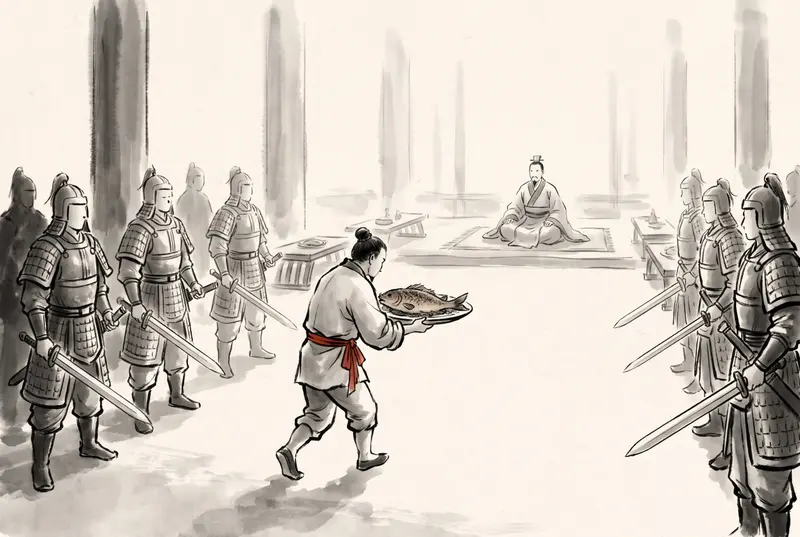
十二年冬,楚平王卒。十三年春,吳欲因楚喪而伐之,使公子蓋餘、燭庸以兵圍楚之六、灊。使季札於晉,以觀諸侯之變。楚發兵絶吳兵後,吳兵不得還。於是吳公子光曰:「此時不可失也。」告專諸曰:「不索何獲!我眞王嗣,當立,吾欲求之。季子雖至,不吾廢也。」專諸曰:「王僚可殺也。母老子弱,而兩公子將兵攻楚,楚絶其路。方今吳外困於楚,而内空無骨鯁之臣,是無奈我何。」光曰:「我身,子之身也。」四月丙子,光伏甲士於窟室,而謁王僚飲。王僚使兵陳於道,自王宮至光之家,門階戸席,皆王僚之親也,人夾持鈹。公子光詳爲足疾,入於窟室,使專諸置匕首於炙魚之中以進食。手匕首刺王僚,鈹交於匈,遂弑王僚。公子光竟代立爲王,是爲吳王闔廬。闔廬乃以專諸子爲卿。
Kundoku (Japanese reading)
十二年冬、楚の平王卒す。十三年春、呉楚の喪に因りて之を伐たんと欲す。公子蓋餘・燭庸をして兵を以て楚の六・灊を囲ましむ。季札を晋に使いせしめ、以て諸侯の変を観しむ。楚兵を発して呉の兵の後を絶ち、呉の兵還るを得ず。是に於いて呉の公子光曰く、「此の時失うべからざるなり」と。専諸に告げて曰く、「索めずんば何をか獲ん。我は真の王嗣なり。当に立つべし。吾之を求めんと欲す。季子至ると雖も、吾を廃せざるなり」と。専諸曰く、「王僚殺すべきなり。母老い子弱く、而して両公子兵を将いて楚を攻め、楚其の路を絶つ。方今呉外は楚に困しみ、而して内は空しく骨鯁の臣無し。是れ我を奈何ともする無し」と。光曰く、「我が身は、子の身なり」と。四月丙子、光甲士を窟室に伏せて、王僚に謁して飲ましむ。王僚兵をして道に陳ねしめ、王宮より光の家に至るまで、門階戸席、皆王僚の親なり。人夾みて鈹を持つ。公子光詳りて足疾と為し、窟室に入り、専諸をして匕首を炙魚の中に置きて以て食を進めしむ。手ずから匕首もて王僚を刺す。鈹匈に交わる。遂に王僚を弑す。公子光竟に代わりて立ちて王と為る。是れを呉王闔廬と為す。闔廬乃ち専諸の子を以て卿と為す。
Japanese
王僚の十二年冬、楚の平王が亡くなった。十三年の春、呉は楚の喪に乗じて攻めようとし、公子の蓋餘と燭庸に兵を率いさせて楚の六と灊を包囲させた。季札は晋へ使いに出して、諸侯の動きを探らせた。ところが楚は兵を出して呉軍の背後を断ち、呉軍は帰れなくなった。そこで呉の公子光は「この好機を逃してはならない」と言い、専諸に告げた。「求めなければ何も得られない。わしこそ本当の王の跡継ぎで、王になるべき身だ。わしは位を取りたい。季子が帰ってきても、わしを廃しはしないだろう」。専諸は言った。「王僚は殺せます。王の母は年老い、子は幼く、二人の公子は兵を率いて楚を攻めていて、楚に退路を断たれています。いまの呉は、外では楚に苦しめられ、内には骨のある家臣がいません。王僚にはわれわれをどうすることもできません」。公子光は言った。「わしの身は、おまえの身も同然だ(おまえの家族はわしが引き受ける)」。四月丙子の日、公子光は地下室に武装した兵を伏せておき、王僚を酒宴に招いた。王僚は兵を道に並べ、王宮から公子光の家まで、門にも階段にも戸口にも席にも、自分の側近を置き、彼らは両側から剣を構えていた。公子光は足の病だといつわって地下室に入り、専諸に、焼いた魚の腹の中に短剣を隠して料理を運ばせた。専諸は自ら短剣で王僚を刺した。左右の側近の剣が専諸の胸を貫いたが、ついに王僚を殺した。公子光は代わって立って王となった。これが呉王闔廬である。闔廬は専諸の子を卿に取り立てた。
English
In the winter of the twelfth year King Ping of Chu died. In the spring of the thirteenth year Wu wanted to take advantage of Chu's mourning to attack, and sent Princes Gaiyu and Zhuyong with an army to besiege Liu and Qian in Chu. Jizha was sent as envoy to Jin to see how the lords would react. Chu sent troops to cut off the Wu army from behind, and the Wu army could not get back. Then Prince Guang of Wu said: "This chance must not be lost." He told Zhuan Zhu: "If you do not seek, what will you gain? I am the true heir, I ought to be king, and I mean to take the throne. Even if Jizi comes back, he will not set me aside." Zhuan Zhu said: "King Liao can be killed. His mother is old and his son is young; the two princes are leading the army against Chu, and Chu has cut off their road. Wu is now hard pressed by Chu abroad, and at home it is empty, with no ministers of backbone. There is nothing they can do to us." Prince Guang said: "My body is your body." On the day bingzi of the fourth month, Guang hid armed men in a cellar room and invited King Liao to drink. King Liao had his soldiers line the road; from the palace to Guang's house, at the gates, on the steps, at the doors and by the mats, all were King Liao's own men, standing on both sides with swords drawn. Prince Guang pretended to have a bad foot and went into the cellar, and had Zhuan Zhu bring in food with a dagger hidden inside a roasted fish. Zhuan Zhu stabbed King Liao with his own hand, and the guards' swords crossed in his chest, but King Liao was dead. Prince Guang took his place as king; he was King Helü of Wu. Helü made Zhuan Zhu's son a minister.
Notes (JA)
- 六・灊: 楚の町。
- 不索何獲: 「求めなければ何も得られない」。
- 骨鯁之臣: 骨のある、直言する臣下。
- 我身,子之身也: 「わしの身はおまえの身だ」。おまえが死んでも家族の面倒はみるという約束。
- 炙魚: 焼いた魚。専諸はその腹に短剣を隠した。この事件は刺客列伝(巻86)にも描かれる。
- 闔廬: のちに伍子胥と孫武を用いて楚を破った呉王(巻65・66)。
Notes (EN)
- "If you do not seek, what will you gain?" (不索何獲).
- "My body is your body": a promise to look after Zhuan Zhu's family if he died.
- A dagger inside a roasted fish (炙魚): the same story appears in the Biographies of the Assassins (vol. 86).
- Helü (闔廬): the King of Wu who later used Wu Zixu and Sun Wu to crush Chu (vols. 65, 66).
Word notes
- backbone/ˈbækˌboʊn/noun
strength of character and courage
In the text: “no ministers of backbone”
Similar words: spine — courage (figurative) · grit — determination
- cellar/ˈsɛlər/noun
a room under a building
In the text: “hid armed men in a cellar room”
Similar words: basement — a room below ground · vault — an underground room
Passage 9
Original
季子至,曰:「苟先君無廢祀,民人無廢主,社稷有奉,乃吾君也。吾敢誰怨乎?哀死事生,以待天命。非我生亂,立者從之,先人之道也。」復命,哭僚墓,復位而待。吳公子燭庸、蓋餘二人將兵遇圍於楚者,聞公子光弑王僚自立,乃以其兵降楚,楚封之於舒。
Kundoku (Japanese reading)
季子至りて曰く、「苟も先君に廃祀無く、民人に廃主無く、社稷奉ずる有らば、乃ち吾が君なり。吾敢えて誰をか怨みん。死を哀しみ生に事えて、以て天命を待たん。我乱を生ずるに非ず。立つ者に之れ従うは、先人の道なり」と。復命し、僚の墓に哭し、位に復して待つ。呉の公子燭庸・蓋餘の二人兵を将いて楚に囲まるる者、公子光の王僚を弑して自立するを聞き、乃ち其の兵を以て楚に降る。楚之を舒に封ず。
Japanese
季子が晋から帰ってきて言った。「先君の祭りが絶えず、民に君主がいなくなることがなく、国家が守られているなら、その人こそ私の君主だ。私が誰を恨もうか。死んだ者を悲しみ、生きている者に仕えて、天命を待とう。私が乱を起こしたのではない。立った者に従うのが、先人の道である」。季子は王僚の墓の前で使者としての報告をして泣き、自分の職に戻って、新しい王の命を待った。楚に包囲されていた呉の公子の燭庸と蓋餘の二人は、公子光が王僚を殺して自ら王になったと聞くと、兵を率いて楚に降った。楚は二人を舒に封じた。
English
When Jizi came back, he said: "So long as the sacrifices to our former rulers are not cut off, the people are not without a ruler, and the altars of the state are kept up, he is my lord. Whom should I resent? I will mourn the dead and serve the living, and await Heaven's will. I did not make this disorder. To follow the one who has taken the throne is the way of our forefathers." He made his report at Liao's grave and wept there, then went back to his post and waited. The two Wu princes, Zhuyong and Gaiyu, who were leading the army surrounded by Chu, heard that Prince Guang had killed King Liao and made himself king, and surrendered with their troops to Chu. Chu enfeoffed them at Shu.
Notes (JA)
- 社稷: 土地の神と穀物の神。国家のこと。
- 哀死事生: 死んだ者を悲しみ、生きている者に仕える。
- 復命,哭僚墓: 使者としての報告を王僚の墓の前で行い、泣いた。仕えた王への礼を尽くしたうえで新王に従った。
- 季札は、争いを広げないことを何より重んじた。
Notes (EN)
- The altars of the state (社稷): the gods of soil and grain, standing for the state itself.
- Mourn the dead and serve the living (哀死事生).
- He made his report at Liao's grave: Jizha paid his respects to the dead king before serving the new one, putting peace above all.
Word notes
- resent/rɪˈzɛnt/verb
to feel bitter about someone or something
In the text: “Whom should I resent?”
Similar words: bear a grudge — hold ill feeling · begrudge — feel bitter about
- await/əˈweɪt/verb
to wait for
In the text: “await Heaven's will”
Similar words: wait for — stay until · expect — look forward to
Passage 10
Original
二十年,越王句踐復伐吳。二十一年,遂圍吳。二十三年十一月丁卯,越敗吳。越王句踐欲遷吳王夫差於甬東,予百家居之。吳王曰:「孤老矣,不能事君王也。吾悔不用子胥之言,自令陷此。」遂自剄死。越王滅吳,誅太宰嚭,以爲不忠,而歸。
Kundoku (Japanese reading)
二十年、越王句践復た呉を伐つ。二十一年、遂に呉を囲む。二十三年十一月丁卯、越呉を敗る。越王句践呉王夫差を甬東に遷し、百家を予えて之に居らしめんと欲す。呉王曰く、「孤老いたり。君王に事うる能わざるなり。吾悔ゆらくは子胥の言を用いずして、自ら此に陥らしめしことを」と。遂に自剄して死す。越王呉を滅ぼし、太宰嚭を誅し、以て不忠と為して、帰る。
Japanese
(闔廬の子の)夫差の二十年、越王句践は再び呉を攻め、二十一年、ついに呉を包囲した。二十三年十一月丁卯の日、越は呉を破った。越王句践は、呉王夫差を甬東に移して、百戸の家を与えてそこに住まわせようとした。呉王は言った。「私はもう年老いた。越王にお仕えすることはできない。伍子胥の言葉を用いず、自分でこんなところに落ちこんでしまったことが悔やまれる」。そして自ら首をはねて死んだ。越王は呉を滅ぼし、太宰の伯嚭を不忠者として誅殺して、引き上げた。
English
In Fuchai's twentieth year Goujian, King of Yue, attacked Wu again, and in the twenty-first year he laid siege to it. On the day dingmao in the eleventh month of the twenty-third year, Yue defeated Wu. Goujian wanted to move Fuchai, King of Wu, to Yongdong and give him a hundred households to live among. The King of Wu said: "I am old. I cannot serve you, King. I regret that I did not follow Wu Zixu's advice, and so brought myself to this." And he cut his own throat and died. The King of Yue destroyed Wu, executed the Grand Steward Pi as a disloyal minister, and went home.
Notes (JA)
- 夫差: 闔廬の子。父の仇の越を破ったが、句践を許したことが命取りとなった(巻41)。
- 甬東: 今の浙江省舟山のあたり。
- 吾悔不用子胥之言: 伍子胥は越を滅ぼせといさめたが、夫差は聞かずに伍子胥を死なせた(巻66)。
- 太宰嚭: 伯嚭。越から賄賂を受けて夫差を誤らせた。
Notes (EN)
- Fuchai (夫差): Helü's son, who defeated Yue but spared Goujian, a mercy that destroyed him (vol. 41).
- "I regret that I did not follow Wu Zixu's advice": Wu Zixu had urged him to destroy Yue, and Fuchai had driven him to his death (vol. 66).
- The Grand Steward Pi (太宰嚭): Bo Pi, who took bribes from Yue and led Fuchai astray.
Word notes
- lay siege to/leɪ sidʒ tu/phrase
to surround a city with an army
In the text: “he laid siege to it”
Similar words: besiege — surround to capture · blockade — cut off
- disloyal/dɪsˈlɔɪəl/adjective
not faithful to one's ruler or friend
In the text: “as a disloyal minister”
Similar words: treacherous — betraying · faithless — not loyal
Passage 11
Original
太史公曰:孔子言「太伯可謂至德矣,三以天下讓,民無得而稱焉」。余讀春秋古文,乃知中國之虞與荊蠻句吳兄弟也。延陵季子之仁心,慕義無窮,見微而知淸濁。嗚呼,又何其閎覽博物君子也!
Kundoku (Japanese reading)
太史公曰く、孔子言う、「太伯は至徳と謂うべし。三たび天下を以て譲り、民得て称する無し」と。余春秋の古文を読み、乃ち中国の虞と荊蛮の句呉とは兄弟なるを知る。延陵季子の仁心、義を慕いて窮まり無く、微を見て清濁を知る。嗚呼、又何ぞ其れ閎覧博物の君子なるや。
Japanese
太史公は言う。孔子は「太伯は最高の徳の人と言うべきだ。三度も天下を譲ったが、民はそれをたたえる言葉さえ見つけられなかった」と言った。私は『春秋』の古い文書を読んで、中原の虞の国と荊蛮の句呉とが兄弟の国であることを知った。延陵季子の仁の心は、義を慕ってきわまりなく、小さなきざしから物事の善し悪しを見抜いた。ああ、なんと見聞が広く、物事に通じた君子であったことか。
English
The Grand Historian says: Confucius said: "Taibo may be said to have had perfect virtue. Three times he gave up the realm, and the people could find no words to praise him." When I read the old texts of the Spring and Autumn period, I learned that Yu in the Middle Kingdom and Gouwu among the Jing barbarians were brother states. Jizi of Yanling had a humane heart and a boundless love of righteousness; from the smallest signs he could tell the clear from the muddy. Ah, what a man of broad vision and wide learning he was!
Notes (JA)
- 至德: 最高の徳。孔子の言葉(『論語』泰伯篇)。
- 三以天下讓: 三度天下を譲る。何度も譲ったことをいう。
- 中國之虞: 仲雍の子孫が周の武王に封じられた国。呉と兄弟の国にあたる。
- 見微而知淸濁: 小さなきざしから、物事の清らかさと濁りを見分ける。
Notes (EN)
- "Perfect virtue" (至德): Confucius in the Analects.
- Yu (虞): the state granted by King Wu to Zhongyong's descendants, a brother of Wu.
- From the smallest signs he could tell the clear from the muddy (見微而知淸濁).
Word notes
- humane/hjuˈmeɪn/adjective
kind and caring towards others
In the text: “had a humane heart”
Similar words: compassionate — full of pity · benevolent — kind