Hereditary Houses · Vol. 39
The Hereditary House of Jin 晉世家
The Wanderings of Chong'er 重耳出亡
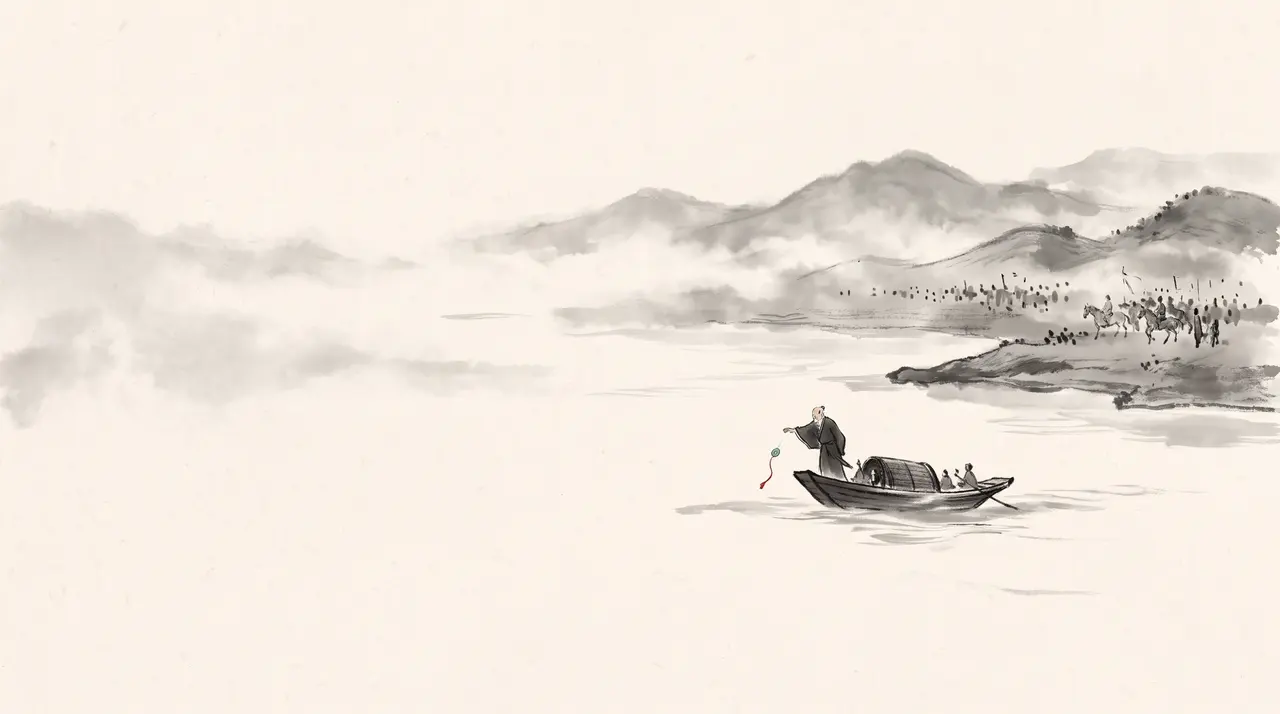
Prince Chong'er of Jin was driven from his country at forty-three by the plots of Lady Li, the favorite of his father, Duke Xian. With a band of able followers he wandered through Di, Wey, Qi, Cao, Song, Zheng, Chu and Qin. He went hungry and was handed a clod of earth by a peasant. In Qi he sank into comfort until his wife and his men got him drunk and carried him off. Some states treated him with honor and others with contempt. To the king of Chu he promised that if they ever met in battle, he would draw back three days' march. After nineteen years, at sixty-two, he returned with the help of Qin and became Duke Wen of Jin, while Jie Zhitui, overlooked in the rewards, vanished into the mountains with his mother. At Chengpu, Duke Wen kept his promise, drew back, and then crushed Chu, becoming hegemon after Duke Huan of Qi.
This page has the scene "The Wanderings of Chong'er" from this volume, not the whole volume.
Audio
The audio is synthetic speech.
Video
Passage 1
Original
晉文公重耳,晉獻公之子也。自少好士,年十七,有賢士五人:曰趙衰;狐偃咎犯,文公舅也;賈佗;先軫;魏武子。自獻公爲太子時,重耳固已成人矣。獻公卽位,重耳年二十一。獻公十三年,以驪姬故,重耳備蒲城守秦。獻公二十一年,獻公殺太子申生,驪姬讒之,恐,不辭獻公而守蒲城。獻公二十二年,獻公使宦者履鞮趣殺重耳。重耳踰垣,宦者逐斬其衣袪。重耳遂奔狄。狄,其母國也。是時重耳年四十三。從此五士,其餘不名者數十人,至狄。
Kundoku (Japanese reading)
晋の文公重耳は、晋の献公の子なり。少きより士を好み、年十七にして、賢士五人有り。趙衰と曰い、狐偃咎犯、文公の舅なり。賈佗、先軫、魏武子。献公の太子たりし時より、重耳固より已に成人なり。献公即位するに、重耳年二十一。献公の十三年、驪姫の故を以て、重耳蒲城に備えて秦を守る。献公の二十一年、献公太子申生を殺す。驪姫之を讒す。恐れて、献公に辞せずして蒲城を守る。献公の二十二年、献公宦者履鞮をして重耳を趣やかに殺さしむ。重耳垣を踰ゆ。宦者逐いて其の衣袪を斬る。重耳遂に狄に奔る。狄は其の母の国なり。是の時重耳年四十三。此の五士に従う、其の余の名あらざる者数十人、狄に至る。
Japanese
晋の文公、名は重耳は、晋の献公の子である。若いころから人材を好み、十七歳のときには五人の賢士がいた。趙衰、文公の母方の叔父である狐偃(咎犯)、賈佗、先軫、魏武子である。献公が太子だったころ、重耳はすでに成人していた。献公が即位したとき、重耳は二十一歳だった。献公の十三年、驪姫の画策で、重耳は蒲の城に置かれて秦に備えた。献公の二十一年、献公は太子の申生を死に追いやった。驪姫が重耳のことも讒言したので、重耳は恐れ、献公に挨拶もせず蒲の城に帰って守りを固めた。献公の二十二年、献公は宦官の履鞮に、すぐ重耳を殺すよう命じた。重耳は垣根を乗り越えて逃げ、宦官は追いかけて衣のそでを斬った。重耳はそのまま狄へ逃げた。狄は母の国である。このとき重耳は四十三歳だった。五人の賢士と、ほかに名の伝わらない数十人が従って、狄に着いた。
English
Duke Wen of Jin, whose name was Chong'er, was a son of Duke Xian of Jin. From his youth he loved men of ability, and by seventeen he had five worthy followers: Zhao Cui; Hu Yan, also called Jiu Fan, his uncle on his mother's side; Jia Tuo; Xian Zhen; and Wei Wuzi. Chong'er was already grown when his father was crown prince, and he was twenty-one when Duke Xian took the throne. In the duke's thirteenth year, because of Lady Li, Chong'er was posted to the city of Pu to guard against Qin. In the twenty-first year, Duke Xian had Crown Prince Shensheng put to death. Lady Li slandered Chong'er as well, and in fear he went back to hold Pu without taking leave of his father. In the twenty-second year, the duke sent the eunuch Lüdi to kill Chong'er at once. Chong'er climbed over the wall, and the eunuch, chasing him, cut off the end of his sleeve. Chong'er fled to the Di, the people of his mother. He was then forty-three. With him went his five followers and several dozen others whose names are lost.
Notes (JA)
- 狐偃: 字は子犯。「咎犯」は「舅犯」(おじの犯)の意。
- 驪姫: 献公が驪戎を討って得た愛妾。自分の子の奚斉を立てようとした。
- 申生: 献公の太子。驪姫に毒殺の罪を着せられ、自害した。
- 衣袪: 衣のそでぐち。
- 狄: 北方の民族。重耳の母の出身地。
- 重耳の年齢は『史記』による。『左伝』などからはもっと若いとする説がある。
Notes (EN)
- Jiu Fan (咎犯): "Uncle Fan", the name by which Hu Yan is often known.
- Lady Li (驪姬): a captive from the Li Rong, Duke Xian's favorite, who schemed to put her son Xiqi on the throne.
- Shensheng: the crown prince, framed by Lady Li for an attempt to poison the duke. He took his own life.
- The Di (狄): a people of the north, from whom Chong'er's mother came.
- His age follows the Shiji. Other sources suggest he was younger.
Word notes
- slander/ˈslændər/verb
to say false things that harm someone
In the text: “Lady Li slandered Chong'er”
Similar words: defame — damage a good name · smear — spread lies about
- eunuch/ˈjunək/noun
a castrated man who served at a palace
In the text: “sent the eunuch Lüdi”
Similar words: court servant — a palace attendant · chamberlain — an officer of a royal household
Passage 2
Original
狄伐咎如,得二女:以長女妻重耳,生伯鯈、叔劉;以少女妻趙衰,生盾。居狄五歳而晉獻公卒,裏克已殺奚齊、悼子,乃使人迎,欲立重耳。重耳畏殺,因固謝,不敢入。已而晉更迎其弟夷吾立之,是爲惠公。惠公七年,畏重耳,乃使宦者履鞮與壯士欲殺重耳。重耳聞之,乃謀趙衰等曰:「始吾奔狄,非以爲可用與,以近易通,故且休足。休足久矣,固願徙之大國。夫齊桓公好善,志在霸王,收恤諸侯。今聞管仲、隰朋死,此亦欲得賢佐,盍往乎?」於是遂行。重耳謂其妻曰:「待我二十五年不來,乃嫁。」其妻笑曰:「犁二十五年,吾冢上柏大矣。雖然,妾待子。」重耳居狄凡十二年而去。
Kundoku (Japanese reading)
狄咎如を伐ちて、二女を得たり。長女を以て重耳に妻わせ、伯鯈・叔劉を生む。少女を以て趙衰に妻わせ、盾を生む。狄に居ること五歳にして晋の献公卒す。裏克已に奚斉・悼子を殺し、乃ち人をして迎えしめ、重耳を立てんと欲す。重耳殺さるるを畏れ、因りて固く謝して、敢えて入らず。已にして晋更に其の弟夷吾を迎えて之を立つ。是を恵公と為す。恵公七年、重耳を畏れ、乃ち宦者履鞮をして壮士と重耳を殺さんと欲せしむ。重耳之を聞き、乃ち趙衰等に謀りて曰く、「始め吾狄に奔りしは、以て用うべしと為すに非ず。近くして通じ易きを以て、故に且く足を休むるのみ。足を休むること久し。固より願わくは大国に徙らん。夫れ斉の桓公は善を好み、志は覇王に在り、諸侯を収恤す。今聞く管仲・隰朋死すと。此れ亦賢佐を得んと欲せん。盍ぞ往かざる」と。是に於いて遂に行く。重耳其の妻に謂いて曰く、「我を待つこと二十五年にして来たらずんば、乃ち嫁せよ」と。其の妻笑いて曰く、「二十五年に犁べば、吾が冢上の柏大ならん。然りと雖も、妾子を待たん」と。重耳狄に居ること凡そ十二年にして去る。
Japanese
狄が咎如を討って二人の娘を得た。姉を重耳の妻とし、伯鯈と叔劉が生まれた。妹を趙衰の妻とし、盾が生まれた。狄に住んで五年で晋の献公が亡くなった。里克が奚斉と悼子を殺し、使者をよこして重耳を立てようとした。重耳は殺されることを恐れ、かたく辞退して帰らなかった。そこで晋は弟の夷吾を迎えて位につけた。これが恵公である。恵公の七年、恵公は重耳を恐れ、宦官の履鞮と勇士に重耳を殺させようとした。重耳はこれを聞くと、趙衰らに相談した。「はじめ狄に逃げたのは、ここが頼りになると思ったからではない。近くて連絡しやすいので、しばらく足を休めただけだ。もう十分に休んだ。大国へ移りたいと思う。斉の桓公は善を好み、志は覇者にあり、諸侯の面倒をよく見ている。聞けば管仲と隰朋が死んだという。桓公も賢い補佐を求めているだろう。行こうではないか」。こうして出発した。重耳は妻に言った。「二十五年待って帰らなければ、再婚しなさい」。妻は笑って言った。「二十五年もたったら、私の墓の柏が大きくなっていますよ。それでも、あなたを待ちましょう」。重耳は狄に合わせて十二年いて去った。
English
The Di attacked the Jiuru and took two young women. The elder they gave to Chong'er as his wife, and she bore him Boshu and Shuliu; the younger they gave to Zhao Cui, and she bore Dun. After Chong'er had been with the Di for five years, Duke Xian of Jin died. Li Ke killed the young heirs Xiqi and Daozi and sent men to bring Chong'er home as ruler. Afraid he would be killed, Chong'er firmly declined and would not go. So Jin brought in his younger brother Yiwu instead, who became Duke Hui. In his seventh year Duke Hui, fearing Chong'er, sent the eunuch Lüdi with strong men to kill him. When Chong'er heard this he said to Zhao Cui and the others: "When I first fled to the Di, it was not because they could help me. It was near and easy to reach, so I stopped here to rest my feet. I have rested long enough, and I want to move to a great state. Duke Huan of Qi loves goodness, aims to be hegemon and looks after the lords. I hear that Guan Zhong and Xi Peng have died, so he too must be looking for able helpers. Why not go to him?" And so they set out. Chong'er said to his wife: "Wait for me twenty-five years. If I have not come back, marry again." His wife laughed and said: "In twenty-five years the cypress on my grave will be tall. Still, I will wait for you." Chong'er left after twelve years among the Di.
Notes (JA)
- 咎如: 狄の一派。
- 趙衰の子の盾: 趙盾。のちに晋の執政となる。
- 裏克: 里克。晋の大臣。
- 管仲・隰朋: 斉の桓公を支えた賢臣(巻62)。
- 犁: 「比」に通じ、「〜のころには」の意。
Notes (EN)
- Zhao Dun, the son born here, later ruled Jin as its chief minister.
- Li Ke (裏克, usually 里克): a leading minister of Jin.
- Guan Zhong: the great minister of Qi in Volume 62.
Word notes
- cypress/ˈsaɪprəs/noun
a tall evergreen tree, often grown by graves
In the text: “the cypress on my grave”
Similar words: evergreen — a tree that keeps its leaves · conifer — a tree with cones
Passage 3
Original
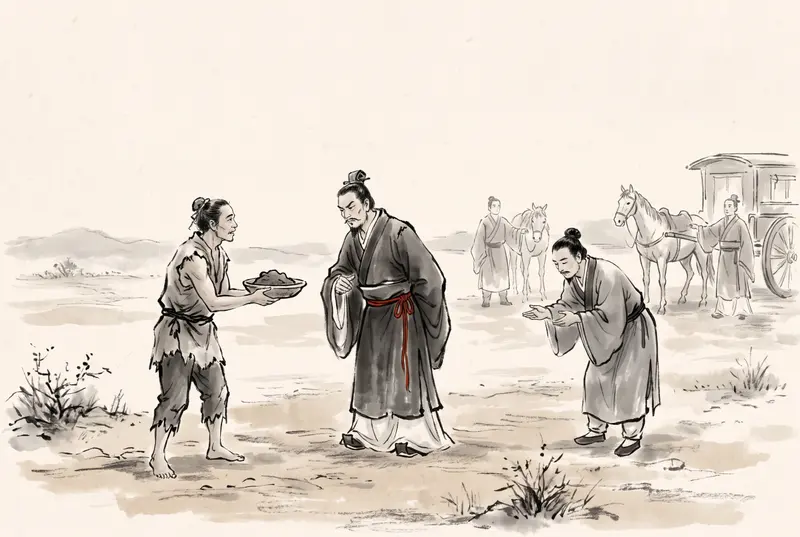
過衞,衞文公不禮。去,過五鹿,饑而從野人乞食,野人盛土器中進之。重耳怒。趙衰曰:「土者,有土也,君其拜受之。」至齊,齊桓公厚禮,而以宗女妻之,有馬二十乘,重耳安之。重耳至齊二歳而桓公卒,會豎刀等爲内亂,齊孝公之立,諸侯兵數至。留齊凡五歳。重耳愛齊女,毋去心。趙衰、咎犯乃於桑下謀行。齊女侍者在桑上聞之,以告其主。其主乃殺侍者,勸重耳趣行。重耳曰:「人生安樂,孰知其他!必死於此,不能去。」齊女曰:「子一國公子,窮而來此,數士者以子爲命。子不疾反國,報勞臣,而懷女德,竊爲子羞之。且不求,何時得功?」乃與趙衰等謀,醉重耳,載以行。行遠而覺,重耳大怒,引戈欲殺咎犯。咎犯曰:「殺臣成子,偃之願也。」重耳曰:「事不成,我食舅氏之肉。」咎犯曰:「事不成,犯肉腥臊,何足食!」乃止,遂行。
Kundoku (Japanese reading)
衛を過ぐ。衛の文公礼せず。去りて、五鹿を過ぐ。饑えて野人に従いて食を乞う。野人土器の中に盛りて之を進む。重耳怒る。趙衰曰く、「土は、土を有つなり。君其れ拝して之を受けよ」と。斉に至る。斉の桓公厚く礼し、而して宗女を以て之に妻わせ、馬二十乗有り。重耳之に安んず。重耳斉に至ること二歳にして桓公卒す。会々豎刀等内乱を為し、斉の孝公の立つや、諸侯の兵数しば至る。斉に留まること凡そ五歳。重耳斉の女を愛し、去る心毋し。趙衰・咎犯乃ち桑下に於いて行かんことを謀る。斉の女の侍者桑上に在りて之を聞き、以て其の主に告ぐ。其の主乃ち侍者を殺し、重耳に趣やかに行かんことを勧む。重耳曰く、「人生安楽なり、孰か其の他を知らん。必ず此に死せん、去る能わず」と。斉の女曰く、「子は一国の公子なり。窮して此に来たる。数士は子を以て命と為す。子疾く国に反りて、労臣に報いずして、女の徳を懐う。窃かに子の為に之を羞ず。且つ求めずんば、何れの時か功を得ん」と。乃ち趙衰等と謀り、重耳を酔わしめ、載せて以て行く。行くこと遠くして覚む。重耳大いに怒り、戈を引きて咎犯を殺さんと欲す。咎犯曰く、「臣を殺して子を成すは、偃の願いなり」と。重耳曰く、「事成らずんば、我舅氏の肉を食らわん」と。咎犯曰く、「事成らずんば、犯の肉腥臊なり、何ぞ食らうに足らん」と。乃ち止み、遂に行く。
Japanese
衛を通ったが、衛の文公は礼をもって迎えなかった。去って五鹿を通ったとき、飢えて農民に食べ物を乞うと、農民は土の器に土くれを盛って差し出した。重耳は怒った。趙衰は言った。「土は、国土を持つしるしです。拝んでお受けください」。斉に着くと、桓公は手厚くもてなし、一族の娘を妻として与え、馬八十頭も贈った。重耳はそこに安住した。斉に来て二年で桓公が亡くなり、豎刀らが内乱を起こし、孝公が立つと諸侯の兵がたびたび攻めてきた。斉にとどまること合わせて五年、重耳は斉の妻を愛して、去る気がなかった。趙衰と咎犯は桑の木の下で出発の相談をした。ところが妻の侍女が桑の上にいて聞いてしまい、主人に告げた。妻はその侍女を殺し、重耳に早く出発するよう勧めた。重耳は言った。「人生は楽しければよい。ほかのことなど知るものか。私はここで死ぬ。去りはしない」。妻は言った。「あなたは一国の公子です。行き詰まってここへ来られた。あの人たちはあなたに命を預けています。早く国へ帰って苦労した臣に報いようとせず、女の情にひかれているとは、あなたのために恥ずかしく思います。それに、求めなければ、いつ功を得られましょう」。そこで趙衰らと相談し、重耳を酔わせて車に乗せて出発した。遠くまで来て目を覚ました重耳は激怒し、戈をつかんで咎犯を殺そうとした。咎犯は言った。「私を殺してあなたの事が成るなら、それこそ私の願いです」。重耳は言った。「事が成らなければ、叔父の肉を食ってやる」。咎犯は言った。「事が成らなければ、私の肉など生臭くて、食べるほどのものではありません」。重耳はそれでやめて、旅を続けた。
English
He passed through Wey, where Duke Wen of Wey showed him no courtesy. Moving on, he reached Wulu. Hungry, he begged food from a peasant, and the peasant served him a lump of dirt on an earthen dish. Chong'er was furious. Zhao Cui said: "Earth means owning the land. You should bow and accept it." When they reached Qi, Duke Huan received him generously, gave him a woman of his clan as a wife, and presented him with eighty horses. Chong'er settled in happily. Two years after he arrived, Duke Huan died. The eunuch Shu Diao and others rose in revolt, and when Duke Xiao took the throne the armies of the other lords kept coming. Chong'er stayed in Qi five years in all. He loved his Qi wife and had no thought of leaving. Zhao Cui and Jiu Fan met under a mulberry tree to plan their departure. A maid of the lady was up in the tree and overheard them, and told her mistress. The lady had the maid killed and urged Chong'er to leave quickly. Chong'er said: "Life is pleasant here. Who cares about anything else? I will die here. I cannot go." The lady said: "You are the prince of a state, who came here in distress. These men have staked their lives on you. If you do not hurry home to reward your loyal servants, but cling to a woman's love, I am ashamed for you. And if you do not seek success, when will it ever come?" So she plotted with Zhao Cui and the others. They got Chong'er drunk, put him in a carriage and set off. He woke a long way down the road in a towering rage, seized a spear and went to kill Jiu Fan. Jiu Fan said: "If killing me would make you great, that is all I wish." Chong'er said: "If this fails, I will eat your flesh, Uncle." Jiu Fan said: "If this fails, my flesh will be rank and stinking. It will not be worth eating." So he stopped, and they went on.
Notes (JA)
- 五鹿: 衛の地。今の河南省濮陽市付近。のちに文公が取る(p11)。
- 土者有土也: 土を贈られたのは国土を得る前ぶれだという解釈。
- 宗女: 君主と同族の娘。
- 二十乘: 一乗は四頭で、八十頭。
- 豎刀: 桓公の寵臣の宦官。
- 舅氏: 母方の叔父。ここでは咎犯。
Notes (EN)
- Wulu (五鹿): a place in Wey, near present-day Puyang in Henan. He later captures it (p11).
- "Earth means owning the land": Zhao Cui turned the insult into an omen.
- Eighty horses: literally twenty teams of four.
- Shu Diao: a favorite eunuch of Duke Huan.
Word notes
- peasant/ˈpɛzənt/noun
a poor farmer
In the text: “begged food from a peasant”
Similar words: farmer — one who works the land · villager — one who lives in a village
- furious/ˈfjʊriəs/adjective
extremely angry
In the text: “Chong'er was furious”
Similar words: enraged — very angry · livid — white with anger
- overhear/ˌoʊvərˈhɪr/verb
to hear what was not meant for you
In the text: “overheard them”
Similar words: eavesdrop — listen secretly · catch — happen to hear
- rank/ræŋk/adjective
having a strong, bad smell
In the text: “my flesh will be rank”
Similar words: foul — very unpleasant · stinking — smelling bad
Passage 4
Original
過曹,曹共公不禮,欲觀重耳駢脅。曹大夫釐負羈曰:「晉公子賢,又同姓,窮來過我,柰何不禮!」共公不從其謀。負羈乃私遺重耳食,置璧其下。重耳受其食,還其璧。去,過宋。宋襄公新困兵於楚,傷於泓,聞重耳賢,乃以國禮禮於重耳。宋司馬公孫固善於咎犯,曰:「宋小國新困,不足以求入,更之大國。」乃去。過鄭,鄭文公弗禮。鄭叔瞻諫其君曰:「晉公子賢,而其從者皆國相,且又同姓。鄭之出自厲王,而晉之出自武王。」鄭君曰:「諸侯亡公子過此者衆,安可盡禮!」叔瞻曰:「君不禮,不如殺之,且後爲國患。」鄭君不聽。
Kundoku (Japanese reading)
曹を過ぐ。曹の共公礼せず、重耳の駢脅を観んと欲す。曹の大夫釐負羈曰く、「晋の公子は賢にして、又同姓なり。窮して来たりて我を過ぐ。柰何ぞ礼せざる」と。共公其の謀に従わず。負羈乃ち私かに重耳に食を遺り、璧を其の下に置く。重耳其の食を受け、其の璧を還す。去りて、宋を過ぐ。宋の襄公新たに兵を楚に困しめられ、泓に傷つく。重耳の賢を聞き、乃ち国の礼を以て重耳を礼す。宋の司馬公孫固咎犯に善くし、曰く、「宋は小国にして新たに困しむ。以て入るを求むるに足らず。大国に更えよ」と。乃ち去る。鄭を過ぐ。鄭の文公礼せず。鄭の叔瞻其の君を諫めて曰く、「晋の公子は賢にして、其の従者は皆国の相なり。且つ又同姓なり。鄭の出づるは厲王よりし、而して晋の出づるは武王よりす」と。鄭君曰く、「諸侯の亡公子の此を過ぐる者衆し、安くんぞ尽く礼すべけんや」と。叔瞻曰く、「君礼せずんば、之を殺すに如かず。且に後に国の患いと為らん」と。鄭君聴かず。
Japanese
曹を通ると、曹の共公は無礼で、重耳のあばら骨が一枚につながっているのを見ようとした。曹の大夫の釐負羈は言った。「晋の公子は賢く、しかも同姓です。困窮して我が国に来たのに、なぜ礼を尽くさないのですか」。共公は聞かなかった。負羈はひそかに重耳に食事を贈り、その下に璧を隠した。重耳は食事を受け取り、璧は返した。去って宋を通った。宋の襄公は楚に敗れて、泓の戦いで傷を負ったばかりだったが、重耳の賢さを聞き、国賓の礼でもてなした。宋の司馬の公孫固は咎犯と親しかったので言った。「宋は小国で、敗れたばかりです。帰国の力にはなれません。大国へお行きなさい」。そこで去った。鄭を通ると、鄭の文公も礼をしなかった。鄭の叔瞻は主君を諫めた。「晋の公子は賢く、従者はみな一国の宰相の器です。しかも同姓で、鄭は厲王から、晋は武王から出ています」。鄭の君主は言った。「亡命の公子がここを通ることは多い。いちいち礼を尽くしていられようか」。叔瞻は言った。「礼をしないのなら、殺してしまうほうがましです。そうでないと後に国の災いとなります」。鄭の君主は聞かなかった。
English
He passed through Cao. Duke Gong of Cao showed him no courtesy, and wanted to see his ribs, which were said to be joined in one piece. Xi Fuji, a minister of Cao, said: "The prince of Jin is a worthy man and of our own surname. He comes to us in distress. How can you treat him so?" The duke paid no attention. So Fuji secretly sent Chong'er a meal with a jade disc hidden beneath it. Chong'er accepted the food and returned the jade. Leaving Cao, he passed through Song. Duke Xiang of Song had just been beaten by Chu and wounded at the Hong River, but hearing of Chong'er's worth, he received him with the honors of a ruler. Gongsun Gu, the Minister of War of Song, was a friend of Jiu Fan and told him: "Song is a small state, just defeated. It cannot help you get home. Try a larger state." So they left. He passed through Zheng, and Duke Wen of Zheng showed him no courtesy. Shu Zhan of Zheng warned his lord: "The prince of Jin is a worthy man, and every one of his followers could be chancellor of a state. And we share a surname: Zheng descends from King Li, and Jin from King Wu." The lord of Zheng said: "Plenty of exiled princes pass through here. How can I be courteous to them all?" Shu Zhan said: "If you will not be courteous, you had better kill him, or he will be the ruin of this state." The lord of Zheng would not listen.
Notes (JA)
- 駢脅: あばら骨がつながって一枚の板のようになっていること。貴人の相とされた。
- 釐負羈: 僖負羈とも書く。
- 璧: 円盤形の玉。
- 泓: 前638年、宋が楚に敗れた川。「宋襄の仁」の故事で知られる。
- 同姓: 晋・曹・鄭はいずれも周の王族の姫姓。
Notes (EN)
- Joined ribs (駢脅): ribs fused into one plate, thought to be the mark of a great man.
- Jade disc (璧): a flat ring of jade, a thing of great value.
- The Hong River: where Song lost to Chu in 638 BCE.
- Same surname: Jin, Cao and Zheng all descended from the Zhou royal Ji clan.
Word notes
- exiled/ˈɛɡzaɪld/adjective
forced to live away from one's country
In the text: “Plenty of exiled princes”
Similar words: banished — sent away · expelled — forced out
Passage 5
Original
重耳去之楚,楚成王以適諸侯禮待之,重耳謝不敢當。趙衰曰:「子亡在外十餘年,小國輕子,況大國乎?今楚大國而固遇子,子其毋讓,此天開子也。」遂以客禮見之。成王厚遇重耳,重耳甚卑。成王曰:「子卽反國,何以報寡人?」重耳曰:「羽毛齒角玉帛,君王所餘,未知所以報。」王曰:「雖然,何以報不穀?」重耳曰:「卽不得已,與君王以兵車會平原廣澤,請辟王三舍。」楚將子玉怒曰:「王遇晉公子至厚,今重耳言不孫,請殺之。」成王曰:「晉公子賢而困於外久,從者皆國器,此天所置,庸可殺乎?且言何以易之!」居楚數月,而晉太子圉亡秦,秦怨之;聞重耳在楚,乃召之。成王曰:「楚遠,更數國乃至晉。秦晉接境,秦君賢,子其勉行!」厚送重耳。
Kundoku (Japanese reading)
重耳去りて楚に之く。楚の成王適諸侯の礼を以て之を待つ。重耳謝して敢えて当たらず。趙衰曰く、「子亡れて外に在ること十余年、小国も子を軽んず、況んや大国をや。今楚は大国にして固く子を遇す。子其れ譲ること毋かれ。此れ天子を開くなり」と。遂に客礼を以て之に見ゆ。成王厚く重耳を遇し、重耳甚だ卑し。成王曰く、「子即し国に反らば、何を以てか寡人に報いん」と。重耳曰く、「羽毛歯角玉帛は、君王の余す所なり。未だ報ゆる所以を知らず」と。王曰く、「然りと雖も、何を以てか不穀に報いん」と。重耳曰く、「即し已むを得ずして、君王と兵車を以て平原広沢に会せば、請う王を辟くること三舎せん」と。楚の将子玉怒りて曰く、「王晋の公子を遇すること至って厚し。今重耳の言不孫なり。請う之を殺さん」と。成王曰く、「晋の公子は賢にして外に困しむこと久し。従者は皆国の器なり。此れ天の置く所、庸ぞ殺すべけんや。且つ言何を以てか之を易えん」と。楚に居ること数月にして、晋の太子圉秦より亡る。秦之を怨む。重耳の楚に在るを聞き、乃ち之を召す。成王曰く、「楚は遠く、数国を更て乃ち晋に至る。秦晋は境を接す。秦君は賢なり。子其れ勉めて行け」と。厚く重耳を送る。
Japanese
重耳は楚へ行った。楚の成王は諸侯に対する礼で迎えた。重耳は恐れ多いと辞退したが、趙衰は言った。「あなたは亡命して十年あまり、小国にさえ軽んじられてきました。まして大国ならなおさらです。いま大国の楚がこれほど手厚く遇してくれるのです。遠慮なさいますな。これは天があなたに道を開いたのです」。そこで客の礼で会見した。成王は重耳を厚くもてなし、重耳はたいそうへりくだった。成王は言った。「もし国に帰れたら、私に何で報いてくれるかな」。重耳は言った。「鳥の羽、獣の毛、象牙、皮、玉や絹は、王のもとに余るほどあります。何でお報いすればよいかわかりません」。王は言った。「それでも、何で報いてくれるのだ」。重耳は言った。「もしやむを得ず、平原や沼地で王と兵車を交えることになれば、王を避けて三舎退きましょう」。楚の将軍の子玉が怒って言った。「王がこれほど厚くもてなしておられるのに、重耳の言葉は不遜です。殺させてください」。成王は言った。「晋の公子は賢く、長く国外で苦しんできた。従者はみな国を担う器だ。これは天が定めたことだ。どうして殺せよう。それに、ほかに何と言えばよかったのか」。楚に数か月いるうちに、晋の太子圉が人質の秦から逃げ帰り、秦はこれを恨んだ。重耳が楚にいると聞いて、秦は彼を招いた。成王は言った。「楚は遠く、数か国を越えないと晋に着かない。秦と晋は国境を接しており、秦の君主は賢い。行って努めなさい」。そして重耳を手厚く送り出した。
English
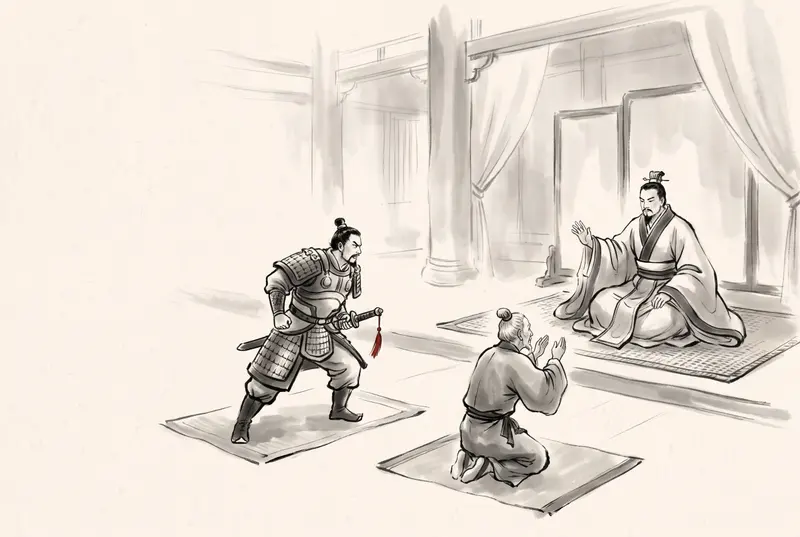
Chong'er left and went to Chu. King Cheng of Chu received him with the rites due to an equal lord. Chong'er declined such an honor, but Zhao Cui said: "You have been in exile for more than ten years. Even small states look down on you, let alone great ones. Now great Chu insists on honoring you. Do not refuse. This is Heaven opening the way for you." So he met the king as an honored guest. King Cheng treated him generously, and Chong'er was very humble. The king said: "If you get back to your country, how will you repay me?" Chong'er said: "Feathers, furs, ivory, hides, jade and silk: Your Majesty has more than enough. I do not know how I could repay you." The king said: "Even so, how will you repay me?" Chong'er said: "If I have no choice but to meet Your Majesty with war chariots on some plain or marsh, let me draw back three days' march before you." The Chu general Ziyu said angrily: "Your Majesty has treated the prince of Jin with the greatest generosity, and now he speaks with such insolence. Let me kill him." King Cheng said: "The prince of Jin is a worthy man who has suffered long abroad, and his followers are all men fit to run a state. Heaven has placed him here. How could we kill him? And what else could he have said?" After a few months in Chu, Prince Yu of Jin ran away from Qin, where he was a hostage, and Qin was angry. Hearing that Chong'er was in Chu, Qin invited him. King Cheng said: "Chu is far away, with several states between here and Jin. Qin and Jin share a border, and the lord of Qin is a worthy man. Go, and do your best." And he sent him off with rich gifts.
Notes (JA)
- 適諸侯: 対等の諸侯。
- 不穀: 王侯の謙遜の自称。
- 三舍: 一舎は軍の一日の行程の三十里。三舎で九十里。「三舎を避く」の出典。
- 子玉: 楚の令尹、成得臣。
- 太子圉: 恵公の子。秦に人質となっていた。
Notes (EN)
- Three days' march (三舍): one she was a day's march of thirty li, so about ninety li. This is the source of the Chinese proverb "to retreat three she", to give way before someone.
- Ziyu (子玉): Cheng Dechen, chief minister of Chu.
- Prince Yu (圉): the son of Duke Hui, who had been held as a hostage in Qin.
Idioms from this passage: Draw back three days' march 退避三舎
Word notes
- insolence/ˈɪnsələns/noun
rude lack of respect
In the text: “speaks with such insolence”
Similar words: impudence — rude boldness · cheek — informal for rudeness
- hostage/ˈhɑstɪdʒ/noun
a person held to force others to keep a promise
In the text: “where he was a hostage”
Similar words: captive — a prisoner · pledge — someone given as a guarantee
Passage 6
Original
重耳至秦,繆公以宗女五人妻重耳,故子圉妻與往。重耳不欲受,司空季子曰:「其國且伐,況其故妻乎!且受以結秦親而求入,子乃拘小禮,忘大丑乎!」遂受。繆公大歡,與重耳飲。趙衰歌黍苗詩。繆公曰:「知子欲急反國矣。」趙衰與重耳下,再拜曰:「孤臣之仰君,如百穀之望時雨。」是時晉惠公十四年秋。惠公以九月卒,子圉立。十一月,葬惠公。十二月,晉國大夫欒、郤等聞重耳在秦,皆陰來勸重耳、趙衰等反國,爲内應甚衆。於是秦繆公乃發兵與重耳歸晉。晉聞秦兵來,亦發兵拒之。然皆陰知公子重耳入也。唯惠公之故貴臣呂、郤之屬不欲立重耳。重耳出亡凡十九歳而得入,時年六十二矣,晉人多附焉。
Kundoku (Japanese reading)
重耳秦に至る。繆公宗女五人を以て重耳に妻わす。故の子圉の妻も与に往く。重耳受くるを欲せず。司空季子曰く、「其の国すら且に伐たんとす、況んや其の故の妻をや。且つ受けて以て秦の親を結びて入るを求めよ。子乃ち小礼に拘わりて、大丑を忘るるか」と。遂に受く。繆公大いに歓び、重耳と飲む。趙衰黍苗の詩を歌う。繆公曰く、「子の急に国に反らんと欲するを知る」と。趙衰重耳と下り、再拝して曰く、「孤臣の君を仰ぐこと、百穀の時雨を望むが如し」と。是の時晋の恵公十四年の秋なり。恵公九月を以て卒し、子圉立つ。十一月、恵公を葬る。十二月、晋国の大夫欒・郤等、重耳の秦に在るを聞き、皆陰かに来たりて重耳・趙衰等に国に反らんことを勧め、内応を為すもの甚だ衆し。是に於いて秦の繆公乃ち兵を発して重耳と晋に帰らしむ。晋秦の兵の来たるを聞き、亦兵を発して之を拒む。然れども皆陰かに公子重耳の入らんとするを知る。唯だ恵公の故の貴臣呂・郤の属のみ重耳を立つるを欲せず。重耳出亡すること凡そ十九歳にして入るを得たり。時に年六十二なり。晋人多く附く。
Japanese
重耳が秦に着くと、繆公は一族の娘五人を重耳の妻とした。その中には子圉のもとの妻もいた。重耳は受けたくなかったが、司空季子が言った。「いずれその国を討とうというのに、もとの妻くらい何でしょう。受け入れて秦と親しくなり、帰国を果たすのです。小さな礼にこだわって、大きな恥を忘れるのですか」。そこで受け入れた。繆公は大いに喜んで重耳と酒を飲んだ。趙衰が「黍苗」の詩を歌うと、繆公は言った。「あなたが一刻も早く帰国したいことはわかった」。趙衰と重耳は席を下りて再拝し、言った。「孤立した臣が君を仰ぐさまは、百穀が恵みの雨を待つようなものです」。これは晋の恵公の十四年の秋である。恵公は九月に亡くなり、子圉が立った。十一月に恵公を葬った。十二月、晋の大夫の欒氏や郤氏らは重耳が秦にいると聞き、みなひそかにやって来て、帰国を勧め、内応する者が非常に多かった。そこで秦の繆公は兵を出して重耳とともに晋へ向かわせた。晋は秦軍が来ると聞いて、兵を出して防いだが、誰もがひそかに重耳の帰国を知っていた。恵公の重臣だった呂省と郤芮の一派だけが、重耳を立てたくなかった。重耳は亡命すること十九年でようやく帰り、時に六十二歳であった。晋の人々の多くが彼についた。
English
When Chong'er reached Qin, Duke Mu gave him five women of his clan as wives, among them the former wife of Prince Yu. Chong'er did not want to accept her, but Sikong Jizi said: "You are going to attack the man's country, so why balk at his former wife? Accept her, bind yourself to Qin and win your way home. Will you cling to a small point of manners and forget your great disgrace?" So he accepted. Duke Mu was delighted and drank with him. Zhao Cui sang the ode "Millet Sprouts," and the duke said: "I see that you are eager to return to your country." Zhao Cui and Chong'er stepped down, bowed twice and said: "We forsaken men look up to you as the hundred grains long for the timely rain." This was the autumn of the fourteenth year of Duke Hui of Jin. In the ninth month Duke Hui died and Prince Yu took the throne. In the eleventh month Duke Hui was buried. In the twelfth month, the ministers of Jin, of the Luan and Xi families and others, hearing that Chong'er was in Qin, all came in secret to urge him and Zhao Cui to come home, and very many were ready to help from within. So Duke Mu of Qin raised troops and sent Chong'er back to Jin. Jin heard that the Qin army was coming and sent troops against it, but all of them knew in secret that Prince Chong'er was on his way. Only Lü and Xi, the favored ministers of the late Duke Hui, did not want him. Chong'er had been in exile for nineteen years in all before he got home, and he was then sixty-two. Most of the people of Jin came over to him.
Notes (JA)
- 繆公: 秦の穆公。春秋の五覇の一人に数えられることがある。
- 子圉の妻: 秦の公女の懐嬴。
- 司空季子: 重耳の従者の胥臣。
- 黍苗: 『詩経』小雅の詩。雨が苗を潤すように、君の恵みを願う。
- 呂・郤: 呂省と郤芮。恵公の重臣。
Notes (EN)
- Duke Mu of Qin (繆公): sometimes counted among the Five Hegemons.
- Former wife of Prince Yu: Huai Ying, a daughter of the house of Qin.
- "Millet Sprouts" (黍苗): an ode from the Book of Songs, on a lord's kindness falling like rain on young grain.
Word notes
- long for/lɔŋ fɔr/phrasal verb
to want very much
In the text: “long for the timely rain”
Similar words: yearn for — want deeply · crave — strongly desire
Passage 7
Original
文公元年春,秦送重耳至河。咎犯曰:「臣從君周旋天下,過亦多矣。臣猶知之,況於君乎?請從此去矣。」重耳曰:「若反國,所不與子犯共者,河伯視之!」乃投璧河中,以與子犯盟。是時介子推從,在船中,乃笑曰:「天實開公子,而子犯以爲己功而要市於君,固足羞也。吾不忍與同位。」乃自隱渡河。秦兵圍令狐,晉軍于廬柳。二月辛丑,咎犯與秦晉大夫盟于郇。壬寅,重耳入于晉師。丙午,入于曲沃。丁未,朝于武宮,卽位爲晉君,是爲文公。群臣皆往。懷公圉奔髙梁。戊申,使人殺懷公。
Kundoku (Japanese reading)
文公元年春、秦重耳を送りて河に至る。咎犯曰く、「臣君に従いて天下を周旋し、過ちも亦多し。臣猶お之を知る、況んや君に於いてをや。請う此より去らん」と。重耳曰く、「若し国に反りて、子犯と共にせざる所あらば、河伯之を視よ」と。乃ち璧を河中に投じて、以て子犯と盟う。是の時介子推従いて、船中に在り。乃ち笑いて曰く、「天実に公子を開く。而るに子犯以て己の功と為して君に要市す。固より羞ずるに足る。吾与に位を同じくするに忍びず」と。乃ち自ら隠れて河を渡る。秦の兵令狐を囲み、晋は廬柳に軍す。二月辛丑、咎犯秦晋の大夫と郇に盟う。壬寅、重耳晋の師に入る。丙午、曲沃に入る。丁未、武宮に朝し、即位して晋君と為る。是を文公と為す。群臣皆往く。懐公圉髙梁に奔る。戊申、人をして懐公を殺さしむ。
Japanese
文公元年の春、秦は重耳を黄河まで送った。咎犯は言った。「私はあなたに従って天下を巡り、多くの過ちを犯しました。私でさえ覚えているのですから、あなたはなおさらでしょう。ここでお暇をいただきます」。重耳は言った。「もし国に帰って、そなたと喜びをともにしなかったら、河の神よ、見ていてください」。そして璧を川に投げ込んで、子犯と誓った。このとき介子推も船に乗っていて、笑って言った。「天が公子の道を開いたのに、子犯はこれを自分の手柄にして、主君に取り引きを迫っている。恥ずべきことだ。私はこんな者と同じ席に並ぶ気にはなれない」。そして人目を避けて河を渡った。秦の軍は令狐を囲み、晋の軍は廬柳に陣を敷いた。二月の辛丑の日、咎犯は秦と晋の大夫と郇で盟約した。壬寅の日、重耳は晋の軍に入り、丙午の日に曲沃に入った。丁未の日、武公の廟に参って即位し、晋の君主となった。これが文公である。群臣はみな集まった。懐公(子圉)は高梁に逃げ、戊申の日、文公は人をやって懐公を殺させた。
English
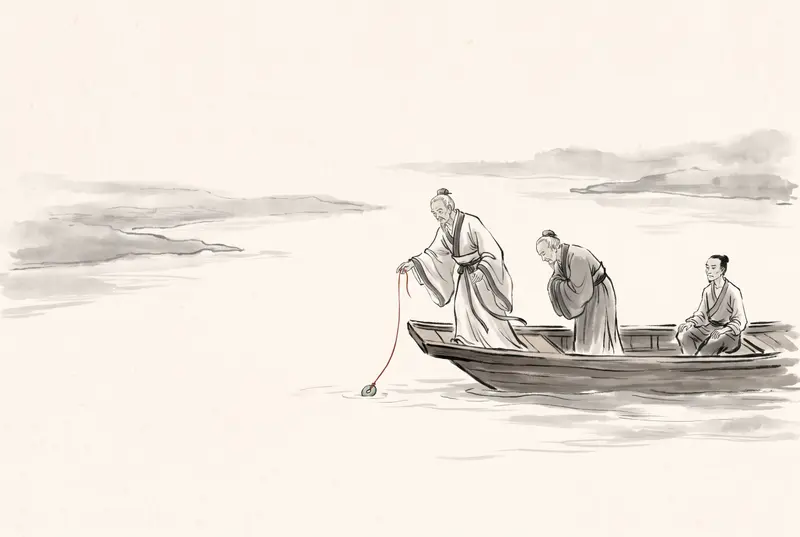
In the spring of the first year of Duke Wen, Qin escorted Chong'er to the Yellow River. Jiu Fan said: "I have followed you around the world and done you many wrongs. I know them well, and you must know them better still. Let me take my leave here." Chong'er said: "If, when I return, I do not share everything with you, Zifan, may the god of the River be my witness!" And he threw a jade disc into the water to seal his oath with Zifan. Jie Zhitui, who was with them in the boat, laughed and said: "It is Heaven that has opened the way for the prince, and Zifan claims it as his own achievement and bargains with his lord. It is shameful. I cannot bear to stand in the same rank as him." And he hid himself away as they crossed. The Qin army surrounded Linghu, and the Jin army camped at Luliu. On the day xinchou of the second month, Jiu Fan swore a pact with the ministers of Qin and Jin at Xun. On renyin, Chong'er entered the Jin army. On bingwu, he entered Quwo. On dingwei, he paid his respects at the temple of Duke Wu and took the throne as ruler of Jin, Duke Wen. All the ministers came to him. Duke Huai, Prince Yu, fled to Gaoliang. On wushen, Duke Wen sent men to kill him.
Notes (JA)
- 文公元年: 前636年。
- 河伯: 黄河の神。
- 介子推: 重耳に従った臣。『左伝』では介之推。
- 要市: 取り引きを持ちかける。
- 曲沃: 晋の祖先の地。
- 武宮: 文公の祖父、武公の廟。
Notes (EN)
- First year of Duke Wen: 636 BCE.
- God of the River (河伯): the deity of the Yellow River.
- Zifan (子犯): the courtesy name of Hu Yan, or Jiu Fan.
- Quwo: the old seat of Chong'er's branch of the ruling family.
Word notes
- oath/oʊθ/noun
a solemn promise
In the text: “to seal his oath”
Similar words: vow — a serious promise · pledge — a promise
- witness/ˈwɪtnəs/noun
someone who sees and can say what happened
In the text: “be my witness”
Similar words: observer — one who watches · onlooker — someone who sees an event
Passage 8
Original
懷公故大臣呂省、郤芮本不附文公,文公立,恐誅,乃欲與其徒謀燒公宮,殺文公。文公不知。始嘗欲殺文公宦者履鞮知其謀,欲以告文公,解前罪,求見文公。文公不見,使人讓曰:「蒲城之事,女斬予袪。其後我從狄君獵,女爲惠公來求殺我。惠公與女期三日至,而女一日至,何速也?女其念之。」宦者曰:「臣刀鋸之餘,不敢以二心事君倍主,故得罪於君。君已反國,其毋蒲、翟乎?且管仲射鉤,桓公以霸。今刑餘之人以事告而君不見,禍又且及矣。」於是見之,遂以呂、郤等告文公。文公欲召呂、郤,呂、郤等黨多,文公恐初入國,國人賣己,乃爲微行,會秦繆公於王城,國人莫知。三月己丑,呂、郤等果反,焚公宮,不得文公。文公之衞徒與戰,呂、郤等引兵欲奔,秦繆公誘呂、郤等,殺之河上,晉國復而文公得歸。夏,迎夫人於秦,秦所與文公妻者卒爲夫人。秦送三千人爲衞,以備晉亂。
Kundoku (Japanese reading)
懐公の故の大臣呂省・郤芮本より文公に附かず。文公立つや、誅せられんことを恐れ、乃ち其の徒と謀りて公宮を焼き、文公を殺さんと欲す。文公知らず。始め嘗て文公を殺さんと欲せし宦者履鞮其の謀を知り、以て文公に告げ、前罪を解かんと欲し、文公に見えんことを求む。文公見ず、人をして譲めしめて曰く、「蒲城の事、女予が袪を斬る。其の後我狄君に従いて猟するに、女恵公の為に来たりて我を殺さんことを求む。恵公女と期するに三日にして至れと。而るに女は一日にして至る。何ぞ速やかなるや。女其れ之を念え」と。宦者曰く、「臣は刀鋸の余なり。敢えて二心を以て君に事え主に倍かず。故に罪を君に得たり。君已に国に反る、其れ蒲・翟毋からんや。且つ管仲は鉤を射、桓公以て覇たり。今刑余の人事を以て告ぐるに君見ず。禍又且に及ばんとす」と。是に於いて之に見ゆ。遂に呂・郤等を以て文公に告ぐ。文公呂・郤を召さんと欲するも、呂・郤等党多く、文公初めて国に入り、国人の己を売らんことを恐れ、乃ち微行を為して、秦の繆公に王城に会す。国人知る莫し。三月己丑、呂・郤等果たして反し、公宮を焚くも、文公を得ず。文公の衛徒与に戦う。呂・郤等兵を引きて奔らんと欲す。秦の繆公呂・郤等を誘い、之を河上に殺す。晋国復して文公帰るを得たり。夏、夫人を秦より迎う。秦の文公に妻わす所の者卒に夫人と為る。秦三千人を送りて衛と為し、以て晋の乱に備う。
Japanese
懐公の重臣だった呂省と郤芮は、もともと文公に従っていなかった。文公が立つと処刑を恐れ、仲間と謀って宮殿を焼き、文公を殺そうとした。文公はこれを知らなかった。かつて文公を殺そうとした宦官の履鞮がこの謀を知り、文公に告げて前の罪を償おうと、面会を求めた。文公は会わず、人をやって責めさせた。「蒲の城では、お前は私のそでを斬った。その後、私が狄の君主と狩りをしていたとき、お前は恵公のために私を殺しに来た。恵公は三日で着けと命じたのに、お前は一日で着いた。なんと速いことか。よく考えてみろ」。宦官は言った。「私は刑を受けた身ですが、二心をもって主君に背かなかったからこそ、あなたに罪を得たのです。あなたは国に帰られましたが、蒲や狄のような危険はもうないとお思いですか。管仲は桓公に矢を射て帯の金具に当てましたが、桓公は彼を用いて覇者になりました。いま刑余の者が大事を告げに来たのに、会ってくださらないなら、禍がまた及びますぞ」。そこで文公は彼に会い、呂省と郤芮の謀を聞いた。文公は二人を召そうとしたが、仲間が多いうえ、自分は帰国したばかりで、国人に裏切られることを恐れ、お忍びで王城へ行って秦の繆公と会った。国人は誰も知らなかった。三月の己丑の日、呂省と郤芮らは果たして反乱を起こし、宮殿を焼いたが、文公を捕らえられなかった。文公の護衛が戦い、呂省らは兵を連れて逃げようとした。秦の繆公は彼らをおびき出して、黄河のほとりで殺した。晋は元に戻り、文公は帰ることができた。夏、夫人を秦から迎えた。秦が文公に与えた妻がついに正夫人となった。秦は三千人を護衛として送り、晋の乱に備えた。
English
Lü Sheng and Xi Rui, the chief ministers of Duke Huai, had never been on Duke Wen's side. Now that he was on the throne, they feared execution and plotted with their followers to burn the palace and kill him. Duke Wen did not know. The eunuch Lüdi, who had once tried to kill him, learned of the plot and asked to see him, hoping to make up for his past crimes. Duke Wen refused and sent a man to rebuke him: "At Pu you cut off my sleeve. Later, when I was hunting with the lord of the Di, you came on Duke Hui's orders to kill me. He gave you three days to get there, and you did it in one. How quick you were! Think about that." The eunuch said: "I am a mutilated servant. I would not serve my lord with a divided heart, and that is why I offended you. Now you are home, but do you imagine there will be no more Pus and no more Dis? Guan Zhong once shot an arrow into Duke Huan's belt hook, and Duke Huan made him his minister and became hegemon. A mutilated man comes to tell you something and you will not see him. Disaster is about to strike again." So the duke saw him, and he told him about Lü and Xi. The duke wanted to summon them, but they had many followers. He had only just returned and feared that his people might betray him, so he slipped away in disguise and met Duke Mu of Qin at Wangcheng, and no one in the country knew. On the day jichou of the third month, Lü and Xi did rise in revolt and burned the palace, but they did not get Duke Wen. His guards fought them, and they tried to flee with their troops. Duke Mu of Qin lured them out and killed them on the banks of the River. Jin was restored and Duke Wen was able to return. In the summer he brought his wife from Qin; the woman Qin had given him became his principal wife in the end. Qin sent three thousand men as a guard against further trouble in Jin.
Notes (JA)
- 刀鋸之餘: 刑で身体を損なわれた者。宦官の自称。
- 管仲射鉤: 公子糾に仕えていた管仲が小白(桓公)を射て、帯の留め金に当てた故事。
- 微行: お忍びで出かける。
- 王城: 秦の地の城。
- 「過去の敵でも用いる」という文公の度量を示す話。
Notes (EN)
- Mutilated servant (刀鋸之餘): literally "what the knife and saw left", a eunuch's name for himself.
- Belt hook: when serving Prince Jiu, Guan Zhong shot at the future Duke Huan and hit the hook of his belt.
- In disguise (微行): a ruler traveling unrecognized.
Word notes
- rebuke/rɪˈbjuk/verb
to criticize sharply
In the text: “sent a man to rebuke him”
Similar words: scold — speak angrily to · reprimand — criticize officially
Passage 9
Original
文公修政,施惠百姓。賞從亡者及功臣,大者封邑,小者尊爵。未盡行賞,周襄王以弟帶難出居鄭地,來告急晉。晉初定,欲發兵,恐他亂起,是以賞從亡未至隱者介子推。推亦不言祿,祿亦不及。推曰:「獻公子九人,唯君在矣。惠、懷無親,外内棄之;天未絶晉,必將有主,主晉祀者,非君而誰?天實開之,二三子以爲己力,不亦誣乎?竊人之財,猶曰是盜,況貪天之功以爲己力乎?下冒其罪,上賞其姦,上下相蒙,難與處矣!」其母曰:「盍亦求之,以死誰懟?」推曰:「尤而效之,罪有甚焉。且出怨言,不食其祿。」母曰:「亦使知之,若何?」對曰:「言,身之文也;身欲隱,安用文之?文之,是求顯也。」其母曰:「能如此乎?與女偕隱。」至死不復見。
Kundoku (Japanese reading)
文公政を修め、恵を百姓に施す。亡に従う者及び功臣を賞するに、大なる者は邑を封じ、小なる者は爵を尊くす。未だ尽くは賞を行わざるに、周の襄王弟帯の難を以て出でて鄭の地に居り、来たりて急を晋に告ぐ。晋初めて定まり、兵を発せんと欲するも、他の乱の起こらんことを恐る。是を以て亡に従いしものを賞して未だ隠者介子推に至らず。推も亦禄を言わず、禄も亦及ばず。推曰く、「献公の子九人、唯だ君のみ在す。恵・懐は親無く、外内之を棄つ。天未だ晋を絶たず、必ず将に主有らんとす。晋の祀を主る者は、君に非ずして誰ぞ。天実に之を開く。二三子以て己の力と為す、亦誣いざらんや。人の財を窃むすら、猶お是を盗と曰う。況んや天の功を貪りて以て己の力と為すをや。下は其の罪を冒し、上は其の姦を賞す。上下相蒙う、与に処り難し」と。其の母曰く、「盍ぞ亦之を求めざる。以て死すとも誰をか懟まん」と。推曰く、「尤めて之に効うは、罪甚だしきこと有り。且つ怨言を出だす、其の禄を食らわず」と。母曰く、「亦之を知らしめば、若何」と。対えて曰く、「言は身の文なり。身隠れんと欲す、安くんぞ之を文るを用いん。之を文るは、是れ顕るるを求むるなり」と。其の母曰く、「能く此くの如きか。女と偕に隠れん」と。死に至るまで復た見えず。
Japanese
文公は政治を整え、民に恵みを施した。亡命に従った者や功臣を賞し、功の大きい者には領地を、小さい者には高い爵位を与えた。まだ賞が行き渡らないうちに、周の襄王が弟の帯の乱で鄭の地に逃れ、晋に急を告げてきた。晋は安定したばかりで、兵を出そうにも別の乱が起こることを恐れた。そのため、亡命に従った者への賞は、隠れていた介子推にまで及ばなかった。介子推も禄のことを言わず、禄も届かなかった。介子推は言った。「献公の子は九人いたが、今は主君だけが残っている。恵公も懐公も親しむ者がなく、内からも外からも見捨てられた。天はまだ晋を絶やさず、必ず君主を立てるはずだった。晋の祭りを主宰するのは、主君でなくて誰だろう。天が道を開いたのだ。それを数人の者が自分の力だと言う。でたらめではないか。人の財を盗んでさえ泥棒という。まして天の功をむさぼって自分の力とするとは。下は罪を犯し、上はその悪事を賞している。上も下もだまし合っていて、一緒にはいられない」。母が言った。「お前も賞を求めてはどうかね。このまま死んだら、誰を恨むのだ」。介子推は言った。「人を非難しながら同じことをするのは、もっと罪が重い。それに、恨みごとを口にした以上、その禄は食べません」。母は言った。「せめて主君に知らせてはどうかね」。介子推は答えた。「言葉は身の飾りです。身を隠そうというのに、飾りは要りません。飾るのは、世に出たいと願うことです」。母は言った。「そこまで言えるのかい。それなら、お前と一緒に隠れよう」。そして死ぬまで二度と姿を現さなかった。
English
Duke Wen put the government in order and was generous to the people. He rewarded those who had followed him in exile and those who had served him, giving fiefs for great merit and high rank for lesser. Before all the rewards had been given, King Xiang of Zhou, driven out by the revolt of his brother Dai, took refuge in Zheng and sent to Jin for urgent help. Jin had only just settled and wanted to send troops, but feared some other rising. So the rewards had not yet reached Jie Zhitui, who had gone into hiding. Zhitui did not speak of a stipend, and no stipend came. He said: "Of the nine sons of Duke Xian, only our lord remains. Dukes Hui and Huai had no one close to them, and were cast off at home and abroad. Heaven had not finished with Jin and was sure to give it a master. Who else could lead the sacrifices of Jin but our lord? It was Heaven that opened the way, and yet these gentlemen say it was their own strength. Is that not a lie? Even a man who steals another's goods is called a thief. How much worse to grab the work of Heaven and call it one's own! Those below commit the crime, those above reward the fraud, and each deceives the other. I cannot live among them." His mother said: "Why not ask for your reward too? If you die like this, whom will you blame?" Zhitui said: "To condemn a thing and then do it is a worse crime. Besides, I have spoken in anger, and I will not eat his grain." She said: "Then at least let him know?" He answered: "Words are the adornment of the self. I mean to hide myself. What need have I of adornment? To adorn it would be to seek attention." His mother said: "Can you truly do this? Then I will go into hiding with you." And they were never seen again as long as they lived.
Notes (JA)
- 周襄王: 周の王。弟の王子帯に追われた。
- 貪天之功: 天の功をむさぼる。他人の功績を横取りするたとえ。
- 懟: うらむ。
- 身之文: 身を飾るもの。
- 後世、文公が山を焼いて介子推を呼び出そうとしたという伝説と、寒食節の起源の話が生まれた。『史記』にはその記述はない。
Notes (EN)
- To grab the work of Heaven (貪天之功): a phrase still used for taking credit for what others did.
- Adornment (文): what makes a person visible and admired.
- A later legend says Duke Wen set the mountain on fire to drive him out, and that the Cold Food Festival began from this. The Shiji does not say so.
Idioms from this passage: Grab the work of Heaven 天の功を貪る
Word notes
- stipend/ˈstaɪpɛnd/noun
regular pay for a post
In the text: “did not speak of a stipend”
Similar words: salary — regular pay · allowance — money given regularly
- fraud/frɔd/noun
dishonest trickery
In the text: “those above reward the fraud”
Similar words: deceit — dishonesty · scam — a dishonest trick
- adornment/əˈdɔrnmənt/noun
something that decorates
In the text: “the adornment of the self”
Similar words: ornament — a decoration · decoration — something added for beauty
Passage 10
Original
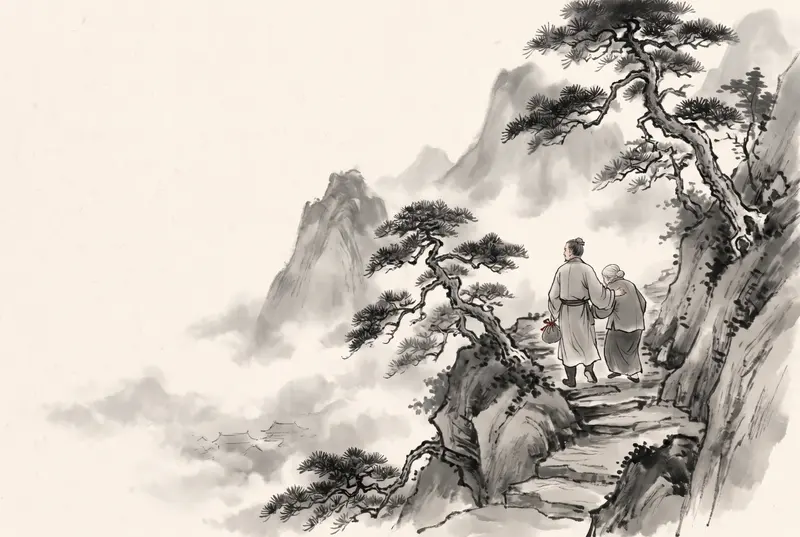
介子推從者憐之,乃懸書宮門曰:「龍欲上天,五蛇爲輔。龍已升雲,四蛇各入其宇,一蛇獨怨,終不見處所。」文公出,見其書,曰:「此介子推也。吾方憂王室,未圖其功。」使人召之,則亡。遂求所在,聞其入綿上山中,於是文公環綿上山中而封之,以爲介推田,號曰介山,「以記吾過,且旌善人」。從亡賤臣壺叔曰;「君三行賞,賞不及臣,敢請罪。」文公報曰:「夫導我以仁義,防我以德惠,此受上賞。輔我以行,卒以成立,此受次賞。矢石之難,汗馬之勞,此復受次賞。若以力事我而無補吾缺者,此[復]受次賞。三賞之後,故且及子。」晉人聞之,皆説。
Kundoku (Japanese reading)
介子推の従者之を憐れみ、乃ち書を宮門に懸けて曰く、「龍天に上らんと欲し、五蛇輔と為る。龍已に雲に升り、四蛇各々其の宇に入る。一蛇独り怨み、終に処所を見ず」と。文公出でて、其の書を見て曰く、「此れ介子推なり。吾方に王室を憂え、未だ其の功を図らず」と。人をして之を召さしむるに、則ち亡し。遂に所在を求むるに、其の綿上の山中に入れるを聞く。是に於いて文公綿上の山中を環りて之を封じ、以て介推の田と為し、号して介山と曰う。「以て吾が過ちを記し、且つ善人を旌す」と。亡に従いし賤臣壺叔曰く、「君三たび賞を行うも、賞臣に及ばず。敢えて罪を請う」と。文公報じて曰く、「夫れ我を導くに仁義を以てし、我を防ぐに徳恵を以てす、此れ上賞を受く。我を輔くるに行を以てし、卒に以て成立す、此れ次賞を受く。矢石の難、汗馬の労、此れ復た次賞を受く。若し力を以て我に事えて吾が缺を補うこと無き者は、此れ[復た]次賞を受く。三賞の後、故に且に子に及ばんとす」と。晋人之を聞きて、皆説ぶ。
Japanese
介子推の従者が彼を哀れみ、宮殿の門に書を掲げた。「竜が天に昇ろうとして、五匹の蛇が助けた。竜が雲に昇ると、四匹の蛇はそれぞれ住みかを得たが、一匹の蛇だけは恨み、ついに居場所が見つからない」。文公は外出してこの書を見て言った。「これは介子推のことだ。私は王室のことを心配していて、彼の功を考えていなかった」。人をやって召したが、すでにいなかった。行方を探すと、綿上の山中に入ったと聞いた。そこで文公は綿上の山のまわりを彼の領地とし、介推の田として、介山と名づけた。「私の過ちを記し、また善人をあらわすためである」と言った。亡命に従った身分の低い臣の壺叔が言った。「三度賞を行われましたが、私には及びません。どんな罪があるのか、お尋ねします」。文公は答えた。「私を仁義で導き、徳と恵みで過ちを防いでくれた者が最上の賞を受ける。行動で助け、私を立ててくれた者がその次の賞を受ける。矢や石の危険をくぐり、馬に汗をかかせて働いた者がまたその次の賞を受ける。力仕事で仕えてくれたが私の足りないところを補うわけではない者は、さらにその次の賞を受ける。三度の賞の後に、そなたに及ぶはずだ」。晋の人々はこれを聞いて、みな喜んだ。
English
One of Jie Zhitui's followers pitied him and hung a message on the palace gate: "The dragon longed to rise to heaven, and five snakes helped him. Now the dragon has reached the clouds, and four snakes have gone into their homes. One snake alone is left to grieve, and no one has seen where he lies." When Duke Wen came out and saw it, he said: "This is Jie Zhitui. I have been worried about the royal house and have not thought of his service." He sent for him, but he was gone. He had a search made, and heard that Zhitui had gone into the mountains of Mianshang. So Duke Wen made all the land around the mountains of Mianshang into Jie Tui's fields, and named it Mount Jie, "to record my fault and to honor a good man." Hu Shu, a humble servant who had followed him in exile, said: "Three times you have given rewards, and none has reached me. May I ask what I have done wrong?" Duke Wen answered: "Those who guided me with goodness and right, and kept me from error with virtue and kindness, have the highest reward. Those who helped me with their deeds until I was established have the next. Those who braved the arrows and stones and sweated their horses have the next. Those who served me with their strength but did not mend my faults will have the next after that. After the three rounds of rewards, it will come to you." The people of Jin heard this and were all pleased.
Notes (JA)
- 五蛇: 重耳に従った五人の賢士をたとえる。
- 綿上: 今の山西省の綿山一帯。
- 旌: 表彰する。
- 汗馬の勞: 戦場で馬に汗をかかせる苦労。「汗馬の労」の出典の一つ。
- [復]: 校訂で補った字。
Notes (EN)
- Five snakes: the five followers who stood by Chong'er.
- Mianshang: the Mian Mountains in present-day Shanxi.
- Sweated their horses (汗馬之勞): a phrase still used for hard service in war.
Idioms from this passage: The labor of sweating horses 汗馬の労
Word notes
- grieve/ɡriv/verb
to feel deep sorrow
In the text: “left to grieve”
Similar words: mourn — feel sadness at a loss · lament — express sorrow
- humble/ˈhʌmbəl/adjective
of low rank
In the text: “a humble servant”
Similar words: lowly — of low position · modest — not grand
Passage 11
Original
二年春,秦軍河上,將入王。趙衰曰;「求霸莫如入王尊周。周晉同姓,晉不先入王,後秦入之,毋以令于天下。方今尊王,晉之資也。」三月甲辰,晉乃發兵至陽樊,圍温,入襄王于周。四月,殺王弟帶。周襄王賜晉河内陽樊之地。四年,楚成王及諸侯圍宋,宋公孫固如晉告急。先軫曰:「報施定霸,於今在矣。」狐偃曰:「楚新得曹而初婚於衞,若伐曹、衞,楚必救之,則宋免矣。」於是晉作三軍。趙衰舉郤縠將中軍,郤臻佐之;使狐偃將上軍,狐毛佐之,命趙衰爲卿;欒枝將下軍,先軫佐之;荀林父御戎,魏犫爲右:往伐。冬十二月,晉兵先下山東,而以原封趙衰。五年春,晉文公欲伐曹,假道於衞,衞人弗許。還自河南度,侵曹,伐衞。正月,取五鹿。二月,晉侯、齊侯盟于斂盂。衞侯請盟晉,晉人不許。衞侯欲與楚,國人不欲,故出其君以説晉。衞侯居襄牛,公子買守衞。楚救衞,不卒。晉侯圍曹。三月丙午,晉師入曹,數之以其不用釐負羈言,而用美女乘軒者三百人也。令軍毋入僖負羈宗家以報德。楚圍宋,宋復告急晉。文公欲救則攻楚,爲楚嘗有德,不欲伐也;欲釋宋,宋又嘗有德於晉:患之。先軫曰:「執曹伯,分曹、衞地以與宋,楚急曹、衞,其勢宜釋宋。」於是文公從之,而楚成王乃引兵歸。
Kundoku (Japanese reading)
二年春、秦河上に軍し、将に王を入れんとす。趙衰曰く、「覇を求むるは王を入れて周を尊ぶに如くは莫し。周と晋とは同姓なり。晋先んじて王を入れず、後れて秦之を入れば、以て天下に令する毋し。方今王を尊ぶは、晋の資なり」と。三月甲辰、晋乃ち兵を発して陽樊に至り、温を囲み、襄王を周に入る。四月、王の弟帯を殺す。周の襄王晋に河内陽樊の地を賜う。四年、楚の成王及び諸侯宋を囲む。宋の公孫固晋に如きて急を告ぐ。先軫曰く、「施しに報い覇を定むるは、今に於いて在り」と。狐偃曰く、「楚新たに曹を得て初めて衛に婚す。若し曹・衛を伐たば、楚必ず之を救わん。則ち宋免れん」と。是に於いて晋三軍を作る。趙衰郤縠を挙げて中軍に将たらしめ、郤臻之を佐く。狐偃をして上軍に将たらしめ、狐毛之を佐け、趙衰に命じて卿と為す。欒枝下軍に将たり、先軫之を佐く。荀林父戎を御し、魏犫右と為り、往きて伐つ。冬十二月、晋の兵先ず山東に下り、而して原を以て趙衰を封ず。五年春、晋の文公曹を伐たんと欲し、道を衛に仮る。衛人許さず。還りて河南より度り、曹を侵し、衛を伐つ。正月、五鹿を取る。二月、晋侯・斉侯斂盂に盟う。衛侯晋に盟わんことを請うも、晋人許さず。衛侯楚に与せんと欲す。国人欲せず、故に其の君を出だして以て晋に説く。衛侯襄牛に居り、公子買衛を守る。楚衛を救うも、卒えず。晋侯曹を囲む。三月丙午、晋の師曹に入り、之を数むるに其の釐負羈の言を用いずして、美女の軒に乗る者三百人を用うるを以てす。軍に令して僖負羈の宗家に入る毋からしめ、以て徳に報ゆ。楚宋を囲む。宋復た急を晋に告ぐ。文公救わんと欲すれば則ち楚を攻む。楚嘗て徳有るが為に、伐つを欲せず。宋を釈かんと欲すれば、宋も又嘗て晋に徳有り。之を患う。先軫曰く、「曹伯を執え、曹・衛の地を分かちて以て宋に与えよ。楚曹・衛に急にして、其の勢い宜しく宋を釈くべし」と。是に於いて文公之に従う。而して楚の成王乃ち兵を引きて帰る。
Japanese
二年の春、秦が黄河のほとりに軍を進め、襄王を都へ戻そうとした。趙衰は言った。「覇者を目指すなら、王を入れて周を尊ぶのが一番です。周と晋は同姓です。晋が先に王を入れず、遅れて秦が入れたなら、天下に号令できません。今こそ王を尊ぶことが晋の元手となります」。三月の甲辰の日、晋は兵を出して陽樊に至り、温を囲み、襄王を周に戻した。四月、王の弟の帯を殺した。襄王は晋に河内の陽樊の地を与えた。四年、楚の成王と諸侯が宋を囲み、宋の公孫固が晋に急を告げた。先軫は言った。「恩に報いて覇業を定めるのは今です」。狐偃は言った。「楚は曹を味方にしたばかりで、衛とも婚姻を結びました。曹と衛を討てば、楚は必ず救いに来ます。そうなれば宋は助かります」。そこで晋は三軍を編成した。趙衰は郤縠を推して中軍の将とし、郤臻が補佐した。狐偃を上軍の将、狐毛を補佐とし、趙衰を卿とした。欒枝を下軍の将、先軫を補佐とし、荀林父が戦車を御し、魏犫を車右として出陣した。冬十二月、晋の兵はまず太行山の東に下り、原の地を趙衰に与えた。五年の春、文公は曹を討とうとして衛に道を借りたが、衛は許さなかった。引き返して黄河の南から渡り、曹を侵して衛を討った。正月、五鹿を取った。二月、晋侯と斉侯は斂盂で盟約した。衛侯は晋に盟約を願ったが許されず、楚につこうとしたところ、国人は望まず、君主を追い出して晋の機嫌をとった。衛侯は襄牛に身を置き、公子買が衛を守った。楚は衛を救おうとしたが果たせなかった。晋侯は曹を囲んだ。三月の丙午の日、晋軍は曹に入り、釐負羈の言葉を用いずに、車に乗る美女三百人を抱えていたことを責めた。そして軍に命じて負羈の一族の家には入らせず、恩に報いた。楚が宋を囲むと、宋はまた晋に急を告げた。文公は、救おうとすれば楚を攻めることになるが、楚には恩があるので討ちたくない。宋を見捨てれば、宋にも恩がある。困っていると、先軫が言った。「曹の君主を捕らえ、曹と衛の土地を分けて宋に与えましょう。楚は曹と衛のことで焦って、宋の包囲を解かざるを得なくなります」。文公はこれに従い、楚の成王は兵を引いて帰った。
English
In the spring of the second year, Qin camped by the Yellow River, about to restore the king. Zhao Cui said: "There is no better way to become hegemon than to restore the king and honor Zhou. Zhou and Jin share a surname. If Jin does not bring the king back first and Qin does it instead, we will never be able to command the realm. To honor the king now is the capital on which Jin can build." On the day jiachen of the third month, Jin marched to Yangfan, besieged Wen and brought King Xiang back to Zhou. In the fourth month it killed the king's brother Dai. King Xiang rewarded Jin with the land of Yangfan in Henei. In the fourth year, King Cheng of Chu and other lords besieged Song, and Gongsun Gu of Song came to Jin for help. Xian Zhen said: "The time to repay kindness and establish your hegemony is now." Hu Yan said: "Chu has just won over Cao and has made a marriage alliance with Wey. If we attack Cao and Wey, Chu will surely come to save them, and Song will be spared." So Jin formed three armies. Zhao Cui put forward Xi Hu to lead the Central Army, assisted by Xi Zhen. Hu Yan led the Upper Army, assisted by Hu Mao, and Zhao Cui was made a high minister. Luan Zhi led the Lower Army, assisted by Xian Zhen. Xun Linfu drove the war chariot, and Wei Chou stood at the right. So they marched. In the twelfth month, the Jin army first came down east of the mountains, and Yuan was given to Zhao Cui as a fief. In the spring of the fifth year, Duke Wen wanted to attack Cao and asked Wey for passage. Wey refused. He turned back, crossed the River from the south, invaded Cao and attacked Wey. In the first month he took Wulu. In the second month, the lords of Jin and Qi swore a pact at Lianyu. The lord of Wey asked to join, but Jin refused. He then wanted to side with Chu, but his people would not have it, and they drove him out to please Jin. He took refuge at Xiangniu, and Prince Mai held Wey. Chu tried to save Wey but failed. The lord of Jin besieged Cao. On the day bingwu of the third month the Jin army entered Cao. He denounced its ruler for ignoring the advice of Xi Fuji while keeping three hundred beauties who rode in carriages. He ordered his troops to stay out of the house of Xi Fuji's clan, in return for his kindness. Chu besieged Song, and Song again called on Jin. If Duke Wen rescued it he would have to attack Chu, and he did not want to fight Chu, which had been kind to him. If he abandoned Song, Song too had been kind to him. It troubled him. Xian Zhen said: "Seize the ruler of Cao and give Song part of the lands of Cao and Wey. Chu will rush to save Cao and Wey, and it will have to let Song go." Duke Wen did this, and King Cheng of Chu drew back his forces.
Notes (JA)
- 尊王: 周王を尊ぶこと。覇者の大義名分。
- 三軍: 上・中・下の三軍。
- 御戎・右: 戦車の御者と、右に乗る武者。
- 山東: ここでは太行山の東。
- 五鹿: 重耳が放浪中に飢えて土を与えられた地(p3)。
Notes (EN)
- Honoring the king (尊王): the moral banner under which a hegemon acted.
- Three armies: the Upper, Central and Lower Armies, Jin's main force.
- Wulu: the place where the hungry Chong'er had been handed a clod of earth (p3).
Word notes
- restore/rɪˈstɔr/verb
to put back in power or in place
In the text: “to restore the king”
Similar words: reinstate — put back in a post · bring back — return
- besiege/bɪˈsidʒ/verb
to surround a city to force it to give up
In the text: “besieged Song”
Similar words: surround — be on all sides of · blockade — cut off from supplies
Passage 12
Original
楚將子玉曰:「王遇晉至厚,今知楚急曹、衞而故伐之,是輕王。」王曰:「晉侯亡在外十九年,困日久矣,果得反國,險阸盡知之,能用其民,天之所開,不可當。」子玉請曰:「非敢必有功,願以閒執讒慝之口也。」楚王怒,少與之兵。於是子玉使宛春告晉:「請復衞侯而封曹,臣亦釋宋。」咎犯曰:「子玉無禮矣,君取一,臣取二,勿許。」先軫曰:「定人之謂禮。楚一言定三國,子一言而亡之,我則毋禮。不許楚,是棄宋也。不如私許曹、衞以誘之,執宛春以怒楚,旣戰而後圖之。」晉侯乃囚宛春於衞,且私許復曹、衞。曹、衞告絶於楚。楚得臣怒,撃晉師,晉師退。軍吏曰:「爲何退?」文公曰:「昔在楚,約退三舍,可倍乎!」楚師欲去,得臣不肯。四月戊辰,宋公、齊將、秦將與晉侯次城濮。己巳,與楚兵合戰,楚兵敗,得臣收餘兵去。甲午,晉師還至衡雍,作王宮于踐土。
Kundoku (Japanese reading)
楚の将子玉曰く、「王晋を遇すること至って厚し。今楚の曹・衛に急なるを知りて故に之を伐つ。是れ王を軽んずるなり」と。王曰く、「晋侯亡れて外に在ること十九年、困しむ日久し。果たして国に反るを得、険阸尽く之を知り、能く其の民を用う。天の開く所、当たるべからず」と。子玉請いて曰く、「敢えて必ず功有らんとするに非ず。願わくは以て讒慝の口を間執せん」と。楚王怒り、少しく之に兵を与う。是に於いて子玉宛春をして晋に告げしむ、「請う衛侯を復して曹を封ぜよ。臣も亦宋を釈かん」と。咎犯曰く、「子玉は無礼なり。君は一を取り、臣は二を取る。許す勿かれ」と。先軫曰く、「人を定むるを之れ礼と謂う。楚は一言にして三国を定め、子は一言にして之を亡ぼす。我則ち礼毋し。楚を許さざるは、是れ宋を棄つるなり。私かに曹・衛に許して以て之を誘い、宛春を執えて以て楚を怒らせ、既に戦いて而る後に之を図るに如かず」と。晋侯乃ち宛春を衛に囚え、且つ私かに曹・衛を復するを許す。曹・衛絶を楚に告ぐ。楚の得臣怒り、晋の師を撃つ。晋の師退く。軍吏曰く、「何の為に退くや」と。文公曰く、「昔楚に在りしとき、三舎退かんことを約す。倍くべけんや」と。楚の師去らんと欲するも、得臣肯ぜず。四月戊辰、宋公・斉の将・秦の将、晋侯と城濮に次す。己巳、楚の兵と合戦す。楚の兵敗れ、得臣余兵を収めて去る。甲午、晋の師還りて衡雍に至り、王宮を践土に作る。
Japanese
楚の将軍の子玉は言った。「王は晋を手厚く遇されたのに、楚が曹と衛のことで困ると知って、わざと攻めています。これは王を軽んじています」。成王は言った。「晋侯は十九年も国外で苦しみ、ついに帰国して、国の険しい所をすべて知り、民をよく使っている。天が開いた者には、当たることはできない」。子玉は願い出た。「必ず手柄を立てるとは申しません。ただ、私を悪く言う者たちの口をふさぎたいのです」。楚王は怒って、わずかな兵しか与えなかった。そこで子玉は宛春を晋へやって告げた。「衛侯を復位させ、曹を元に戻してください。そうすれば私も宋の囲みを解きます」。咎犯は言った。「子玉は無礼です。主君には一つ、臣下の自分は二つ取ろうというのです。許してはなりません」。先軫は言った。「人を安定させるのが礼です。楚は一言で三国を安定させ、我々は一言でそれを滅ぼすことになる。それでは我々が無礼です。楚の申し出を拒めば、宋を捨てることになります。ひそかに曹と衛に復国を約束して誘い、宛春を捕らえて楚を怒らせ、戦ったあとで考えるのがよいでしょう」。晋侯は宛春を衛に捕らえ、ひそかに曹と衛の復国を約束した。曹と衛は楚に絶交を告げた。楚の得臣(子玉)は怒って晋軍を攻めた。晋軍は退いた。軍吏が「なぜ退くのですか」と言うと、文公は言った。「昔、楚にいたとき、三舎退くと約束した。背くことができようか」。楚軍は引こうとしたが、得臣は承知しなかった。四月の戊辰の日、宋公、斉の将軍、秦の将軍は晋侯とともに城濮に陣を敷いた。己巳の日、楚軍と戦い、楚軍は敗れ、得臣は残兵をまとめて去った。甲午の日、晋軍は引き返して衡雍に至り、践土に王の宮殿を建てた。
English
The Chu general Ziyu said: "Your Majesty treated Jin with the greatest kindness. Now, knowing how much we care for Cao and Wey, he deliberately attacks them. This is contempt for you." The king said: "The lord of Jin spent nineteen years abroad and suffered long. Now that he has got home, he knows every danger and difficulty and can make good use of his people. Heaven has opened the way for him, and he cannot be opposed." Ziyu begged: "I do not say I am sure to succeed. I only want to stop the mouths of those who slander me." The king was angry and gave him few troops. So Ziyu sent Wan Chun to tell Jin: "Restore the lord of Wey and return Cao to its ruler, and I will lift the siege of Song." Jiu Fan said: "Ziyu is insolent. He offers our lord one thing and takes two for himself. Do not agree." Xian Zhen said: "To bring people security is what we call the rites. Chu, with one word, would settle three states. If you, with one word, destroy them, then we are the ones without manners. To refuse Chu is to abandon Song. Better to promise Cao and Wey in secret and draw them away, seize Wan Chun to enrage Chu, and decide what to do after the battle." So the lord of Jin held Wan Chun prisoner in Wey and secretly promised to restore Cao and Wey. Cao and Wey told Chu they were breaking with it. Ziyu, in a rage, attacked the Jin army, and the Jin army withdrew. The officers said: "Why are we retreating?" Duke Wen said: "When I was in Chu I promised to draw back three days' march. How can I break my word?" The Chu troops wanted to stop, but Ziyu would not. On the day wuchen of the fourth month, the duke of Song and the generals of Qi and Qin camped with the lord of Jin at Chengpu. On jisi they met the Chu army in battle. Chu was defeated, and Ziyu gathered his remaining men and left. On jiawu the Jin army returned to Hengyong and built a palace for the king at Jiantu.
Notes (JA)
- 閒執讒慝之口: 自分を悪く言う者の口をふさぐ。
- 得臣: 子玉の本名、成得臣。
- 城濮: 今の山東省・河南省の境。前632年の城濮の戦い。春秋時代の大きな転機。
- 退三舍: p5 の約束を実行した。これにより楚軍は深追いして不利な地で戦った。
- 踐土: 今の河南省原陽県付近。
Notes (EN)
- Battle of Chengpu: 632 BCE, on the present Shandong-Henan border, one of the turning points of the Spring and Autumn period.
- Draw back three days' march: he kept the promise of p5, and drew Chu forward onto ground of his choosing.
- Jiantu: near present-day Yuanyang, Henan.
Word notes
- oppose/əˈpoʊz/verb
to fight or be against
In the text: “he cannot be opposed”
Similar words: resist — fight against · withstand — stand against
- withdraw/wɪðˈdrɔ/verb
to move back
In the text: “the Jin army withdrew”
Similar words: retreat — move back from an enemy · pull back — move away
Passage 13
Original
五月丁未,獻楚俘於周,駟介百乘,徒兵千。天子使王子虎命晉侯爲伯,賜大輅,彤弓矢百,玈弓矢千,秬鬯一卣,珪瓚,虎賁三百人。晉侯三辭,然后稽首受之。周作晉文侯命:「王若曰:父義和,丕顯文、武,能愼明德,昭登於上,布聞在下,維時上帝集厥命于文、武。恤朕身、繼予一人永其在位。」於是晉文公稱伯。癸亥,王子虎盟諸侯於王庭。晉焚楚軍,火數日不息,文公嘆。左右曰:「勝楚而君猶憂,何?」文公曰:「吾聞能戰勝安者唯聖人,是以懼。且子玉猶在,庸可喜乎!」子玉之敗而歸,楚成王怒其不用其言,貪與晉戰,讓責子玉,子玉自殺。晉文公曰:「我撃其外,楚誅其内,内外相應。」於是乃喜。六月,晉人復入衞侯。壬午,晉侯度河北歸國。行賞,狐偃爲首。或曰:「城濮之事,先軫之謀。」文公曰:「城濮之事,偃説我毋失信。先軫曰『軍事勝爲右』,吾用之以勝。然此一時之説,偃言萬世之功,柰何以一時之利而加萬世功乎?是以先之。」
Kundoku (Japanese reading)
五月丁未、楚の俘を周に献ず。駟介百乗、徒兵千。天子王子虎をして晋侯に命じて伯と為し、大輅、彤弓矢百、玈弓矢千、秬鬯一卣、珪瓚、虎賁三百人を賜う。晋侯三たび辞し、然る后に稽首して之を受く。周晋の文侯の命を作る、「王若くのごとく曰く、父義和よ、丕いに顕らかなる文・武は、能く明徳を慎み、昭らかに上に登り、布きて下に聞こゆ。維れ時に上帝厥の命を文・武に集む。朕が身を恤み、予一人を継ぎて永く其の位に在らしめよ」と。是に於いて晋の文公伯を称す。癸亥、王子虎諸侯に王庭に盟う。晋楚の軍を焚くに、火数日息まず。文公嘆ず。左右曰く、「楚に勝ちて君猶お憂うるは、何ぞや」と。文公曰く、「吾聞く、能く戦い勝ちて安んずるは唯だ聖人のみと。是を以て懼る。且つ子玉猶お在り、庸ぞ喜ぶべけんや」と。子玉の敗れて帰るや、楚の成王其の言を用いず、貪りて晋と戦いしを怒り、子玉を譲責す。子玉自殺す。晋の文公曰く、「我其の外を撃ち、楚其の内を誅す。内外相応ず」と。是に於いて乃ち喜ぶ。六月、晋人復た衛侯を入る。壬午、晋侯河を度りて北して国に帰る。賞を行うに、狐偃を首と為す。或るひと曰く、「城濮の事は、先軫の謀なり」と。文公曰く、「城濮の事は、偃我に信を失う毋かれと説けり。先軫は『軍事は勝つを右と為す』と曰い、吾之を用いて以て勝てり。然れども此れ一時の説なり。偃の言は万世の功なり。柰何ぞ一時の利を以て万世の功に加えんや。是を以て之を先にす」と。
Japanese
五月の丁未の日、楚の捕虜を周に献上した。よろいをつけた馬の戦車百乗、歩兵千人である。天子は王子虎を遣わして晋侯を伯(覇者)に任じ、大きな車、赤い弓と矢百本、黒い弓と矢千本、香り酒一壺、祭りの玉の杓、精鋭の虎賁三百人を賜った。晋侯は三度辞退してから、額を地につけて受けた。周は「晋文侯の命」を作って言った。「王はこのように言う。おじの義和よ、偉大なる文王と武王は明らかな徳を慎み、その徳は天に昇り、地に広まった。そこで上帝はその命を文王と武王に授けた。朕の身をいたわり、朕が長くこの位にあるよう助けよ」。こうして晋の文公は覇者を称した。癸亥の日、王子虎は諸侯と王の庭で盟約した。晋は楚の陣営を焼き、火は数日消えなかった。文公はため息をついた。側近が「楚に勝ったのに、なぜ憂えておられるのですか」と言うと、文公は言った。「戦って勝ち、なお安らかでいられるのは聖人だけだと聞く。だから恐れるのだ。それに子玉がまだいる。どうして喜べよう」。子玉が敗れて帰ると、楚の成王は言うことを聞かず欲張って晋と戦ったことに怒り、子玉を責めた。子玉は自殺した。文公は言った。「私が外から撃ち、楚が内で彼を誅した。内と外が応じ合ったのだ」。そこで初めて喜んだ。六月、晋は衛侯を復位させた。壬午の日、晋侯は黄河を渡って北へ帰国した。賞を行うとき、狐偃を第一とした。ある人が言った。「城濮の戦いは先軫の計略です」。文公は言った。「城濮のとき、狐偃は信義を失うなと説いた。先軫は『軍事は勝つことが第一』と言い、私はそれを用いて勝った。しかしこれは一時の説である。狐偃の言葉は万世の功である。どうして一時の利を万世の功の上に置けようか。だから彼を先にしたのだ」。
English
On the day dingwei of the fifth month, he presented his Chu captives to Zhou: a hundred armored chariots and a thousand foot soldiers. The Son of Heaven sent Prince Hu to name the lord of Jin as hegemon, and gave him a great carriage, a red bow with a hundred arrows, a black bow with a thousand arrows, a jar of fragrant millet wine, a jade ladle and three hundred elite guards. The lord of Jin declined three times, and then bowed his head to the ground and accepted. Zhou composed the Charge to Marquis Wen of Jin: "Thus says the King: Uncle Yihe, the illustrious Kings Wen and Wu tended their bright virtue with care. It rose up shining to Heaven and spread through the world below, and so the Lord on High conferred his mandate on them. Take care of my person, and help me to remain long upon this throne." So Duke Wen of Jin was called hegemon. On guihai, Prince Hu swore the lords to a pact in the royal court. Jin burned the Chu camp, and the fire went on for days. Duke Wen sighed. His attendants said: "You have beaten Chu and still you are troubled. Why?" He said: "I have heard that only a sage can win a war and be at peace. That is why I am afraid. And Ziyu is still alive. How can I rejoice?" When Ziyu returned in defeat, King Cheng of Chu was angry that he had ignored his advice and greedily fought Jin, and he rebuked him. Ziyu killed himself. Duke Wen said: "I struck him from without, and Chu destroyed him from within. The two worked together." Only then was he glad. In the sixth month Jin restored the lord of Wey. On renwu the lord of Jin crossed the River and went north to his own country. In handing out rewards, he put Hu Yan first. Someone said: "The victory at Chengpu was Xian Zhen's plan." Duke Wen said: "At Chengpu, Yan urged me not to break faith. Xian Zhen said, 'In war, winning comes first,' and I used his advice and won. But his was advice for a moment. Yan's words are of service for ten thousand generations. How could I place a moment's gain above a service for ten thousand generations? That is why I put him first."
Notes (JA)
- 駟介: 四頭の馬によろいをつけた戦車。
- 伯: 「覇」と同じ。諸侯の長。
- 彤弓・玈弓: 赤い弓と黒い弓。天子が功臣に賜った。
- 秬鬯: 黒黍に香草を加えた祭りの酒。
- 虎賁: 勇猛な近衛兵。
- 父義和: 同姓の諸侯を「おじ」と呼んだ。ここの文は『書経』文侯之命の語句とされる。
Notes (EN)
- Hegemon (伯): the same word as 霸, the chief of the lords.
- Red and black bows: gifts the Son of Heaven gave to those of great merit.
- The Charge (文侯之命): a chapter of the Book of Documents with this wording.
- Uncle: a king called lords of his own clan "uncle".
Word notes
- hegemon/ˈhɛdʒəˌmɑn/noun
the leading ruler among many
In the text: “to name the lord of Jin as hegemon”
Similar words: overlord — a supreme lord · leader — the one in charge
Passage 14
Original
冬,晉侯會諸侯於温,欲率之朝周。力未能,恐其有畔者,乃使人言周襄王狩于河陽。壬申,遂率諸侯朝王於踐土。孔子讀史記至文公,曰「諸侯無召王」、「王狩河陽」者,春秋諱之也。
Kundoku (Japanese reading)
冬、晋侯諸侯を温に会し、之を率いて周に朝せんと欲す。力未だ能わず。其の畔く者有らんことを恐れ、乃ち人をして周の襄王に河陽に狩せんことを言わしむ。壬申、遂に諸侯を率いて王に践土に朝す。孔子史記を読みて文公に至り、曰く「諸侯は王を召すこと無し」と。「王河陽に狩す」とは、春秋之を諱むなり。
Japanese
冬、晋侯は諸侯を温に集め、彼らを率いて周に朝見しようとした。しかし、まだ力が足りず、背く者が出ることを恐れて、人をやって周の襄王に河陽で狩りをするよう申し入れた。壬申の日、諸侯を率いて践土で王に朝見した。孔子は史書を読んで文公のくだりにくると、「諸侯が王を呼びつけることがあってはならない」と言った。「王が河陽で狩りをした」という『春秋』の書き方は、この事実をはばかったものである。
English
In winter the lord of Jin gathered the lords at Wen and wanted to lead them to pay homage at the court of Zhou. But he did not yet have the power to do it, and feared some of them might rebel. So he sent word asking King Xiang of Zhou to go hunting at Heyang. On the day renshen, he led the lords to pay homage to the king at Jiantu. When Confucius, reading the historical records, came to Duke Wen, he said: "A lord does not summon a king." The words "The king went hunting at Heyang" are how the Spring and Autumn Annals avoids saying what happened.
Notes (JA)
- 溫: 今の河南省温県。
- 河陽: 黄河の北。
- 諱: はばかって直接書かない。孔子世家(巻47 p14)に同じ話がある。
Notes (EN)
- Heyang: north of the Yellow River.
- Compare the same example in the life of Confucius, Volume 47, p14.
Word notes
- pay homage/peɪ ˈhɑmɪdʒ/idiom
to show formal respect to a ruler
In the text: “to pay homage at the court of Zhou”
Similar words: bow to — show respect · honor — show great respect
Passage 15
Original
太史公曰:晉文公,古所謂明君也,亡居外十九年,至困約,及卽位而行賞,尚忘介子推,況驕主乎?靈公旣弒,其後成、景致嚴,至厲大刻,大夫懼誅,禍作。悼公以後日衰,六卿專權。故君道之御其臣下。固不易哉!
Kundoku (Japanese reading)
太史公曰く、晋の文公は、古の所謂明君なり。亡れて外に居ること十九年、困約に至る。位に即きて賞を行うに及びて、尚お介子推を忘る。況んや驕主をや。霊公既に弑せられ、其の後成・景は厳を致し、厲に至りて大いに刻なり。大夫誅を懼れ、禍作る。悼公以後日に衰え、六卿権を専らにす。故に君道の其の臣下を御するは、固より易からざるかな。
Japanese
太史公は言う。晋の文公は、昔でいう名君である。国外に亡命すること十九年、苦しみの極みを味わった。それでも位について賞を行うときには、介子推を忘れた。まして、おごった君主ならなおさらである。その後、霊公は殺され、成公と景公は厳しく治め、厲公に至ってはひどく苛酷だったので、大夫たちは処刑を恐れて禍が起こった。悼公より後は日ごとに衰え、六卿が権力を独占した。君主が臣下を治めることは、まことに容易ではない。
English
The Grand Historian says: Duke Wen of Jin was what the ancients called an enlightened ruler. He lived in exile for nineteen years and knew the depths of hardship. Yet when he took the throne and handed out rewards, he still forgot Jie Zhitui. How much more would an arrogant ruler forget! After Duke Ling was murdered, Dukes Cheng and Jing ruled severely, and Duke Li was extremely harsh. The ministers feared for their lives, and disaster followed. After Duke Dao the state weakened day by day, and the six high ministers took all the power. It is truly no easy thing for a ruler to manage his ministers.
Notes (JA)
- 六卿: 晋の六つの有力な家。のちに韓・魏・趙が晋を分割し、戦国時代が始まる。
- 御: 治める。もとは馬車を御すること。
Notes (EN)
- Six high ministers (六卿): the great families of Jin. Three of them, Han, Wei and Zhao, later split the state, which opened the Warring States period.
Word notes
- enlightened/ɪnˈlaɪtənd/adjective
wise and understanding
In the text: “an enlightened ruler”
Similar words: wise — having good judgment · just — fair