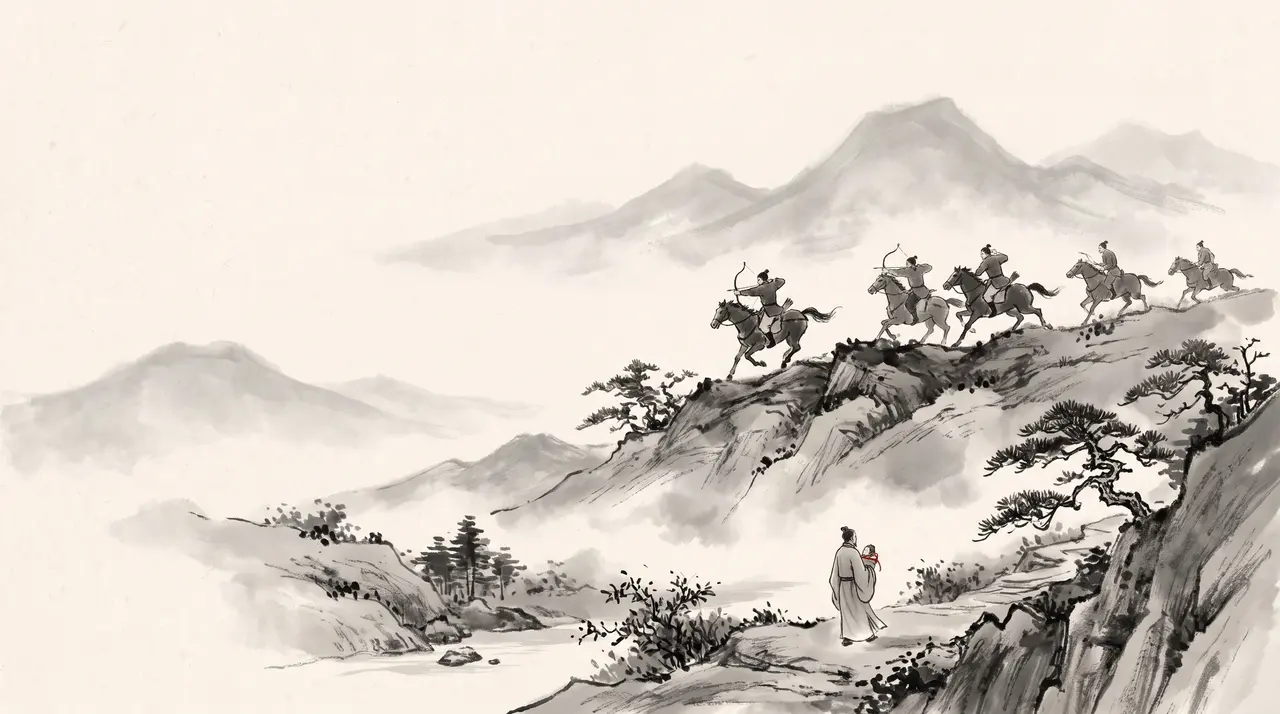
Hereditary Houses · Vol. 43
The Hereditary House of Zhao 趙世家
The Orphan of Zhao, and Riding in Nomad Dress 趙氏孤兒・胡服騎射
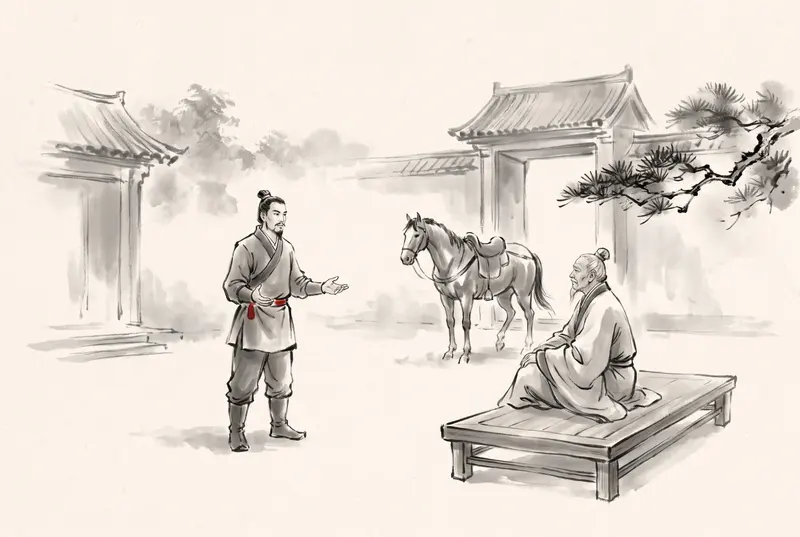
Two stories of the great Zhao clan of Jin. The first is the Orphan of Zhao. When the powerful minister Tu'an Gu wiped out the Zhao, only Zhao Shuo's pregnant wife survived. To save the boy she bore, the retainer Gongsun Chujiu said that dying was easy and raising the orphan hard, and died himself with another baby in the orphan's place, while Cheng Ying took on the name of a traitor to bring up the real heir. Fifteen years later the Zhao were restored, and Cheng Ying killed himself to report to his dead comrade. The second, more than two centuries later, is King Wuling of Zhao's "nomad dress and mounted archery". When the king set out to dress like the horsemen of the north and train cavalry, his uncle Prince Cheng objected that he was abandoning the culture of the Middle Kingdom. The king argued that dress and ritual exist for convenience, and carried his reform through.
This page has the scene "The Orphan of Zhao, and Riding in Nomad Dress" from this volume, not the whole volume.
Audio
The audio is synthetic speech.
Video
Passage 1
Original
晉景公之三年,大夫屠岸賈欲誅趙氏。初,趙盾在時,夢見叔帶持要而哭,甚悲;已而笑,拊手且歌。盾卜之,兆絶而後好。趙史援占之,曰:「此夢甚惡,非君之身,乃君之子,然亦君之咎。至孫,趙將世益衰。」
Kundoku (Japanese reading)
晋の景公の三年、大夫屠岸賈趙氏を誅せんと欲す。初め、趙盾在りし時、夢に叔帯要を持して哭し、甚だ悲しむを見る。已にして笑い、手を拊ちて且つ歌う。盾之を卜するに、兆絶えて後に好し。趙の史援之を占いて曰く、「此の夢甚だ悪し。君の身に非ず、乃ち君の子なり。然れども亦君の咎なり。孫に至りて、趙将に世々益々衰えんとす」と。
Japanese
晋の景公の三年、大夫の屠岸賈が趙氏を滅ぼそうとした。これより前、趙盾が生きていたころ、趙盾は夢を見た。趙氏の祖先の叔帯が腰をつかんで泣き、ひどく悲しんでいたが、やがて笑い出し、手を打って歌った。趙盾がこれを占うと、亀甲のひびは途中で切れ、その先はよい形になっていた。趙氏の史官の援が占って言った。「この夢はたいへん悪い。災いはあなた自身ではなく、あなたの子に降りかかります。それでも、もとはあなたの招いたものです。孫の代には、趙氏はいっそう衰えるでしょう」。
English
In the third year of Duke Jing of Jin, the grandee Tu'an Gu set out to destroy the Zhao clan. Earlier, while Zhao Dun was alive, he had dreamed of Shu Dai, the founder of his line, clutching his waist and weeping bitterly; then Shu Dai laughed, clapped his hands and sang. Zhao Dun had it divined: the crack in the shell broke off and then turned favourable. Yuan, the Zhao clan's scribe, read it and said: "This dream is very bad. It falls not on you but on your son, yet the fault is yours. By your grandson's time, the Zhao will be in deeper decline."
Notes (JA)
- 晉景公之三年: 前597年。『春秋左氏伝』ではこの事件(下宮の難)を前583年のこととし、話の筋もかなり違う。ここは『史記』の伝える形で読む。
- 趙盾: 趙宣子。晋の正卿(筆頭の大臣)で、趙朔の父。
- 叔帶: 周の幽王のころ晋に移った、趙氏の祖先。
- 兆: 亀甲を焼いてできるひび。その形で吉凶を占った。
- 咎: とが、責任。
Notes (EN)
- The third year of Duke Jing: 597 BCE. The Zuo Commentary dates this massacre to 583 BCE and tells it quite differently; here we follow the Shiji.
- Zhao Dun (趙盾): Zhao Xuanzi, chief minister of Jin and father of Zhao Shuo.
- Shu Dai (叔帶): the ancestor of the Zhao, who moved to Jin in the time of King You of Zhou.
- The crack in the shell (兆): tortoise shells were heated and the cracks read for omens.
Word notes
- divine/dɪˈvaɪn/verb
to try to learn the future by reading signs
In the text: “Zhao Dun had it divined”
Similar words: foretell — say what will happen · read — explain signs
- decline/dɪˈklaɪn/noun
a slow loss of power or strength
In the text: “deeper decline”
Similar words: fall — a drop · downturn — a move for the worse
Passage 2
Original
屠岸賈者,始有寵於靈公,及至於景公而賈爲司寇,將作難,乃治靈公之賊以致趙盾,遍告諸將曰:「盾雖不知,猶爲賊首。以臣弒君,子孫在朝,何以懲罪?請誅之。」韓厥曰:「靈公遇賊,趙盾在外,吾先君以爲無罪,故不誅。今諸君將誅其後,是非先君之意而今妄誅。妄誅謂之亂。臣有大事而君不聞,是無君也。」屠岸賈不聽。韓厥告趙朔趣亡。朔不肯,曰:「子必不絶趙祀,朔死不恨。」韓厥許諾,稱疾不出。賈不請而擅與諸將攻趙氏於下宮,殺趙朔、趙同、趙括、趙嬰齊,皆滅其族。
Kundoku (Japanese reading)
屠岸賈なる者は、始め霊公に寵有り。景公に至るに及びて賈は司寇と為る。将に難を作さんとし、乃ち霊公の賊を治めて以て趙盾に致し、遍く諸将に告げて曰く、「盾知らずと雖も、猶お賊首たり。臣を以て君を弑し、子孫朝に在り。何を以て罪を懲らさん。請う之を誅せん」と。韓厥曰く、「霊公賊に遇うに、趙盾外に在り。吾が先君以て罪無しと為す。故に誅せず。今諸君将に其の後を誅せんとす。是れ先君の意に非ずして今妄りに誅するなり。妄りに誅する、之を乱と謂う。臣大事有りて君聞かず、是れ君無きなり」と。屠岸賈聴かず。韓厥趙朔に告げて趣かに亡げしむ。朔肯ぜずして曰く、「子必ず趙の祀を絶たずんば、朔死すとも恨みず」と。韓厥許諾し、疾と称して出でず。賈請わずして擅に諸将と趙氏を下宮に攻め、趙朔・趙同・趙括・趙嬰斉を殺し、皆其の族を滅ぼす。
Japanese
屠岸賈は、はじめ霊公に気に入られていたが、景公の代になると司寇(刑罰をつかさどる長官)となった。屠岸賈は事を起こそうとして、霊公を殺した者たちの罪を問い直し、その責任を趙盾に結びつけた。そして将軍たちに触れ回った。「趙盾は知らなかったとしても、反逆の首謀者だ。臣下が主君を殺したのに、その子孫が朝廷にいる。これでどうして罪を罰したことになろう。彼らを討とう」。韓厥は言った。「霊公が殺されたとき、趙盾は国外にいた。先君(成公)は趙盾に罪はないとして、罰しなかったのだ。いま諸君がその子孫を討とうとするのは、先君の考えに背き、みだりに人を殺すことだ。みだりに殺すことを乱という。臣下が大事を起こすのに主君が知らないのでは、主君がいないのと同じだ」。屠岸賈は聞き入れなかった。韓厥は趙朔に、すぐに逃げるよう知らせた。趙朔は承知せず、「あなたがきっと趙氏の祭祀を絶やさないようにしてくださるなら、私は死んでも心残りはない」と言った。韓厥は承知し、病気と称して家から出なかった。屠岸賈は主君の許しも得ずに、勝手に将軍たちと下宮の趙氏を攻め、趙朔・趙同・趙括・趙嬰斉を殺し、その一族をことごとく滅ぼした。
English
Tu'an Gu had first been a favourite of Duke Ling, and under Duke Jing he became Minister of Justice. Meaning to stir up trouble, he reopened the case of Duke Ling's murder so as to pin it on Zhao Dun, and told all the generals: "Even if Dun did not know of it, he was still the chief of the traitors. A subject killed his lord, and his descendants sit at court. How is the crime to be punished? I ask that they be put to death." Han Jue said: "When Duke Ling was murdered, Zhao Dun was away. Our former lord judged him innocent, and so did not punish him. If you gentlemen now put his descendants to death, you go against our former lord's will and kill without cause. To kill without cause is called disorder. And if subjects do a great deed without their lord hearing of it, it is as if there were no lord." Tu'an Gu would not listen. Han Jue told Zhao Shuo to flee at once. Zhao Shuo refused: "If you will make sure the sacrifices of Zhao are never cut off, I can die without regret." Han Jue promised, and then stayed at home pleading illness. Without asking the duke's leave, Tu'an Gu went with the generals and attacked the Zhao at the Lower Palace, killing Zhao Shuo, Zhao Tong, Zhao Kuo and Zhao Yingqi and wiping out their families.
Notes (JA)
- 靈公: 晋の霊公。暴君で、前607年に趙盾の一族の趙穿に殺された。国外へ逃げる途中だった趙盾が戻って位にとどまったため、史官に「趙盾其の君を弑す」と書かれた。
- 司寇: 刑罰をつかさどる長官。
- 韓厥: 晋の卿。のちの韓の国の祖先。
- 趙朔: 趙盾の子。妻は晋の成公の姉。
- 下宮: 趙氏の屋敷のあった所とされる。
- 趙括: ここの趙括は春秋時代の晋の人。巻81の、戦国時代の趙の将軍趙括(このサイトに掲載)とは別人。
Notes (EN)
- Duke Ling (靈公): a tyrant killed in 607 BCE by Zhao Chuan, a kinsman of Zhao Dun. Zhao Dun, who had fled but not yet left the country, came back and kept his post, so the court scribe wrote that "Zhao Dun murdered his lord."
- Han Jue (韓厥): a minister of Jin and ancestor of the later state of Han.
- Zhao Shuo (趙朔): Zhao Dun's son, married to the elder sister of Duke Cheng of Jin.
- Zhao Kuo (趙括): not the Warring States general of Shiji 81 (on this site), but a Jin noble of the same name.
Word notes
- reopen/riˈoʊpən/verb
to start dealing with something again
In the text: “he reopened the case”
Similar words: revive — bring back · resume — start again
- flee/fli/verb
to run away from danger
In the text: “told Zhao Shuo to flee at once”
Similar words: escape — get away · run off — leave fast
Past tense: fled.
Passage 3
Original
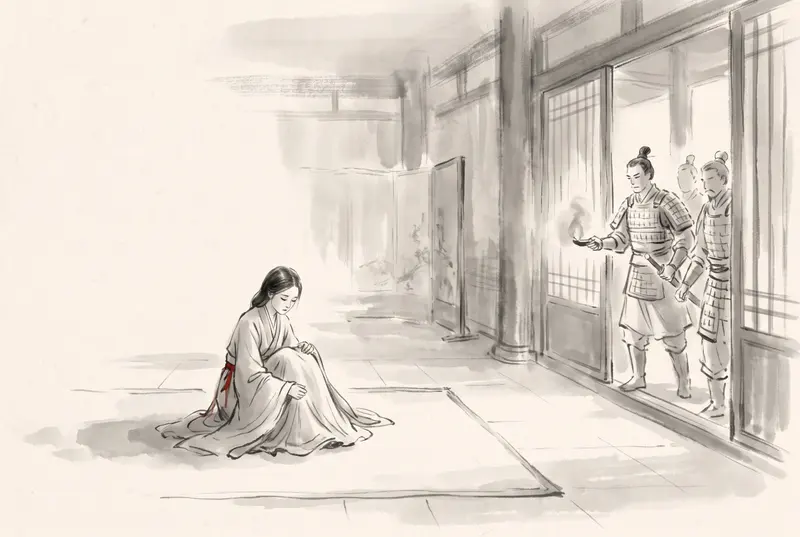
趙朔妻成公姊,有遺腹,走公宮匿。趙朔客曰公孫杵臼,杵臼謂朔友人程嬰曰:「胡不死?」程嬰曰:「朔之婦有遺腹,若幸而男,吾奉之;卽女也,吾徐死耳。」居無何,而朔婦免身,生男。屠岸賈聞之,索於宮中。夫人置兒叱罅祝曰:「趙宗滅乎,若號;卽不滅,若無聲。」及索,兒竟無聲。
Kundoku (Japanese reading)
趙朔の妻は成公の姉にして、遺腹有り。公宮に走りて匿る。趙朔の客を公孫杵臼と曰う。杵臼朔の友人程嬰に謂いて曰く、「胡ぞ死せざる」と。程嬰曰く、「朔の婦遺腹有り。若し幸いにして男ならば、吾之を奉ぜん。即し女ならば、吾徐ろに死せんのみ」と。居ること何も無くして、朔の婦免身し、男を生む。屠岸賈之を聞き、宮中に索む。夫人児を絝の中に置き、祝りて曰く、「趙宗滅びんか、若号べ。即し滅びずんば、若声無かれ」と。索むるに及びて、児竟に声無し。
Japanese
趙朔の妻は成公の姉で、身ごもっていた。彼女は晋公の宮殿に逃げこんで身を隠した。趙朔の食客に、公孫杵臼という者がいた。杵臼は趙朔の友人の程嬰に言った。「なぜ死なないのか」。程嬰は言った。「趙朔の奥方は身ごもっている。もし運よく男の子なら、私がお育てする。女の子なら、そのときゆっくり死ぬまでだ」。まもなく趙朔の妻は出産し、男の子が生まれた。屠岸賈はこれを聞くと、宮中を捜索させた。夫人は赤子をはかまの中に隠し、祈った。「趙の一族が滅びるのなら、泣き叫びなさい。滅びないのなら、声を立ててはいけません」。捜索の役人が来たが、赤子はとうとう声を出さなかった。
English
Zhao Shuo's wife, the elder sister of Duke Cheng, was carrying his child. She fled to the duke's palace and hid. Zhao Shuo had a retainer named Gongsun Chujiu, who said to Zhao Shuo's friend Cheng Ying: "Why haven't you died with him?" Cheng Ying said: "Shuo's wife is with child. If by good fortune it is a boy, I will serve him. If it is a girl, I can die at my leisure." Before long Shuo's wife gave birth to a boy. Tu'an Gu heard of it and had the palace searched. The lady hid the baby in her trousers and prayed: "If the house of Zhao is to perish, cry out. If not, make no sound." When the search came, the baby made no sound at all.
Notes (JA)
- 遺腹: 父の死後に生まれる子。
- 公宮: 晋の君主の宮殿。
- 客: 食客。有力者の家に養われている人。
- 免身: 出産する。
- 叱罅: Wikisource のこの版の字。中華書局本など通行の本は「絝中」(はかまの中)とする。書き下しと訳は通行本に従った。
Notes (EN)
- Retainer (客): a "guest" kept by a great house, a client or follower.
- Hid the baby in her trousers: this edition of the text reads 叱罅 here, but the standard editions read 絝中, "in her trousers", which we follow.
Word notes
- search/sɜrtʃ/verb
to look carefully for someone or something
In the text: “had the palace searched”
Similar words: hunt — look hard for · comb — search very carefully
- pray/preɪ/verb
to speak to a god or spirit, asking for help
In the text: “hid the baby in her trousers and prayed”
Similar words: plead — ask strongly · beseech — beg
Passage 4
Original
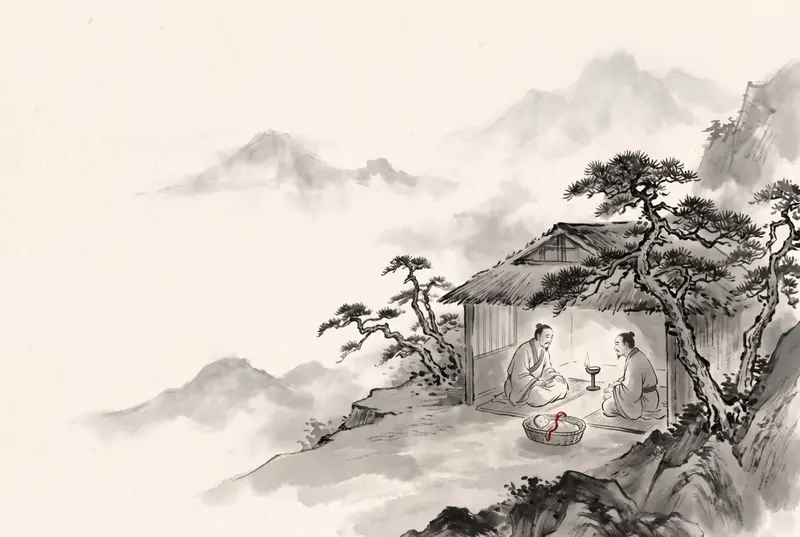
已脱,程嬰謂公孫杵臼曰:「今一索不得,後必且復索之,柰何?」公孫杵臼曰:「立孤與死孰難?」程嬰曰:「死易,立孤難耳。」公孫杵臼曰:「趙氏先君遇子厚,子彊爲其難者,吾爲其易者,請先死。」乃二人謀取他人嬰兒負之,衣以文葆,匿山中。
Kundoku (Japanese reading)
已に脱して、程嬰公孫杵臼に謂いて曰く、「今一たび索めて得ず。後必ず且に復た之を索めんとす。柰何せん」と。公孫杵臼曰く、「孤を立つると死すると孰れか難き」と。程嬰曰く、「死するは易く、孤を立つるは難きのみ」と。公孫杵臼曰く、「趙氏の先君子を遇すること厚し。子彊いて其の難き者を為せ。吾は其の易き者を為さん。請う先ず死せん」と。乃ち二人謀りて他人の嬰児を取りて之を負い、衣するに文葆を以てし、山中に匿す。
Japanese
危機を逃れると、程嬰は公孫杵臼に言った。「いま一度は見つからなかったが、いずれまた必ず探しに来る。どうしたものか」。公孫杵臼は言った。「遺児を守り立てるのと、死ぬのと、どちらが難しいか」。程嬰は言った。「死ぬのはたやすい。遺児を守り立てるほうが難しい」。公孫杵臼は言った。「趙氏の先代は、あなたを手厚く遇した。あなたは難しいほうを引き受けてくれ。私はたやすいほうをやろう。先に死なせてもらう」。そこで二人は相談して、よその家の赤子を手に入れて背負い、模様のある産着を着せて、山の中に隠した。
English
Once the danger had passed, Cheng Ying said to Gongsun Chujiu: "This time the search found nothing, but they are sure to search again. What can we do?" Gongsun Chujiu said: "Which is harder, raising an orphan or dying?" Cheng Ying said: "Dying is easy. Raising the orphan is hard." Gongsun Chujiu said: "The late lord of the Zhao treated you generously. You force yourself to do the hard thing; I will do the easy one. Let me die first." So the two of them made a plan. They got hold of someone else's baby, carried it off, dressed it in embroidered swaddling clothes, and hid it in the mountains.
Notes (JA)
- 立孤: 孤児(ここでは趙氏の遺児)を守り育てて、家を再興させる。
- 先君: ここでは趙氏の先代、趙朔のこと。
- 文葆: 模様のある産着。身分の高い家の子に見せかけるため。
Notes (EN)
- Raising an orphan (立孤): bringing up the heir so that the family can be restored.
- The late lord: here Zhao Shuo, the head of the Zhao clan.
- Embroidered swaddling clothes (文葆): to make the baby look like a child of a great house.
Idioms from this passage: Which is harder, raising the orphan or dying? 孤を立つると死すると孰れか難き
Word notes
- orphan/ˈɔrfən/noun
a child whose parents are dead
In the text: “raising an orphan”
Similar words: foundling — an abandoned baby · ward — a child in someone's care
- generously/ˈdʒɛnərəsli/adverb
in a kind way that gives a lot
In the text: “treated you generously”
Similar words: kindly — in a kind way · lavishly — giving a great deal
Passage 5
Original
程嬰出,謬謂諸將軍曰:「嬰不肖,不能立趙孤。誰能與我千金,吾告趙氏孤處。」諸將皆喜,許之,發師隨程嬰攻公孫杵臼。杵臼謬曰:「小人哉程嬰!昔下宮之難不能死,與我謀匿趙氏孤兒,今又賣我。縱不能立,而忍賣之乎!」抱兒呼曰:「天乎天乎!趙氏孤兒何罪?請活之,獨殺杵臼可也。」諸將不許,遂殺杵臼與孤兒。諸將以爲趙氏孤兒良已死,皆喜。然趙氏眞孤乃反在,程嬰卒與倶匿山中。
Kundoku (Japanese reading)
程嬰出でて、謬りて諸将軍に謂いて曰く、「嬰不肖にして、趙孤を立つる能わず。誰か能く我に千金を与えん。吾趙氏の孤の処を告げん」と。諸将皆喜び、之を許す。師を発し程嬰に随いて公孫杵臼を攻む。杵臼謬りて曰く、「小人なるかな程嬰。昔下宮の難に死する能わず、我と謀りて趙氏の孤児を匿す。今又我を売る。縦い立つる能わずとも、而も之を売るに忍びんや」と。児を抱きて呼びて曰く、「天か天か。趙氏の孤児何の罪かある。請う之を活かせ。独り杵臼を殺さば可なり」と。諸将許さず、遂に杵臼と孤児とを殺す。諸将以為えらく、趙氏の孤児良に已に死せりと。皆喜ぶ。然れども趙氏の真の孤は乃ち反って在り。程嬰卒に与に倶に山中に匿る。
Japanese
程嬰は山から出てくると、偽って将軍たちに言った。「私はふがいない男で、趙氏の遺児を守り立てることなどできません。誰か私に千金をくださるなら、趙氏の遺児の居場所をお教えしましょう」。将軍たちはみな喜んで承知し、兵を出して程嬰について行き、公孫杵臼を攻めた。杵臼は芝居をして言った。「程嬰め、つまらぬ男よ。下宮の難のときにも死ねず、私と相談して趙氏の遺児を隠しておきながら、今度は私を売るのか。たとえ守り立てられないとしても、売るなどということがよくもできたものだ」。そして赤子を抱いて叫んだ。「天よ、天よ。趙氏の遺児に何の罪があろうか。どうかこの子は生かしてやってくれ。殺すのは杵臼一人でよいではないか」。将軍たちは許さず、ついに杵臼と赤子を殺した。将軍たちは、趙氏の遺児は本当に死んだと思い、みな喜んだ。しかし趙氏の本当の遺児は生きていて、程嬰はついにその子とともに山の中に身を隠した。
English
Cheng Ying came out and told the generals, falsely: "I am a worthless man and cannot raise the Zhao orphan. If someone will give me a thousand pieces of gold, I will tell you where the orphan is." The generals were all delighted and agreed, and sent troops with Cheng Ying to attack Gongsun Chujiu. Chujiu played his part: "What a small man you are, Cheng Ying! You could not die in the disaster at the Lower Palace; you plotted with me to hide the Zhao orphan; and now you sell me out. Even if you could not raise him, how could you bear to sell him?" Clutching the baby, he cried: "Heaven, O Heaven! What crime has the orphan of Zhao committed? Let him live, and kill only Chujiu!" The generals would not allow it, and killed Chujiu and the baby. They believed the Zhao orphan was truly dead, and all rejoiced. But the real orphan of Zhao was still alive, and in the end Cheng Ying went into hiding with him in the mountains.
Notes (JA)
- 謬: いつわる。
- 不肖: 愚か者、ふがいない者。へりくだって言う言葉。
- 趙氏孤兒: この話はのちに元の時代の雑劇『趙氏孤児』となり、18世紀にはヨーロッパにも伝わって、ヴォルテールの戯曲『中国の孤児』のもとになった。
Notes (EN)
- Falsely (謬): Cheng Ying and Chujiu were both acting a part.
- The Orphan of Zhao became a famous Yuan-dynasty play, which reached Europe in the eighteenth century and inspired Voltaire's The Orphan of China.
Word notes
- worthless/ˈwɜrθləs/adjective
having no value or use
In the text: “I am a worthless man”
Similar words: useless — no good · good-for-nothing — of no use at all
- falsely/ˈfɔlsli/adverb
in a way that is not true
In the text: “told the generals, falsely”
Similar words: untruthfully — not truly · deceitfully — in order to trick
Passage 6
Original
居十五年,晉景公疾,卜之,大業之後不遂者爲祟。景公問韓厥,厥知趙孤在,乃曰:「大業之後在晉絶祀者,其趙氏乎?夫自中衍者皆嬴姓也。中衍人面鳥噣,降佐殷帝大戊,及周天子,皆有明德。下及幽厲無道,而叔帶去周適晉,事先君文侯,至于成公,世有立功,未嘗絶祀。今吾君獨滅趙宗,國人哀之,故見龜策。唯君圖之。」景公問:「趙尚有後子孫乎?」韓厥具以實告。於是景公乃與韓厥謀立趙孤兒,召而匿之宮中。諸將入問疾,景公因韓厥之衆以脅諸將而見趙孤。趙孤名曰武。諸將不得已,乃曰:「昔下宮之難,屠岸賈爲之,矯以君命,并命群臣。非然,孰敢作難!微君之疾,群臣固且請立趙後。今君有命,群臣之願也。」於是召趙武、程嬰遍拜諸將,遂反與程嬰、趙武攻屠岸賈,滅其族。復與趙武田邑如故。
Kundoku (Japanese reading)
居ること十五年、晋の景公疾む。之を卜するに、大業の後の遂げざる者祟りを為すとす。景公韓厥に問う。厥趙孤の在るを知り、乃ち曰く、「大業の後の晋に在りて祀を絶つ者は、其れ趙氏か。夫れ中衍よりする者は皆嬴姓なり。中衍は人面鳥噣、降りて殷の帝大戊を佐け、周の天子に及ぶまで、皆明徳有り。下りて幽・厲の無道に及び、而して叔帯周を去りて晋に適き、先君文侯に事え、成公に至るまで、世々功を立つる有り、未だ嘗て祀を絶たず。今吾が君独り趙宗を滅ぼす。国人之を哀れむ。故に亀策に見わる。唯だ君之を図れ」と。景公問う、「趙尚お後の子孫有りや」と。韓厥具に実を以て告ぐ。是に於いて景公乃ち韓厥と謀りて趙の孤児を立て、召して之を宮中に匿す。諸将入りて疾を問う。景公韓厥の衆に因りて以て諸将を脅かして趙孤に見えしむ。趙孤名づけて武と曰う。諸将已むを得ず、乃ち曰く、「昔下宮の難は、屠岸賈之を為し、矯むるに君命を以てし、并びに群臣に命ず。然らずんば、孰か敢えて難を作さん。君の疾微かりせば、群臣固より且に趙の後を立てんことを請わんとす。今君命有り、群臣の願いなり」と。是に於いて趙武・程嬰を召して遍く諸将に拝せしめ、遂に反りて程嬰・趙武と屠岸賈を攻め、其の族を滅ぼす。復た趙武に田邑を与うること故の如し。
Japanese
十五年がたち、晋の景公が病気になった。占わせると、「大業の子孫で家の絶えた者がたたっている」と出た。景公が韓厥に尋ねると、韓厥は趙氏の遺児が生きていることを知っていたので、こう言った。「大業の子孫で、晋で祭祀の絶えた者といえば、趙氏でしょう。中衍から出た家はみな嬴姓です。中衍は人の顔に鳥のくちばしを持ち、地上に降りて殷の帝大戊を助けました。周の天子の代になっても、子孫はみな立派な徳を備えていました。下って幽王・厲王が道に外れたことをすると、叔帯は周を去って晋へ移り、先君の文侯に仕えました。それから成公にいたるまで、代々手柄を立て、祭祀が絶えたことはありませんでした。それなのに、わが君だけが趙氏を滅ぼしてしまわれた。都の人々はこれを哀れんでいます。だから占いに現れたのです。どうかよくお考えください」。景公は尋ねた。「趙氏にまだ子孫はいるのか」。韓厥はありのままを話した。そこで景公は韓厥と相談して趙氏の遺児を立てることにし、遺児を呼び寄せて宮中にかくまった。将軍たちが見舞いに来ると、景公は韓厥の兵の力を背景に将軍たちに迫り、趙氏の遺児に会わせた。遺児の名は武といった。将軍たちはやむなく言った。「かつての下宮の難は、屠岸賈がしたことです。君命と偽って、私たちにも命じたのです。そうでなければ、誰があんなことをしましょう。殿のご病気がなくても、私たちは趙氏の跡継ぎを立てるようお願いするつもりでした。いま殿のお言葉をいただき、私たちの願いがかないます」。そこで趙武と程嬰を呼び、将軍たち一人ひとりに挨拶させた。そして今度は逆に、程嬰・趙武とともに屠岸賈を攻め、その一族を滅ぼした。趙武には元どおり領地を与えた。
English
Fifteen years passed. Duke Jing of Jin fell ill, and when it was divined, the answer was that the curse came from descendants of Da Ye whose line had not been continued. The duke asked Han Jue, who knew the Zhao orphan was alive, and he said: "Descendants of Da Ye whose sacrifices have been cut off in Jin: that must be the Zhao. All who come down from Zhong Yan are of the Ying surname. Zhong Yan had a human face and a bird's beak; he came down to help Emperor Da Wu of Yin, and down to the Sons of Heaven of Zhou his descendants all had shining virtue. Then in the misrule of Kings You and Li, Shu Dai left Zhou for Jin and served our former lord Marquis Wen, and down to Duke Cheng they served with merit in every generation, and their sacrifices were never broken. Now my lord alone has destroyed the house of Zhao. The people of the land grieve for it, and so it has appeared in the tortoise and the stalks. I beg my lord to consider it." The duke asked: "Has the Zhao still a descendant?" Han Jue told him the whole truth. So Duke Jing plotted with Han Jue to restore the Zhao orphan, summoned him and hid him in the palace. When the generals came in to ask after the duke's health, the duke used Han Jue's men to put pressure on them and made them meet the orphan, whose name was Wu. The generals had no choice. They said: "The disaster at the Lower Palace was Tu'an Gu's doing. He falsely used my lord's command and gave orders to all of us. Otherwise who would have dared to do such a thing? Even without my lord's illness, we were going to ask that an heir of the Zhao be restored. Now that my lord commands it, our wish is granted." So Zhao Wu and Cheng Ying were brought in to bow to each general in turn. Then, turning the tables, the generals joined Cheng Ying and Zhao Wu in attacking Tu'an Gu, and wiped out his clan. Zhao Wu was given back his lands and towns as before.
Notes (JA)
- 大業: 秦や趙の伝説上の祖先。
- 中衍: 大業の子孫。殷に仕えたとされる。
- 嬴姓: 秦と趙に共通する姓。
- 龜策: 亀甲と筮竹(ぜいちく)による占い。
- 趙武: 趙文子。のちに晋の正卿となった。
Notes (EN)
- Da Ye (大業): the legendary ancestor of both Qin and Zhao.
- The Ying surname (嬴姓): shared by the ruling houses of Qin and Zhao.
- The tortoise and the stalks (龜策): divination with tortoise shells and yarrow stalks.
- Zhao Wu (趙武): Zhao Wenzi, who later became chief minister of Jin.
Word notes
- curse/kɜrs/noun
a power believed to bring bad luck or harm
In the text: “the curse came from descendants”
Similar words: hex — a magic spell for harm · blight — something that spoils
- pressure/ˈprɛʃər/noun
force used to make someone do something
In the text: “to put pressure on them”
Similar words: force — power to make · coercion — forcing someone
Passage 7
Original
及趙武冠,爲成人,程嬰乃辭諸大夫,謂趙武曰:「昔下宮之難,皆能死。我非不能死,我思立趙氏之後。今趙武旣立,爲成人,復故位,我將下報趙宣孟與公孫杵臼。」趙武啼泣頓首固請,曰:「武願苦筋骨以報子至死,而子忍去我死乎!」程嬰曰:「不可。彼以我爲能成事,故先我死;今我不報,是以我事爲不成。」遂自殺。趙武服齊衰三年,爲之祭邑,春秋祠之,世世勿絶。
Kundoku (Japanese reading)
趙武冠して、成人と為るに及び、程嬰乃ち諸大夫に辞し、趙武に謂いて曰く、「昔下宮の難、皆能く死せり。我死する能わざるに非ず。我趙氏の後を立てんことを思えり。今趙武既に立ち、成人と為り、故の位に復す。我将に下りて趙宣孟と公孫杵臼とに報ぜんとす」と。趙武啼泣頓首して固く請いて曰く、「武願わくは筋骨を苦しめて以て子に報いて死に至らん。而るに子忍びて我を去りて死せんや」と。程嬰曰く、「不可なり。彼我を以て能く事を成すと為す。故に我に先んじて死せり。今我報ぜずんば、是れ我が事を以て成らずと為すなり」と。遂に自殺す。趙武斉衰を服すること三年、之が為に祭邑し、春秋に之を祠り、世々絶つ勿し。
Japanese
趙武が冠をつけて成人すると、程嬰は大夫たちに別れを告げ、趙武に言った。「かつての下宮の難では、みな死ぬことができた。私も死ねなかったわけではない。趙氏の跡継ぎを立てようと思っていたのだ。いま趙武どのは立派に家を継ぎ、成人して、元の地位に戻られた。私はあの世へ行って、趙宣孟(趙盾)さまと公孫杵臼に報告しよう」。趙武は泣いて額を地につけ、懸命に頼んだ。「私はこの身を粉にして、死ぬまであなたにご恩返しをしたいのです。それなのに、あなたは私を置いて死んでしまうのですか」。程嬰は言った。「それはできない。杵臼は、私なら事を成しとげられると思ったから、私より先に死んだのだ。いま私が報告に行かなければ、私の務めは果たされなかったことになる」。そして自ら命を絶った。趙武は三年のあいだ喪服を着て喪に服し、程嬰のために祭りのための領地を設け、春と秋に祭って、代々絶やさなかった。
English
When Zhao Wu was capped and came of age, Cheng Ying took leave of the grandees and said to him: "In the disaster at the Lower Palace, everyone else was able to die. It was not that I could not die; I meant to see an heir of the Zhao restored. Now you are established, Zhao Wu, grown to manhood and back in your old place. I shall go down and report to Lord Zhao Xuanmeng and to Gongsun Chujiu." Zhao Wu wept and bowed his head to the ground, begging him: "I want to wear out my body repaying you until the day I die. How can you bear to leave me and die?" Cheng Ying said: "I cannot do otherwise. He believed I could carry the task through, so he died before me. If I do not report to him now, he will think my task was left undone." And he killed himself. Zhao Wu wore mourning for him for three years, set aside a town to support sacrifices to him, and offered them every spring and autumn, never to be broken for generations.
Notes (JA)
- 冠: 男子が成人して冠をつける儀式。
- 趙宣孟: 趙盾のこと。宣は死後の名、孟は長子の意。
- 齊衰: 喪服の一つ。目上の人への服喪に用いる。
- 祭邑: 祭祀の費用をまかなうための領地。
Notes (EN)
- Capped (冠): the coming-of-age ceremony in which a young man first wore the cap.
- Zhao Xuanmeng (趙宣孟): Zhao Dun; Xuan was his posthumous name and Meng means "eldest son".
- Wore mourning (齊衰): one of the grades of mourning dress, worn for a senior.
Word notes
- beg/bɛɡ/verb
to ask for something very strongly
In the text: “begging him”
Similar words: plead — ask with feeling · implore — beg desperately
- mourning/ˈmɔrnɪŋ/noun
sorrow shown for someone who has died, often by special clothes
In the text: “Zhao Wu wore mourning for him”
Similar words: grief — deep sadness · lament — an expression of sorrow
Passage 8
Original
十九年春正月,大朝信宮。召肥義與議天下,五日而畢。王北略中山之地,至於房子,遂之代,北至無窮,西至河,登黃華之上。召樓緩謀曰:「我先王因世之變,以長南藩之地,屬阻漳、滏之險,立長城,又取藺、郭狼,敗林人於荏,而功未遂。今中山在我腹心,北有燕,東有胡,西有林胡、樓煩、秦、韓之邊,而無彊兵之救,是亡社稷,柰何?夫有髙世之名,必有遺俗之累。吾欲胡服。」樓緩曰:「善。」群臣皆不欲。
Kundoku (Japanese reading)
十九年春正月、大いに信宮に朝す。肥義を召して与に天下を議し、五日にして畢わる。王北のかた中山の地を略し、房子に至り、遂に代に之き、北のかた無窮に至り、西のかた河に至り、黄華の上に登る。楼緩を召して謀りて曰く、「我が先王世の変に因りて、以て南藩の地に長たり。漳・滏の険に属阻し、長城を立て、又藺・郭狼を取り、林人を荏に敗るも、而も功未だ遂げず。今中山我が腹心に在り。北に燕有り、東に胡有り、西に林胡・楼煩・秦・韓の辺有り。而して彊兵の救い無し。是れ社稷を亡ぼさん。柰何せん。夫れ高世の名有る者は、必ず遺俗の累有り。吾胡服せんと欲す」と。楼緩曰く、「善し」と。群臣皆欲せず。
Japanese
(武霊王の)十九年の春正月、王は信宮で大きな朝会を開き、肥義を呼んで天下のことを議論させ、五日かけて終えた。王は北へ進んで中山の地を攻略して房子に至り、さらに代へ行き、北は無窮、西は黄河まで至って、黄華山に登った。王は楼緩を呼んで相談した。「わが先代の王たちは、世の移り変わりに乗じて、南方の辺境の地を治めてきた。漳水・滏水の険しい地形をたのみ、長城を築き、さらに藺・郭狼を取り、林胡の人々を荏で破ったが、まだ事業は成しとげていない。いま中山はわが国のふところ深くにあり、北には燕、東には胡、西には林胡・楼煩・秦・韓との国境がある。それなのに、強い兵で守る備えがない。これでは国を滅ぼしてしまう。どうしたものか。世に抜きん出た名声を得ようとする者は、必ず古い習わしからの非難を背負うものだ。私は胡服(騎馬民族の服)を着ようと思う」。楼緩は「よろしいでしょう」と言ったが、群臣はみな反対であった。
English
In the first month of spring in his nineteenth year, the king held a great court at the Xin Palace. He called Fei Yi to discuss the affairs of the world with him, and it took five days. The king went north, seizing the land of Zhongshan as far as Fangzi, then on to Dai, north as far as Wuqiong and west to the Yellow River, and climbed Mount Huanghua. He called Lou Huan to plan with him and said: "My forefathers, riding the changes of the times, ruled over the southern borderlands. They relied on the barriers of the Zhang and Fu rivers, built the long wall, took Lin and Guolang, and beat the Lin people at Ren, but their work was never finished. Now Zhongshan sits in our very belly. To the north is Yan, to the east the Hu, and to the west our borders with the Linhu, the Loufan, Qin and Han. Yet we have no strong army to save us. This is the way to lose our state. What can be done? Whoever wins a name above his age must carry the burden of the old customs he leaves behind. I wish to wear the dress of the Hu." Lou Huan said: "Good." All the other ministers were against it.
Notes (JA)
- 十九年: 趙の武霊王の十九年、前307年。武霊王は前325年に即位した。
- 肥義・樓緩: いずれも武霊王の重臣。
- 中山: 趙の北東にあった国。北方の狄の人々が建てた国とされ、前296年に趙に滅ぼされた。
- 代: 今の河北省北西部から山西省北部にかけての地。
- 林胡・樓煩: 北方の遊牧民。
- 胡服: 北方の騎馬民族の服。筒袖の短い上着とズボンで、馬に乗りやすい。中国の伝統的な服は裾の長い衣だった。
Notes (EN)
- The nineteenth year: 307 BCE, in the reign of King Wuling of Zhao, who had come to the throne in 325 BCE.
- Zhongshan (中山): a state to the northeast of Zhao, founded by northern Di people; Zhao destroyed it in 296 BCE.
- The Linhu and Loufan (林胡・樓煩): nomads of the north.
- Hu dress (胡服): the clothing of the northern horsemen, a short jacket with tight sleeves and trousers, made for riding. Traditional Chinese dress was a long robe.
Word notes
- barrier/ˈbæriər/noun
something that blocks the way
In the text: “relied on the barriers”
Similar words: obstacle — something in the way · defence — protection
- burden/ˈbɜrdən/noun
a heavy load or duty
In the text: “must carry the burden”
Similar words: load — something carried · weight — heaviness
Passage 9
Original
於是肥義侍,王曰:「簡、襄主之烈,計胡、翟之利。爲人臣者,寵有孝弟長幼順明之節,通有補民益主之業,此兩者臣之分也。今吾欲繼襄主之跡,開於胡、翟之鄕,而卒世不見也。爲敵弱,用力少而功多,可以毋盡百姓之勞,而序往古之勳。夫有髙世之功者,負遺俗之累;有獨智之慮者,任驁民之怨。今吾將胡服騎射以教百姓,而世必議寡人,柰何?」肥義曰:「臣聞疑事無功,疑行無名。王旣定負遺俗之慮,殆無顧天下之議矣。夫論至德者不和於俗,成大功者不謀於衆。昔者舜舞有苗,禹袒裸國,非以養欲而樂志也,務以論德而約功也。愚者闇成事,智者睹未形,則王何疑焉。」王曰:「吾不疑胡服也,吾恐天下笑我也。狂夫之樂,智者哀焉;愚者所笑,賢者察焉。世有順我者,胡服之功未可知也。雖驅世以笑我,胡地中山吾必有之。」於是遂胡服矣。
Kundoku (Japanese reading)
是に於いて肥義侍す。王曰く、「簡・襄主の烈は、胡・翟の利を計る。人の臣為る者、寵あれば孝弟長幼順明の節有り、通ずれば民を補い主を益するの業有り。此の両者は臣の分なり。今吾襄主の跡を継ぎ、胡・翟の郷を開かんと欲するも、而も世を卒うるまで見ざるなり。敵の弱きを為し、力を用うること少なくして功多く、以て百姓の労を尽くすこと毋かるべくして、往古の勲を序ぶべし。夫れ高世の功有る者は、遺俗の累を負い、独智の慮有る者は、驁民の怨みを任う。今吾将に胡服騎射して以て百姓に教えんとす。而るに世必ず寡人を議せん。柰何せん」と。肥義曰く、「臣聞く、事を疑えば功無く、行いを疑えば名無しと。王既に遺俗を負うの慮を定む。殆ど天下の議を顧みる無からん。夫れ至徳を論ずる者は俗に和せず、大功を成す者は衆に謀らず。昔者舜は有苗に舞い、禹は裸国に袒す。以て欲を養いて志を楽しましむるに非ざるなり。務めて以て徳を論じて功を約するなり。愚者は成事に闇く、智者は未形を睹る。則ち王何をか疑わん」と。王曰く、「吾胡服を疑わざるなり。吾天下の我を笑わんことを恐るるなり。狂夫の楽しみは、智者哀しむ。愚者の笑う所は、賢者察す。世に我に順う者有らば、胡服の功未だ知るべからざるなり。世を駆りて以て我を笑うと雖も、胡地・中山は吾必ず之を有たん」と。是に於いて遂に胡服す。
Japanese
そこへ肥義がそばに控えていた。王は言った。「簡子・襄子が残した功業は、胡や翟の地から利益を得ることを考えたものだった。臣下たる者は、主君に用いられていれば、親に孝、兄に悌、年長を敬い、道理に従う節度を守り、出世すれば民を助け主君を益する仕事をする。この二つが臣下の本分だ。いま私は襄子の跡を継いで胡や翟の地を切り開こうと思うが、生涯のうちには見届けられそうにない。敵を弱らせ、少ない力で大きな成果を上げれば、民を疲れさせずに昔の功業を受け継ぐことができる。世に抜きん出た功を立てる者は、古い習わしからの非難を背負い、ひとりだけ先を見通す者は、わからず屋の民の恨みを買う。いま私は、胡服を着て馬に乗り弓を射ることを民に教えようと思う。だが世の人々はきっと私を非難するだろう。どうしたものか」。肥義は言った。「事を行うのにためらえば成果はなく、行動にためらえば名声はない、と聞いております。王はすでに古い習わしからの非難を背負う覚悟を決めておられます。天下の議論など気にかけることはありません。最高の徳を論じる者は世俗に同調せず、大きな功を成す者は大勢と相談しないものです。昔、舜は有苗の地で舞を舞い、禹は裸の国では自分も肌脱ぎになりました。欲望を満たし、気ままに楽しむためではありません。徳を明らかにし、功を成しとげるためでした。愚かな者は成しとげられたことさえ理解できず、賢い者はまだ形になっていないことを見通します。王が何をためらわれることがありましょう」。王は言った。「私は胡服そのものにはためらっていない。天下の人々に笑われるのが心配なのだ。愚か者の楽しみを、賢者は哀れむ。愚か者が笑うことを、賢者はよく見きわめる。世の人々が私に従ってくれれば、胡服の効果は計り知れない。たとえ世をあげて私を笑おうとも、胡の地と中山は必ず手に入れてみせる」。こうして、ついに胡服を着た。
English
Then, with Fei Yi in attendance, the king said: "The great deeds of my forebears Jianzi and Xiangzi aimed at winning advantage from the Hu and Di. A subject, when in favour, keeps to filial piety, respect for elders and obedience; when he rises, he does work that helps the people and benefits his lord. These two are a subject's part. Now I wish to follow in Xiangzi's footsteps and open up the lands of the Hu and Di, yet I may not see it done in my lifetime. If we weaken our enemies, we can achieve much with little effort, spare the people from exhaustion, and carry on the deeds of old. Whoever achieves something above his age carries the burden of the old customs; whoever sees alone what others cannot bears the resentment of a stubborn people. Now I mean to wear Hu dress and teach the people to ride and shoot, and the world will surely criticise me. What should I do?" Fei Yi said: "I have heard that doubt in action brings no achievement, and doubt in conduct brings no name. Your Majesty has already resolved to bear the burden of breaking with old customs; you need hardly heed what the world says. Those who speak of the highest virtue do not go along with common ways; those who achieve great things do not consult the crowd. Long ago Shun danced among the Miao, and Yu stripped to the waist in the land of the naked. They did not do it to indulge themselves, but to make their virtue clear and to achieve their aims. The foolish cannot understand even what has been done; the wise see what has not yet taken shape. So why should Your Majesty hesitate?" The king said: "I have no doubts about Hu dress. I am afraid the world will laugh at me. What delights a madman, a wise man pities; what a fool laughs at, a worthy man examines. If the world goes along with me, there is no telling what Hu dress may achieve. Even if the whole world laughs at me, I will surely have the Hu lands and Zhongshan." And so he put on Hu dress.
Notes (JA)
- 簡・襄主: 趙簡子(趙鞅)と趙襄子(無恤)。趙の基礎を築いた二人。趙襄子は、豫譲が仇とねらった人物でもある(巻86、このサイトに掲載)。
- 胡・翟: 北方の民族。「翟」は「狄」と同じ。
- 驁民: 頑固で、上の言うことを聞かない民。
- 舜舞有苗: 舜が武力によらず、舞楽によって有苗を従わせたという伝説。
- 禹袒裸國: 禹が、裸で暮らす国では自分も衣を脱いだという伝説。その土地の習俗に従う例。
Notes (EN)
- Jianzi and Xiangzi (簡・襄主): Zhao Jianzi and Zhao Xiangzi, who laid the foundations of Zhao. Xiangzi is the viscount whom Yu Rang tried to kill (Shiji 86, on this site).
- The Hu and Di (胡・翟): peoples of the north; 翟 is the same as 狄.
- Shun danced among the Miao: Shun was said to have won over the Miao with dance and music instead of force.
- Yu stripped to the waist: in a land where people went naked, Yu took off his robe, following local custom.
Idioms from this passage: Nomad dress and mounted archery 胡服騎射、Doubt in action brings no achievement 事を疑えば功無し
Word notes
- hesitate/ˈhɛzɪˌteɪt/verb
to stop before acting because you are unsure
In the text: “why should Your Majesty hesitate”
Similar words: waver — be unsure · pause — stop for a moment
- indulge/ɪnˈdʌldʒ/verb
to let yourself have what you enjoy
In the text: “to indulge themselves”
Similar words: pamper — treat too kindly · spoil — give too much
Passage 10
Original
使王紲公子成曰:「寡人胡服,將以朝也,亦欲叔服之。家聽於親而國聽於君,古今之公行也。子不反親,臣不逆君,兄弟之通義也。今寡人作教易服而叔不服,吾恐天下議之也。制國有常,利民爲本;從政有經,令行爲上。明德先論於賤,而行政先信於貴。今胡服之意,非以養欲而樂志也;事有所止而功有所出,事成功立,然後善也。今寡人恐叔之逆從政之經,以輔叔之議。且寡人聞之,事利國者行無邪,因貴戚者名不累,故願慕公叔之義,以成胡服之功。使紲謁之叔,請服焉。」
Kundoku (Japanese reading)
王紲をして公子成に使いせしめて曰く、「寡人胡服し、将に以て朝せんとす。亦叔の之を服せんことを欲す。家は親に聴き、国は君に聴くは、古今の公行なり。子は親に反かず、臣は君に逆らわざるは、兄弟の通義なり。今寡人教えを作して服を易うるに、叔服せずんば、吾天下の之を議せんことを恐るるなり。国を制するに常有り、民を利するを本と為す。政に従うに経有り、令の行わるるを上と為す。徳を明らかにするには先ず賤に論じ、政を行うには先ず貴に信ぜらる。今胡服の意は、以て欲を養いて志を楽しましむるに非ざるなり。事止まる所有りて功出づる所有り、事成り功立ちて、然る後に善きなり。今寡人叔の政に従うの経に逆らうを恐れ、以て叔の議を輔けんとす。且つ寡人之を聞く、事の国を利する者は行い邪無く、貴戚に因る者は名累わされずと。故に願わくは公叔の義を慕いて、以て胡服の功を成さん。紲をして之を叔に謁せしむ。請う服せよ」と。
Japanese
王は王紲を使者として公子成のもとへやり、こう伝えさせた。「私は胡服を着て朝廷に出ようと思う。叔父上にも着ていただきたい。家では親に従い、国では君に従うのが、昔も今も変わらぬ道である。子は親に背かず、臣は君に逆らわないのが、身内の間の当然の義理である。いま私が教えを定めて服装を改めるのに、叔父上が着てくださらなければ、天下の人々があれこれ言うのではないかと心配だ。国を治めるには決まった道があり、民の利益を根本とする。政治を行うには筋道があり、命令が行き渡ることを第一とする。徳を明らかにするには、まず身分の低い者にわかるように説き、政治を行うには、まず身分の高い者に信じてもらわねばならない。胡服を着るのは、欲望を満たし、気ままに楽しむためではない。事には行き着くところがあり、成果には生まれるところがある。事が成り、功が立って、はじめてよしとされるのだ。いま私は、叔父上が政治の筋道に逆らってしまうことを恐れ、叔父上のお考えを正しい方へお助けしたい。また、国の利益になることは行いに偏りがなく、王族の力を借りれば名声は傷つかない、とも聞く。だから叔父上の義に頼って、胡服の功を成しとげたいのだ。紲に申し上げさせるので、どうか着ていただきたい」。
English
The king sent Wang Xie to Prince Cheng with a message: "I am wearing Hu dress and mean to hold court in it, and I would like you, uncle, to wear it too. In the family one heeds one's parents, in the state one heeds one's lord: this has always been the common rule. A son does not defy his parents, nor a subject his lord: this is the common duty of kinsmen. If I make a new teaching and change our dress and you do not wear it, I fear the world will talk. There is a constant way of ruling a state: benefiting the people comes first. There is a principle in government: orders being carried out comes first. To make virtue known, one must first explain it to the humble; to carry out government, one must first be trusted by the great. I do not wear Hu dress to indulge myself. Every undertaking has its end, and every achievement its source; only when the thing is done and the achievement made is it called good. Now I fear you may go against the principles of government, and I wish to help your thinking. I have also heard that what benefits the state is done without crookedness, and what relies on the royal kin does no harm to one's name. So I look to your sense of duty, uncle, to make Hu dress succeed. I send Xie to call on you: please put it on."
Notes (JA)
- 王紲: 王の使者の名。
- 公子成: 武霊王の叔父。
- 公行・通義: 誰にも当てはまる道、当然の義理。
- 貴戚: 王の親族。
Notes (EN)
- Wang Xie (王紲): the king's messenger.
- Prince Cheng (公子成): King Wuling's uncle.
- The royal kin (貴戚): relatives of the king, whose example carried weight.
Word notes
- defy/dɪˈfaɪ/verb
to refuse to obey
In the text: “A son does not defy his parents”
Similar words: disobey — not do as told · resist — fight against
- principle/ˈprɪnsəpəl/noun
a basic rule or belief
In the text: “There is a principle in government”
Similar words: rule — a guide for action · standard — an accepted level
Passage 11
Original
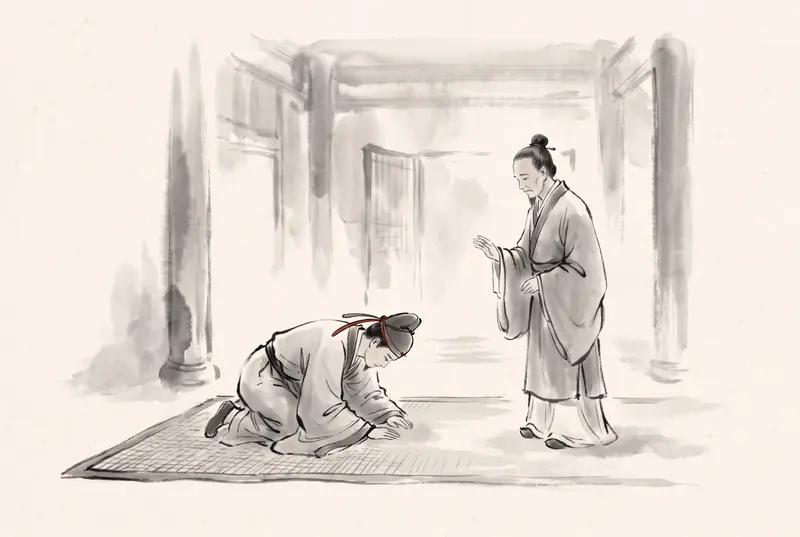
公子成再拜稽首曰:「臣固聞王之胡服也。臣不佞,寢疾,未能趨走以滋進也。王命之,臣敢對,因竭其愚忠。曰:臣聞中國者,蓋聰明徇智之所居也,萬物財用之所聚也,賢聖之所教也,仁義之所施也,詩書禮樂之所用也,異敏技能之所試也,遠方之所觀赴也,蠻夷之所義行也。今王捨此而襲遠方之服,變古之教,易古人道,逆人之心,而怫學者,離中國,故臣願王圖之也。」使者以報。王曰:「吾固聞叔之疾也,我將自往請之。」
Kundoku (Japanese reading)
公子成再拝稽首して曰く、「臣固より王の胡服するを聞けり。臣不佞にして、寝疾し、未だ趨走して以て滋々進む能わざるなり。王之に命ず。臣敢えて対え、因りて其の愚忠を竭くさん。曰く、臣聞く、中国なる者は、蓋し聡明徇智の居る所なり、万物財用の聚まる所なり、賢聖の教うる所なり、仁義の施す所なり、詩書礼楽の用いらるる所なり、異敏技能の試みらるる所なり、遠方の観赴する所なり、蛮夷の義行する所なり。今王此を捨てて遠方の服を襲い、古の教えを変じ、古人の道を易え、人の心に逆らいて、学者に怫り、中国を離る。故に臣願わくは王之を図れ」と。使者以て報ず。王曰く、「吾固より叔の疾を聞けり。我将に自ら往きて之を請わんとす」と。
Japanese
公子成は二度礼をし、額を地につけて言った。「王が胡服を着られることは、すでに聞いております。私は才もなく病の床にあって、駆けつけてご意見を申し上げることもできずにおりました。王のお言葉をいただきましたので、あえてお答えし、愚かな忠誠を尽くして申し上げます。中国というところは、聡明で知恵のある者が住み、あらゆる物や財貨が集まり、聖人や賢者が教えを説き、仁義が行われ、『詩経』『書経』や礼楽が用いられ、優れた技能が試される場所であり、遠方の人々が見に来て、異民族が手本とするところだと聞いております。それなのに王はこれを捨てて遠方の異民族の服をまね、昔の教えを変え、昔の人の道を改め、人々の心に逆らい、学問を修める者たちの意に背き、中国の文化から離れようとしておられます。どうかよくお考えくださいますように」。使者はこれを王に報告した。王は言った。「叔父上が病気なのは知っている。私が自ら出向いてお願いしよう」。
English
Prince Cheng bowed twice, touching his head to the ground, and said: "I had already heard that Your Majesty wears Hu dress. I am a man of no talent and lie ill, and have not been able to hurry to court and offer my views. Since Your Majesty commands me, I dare to answer and give you all my foolish loyalty. I have heard that the Middle Kingdom is where the wise and clever live, where all goods and wealth gather, where sages and worthies teach, where humanity and righteousness are practised, where the Odes and the Documents, rites and music are used, where rare skills and talents are tried; it is what distant peoples come to see and what the barbarians take as their model. Now Your Majesty casts this aside to copy the dress of distant lands, changing the old teachings and the ways of the ancients, going against people's hearts, offending scholars and turning away from the Middle Kingdom. I beg Your Majesty to consider it." The messenger reported this. The king said: "I knew my uncle was ill. I shall go and ask him myself."
Notes (JA)
- 稽首: 頭を地につける、もっとも丁寧な礼。
- 不佞: 才がない。へりくだって言う言葉。
- 中國: ここでは、黄河流域の中原の諸国とその文化を指す。
- 蠻夷: 周辺の異民族を指す当時の呼び方。
- 怫: 逆らう、背く。
Notes (EN)
- Touching his head to the ground (稽首): the most respectful form of bow.
- The Middle Kingdom (中國): here the states of the central plain and their culture.
- The barbarians (蠻夷): the term used at the time for surrounding peoples.
Word notes
- model/ˈmɑdəl/noun
a good example to copy
In the text: “take as their model”
Similar words: example — a thing to follow · pattern — a guide to copy
- consider/kənˈsɪdər/verb
to think carefully about
In the text: “I beg Your Majesty to consider it”
Similar words: weigh — think over · reflect on — think about deeply
Passage 12
Original
王遂往之公子成家,因自請之,曰:「夫服者,所以便用也;禮者,所以便事也。聖人觀鄕而順宜,因事而制禮,所以利其民而厚其國也。夫翦發文身,錯臂左衽,甌越之民也。黑齒雕題,卻冠秫絀,大吳之國也。故禮服莫同,其便一也。鄕異而用變,事異而禮易。是以聖人果可以利其國,不一其用;果可以便其事,不同其禮。儒者一師而俗異,中國同禮而教離,況於山谷之便乎?故去就之變,智者不能一;遠近之服,賢聖不能同。窮鄕多異,曲學多辯。不知而不疑,異於己而不非者,公焉而衆求盡善也。
Kundoku (Japanese reading)
王遂に公子成の家に往き、因りて自ら之を請いて曰く、「夫れ服なる者は、用を便にする所以なり。礼なる者は、事を便にする所以なり。聖人は郷を観て宜しきに順い、事に因りて礼を制す。其の民を利して其の国を厚くする所以なり。夫れ髪を翦り身に文し、臂に錯し衽を左にするは、甌越の民なり。歯を黒くし題に雕り、冠を卻け秫もて絀うは、大呉の国なり。故に礼服同じき莫きも、其の便なるは一なり。郷異なりて用変じ、事異なりて礼易わる。是を以て聖人は果して以て其の国を利すべくんば、其の用を一にせず。果して以て其の事を便にすべくんば、其の礼を同じくせず。儒者は師を一にして俗異なり、中国は礼を同じくして教え離る。況んや山谷の便に於いてをや。故に去就の変は、智者も一にする能わず。遠近の服は、賢聖も同じくする能わず。窮郷には異多く、曲学には辯多し。知らずして疑わず、己に異なりて非とせざる者は、公にして衆善を尽くさんことを求むるなり。
Japanese
王はとうとう公子成の家に出向き、自ら頼んで言った。「服というものは、使いやすくするためのものです。礼というものは、事を運びやすくするためのものです。聖人は土地柄を見てそれにふさわしいやり方に従い、事情に応じて礼を定めました。それが民の利益となり、国を豊かにするからです。髪を短く切り、体に入れ墨をし、腕に模様を描き、衣を左前に着るのは、甌越の民です。歯を黒く染め、額に入れ墨をし、魚の皮の冠をかぶり、粗い縫い目の服を着るのは、大いなる呉の国です。礼服はそれぞれ違いますが、便利さを求める点では同じなのです。土地が違えば用い方が変わり、事情が違えば礼も変わる。だから聖人は、国の利益になるなら用い方を一つに決めず、事を運びやすくなるなら礼を同じにしないのです。儒者は同じ師に学んでも習俗は違い、中国は同じ礼を持ちながら教えは分かれています。まして山や谷の暮らしの便宜となれば、なおさらです。だから身の処し方の変化は、知恵者でも一つにまとめることはできず、遠い国と近い国の服装は、聖人や賢者でも同じにすることはできません。辺鄙な土地ほど風変わりなことが多く、偏った学問ほど理屈が多いものです。知らないことをむやみに疑わず、自分と違うことをむやみに非難しない人こそ、公平で、多くの人の良いところをすべて取り入れようとする人なのです。
English
So the king went to Prince Cheng's house and asked him in person: "Clothing is for convenience of use; rites are for convenience in affairs. The sages looked at each place and followed what suited it, and set rites according to circumstances, so as to benefit their people and enrich their states. Cropping the hair, tattooing the body, painting the arms and folding the robe to the left: that is the people of Ou and Yue. Blackening the teeth and tattooing the forehead, fish-skin caps and coarsely stitched clothes: that is the great state of Wu. Their ritual dress is not the same, but in their convenience they are one. Where places differ, uses change; where circumstances differ, rites change. So a sage, if he can truly benefit his state, does not insist on one use; if he can truly make affairs easier, does not insist on the same rites. Confucian scholars may have one master and different customs; the Middle Kingdom may share its rites and yet its teachings diverge. How much more so when it comes to what suits mountains and valleys! So even the wise cannot make all choices the same, and even sages cannot make the dress of near and far alike. Remote places have many oddities; narrow learning has many arguments. One who does not doubt what he does not know, and does not condemn what differs from himself, is fair-minded and seeks to bring out the good in everyone.
Notes (JA)
- 左衽: 衣の襟を左前に合わせること。中国では異民族の風俗とされた。
- 甌越: 今の浙江省南部の越の人々。
- 雕題: 額に入れ墨をすること。
- 卻冠秫絀: 古注に諸説ある。魚の皮で作った冠と、粗い縫い目の衣とする説に従った。
- 曲學: 一部に偏った学問。
Notes (EN)
- Folding the robe to the left (左衽): in China, the mark of a foreign people.
- Ou and Yue (甌越): the Yue peoples of what is now southern Zhejiang.
- Fish-skin caps and coarsely stitched clothes (卻冠秫絀): the old commentaries disagree; we follow one reading.
Word notes
- convenience/kənˈvinjəns/noun
the quality of being easy and useful
In the text: “Clothing is for convenience of use”
Similar words: ease — lack of difficulty · practicality — usefulness
- condemn/kənˈdɛm/verb
to say strongly that something is wrong
In the text: “does not condemn what differs from himself”
Similar words: criticize — find fault with · denounce — speak against
Passage 13
Original
今叔之所言者俗也,吾所言者所以制俗也。吾國東有河、薄洛之水,與齊、中山同之,無舟楫之用。自常山以至代、上黨,東有燕、東胡之境,而西有樓煩、秦、韓之邊,今無騎射之備。故寡人無舟楫之用,夾水居之民,將何以守河、薄洛之水;變服騎射,以備燕、三胡、秦、韓之邊。且昔者簡主不塞晉陽以及上黨,而襄主并戎取代以攘諸胡,此愚智所明也。先時中山負齊之彊兵,侵暴吾地,系累吾民,引水圍鄗,微社稷之神靈,則鄗幾於不守也。先王丑之,而怨未能報也。今騎射之備,近可以便上黨之形,而遠可以報中山之怨。而叔順中國之俗以逆簡、襄之意,惡變服之名以忘鄗事之丑,非寡人之所望也。」公字成再拜稽首曰:「臣愚,不達於王之義,敢道世俗之聞,臣之罪也。今王將繼簡、襄之意以順先王之志,臣敢不聽命乎!」再拜稽首。乃賜胡服。明日,服而朝。於是始出胡服令也。
Kundoku (Japanese reading)
今叔の言う所の者は俗なり。吾が言う所の者は俗を制する所以なり。吾が国東に河・薄洛の水有り、斉・中山と之を同じくするも、舟楫の用無し。常山より以て代・上党に至るまで、東に燕・東胡の境有り、而して西に楼煩・秦・韓の辺有るも、今騎射の備え無し。故に寡人舟楫の用無くんば、水を夾みて居る民、将に何を以てか河・薄洛の水を守らんとする。服を変じて騎射し、以て燕・三胡・秦・韓の辺に備えんとす。且つ昔者簡主は晋陽を塞がずして以て上党に及び、而して襄主は戎を并せ代を取りて以て諸胡を攘う。此れ愚智の明らかにする所なり。先の時中山斉の彊兵を負みて、吾が地を侵暴し、吾が民を系累し、水を引きて鄗を囲む。社稷の神霊微かりせば、則ち鄗幾ど守られざらんとす。先王之を醜とするも、而も怨み未だ報ゆる能わざるなり。今騎射の備えは、近くは以て上党の形を便にすべく、而して遠くは以て中山の怨みに報ゆべし。而るに叔中国の俗に順いて以て簡・襄の意に逆らい、変服の名を悪みて以て鄗の事の醜を忘る。寡人の望む所に非ざるなり」と。公子成再拝稽首して曰く、「臣愚にして、王の義に達せず。敢えて世俗の聞を道うは、臣の罪なり。今王将に簡・襄の意を継ぎて以て先王の志に順わんとす。臣敢えて命を聴かざらんや」と。再拝稽首す。乃ち胡服を賜う。明日、服して朝す。是に於いて始めて胡服の令を出だすなり。
Japanese
叔父上がおっしゃっているのは習俗のことですが、私が申し上げているのは、習俗をどう定めるかということです。わが国の東には黄河と薄洛の川があり、斉や中山と境を接していますが、船の備えがありません。常山から代・上党にかけては、東に燕や東胡との境、西に楼煩・秦・韓との国境がありますが、いま騎馬で弓を射る兵の備えがありません。船の備えもなしに、川をはさんで暮らす民が、どうやって黄河や薄洛の川を守れましょう。だから服を改めて騎射を習わせ、燕・三胡・秦・韓との国境に備えるのです。それに、昔、簡子は晋陽を固めるだけでなく上党まで勢力を広げ、襄子は戎を併せて代を取り、胡の諸族を退けました。これは誰の目にも明らかです。以前、中山は斉の強い兵を頼みにわが国の地を荒らし、民を捕らえて連れ去り、川の水を引いて鄗の町を水攻めにしました。国の守り神のご加護がなければ、鄗はほとんど守りきれないところでした。先王はこれを恥とされましたが、まだその恨みを晴らせずにいます。いま騎射の備えをすれば、近くは上党の地形を生かすことができ、遠くは中山への恨みを晴らすことができます。それなのに叔父上は中国の習俗に従って簡子・襄子の志に背き、服を改めるという評判を嫌って、鄗での恥を忘れておられる。これは私の望むところではありません」。公子成は二度礼をし、額を地につけて言った。「私は愚かで、王のお考えがわかっておりませんでした。世俗の考えを申し上げたのは、私の罪です。いま王が簡子・襄子の志を継ぎ、先王の願いをかなえようとなさっているのに、どうしてご命令に従わずにいられましょう」。そして二度礼をし、額を地につけた。王はそこで胡服を与えた。翌日、公子成は胡服を着て朝廷に出た。こうして初めて胡服の令が出された。
English
What you speak of, uncle, is custom; what I speak of is how custom is made. To our east are the Yellow River and the Boluo, which we share with Qi and Zhongshan, and yet we have no boats. From Mount Chang to Dai and Shangdang, we have the borders of Yan and the Eastern Hu to the east and those of the Loufan, Qin and Han to the west, and yet we have no mounted archers. Without boats, how are the people who live along those rivers to defend the Yellow River and the Boluo? So I will change our dress and train mounted archers to guard our borders with Yan, the three Hu, Qin and Han. Besides, long ago Jianzi did not stop at holding Jinyang but reached on to Shangdang, and Xiangzi absorbed the Rong, took Dai and drove back the Hu. That is plain to fools and wise men alike. Not long ago Zhongshan, relying on the strong armies of Qi, ravaged our lands, carried off our people in chains, and turned a river against Hao to drown it. Had it not been for the spirits of our altars, Hao would hardly have held. My father felt the shame of it, but that grievance has not yet been avenged. Now if we have mounted archers, close at hand they will suit the terrain of Shangdang, and further off they will let us repay Zhongshan. Yet you, uncle, follow the customs of the Middle Kingdom against the will of Jianzi and Xiangzi, and in your dislike of a change of dress forget the shame of Hao. This is not what I hoped for." Prince Cheng bowed twice, touching his head to the ground, and said: "I am a fool and did not grasp Your Majesty's purpose. It was my fault to repeat what the world says. Now that Your Majesty means to carry on the will of Jianzi and Xiangzi and fulfil the wishes of the former king, how could I dare not obey?" He bowed twice again, touching his head to the ground. The king gave him Hu clothes, and the next day he came to court wearing them. With that, the order on Hu dress was first issued.
Notes (JA)
- 薄洛: 趙の東を流れていた川。
- 上黨: 今の山西省東南部。
- 東胡・三胡: 東胡は北東の遊牧民。三胡は林胡・楼煩・東胡とされる。
- 晉陽: 趙氏の本拠。今の山西省太原市。智伯に包囲されたのもこの城(巻86の豫譲の段の背景)。
- 鄗: 趙の町。今の河北省柏郷県のあたり。
- 公字成: Wikisource のこの版の字。「公子成」の誤りと考えられるので、そのように読んだ。
- 胡服騎射: この改革で趙は強い騎兵を持ち、前296年に中山を滅ぼした。中国で本格的な騎兵が使われるようになったのは、この改革からとされる。
Notes (EN)
- Shangdang (上黨): the southeast of present-day Shanxi.
- Jinyang (晉陽): the Zhao stronghold, present-day Taiyuan, where Zhi Bo besieged Viscount Xiang (the background to the Yu Rang story, Shiji 86).
- Prince Cheng: this edition misprints the name as 公字成 here.
- With this reform Zhao built up a strong cavalry and destroyed Zhongshan in 296 BCE. It is often said to mark the start of true cavalry warfare in China.
Word notes
- custom/ˈkʌstəm/noun
a way of doing things that people have long followed
In the text: “is custom”
Similar words: tradition — an old way · practice — a usual way
- avenge/əˈvɛndʒ/verb
to punish someone for a past wrong
In the text: “has not yet been avenged”
Similar words: revenge — pay back · settle — deal with
- grasp/ɡræsp/verb
to understand
In the text: “did not grasp Your Majesty's purpose”
Similar words: understand — know the meaning · comprehend — take in
- obey/oʊˈbeɪ/verb
to do what you are told
In the text: “how could I dare not obey”
Similar words: comply — do as asked · follow — act on