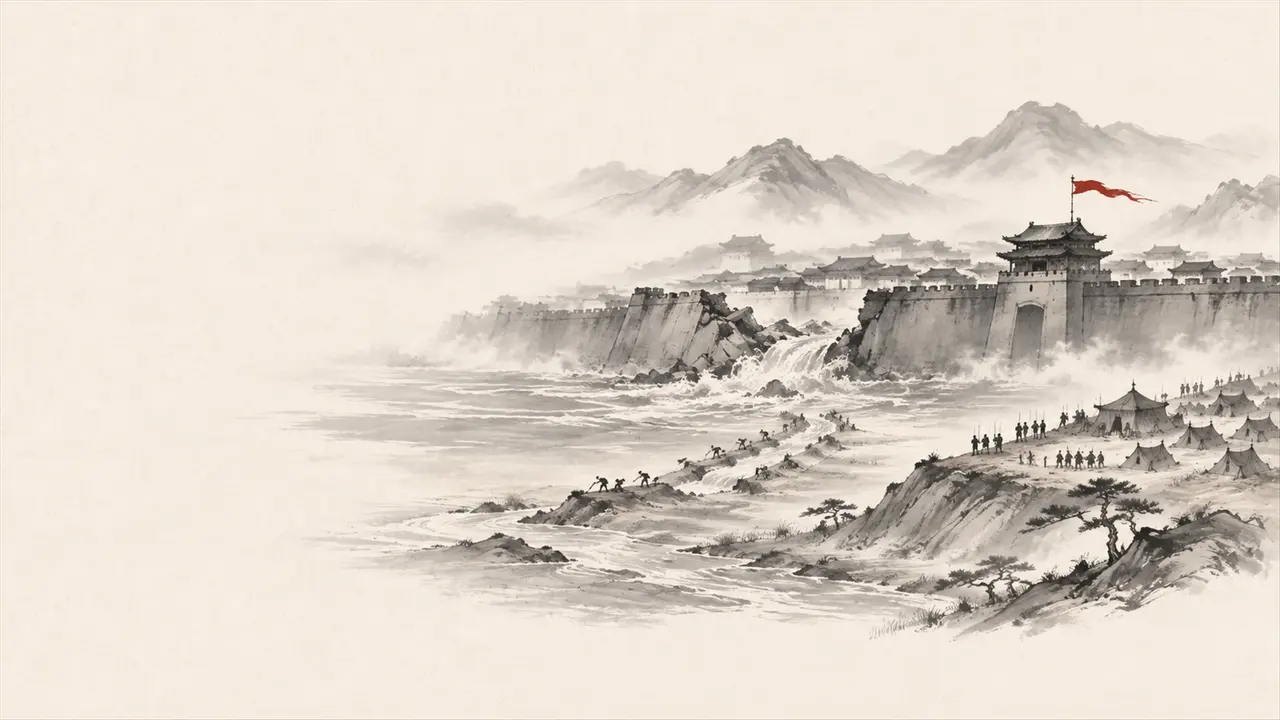
Hereditary Houses · Vol. 50
The Hereditary House of King Yuan of Chu 楚元王世家
Survival Lies in Whom You Trust 存亡在所任
The houses of Liu Jiao, Gaozu's younger brother who became King of Chu, and of Liu You, Gaozu's son King You of Zhao. When the young Gaozu brought guests to his eldest brother's widow, she pretended the soup was gone and scraped the pot to send them away; Gaozu never forgot it, and as emperor left her son unenfeoffed until his father spoke up, then made him "Marquis of the Scraped Pot". Liu Jiao became King of Chu, but his grandson Liu Wu killed the ministers who warned him, joined the Revolt of the Seven States under Liu Bi of Wu, and killed himself in defeat; on Empress Dowager Dou's advice Emperor Jing let Liu Jiao's son Liu Li carry on the house of Chu. Liu Sui, King of Zhao, likewise burned his ministers alive, rebelled, and killed himself when Handan was flooded. The Grand Historian concludes that survival depends on whom a ruler trusts.
This page has the scene "Survival Lies in Whom You Trust" from this volume, not the whole volume.
Audio
The audio is synthetic speech.
Video
Passage 1
Original
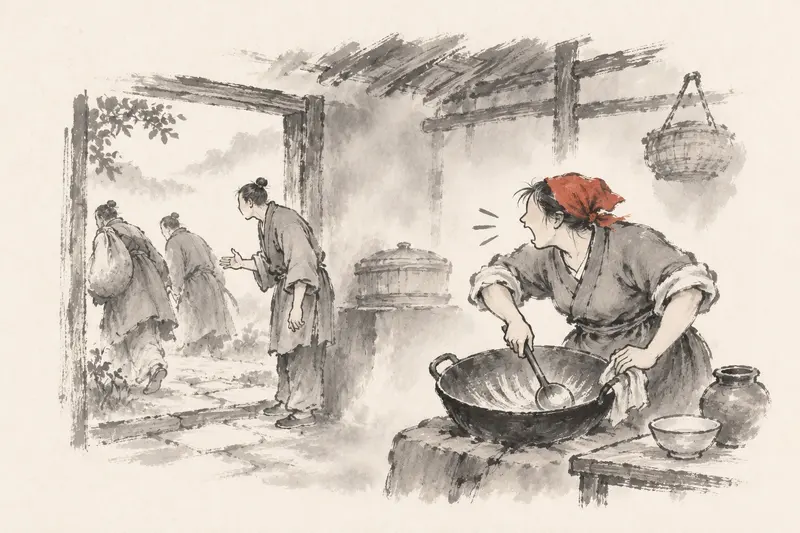
楚元王劉交者,高祖之同母少弟也,字游。高祖兄弟四人,長兄伯,伯蚤卒。始高祖微時,嘗辟事,時時與賓客過巨嫂食。嫂厭叔,叔與客來,嫂詳為羹盡,櫟釜,賓客以故去。已而視釜中尚有羹,高祖由此怨其嫂。及高祖為帝,封昆弟,而伯子獨不得封。太上皇以為言,高祖曰:「某非忘封之也,為其母不長者耳。」於是乃封其子信為羹頡侯。而王次兄仲於代。
Kundoku (Japanese reading)
楚の元王劉交は、高祖の同母の少弟なり。字は游。高祖の兄弟四人、長兄は伯、伯蚤く卒す。始め高祖微なりし時、嘗て事を辟け、時時賓客と巨嫂に過りて食す。嫂叔を厭い、叔客と来たれば、嫂詳りて羹尽きたりと為し、釜を櫟す。賓客故を以て去る。已にして釜中を視れば尚お羹有り。高祖此に由りて其の嫂を怨む。高祖帝と為るに及び、昆弟を封じ、而して伯の子のみ独り封を得ず。太上皇以て言を為す。高祖曰く、「某封ずるを忘るるに非ざるなり。其の母の長者ならざるが為のみ」と。是に於いて乃ち其の子信を封じて羹頡侯と為す。而して次兄仲を代に王とす。
Japanese
楚の元王劉交は、高祖と母を同じくする末の弟で、字は游である。高祖は四人兄弟で、いちばん上の兄は劉伯といったが、早くに亡くなった。まだ高祖が身分の低かったころ、事件を避けて身を隠していたとき、たびたび客を連れて長兄の妻の家に行って食事をした。兄嫁は弟を嫌っていたので、弟が客と来ると、羹(スープ)がなくなったふりをして、しゃもじで鍋をこすって音を立てた。客はそのために帰っていった。あとで鍋の中を見ると、羹はまだ残っていた。高祖はこのことで兄嫁を恨んだ。高祖が皇帝になって兄弟たちを封じたとき、劉伯の子だけは封じられなかった。太上皇(父)がそのことを言うと、高祖は言った。「封じるのを忘れたわけではありません。あの子の母が長者らしくなかったからです」。そこでやっとその子の劉信を羹頡侯に封じた。また次の兄の劉仲を代の王とした。
English
Liu Jiao, King Yuan of Chu, was Gaozu's youngest full brother, with the courtesy name You. Gaozu was one of four brothers; the eldest, Bo, died young. Long ago, when Gaozu was still of no account and was keeping out of trouble, he often went with his guests to eat at the house of his eldest brother's widow. She was tired of her brother-in-law, and when he came with guests she pretended the soup was all gone and scraped the pot with the ladle, so the guests went away. Afterwards he looked in the pot and found there was still soup in it. From then on Gaozu bore a grudge against her. When he became emperor and enfeoffed his brothers, Bo's son alone got nothing. When the Grand Supreme Emperor spoke to him about it, Gaozu said: "It is not that I forgot to enfeoff him. It is because his mother was no true elder." Then at last he made the son, Xin, Marquis of Gejie, "the Scraped Pot". And he made his second brother, Zhong, King of Dai.
Notes (JA)
- 巨嫂: いちばん上の兄の妻。
- 羹頡侯: 「頡」は鍋をこする音にかけた名で、「鍋こすり侯」というからかいの意味がこめられている。
- 劉仲: 代王となったが、匈奴に攻められて逃げ、王位を下ろされた。呉王劉濞の父。
Notes (EN)
- The eldest brother's widow (巨嫂): the wife of the oldest brother.
- Marquis of Gejie (羹頡侯): a mocking name playing on the scraping of the soup pot.
- Zhong: Liu Zhong, made King of Dai, fled from a Xiongnu attack and lost his kingdom; he was the father of Liu Bi, King of Wu.
Idioms from this passage: Marquis of the Scraped Pot 羹頡侯
Word notes
- grudge/ɡrʌdʒ/noun
a lasting feeling of anger about a past wrong
In the text: “Gaozu bore a grudge against her”
Similar words: resentment — bitter feeling · spite — wish to hurt
- ladle/ˈleɪdəl/noun
a big spoon with a long handle for soup
In the text: “scraped the pot with the ladle”
Similar words: scoop — a tool for lifting · dipper — a cup on a handle
Passage 2
Original
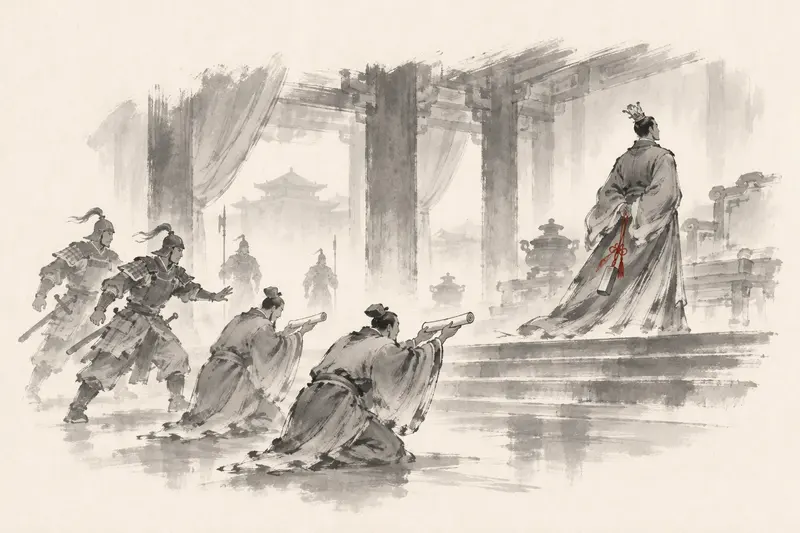
高祖六年,已禽楚王韓信於陳,乃以弟交為楚王,都彭城。即位二十三年卒,子夷王郢立。夷王四年卒,子王戊立。王戊立二十年,冬,坐為薄太后服私姦,削東海郡。春,戊與吳王合謀反,其相張尚、太傅趙夷吾諫,不聽。戊則殺尚、夷吾,起兵與吳西攻梁,破棘壁。至昌邑南,與漢將周亞夫戰。漢絕吳楚糧道,士卒饑,吳王走,楚王戊自殺,軍遂降漢。
Kundoku (Japanese reading)
高祖の六年、已に楚王韓信を陳に禽にし、乃ち弟交を以て楚王と為し、彭城に都せしむ。即位すること二十三年にして卒す。子の夷王郢立つ。夷王四年にして卒す。子の王戊立つ。王戊立つこと二十年、冬、薄太后の為に服するに私姦するに坐して、東海郡を削らる。春、戊呉王と合謀して反す。其の相張尚・太傅趙夷吾諫むるも、聴かず。戊則ち尚・夷吾を殺し、兵を起こして呉と西して梁を攻め、棘壁を破る。昌邑の南に至り、漢の将周亜夫と戦う。漢呉楚の糧道を絶ち、士卒饑う。呉王走り、楚王戊自殺し、軍遂に漢に降る。
Japanese
高祖の六年(前201年)、楚王韓信を陳で捕らえると、弟の劉交を楚王にして、彭城を都とさせた。劉交は位について二十三年で亡くなり、子の夷王劉郢が立った。夷王は四年で亡くなり、子の劉戊が王となった。王戊が立って二十年目の冬、薄太后の喪に服している間にひそかに女と通じた罪で、東海郡を削られた。春、劉戊は呉王劉濞と手を組んで反乱を起こした。楚の相の張尚と太傅の趙夷吾が諫めたが聞かず、二人を殺して兵を挙げ、呉とともに西へ進んで梁を攻め、棘壁を破った。昌邑の南まで来て、漢の将軍周亜夫と戦った。漢が呉・楚の兵糧の道を断ったので、兵士たちは飢えた。呉王は逃げ、楚王劉戊は自殺し、楚の軍は漢に降った。
English
In Gaozu's sixth year, having captured Han Xin, King of Chu, at Chen, he made his brother Jiao King of Chu with his capital at Pengcheng. Twenty-three years after taking the throne Jiao died, and his son Ying, King Yi, succeeded him. King Yi died in his fourth year, and his son Wu became king. In the winter of Wu's twentieth year, he was found to have had secret relations with a woman while in mourning for Empress Dowager Bo, and the commandery of Donghai was cut from his kingdom. In the spring, Wu plotted rebellion with the King of Wu. His chancellor Zhang Shang and his grand tutor Zhao Yiwu remonstrated, but he would not listen; he killed them both, raised troops, marched west with Wu against Liang and broke through at Jibi. South of Changyi he fought the Han general Zhou Yafu. Han cut off the supply lines of Wu and Chu, and their soldiers went hungry. The King of Wu fled, Wu, King of Chu, killed himself, and his army surrendered to Han.
Notes (JA)
- 薄太后: 文帝の母。前155年に亡くなった。
- 王戊の反乱: 呉楚七国の乱(前154年)。晁錯の「削藩」で領地を削られたことがきっかけになった(106-liu-pi の章)。
- 周亜夫: 七国の乱を平らげた将軍(057-zhou-bo の章)。
Notes (EN)
- Empress Dowager Bo: Emperor Wen's mother, who died in 155 BCE.
- Wu's rebellion: the Revolt of the Seven States of 154 BCE, set off by Chao Cuo's policy of cutting the kingdoms' lands (chapter 106).
- Zhou Yafu: the general who crushed the revolt (chapter 057).
Word notes
- mourning/ˈmɔːrnɪŋ/noun
a time of showing sadness after someone dies
In the text: “while in mourning for Empress Dowager Bo”
Similar words: grief — deep sadness · bereavement — the loss of a loved one
- supply line/səˈplaɪ laɪn/noun
the route along which an army gets food and weapons
In the text: “cut off the supply lines of Wu and Chu”
Similar words: lifeline — a vital link · route — a way from place to place
Passage 3
Original
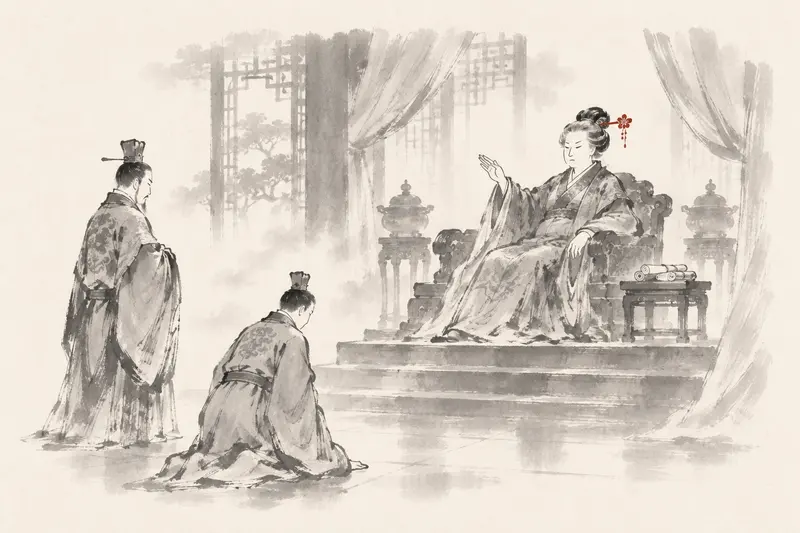
漢已平吳楚,孝景帝欲以德侯子續吳,以元王子禮續楚。竇太后曰:「吳王,老人也,宜為宗室順善。今乃首率七國,紛亂天下,柰何續其後!」不許吳,許立楚後。是時禮為漢宗正。乃拜禮為楚王,奉元王宗廟,是為楚文王。文王立三年卒,子安王道立。安王二十二年卒,子襄王注立。襄王立十四年卒,子王純代立。王純立,地節二年,中人上書告楚王謀反,王自殺,國除,入漢為彭城郡。
Kundoku (Japanese reading)
漢已に呉楚を平らげ、孝景帝徳侯の子を以て呉を続がしめ、元王の子礼を以て楚を続がしめんと欲す。竇太后曰く、「呉王は、老人なり。宜しく宗室の為に順善なるべし。今乃ち首めに七国を率い、天下を紛乱す。奈何ぞ其の後を続がん」と。呉を許さず、楚の後を立つるを許す。是の時礼漢の宗正為り。乃ち礼を拝して楚王と為し、元王の宗廟を奉ぜしむ。是を楚の文王と為す。文王立つこと三年にして卒す。子の安王道立つ。安王二十二年にして卒す。子の襄王注立つ。襄王立つこと十四年にして卒す。子の王純代わりて立つ。王純立ち、地節二年、中人上書して楚王の謀反を告ぐ。王自殺し、国除かれ、漢に入りて彭城郡と為る。
Japanese
漢は呉・楚を平らげると、景帝は徳侯の子に呉の家を継がせ、元王の子の劉礼に楚の家を継がせようとした。竇太后は言った。「呉王は年長者で、本来なら一族のために素直でよい手本となるべき人でした。それなのに先頭に立って七つの国を率い、天下を乱しました。どうしてその跡を継がせられましょう」。そこで呉の跡継ぎは許さず、楚の跡継ぎだけを許した。このとき劉礼は漢の宗正(皇族を取りまとめる役)だった。そこで劉礼を楚王に任じて元王の宗廟を守らせた。これが楚の文王である。文王は三年で亡くなり、子の安王劉道が立った。安王は二十二年で亡くなり、子の襄王劉注が立った。襄王は十四年で亡くなり、子の劉純が代わって立った。王純が立ったあと、地節二年(前68年)、宮中の者が上書して楚王の謀反を訴えた。王は自殺し、国は取りつぶされ、漢の彭城郡となった。
English
When Han had put down Wu and Chu, Emperor Jing wanted to let the son of the Marquis of De carry on the house of Wu, and King Yuan's son Li carry on the house of Chu. Empress Dowager Dou said: "The King of Wu was an elder of the family, who ought to have set the imperial clan an example of obedience and goodness. Instead he led the seven states and threw the realm into turmoil. How can his line be continued?" She refused for Wu but allowed an heir for Chu. At this time Li was Director of the Imperial Clan, so he was made King of Chu to keep up the ancestral temple of King Yuan: this was King Wen of Chu. King Wen died three years later, and his son Dao, King An, succeeded him. King An died in his twenty-second year, and his son Zhu, King Xiang, succeeded. King Xiang died in his fourteenth year, and his son Chun took his place. In the second year of Dijie, during Chun's reign, someone of the palace sent up a letter accusing the King of Chu of plotting rebellion. The king killed himself, his kingdom was abolished, and it became the Han commandery of Pengcheng.
Notes (JA)
- 徳侯: 劉広。呉王劉濞の弟。
- 竇太后: 景帝の母。黄老の学を好み、一族の長幼の順を重んじた。
- 地節二年: 宣帝の年号。司馬遷の死後のことで、後の人が書き足したと考えられている。
Notes (EN)
- The Marquis of De: Liu Guang, younger brother of Liu Bi, King of Wu.
- Empress Dowager Dou: Emperor Jing's mother, devoted to the Yellow Emperor and Laozi and to order among the kin.
- The second year of Dijie: a reign period of Emperor Xuan, after Sima Qian's death; this was added later.
Word notes
- turmoil/ˈtɜːrmɔɪl/noun
a state of great confusion and trouble
In the text: “threw the realm into turmoil”
Similar words: chaos — complete disorder · upheaval — a sudden, violent change
- abolish/əˈbɒlɪʃ/verb
to end something officially
In the text: “his kingdom was abolished”
Similar words: end — bring to a stop · scrap — get rid of; informal
Passage 4
Original
趙王劉遂者,其父高祖中子,名友,謚曰「幽」。幽王以憂死,故為「幽」。高后王呂祿於趙,一歲而高后崩。大臣誅諸呂呂祿等,乃立幽王子遂為趙王。孝文帝即位二年,立遂弟辟彊,取趙之河閒郡為河閒王,(以)[是]為文王。立十三年卒,子哀王福立。一年卒,無子,絕後,國除,入于漢。
Kundoku (Japanese reading)
趙王劉遂は、其の父は高祖の中子、名は友、謚して「幽」と曰う。幽王憂いを以て死す。故に「幽」と為す。高后呂禄を趙に王とし、一歳にして高后崩ず。大臣諸呂呂禄等を誅し、乃ち幽王の子遂を立てて趙王と為す。孝文帝即位の二年、遂の弟辟彊を立て、趙の河閒郡を取りて河閒王と為す。是を文王と為す。立つこと十三年にして卒す。子の哀王福立つ。一年にして卒す。子無く、後を絶ち、国除かれ、漢に入る。
Japanese
趙王劉遂の父は高祖の子の一人で、名を劉友といい、幽王と諡された。憂いのうちに死んだので「幽」とされたのである。呂后は呂禄を趙の王としたが、一年で呂后は亡くなった。大臣たちは呂禄ら呂氏の一族を討ち、幽王の子の劉遂を趙王に立てた。文帝は即位して二年目に、劉遂の弟の劉辟彊を立て、趙の河間郡を分けて河間王とした。これが文王である。文王は位について十三年で亡くなり、子の哀王劉福が立ったが、一年で亡くなった。子がなかったので跡が絶え、国は取りつぶされて漢の直轄となった。
English
Liu Sui, King of Zhao, was the son of one of Gaozu's middle sons, named You, who was given the posthumous name "You", meaning "the Hidden", because he died in misery. Empress Lü made Lü Lu King of Zhao, and a year later she died. The great ministers destroyed Lü Lu and the rest of the Lü clan, and made King You's son Sui King of Zhao. In the second year of his reign Emperor Wen set up Sui's younger brother Biqiang, giving him the commandery of Hejian, taken from Zhao, as King of Hejian: this was King Wen. He died after thirteen years, and his son Fu, King Ai, succeeded, but died within a year with no son, so the line ended and the kingdom was abolished and taken into Han.
Notes (JA)
- 幽王劉友: 呂氏の娘を妻としたが愛さず、呂后に都へ呼ばれて閉じこめられ、飢え死にした(009-empress-lu の章)。
- 原文の「(以)[是]」は、底本の校訂で「以」を「是」に改めたもの。
Notes (EN)
- Liu You, King You: married to a Lü woman he did not love, he was summoned by Empress Lü, shut up and starved to death (chapter 009).
- The text's "(以)[是]" shows the editors' correction of 以 to 是.
Word notes
- misery/ˈmɪzəri/noun
great unhappiness or suffering
In the text: “because he died in misery”
Similar words: wretchedness — deep unhappiness · distress — pain or worry
- posthumous/ˈpɒstʃʊməs/adjective
given or happening after death
In the text: “was given the posthumous name”
Similar words: after death — the plain phrase · memorial — in memory of
Passage 5
Original
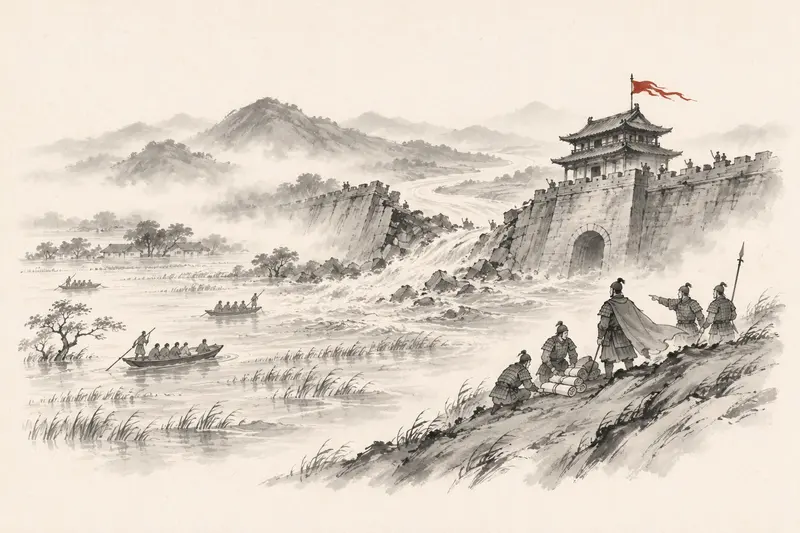
遂既王趙二十六年,孝景帝時坐晁錯以適削趙王常山之郡。吳楚反,趙王遂與合謀起兵。其相建德、內史王悍諫,不聽。遂燒殺建德、王悍,發兵屯其西界,欲待吳與俱西。北使匈奴,與連和攻漢。漢使曲周侯酈寄擊之。趙王遂還,城守邯鄲,相距七月。吳楚敗於梁,不能西。匈奴聞之,亦止,不肯入漢邊。欒布自破齊還,乃并兵引水灌趙城。趙城壞,趙王自殺,邯鄲遂降。趙幽王絕後。
Kundoku (Japanese reading)
遂既に趙に王たること二十六年、孝景帝の時晁錯に坐して適を以て趙王の常山の郡を削らる。呉楚反し、趙王遂与に合謀して兵を起こす。其の相建徳・内史王悍諫むるも、聴かず。遂建徳・王悍を焼殺し、兵を発して其の西界に屯し、呉の与に倶に西するを待たんと欲す。北のかた匈奴に使いし、与に連和して漢を攻む。漢曲周侯酈寄をして之を撃たしむ。趙王遂還り、邯鄲を城守し、相距ぐこと七月。呉楚梁に敗れ、西すること能わず。匈奴之を聞き、亦た止まり、漢の辺に入るを肯んぜず。欒布斉を破りて還り、乃ち兵を并せ水を引きて趙の城に灌ぐ。趙の城壊れ、趙王自殺し、邯鄲遂に降る。趙の幽王後を絶つ。
Japanese
劉遂が趙の王となって二十六年、景帝の時代に、晁錯の進言によって罪を問われ、趙王の常山郡を削られた。呉・楚が反乱を起こすと、趙王劉遂も手を組んで兵を挙げた。趙の相の建徳と内史の王悍が諫めたが聞かず、劉遂は二人を焼き殺して、兵を西の国境に置き、呉と一緒に西へ攻め上るのを待とうとした。また北の匈奴に使いを送り、手を結んで漢を攻めようとした。漢は曲周侯の酈寄に攻めさせた。趙王劉遂は引き返して邯鄲に立てこもり、七か月にわたってもちこたえた。しかし呉・楚は梁で敗れて西へ進めず、匈奴もそれを聞いて兵を止め、漢の国境に入ろうとしなかった。欒布が斉の反乱軍を破って戻ってくると、兵を合わせて川の水を引き、趙の城に注ぎこんだ。城壁がくずれ、趙王は自殺し、邯鄲は降った。こうして趙の幽王の家は絶えた。
English
After Sui had been King of Zhao for twenty-six years, under Emperor Jing, he was charged with an offence at Chao Cuo's instance and the commandery of Changshan was cut from his kingdom. When Wu and Chu rebelled, Sui, King of Zhao, plotted with them and raised troops. His chancellor Jiande and his Inner Secretary Wang Han remonstrated, but he would not listen; he burned them both to death, posted his troops on his western border and meant to wait for Wu so they could march west together. He also sent envoys north to the Xiongnu to join with them against Han. Han sent Li Ji, Marquis of Quzhou, against him. Sui turned back and held the walls of Handan, and they faced each other for seven months. Wu and Chu were beaten at Liang and could not come west; when the Xiongnu heard, they stopped too and would not cross the Han frontier. Luan Bu, coming back from crushing Qi, joined forces with Li Ji and diverted a river to flood the walls of Zhao. The walls of Zhao collapsed, the king killed himself, and Handan surrendered. So the line of King You of Zhao came to an end.
Notes (JA)
- 晁錯: 諸侯王の領地を削ることを進めた景帝の重臣(101-yuan-ang-chao-cuo の章)。
- 酈寄: 酈商の子。呂氏討伐のとき、友人の呂禄をだまして軍を手放させた。
- 欒布: 彭越の首の下で泣いた義理堅い将(100-ji-bu の章)。
Notes (EN)
- Chao Cuo: Emperor Jing's minister who pressed for cutting the kings' lands (chapter 101).
- Li Ji: son of Li Shang, who during the fall of the Lü clan tricked his friend Lü Lu into giving up his army.
- Luan Bu: the loyal general who wept beneath Peng Yue's head (chapter 100).
Word notes
- divert/daɪˈvɜːrt/verb
to make something go a different way
In the text: “diverted a river to flood the walls of Zhao”
Similar words: redirect — send another way · channel — guide along a path
- collapse/kəˈlæps/verb
to fall down suddenly
In the text: “The walls of Zhao collapsed”
Similar words: cave in — fall inward · give way — break under weight
Passage 6
Original
太史公曰:國之將興,必有禎祥,君子用而小人退。國之將亡,賢人隱,亂臣貴。使楚王戊毋刑申公,遵其言,趙任防與先生,豈有篡殺之謀,為天下僇哉?賢人乎,賢人乎!非質有其內,惡能用之哉?甚矣,「安危在出令,存亡在所任」,誠哉是言也!
Kundoku (Japanese reading)
太史公曰く、国の将に興らんとするや、必ず禎祥有り、君子用いられて小人退く。国の将に亡びんとするや、賢人隠れ、乱臣貴し。楚王戊をして申公を刑すること毋く、其の言に遵わしめ、趙をして防与先生に任ぜしめば、豈に篡殺の謀有りて、天下の僇と為らんや。賢人か、賢人か。質に其の内に有るに非ずんば、悪くんぞ能く之を用いんや。甚だしいかな、「安危は令を出だすに在り、存亡は任ずる所に在り」と。誠なるかな是の言や。
Japanese
太史公は言う。国が興ろうとするときには、必ずめでたいしるしがあり、君子が用いられて小人は退く。国が滅びようとするときには、賢人は身を隠し、国を乱す臣が重んじられる。もし楚王劉戊が申公を罰せず、その言葉に従っていたら、もし趙王が防与先生に政治をまかせていたら、どうして国を奪い人を殺すはかりごとをして、天下の恥さらしとなっただろうか。賢人よ、賢人よ。自分の内に本当の素質がなければ、どうして賢人を用いることができようか。まったく、「国が安らかか危ういかは命令の出し方にかかり、国が続くか滅ぶかは誰に任せるかにかかる」とは、本当にそのとおりである。
English
The Grand Historian says: When a state is about to rise, there are always good omens; gentlemen are employed and petty men withdraw. When a state is about to fall, worthy men hide and men who bring disorder are honoured. If Wu, King of Chu, had not punished Master Shen but followed his words, and if the King of Zhao had trusted Master Fangyu, how could they have plotted usurpation and murder and become a disgrace before the whole realm? Worthy men, worthy men! Unless one has the quality within oneself, how can one make use of them? How true it is that "safety and danger lie in the orders one gives, survival and ruin in whom one trusts"!
Notes (JA)
- 申公: 魯の詩の学者。楚王戊に仕えたが、罪人として働かされた(121-rulin の章)。
- 防与先生: 趙に仕えた賢人とされるが、くわしいことはわからない。
- 「安危は令を出だすに在り、存亡は任ずる所に在り」: 古いことわざを引いたもの。
Notes (EN)
- Master Shen: the Lu scholar of the Odes who served King Wu of Chu and was set to hard labour as a convict (chapter 121).
- Master Fangyu: said to be a worthy man of Zhao; nothing more is known of him.
- "Safety and danger lie in the orders one gives…": an old saying.
Idioms from this passage: Survival lies in whom you trust 存亡は任ずる所に在り
Word notes
- omen/ˈoʊmən/noun
a sign of something that will happen
In the text: “there are always good omens”
Similar words: sign — a mark of what is coming · portent — a sign of something big
- usurpation/ˌjuːzɜːrˈpeɪʃən/noun
taking power that belongs to someone else
In the text: “plotted usurpation and murder”
Similar words: seizure — taking by force · takeover — taking control