Hereditary Houses · Vol. 56
The Hereditary House of Chancellor Chen 陳丞相世家
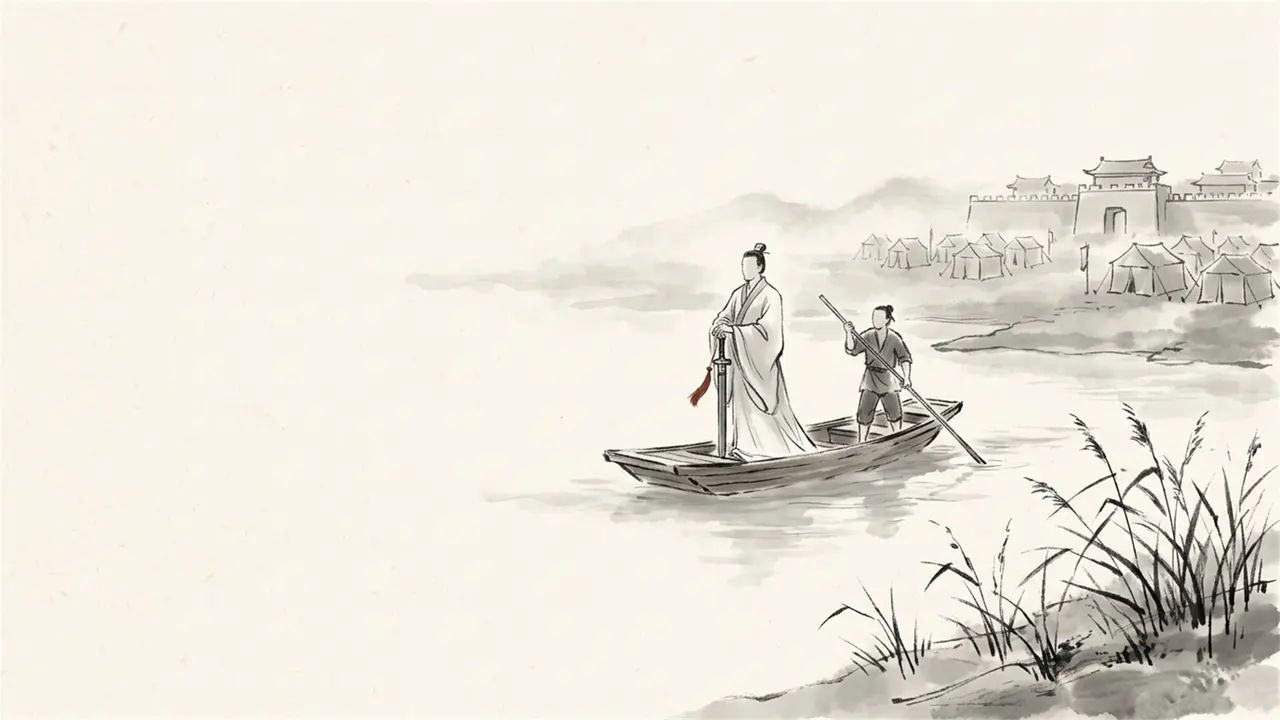
Chen Ping: Six Secret Stratagems 六出奇計
Chen Ping was born poor, but his elder brother supported him so that he could study, and when he divided the meat fairly at a village festival he said he would govern the world just as fairly. He served Wei and Chu without being used, and went over to Han with nothing but himself. Though slandered for sleeping with his sister-in-law and taking bribes, he was kept for his talent. With forty thousand catties of gold he sowed distrust between Xiang Yu and his adviser Fan Zeng until Fan Zeng left. He went on to devise six secret stratagems: stepping on the King of Han's foot to make him accept Han Xin as King of Qi, capturing Han Xin with a pretended royal tour to Yunmeng, and getting Gaozu out of the Xiongnu siege at Pingcheng. Under Emperor Wen he became chancellor, and explained that a chancellor's task is to see that every official does his own job.
This page has the scene "Chen Ping: Six Secret Stratagems" from this volume, not the whole volume.
Audio
The audio is synthetic speech.
Video
Passage 1
Original
陳丞相平者,陽武戸牖鄕人也。少時家貧,好讀書,有田三十畝,獨與兄伯居。伯常耕田,縱平使遊學。平爲人長美色。人或謂陳平曰:「貧何食而肥若是?」其嫂嫉平之不視家生產,曰:「亦食糠覈耳。有叔如此,不如無有。」伯聞之,逐其婦而棄之。
Kundoku (Japanese reading)
陳丞相平なる者は、陽武の戸牖郷の人なり。少き時家貧しく、読書を好む。田三十畝有り、独り兄伯と居る。伯常に田を耕し、平を縦ちて游学せしむ。平人と為り長大にして美色なり。人或いは陳平に謂いて曰く、「貧しきに何を食いて肥ゆること是の若きや」と。其の嫂平の家生産を視ざるを嫉み、曰く、「亦た糠覈を食らうのみ。叔有ること此の如くんば、有ること無きに如かず」と。伯之を聞き、其の婦を逐いて之を棄つ。
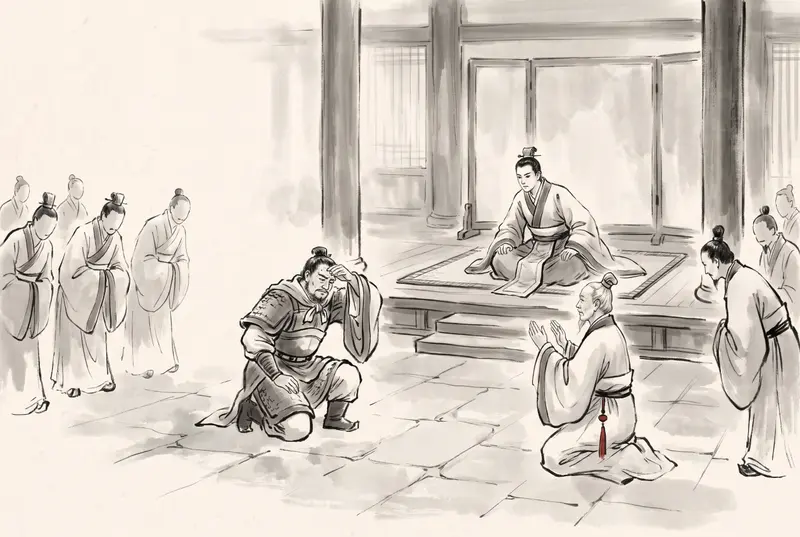
Japanese
丞相の陳平は、陽武県戸牖郷の人である。若いころ家は貧しかったが、書物を読むのが好きだった。田は三十畝しかなく、兄の伯と二人で暮らしていた。伯はいつも田を耕し、陳平には好きなように学問をさせていた。陳平は背が高く、顔立ちが美しかった。ある人が陳平に言った。「貧しいのに、何を食べてそんなに肥えているのかね」。兄嫁は、陳平が家の仕事をしないのを憎んで言った。「どうせ糠やくずを食べているだけですよ。こんな弟なら、いないほうがましです」。伯はそれを聞くと、妻を追い出して離縁した。
English
Chen Ping, the chancellor, was a man of Huyou village in Yangwu. As a young man he was poor but loved to read. He had only thirty mu of land and lived alone with his elder brother Bo. Bo always worked the fields and left Chen Ping free to travel and study. Chen Ping grew up tall and handsome. Someone said to him, "You are poor, so what do you eat to look so well fed?" His sister-in-law, who resented his not helping with the family's living, said, "Just bran and husks, like the rest of us. Better no brother-in-law at all than one like him." When Bo heard this, he drove his wife out and divorced her.
Notes (JA)
- 陽武戸牖鄕: 今の河南省原陽県のあたり。
- 畝: 面積の単位。三十畝は小さな田畑。
- 游學: 家を離れて師のもとで学ぶ。
- 長美色: 背が高く、見た目が美しい。
- 嫂: 兄の妻。
- 糠覈: 糠と穀物のくず。貧しい食事。
- 叔: 夫の弟。
Notes (EN)
- Huyou village in Yangwu: near present-day Yuanyang in Henan.
- 畝 (mu): a unit of area; thirty mu is a small holding.
- 游學: to leave home to study under teachers.
- 長美色: tall and good-looking.
- 嫂: an elder brother's wife.
- 糠覈: bran and husks; a poor diet.
- 叔: a husband's younger brother.
Word notes
- resent/rɪˈzɛnt/verb
to feel angry about something you think is unfair
In the text: “who resented his not helping”
Similar words: begrudge — be unhappy about · dislike — not like
- divorce/dɪˈvɔrs/verb
to end a marriage
In the text: “drove his wife out and divorced her”
Similar words: separate — stop living together · split up — end a relationship
Passage 2
Original
及平長,可娶妻,富人莫肯與者,貧者平亦恥之。久之,戸牖富人有張負,張負女孫五嫁而夫輒死,人莫敢娶。平欲得之。邑中有喪,平貧,侍喪,以先往後罷爲助。張負既見之喪所,獨視偉平,平亦以故後去。負隨平至其家,家乃負郭窮巷,以弊席爲門,然門外多有長者車轍。張負歸,謂其子仲曰:「吾欲以女孫予陳平。」張仲曰:「平貧不事事,一縣中盡笑其所爲,獨奈何予女乎?」負曰:「人固有好美如陳平而長貧賤者乎?」卒與女。爲平貧,乃假貸幣以聘,予酒肉之資以內婦。負誡其孫曰:「毋以貧故,事人不謹。事兄伯如事父,事嫂如母。」平既娶張氏女,齎用益饒,遊道日廣。
Kundoku (Japanese reading)
平長じて、妻を娶るべきに及び、富人肯えて与うる者莫く、貧しき者は平も亦た之を恥ず。之を久しくして、戸牖の富人に張負有り。張負の女孫五たび嫁して夫輒ち死し、人敢えて娶る莫し。平之を得んと欲す。邑中に喪有り、平貧しくして、喪に侍し、先に往き後に罷むるを以て助けと為す。張負既に之を喪所に見て、独り平を視て偉とす。平も亦た故を以て後れて去る。負平に随いて其の家に至る。家は乃ち郭を負う窮巷にして、弊席を以て門と為す。然れども門外に多く長者の車轍有り。張負帰りて、其の子仲に謂いて曰く、「吾女孫を以て陳平に予えんと欲す」と。張仲曰く、「平は貧しくして事を事とせず。一県の中尽く其の為す所を笑う。独り奈何ぞ女を予えんや」と。負曰く、「人固より好美なること陳平の如くにして長く貧賤なる者有らんや」と。卒に女を与う。平の貧しきが為に、乃ち幣を仮貸して以て聘し、酒肉の資を予えて以て婦を内る。負其の孫を誡めて曰く、「貧しきの故を以て、人に事うること謹まざること毋かれ。兄伯に事うること父に事うるが如くし、嫂に事うること母の如くせよ」と。平既に張氏の女を娶り、齎用益ます饒かに、游道日に広し。
Japanese
陳平が成長して妻を迎える年ごろになったが、金持ちは娘をくれようとせず、貧しい家の娘では陳平のほうが気が進まなかった。しばらくして、戸牖の金持ちに張負という人がいた。張負の孫娘は五回嫁いだが、そのたびに夫が死んだので、だれもめとろうとしなかった。陳平はこの娘を妻にしたいと思った。村で葬式があったとき、陳平は貧しかったので、手伝いに行き、だれよりも早く来て遅くまで残って働いた。張負は葬式の場で陳平を見かけ、ただ一人陳平を見込んだ。陳平もそれを知って、わざと遅くまで残った。張負が陳平のあとについて家まで行くと、家は町の城壁にくっついた貧しい路地にあり、破れたむしろを門の代わりにしていた。ところが門の外には、身分の高い人の車のわだちがたくさん残っていた。張負は帰ると、息子の仲に言った。「孫娘を陳平にやりたい」。張仲は言った。「陳平は貧しいうえに仕事もせず、県じゅうの人がそのふるまいを笑っています。どうしてわざわざ娘をやるのですか」。張負は言った。「陳平ほど立派な顔立ちの者が、いつまでも貧しく卑しいままでいるものか」。そしてとうとう孫娘を嫁がせた。陳平が貧しいので、結納の品を貸してやり、酒や肉の費用も与えて嫁を迎えさせた。張負は孫娘に言い聞かせた。「夫が貧しいからといって、仕えるのをおろそかにしてはいけない。兄の伯には父に仕えるように、兄嫁には母に仕えるように仕えなさい」。陳平は張家の娘を妻にすると、使えるお金も増え、付き合いの範囲も日に日に広がった。
English
When Chen Ping grew up and it was time to take a wife, no rich family would give him a daughter, and he himself was ashamed to marry a poor girl. After some time there was a rich man of Huyou named Zhang Fu. Zhang Fu's granddaughter had married five times, and each time her husband had died; no one dared to marry her. Chen Ping wanted her. When there was a funeral in the town, Chen Ping, being poor, helped with it, arriving first and leaving last. Zhang Fu saw him there and alone thought him remarkable, and Chen Ping, knowing this, stayed on till the end. Zhang Fu followed him home. His house was in a poor lane against the city wall, with a worn-out mat for a door, yet outside the gate there were many tracks of the carriages of eminent men. Zhang Fu went home and said to his son Zhong, "I want to give my granddaughter to Chen Ping." Zhang Zhong said, "Chen Ping is poor and does no work; the whole county laughs at the way he lives. Why give her to him of all people?" Zhang Fu said, "Has there ever been a man as fine-looking as Chen Ping who stayed poor and lowly all his life?" In the end he gave her to him. Because Chen Ping was poor, Zhang Fu lent him money for the betrothal gifts and paid for the wine and meat of the wedding. He warned his granddaughter, "Do not be careless in serving him because he is poor. Serve his brother Bo as you would your father, and his sister-in-law as your mother." After Chen Ping married into the Zhang family, he had more money to spend, and his circle grew wider day by day.
Notes (JA)
- 張負: 戸牖の金持ち。
- 女孫: 孫娘。
- 侍喪: 葬式を手伝う。
- 負郭窮巷: 町の城壁を背にした貧しい路地。
- 弊席: 破れたむしろ。
- 長者車轍: 身分の高い人や有徳の人が乗ってきた車のわだち。陳平を訪ねる人がいたしるし。
- 聘: 結納を贈って婚約する。
- 齎用: 使える金品。
Notes (EN)
- Zhang Fu: a rich man of Huyou.
- 女孫: granddaughter.
- 侍喪: to help at a funeral.
- 負郭窮巷: a poor lane backing onto the city wall.
- 弊席: a worn-out mat.
- Tracks of eminent men's carriages (長者車轍): a sign that important people came to visit him.
- 聘: to send betrothal gifts.
- 齎用: money and goods to spend.
Word notes
- remarkable/rɪˈmɑrkəbəl/adjective
unusual and worth noticing
In the text: “alone thought him remarkable”
Similar words: extraordinary — very unusual · outstanding — much better than others
- betrothal/bɪˈtroʊðəl/noun
an agreement to marry
In the text: “money for the betrothal gifts”
Similar words: engagement — a promise to marry · match — an arranged marriage
Passage 3
Original
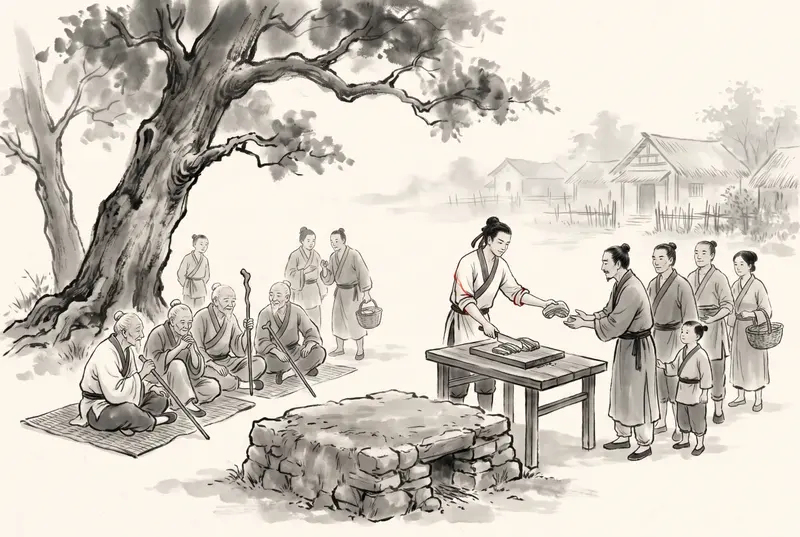
里中社,平爲宰,分肉食甚均。父老曰:「善,陳孺子之爲宰!」平曰:「嗟乎,使平得宰天下,亦如是肉矣!」陳渉起而王陳,使周市略定魏地,立魏咎爲魏王,與秦軍相攻於臨濟。陳平固已前謝其兄伯,從少年往事魏王咎於臨濟。魏王以爲太僕。説魏王不聽,人或讒之,陳平亡去。
Kundoku (Japanese reading)
里中の社に、平宰と為り、肉食を分かつこと甚だ均し。父老曰く、「善きかな、陳孺子の宰為るや」と。平曰く、「嗟乎、平をして天下に宰たるを得しめば、亦た是の肉の如くならん」と。陳渉起こりて陳に王たり。周市をして魏の地を略定せしめ、魏咎を立てて魏王と為し、秦軍と臨済に相攻む。陳平固より已に前に其の兄伯に謝し、少年に従いて往きて魏王咎に臨済に事う。魏王以て太僕と為す。魏王に説くも聴かれず。人或いは之を讒す。陳平亡げ去る。
Japanese
村で土地の神をまつる祭りがあったとき、陳平は肉を切り分ける役になり、とても公平に分けた。村の長老たちは言った。「陳の若者は、なかなか見事な分け役だ」。陳平は言った。「ああ、もしわたしに天下を切り盛りさせてくれたら、この肉と同じように公平にしてみせるのに」。陳渉(陳勝)が兵を挙げて陳で王になると、周市に魏の地を平定させ、魏咎を魏王に立てて、臨済で秦軍と戦わせた。陳平はすでに兄の伯に別れを告げており、若者たちと一緒に臨済へ行って魏王咎に仕えた。魏王は陳平を太僕にした。陳平は魏王に策を説いたが聞き入れられず、讒言する者もいたので、逃げ去った。
English
At the village festival for the god of the soil, Chen Ping was put in charge of cutting up the meat, and he divided it very fairly. The elders said, "Well done, young Chen, as carver!" Chen Ping said, "Ah, if only I could carve up the world, I would do it just like this meat." When Chen She rose in revolt and became king at Chen, he sent Zhou Shi to subdue the land of Wei, set up Wei Jiu as King of Wei, and fought the Qin army at Linji. Chen Ping had already taken leave of his brother Bo, and he went with some young men to serve King Jiu of Wei at Linji. The King of Wei made him master of the horse. Chen Ping offered him advice but was not heeded, and someone slandered him, so he fled.
Notes (JA)
- 社: 土地の神。その祭り。
- 宰: 祭りで肉を切り分ける役。のちに「宰相」の「宰」に通じる言葉遊びになっている。
- 陳孺子: 陳の若者。
- 陳渉: 陳勝(巻48の章を参照)。
- 臨濟: 魏の都になった町。
- 太僕: 車馬をつかさどる役。
Notes (EN)
- 社: the god of the soil, and his festival.
- 宰: the one who carves the meat at a festival; the same word as in 宰相, "chancellor," a play on words.
- 陳孺子: young Chen.
- Chen She: Chen Sheng (see Volume 48).
- Linji: the town that became the Wei capital.
- 太僕: master of the horse, in charge of carriages and horses.
Word notes
- carve up/kɑrv ʌp/phrasal verb
to cut into pieces; to divide
In the text: “if only I could carve up the world”
Similar words: divide — split into parts · share out — give parts to each person
- slander/ˈslændər/verb
to say false things that harm someone's good name
In the text: “someone slandered him”
Similar words: defame — damage a reputation · malign — speak badly of
Passage 4
Original
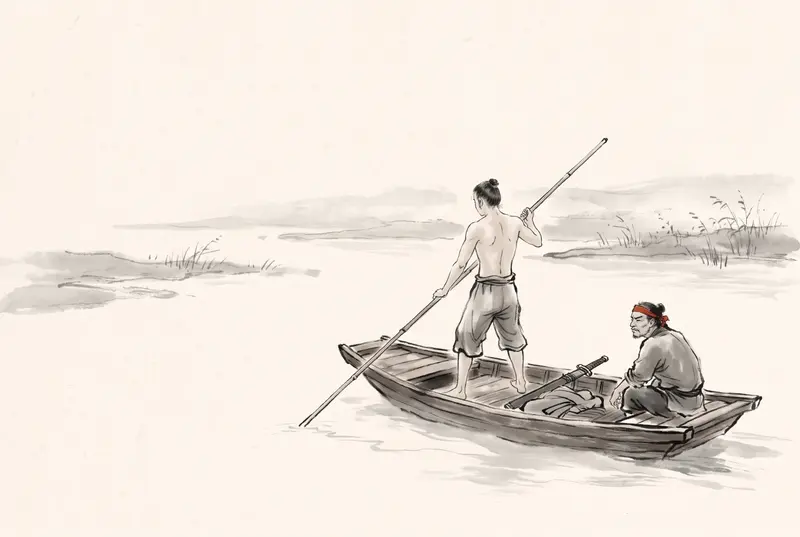
久之,項羽略地至河上,陳平往歸之,從入破秦,賜平爵卿。項羽之東王彭城也,漢王還定三秦而東,殷王反楚。項羽乃以平爲信武君,將魏王咎客在楚者以往,擊降殷王而還。項王使項悍拜平爲都尉,賜金二十溢。居無何,漢王攻下殷。項王怒,將誅定殷者將吏。陳平懼誅,乃封其金與印,使使歸項王,而平身間行杖劎亡。渡河,船人見其美丈夫獨行,疑其亡將,要中當有金玉寶器,目之,欲殺平。平恐,乃解衣躶而佐刺船。船人知其無有,乃止。
Kundoku (Japanese reading)
之を久しくして、項羽地を略して河上に至る。陳平往きて之に帰し、従いて入りて秦を破る。平に爵卿を賜う。項羽の東して彭城に王たるや、漢王還りて三秦を定めて東す。殷王楚に反す。項羽乃ち平を以て信武君と為し、魏王咎の客の楚に在る者を将いて以て往かしめ、殷王を撃ちて降して還る。項王項悍をして平を拝して都尉と為し、金二十溢を賜わしむ。居ること幾も無くして、漢王殷を攻め下す。項王怒り、将に殷を定むる者の将吏を誅せんとす。陳平誅を懼れ、乃ち其の金と印とを封じ、使いをして項王に帰さしめ、而して平の身は間行し剣を杖つきて亡ぐ。河を渡るに、船人其の美丈夫の独り行くを見て、其の亡将にして、要中に当に金玉宝器有るべしと疑い、之を目して、平を殺さんと欲す。平恐れ、乃ち衣を解きて躶となりて刺船を佐く。船人其の有ること無きを知り、乃ち止む。
Japanese
しばらくして、項羽が土地を攻め取りながら黄河のほとりまで来ると、陳平は項羽のもとへ身を寄せ、従って関中に入り、秦を破った。項羽は陳平に卿の爵位を与えた。項羽が東へ帰って彭城で王になると、漢王は引き返して三秦を平定し、東へ進んできた。殷王が楚にそむいたので、項羽は陳平を信武君とし、楚にいた魏王咎の旧臣たちを率いて行かせた。陳平は殷王を攻めて降伏させ、帰ってきた。項王は項悍を使者として陳平を都尉に任じ、金二十溢を与えた。ところが、まもなく漢王が殷を攻め落とした。項王は怒って、殷を平定した将や役人を処刑しようとした。陳平は殺されるのを恐れ、もらった金と官印を封をして使いに項王のもとへ返させ、自分は剣をつえに抜け道を通って逃げた。黄河を渡るとき、船頭は、立派な男がひとりで旅をしているのを見て、逃げてきた将軍で腰に金や宝玉を隠しているにちがいないと疑い、じろじろ見て、陳平を殺そうとした。陳平は恐れて、着物を脱いで裸になり、船を漕ぐのを手伝った。船頭は何も持っていないとわかり、殺すのをやめた。
English
Some time later, when Xiang Yu came to the Yellow River conquering land, Chen Ping went over to him, followed him into the land within the passes, and helped defeat Qin. Xiang Yu gave him the rank of minister. When Xiang Yu went east to rule as king at Pengcheng, the King of Han came back, pacified the Three Qins and advanced east, and the King of Yin rebelled against Chu. Xiang Yu made Chen Ping Lord Xinwu and sent him with the former followers of King Jiu of Wei who were in Chu. Chen Ping attacked the King of Yin, made him surrender, and returned. Xiang Yu sent Xiang Han to appoint him commandant and give him twenty yi of gold. Soon afterward, the King of Han attacked and took Yin. Xiang Yu was furious and was about to execute the generals and officers who had pacified it. Afraid of being put to death, Chen Ping sealed up his gold and his seal of office and sent them back to Xiang Yu, while he himself fled by back roads, leaning on his sword. As he crossed the Yellow River, the boatman, seeing a handsome man traveling alone, suspected he was a runaway general with gold, jade and treasure hidden at his waist. He kept his eyes on him and meant to kill him. Chen Ping, frightened, took off his clothes and, stripped naked, helped to pole the boat. Seeing that he had nothing, the boatman gave up the idea.
Notes (JA)
- 河上: 黄河のほとり。
- 爵卿: 卿の爵位。
- 彭城: 今の江蘇省徐州。項羽(西楚の覇王)の都。
- 殷王: 項羽が立てた王の一人、司馬卬。
- 溢: 金の重さの単位(「鎰」と同じ。二十両または二十四両)。
- 間行: 抜け道を通って、人目を避けて行く。
- 要: 「腰」と同じ。
- 刺船: さおで船を進める。
Notes (EN)
- 河上: the bank of the Yellow River.
- 爵卿: the rank of minister.
- Pengcheng: present-day Xuzhou in Jiangsu, Xiang Yu's capital as Hegemon-King of Western Chu.
- The King of Yin: Sima Ang, one of the kings set up by Xiang Yu.
- 溢 (yi): a unit of weight for gold, the same as 鎰.
- 間行: traveling secretly by back roads.
- 要: the waist (腰).
- 刺船: to pole a boat.
Word notes
- pole/poʊl/verb
to push a boat along with a long stick
In the text: “helped to pole the boat”
Similar words: punt — move a flat boat with a pole · row — move a boat with oars
- suspect/səˈspɛkt/verb
to think something bad is probably true
In the text: “suspected he was a runaway general”
Similar words: guess — think without being sure · presume — suppose
Passage 5
Original
平遂至修武降漢,因魏無知求見漢王,漢王召入。是時萬石君奮爲漢王中涓,受平謁,入見平。平等七人俱進,賜食。王曰:「罷,就舍矣。」平曰:「臣爲事來,所言不可以過今日。」於是漢王與語而説之,問曰:「子之居楚何官?」曰:「爲都尉。」是日乃拜平爲都尉,使爲參乘,典護軍。諸將盡讙,曰:「大王一日得楚之亡卒,未知其高下,而即與同載,反使監護軍長者!」漢王聞之,愈益幸平。遂與東伐項王。至彭城,爲楚所敗。引而還,收散兵至滎陽,以平爲亞將,屬於韓王信,軍廣武。
Kundoku (Japanese reading)
平遂に修武に至りて漢に降り、魏無知に因りて漢王に見えんことを求む。漢王召し入る。是の時万石君奮漢王の中涓為り、平の謁を受け、入れて平を見えしむ。平等七人倶に進み、食を賜う。王曰く、「罷めて、舎に就け」と。平曰く、「臣事の為に来たる。言う所今日を過ぐべからず」と。是に於いて漢王与に語りて之を説び、問いて曰く、「子の楚に居りしは何の官ぞ」と。曰く、「都尉為り」と。是の日乃ち平を拝して都尉と為し、参乗たらしめ、護軍を典らしむ。諸将尽く讙して曰く、「大王一日にして楚の亡卒を得、未だ其の高下を知らずして、即ち与に載を同じくし、反って長者を監護せしむ」と。漢王之を聞き、愈いよ益ます平を幸す。遂に与に東して項王を伐つ。彭城に至り、楚の敗る所と為る。引きて還り、散兵を収めて滎陽に至る。平を以て亜将と為し、韓王信に属せしめ、広武に軍す。
Japanese
陳平は修武まで来て漢に降り、魏無知のつてで漢王に会いたいと願い出た。漢王は呼び入れた。このとき万石君の石奮が漢王の側近で、陳平の名札を受け取り、陳平を中に通した。陳平たち七人がそろって進み、食事を賜った。漢王が「もう下がって宿舎で休め」と言うと、陳平は言った。「わたしは用があって参りました。申し上げることは、今日のうちでなければなりません」。そこで漢王は陳平と話して、すっかり気に入り、たずねた。「楚では何の官についていたのか」。「都尉でした」。漢王はその日のうちに陳平を都尉に任じ、自分の車に同乗させ、諸将の監督をまかせた。将軍たちはみな騒ぎ立てた。「大王は楚から逃げてきた兵を一日で手に入れ、その器量もまだわからないのに、すぐに同じ車に乗せ、そのうえ古参の将たちを監督させるとは」。漢王はそれを聞くと、ますます陳平をかわいがった。そして陳平とともに東へ向かって項王を討ったが、彭城で楚に大敗した。兵を引いて帰り、散り散りになった兵を集めて滎陽に至ると、陳平を副将とし、韓王信の下につけて、広武に駐屯させた。
English
Chen Ping reached Xiuwu, went over to Han, and through Wei Wuzhi asked to see the King of Han. The king called him in. At the time Shi Fen, later Lord Wanshi, was one of the king's attendants; he took Chen Ping's name card and brought him in. Chen Ping and six others came forward together and were given a meal. The king said, "That is all; go to your quarters." Chen Ping said, "I came on business, and what I have to say cannot wait past today." So the King of Han talked with him and was delighted. He asked, "What office did you hold in Chu?" "Commandant." That very day the king made him commandant, had him ride in his own carriage, and put him in charge of supervising the army. The generals all clamored: "In a single day Your Majesty takes in a deserter from Chu, without knowing whether he is any good, rides with him in the same carriage, and even sets him over his elders!" When the King of Han heard this, he favored Chen Ping all the more. Together they marched east against Xiang Yu, but at Pengcheng they were defeated by Chu. They drew back, gathered the scattered troops and reached Xingyang, where the king made Chen Ping a deputy general under Xin, King of Hann, and stationed him at Guangwu.
Notes (JA)
- 修武: 今の河南省獲嘉県のあたり。
- 魏無知: 陳平を漢王に推薦した人。のちに陳平はこの恩を忘れない(p11)。
- 萬石君奮: 石奮。のちに一家で二千石の高官を五人出し、「万石君」と呼ばれた。
- 中涓: 主君のそばに仕える役。
- 謁: 名札。
- 參乘: 主君の車に同乗する役。
- 護軍: 諸将を監督する役。
- 讙: やかましく騒ぐ。
- 韓王信: 韓の王族の韓信。淮陰侯の韓信とは別人。
Notes (EN)
- Xiuwu: near present-day Huojia in Henan.
- Wei Wuzhi: the man who introduced Chen Ping to the King of Han; Chen Ping never forgot this (p11).
- Shi Fen (萬石君奮): later called Lord Wanshi, "ten thousand shi," because he and four sons all held posts of two thousand shi.
- 中涓: a personal attendant.
- 謁: a name card.
- 參乘: the one who rides in the lord's carriage with him.
- 護軍: supervisor of the generals.
- 讙: to clamor.
- Xin, King of Hann (韓王信): a member of the Hann royal house, not the same man as Han Xin, Marquis of Huaiyin.
Word notes
- clamor/ˈklæmər/verb
to shout loudly in protest
In the text: “The generals all clamored”
Similar words: protest — say strongly that you disagree · complain — say you are unhappy
- deserter/dɪˈzɜrtər/noun
a soldier who runs away from his army
In the text: “takes in a deserter from Chu”
Similar words: runaway — someone who has fled · defector — someone who changes sides
Passage 6
Original
絳侯、灌嬰等咸讒陳平曰:「平雖美丈夫,如冠玉耳,其中未必有也。臣聞平居家時,盜其嫂;事魏不容,亡歸楚;歸楚不中,又亡歸漢。今日大王尊官之,令護軍。臣聞平受諸將金,金多者得善處,金少者得惡處。平,反覆亂臣也,願王察之。」漢王疑之,召讓魏無知。無知曰:「臣所言者,能也;陛下所問者,行也。今有尾生、孝己之行而無益處於勝負之數,陛下何暇用之乎?楚漢相距,臣進奇謀之士,顧其計誠足以利國家不耳。且盜嫂受金又何足疑乎?」漢王召讓平曰:「先生事魏不中,遂事楚而去,今又從吾遊,信者固多心乎?」平曰:「臣事魏王,魏王不能用臣説,故去事項王。項王不能信人,其所任愛,非諸項即妻之昆弟,雖有奇士不能用,平乃去楚。聞漢王之能用人,故歸大王。臣躶身來,不受金無以爲資。誠臣計畫有可采者,顧大王用之;使無可用者,金具在,請封輸官,得請骸骨。」漢王乃謝,厚賜,拜爲護軍中尉,盡護諸將。諸將乃不敢復言。
Kundoku (Japanese reading)
絳侯・灌嬰等咸陳平を讒して曰く、「平は美丈夫なりと雖も、冠玉の如きのみ。其の中未だ必ずしも有らず。臣聞く、平家に居りし時、其の嫂を盗む。魏に事えて容れられず、亡げて楚に帰す。楚に帰して中らず、又亡げて漢に帰す。今日大王之を尊官とし、軍を護らしむ。臣聞く、平諸将の金を受け、金多き者は善処を得、金少なき者は悪処を得と。平は反覆の乱臣なり。願わくは王之を察せよ」と。漢王之を疑い、魏無知を召して譲む。無知曰く、「臣の言う所の者は、能なり。陛下の問う所の者は、行いなり。今尾生・孝己の行い有りて勝負の数に益処無くば、陛下何の暇ありて之を用いんや。楚漢相距ぐ。臣奇謀の士を進む。顧うに其の計誠に以て国家を利するに足るや不やのみ。且つ嫂を盗み金を受くるは又何ぞ疑うに足らんや」と。漢王平を召して譲めて曰く、「先生魏に事えて中らず、遂に楚に事えて去る。今又吾に従いて游ぶ。信なる者は固より心多きか」と。平曰く、「臣魏王に事うるも、魏王臣の説を用うる能わず。故に去りて項王に事う。項王は人を信ずる能わず。其の任愛する所は、諸項に非ずんば即ち妻の昆弟なり。奇士有りと雖も用うる能わず。平乃ち楚を去る。漢王の能く人を用うるを聞く。故に大王に帰す。臣躶身にて来たる。金を受けずんば以て資と為す無し。誠に臣の計画に采るべき者有らば、願わくは大王之を用いよ。用うべき者無からしめば、金具に在り。請う封じて官に輸し、骸骨を請うを得ん」と。漢王乃ち謝し、厚く賜い、拝して護軍中尉と為し、尽く諸将を護らしむ。諸将乃ち敢えて復た言わず。
Japanese
絳侯の周勃や灌嬰らはそろって陳平を讒言した。「陳平は見た目は立派ですが、冠の飾りの玉のようなもので、中身があるとはかぎりません。聞けば陳平は、家にいたころ兄嫁と通じていたとか。魏に仕えても受け入れられず、逃げて楚につき、楚でもうまくいかず、また逃げて漢についたのです。それを今日、大王は高い官につけ、軍の監督までさせておられる。しかも陳平は将軍たちから金を受け取り、金を多く出した者には良い持ち場を、少ない者には悪い持ち場を与えていると聞きます。陳平は寝返りを繰り返す、乱れた臣です。どうかよくお調べください」。漢王は疑いを抱き、魏無知を呼んで責めた。魏無知は言った。「わたしが申し上げたのは才能のことで、陛下がおたずねなのは行いのことです。いま、尾生や孝己のような立派な行いがあっても、勝ち負けの役に立たないなら、陛下にはそんな者を使っているひまはないはずです。楚と漢がにらみ合っている今、わたしは奇策の士を推薦したのです。考えるべきは、その計略が本当に国の役に立つかどうかだけです。兄嫁と通じたとか金を受け取ったとか、そんなことを気にする必要がありましょうか」。漢王は陳平を呼んで責めた。「先生は魏に仕えてうまくいかず、楚に仕えて去り、いままたわたしに付き従っている。誠実な人間というのは、そんなに心が多いものか」。陳平は言った。「わたしは魏王に仕えましたが、魏王はわたしの策を用いることができませんでした。だから去って項王に仕えたのです。項王は人を信じることができません。信頼してかわいがるのは、項氏の一族か、妻の兄弟ばかりです。すぐれた人物がいても用いることができません。だからわたしは楚を去りました。漢王はよく人を用いると聞いて、大王のもとへ来たのです。わたしは裸一貫で来ました。金を受け取らなければ、何の元手もありません。わたしの計略に取るべきところがあるなら、どうかお用いください。用いるところがないなら、金はすべて手元に残っています。封をして官に納めますので、どうかお暇をください」。漢王はそこで陳平にあやまり、手厚く褒美を与え、護軍中尉に任じて、諸将をすべて監督させた。将軍たちは、もう何も言わなくなった。
English
The Marquis of Jiang, Guan Ying and others all slandered Chen Ping: "Chen Ping may be a handsome man, but he is like the jade ornament on a cap; there is not necessarily anything inside. We hear that when he lived at home he slept with his sister-in-law. He served Wei and was not accepted, so he fled to Chu; he did not fit in with Chu, so he fled again, to Han. Now Your Majesty has given him high office and set him to supervise the army. We hear that he takes gold from the generals: those who give more get good posts, and those who give less get bad ones. Chen Ping is a turncoat, a disloyal subject. We beg Your Majesty to look into it." The King of Han grew suspicious and called in Wei Wuzhi to reproach him. Wei Wuzhi said, "What I spoke of was ability; what Your Majesty asks about is conduct. If a man had the virtue of Wei Sheng or Xiao Ji but did nothing to decide who wins and who loses, what time would Your Majesty have to use him? Chu and Han are locked in battle, and I put forward a man of extraordinary plans. All that matters is whether his plans can truly benefit the state. Why worry about sisters-in-law and gold?" The king called in Chen Ping and reproached him: "You served Wei and it did not work out, so you served Chu and left; now you follow me. Is a faithful man always so changeable?" Chen Ping said, "I served the King of Wei, but he could not use my advice, so I left to serve Xiang Yu. Xiang Yu cannot trust anyone. Those he trusts and favors are either members of the Xiang clan or his wife's brothers; even if he has extraordinary men, he cannot use them. So I left Chu. I heard that the King of Han knows how to use men, so I came to you. I came with nothing but my bare body; if I did not accept gold, I would have nothing to live on. If any of my plans are worth taking up, I beg you to use them. If none are of use, the gold is all still here. Let me seal it up and hand it to the treasury, and ask leave to go home." The king apologized, rewarded him generously, made him Commander Supervisor of the Army, and put all the generals under his supervision. After that the generals did not dare say any more.
Notes (JA)
- 絳侯: 周勃。沛以来の功臣。のちに陳平と組んで呂氏を討つ(p12)。
- 灌嬰: 騎兵の将。垓下で項羽を追った(巻7「垓下」の章)。
- 冠玉: 冠の飾りの玉。外見だけで中身がないことのたとえ。
- 盜嫂: 兄嫁と密通する。p1 のとおり兄嫁は離縁されており、事実かどうかは書かれていない。
- 反覆: 寝返りを繰り返す。
- 尾生・孝己: 尾生は約束を守って橋の下で溺れ死んだ男、孝己は殷の孝行な王子。信義と孝の手本。
- 躶身: 裸の身。p4 で船の上で裸になった話と重なる。
- 請骸骨: 骨を返してほしいと願う。辞職を願い出る決まり文句。
- 護軍中尉: 諸将を監督する長官。
Notes (EN)
- The Marquis of Jiang: Zhou Bo, a man of merit since the days in Pei; later Chen Ping's partner in overthrowing the Lü clan (p12).
- Guan Ying: a cavalry general who chased Xiang Yu after Gaixia (see Volume 7).
- Jade on a cap (冠玉): a fine surface with nothing inside.
- Slept with his sister-in-law (盜嫂): as p1 says, the sister-in-law had been sent away; whether this was true is not told.
- 反覆: to keep changing sides.
- Wei Sheng and Xiao Ji: Wei Sheng drowned under a bridge rather than break a promise to meet there; Xiao Ji was a filial prince of Shang. Models of good faith and filial duty.
- 躶身: bare body, recalling the naked crossing of the river in p4.
- 請骸骨: "to ask for one's bones back," the set phrase for asking to resign.
- 護軍中尉: Commander Supervisor of the Army.
Word notes
- turncoat/ˈtɜrnkoʊt/noun
a person who leaves one side to join the enemy
In the text: “Chen Ping is a turncoat”
Similar words: traitor — someone who betrays their side · renegade — someone who abandons their group
- conduct/ˈkɑndʌkt/noun
the way a person behaves
In the text: “what Your Majesty asks about is conduct”
Similar words: behavior — how someone acts · character — the kind of person someone is
- reproach/rɪˈproʊtʃ/verb
to blame or criticize someone
In the text: “called in Chen Ping and reproached him”
Similar words: rebuke — speak sharply to · scold — speak angrily to
Passage 7
Original
其後,楚急攻,絶漢甬道,圍漢王於滎陽城。久之,漢王患之,請割滎陽以西以和。項王不聽。漢王謂陳平曰:「天下紛紛,何時定乎?」陳平曰:「項王爲人,恭敬愛人,士之廉節好禮者多歸之。至於行功爵邑,重之,士亦以此不附。今大王慢而少禮,士廉節者不來;然大王能饒人以爵邑,士之頑鈍嗜利無恥者亦多歸漢。誠各去其兩短,襲其兩長,天下指麾則定矣。然大王恣侮人,不能得廉節之士。顧楚有可亂者,彼項王骨鯁之臣亞父、鍾離眛、龍且、周殷之屬,不過數人耳。大王誠能出捐數萬斤金,行反間,間其君臣,以疑其心,項王爲人意忌信讒,必內相誅。漢因舉兵而攻之,破楚必矣。」漢王以爲然,乃出黃金四萬斤,與陳平,恣所爲,不問其出入。
Kundoku (Japanese reading)
其の後、楚急に攻めて、漢の甬道を絶ち、漢王を滎陽城に囲む。之を久しくして、漢王之を患え、滎陽以西を割きて以て和せんことを請う。項王聴かず。漢王陳平に謂いて曰く、「天下紛紛たり。何れの時にか定まらん」と。陳平曰く、「項王の人と為り、恭敬にして人を愛す。士の廉節にして礼を好む者多く之に帰す。功を行い邑を爵するに至りては、之を重んず。士も亦た此を以て附かず。今大王は慢にして礼少なし。士の廉節なる者来たらず。然れども大王能く人を饒かにするに爵邑を以てす。士の頑鈍にして利を嗜み恥無き者も亦た多く漢に帰す。誠に各おの其の両短を去り、其の両長を襲わば、天下指麾すれば則ち定まらん。然れども大王恣に人を侮る。廉節の士を得る能わず。顧うに楚に乱すべき者有り。彼の項王の骨鯁の臣は、亜父・鍾離眛・龍且・周殷の属、数人に過ぎざるのみ。大王誠に能く数万斤の金を出捐し、反間を行い、其の君臣を間して、以て其の心を疑わしめば、項王の人と為りは意忌して讒を信ず。必ず内に相誅せん。漢因りて兵を挙げて之を攻めば、楚を破ること必せり」と。漢王以て然りと為し、乃ち黄金四万斤を出だして、陳平に与え、為す所を恣にして、其の出入を問わず。
Japanese
その後、楚は激しく攻め、漢の食糧を運ぶ壁つきの道を断ち切って、漢王を滎陽城に包囲した。包囲が長引き、困った漢王は、滎陽から西を楚に割き与えて和睦したいと申し入れたが、項王は聞き入れなかった。漢王は陳平に言った。「天下は乱れに乱れている。いつになったら定まるのか」。陳平は言った。「項王は、人には礼儀正しく、思いやりがあります。そのため、清廉で礼を好む士が多く項王のもとに集まります。ところが手柄に応じて爵位や領地を与える段になると、惜しんでしまう。それで士も心から従わないのです。いっぽう大王は人を見下して礼に欠けるので、清廉な士はやって来ません。けれども大王は、気前よく爵位や領地を与えることができるので、頑固で鈍く、利を好み恥を知らない士は、たくさん漢に集まってきます。それぞれの短所を捨て、両方の長所を取り込めば、指図ひとつで天下は定まるでしょう。しかし大王は好き勝手に人を侮るので、清廉な士を得ることはできません。考えてみると、楚には乱すことのできる弱みがあります。項王の芯となる忠臣は、亜父(范増)・鍾離眛・龍且・周殷といった数人にすぎません。大王が本当に数万斤の黄金を投げ出して反間の計を行い、君臣の仲を裂いて互いに疑わせれば、項王は疑い深く、讒言を信じやすい人ですから、きっと内輪で殺し合うでしょう。そこへ漢が兵を挙げて攻めれば、楚を破るのはまちがいありません」。漢王はもっともだと思い、黄金四万斤を出して陳平に与え、思うままに使わせて、その使いみちを問わなかった。
English
Later, Chu attacked fiercely, cut the walled road by which Han brought in its supplies, and besieged the King of Han in the city of Xingyang. After a long siege the King of Han, in distress, asked for peace in exchange for everything west of Xingyang, but Xiang Yu would not listen. The king said to Chen Ping, "The world is in turmoil. When will it ever be settled?" Chen Ping said, "Xiang Yu is courteous and kind to people, so many men of integrity who love good manners go to him. But when it comes to rewarding merit with titles and land, he holds back, and so even those men do not truly attach themselves to him. Your Majesty, on the other hand, is rude and has little regard for courtesy, so men of integrity do not come. But you are generous with titles and land, so many stubborn, dull, greedy and shameless men come over to Han. If each of you could drop your two faults and take up the other's two strengths, the world would be settled with a wave of the hand. But Your Majesty insults people as you please, and cannot win men of integrity. Still, there is a way to throw Chu into disorder. Xiang Yu's loyal backbone is only a few men: the Second Father, Zhongli Mo, Long Ju, Zhou Yin and their like. If Your Majesty will really part with tens of thousands of catties of gold to spread distrust, to set the ruler against his ministers and fill their hearts with suspicion, then Xiang Yu, being jealous and quick to believe slander, is sure to turn on his own men. If Han then raises its army and attacks, Chu will certainly fall." The King of Han agreed. He gave Chen Ping forty thousand catties of gold to use as he pleased, without asking where any of it went.
Notes (JA)
- 甬道: 両側に壁を築いて、敵から隠して物資を運ぶ道。
- 紛紛: 乱れて落ち着かないさま。
- 廉節: 清廉で節操がある。
- 頑鈍嗜利無恥: 頑固で鈍く、利益を好み、恥を知らない。
- 指麾: 指図する。
- 骨鯁之臣: 骨のように芯の強い、直言する忠臣。
- 亞父: 范増。項羽が父に次ぐ人として尊んだ呼び名(巻7「鴻門の会」の章)。
- 反間: 敵の中に不和を起こさせる計略。間者を使って敵を疑わせる。
- 斤: 重さの単位。漢代の一斤はおよそ250グラム。
Notes (EN)
- 甬道: a road walled on both sides to hide supplies from the enemy.
- 紛紛: in turmoil.
- 廉節: honest and principled.
- 頑鈍嗜利無恥: stubborn, dull, greedy for gain and shameless.
- 指麾: to direct with a wave of the hand.
- 骨鯁之臣: ministers with backbone who speak out.
- The Second Father (亞父): Fan Zeng, so honored by Xiang Yu (see the Feast at Hongmen, Volume 7).
- 反間: the stratagem of sowing discord in the enemy camp, using agents and rumors.
- Catty (斤): a unit of weight, about 250 grams in Han times.
Word notes
- generous/ˈdʒɛnərəs/adjective
happy to give freely
In the text: “you are generous with titles and land”
Similar words: open-handed — giving freely · lavish — giving a lot
- jealous/ˈdʒɛləs/adjective
suspicious and afraid of losing what you have
In the text: “being jealous and quick to believe slander”
Similar words: suspicious — not trusting · envious — wanting what others have
Passage 8
Original
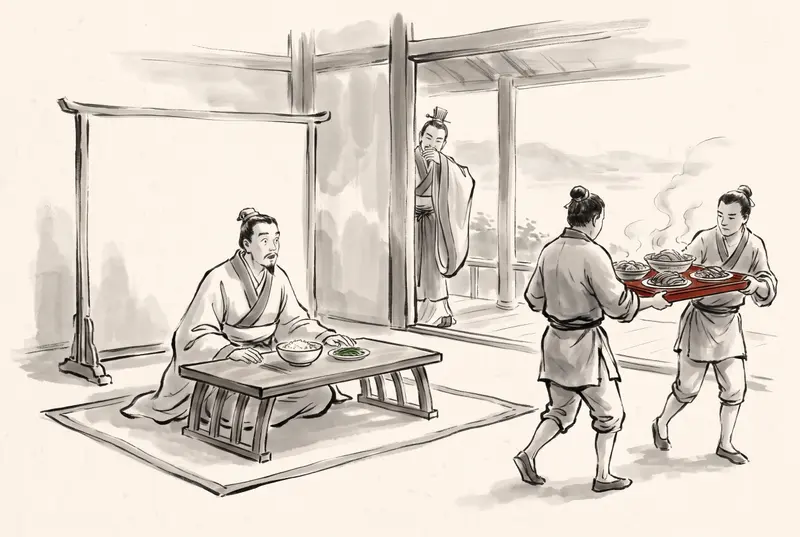
陳平既多以金縱反間於楚軍,宣言諸將鍾離眛等爲項王將,功多矣,然而終不得裂地而王,欲與漢爲一,以滅項氏而分王其地。項羽果意不信鍾離眛等。項王既疑之,使使至漢。漢王爲太牢具,舉進。見楚使,即詳驚曰:「吾以爲亞父使,乃項王使!」復持去,更以惡草具進楚使。楚使歸,具以報項王。項王果大疑亞父。亞父欲急攻下滎陽城,項王不信,不肯聽。亞父聞項王疑之,乃怒曰:「天下事大定矣,君王自爲之!願請骸骨歸!」歸未至彭城,疽發背而死。陳平乃夜出女子二千人滎陽城東門,楚因擊之,陳平乃與漢王從城西門夜出去。遂入關,收散兵復東。
Kundoku (Japanese reading)
陳平既に多く金を以て反間を楚軍に縦ち、宣言すらく、諸将鍾離眛等項王の将為りて、功多し。然れども終に地を裂きて王たるを得ず。漢と一と為りて、以て項氏を滅ぼして其の地を分かちて王たらんと欲すと。項羽果たして意に鍾離眛等を信ぜず。項王既に之を疑い、使いをして漢に至らしむ。漢王為に太牢の具を為り、挙げて進む。楚の使いを見て、即ち詳り驚きて曰く、「吾以為えらく亜父の使いならんと。乃ち項王の使いなり」と。復た持ち去り、更に悪草の具を以て楚の使いに進む。楚の使い帰りて、具に以て項王に報ず。項王果たして大いに亜父を疑う。亜父急に滎陽城を攻め下さんと欲するも、項王信ぜず、聴くを肯んぜず。亜父項王の之を疑うを聞き、乃ち怒りて曰く、「天下の事大いに定まれり。君王自ら之を為せ。願わくは骸骨を請いて帰らん」と。帰りて未だ彭城に至らざるに、疽背に発して死す。陳平乃ち夜女子二千人を滎陽城の東門より出だす。楚因りて之を撃つ。陳平乃ち漢王と城の西門より夜出でて去る。遂に関に入り、散兵を収めて復た東す。
Japanese
陳平は大量の金を使って楚の軍中に反間の者を放ち、こう言いふらさせた。「鍾離眛らの将軍は項王のもとで手柄をたくさん立てたのに、いつまでたっても土地を分けてもらって王になることができない。そこで漢と手を結んで項氏を滅ぼし、その土地を分けて王になろうとしている」。はたして項羽は鍾離眛らを信じなくなった。項王は疑いを持つと、使者を漢に送ってきた。漢王はそのためにごちそう(太牢)を用意させ、運ばせた。ところが楚の使者を見ると、わざと驚いたふりをして言った。「亜父の使者かと思ったら、項王の使者だったのか」。そしてごちそうを下げさせ、代わりに粗末な食事を楚の使者に出した。楚の使者は帰ると、ありのままを項王に報告した。はたして項王は亜父をひどく疑うようになった。亜父は急いで滎陽城を攻め落とそうとしたが、項王は信用せず、聞き入れようとしなかった。亜父は項王に疑われていると知ると、怒って言った。「天下の大勢はもう決まった。あとは王ご自身でおやりなさい。どうかこの老いぼれの骨を故郷に帰らせてください」。そして帰る途中、彭城に着かないうちに、背中に悪性のできものができて死んだ。陳平は夜、女二千人を滎陽城の東門から出した。楚軍がそれを攻めているすきに、陳平は漢王とともに夜、城の西門から脱出した。こうして関中に入り、散った兵を集めて、ふたたび東へ向かった。
English
Chen Ping spent a great deal of gold sending agents among the Chu army to spread the word that Zhongli Mo and the other generals had won great merit under Xiang Yu but would never be given land to rule as kings, and that they meant to join Han, destroy the Xiang clan and divide its land among themselves as kings. Sure enough, Xiang Yu stopped trusting Zhongli Mo and the others. Once he was suspicious, he sent an envoy to Han. The King of Han had a grand feast of beef, mutton and pork prepared and carried in. When he saw the envoy from Chu, he pretended to be surprised and said, "I thought you were an envoy from the Second Father, but you are Xiang Yu's!" He had the feast taken away and plain food served to the Chu envoy instead. The envoy went back and told Xiang Yu everything. Sure enough, Xiang Yu came to suspect the Second Father deeply. The Second Father wanted to storm Xingyang at once, but Xiang Yu did not trust him and would not listen. When the Second Father learned that Xiang Yu suspected him, he said angrily, "The great affairs of the world are settled. Let my lord handle them himself. I beg leave to take my old bones home." On the way, before he reached Pengcheng, an abscess broke out on his back and he died. Then, one night, Chen Ping sent two thousand women out of the east gate of Xingyang. While Chu attacked them, Chen Ping and the King of Han slipped out of the west gate in the dark. They entered the land within the passes, gathered their scattered troops and marched east again.
Notes (JA)
- 縱反間: 間者を放ち、敵の中で疑いを起こさせる。
- 鍾離眛: 項羽の将。のちに韓信のもとに身を寄せる(巻92「韓信の最期」の章)。
- 太牢: 牛・羊・豚をそろえた最上のごちそう。
- 詳: 「佯」と同じ。ふりをする。
- 惡草具: 粗末な食事。
- 疽: 悪性のはれもの。
- 女子二千人: 女たちによろいを着せて兵に見せかけたとされる(巻7・巻8では紀信が漢王に化けて降伏したと書く)。
Notes (EN)
- 縱反間: to send out agents to sow distrust in the enemy.
- Zhongli Mo: one of Xiang Yu's generals, who later took refuge with Han Xin (see Volume 92).
- 太牢: a feast with beef, mutton and pork, the grandest kind.
- 詳: the same as 佯, to pretend.
- 惡草具: plain, poor food.
- 疽: an abscess.
- Two thousand women: they are said to have been dressed in armor to look like soldiers (Volumes 7 and 8 add that Ji Xin, dressed as the king, came out to surrender).
Word notes
- pretend/prɪˈtɛnd/verb
to act as if something is true when it is not
In the text: “he pretended to be surprised”
Similar words: feign — act falsely · fake — not real
- abscess/ˈæbsɛs/noun
a painful swelling full of pus
In the text: “an abscess broke out on his back”
Similar words: boil — a painful red swelling · sore — a painful spot on the skin
Passage 9
Original
其明年,淮陰侯破齊,自立爲齊王,使使言之漢王。漢王大怒而罵,陳平躡漢王。漢王亦悟,乃厚遇齊使,使張子房卒立信爲齊王。封平以戸牖鄕。用其奇計策,卒滅楚。常以護軍中尉從定燕王臧荼。
Kundoku (Japanese reading)
其の明年、淮陰侯斉を破り、自ら立ちて斉王と為り、使いをして之を漢王に言わしむ。漢王大いに怒りて罵る。陳平漢王を躡む。漢王も亦た悟り、乃ち厚く斉の使いを遇し、張子房をして卒に信を立てて斉王と為さしむ。平を封ずるに戸牖郷を以てす。其の奇計策を用いて、卒に楚を滅ぼす。常に護軍中尉を以て従いて燕王臧荼を定む。
Japanese
その翌年、淮陰侯の韓信は斉を破ると、自分を斉王に立ててほしいと、使者をよこして漢王に申し入れた。漢王はかんかんに怒ってののしった。陳平はそっと漢王の足を踏んだ。漢王もはっと気づいて、斉の使者を手厚くもてなし、張子房(張良)を送って、韓信をとうとう斉王に立てた。漢王は陳平を戸牖郷に封じた。陳平の奇計を用いて、ついに楚を滅ぼした。陳平はその後も護軍中尉として従い、燕王臧荼の反乱を平定した。
English
The next year, the Marquis of Huaiyin conquered Qi and sent an envoy to tell the King of Han that he wished to set himself up as King of Qi. The King of Han flew into a rage and began to curse. Chen Ping stepped on his foot. The king understood at once; he treated the envoy from Qi generously and sent Zhang Liang to make Han Xin King of Qi after all. He gave Chen Ping Huyou village as a fief. Using his extraordinary plans, Han finally destroyed Chu. Chen Ping went on serving as Commander Supervisor of the Army and helped put down Zang Tu, King of Yan.
Notes (JA)
- 淮陰侯: 韓信。このときはまだ淮陰侯ではない(のちの呼び名で書いている)。
- 自立爲齊王: 「仮の斉王」にしてほしいと願い出た(巻92「韓信」の章)。
- 躡: 足を踏む。言葉にせず合図する。
- 張子房: 張良(巻55の章を参照)。
- 臧荼: 燕王。前202年に反乱を起こした。
Notes (EN)
- The Marquis of Huaiyin: Han Xin, called by his later title.
- King of Qi: he asked to be made "acting King of Qi" (see the chapter on Han Xin, Volume 92).
- 躡: to step on someone's foot; a silent signal.
- Zhang Zifang: Zhang Liang (see Volume 55).
- Zang Tu: King of Yan, who rebelled in 202 BCE.
Word notes
- curse/kɜrs/verb
to use angry, offensive words
In the text: “flew into a rage and began to curse”
Similar words: swear — use bad words · rant — shout angrily
Passage 10
Original
漢六年,人有上書告楚王韓信反。高帝問諸將,諸將曰:「亟發兵阬豎子耳。」高帝默然。問陳平,平固辭謝,曰:「諸將云何?」上具告之。陳平曰:「人之上書言信反,有知之者乎?」曰:「未有。」曰:「信知之乎?」曰:「不知。」陳平曰:「陛下精兵孰與楚?」上曰:「不能過。」平曰:「陛下將用兵有能過韓信者乎?」上曰:「莫及也。」平曰:「今兵不如楚精,而將不能及,而舉兵攻之,是趣之戰也,竊爲陛下危之。」上曰:「爲之奈何?」平曰:「古者天子巡狩,會諸侯。南方有雲夢,陛下弟出僞遊雲夢,會諸侯於陳。陳,楚之西界,信聞天子以好出遊,其勢必無事而郊迎謁。謁,而陛下因禽之,此特一力士之事耳。」高帝以爲然,乃發使告諸侯會陳,「吾將南遊雲夢」。上因隨以行。行未至陳,楚王信果郊迎道中。高帝豫具武士,見信至,即執縛之,載後車。信呼曰:「天下已定,我固當烹!」高帝顧謂信曰:「若毋聲!而反,明矣!」武士反接之。遂會諸侯於陳,盡定楚地。還至雒陽,赦信以爲淮陰侯,而與功臣剖符定封。
Kundoku (Japanese reading)
漢の六年、人上書して楚王韓信反すと告ぐる有り。高帝諸将に問う。諸将曰く、「亟やかに兵を発して豎子を阬にするのみ」と。高帝黙然たり。陳平に問う。平固く辞謝して、曰く、「諸将何と云う」と。上具に之を告ぐ。陳平曰く、「人の上書して信の反を言うこと、之を知る者有りや」と。曰く、「未だ有らず」と。曰く、「信之を知るか」と。曰く、「知らず」と。陳平曰く、「陛下の精兵は楚と孰与ぞ」と。上曰く、「過ぐる能わず」と。平曰く、「陛下の将の兵を用うること能く韓信に過ぐる者有りや」と。上曰く、「及ぶ莫きなり」と。平曰く、「今兵は楚の精に如かず、而して将は及ぶ能わず。而るに兵を挙げて之を攻むるは、是れ之に戦いを趣すなり。窃かに陛下の為に之を危ぶむ」と。上曰く、「之を為すこと奈何」と。平曰く、「古者天子巡狩し、諸侯を会す。南方に雲夢有り。陛下弟だ出でて偽りて雲夢に遊び、諸侯を陳に会せよ。陳は楚の西界なり。信天子の好を以て出遊すと聞かば、其の勢い必ず事無くして郊迎謁せん。謁せば、陛下因りて之を禽にせよ。此れ特だ一力士の事のみ」と。高帝以て然りと為し、乃ち使いを発して諸侯に陳に会せよと告ぐ。「吾将に南のかた雲夢に遊ばんとす」と。上因りて随いて以て行く。行きて未だ陳に至らざるに、楚王信果たして道中に郊迎す。高帝予め武士を具え、信の至るを見て、即ち之を執縛し、後車に載す。信呼びて曰く、「天下已に定まる。我固より当に烹らるべし」と。高帝顧みて信に謂いて曰く、「若声する毋かれ。而の反すること、明らかなり」と。武士反接す。遂に諸侯に陳に会し、尽く楚の地を定む。還りて雒陽に至り、信を赦して以て淮陰侯と為し、而して功臣と符を剖きて封を定む。
Japanese
漢の六年(前201年)、楚王の韓信が謀反をくわだてていると上書した者がいた。高帝が諸将にたずねると、将軍たちは言った。「すぐに兵を出して、あの小僧を生き埋めにするまでです」。高帝は黙りこんだ。陳平にたずねると、陳平はかたく遠慮してから言った。「将軍たちは何と言っていますか」。高帝はそのまま話した。陳平は言った。「韓信が謀反をくわだてていると上書があったことを、知っている者はいますか」。「まだいない」。「韓信は知っていますか」。「知らない」。陳平は言った。「陛下の精兵は、楚の兵と比べてどうですか」。「かなわない」。「陛下の将軍で、用兵が韓信にまさる者はいますか」。「およぶ者はいない」。陳平は言った。「いま兵は楚の精鋭にかなわず、将軍も韓信におよばないのに、兵を挙げて攻めれば、わざわざ韓信に戦いをけしかけるようなものです。陛下のために危ぶまずにはいられません」。高帝が「ではどうすればよい」と言うと、陳平は言った。「昔、天子は諸国を巡って諸侯を集めました。南方に雲夢という沢があります。陛下は雲夢に遊びに行くふりをして、諸侯を陳に集めてください。陳は楚の西の境です。韓信は、天子が楽しみのために遊びに出たと聞けば、何事もないと思って郊外まで迎えに出てくるでしょう。迎えに来たところを、陛下が捕らえればよいのです。力の強い者が一人いれば足りることです」。高帝はもっともだと思い、使者を出して諸侯に「わたしは南の雲夢へ遊びに行くので、陳に集まれ」と告げ、そのまま出発した。まだ陳に着かないうちに、楚王の韓信は、はたして道の途中まで迎えに出てきた。高帝はあらかじめ武士を用意しておき、韓信が来るのを見ると、すぐに縛り上げて後ろの車に乗せた。韓信は叫んだ。「天下はもう定まった。わたしが煮殺されるのも当然だ」。高帝は振り返って言った。「黙れ。おまえの謀反は明らかだ」。武士たちは韓信を後ろ手に縛った。こうして陳で諸侯と会い、楚の地をすっかり平定した。雒陽まで帰ると、韓信を許して淮陰侯とし、功臣たちと割り符を分けて領地を定めた。
English
In the sixth year of Han (201 BCE), someone sent up a letter accusing Han Xin, King of Chu, of plotting rebellion. The emperor asked his generals, and they said, "Send the army at once and bury the brat alive, that is all." The emperor said nothing. He asked Chen Ping. Chen Ping declined again and again, then asked, "What do the generals say?" The emperor told him everything. Chen Ping said, "Does anyone know about this letter saying that Han Xin is rebelling?" "Not yet." "Does Han Xin know?" "No." Chen Ping said, "How do Your Majesty's best troops compare with those of Chu?" "They are no better." "Does Your Majesty have a general who can handle troops better than Han Xin?" "None comes near him." Chen Ping said, "Your troops are not as good as those of Chu and your generals are no match for him; to raise an army and attack him would only push him into fighting. I fear for Your Majesty." "Then what should I do?" Chen Ping said, "In ancient times the Son of Heaven toured the realm and gathered the lords. In the south there is the Yunmeng marsh. Let Your Majesty simply pretend to go on a pleasure tour to Yunmeng and call the lords to meet you at Chen. Chen is on the western border of Chu. When Han Xin hears that the emperor is out traveling for pleasure, he will surely suspect nothing and come out to the outskirts to greet you. When he does, Your Majesty can seize him. That needs nothing more than one strong man." The emperor agreed. He sent envoys to tell the lords to meet him at Chen, saying, "I am going south on a tour of Yunmeng," and he set out. Before he reached Chen, Han Xin, King of Chu, did indeed come out to meet him on the road. The emperor had warriors ready, and as soon as Han Xin arrived they seized and bound him and put him in a rear carriage. Han Xin cried out, "The empire is settled, and now I am to be boiled, as I should have known!" The emperor turned and said, "Be quiet. Your treason is plain." The warriors tied his hands behind his back. The emperor met the lords at Chen and took all the land of Chu. When he got back to Luoyang, he pardoned Han Xin and made him Marquis of Huaiyin, and then split tallies with the men of merit to fix their fiefs.
Notes (JA)
- 楚王韓信: 項羽を滅ぼしたあと、韓信は斉王から楚王に移されていた。
- 阬: 穴埋めにして殺す。
- 豎子: 小僧。人をののしる言葉。
- 孰與: 〜と比べてどうか。
- 巡狩: 天子が諸国を巡って視察すること。
- 雲夢: 楚の南にあった大きな沢。
- 郊迎: 郊外まで出迎える。
- 我固當烹: 「狡兎死して良狗烹らる」と言ったのはこの場面(巻92「韓信の最期」の章、故事成語「狡兎死して走狗烹らる」)。
- 反接: 後ろ手に縛る。
- 剖符: 割り符を二つに割って、天子と功臣が一つずつ持つ。領地を与えた証拠。
Notes (EN)
- Han Xin, King of Chu: after Xiang Yu's fall, Han Xin had been moved from King of Qi to King of Chu.
- 阬: to bury alive.
- 豎子: brat; a term of abuse.
- 孰與: how does it compare with...?
- 巡狩: an imperial tour of inspection.
- Yunmeng: a great marshland in the south of Chu.
- 郊迎: to come out to the outskirts to greet someone.
- "Now I am to be boiled": this is where he said "when the cunning hare is dead, the good hound is cooked" (Volume 92; see the idiom page).
- 反接: to tie someone's hands behind their back.
- 剖符: splitting a tally in two, one half for the emperor and one for the man of merit, as proof of a fief.
Word notes
- outskirts/ˈaʊtskɜrts/noun
the outer parts of a town
In the text: “come out to the outskirts to greet you”
Similar words: suburbs — areas at the edge of a town · edge — the outer part
- treason/ˈtrizən/noun
the crime of betraying one's ruler or country
In the text: “Your treason is plain”
Similar words: betrayal — being disloyal · rebellion — fighting against a ruler
Passage 11
Original
於是與平剖符,世世勿絶,爲戸牖侯。平辭曰:「此非臣之功也。」上曰:「吾用先生謀計,戰勝剋敵,非功而何?」平曰:「非魏無知臣安得進?」上曰;「若子可謂不背本矣。」乃復賞魏無知。其明年,以護軍中尉從攻反者韓王信於代。卒至平城,爲匈奴所圍,七日不得食。高帝用陳平奇計,使單于閼氏,圍以得開。高帝既出,其計祕,世莫得聞。
Kundoku (Japanese reading)
是に於いて平と符を剖き、世世絶ゆること勿からしめ、戸牖侯と為す。平辞して曰く、「此れ臣の功に非ざるなり」と。上曰く、「吾先生の謀計を用いて、戦い勝ち敵に剋つ。功に非ずして何ぞや」と。平曰く、「魏無知に非ずんば臣安くんぞ進むを得ん」と。上曰く、「若子は本に背かずと謂うべし」と。乃ち復た魏無知を賞す。其の明年、護軍中尉を以て従いて反者韓王信を代に攻む。卒に平城に至り、匈奴の囲む所と為り、七日食を得ず。高帝陳平の奇計を用い、単于の閼氏に使いせしめ、囲み以て開くを得たり。高帝既に出づ。其の計祕にして、世聞くを得る莫し。
Japanese
そこで陳平にも割り符を分け、子々孫々絶えることがないようにと約束して、戸牖侯にした。陳平は辞退して言った。「これはわたしの手柄ではありません」。高帝は言った。「わたしは先生の計略を用いて戦いに勝ち、敵を打ち破った。手柄でなくて何だというのか」。陳平は言った。「魏無知がいなければ、わたしがどうして取り立てられたでしょう」。高帝は言った。「あなたのような人こそ、もとを忘れないと言うべきだ」。そして魏無知にも褒美を与えた。その翌年、陳平は護軍中尉として高帝に従い、代で謀反を起こした韓王信を攻めた。ところが平城まで来たところで匈奴に包囲され、七日間食べ物が手に入らなかった。高帝は陳平の奇計を用い、単于の妃の閼氏のもとへ使者を送って、包囲を解かせることができた。高帝は脱出したが、その計略は秘密にされ、世間に知られることはなかった。
English
Then the emperor split a tally with Chen Ping too, promising that it would pass down through the generations, and made him Marquis of Huyou. Chen Ping declined, saying, "This is not my merit." The emperor said, "I used your plans to win battles and defeat my enemies. If that is not merit, what is?" Chen Ping said, "Without Wei Wuzhi, how could I ever have been brought forward?" The emperor said, "A man like you can truly be said not to forget where he came from." And he rewarded Wei Wuzhi as well. The next year Chen Ping, as Commander Supervisor of the Army, followed the emperor against Xin, King of Hann, who had rebelled in Dai. They got as far as Pingcheng, where the Xiongnu surrounded them, and for seven days they had nothing to eat. The emperor used one of Chen Ping's extraordinary plans: he sent an envoy to the chanyu's consort, and the siege was opened. The emperor got out, but the plan was kept secret, and no one in the world ever learned what it was.
Notes (JA)
- 世世勿絶: 代々絶えることがない。
- 不背本: もと(恩人)に背かない。
- 韓王信: p5 の韓王信。匈奴と結んで代で反乱した。
- 平城: 今の山西省大同市の近く。前200年、高祖は白登山で匈奴に七日間包囲された。
- 匈奴: 北方の遊牧民の国。
- 單于: 匈奴の君主(このときは冒頓単于)。
- 閼氏: 単于の妃。のちの書物は、美女を送ると単于の心が移るぞと閼氏に吹きこんだ、などと伝える。
- 祕: 秘密。
Notes (EN)
- 世世勿絶: never to be cut off, generation after generation.
- 不背本: not to forget one's benefactor.
- Xin, King of Hann: the man of p5, who allied with the Xiongnu and rebelled in Dai.
- Pingcheng: near present-day Datong in Shanxi. In 200 BCE Gaozu was surrounded by the Xiongnu for seven days on Mount Baideng.
- Xiongnu: the nomadic people of the northern steppe.
- Chanyu (單于): the Xiongnu ruler (at this time Modu).
- The chanyu's consort (閼氏): later books say she was warned that the Han would send a beauty to win the chanyu's heart.
- 祕: secret.
Word notes
- consort/ˈkɑnsɔrt/noun
the wife of a ruler
In the text: “an envoy to the chanyu's consort”
Similar words: queen — a king's wife · spouse — husband or wife
Passage 12
Original
孝文帝立,以爲太尉勃親以兵誅呂氏,功多;陳平欲讓勃尊位,乃謝病。孝文帝初立,怪平病,問之。平曰:「高祖時,勃功不如臣平。及誅諸呂,臣功亦不如勃。願以右丞相讓勃。」於是孝文帝乃以絳侯勃爲右丞相,位次第一;平徙爲左丞相,位次第二。賜平金千斤,益封三千戸。
Kundoku (Japanese reading)
孝文帝立つ。以為えらく、太尉勃親ら兵を以て呂氏を誅し、功多しと。陳平勃に尊位を譲らんと欲し、乃ち病を謝す。孝文帝初めて立ち、平の病を怪しみ、之を問う。平曰く、「高祖の時、勃の功は臣平に如かず。諸呂を誅するに及び、臣の功も亦た勃に如かず。願わくは右丞相を以て勃に譲らん」と。是に於いて孝文帝乃ち絳侯勃を以て右丞相と為し、位次第一とす。平徙りて左丞相と為り、位次第二なり。平に金千斤を賜い、三千戸を益封す。
Japanese
孝文帝が即位した。太尉の周勃が自ら兵を率いて呂氏を討ったので、その功は大きいとされた。陳平は周勃に高い位を譲ろうと思い、病気と称して引きこもった。即位したばかりの孝文帝は、陳平の病気をいぶかって、たずねた。陳平は言った。「高祖のときには、周勃の功はわたしに及びませんでした。しかし呂氏の一族を討ったことでは、わたしの功は周勃に及びません。どうか右丞相の位を周勃に譲らせてください」。そこで孝文帝は絳侯の周勃を右丞相とし、席次を第一とした。陳平は左丞相に移り、席次は第二となった。孝文帝は陳平に金千斤を与え、領地を三千戸増やした。
English
Emperor Wen came to the throne. It was held that Zhou Bo, the Grand Commandant, had personally led the troops that destroyed the Lü clan, and that his merit was great. Chen Ping wanted to yield the highest rank to Zhou Bo, so he excused himself on grounds of illness. Emperor Wen, newly enthroned, wondered at Chen Ping's illness and asked him about it. Chen Ping said, "In Gaozu's time, Zhou Bo's merit did not equal mine. But in destroying the Lü clan, my merit does not equal his. I beg to yield the post of Chancellor of the Right to him." So Emperor Wen made Zhou Bo, Marquis of Jiang, Chancellor of the Right, first in rank, and Chen Ping was moved to Chancellor of the Left, second in rank. He gave Chen Ping a thousand catties of gold and added three thousand households to his fief.
Notes (JA)
- 孝文帝: 高祖の子。呂后の死後、陳平と周勃らに迎えられて即位した(前180年)。
- 省いた部分: 高祖の死後、陳平は呂后のもとで右丞相となり、呂氏を王に立てることにも表向きは賛成したが、呂后が死ぬと周勃と謀って呂氏一族を討った。
- 太尉: 軍事の最高長官。
- 謝病: 病気を理由に引きこもる、または辞める。
- 右丞相・左丞相: 二人の丞相。右が上位。
Notes (EN)
- Emperor Wen: a son of Gaozu, brought to the throne by Chen Ping, Zhou Bo and others after Empress Lü died (180 BCE).
- What is left out: after Gaozu died, Chen Ping became Chancellor of the Right under Empress Lü and outwardly agreed to her making members of the Lü clan kings, but when she died he and Zhou Bo plotted together and wiped out the clan.
- 太尉: Grand Commandant, the highest military office.
- 謝病: to plead illness in order to stay away or resign.
- Chancellors of the Right and Left: the two chancellors; the Right ranked higher.
Word notes
- yield/jild/verb
to give something up to someone else
In the text: “Chen Ping wanted to yield the highest rank to Zhou Bo”
Similar words: give way — let someone else go first · hand over — give to someone
Passage 13
Original
居頃之,孝文皇帝既益明習國家事,朝而問右丞相勃曰:「天下一歳決獄幾何?」勃謝曰:「不知。」問:「天下一歳錢穀出入幾何?」勃又謝不知,汗出沾背,愧不能對。於是上亦問左丞相平。平曰:「有主者。」上曰:「主者謂誰?」平曰:「陛下即問決獄,責廷尉;問錢穀,責治粟內史。」上曰:「苟各有主者,而君所主者何事也?」平謝曰:「主臣!陛下不知其駑下,使待罪宰相。宰相者,上佐天子理陰陽,順四時,下育萬物之宜,外鎮撫四夷諸侯,內親附百姓,使卿大夫各得任其職焉。」孝文帝乃稱善。右丞相大慚,出而讓陳平曰:「君獨不素教我對!」陳平笑曰:「君居其位,不知其任邪?且陛下即問長安中盜賊數,君欲彊對邪?」於是絳侯自知其能不如平遠矣。居頃之,絳侯謝病請免相,陳平專爲一丞相。
Kundoku (Japanese reading)
居ること頃之にして、孝文皇帝既に益ます国家の事を明習し、朝して右丞相勃に問いて曰く、「天下一歳の決獄は幾何ぞ」と。勃謝して曰く、「知らず」と。問う、「天下一歳の銭穀の出入は幾何ぞ」と。勃又謝して知らず。汗出でて背を沾し、対うる能わざるを愧ず。是に於いて上亦た左丞相平に問う。平曰く、「主る者有り」と。上曰く、「主る者とは誰を謂うか」と。平曰く、「陛下即し決獄を問わば、廷尉を責めよ。銭穀を問わば、治粟内史を責めよ」と。上曰く、「苟くも各おの主る者有らば、而ち君の主る所の者は何事ぞや」と。平謝して曰く、「主臣。陛下其の駑下なるを知らず、罪を宰相に待たしむ。宰相なる者は、上は天子を佐けて陰陽を理め、四時に順い、下は万物の宜しきを育み、外は四夷・諸侯を鎮撫し、内は百姓を親附し、卿大夫をして各おの其の職に任ずるを得しむるなり」と。孝文帝乃ち善しと称す。右丞相大いに慚じ、出でて陳平を譲めて曰く、「君独り素より我に対うるを教えざりしや」と。陳平笑いて曰く、「君其の位に居りて、其の任を知らざるか。且つ陛下即し長安中の盗賊の数を問わば、君彊いて対えんと欲するか」と。是に於いて絳侯自ら其の能の平に如かざること遠きを知る。居ること頃之にして、絳侯病を謝して相を免ぜられんことを請う。陳平専ら一丞相為り。
Japanese
しばらくして、孝文帝は国の政治にますます通じてくると、朝廷で右丞相の周勃にたずねた。「天下で一年に裁かれる訴訟はどれほどか」。周勃は「存じません」とわびた。「では、天下で一年に出入りする銭と穀物はどれほどか」。周勃はまたも「存じません」とわび、背中まで汗でびっしょりになって、答えられないのを恥じた。そこで孝文帝は左丞相の陳平にもたずねた。陳平は言った。「それぞれ受け持つ者がおります」。「受け持つ者とはだれか」。陳平は言った。「陛下が裁判のことをおたずねなら、廷尉にお聞きください。銭や穀物のことなら、治粟内史にお聞きください」。孝文帝は言った。「それぞれに受け持つ者がいるなら、あなたが受け持っているのは何なのか」。陳平は恐縮して言った。「おそれいります。陛下はわたしの愚かさをご存じないまま、宰相の位につけてくださいました。宰相の務めとは、上は天子を助けて陰陽の調和をはかり、四季の移り変わりに従い、下はあらゆるものがほどよく育つようにし、外は四方の異民族や諸侯をしずめなつけ、内は民を親しみなつかせ、そして公卿や大夫がそれぞれの職務を十分に果たせるようにすることです」。孝文帝は「よろしい」とほめた。右丞相の周勃はひどく恥じ入り、退出すると陳平を責めた。「どうしてふだんから、ああいう答え方を教えてくれなかったのか」。陳平は笑って言った。「あなたはその位にいながら、その務めを知らなかったのですか。それに、もし陛下が長安の盗賊の数をおたずねになったら、あなたは無理にでも答えるおつもりですか」。こうして絳侯は、自分の能力が陳平にはるかに及ばないことを悟った。まもなく絳侯は病気を理由に丞相を辞めたいと願い出て、陳平がただ一人の丞相となった。
English
Some time later, when Emperor Wen had become more familiar with the affairs of state, he asked Zhou Bo, Chancellor of the Right, at court, "How many criminal cases are decided in the empire in a year?" Zhou Bo apologized: "I do not know." "How much money and grain comes in and goes out of the empire in a year?" Again Zhou Bo apologized that he did not know. Sweat soaked his back, and he was ashamed that he could not answer. So the emperor asked Chen Ping, Chancellor of the Left. Chen Ping said, "There are officials in charge of those things." "Who are they?" Chen Ping said, "If Your Majesty asks about criminal cases, ask the Commandant of Justice. If you ask about money and grain, ask the Grain Intendant." The emperor said, "If each thing has someone in charge of it, then what are you in charge of?" Chen Ping apologized and said, "Forgive me. Your Majesty, not knowing how dull I am, has let me serve as chancellor. A chancellor assists the Son of Heaven above in keeping yin and yang in order and following the four seasons; below, he sees that all things grow as they should; abroad, he keeps the peoples of the four quarters and the lords at peace; at home, he keeps the people close and loyal; and he sees that each of the ministers and officials is able to do his own job." Emperor Wen praised his answer. The Chancellor of the Right was deeply ashamed. When they came out, he reproached Chen Ping: "Why did you never teach me how to answer?" Chen Ping laughed and said, "You hold the post, and you do not know what it is for? And if His Majesty asked you how many thieves there are in Chang'an, would you try to give him a number?" Then the Marquis of Jiang knew that his ability fell far short of Chen Ping's. Soon afterward he pleaded illness and asked to be relieved of office, and Chen Ping became sole chancellor.
Notes (JA)
- 決獄: 裁判で判決を下す。
- 錢穀出入: 国の財政の出入り。
- 汗出沾背: 汗が背中をぬらす。ひどく恥じ入るさま。
- 治粟內史: 穀物や財政をつかさどる長官。
- 主臣: おそれいります。恐縮したときのことば。
- 駑下: 能力が劣っていること。駑はのろい馬。
- 理陰陽,順四時: 天地の陰陽と四季の運行を整える。宰相は天下の調和に責任を持つとされた。
- 鎮撫四夷: 四方の異民族をしずめ、なつける。
Notes (EN)
- 決獄: to decide criminal cases.
- 錢穀出入: income and spending of money and grain.
- 汗出沾背: sweat soaking his back; deep embarrassment.
- Grain Intendant (治粟內史): the official in charge of grain and finance.
- 主臣: "forgive me," said in apology.
- 駑下: of little ability (a 駑 is a slow horse).
- Keeping yin and yang in order and following the seasons: the chancellor was held responsible for the harmony of the world.
- 鎮撫四夷: to keep the peoples of the four quarters at peace.
Word notes
- apologize/əˈpɑləˌdʒaɪz/verb
to say you are sorry
In the text: “Zhou Bo apologized”
Similar words: beg pardon — ask to be forgiven · make amends — try to put right
- ashamed/əˈʃeɪmd/adjective
feeling bad because of something you did
In the text: “was deeply ashamed”
Similar words: embarrassed — feeling foolish · humiliated — made to feel small
Passage 14
Original
始陳平曰:「我多陰謀,是道家之所禁。吾世即廢,亦已矣,終不能復起,以吾多陰禍也。」然其後曾孫陳掌以衞氏親貴戚,願得續封陳氏,然終不得。
Kundoku (Japanese reading)
始め陳平曰く、「我陰謀多し。是れ道家の禁ずる所なり。吾が世即ち廃せば、亦た已みなん。終に復た起こる能わず。吾陰禍多きを以てなり」と。然れども其の後曾孫陳掌衛氏の親貴戚なるを以て、陳氏を続封せられんことを願い得たるも、然れども終に得ず。
Japanese
かつて陳平は言った。「わたしは陰謀をたくさん使った。これは道家の教えが禁じていることだ。わたしの家は、子孫の代で絶えてしまえばそれまでで、二度と再びおこることはあるまい。わたしは人に知られない災いをたくさん積んだからだ」。その後、曾孫の陳掌が、外戚の衛氏の親族として重んじられたので、陳氏の領地を継がせてほしいと願ったが、とうとう許されなかった。
English
Chen Ping had once said, "I have used many secret schemes, and that is what the Daoists forbid. If my line is cut off in some later generation, that will be the end of it; it will never rise again, because I have laid up so much hidden misfortune." Later his great-grandson Chen Zhang, being related to the honored Wei family of the empress, asked to have the Chen fief restored, but in the end it was not granted.
Notes (JA)
- 陰謀: ひそかなはかりごと。
- 道家: 老子・黄帝の教えを奉じる人々。陳平は若いころ黄帝・老子の学を好んだ(p15)。
- 陰禍: 人に知られない形で積み重ねた災いの種。
- 省いた部分: 陳平の死後、家は四代目の陳何が人の妻を奪った罪で処刑され、領地を取り上げられた。
- 衞氏: 漢の武帝の皇后、衛子夫の一族。
Notes (EN)
- 陰謀: secret schemes.
- Daoists (道家): followers of the teachings of Laozi and the Yellow Emperor, which Chen Ping loved as a young man (p15).
- 陰禍: misfortune laid up in secret.
- What is left out: after Chen Ping's death, his great-grandson Chen He was executed for abducting a man's wife, and the fief was taken away.
- The Wei family: the family of Wei Zifu, empress of Emperor Wu of Han.
Word notes
- scheme/skim/noun
a secret, clever plan
In the text: “I have used many secret schemes”
Similar words: plot — a secret plan · stratagem — a clever trick
Passage 15
Original
太史公曰:陳丞相平少時,本好黃帝、老子之術。方其割肉俎上之時,其意固已遠矣。傾側擾攘楚魏之間,卒歸高帝。常出奇計,救紛糾之難,振國家之患。及呂后時,事多故矣,然平竟自脫,定宗廟,以榮名終,稱賢相,豈不善始善終哉!非知謀孰能當此者乎?
Kundoku (Japanese reading)
太史公曰く、陳丞相平は少き時、本黄帝・老子の術を好む。其の肉を俎上に割くの時に方たり、其の意固より已に遠し。楚・魏の間に傾側擾攘し、卒に高帝に帰す。常に奇計を出だし、紛糾の難を救い、国家の患いを振う。呂后の時に及び、事故多し。然れども平竟に自ら脱し、宗廟を定め、栄名を以て終わり、賢相と称せらる。豈に始めを善くし終わりを善くするに非ずや。知謀に非ずんば孰か能く此に当たらんや。
Japanese
太史公はいう。丞相の陳平は若いころ、もともと黄帝や老子の学問を好んでいた。まな板の上で祭りの肉を切り分けていたとき、その志はすでに遠いところにあった。楚と魏のあいだを行き来して苦労したが、ついに高帝のもとに身を寄せた。いつも奇計を出して、入り組んだ難局を救い、国家の危機を除いた。呂后の時代には難しいことが多かったが、陳平はついに自分の身を全うし、漢の宗廟を安定させ、名誉ある最期を迎えて、賢い宰相とたたえられた。始めもよく、終わりもよいとは、まさにこのことではないか。知恵と計略がなければ、だれがこうはできただろう。
English
The Grand Historian says: As a young man, Chancellor Chen Ping loved the arts of the Yellow Emperor and Laozi. When he was carving the meat on the board, his ambitions already reached far. He was tossed back and forth between Chu and Wei, and in the end he came to Emperor Gaozu. Again and again he produced extraordinary plans, rescued the state from tangled troubles and saved it from disaster. In Empress Lü's time there were many crises, yet Chen Ping came through safely in the end, secured the ancestral temples of Han, died with an honored name and was praised as a worthy chancellor. Is that not a good beginning and a good end? Who but a man of wisdom and plans could have managed it?
Notes (JA)
- 黃帝老子之術: 黄老の学。無理をせず、自然にまかせる政治を説いた。
- 割肉俎上: まな板の上で肉を切り分ける(p3 の場面)。
- 傾側擾攘: あちこちと揺れ動き、苦労する。
- 紛糾: もつれて入り組むこと。
- 定宗廟: 呂氏を除いて、劉氏の漢を安定させたこと。
- 善始善終: 始めもよく、終わりもよい。
Notes (EN)
- The arts of the Yellow Emperor and Laozi: Huang-Lao thought, which favored governing without forcing things.
- Carving the meat on the board: the scene in p3.
- 傾側擾攘: tossed this way and that.
- 紛糾: tangled.
- Secured the ancestral temples: by removing the Lü clan, he kept the Han in the hands of the Liu family.
- 善始善終: a good beginning and a good end.
Word notes
- rescue/ˈrɛskju/verb
to save from danger or trouble
In the text: “rescued the state from tangled troubles”
Similar words: save — keep from harm · deliver — set free from danger