Biographies · Vol. 79
Biographies of Fan Ju and Cai Ze 范睢蔡澤列傳
Fan Ju: Befriend the Far, Attack the Near 遠交近攻
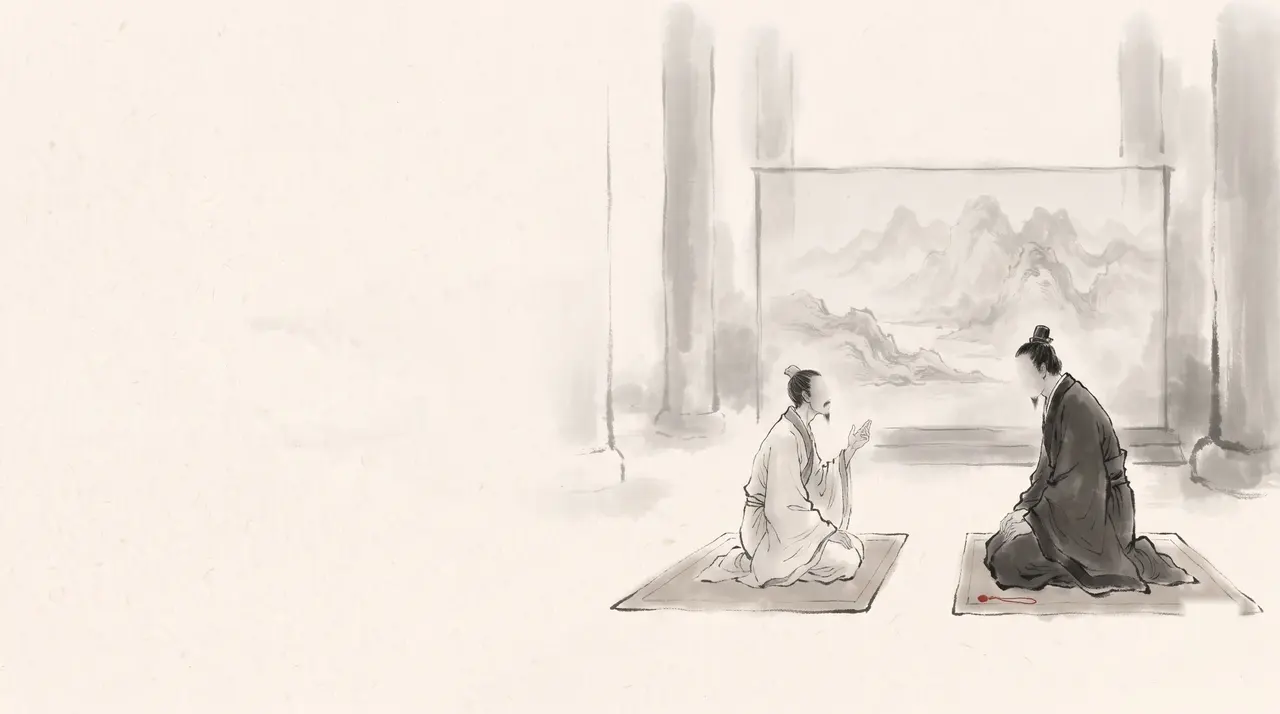
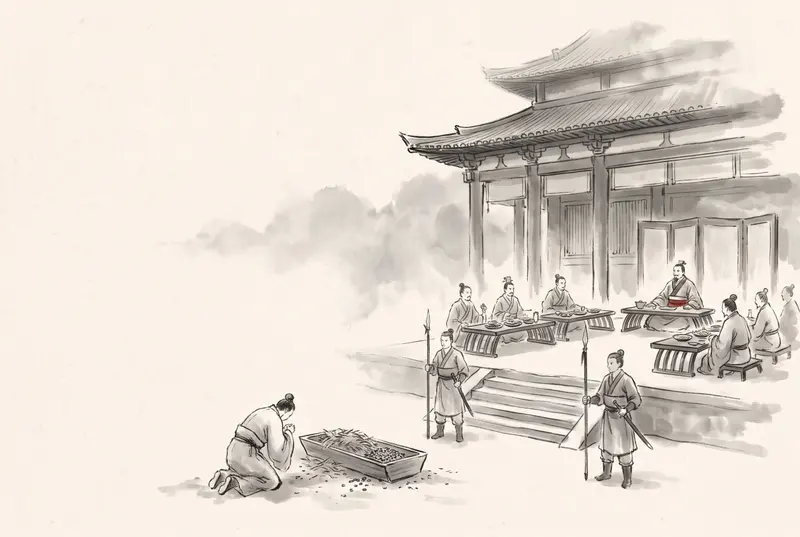
Fan Ju of Wei, suspected of selling secrets to Qi, is beaten nearly to death by the Wei chancellor Wei Qi, rolled in a reed mat and thrown into a latrine. Playing dead, he escapes, changes his name to Zhang Lu and goes to Qin, where he becomes chancellor after advising King Zhao to "befriend the distant and attack the near." Then Xu Gu, the man who once betrayed him, arrives as an envoy from Wei. Fan Ju goes to see him in rags, and Xu Gu, pitying him, gives him a thick silk robe. When Xu Gu learns who the chancellor really is, he strips to the waist and begs for his life. Fan Ju spares him because the robe "showed the feeling of an old friend," but demands the head of Wei Qi.
This page has the scene "Fan Ju: Befriend the Far, Attack the Near" from this volume, not the whole volume.
Audio
The audio is synthetic speech.
Video
Passage 1
Original
范睢者,魏人也,字叔。游說諸侯,欲事魏王,家貧無以自資,乃先事魏中大夫須賈。須賈為魏昭王使於齊,范睢從。留數月,未得報。齊襄王聞睢辯口,乃使人賜睢金十斤及牛酒,睢辭謝不敢受。須賈知之,大怒,以為睢持魏國陰事告齊,故得此饋,令睢受其牛酒,還其金。既歸,心怒睢,以告魏相。魏相,魏之諸公子,曰魏齊。魏齊大怒,使舍人笞擊睢,折脅摺齒。睢詳死,即卷以簀,置廁中。賓客飲者醉,更溺睢,故僇辱以懲後,令無妄言者。睢從簀中謂守者曰:「公能出我,我必厚謝公。」守者乃請出棄簀中死人。魏齊醉,曰:「可矣。」范睢得出。
Kundoku (Japanese reading)
范睢なる者は、魏の人なり。字は叔。諸侯に游説し、魏王に事えんと欲するも、家貧しくして以て自ら資する無し。乃ち先ず魏の中大夫須賈に事う。須賈魏の昭王の為に斉に使いし、范睢従う。留まること数月、未だ報を得ず。斉の襄王睢の弁口を聞き、乃ち人をして睢に金十斤及び牛酒を賜わしむ。睢辞謝して敢えて受けず。須賈之を知りて大いに怒り、以為えらく睢魏国の陰事を持して斉に告ぐ、故に此の饋を得たり、と。睢をして其の牛酒を受けて其の金を還さしむ。既に帰り、心に睢を怒り、以て魏の相に告ぐ。魏の相は、魏の諸公子にして、魏斉と曰う。魏斉大いに怒り、舎人をして睢を笞撃せしめ、脅を折り歯を摺く。睢詳りて死す。即ち巻くに簀を以てし、廁中に置く。賓客の飲む者酔い、更ごも睢に溺す。故に僇辱して以て後を懲らし、妄言する者無からしむ。睢簀の中より守る者に謂いて曰く、「公能く我を出ださば、我必ず厚く公に謝せん」と。守る者乃ち簀の中の死人を出だして棄てんことを請う。魏斉酔いて曰く、「可なり」と。范睢出づるを得たり。
Japanese
范雎は魏の人で、字を叔という。諸侯を説いてまわり、魏王に仕えたいと思ったが、家が貧しくて元手がなかったので、まず魏の中大夫の須賈に仕えた。須賈が魏の昭王の使者として斉に行ったとき、范雎もお供をした。数か月滞在したが、返事はもらえなかった。斉の襄王は范雎の弁舌のうまさを聞いて、人をやって金十斤と牛肉と酒を贈ったが、范雎は断って受け取らなかった。須賈はそれを知るとひどく怒り、范雎が魏の国の秘密を斉にもらしたから、こんな贈り物をもらったのだと思いこんだ。そこで范雎に牛肉と酒だけを受け取らせ、金は返させた。帰国すると、須賈は范雎への怒りがおさまらず、魏の宰相に告げた。魏の宰相は、魏の公子の一人で、魏斉という。魏斉は激怒し、家来に范雎をむちで打たせ、あばら骨を折り、歯を砕かせた。范雎は死んだふりをした。すると、すのこで巻かれて便所に置かれた。酒を飲んで酔った客たちは、次々に范雎に小便をかけた。わざと辱めて、二度とでたらめを言う者が出ないよう見せしめにしたのである。范雎はすのこの中から番人に言った。「わたしを出してくれたら、必ず手厚くお礼をする」。そこで番人は、すのこの中の死人を外に捨てたいと願い出た。魏斉は酔っていて「よかろう」と言った。こうして范雎は外に出ることができた。
English
Fan Ju was a man of Wei whose courtesy name was Shu. He traveled among the lords as a persuader and wanted to serve the King of Wei, but his family was poor and he had no means of his own, so he first served Xu Gu, a palace grandee of Wei. When Xu Gu went to Qi as an envoy for King Zhao of Wei, Fan Ju went with him. They stayed several months without receiving an answer. King Xiang of Qi heard how eloquent Fan Ju was and sent him ten catties of gold, along with beef and wine, but Fan Ju politely declined and did not dare to accept. When Xu Gu learned of this he was furious. He decided that Fan Ju must have told Qi the secrets of Wei to receive such a gift, so he made Fan Ju accept the beef and wine and send back the gold. After they returned, still angry, he reported it to the chancellor of Wei, a prince of Wei named Wei Qi. Wei Qi was enraged and had his retainers beat Fan Ju until his ribs were broken and his teeth knocked out. Fan Ju pretended to be dead. He was rolled up in a reed mat and put in the latrine. Guests who had been drinking got drunk and took turns urinating on him, a deliberate humiliation to warn anyone else against loose talk. From inside the mat Fan Ju said to the guard, "If you get me out, I will reward you richly." So the guard asked permission to throw out the dead man in the mat. Wei Qi, drunk, said, "All right." And Fan Ju got out.
Notes (JA)
- 范睢: 范雎(?〜前255年)。原文では「范睢」と書くが、日本では「范雎」と書くことが多い。
- 中大夫: 魏の役職の一つ。
- 須賈: 魏の大夫。
- 齊襄王: 斉の王(在位 前283〜前265年)。
- 牛酒: 牛肉と酒。
- 陰事: 秘密。
- 魏齊: 魏の宰相で、魏の公子の一人。
- 簀: すのこ、むしろ。
- 僇辱: はずかしめる。
Notes (EN)
- Fan Ju (d. 255 BCE): the source text writes 范睢; Japanese books often write 范雎.
- 中大夫: a palace grandee, an office in Wei.
- Xu Gu: an official of Wei.
- King Xiang of Qi (r. 283–265 BCE).
- 牛酒: beef and wine.
- 陰事: secrets.
- Wei Qi: the chancellor of Wei, a member of its royal clan.
- 簀: a reed mat.
- 僇辱: to humiliate.
Word notes
- decline/dɪˈklaɪn/verb
to say politely that you will not accept something
In the text: “Fan Ju politely declined”
Similar words: refuse — say no · turn down — refuse an offer
- humiliation/hjuːˌmɪliˈeɪʃən/noun
an act that makes someone feel ashamed and foolish
In the text: “a deliberate humiliation”
Similar words: disgrace — loss of respect · indignity — treatment that hurts pride
- reward/rɪˈwɔrd/verb
to give something to someone in return for help
In the text: “I will reward you richly”
Similar words: repay — give back for help · compensate — pay for a service or loss
- permission/pərˈmɪʃən/noun
being allowed to do something
In the text: “asked permission to throw out the dead man”
Similar words: consent — agreement to let something happen · leave — formal; permission
Passage 2
Original
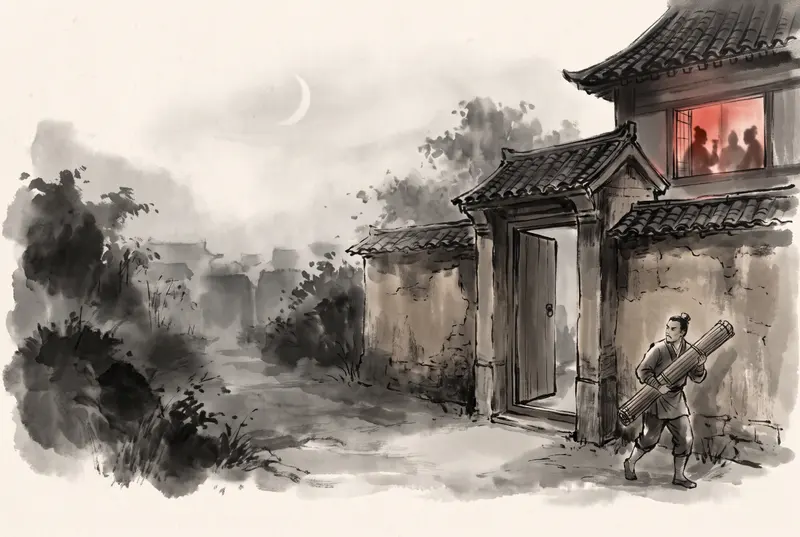
後魏齊悔,復召求之。魏人鄭安平聞之,乃遂操范睢亡,伏匿,更名姓曰張祿。當此時,秦昭王使謁者王稽於魏。鄭安平詐為卒,侍王稽。王稽問:「魏有賢人可與俱西游者乎?」鄭安平曰:「臣里中有張祿先生,欲見君,言天下事。其人有仇,不敢晝見。」王稽曰:「夜與俱來。」鄭安平夜與張祿見王稽。語未究,王稽知范睢賢,謂曰:「先生待我於三亭之南。」與私約而去。
Kundoku (Japanese reading)
後に魏斉悔い、復た召して之を求む。魏人鄭安平之を聞き、乃ち遂に范睢を操りて亡れ、伏匿して、名姓を更めて張禄と曰う。此の時に当たり、秦の昭王謁者王稽を魏に使いせしむ。鄭安平詐りて卒と為り、王稽に侍す。王稽問う、「魏に賢人の与に倶に西游すべき者有りや」と。鄭安平曰く、「臣の里中に張禄先生有り。君に見えて、天下の事を言わんと欲す。其の人仇有り、敢えて昼に見えず」と。王稽曰く、「夜与に倶に来たれ」と。鄭安平夜張禄と王稽に見ゆ。語未だ究まらざるに、王稽范睢の賢なるを知り、謂いて曰く、「先生我を三亭の南に待て」と。与に私かに約して去る。
Japanese
のちに魏斉は後悔して、范雎を探させた。魏の人の鄭安平がそれを聞きつけ、范雎を連れて逃げて身を隠し、名前を張禄と変えさせた。そのころ、秦の昭王が取り次ぎ役の王稽を使者として魏に送ってきた。鄭安平は兵士に化けて、王稽に仕えた。王稽はたずねた。「魏に、一緒に西の秦へ行ってくれるような賢人はいないか」。鄭安平は言った。「わたしの村に張禄先生という方がいて、あなたにお会いして天下のことを語りたがっています。ただ、仇がいるので、昼間はお会いできません」。王稽は言った。「夜、一緒に来なさい」。鄭安平は夜、張禄を連れて王稽に会わせた。話が終わらないうちに、王稽は范雎がすぐれた人物だとわかり、「先生、三亭の南で待っていてください」と言って、ひそかに約束を交わして去った。
English
Later Wei Qi regretted it and sent men to search for him. Zheng Anping, a man of Wei, heard of this, took Fan Ju away and hid him, and had him change his name to Zhang Lu. At this time King Zhao of Qin sent Wang Ji, one of his court ushers, to Wei. Zheng Anping disguised himself as a soldier and attended Wang Ji. Wang Ji asked, "Is there a worthy man in Wei who might come west with me?" Zheng Anping said, "In my village there is a Master Zhang Lu who wishes to see you and talk about the affairs of the realm. But he has an enemy and does not dare to show himself by day." "Bring him at night," said Wang Ji. That night Zheng Anping brought Zhang Lu to see Wang Ji. Before they had finished talking, Wang Ji knew that Fan Ju was a man of worth. "Wait for me, sir, south of the Three Pavilions," he said, and after making this secret arrangement he left.
Notes (JA)
- 鄭安平: 魏の人。范雎を助け、のちに秦の将軍となる。
- 張祿: 范雎が名のった偽名。
- 謁者: 王の取り次ぎ役の役人。
- 王稽: 秦の役人。
- 三亭: 地名。魏の国境近くとされる。
Notes (EN)
- Zheng Anping: a man of Wei who helped Fan Ju and later became a general of Qin.
- Zhang Lu: the false name Fan Ju took.
- 謁者: a court usher who carried messages for the king.
- Wang Ji: an official of Qin.
- The Three Pavilions: a place, probably near the Wei border.
Word notes
- usher/ˈʌʃər/noun
an official who brings visitors to see a king
In the text: “one of his court ushers”
Similar words: attendant — a person who serves · steward — a person who manages a household
- disguise oneself/dɪsˈɡaɪz wʌnˈsɛlf/phrase
to change your looks so that people will not know you
In the text: “disguised himself as a soldier”
Similar words: pose as — pretend to be · pass oneself off — make others believe you are someone else
Passage 3
Original
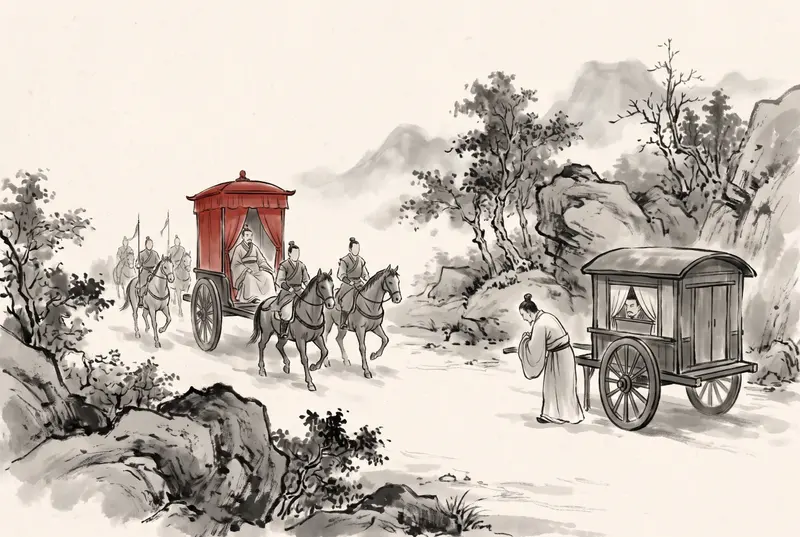
王稽辭魏去,過載范睢入秦。至湖,望見車騎從西來。范睢曰:「彼來者為誰?」王稽曰:「秦相穰侯東行縣邑。」范睢曰:「吾聞穰侯專秦權,惡內諸侯客,此恐辱我,我寧且匿車中。」有頃,穰侯果至,勞王稽,因立車而語曰:「關東有何變?」曰:「無有。」又謂王稽曰:「謁君得無與諸侯客子俱來乎?無益,徒亂人國耳。」王稽曰:「不敢。」即別去。范睢曰:「吾聞穰侯智士也,其見事遲,鄉者疑車中有人,忘索之。」於是范睢下車走,曰:「此必悔之。」行十餘里,果使騎還索車中,無客,乃已。王稽遂與范睢入咸陽。
Kundoku (Japanese reading)
王稽魏を辞して去り、過りて范睢を載せて秦に入る。湖に至り、車騎の西より来たるを望見す。范睢曰く、「彼の来たる者は誰と為す」と。王稽曰く、「秦の相穰侯、東のかた県邑を行る」と。范睢曰く、「吾聞く、穰侯秦の権を専らにし、諸侯の客を内るるを悪む、と。此れ恐らくは我を辱めん。我寧ろ且く車中に匿れん」と。頃く有りて、穰侯果たして至り、王稽を労い、因りて車を立てて語りて曰く、「関東に何の変か有る」と。曰く、「有る無し」と。又王稽に謂いて曰く、「謁君は諸侯の客子と倶に来たる無きを得んや。益無し。徒らに人の国を乱すのみ」と。王稽曰く、「敢えてせず」と。即ち別れ去る。范睢曰く、「吾聞く、穰侯は智士なり、其の事を見るに遅し、と。郷者車中に人有るを疑うも、之を索むるを忘る」と。是に於いて范睢車を下りて走りて曰く、「此れ必ず之を悔いん」と。行くこと十余里、果たして騎をして還りて車中を索めしむ。客無し。乃ち已む。王稽遂に范睢と咸陽に入る。
Japanese
王稽は魏を去るとき、約束の場所に立ち寄って范雎を車に乗せ、秦に入った。湖という地まで来ると、西から車と騎兵がやって来るのが見えた。范雎は言った。「あれはだれですか」。王稽は言った。「秦の宰相の穰侯が、東の町々を見回っているのです」。范雎は言った。「穰侯は秦の権力を一人占めにし、よその国の客を入れるのを嫌うと聞いています。きっとわたしを辱めるでしょう。しばらく車の中に隠れていたほうがよい」。間もなく、果たして穰侯がやって来て、王稽をねぎらい、車を止めて話しかけた。「関所の東で、何か変わったことはあったか」。「何もありません」。穰侯はまた王稽に言った。「あなたは、よその国の客など連れてきてはいないだろうな。何の役にも立たず、人の国を乱すだけだ」。王稽は「とんでもありません」と言い、そのまま別れた。范雎は言った。「穰侯は知恵のある人ですが、物事に気づくのが遅いと聞いています。さっき車の中に人がいると疑ったのに、調べるのを忘れていました」。そこで范雎は車を下りて歩き、「穰侯はきっと後悔して戻ってきます」と言った。十里あまり進むと、果たして穰侯は騎兵を引き返させて車の中を調べさせたが、客はいなかったので、そのまま引き上げた。こうして王稽は范雎とともに咸陽に入った。
English
When Wang Ji left Wei, he stopped to pick up Fan Ju in his carriage and entered Qin. When they reached Hu, they saw carriages and riders coming from the west. "Who is that coming?" asked Fan Ju. "The chancellor of Qin, the Marquis of Rang, touring the towns of the east," said Wang Ji. Fan Ju said, "I have heard that the Marquis of Rang holds all the power in Qin and hates letting in guests from the other states. He will probably humiliate me. I had better hide in the carriage for now." Soon the Marquis of Rang did arrive. He greeted Wang Ji, stopped his carriage and said, "Has anything happened east of the pass?" "Nothing," said Wang Ji. Then he said to Wang Ji, "You haven't brought any of those wandering guests from the other states with you, have you? They are no use, and only stir up trouble in other people's states." "I would not dare," said Wang Ji, and they parted. Fan Ju said, "I have heard that the Marquis of Rang is a clever man, but slow to see things. Just now he suspected there was someone in the carriage, but forgot to search it." So Fan Ju got down and walked on foot, saying, "He will surely regret it." After they had gone ten li or so, the Marquis did send riders back to search the carriage, but there was no guest in it, and they gave up. And so Wang Ji brought Fan Ju into Xianyang.
Notes (JA)
- 湖: 今の河南省霊宝市の西のあたり。函谷関の近く。
- 穰侯: 魏冄(ぎぜん)。昭王の母の宣太后の弟で、長く秦の宰相として権力を握った。
- 內諸侯客: よその国から来た客を受け入れる。
- 關東: 函谷関より東の諸国。
- 謁君: あなた(謁者の王稽への呼びかけ)。
- 見事遲: 物事に気づくのが遅い。
Notes (EN)
- Hu: west of present-day Lingbao in Henan, near the Hangu Pass.
- The Marquis of Rang: Wei Ran, brother of King Zhao's mother, Queen Dowager Xuan, and long the most powerful chancellor of Qin.
- 內諸侯客: letting in guests from other states.
- 關東: the states east of the Hangu Pass.
- 謁君: "you," addressing Wang Ji as usher.
- 見事遲: slow to see things.
Word notes
- tour/tʊr/verb
to travel around a place, visiting it
In the text: “touring the towns of the east”
Similar words: inspect — look at officially · travel around — visit many places
- suspect/səˈspɛkt/verb
to think something is probably true, without proof
In the text: “he suspected there was someone in the carriage”
Similar words: sense — feel that something is so · have a hunch — informal; suspect
Passage 4
Original
於是范睢乃得見於離宮,詳為不知永巷而入其中。王來而宦者怒,逐之,曰:「王至!」范睢繆為曰:「秦安得王?秦獨有太后、穰侯耳。」欲以感怒昭王。昭王至,聞其與宦者爭言,遂延迎,謝曰:「寡人宜以身受命久矣,會義渠之事急,寡人旦暮自請太后;今義渠之事已,寡人乃得受命。竊閔然不敏,敬執賓主之禮。」范睢辭讓。是日觀范睢之見者,群臣莫不灑然變色易容者。
Kundoku (Japanese reading)
是に於いて范睢乃ち離宮に見ゆるを得たり。詳りて永巷を知らざると為して其の中に入る。王来たりて宦者怒り、之を逐いて曰く、「王至る」と。范睢繆りて為に曰く、「秦安くんぞ王有るを得ん。秦は独り太后・穰侯有るのみ」と。以て昭王を感怒せしめんと欲す。昭王至り、其の宦者と争い言うを聞き、遂に延き迎えて、謝して曰く、「寡人宜しく身を以て命を受くべきこと久し。会たま義渠の事急にして、寡人旦暮に自ら太后に請う。今義渠の事已みぬ。寡人乃ち命を受くるを得たり。竊かに閔然として不敏なり。敬んで賓主の礼を執らん」と。范睢辞譲す。是の日范睢の見ゆるを観る者、群臣灑然として色を変じ容を易えざる者莫し。
Japanese
一年あまり待たされたのち、范雎はようやく離宮で王に会うことになった。范雎は、わざと奥の宮殿へ通じる長い通路を知らないふりをして中に入りこんだ。そこへ王がやって来たので、宦官が怒って追い払おうとし、「王のお出ましだ」と言った。范雎はわざと言った。「秦に王などいるものか。秦にいるのは太后と穰侯だけだ」。昭王を怒らせて、心を動かそうとしたのである。昭王はやって来て、范雎が宦官と言い争っているのを聞くと、范雎を招き入れてわびた。「わたしはずっと前から、自らあなたの教えを受けるべきだった。ちょうど義渠の件で急を要し、朝晩、太后のもとへ相談に通っていたが、いま義渠の件が片づいたので、ようやく教えを受けられる。至らぬことを心苦しく思っている。謹んで、客と主人の礼をとらせてほしい」。范雎は辞退した。その日、范雎が王に会うのを見ていた家臣たちは、みな驚いて顔色を変えた。
English
Then at last Fan Ju was granted an audience at a detached palace. He pretended not to know the Long Lane to the inner palace and walked into it. The king was coming, and a eunuch angrily tried to drive him out, saying, "The king is coming!" Fan Ju deliberately said, "How can Qin have a king? Qin has only the Queen Dowager and the Marquis of Rang." He meant to stir King Zhao to anger. When King Zhao arrived and heard him arguing with the eunuch, he invited him in and apologized: "I ought to have come to receive your instruction myself long ago. But the affair of the Yiqu was urgent, and I had to go morning and evening to consult the Queen Dowager. Now the Yiqu affair is settled, and at last I can receive your instruction. I am sorry to have been so slow. Let me respectfully treat you as an honored guest." Fan Ju declined the honor. Of the ministers who watched Fan Ju's audience that day, there was not one whose face did not change in astonishment.
Notes (JA)
- この節の前(省略): 王稽は范雎を秦王に推薦したが、王は信用せず、范雎は粗末な食事を与えられて一年あまり待たされた。范雎は上書して王に会うことを願い出た。
- 離宮: 都の外にある王の別の宮殿。
- 永巷: 後宮へ通じる長い通路。家臣が勝手に入ってはいけない場所。
- 秦獨有太后、穰侯耳: 秦には太后と穰侯がいるだけだ。昭王の母の宣太后と叔父の穰侯が実権を握っていることを皮肉った言葉。
- 義渠: 秦の北西にいた異民族の国。宣太后がその王を誘い出して殺したとされる。
- 灑然變色: 驚いて顔色を変える。
Notes (EN)
- Before this (left out here): Wang Ji recommended Fan Ju to the king, but the king did not trust him, and Fan Ju was kept waiting more than a year on poor fare. He sent up a letter asking for an audience.
- 離宮: a palace outside the capital.
- The Long Lane (永巷): the passage to the inner palace, forbidden to ministers.
- "Qin has only the Queen Dowager and the Marquis of Rang": a jab at the real power held by the king's mother and uncle.
- The Yiqu: a non-Chinese people northwest of Qin. The Queen Dowager is said to have lured their king to Qin and killed him.
- 灑然變色: to change color in astonishment.
Word notes
- eunuch/ˈjuːnək/noun
a castrated man who served in a palace
In the text: “a eunuch angrily tried to drive him out”
Similar words: palace servant — a servant in a palace · chamberlain — an officer of the royal household
- instruction/ɪnˈstrʌkʃən/noun
teaching or advice that someone gives you
In the text: “I ought to have come to receive your instruction”
Similar words: teaching — what someone teaches · counsel — formal; advice
Passage 5
Original
秦王屏左右,宮中虛無人。秦王跽而請曰:「先生何以幸教寡人?」范睢曰:「唯唯。」有閒,秦王復跽而請曰:「先生何以幸教寡人?」范睢曰:「唯唯。」若是者三。秦王跽曰:「先生卒不幸教寡人邪?」范睢曰:「非敢然也。臣聞昔者呂尚之遇文王也,身為漁父而釣於渭濱耳。若是者,交疏也。已說而立為太師,載與俱歸者,其言深也。故文王遂收功於呂尚而卒王天下。鄉使文王疏呂尚而不與深言,是周無天子之德,而文武無與成其王業也。今臣羈旅之臣也,交疏於王,而所願陳者皆匡君之事,處人骨肉之閒,願效愚忠而未知王之心也。此所以王三問而不敢對者也。
Kundoku (Japanese reading)
秦王左右を屏け、宮中虚しくして人無し。秦王跽きて請いて曰く、「先生何を以て幸いに寡人に教えんとするや」と。范睢曰く、「唯唯」と。間有りて、秦王復た跽きて請いて曰く、「先生何を以て幸いに寡人に教えんとするや」と。范睢曰く、「唯唯」と。是くの若き者三たび。秦王跽きて曰く、「先生卒に幸いに寡人に教えざるか」と。范睢曰く、「敢えて然るに非ざるなり。臣聞く、昔者呂尚の文王に遇うや、身は漁父と為りて渭の浜に釣るのみ。是くの若き者は、交わり疏きなり。已に説きて立ちて太師と為り、載せて与に倶に帰る者は、其の言深ければなり。故に文王遂に功を呂尚に収めて、卒に天下に王たり。郷に文王をして呂尚を疏んじて与に深く言わざらしめば、是れ周に天子の徳無く、而して文・武与に其の王業を成す無からん。今臣は羈旅の臣なり。交わり王に疏し。而して陳べんと願う所の者は皆君を匡すの事にして、人の骨肉の間に処る。愚忠を効さんと願うも、未だ王の心を知らざるなり。此れ王三たび問うも敢えて対えざる所以の者なり。
Japanese
秦王は側近を下がらせ、宮殿の中にはだれもいなくなった。秦王はひざを立てて身を乗り出し、たずねた。「先生は、わたしに何を教えてくださるのか」。范雎は「はい、はい」と言うだけだった。しばらくして、秦王はまたひざを立てて頼んだ。「先生は、わたしに何を教えてくださるのか」。范雎はまた「はい、はい」と言った。こうしたことが三度続いた。秦王はひざを立てて言った。「先生は、とうとうわたしに教えてくださらないのか」。范雎は言った。「そうではございません。昔、呂尚(太公望)が文王に出会ったとき、呂尚は渭水のほとりで釣りをしている漁師にすぎなかったと聞いています。つまり、二人はまだ親しくはなかった。それでも、話をしたとたんに太師に取り立てられ、文王の車に乗って一緒に帰ったのは、その言葉が深かったからです。だから文王は呂尚の力で手柄を立て、ついに天下の王となりました。もし文王が呂尚を遠ざけて深い話をしなかったら、周には天子となる徳がなく、文王も武王も王業をなしとげられなかったでしょう。いま、わたしはよその国から来た身で、王とはまだ親しくありません。それなのに申し上げたいことは、みな君主の過ちを正すことで、王と王の肉親との間に立ち入ることになります。愚かな忠義を尽くしたいと願いながら、王のお心がまだわからない。これが、王が三度たずねられても、お答えしなかったわけです。
English
The King of Qin sent his attendants away, and the palace was empty. Kneeling upright, the king asked, "What will you be kind enough to teach me, sir?" "Yes, yes," said Fan Ju. After a while the king knelt up again and asked, "What will you be kind enough to teach me, sir?" "Yes, yes," said Fan Ju. This happened three times. The king knelt up and said, "Will you never be kind enough to teach me, sir?" Fan Ju said, "It is not that I dare not. I have heard that when Lü Shang met King Wen, he was only a fisherman angling on the bank of the Wei. They were strangers. Yet once he had spoken, he was made Grand Tutor and rode home in the king's carriage, because his words went deep. So King Wen achieved his great work through Lü Shang and in the end became king of the realm. If King Wen had kept Lü Shang at a distance and not talked with him deeply, Zhou would never have had the virtue of the Son of Heaven, and Wen and Wu would have had no one to help them complete their royal work. Now I am a stranger from abroad, unknown to Your Majesty, yet everything I wish to say concerns correcting my lord, and it would put me between Your Majesty and your own flesh and blood. I wish to offer my humble loyalty, but I do not yet know Your Majesty's heart. That is why I did not dare to answer though you asked three times."
Notes (JA)
- 跽: ひざを地につけたまま、腰を浮かせて上体を起こす。相手への敬意と熱意の表れ。
- 唯唯: 「はい、はい」。返事だけして、話をしないこと。
- 呂尚: 太公望。渭水で釣りをしていたところを文王に見いだされた(巻61の章を参照)。
- 太師: 王の師となる最高の役。
- 羈旅之臣: よその国から来た家臣。
- 匡君: 君主の過ちを正す。
- 處人骨肉之閒: 王と王の肉親(母の宣太后や叔父の穰侯)との間に立ち入る。
- このあと(省略): 范雎は、たとえ殺されても言うべきことは言うと覚悟を語り、王は「事の大小にかかわらず、太后から大臣のことまで教えてほしい」と頼んだ。
Notes (EN)
- 跽: kneeling upright, raising the body from the heels; a sign of respect and eagerness.
- 唯唯: "Yes, yes," answering without saying anything.
- Lü Shang: Taigong, discovered by King Wen while fishing in the Wei River (see Volume 61).
- 太師: Grand Tutor, the king's chief teacher.
- 羈旅之臣: a subject from another state.
- 匡君: to correct one's lord.
- Between Your Majesty and your own flesh and blood: between the king and his mother, the Queen Dowager, and his uncle, the Marquis of Rang.
- After this (left out here): Fan Ju declared that he would speak even if it cost him his life, and the king begged him to teach him about everything, from the Queen Dowager down to the ministers.
Word notes
- kneel/niːl/verb
to go down on your knees (past tense: knelt)
In the text: “the king knelt up again”
Similar words: go down on one's knees — kneel · bow — bend the body forward
- angle/ˈæŋɡəl/verb
to fish with a hook and line
In the text: “angling on the bank of the Wei”
Similar words: fish — try to catch fish · cast — throw out a fishing line
Passage 6
Original
王不如遠交而近攻,得寸則王之寸也,得尺亦王之尺也。今釋此而遠攻,不亦繆乎!且昔者中山之國地方五百里,趙獨吞之,功成名立而利附焉,天下莫之能害也。今夫韓、魏,中國之處而天下之樞也,王其欲霸,必親中國以為天下樞,以威楚、趙。楚彊則附趙,趙彊則附楚,楚、趙皆附,齊必懼矣。齊懼,必卑辭重幣以事秦。齊附而韓、魏因可虜也。」昭王曰:「吾欲親魏久矣,而魏多變之國也,寡人不能親。請問親魏柰何?」對曰:「王卑詞重幣以事之;不可,則割地而賂之;不可,因舉兵而伐之。」王曰:「寡人敬聞命矣。」乃拜范睢為客卿,謀兵事。卒聽范睢謀,使五大夫綰伐魏,拔懷。後二歲,拔邢丘。
Kundoku (Japanese reading)
王遠く交わりて近く攻むるに如かず。寸を得れば則ち王の寸なり、尺を得れば亦た王の尺なり。今此を釈てて遠く攻む。亦た繆らずや。且つ昔者中山の国は地方五百里、趙独り之を呑み、功成り名立ちて利附く。天下之を能く害する莫し。今夫れ韓・魏は、中国の処にして天下の枢なり。王其れ霸たらんと欲せば、必ず中国に親しみて以て天下の枢と為し、以て楚・趙を威せ。楚彊ければ則ち趙を附け、趙彊ければ則ち楚を附けよ。楚・趙皆附かば、斉必ず懼れん。斉懼るれば、必ず辞を卑くし幣を重くして以て秦に事えん。斉附かば韓・魏因りて虜にすべし」と。昭王曰く、「吾魏に親しまんと欲すること久し。而るに魏は変多きの国なり。寡人親しむ能わず。請う魏に親しむこと柰何と問う」と。対えて曰く、「王辞を卑くし幣を重くして以て之に事えよ。不可なれば、則ち地を割きて之に賂え。不可なれば、因りて兵を挙げて之を伐て」と。王曰く、「寡人敬んで命を聞けり」と。乃ち范睢を拝して客卿と為し、兵事を謀る。卒に范睢の謀を聴き、五大夫綰をして魏を伐たしめ、懐を抜く。後二歳、邢丘を抜く。
Japanese
「王は、遠くの国と手を結び、近くの国を攻めるのがよろしい。そうすれば、一寸の土地を得れば王の一寸になり、一尺を得れば王の一尺になります。それをやめて遠くの国を攻めるのは、間違いではありませんか。昔、中山の国は五百里四方でしたが、隣の趙が一国でこれを飲みこみ、手柄も名も立って利益も手に入れ、天下のだれも邪魔できませんでした。いま韓と魏は、天下の真ん中にあって、天下の要の位置にあります。王が覇者となりたいなら、まず中原の韓・魏を味方につけて天下の要とし、楚と趙をおびやかすことです。楚が強ければ趙を味方にし、趙が強ければ楚を味方にする。楚も趙も従えば、斉は必ず恐れます。斉が恐れれば、へりくだった言葉と手厚い贈り物で秦に仕えてくるでしょう。斉が従えば、韓と魏はたやすく手に入れられます」。昭王は言った。「わたしは前から魏と親しくしたいと思っているが、魏は態度の変わりやすい国で、親しくできない。どうすれば魏と親しくなれるだろう」。范雎は答えた。「王はへりくだった言葉と手厚い贈り物で魏に仕えてください。それでだめなら、土地を割いて与えて買収してください。それでもだめなら、兵を挙げて攻めることです」。王は言った。「謹んで教えに従おう」。そして范雎を客卿に任じ、軍事を相談した。王はとうとう范雎の策を聞き入れ、五大夫の綰に魏を攻めさせて懐を落とし、その二年後には邢丘を落とした。
English
"Your Majesty's best course is to befriend the distant and attack the near. Then every inch you gain will be your inch, and every foot you gain your foot. To abandon this and attack far away: is that not a mistake? Long ago the state of Zhongshan was five hundred li square, but Zhao alone swallowed it up; it won success and fame and the profit that came with them, and no one in the realm could harm it. Now Hann and Wei lie at the center of the Chinese states, the pivot of the realm. If Your Majesty wishes to be overlord, you must make friends with these central states, make them your pivot, and use them to overawe Chu and Zhao. If Chu is strong, draw Zhao to your side; if Zhao is strong, draw Chu. When both Chu and Zhao are on your side, Qi will surely be afraid, and when Qi is afraid it will send humble words and rich gifts to serve Qin. Once Qi has submitted, Hann and Wei can be taken." King Zhao said, "I have long wanted to be on good terms with Wei, but Wei is a fickle state and I cannot. Tell me, how can I make friends with Wei?" Fan Ju answered, "Serve it with humble words and rich gifts. If that fails, cede it land as a bribe. If that fails, raise your army and attack it." "I respectfully accept your counsel," said the king. He made Fan Ju a guest minister and consulted him on military affairs. In the end he followed Fan Ju's plans and sent the grandee Wan to attack Wei; he took Huai, and two years later Xingqiu.
Notes (JA)
- この節の前(省略): 范雎は、まず穰侯が韓・魏を越えて遠くの斉を攻めようとしていることを「計に非ず」と批判した。
- 遠交而近攻: 遠くの国と手を結び、近くの国を攻める。「遠交近攻」として、のちの秦の天下統一の基本となった外交策。
- 得寸則王之寸也,得尺亦王之尺也: 近くの国から奪った土地は、一寸でも一尺でも、自分の領土として守れる。
- 中山: 戦国時代の小国。前296年に趙に滅ぼされた。
- 樞: 戸を開け閉めする軸。かなめ。
- 客卿: よその国から来て高い位についた者。
- 五大夫: 秦の爵位の一つ。
- 懷・邢丘: 魏の町。今の河南省武陟・温県のあたり。
Notes (EN)
- Before this (left out here): Fan Ju first criticized the Marquis of Rang's plan to march past Hann and Wei to attack distant Qi.
- 遠交而近攻 ("befriend the distant and attack the near"): the strategy that guided Qin until it unified the realm.
- Every inch your inch, every foot your foot: land taken from a neighbor can be held and kept.
- Zhongshan: a small state, destroyed by Zhao in 296 BCE.
- 樞: the pivot of a door; the key point.
- 客卿: a "guest minister," a man from another state given high rank.
- 五大夫: a rank in Qin.
- Huai and Xingqiu: towns of Wei in present-day Wuzhi and Wen County, Henan.
Idioms from this passage: Befriend the distant, attack the near 遠交近攻
Word notes
- pivot/ˈpɪvət/noun
the central point that something turns on
In the text: “the pivot of the realm”
Similar words: hub — the center of activity · linchpin — the most important part
- inch/ɪntʃ/noun
a small measure of length (about 2.5 cm); a very small amount
In the text: “every inch you gain will be your inch”
Similar words: foot — a measure of twelve inches · bit — a small amount
- fickle/ˈfɪkəl/adjective
changing your mind or loyalty often
In the text: “Wei is a fickle state”
Similar words: unreliable — cannot be trusted · changeable — often changing
- bribe/braɪb/noun
money or a gift given to make someone do what you want
In the text: “cede it land as a bribe”
Similar words: payoff — informal; a bribe · inducement — something that persuades
Passage 7
Original
昭王聞之大懼,曰:「善。」於是廢太后,逐穰侯、高陵、華陽、涇陽君於關外。秦王乃拜范睢為相。收穰侯之印,使歸陶,因使縣官給車牛以徙,千乘有餘。到關,關閱其寶器,寶器珍怪多於王室。秦封范睢以應,號為應侯。當是時,秦昭王四十一年也。
Kundoku (Japanese reading)
昭王之を聞きて大いに懼れて曰く、「善し」と。是に於いて太后を廃し、穰侯・高陵・華陽・涇陽君を関外に逐う。秦王乃ち范睢を拝して相と為す。穰侯の印を収め、陶に帰らしめ、因りて県官をして車牛を給して以て徙らしむ。千乗有余。関に到り、関其の宝器を閲するに、宝器珍怪王室より多し。秦范睢を応に封じ、号して応侯と為す。是の時に当たり、秦の昭王の四十一年なり。
Japanese
昭王はこれを聞いてひどく恐れ、「よくぞ言った」と言った。そして太后を政治から退け、穰侯・高陵君・華陽君・涇陽君を関所の外へ追い出した。秦王は范雎を宰相に任じた。穰侯から宰相の印を取り上げて、領地の陶に帰らせ、役所に車と牛を出させて引っ越させたが、その車は千台あまりにもなった。関所でその宝物を調べたところ、珍しい宝物は王室よりも多かった。秦は范雎を応の地に封じ、応侯と呼んだ。これは秦の昭王の四十一年(前266年)のことである。
English
When King Zhao heard this, he was deeply alarmed and said, "Well said." So he removed the Queen Dowager from power and drove the Marquis of Rang and the Lords of Gaoling, Huayang and Jingyang out beyond the passes. The King of Qin made Fan Ju chancellor. He took back the Marquis of Rang's seal and sent him home to Tao, having the officials provide carts and oxen for the move: more than a thousand carts. When they reached the pass, the guards inspected his treasures, and his rare and precious things outnumbered those of the royal house. Qin gave Fan Ju the fief of Ying, and he was called the Marquis of Ying. This was in the forty-first year of King Zhao of Qin.
Notes (JA)
- この節の前(省略): 范雎は数年後、ついに「秦には太后・穰侯らの『四貴』がいるだけで、王はいないも同然だ。このままでは秦の国は王の子孫のものではなくなる」と説いた。
- 廢太后: 宣太后を政治から退ける。
- 高陵・華陽・涇陽君: 昭王の弟たちと、太后の弟。穰侯とあわせて「四貴」と呼ばれた。
- 陶: 穰侯の領地。今の山東省定陶(巻41の陶朱公の陶)。
- 應: 今の河南省平頂山市のあたり。
- 秦昭王四十一年: 前266年。
Notes (EN)
- Before this (left out here): some years later Fan Ju finally told the king that Qin had only the "Four Nobles," the Queen Dowager, the Marquis of Rang and the others, and no king at all, and that the state would soon pass out of his family's hands.
- Removed the Queen Dowager: Queen Dowager Xuan lost her power.
- The Lords of Gaoling, Huayang and Jingyang: the king's brothers and the Queen Dowager's brother. With the Marquis of Rang they were the "Four Nobles."
- Tao: the Marquis of Rang's fief, present-day Dingtao in Shandong (the Tao of Lord Zhu in Volume 41).
- Ying: near present-day Pingdingshan in Henan.
- The forty-first year of King Zhao: 266 BCE.
Word notes
- alarmed/əˈlɑrmd/adjective
suddenly worried or afraid
In the text: “he was deeply alarmed”
Similar words: frightened — afraid · startled — surprised and a little afraid
- outnumber/ˌaʊtˈnʌmbər/verb
to be more in number than others
In the text: “his rare and precious things outnumbered those of the royal house”
Similar words: exceed — be more than · surpass — be greater than
Passage 8
Original
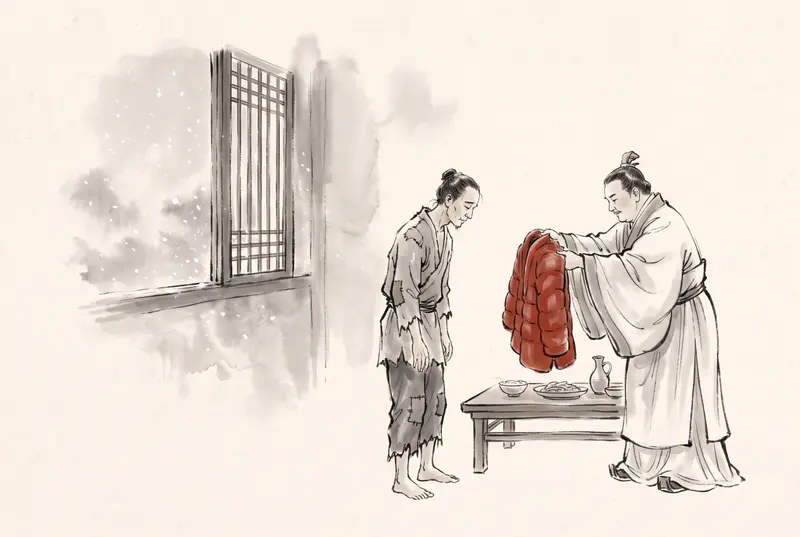
范睢既相秦,秦號曰張祿,而魏不知,以為范睢已死久矣。魏聞秦且東伐韓、魏,魏使須賈於秦。范睢聞之,為微行,敝衣閒步之邸,見須賈。須賈見之而驚曰:「范叔固無恙乎!」范睢曰:「然。」須賈笑曰:「范叔有說於秦邪?」曰:「不也。睢前日得過於魏相,故亡逃至此,安敢說乎!」須賈曰:「今叔何事?」范睢曰「臣為人庸賃。」須賈意哀之,留與坐飲食,曰:「范叔一寒如此哉!」乃取其一綈袍以賜之。須賈因問曰:「秦相張君,公知之乎?吾聞幸於王,天下之事皆決於相君。今吾事之去留在張君。孺子豈有客習於相君者哉?」范睢曰:「主人翁習知之。唯睢亦得謁,睢請為見君於張君。」須賈曰:「吾馬病,車軸折,非大車駟馬,吾固不出。」范睢曰:「願為君借大車駟馬於主人翁。」
Kundoku (Japanese reading)
范睢既に秦に相たり。秦号して張禄と曰う。而して魏知らず、以為えらく范睢已に死すること久し、と。魏秦の且に東して韓・魏を伐たんとするを聞き、魏須賈をして秦に使いせしむ。范睢之を聞き、為に微行し、敝衣して間歩して邸に之き、須賈に見ゆ。須賈之を見て驚きて曰く、「范叔固より恙無きか」と。范睢曰く、「然り」と。須賈笑いて曰く、「范叔秦に説く有るか」と。曰く、「不なり。睢前日過ちを魏の相に得たり。故に亡逃して此に至る。安くんぞ敢えて説かんや」と。須賈曰く、「今叔何をか事とする」と。范睢曰く「臣人の為に庸賃す」と。須賈意に之を哀れみ、留めて与に坐して飲食せしめて曰く、「范叔一に寒しきこと此くの如きか」と。乃ち其の一綈袍を取りて以て之に賜う。須賈因りて問いて曰く、「秦の相張君、公之を知るか。吾聞く、王に幸せられ、天下の事皆相君に決す、と。今吾が事の去留は張君に在り。孺子豈に客の相君に習う者有らんや」と。范睢曰く、「主人翁習く之を知る。唯だ睢も亦た謁するを得。睢請う為に君を張君に見えしめん」と。須賈曰く、「吾が馬病み、車軸折る。大車駟馬に非ずんば、吾固より出でず」と。范睢曰く、「願わくは君の為に大車駟馬を主人翁に借らん」と。
Japanese
范雎は秦の宰相になったが、秦では張禄と名のっていたので、魏の人々は知らず、范雎はとうに死んだと思っていた。魏は、秦が東の韓と魏を攻めようとしていると聞いて、須賈を使者として秦に送った。范雎はそれを聞くと、身分を隠して、ぼろぼろの服を着て、ひとりで歩いて宿舎に行き、須賈に会った。須賈は范雎を見て驚いて言った。「范叔、無事だったのか」。范雎は「ええ」と答えた。須賈は笑って言った。「范叔は秦で遊説でもしているのか」。范雎は言った。「いいえ。わたしは以前、魏の宰相に罪を得たので、ここまで逃げてきたのです。遊説などとんでもない」。須賈は言った。「いまは何をしている」。范雎は言った。「人に雇われて働いています」。須賈は心の中でかわいそうに思い、引き留めて一緒に飲み食いさせ、「范叔も、こんなに寒々しく落ちぶれてしまったのか」と言って、自分の綈袍を一枚与えた。そして須賈はたずねた。「秦の宰相の張君を、あなたは知っているか。王のお気に入りで、天下のことはみな宰相殿が決めていると聞く。いま、わたしの使命がうまくいくかどうかは張君しだいだ。あなたの知り合いに、宰相殿と親しい者はいないか」。范雎は言った。「わたしの主人が宰相殿をよく存じております。わたしも宰相殿にお目通りできますので、あなたを張君にお引き合わせしましょう」。須賈は言った。「わたしの馬は病気で、車の軸も折れている。四頭立ての大きな車でなければ、わたしは出かけない」。范雎は言った。「では、主人から四頭立ての大きな車を借りてまいりましょう」。
English
Fan Ju was now chancellor of Qin, but in Qin he was called Zhang Lu, so Wei did not know and believed that Fan Ju had long been dead. Hearing that Qin was about to march east against Hann and Wei, Wei sent Xu Gu to Qin as envoy. When Fan Ju heard of it, he went out in disguise, dressed in rags, walked alone to the guesthouse and called on Xu Gu. Xu Gu was astonished to see him: "Brother Fan, so you are alive and well!" "I am," said Fan Ju. Xu Gu laughed and said, "Are you advising the King of Qin, Brother Fan?" "No. I offended the chancellor of Wei and fled here. How would I dare to advise anyone?" "What do you do now?" asked Xu Gu. "I hire myself out as a laborer," said Fan Ju. Xu Gu felt sorry for him and kept him to sit and eat and drink. "To think that Brother Fan has come to such poverty!" he said, and he took one of his own thick silk robes and gave it to him. Then Xu Gu asked, "Do you know Lord Zhang, the chancellor of Qin? I hear he is the king's favorite, and every affair in the realm is decided by him. Whether my mission succeeds or fails is up to Lord Zhang. Young man, do you know anyone who is close to the chancellor?" Fan Ju said, "My master knows him well, and even I can get an audience. Let me take you to see Lord Zhang." Xu Gu said, "My horse is sick and my axle broken. I will not go out except in a great carriage with four horses." "Then let me borrow a great carriage and four horses from my master for you," said Fan Ju.
Notes (JA)
- 范叔: 范雎の字の叔に「范」をつけた親しい呼び方。
- 無恙: 無事である。
- 微行: 身分を隠して出歩く。
- 庸賃: 人に雇われて働く。
- 一寒如此: こんなにも寒々しく落ちぶれた。「一寒此くの如し」として、ひどく貧しいことのたとえ。
- 綈袍: 厚い絹の綿入れの上着。「綈袍恋恋」として、昔の友情を忘れない心のたとえになった。
- 孺子: 若者。目下の者への呼びかけ。
- 主人翁: 主人。
- 大車駟馬: 四頭立ての大きな車。
Notes (EN)
- Brother Fan (范叔): a familiar way of addressing Fan Ju by his courtesy name.
- 無恙: safe and well.
- 微行: going out in disguise.
- 庸賃: working for hire.
- 一寒如此 ("so cold as this"): reduced to such poverty; an idiom for extreme hardship.
- 綈袍: a thick padded silk robe. "The silk robe's lingering warmth" became a byword for loyalty to an old friend.
- 孺子: "young man," a way of addressing an inferior.
- 主人翁: master.
- 大車駟馬: a great carriage drawn by four horses.
Word notes
- rags/ræɡz/noun
old, torn clothes
In the text: “dressed in rags”
Similar words: tatters — torn clothes · shabby clothes — old and worn clothes
- laborer/ˈleɪbərər/noun
a worker who does hard physical work
In the text: “I hire myself out as a laborer”
Similar words: worker — a person who works · hired hand — a person paid to do farm or manual work
Passage 9
Original
范睢歸取大車駟馬,為須賈御之,入秦相府。府中望見,有識者皆避匿。須賈怪之。至相舍門,謂須賈曰:「待我,我為君先入通於相君。」須賈待門下,持車良久,問門下曰:「范叔不出,何也?」門下曰:「無范叔。」須賈曰:「鄉者與我載而入者。」門下曰:「乃吾相張君也。」須賈大驚,自知見賣,乃肉袒厀行,因門下人謝罪。於是范睢盛帷帳,待者甚眾,見之。須賈頓首言死罪,曰:「賈不意君能自致於青雲之上,賈不敢復讀天下之書,不敢復與天下之事。賈有湯鑊之罪,請自屏於胡貉之地,唯君死生之!」
Kundoku (Japanese reading)
范睢帰りて大車駟馬を取り、須賈の為に之を御して、秦の相府に入る。府中望見して、識る有る者は皆避け匿る。須賈之を怪しむ。相舎の門に至り、須賈に謂いて曰く、「我を待て。我君の為に先ず入りて相君に通ぜん」と。須賈門下に待ちて、車を持すること良久し。門下に問いて曰く、「范叔出でざるは、何ぞや」と。門下曰く、「范叔無し」と。須賈曰く、「郷者我と載りて入りし者なり」と。門下曰く、「乃ち吾が相張君なり」と。須賈大いに驚き、自ら売らるるを知り、乃ち肉袒厀行し、門下の人に因りて罪を謝す。是に於いて范睢帷帳を盛んにし、待つ者甚だ衆くして、之に見ゆ。須賈頓首して死罪を言いて曰く、「賈意わざりき、君能く自ら青雲の上に致さんとは。賈敢えて復た天下の書を読まず、敢えて復た天下の事に与らず。賈湯鑊の罪有り。請う自ら胡貉の地に屏けん。唯だ君之を死生せよ」と。
Japanese
范雎は帰って四頭立ての大きな車を持ってくると、自ら須賈のために御者となって、秦の宰相の役所に入っていった。役所の中で、范雎の顔を見知っている者たちは、みな脇へよけて姿を隠した。須賈はふしぎに思った。宰相の屋敷の門まで来ると、范雎は須賈に言った。「ここで待っていてください。わたしが先に入って、宰相殿に取り次いでまいります」。須賈は門の下で車を止めて、長いこと待っていたが、門番にたずねた。「范叔が出てこないのはどういうわけだ」。門番は言った。「范叔などという者はおりません」。須賈は言った。「さっき、わたしと一緒に車に乗って入ってきた者だ」。門番は言った。「それは、わが宰相の張君です」。須賈はひどく驚き、だまされたとさとって、肌脱ぎになってひざで進み、門番に頼んで罪をわびた。そこで范雎は、とばりや幕を立派に張りめぐらせ、大勢の家来を控えさせて須賈に会った。須賈は頭を地につけて、死罪にあたると言った。「わたしは、あなたが青雲の上の高い地位にまで昇られるとは、思ってもみませんでした。わたしは、もう二度と天下の書物を読まず、天下のことにかかわりません。わたしは釜ゆでの刑にあたる罪を犯しました。どうか北の果ての異民族の地へでも追いやってください。生かすも殺すも、あなたのお心しだいです」。
English
Fan Ju went back and fetched a great carriage with four horses, and driving it himself for Xu Gu, he entered the chancellor's headquarters of Qin. Those inside who recognized him all stepped aside and hid. Xu Gu thought this strange. When they reached the gate of the chancellor's residence, Fan Ju said to Xu Gu, "Wait for me. I will go in first and announce you to the chancellor." Xu Gu waited at the gate, holding the carriage, for a long time. Then he asked the gatekeeper, "Why doesn't Brother Fan come out?" "There is no Brother Fan here," said the gatekeeper. "The man who drove in with me just now," said Xu Gu. "That was our chancellor, Lord Zhang," said the gatekeeper. Xu Gu was horrified. Realizing that he had been tricked, he stripped to the waist and went forward on his knees, and asked the gatekeeper to convey his apologies. Then Fan Ju had splendid curtains and hangings put up and received him with a great crowd of attendants. Xu Gu knocked his head on the ground and confessed that he deserved death: "I never imagined that you could rise above the blue clouds by your own efforts. I will never again dare to read the books of the realm or take part in the affairs of the realm. I deserve to be boiled in the cauldron. Let me banish myself to the lands of the northern barbarians. My life and death are yours to decide."
Notes (JA)
- 相府: 宰相の役所。
- 見賣: だまされる。
- 肉袒厀行: 肌脱ぎになり、ひざで進む。降伏や謝罪の作法(巻41の章を参照)。
- 帷帳: とばりや幕。権勢を見せつける飾り。
- 青雲之上: 高い地位。「青雲の志」の青雲。
- 湯鑊之罪: 釜ゆでの刑にあたる重い罪。
- 胡貉之地: 北方の異民族の地。
Notes (EN)
- 相府: the chancellor's headquarters.
- 見賣: to be tricked.
- 肉袒厀行: stripping to the waist and going on the knees, the posture of surrender or apology (see Volume 41).
- 帷帳: curtains and hangings, a display of power.
- 青雲之上 ("above the blue clouds"): a high position.
- 湯鑊之罪: a crime deserving death in the cauldron.
- 胡貉之地: the lands of the northern barbarians.
Word notes
- horrified/ˈhɔrɪfaɪd/adjective
very shocked and afraid
In the text: “Xu Gu was horrified”
Similar words: appalled — shocked by something bad · aghast — filled with shock
- trick/trɪk/verb
to make someone believe something false
In the text: “he had been tricked”
Similar words: deceive — make someone believe a lie · fool — trick someone
Passage 10
Original
范睢曰:「汝罪有幾?」曰:「擢賈之發以續賈之罪,尚未足。」范睢曰:「汝罪有三耳。昔者楚昭王時而申包胥為楚卻吳軍,楚王封之以荊五千戶,包胥辭不受,為丘墓之寄於荊也。今睢之先人丘墓亦在魏,公前以睢為有外心於齊而惡睢於魏齊,公之罪一也。當魏齊辱我於廁中,公不止,罪二也。更醉而溺我,公其何忍乎?罪三矣。然公之所以得無死者,以綈袍戀戀,有故人之意,故釋公。」乃謝罷。入言之昭王,罷歸須賈。須賈辭於范睢,范睢大供具,盡請諸侯使,與坐堂上,食飲甚設。而坐須賈於堂下,置莝豆其前,令兩黥徒夾而馬食之。數曰:「為我告魏王,急持魏齊頭來!不然者,我且屠大梁。」須賈歸,以告魏齊。魏齊恐,亡走趙。匿平原君所。
Kundoku (Japanese reading)
范睢曰く、「汝の罪幾ばく有りや」と。曰く、「賈の髪を擢きて以て賈の罪を続くとも、尚お未だ足らず」と。范睢曰く、「汝の罪は三有るのみ。昔者楚の昭王の時にして申包胥楚の為に呉の軍を卻く。楚王之を封ずるに荊の五千戸を以てす。包胥辞して受けず。丘墓の荊に寄するが為なり。今睢の先人の丘墓も亦た魏に在り。公前に睢を以て外心を斉に有すと為して、睢を魏斉に悪す。公の罪一なり。魏斉の我を廁中に辱むるに当たり、公止めず。罪二なり。更ごも酔いて我に溺す。公其れ何ぞ忍びんや。罪三なり。然れども公の死無きを得る所以の者は、綈袍恋恋として、故人の意有るを以てなり。故に公を釈す」と。乃ち謝して罷む。入りて之を昭王に言い、須賈を罷め帰らしむ。須賈范睢に辞す。范睢大いに供具し、尽く諸侯の使いを請い、与に堂上に坐し、食飲甚だ設く。而して須賈を堂下に坐せしめ、莝豆を其の前に置き、両黥徒をして夾みて之に馬食せしむ。数めて曰く、「我が為に魏王に告げよ。急ぎ魏斉の頭を持して来たれ。然らずんば、我且に大梁を屠らんとす」と。須賈帰り、以て魏斉に告ぐ。魏斉恐れ、亡れて趙に走り、平原君の所に匿る。
Japanese
范雎は言った。「おまえの罪はいくつある」。須賈は言った。「わたしの髪の毛を一本一本抜いて、罪を数えても、まだ足りません」。范雎は言った。「おまえの罪は三つだけだ。昔、楚の昭王のとき、申包胥は楚のために呉の軍を退けた。楚王は申包胥に楚の五千戸を領地として与えようとしたが、申包胥は辞退して受けなかった。先祖の墓が楚にあるからだ。わたしの先祖の墓も魏にある。それなのに、おまえは前に、わたしが斉に心を寄せていると思いこんで、魏斉にわたしの悪口を言った。これが罪の一つ目だ。魏斉がわたしを便所で辱めたとき、おまえは止めなかった。これが二つ目だ。酔っては次々にわたしに小便をかけた。よくもそんなひどいことができたものだ。これが三つ目だ。それでもおまえが死なずにすむのは、あの綈袍に、昔なじみを思う温かい心がこもっていたからだ。だから許してやる」。そして須賈を下がらせた。范雎は宮中に入って昭王に告げ、須賈の使命を打ち切って帰らせることにした。須賈が范雎にいとまごいに来ると、范雎は盛大な宴を開き、諸侯の使者たちをみな招いて、ともに堂の上に座り、豪華な料理と酒をふるまった。ところが須賈だけは堂の下に座らせ、刻んだまぐさと豆を前に置いて、入れ墨をされた二人の罪人に両側から押さえつけさせ、馬のように食べさせた。そして責めて言った。「わたしのために魏王に伝えろ。急いで魏斉の首を持ってこい。さもなければ、大梁の民を皆殺しにするぞ」。須賈は帰国して魏斉に伝えた。魏斉は恐れて趙に逃げ、平原君のもとにかくまわれた。
English
"How many crimes do you have?" asked Fan Ju. "If you pulled out every hair on my head and counted one crime for each, it would not be enough," said Xu Gu. Fan Ju said, "You have only three. Long ago, in the time of King Zhao of Chu, Shen Baoxu drove back the army of Wu for Chu, and the King of Chu offered him five thousand households in Jing, but Shen Baoxu declined them, because his ancestors' graves were in Jing. My ancestors' graves are in Wei too. Yet you believed that my heart lay with Qi and slandered me to Wei Qi. That is your first crime. When Wei Qi humiliated me in the latrine, you did not stop him. That is your second. And you got drunk and urinated on me with the others. How could you bear to do it? That is your third. But the reason you will not die is that you lingered over that silk robe with the feeling of an old friend. So I let you go." And he dismissed him. Fan Ju went in to tell King Zhao and had Xu Gu's mission ended and sent home. When Xu Gu came to take his leave, Fan Ju held a great feast, invited all the envoys of the lords and sat with them in the hall, serving lavish food and drink. But he seated Xu Gu below the hall, set chopped hay and beans in front of him, and had two tattooed convicts hold him on either side and feed him like a horse. Then he rebuked him: "Tell the King of Wei for me: bring me Wei Qi's head at once, or I will put Daliang to the sword." Xu Gu went home and told Wei Qi. Wei Qi, terrified, fled to Zhao and hid at the house of Lord Pingyuan.
Notes (JA)
- 擢賈之發以續賈之罪: 髪を一本ずつ抜いて罪を数えても足りない。罪が数えきれないほど多いこと。
- 申包胥: 楚の家臣(巻66の章を参照)。
- 丘墓: 先祖の墓。墓がある国を裏切らない、という意味で引いた。
- 外心: 他国に心を寄せること。
- 綈袍戀戀: 綈袍に、なごりを惜しむ温かい心がこもっている。
- 莝豆: 刻んだまぐさと豆。馬のえさ。
- 黥徒: 顔に入れ墨をされた罪人。
- 屠大梁: 大梁の民を皆殺しにする。
- このあと(省略): 秦の昭王は平原君を秦に招いて人質にとり、魏斉の首を求めた。魏斉は逃げ回ったすえに自害し、趙はその首を秦に送った(巻76・巻77の人々も登場する)。
Notes (EN)
- Every hair a crime: his crimes are past counting.
- Shen Baoxu: a minister of Chu (see Volume 66).
- 丘墓: ancestral graves; one does not betray the state where they lie.
- 外心: a heart given to a foreign state.
- 綈袍戀戀: the silk robe given with lingering warmth.
- 莝豆: chopped hay and beans, horse feed.
- 黥徒: convicts with tattooed faces.
- 屠大梁: to massacre the people of Daliang.
- After this (left out here): King Zhao lured Lord Pingyuan to Qin and held him hostage for Wei Qi's head. After fleeing from place to place, Wei Qi killed himself, and Zhao sent his head to Qin. Figures from Volumes 76 and 77 appear in the story.
Word notes
- crime/kraɪm/noun
a wrong act that deserves punishment
In the text: “How many crimes do you have?”
Similar words: offense — a crime · wrongdoing — bad behavior
- linger/ˈlɪŋɡər/verb
to stay longer than usual, because you do not want to leave
In the text: “you lingered over that silk robe”
Similar words: dwell — keep thinking or talking about · tarry — old; stay longer
- convict/ˈkɑnvɪkt/noun
a person found guilty of a crime and punished
In the text: “two tattooed convicts”
Similar words: prisoner — a person in prison · criminal — a person who commits a crime
- lavish/ˈlævɪʃ/adjective
rich and plentiful, costing a lot
In the text: “serving lavish food and drink”
Similar words: sumptuous — very rich and costly · extravagant — spending too much
Passage 11
Original
范睢既相,王稽謂范睢曰:「事有不可知者三,有不柰何者亦三。宮車一日晏駕,是事之不可知者一也。君卒然捐館舍,是事之不可知者二也。使臣卒然填溝壑,是事之不可知者三也。宮車一日晏駕,君雖恨於臣,無可柰何。君卒然捐館舍,君雖恨於臣,亦無可柰何。使臣卒然填溝壑,君雖恨於臣,亦無可柰何。」范睢不懌,乃入言於王曰:「非王稽之忠,莫能內臣於函谷關;非大王之賢聖,莫能貴臣。今臣官至於相,爵在列侯,王稽之官尚止於謁者,非其內臣之意也。」昭王召王稽,拜為河東守,三歲不上計。又任鄭安平,昭王以為將軍。范睢於是散家財物,盡以報所嘗困戹者。一飯之德必償,睚眥之怨必報。
Kundoku (Japanese reading)
范睢既に相たり。王稽范睢に謂いて曰く、「事に知るべからざる者三有り、柰何ともすべからざる者も亦た三有り。宮車一日晏駕せば、是れ事の知るべからざる者一なり。君卒然として館舎を捐てば、是れ事の知るべからざる者二なり。臣をして卒然として溝壑を填めしめば、是れ事の知るべからざる者三なり。宮車一日晏駕せば、君臣を恨むと雖も、柰何ともすべき無し。君卒然として館舎を捐てば、君臣を恨むと雖も、亦た柰何ともすべき無し。臣をして卒然として溝壑を填めしめば、君臣を恨むと雖も、亦た柰何ともすべき無し」と。范睢懌ばず。乃ち入りて王に言いて曰く、「王稽の忠に非ずんば、能く臣を函谷関に内るる莫し。大王の賢聖に非ずんば、能く臣を貴くする莫し。今臣の官は相に至り、爵は列侯に在り。王稽の官は尚お謁者に止まる。其の臣を内るるの意に非ざるなり」と。昭王王稽を召し、拝して河東の守と為し、三歳計を上らず。又鄭安平を任じ、昭王以て将軍と為す。范睢是に於いて家の財物を散じ、尽く以て嘗て困戹せし所の者に報ゆ。一飯の徳も必ず償い、睚眥の怨みも必ず報ゆ。
Japanese
范雎が宰相になると、王稽が范雎に言った。「世の中には、先のわからないことが三つあり、どうにもならないことも三つあります。王がある日突然亡くなられること、これがわからないことの一つ目です。あなたが突然亡くなられること、これが二つ目です。わたしが突然死んで溝に埋められること、これが三つ目です。王が突然亡くなられたら、あなたがわたしを引き立てなかったことを悔やんでも、どうにもなりません。あなたが突然亡くなられたら、悔やんでも、どうにもなりません。わたしが突然死んだら、悔やんでも、どうにもなりません」。范雎は不愉快に思ったが、宮中に入って王に言った。「王稽の忠義がなければ、わたしを函谷関の内に入れてくれる者はいませんでした。大王の賢明さがなければ、わたしを重く用いてくださる方はいませんでした。いま、わたしの官は宰相に、爵位は列侯にまでなりましたが、王稽の官はいまだに取り次ぎ役にとどまっています。これでは、わたしを秦に連れてきた王稽の心に報いることになりません」。昭王は王稽を呼んで河東の長官に任じ、三年のあいだ会計報告もしなくてよいことにした。また鄭安平を取り立てて、昭王は将軍にした。范雎はさらに家の財産を分け与えて、かつて苦しいときに助けてくれた人々に、残らず恩返しをした。一度の食事の恩にも必ず報い、ほんのわずかな恨みにも必ず仕返しをした。
English
After Fan Ju became chancellor, Wang Ji said to him, "There are three things that cannot be foreseen, and three that cannot be helped. One day the palace carriage may set out late: that is the first thing that cannot be foreseen. You may suddenly leave your house forever: that is the second. I may suddenly fill a ditch: that is the third. If one day the palace carriage sets out late, then however much you regret neglecting me, it cannot be helped. If you suddenly leave your house forever, however much you regret it, it cannot be helped. If I suddenly fill a ditch, however much you regret it, it cannot be helped." Fan Ju was displeased, but he went in and said to the king, "Without Wang Ji's loyalty, no one would have brought me inside the Hangu Pass; without Your Majesty's wisdom, no one would have raised me so high. Now my office has risen to chancellor and my rank to marquis, while Wang Ji is still only an usher. That is not a fit return for his bringing me here." King Zhao summoned Wang Ji and made him governor of Hedong, excused from submitting his accounts for three years. He also took Zheng Anping into service and made him a general. Fan Ju then gave away the wealth of his house, rewarding everyone who had once helped him in his troubles. He repaid even the kindness of a single meal, and avenged even an angry glance.
Notes (JA)
- 宮車晏駕: 王の車の出発が遅れる。王が亡くなることの遠回しな言い方。
- 捐館舍: 屋敷を捨てる。亡くなることの遠回しな言い方。
- 填溝壑: 溝や谷を埋める。死ぬことをへりくだって言う言葉。
- 不懌: 不愉快に思う。
- 列侯: 諸侯の位。
- 河東: 黄河の東、今の山西省南部。
- 上計: 毎年の会計報告。三年免除されるのは特別の待遇。
- 一飯之德必償,睚眥之怨必報: 一度の食事の恩にも必ず報い、にらまれたほどのわずかな恨みにも必ず仕返しをする。恩と恨みのどちらにも、きっちり報いること。「睚眥」は目をむいてにらむこと。
Notes (EN)
- 宮車晏駕 ("the palace carriage sets out late"): a roundabout way of saying the king dies.
- 捐館舍 ("leaving one's house"): a roundabout way of saying someone dies.
- 填溝壑 ("filling a ditch"): a humble way of speaking of one's own death.
- 不懌: displeased.
- 列侯: the rank of marquis.
- Hedong: east of the Yellow River, present-day southern Shanxi.
- 上計: the annual report of accounts; three years' exemption was a special favor.
- 一飯之德必償,睚眥之怨必報: he repaid even the kindness of one meal and avenged even an angry glare; settling every debt of gratitude and every grudge.
Idioms from this passage: Repay a single meal, avenge a single glare 一飯の徳も必ず償い、睚眥の怨みも必ず報ゆ
Word notes
- foresee/fɔrˈsiː/verb
to know that something will happen before it happens
In the text: “three things that cannot be foreseen”
Similar words: predict — say what will happen · anticipate — expect
- displeased/dɪsˈpliːzd/adjective
annoyed or unhappy
In the text: “Fan Ju was displeased”
Similar words: annoyed — a little angry · irritated — impatient and annoyed
Passage 12
Original
太史公曰:韓子稱「長袖善舞,多錢善賈」,信哉是言也!范睢、蔡澤世所謂一切辯士,然游說諸侯至白首無所遇者,非計策之拙,所為說力少也。及二人羈旅入秦,繼踵取卿相,垂功於天下者,固彊弱之勢異也。然士亦有偶合,賢者多如此二子,不得盡意,豈可勝道哉!
Kundoku (Japanese reading)
太史公曰く、韓子称す「長袖は善く舞い、多銭は善く賈う」と。信なるかな是の言や。范睢・蔡沢は世の所謂一切の弁士なり。然れども諸侯に游説して白首に至るまで遇う所無き者は、計策の拙きに非ず、説を為す所の力少なければなり。二人羈旅して秦に入るに及び、踵を継ぎて卿相を取り、功を天下に垂るる者は、固より彊弱の勢い異なればなり。然れども士も亦た偶合有り。賢者の此の二子の如くにして、意を尽くすを得ざる者多し。豈に勝げて道うべけんや。
Japanese
太史公(司馬遷)は言う。韓非子は「袖が長ければ上手に舞え、お金が多ければ上手に商売ができる」と言っているが、まことにそのとおりだ。范雎と蔡沢は、世にいう一流の弁士である。それでも、白髪頭になるまで諸侯を説いてまわっても認められなかったのは、策がまずかったからではなく、説いた相手の国の力が小さかったからである。二人がよその国から秦に入ると、相次いで宰相となり、天下に手柄を残したのは、もともと国の強さが違っていたからだ。しかし、士が世に出られるかどうかには、めぐり合わせもある。この二人のような賢者でありながら、思いを遂げられなかった者は数えきれない。
English
The Grand Historian says: Han Feizi says, "Long sleeves make for good dancing, and plenty of money makes for good trading." How true! Fan Ju and Cai Ze were what the world calls first-rate persuaders. Yet they traveled among the lords until their hair was white without finding a patron, not because their plans were poor, but because the states they advised had little power. When the two of them came to Qin as strangers and became chancellors one after the other, leaving their mark on the realm, it was because Qin's strength was so different. But a gentleman's success also depends on chance. How many worthy men like these two never had the chance to show what they could do? They are beyond counting!
Notes (JA)
- 韓子: 韓非子(巻63)。
- 長袖善舞,多錢善賈: 袖が長ければ上手に舞え、金が多ければ上手に商売ができる。よい条件があれば、才能を発揮しやすいこと。
- 蔡澤: 燕の人。范雎のあとに秦の宰相となった。この巻の後半は蔡沢の伝(ここでは省略)。蔡沢は范雎に、商鞅・呉起・文種の最期を例に引いて、功を立てたら身を引くよう説いた(巻68・巻65・巻41の章を参照)。
- 偶合: めぐり合わせ、偶然。
- このあと(省略): 「二人が困窮しなかったら、どうして奮い立つことがあっただろう」と結ぶ。
Notes (EN)
- Han Feizi: the Legalist Han Fei (Volume 63).
- 長袖善舞,多錢善賈: "Long sleeves make for good dancing, and plenty of money for good trading": talent shows best with the right resources.
- Cai Ze: a man of Yan who became chancellor of Qin after Fan Ju. The second half of this volume (left out here) is his biography. He persuaded Fan Ju to retire by recalling the fates of Shang Yang, Wu Qi and Wen Zhong (see Volumes 68, 65 and 41).
- 偶合: chance, luck.
- After this (left out here): the comment ends by asking whether the two men would ever have been spurred on if they had not suffered hardship.
Word notes
- persuader/pərˈsweɪdər/noun
in this book, a man who traveled to give rulers political advice
In the text: “first-rate persuaders”
Similar words: adviser — a person who gives advice · orator — a skilled public speaker
- patron/ˈpeɪtrən/noun
a powerful person who supports someone
In the text: “without finding a patron”
Similar words: sponsor — a supporter who pays · backer — a person who gives support