Biographies · Vol. 87
Biography of Li Si 李斯列傳
Li Si: The Granary Rat and the Yellow Dog 黃犬之歎
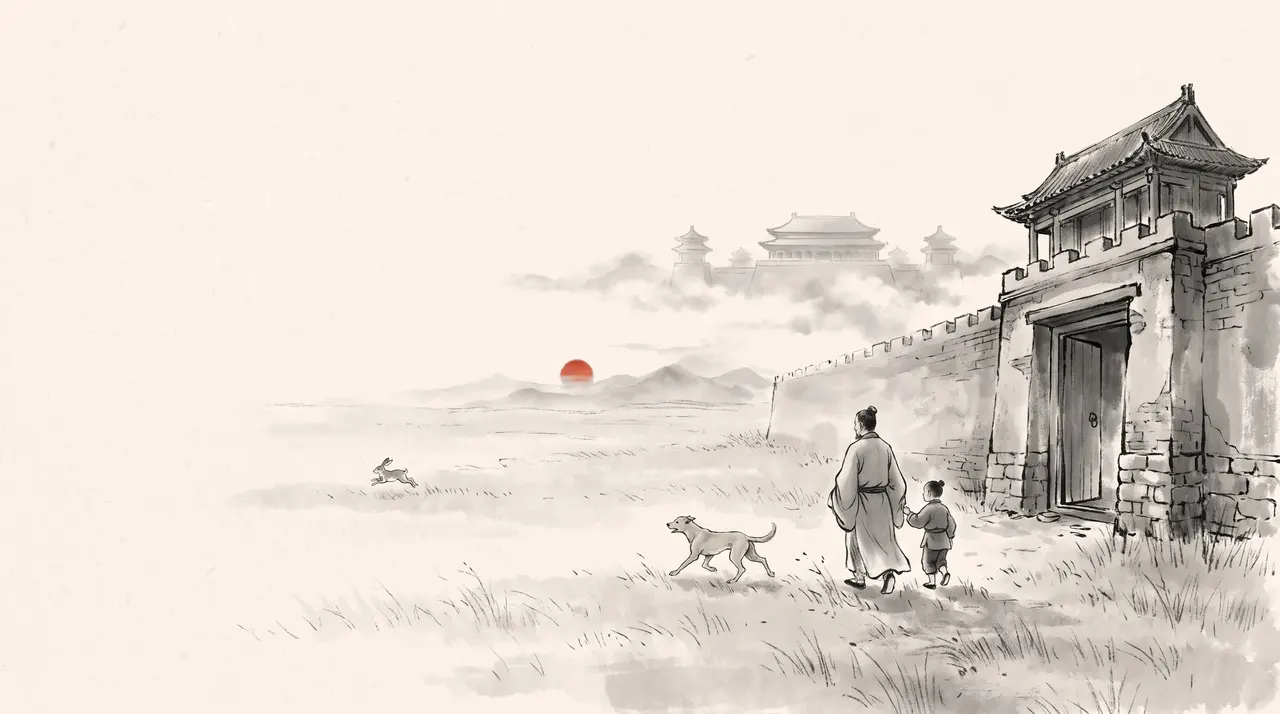
As a minor clerk in Chu, Li Si compares the rats in the latrine with the rats in the granary and decides that a man's worth depends on where he places himself. He studies under Xunzi and goes to Qin; when the king orders all foreigners expelled, he changes his mind with the words "Mount Tai does not refuse any clod of earth." He rises to be the First Emperor's chancellor, but at the height of his glory he worries that "things must not grow too great." After the emperor's death Zhao Gao talks him into forging the will. In the end Zhao Gao brings him down, and on his way to execution he sighs that he would like to go hunting hares with his yellow dog once more.
This page has the scene "Li Si: The Granary Rat and the Yellow Dog" from this volume, not the whole volume.
Audio
The audio is synthetic speech.
Video
Passage 1
Original
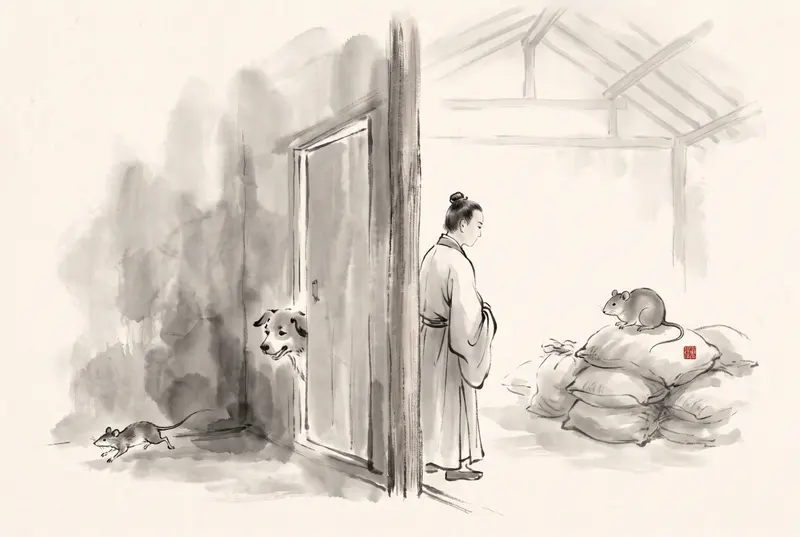
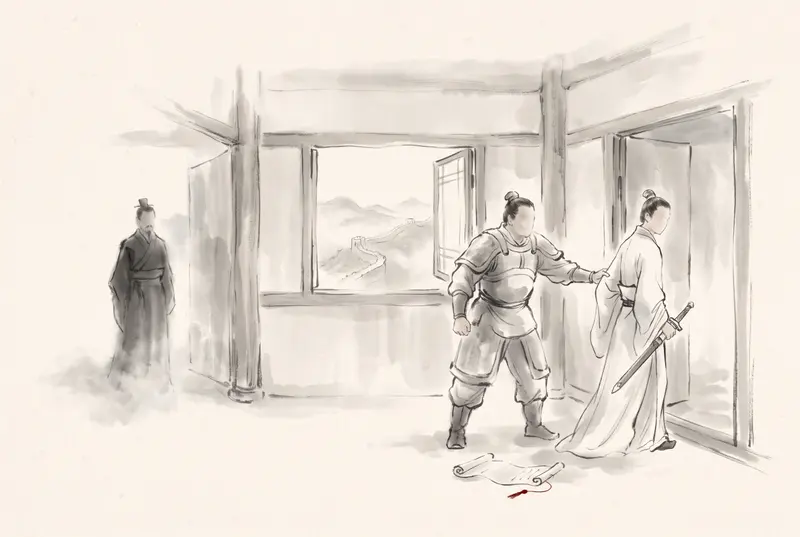
李斯者,楚上蔡人也。年少時,為郡小吏;見吏舍廁中鼠食不絜,近人犬,數驚恐之。斯入倉,觀倉中鼠,食積粟;居大廡之下,不見人犬之憂。於是李斯乃歎曰:「人之賢不肖譬如鼠矣,在所自處耳!」
Kundoku (Japanese reading)
李斯なる者は、楚の上蔡の人なり。年少き時、郡の小吏と為る。吏舎の廁中の鼠の不絜を食い、人犬に近づきて、数しば之に驚恐するを見る。斯倉に入り、倉中の鼠を観るに、積粟を食い、大廡の下に居りて、人犬の憂いを見ず。是に於いて李斯乃ち歎じて曰く、「人の賢不肖は譬えば鼠の如し。自ら処る所に在るのみ」と。
Japanese
李斯は楚の上蔡の人である。若いころ、郡の下級役人をしていた。役所の便所にいる鼠が、汚いものを食べ、人や犬が近づくたびにびくびくしているのを見た。また李斯が倉に入って、倉の中の鼠を見ると、積み上げた穀物を食べ、大きな建物の屋根の下に住んで、人や犬を心配するようすもなかった。そこで李斯はため息をついて言った。「人が賢いか愚かかというのも、鼠と同じだ。自分がどこに身を置くかで決まるのだ」。
English
Li Si was a man of Shangcai in Chu. When he was young, he was a minor clerk in the commandery. He saw that the rats in the clerks' latrine ate filth and were often frightened when people or dogs came near. When he went into the granary, he saw that the rats there ate the piled-up grain and lived under a great roof, with no worry about people or dogs. So Li Si sighed and said, "Whether a man is worthy or worthless is just like these rats. It all depends on where he places himself!"
Notes (JA)
- 上蔡: 今の河南省上蔡県。
- 小吏: 下級の役人。
- 廁: 便所。
- 不絜: 不潔なもの。
- 廡: 大きな建物、ひさしのある建物。
- 賢不肖: 賢いか愚かか、すぐれているかいないか。
- 在所自處: 自分がどこに身を置くかによる。李斯の生き方を決めた考えとして知られる。最後の節の「黄色い犬」の話と対になる。
Notes (EN)
- Shangcai: present-day Shangcai County in Henan.
- 小吏: a minor clerk.
- 廁: a latrine.
- 不絜: filth.
- 廡: a large building with a deep roof.
- 賢不肖: worthy or worthless.
- 在所自處 ("where he places himself"): the idea that shaped Li Si's life. It pairs with the "yellow dog" at the end of the chapter.
Idioms from this passage: People are like rats 人の賢不肖は譬えば鼠の如し
Word notes
- clerk/klɜrk/noun
a person who keeps records or does office work
In the text: “he was a minor clerk”
Similar words: official — someone with a government post · secretary — someone who handles letters and records
- latrine/ləˈtriːn/noun
a simple toilet, often a pit in the ground
In the text: “the rats in the clerks' latrine”
Similar words: toilet — the general word · privy — old word for an outdoor toilet
- worthless/ˈwɜrθləs/adjective
having no value or good qualities
In the text: “Whether a man is worthy or worthless”
Similar words: useless — of no use · good-for-nothing — informal; lazy and useless
- depend on/dɪˈpɛnd ɑn/phrasal verb
to be decided by something
In the text: “It all depends on where he places himself”
Similar words: rest on — be based on · hinge on — depend completely on one thing
Passage 2
Original
乃從荀卿學帝王之術。學已成,度楚王不足事,而六國皆弱,無可為建功者,欲西入秦。辭於荀卿曰:「斯聞得時無怠,今萬乘方爭時,遊者主事。今秦王欲吞天下,稱帝而治,此布衣馳騖之時而遊說者之秋也。處卑賤之位而計不為者,此禽鹿視肉,人面而能彊行者耳。故詬莫大於卑賤,而悲莫甚於窮困。久處卑賤之位,困苦之地,非世而惡利,自讬於無為,此非士之情也。故斯將西說秦王矣。」
Kundoku (Japanese reading)
乃ち荀卿に従いて帝王の術を学ぶ。学已に成り、楚王の事うるに足らず、而して六国皆弱く、為に功を建つべき者無きを度り、西のかた秦に入らんと欲す。荀卿に辞して曰く、「斯聞く、時を得て怠ること無かれと。今万乗方に時を争い、遊ぶ者事を主る。今秦王天下を呑み、帝を称して治めんと欲す。此れ布衣の馳騖の時にして、遊説する者の秋なり。卑賤の位に処りて計の為さざる者は、此れ禽鹿の肉を視るのみ、人面にして能く彊いて行く者のみ。故に詬は卑賤より大なるは莫く、悲しみは窮困より甚だしきは莫し。久しく卑賤の位、困苦の地に処り、世を非として利を悪み、自ら無為に託するは、此れ士の情に非ざるなり。故に斯将に西して秦王に説かんとす」と。
Japanese
そこで李斯は荀卿(荀子)について、天下を治める帝王の術を学んだ。学問を修めると、楚の王は仕えるに足りず、ほかの六国もみな弱くて、手柄を立てられそうな国はないと考え、西の秦へ行こうとした。荀卿に別れを告げて言った。「時を得たら怠けるな、と聞いています。いまは大国どうしが争っている時で、諸国を遊説する者が政治を動かしています。いま秦王は天下を飲みこみ、帝を名のって治めようとしています。これこそ、身分の低い者が駆け回って出世する時、遊説する者にとって実りの秋です。卑しい身分にいながら何も計らない者は、獣が肉を眺めているだけ、人の顔をしてかろうじて歩いているだけの者です。だから、恥は卑しい身分より大きいものはなく、悲しみは貧乏より深いものはありません。いつまでも卑しい地位や苦しい境遇にいながら、世の中を非難して利益を嫌い、何もしないことに逃げこむのは、士の本心ではありません。ですから、わたしは西へ行って秦王に説くつもりです」。
English
So he studied the arts of kingship under Xun Qing. When his studies were complete, he judged that the King of Chu was not worth serving, and that the other six states were all weak, with none in which he could win merit. So he decided to go west to Qin. Taking leave of Xun Qing, he said, "I have heard that when the time comes, one must not be idle. Now the great states are competing, and wandering advisers run their affairs. The King of Qin means to swallow the realm, call himself emperor and rule it. This is the time for commoners to gallop ahead, the harvest season for wandering persuaders. One who stays in a low position and makes no plans is like a beast staring at meat, a man in face only, who just manages to walk. So there is no shame greater than a low station, and no sorrow deeper than poverty. To stay long in a low position and a hard place, condemning the world, hating profit and hiding behind doing nothing: that is not what a true gentleman feels. So I am going west to advise the King of Qin."
Notes (JA)
- 荀卿: 荀子。性悪説で知られる儒家の思想家。法家の韓非も、その弟子。
- 帝王之術: 天下を治める術。
- 六國: 秦以外の六つの大国。
- 萬乘: 戦車一万台を出せる大国。
- 遊者・遊說者: 諸国を回って君主に説く遊説家。
- 秋: 実りの時、大事な時期。
- 禽鹿視肉: 獣が肉を見ているだけで手に入れられない、という意味に解されることが多い(諸説ある)。
- 非世而惡利: 世の中を非難し、利益を嫌う。隠者のような生き方への批判。
Notes (EN)
- Xun Qing: Xunzi, the Confucian thinker known for teaching that human nature is bad. The Legalist Han Fei was also his pupil.
- The arts of kingship: how to rule the realm.
- The six states: the six great states other than Qin.
- 萬乘 ("ten thousand chariots"): a great state.
- Wandering advisers and persuaders: men who traveled from court to court offering advice.
- 秋 ("autumn"): the harvest time, the right moment.
- 禽鹿視肉: usually read as a beast staring at meat it cannot get; the meaning is debated.
- Hating profit and doing nothing: a dig at hermits who refuse office.
Word notes
- kingship/ˈkɪŋʃɪp/noun
the position and skills of a king
In the text: “the arts of kingship”
Similar words: rule — governing a country · statecraft — the art of running a state
- idle/ˈaɪdəl/adjective
not working or doing anything; lazy
In the text: “one must not be idle”
Similar words: lazy — not wanting to work · inactive — not doing anything
- persuader/pərˈsweɪdər/noun
a person who tries to make others agree, especially rulers
In the text: “the harvest season for wandering persuaders”
Similar words: adviser — someone who gives advice · orator — a skilled public speaker
- poverty/ˈpɑvərti/noun
the state of being very poor
In the text: “no sorrow deeper than poverty”
Similar words: need — not having what you need · hardship — a difficult life
Passage 3
Original
會韓人鄭國來間秦,以作注溉渠,已而覺。秦宗室大臣皆言秦王曰:「諸侯人來事秦者,大抵為其主游間於秦耳,請一切逐客。」李斯議亦在逐中。斯乃上書曰:
Kundoku (Japanese reading)
会たま韓人鄭国来たりて秦を間し、以て注漑の渠を作る。已にして覚る。秦の宗室大臣皆秦王に言いて曰く、「諸侯の人の来たりて秦に事うる者は、大抵其の主の為に秦に游間するのみ。請う一切客を逐わん」と。李斯も議して亦た逐中に在り。斯乃ち上書して曰く、
Japanese
ちょうどそのころ、韓の人の鄭国がスパイとして秦にやって来て、灌漑の水路を造っていたことが、やがて発覚した。秦の王族や大臣たちはみな秦王に言った。「よその国から来て秦に仕えている者は、たいてい自分の主君のために秦に入りこんだスパイにすぎません。よそ者はすべて追放してください」。李斯もまた、追放される者の中に入っていた。そこで李斯は上書した。
English
Just then Zheng Guo, a man of Hann, came to Qin as a spy and built an irrigation canal; before long his plot was discovered. The royal kinsmen and high ministers of Qin all said to the King of Qin, "People from the other states who come to serve Qin are mostly here to spy on Qin for their own rulers. We ask you to expel all foreigners." Li Si too was among those to be expelled. So he sent up a letter, which said:
Notes (JA)
- この節の前(省略): 李斯は秦に入って呂不韋の食客(舎人)となり、やがて秦王政(のちの始皇帝)に用いられた。
- 鄭國: 韓の水利技術者。秦の国力を大工事に向けさせて疲れさせようとしたとされる。皮肉にも、この「鄭国渠」は関中を豊かにし、秦の統一を支えた。
- 間: スパイ、間者。
- 客: よその国から来て仕える人。
- 上書: 意見書を差し出すこと。この意見書が、名文として知られる「諫逐客書(逐客を諫むる書)」。
Notes (EN)
- Before this (left out here): Li Si went to Qin, became a retainer of Lü Buwei, and was soon used by King Zheng, the future First Emperor.
- Zheng Guo: a water engineer from Hann, said to have been sent to wear Qin out with a huge project. Ironically, his canal made the land within the passes rich and helped Qin unite the realm.
- 間: a spy.
- 客 ("guests"): men from other states serving in Qin.
- The letter: the famous "Letter against the Expulsion of Foreigners."
Word notes
- irrigation/ˌɪrəˈɡeɪʃən/noun
bringing water to fields through canals or pipes
In the text: “built an irrigation canal”
Similar words: watering — giving water to plants · drainage — taking water away from land
- expel/ɪkˈspɛl/verb
to force someone to leave a place
In the text: “We ask you to expel all foreigners.”
Similar words: banish — send someone away as punishment · drive out — force out
Passage 4
Original
臣聞地廣者粟多,國大者人眾,兵彊則士勇。是以太山不讓土壤,故能成其大;河海不擇細流,故能就其深;王者不卻眾庶,故能明其德。是以地無四方,民無異國,四時充美,鬼神降福,此五帝、三王之所以無敵也。今乃棄黔首以資敵國,卻賓客以業諸侯,使天下之士退而不敢西向,裹足不入秦,此所謂「藉寇兵而齎盜糧」者也。
Kundoku (Japanese reading)
臣聞く、地広き者は粟多く、国大なる者は人衆く、兵彊ければ則ち士勇なりと。是を以て太山は土壌を譲らず、故に能く其の大を成す。河海は細流を択ばず、故に能く其の深きを就す。王者は衆庶を却けず、故に能く其の徳を明らかにす。是を以て地に四方無く、民に異国無く、四時充美し、鬼神福を降す。此れ五帝・三王の敵無き所以なり。今乃ち黔首を棄てて以て敵国に資し、賓客を却けて以て諸侯に業し、天下の士をして退きて敢えて西に向かわず、足を裹みて秦に入らざらしむ。此れ所謂「寇に兵を藉し、盗に糧を齎す」者なり。
Japanese
「地が広ければ穀物は多く、国が大きければ人は多く、兵が強ければ兵士は勇ましい、と聞いています。ですから泰山は、どんな小さな土くれも拒まないので、あれほど大きくなれたのです。黄河や海は、どんな細い流れも選り好みしないので、あれほど深くなれたのです。王者は多くの民を退けないので、その徳を明らかにできるのです。ですから王者にとって、土地には東西南北の区別がなく、民には自国と他国の区別がなく、四季は満ち足り、鬼神は福を降します。これが、五帝や三王に敵がいなかった理由です。ところがいま、民を捨てて敵国に与え、よそから来た人々を退けて諸侯の役に立たせ、天下の人材をしりごみさせて西に向かわせず、足を止めて秦に入らせないようにしています。これこそ、いわゆる『敵に武器を貸し、盗賊に食糧を送る』というものです」。
English
"I have heard that where the land is wide, grain is plentiful; where the state is large, people are many; and where the army is strong, soldiers are brave. So Mount Tai does not refuse any clod of earth, and that is how it became so great. The Yellow River and the sea do not pick and choose among small streams, and that is how they became so deep. A true king does not turn away the common people, and that is how his virtue shines. So for him the land has no east or west, and the people have no foreign states. The four seasons are rich and full, and the spirits send down blessings. This is why the Five Emperors and the Three Kings had no enemies. But now you are throwing away your people to help enemy states and driving away your guests to serve the other lords. You are making the best men of the realm hold back and not dare to face west, wrapping up their feet and not entering Qin. This is what is called 'lending weapons to the enemy and bringing food to the bandits.'"
Notes (JA)
- この節の前(省略): 意見書の前半で李斯は、秦の歴代の君主が、由余・百里奚・商鞅・張儀・范雎など他国出身の人材を用いて強くなったことを挙げた。
- 太山不讓土壤…河海不擇細流: 泰山はどんな土くれも拒まないから大きく、黄河や海はどんな細流も選ばないから深い。大人物は小さなものも受け入れる、という有名なたとえ。
- 太山: 泰山。今の山東省の名山。
- 五帝・三王: 伝説の五人の聖王と、夏・殷・周の三王朝を開いた王。
- 黔首: 民。秦での呼び名。
- 裹足: 足を包んで進まない、しりごみする。
- 藉寇兵而齎盜糧: 敵に武器を貸し、盗賊に食糧を送る。自分に不利なことを、わざわざしてやるたとえ。
Notes (EN)
- Before this (left out here): in the first half of the letter, Li Si listed the foreigners, such as You Yu, Baili Xi, Shang Yang, Zhang Yi and Fan Ju, who had made Qin strong under earlier rulers.
- Mount Tai and the small streams: a famous image: a great man welcomes even small things and people.
- Mount Tai: the sacred mountain in present-day Shandong.
- The Five Emperors and the Three Kings: the legendary sage rulers, and the founders of Xia, Shang and Zhou.
- 黔首 ("the black-headed"): the common people, as Qin called them.
- 裹足 ("wrapping up their feet"): holding back, refusing to come.
- 藉寇兵而齎盜糧 ("lending weapons to the enemy and bringing food to the bandits"): doing something that only helps one's enemies.
Idioms from this passage: Mount Tai refuses no clod of earth 泰山は土壌を譲らず
Word notes
- clod/klɑd/noun
a lump of earth or clay
In the text: “does not refuse any clod of earth”
Similar words: lump — a small solid piece · clump — a small mass of earth or plants
Clod is also an insulting word for a stupid person.
- bandit/ˈbændɪt/noun
a robber, often one of an armed gang
In the text: “bringing food to the bandits”
Similar words: robber — someone who steals by force · outlaw — someone living outside the law
Passage 5
Original
秦王乃除逐客之令,復李斯官,卒用其計謀。官至廷尉。二十餘年,竟并天下,尊主為皇帝,以斯為丞相。夷郡縣城,銷其兵刃,示不復用。使秦無尺土之封,不立子弟為王,功臣為諸侯者,使後無戰攻之患。
Kundoku (Japanese reading)
秦王乃ち逐客の令を除き、李斯の官を復し、卒に其の計謀を用う。官は廷尉に至る。二十余年にして、竟に天下を并せ、主を尊びて皇帝と為し、斯を以て丞相と為す。郡県の城を夷げ、其の兵刃を銷かし、復た用いざるを示す。秦をして尺土の封無からしめ、子弟を立てて王と為し、功臣を諸侯と為す者あらず、後をして戦攻の患い無からしむ。
Japanese
秦王はそこで追放の命令を取り消し、李斯の官職をもとに戻して、ついにはその計略を用いた。李斯の官は廷尉(司法の長官)にまで上った。それから二十年あまりで、秦はとうとう天下を統一し、主君を尊んで皇帝とし、李斯を丞相とした。郡や県の城壁を取り壊し、武器を溶かして、二度と使わないことを示した。秦では一尺の土地も封じず、王の子弟を王にしたり、功臣を諸侯にしたりせず、後の世に戦争の心配がないようにした。
English
So the King of Qin withdrew the order to expel foreigners, restored Li Si to his post, and in the end followed his plans. Li Si rose to be Commandant of Justice. After some twenty years, Qin at last united the realm. It honored its ruler as emperor and made Li Si chancellor. The walls of the commanderies and counties were torn down and their weapons melted, to show that they would never be used again. Not a foot of land in Qin was given out as a fief: no sons or brothers of the ruler were made kings, and no meritorious servants were made lords, so that later generations would not suffer from war.
Notes (JA)
- 廷尉: 司法をつかさどる長官。秦の大臣の一つ。
- 并天下: 前221年の天下統一。
- 尊主為皇帝: 「皇帝」の称号を定めたこと(巻6の章)。
- 銷其兵刃: 天下の武器を集めて溶かし、鐘や銅像(金人)十二体を造った。
- 無尺土之封: 一族や功臣に領地を与えず、すべてを郡と県に分けて皇帝が直接治めた(郡県制)。秦が倒れるとき、一族の助けがなかった原因の一つともされる。
Notes (EN)
- 廷尉 ("Commandant of Justice"): the minister in charge of the law courts.
- Uniting the realm: in 221 BCE.
- Honoring the ruler as emperor: the title huangdi was created then (Volume 6).
- Melting the weapons: the weapons of the realm were melted down into bells and twelve bronze statues.
- Not a foot of land as a fief: the whole empire was divided into commanderies and counties ruled directly by the emperor. This is sometimes given as one reason why no royal kinsmen came to Qin's aid when it fell.
Word notes
- withdraw/wɪðˈdrɔ/verb
to take back or cancel an order or offer (past tense: withdrew)
In the text: “withdrew the order to expel foreigners”
Similar words: cancel — stop something planned or in force · revoke — formal; officially cancel
Withdraw also means to take money out of a bank, or to pull an army back.
Passage 6
Original
斯長男由為三川守,諸男皆尚秦公主,女悉嫁秦諸公子。三川守李由告歸咸陽,李斯置酒於家,百官長皆前為壽,門廷車騎以千數。李斯喟然而歎曰:「嗟乎!吾聞之荀卿曰『物禁大盛』。夫斯乃上蔡布衣,閭巷之黔首,上不知其駑下,遂擢至此。當今人臣之位無居臣上者,可謂富貴極矣。物極則衰,吾未知所稅駕也!」
Kundoku (Japanese reading)
斯の長男由は三川の守と為り、諸男は皆秦の公主を尚り、女は悉く秦の諸公子に嫁す。三川の守李由告帰して咸陽に帰る。李斯酒を家に置く。百官の長皆前みて寿を為し、門廷の車騎千を以て数う。李斯喟然として歎じて曰く、「嗟乎、吾之を荀卿に聞く、『物は大いに盛んなるを禁ず』と。夫れ斯は乃ち上蔡の布衣、閭巷の黔首なり。上其の駑下を知らず、遂に擢きて此に至る。当今人臣の位に臣の上に居る者無し。富貴極まれりと謂うべし。物極まれば則ち衰う。吾未だ駕を税く所を知らざるなり」と。
Japanese
李斯の長男の李由は三川郡の長官となり、息子たちはみな秦の王女を妻にし、娘たちはみな秦の公子に嫁いだ。三川郡の長官の李由が休暇をもらって咸陽に帰ってきたとき、李斯は家で酒宴を開いた。百官の長たちがみな進み出て長寿を祝い、門や庭には、車や馬が千を数えるほど集まった。李斯はため息をついて言った。「ああ、わたしは荀卿から『物事は盛んになりすぎてはいけない』と聞いた。わたしはもともと上蔡の庶民、村里のただの民にすぎない。陛下はわたしの愚かさをご存じなく、引き立てて今の地位にまでしてくださった。いま臣下の位で、わたしの上に立つ者はいない。富も地位も、きわまったと言えよう。物事はきわまれば衰える。わたしは、どこで車から馬を外して休めばよいのか、わからない」。
English
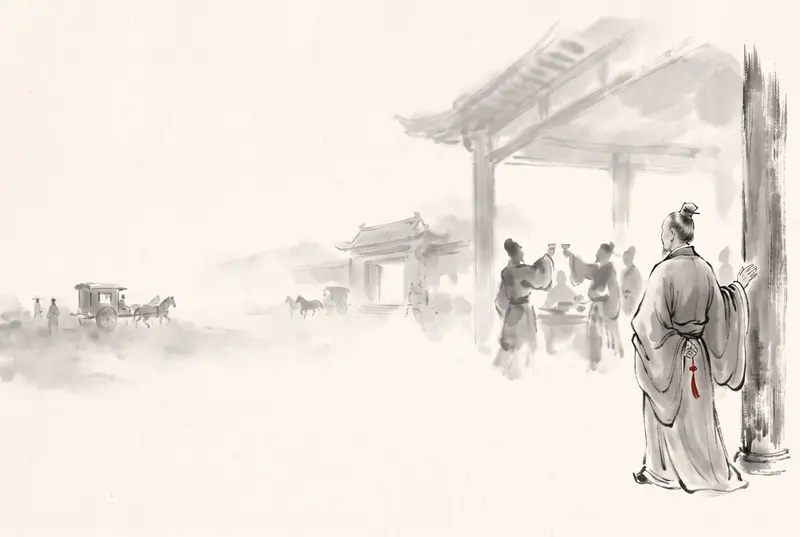
Li Si's eldest son, Li You, was governor of Sanchuan. His other sons all married princesses of Qin, and his daughters all married princes of Qin. When Li You came home to Xianyang on leave, Li Si held a feast at his house. The heads of all the government offices came forward to drink to his long life, and the carriages and horses at his gate and in his courtyard numbered in the thousands. Li Si sighed deeply and said, "Alas! I heard from Xun Qing: 'Things must not grow too great.' I was only a commoner from Shangcai, an ordinary man from the village lanes. His Majesty did not know how dull I was and raised me up to this. Today no subject ranks above me. My wealth and honor have reached their peak. When things reach their peak, they decline. I do not know where I can unhitch my horses and rest!"
Notes (JA)
- 三川: 洛陽を中心とする郡。
- 尚: 王女を妻にすること。
- 告歸: 休暇をもらって帰る。
- 為壽: 杯をささげて長寿を祝う。
- 物禁大盛: 物事は盛んになりすぎることを避けよ。
- 駑下: 才能がないこと(へりくだった言い方)。
- 稅駕: 車から馬を外して休む。「稅」は「脱」と同じ。身の落ち着き先がわからない、という不安を表す。李斯の最期を予感させる言葉。
Notes (EN)
- Sanchuan: the commandery around Luoyang.
- 尚: to marry a princess.
- 告歸: to come home on leave.
- 為壽: to raise a cup to someone's long life.
- 物禁大盛 ("things must not grow too great"): one should avoid too much success.
- 駑下 ("dull"): a humble way to speak of oneself.
- 稅駕 ("unhitch the horses"): to rest at journey's end. He does not know where his journey will end, a hint of what is to come.
Word notes
- on leave/ɑn ˈliːv/phrase
away from work with permission for a time
In the text: “came home to Xianyang on leave”
Similar words: on holiday — British; taking a break · off duty — not working at the moment
- peak/piːk/noun
the highest point
In the text: “My wealth and honor have reached their peak.”
Similar words: summit — the top of a mountain · height — the highest degree
- unhitch/ʌnˈhɪtʃ/verb
to free horses from the carriage they are pulling
In the text: “where I can unhitch my horses”
Similar words: unharness — take the harness off an animal · unyoke — free oxen from a yoke
Passage 7
Original
胡亥既然高之言,高曰:「不與丞相謀,恐事不能成,臣請為子與丞相謀之。」高乃謂丞相斯曰:「上崩,賜長子書,與喪會咸陽而立為嗣。書未行,今上崩,未有知者也。所賜長子書及符璽皆在胡亥所,定太子在君侯與高之口耳。事將何如?」斯曰:「安得亡國之言!此非人臣所當議也!」高曰:「君侯自料能孰與蒙恬?功高孰與蒙恬?謀遠不失孰與蒙恬?無怨於天下孰與蒙恬?長子舊而信之孰與蒙恬?」斯曰:「此五者皆不及蒙恬,而君責之何深也?」
Kundoku (Japanese reading)
胡亥既に高の言を然りとす。高曰く、「丞相と謀らずんば、恐らくは事成る能わざらん。臣請う子の為に丞相と之を謀らん」と。高乃ち丞相斯に謂いて曰く、「上崩ずるに、長子に書を賜い、喪と咸陽に会して立ちて嗣と為らしむ。書未だ行かずして、今上崩ず。未だ知る者有らざるなり。長子に賜う所の書及び符璽は皆胡亥の所に在り。太子を定むるは、君侯と高との口に在るのみ。事将に何如せんとする」と。斯曰く、「安くんぞ亡国の言を得んや。此れ人臣の当に議すべき所に非ざるなり」と。高曰く、「君侯自ら料るに、能は蒙恬と孰与ぞ。功の高きは蒙恬と孰与ぞ。謀遠くして失わざるは蒙恬と孰与ぞ。天下に怨み無きは蒙恬と孰与ぞ。長子の旧くして之を信ずるは蒙恬と孰与ぞ」と。斯曰く、「此の五者は皆蒙恬に及ばず。而るに君の之を責むること何ぞ深きや」と。
Japanese
胡亥が趙高の言うことに同意すると、趙高は言った。「丞相と相談しなければ、事はうまく運ばないでしょう。わたしがあなたのために、丞相と話をつけましょう」。趙高はそこで丞相の李斯に言った。「陛下はお亡くなりになる前に長子(扶蘇)に手紙を与え、咸陽で葬列を迎えて跡継ぎとなるよう命じられました。その手紙がまだ届かないうちに、陛下は亡くなられ、このことを知る者はまだいません。長子にあてた手紙も、割符と印も、みな胡亥さまのところにあります。だれを太子に定めるかは、あなたとわたしの口ひとつにかかっています。どうなさいますか」。李斯は言った。「国を滅ぼすような話を、どうして口にできよう。これは臣下が議論すべきことではない」。趙高は言った。「あなたはご自分で考えてみて、才能は蒙恬と比べてどうですか。功績の高さは、蒙恬と比べてどうですか。遠い先を見通して失敗しない点は、蒙恬と比べてどうですか。天下に恨まれていない点は、蒙恬と比べてどうですか。長子と古くからの付き合いがあり、信頼されている点は、蒙恬と比べてどうですか」。李斯は言った。「その五つは、どれも蒙恬に及ばない。それにしても、あなたはなぜそこまで問いつめるのか」。
English
When Huhai had agreed to Zhao Gao's proposal, Zhao Gao said, "Unless we plan this with the chancellor, I fear it will not succeed. Let me talk it over with the chancellor for you." So Zhao Gao said to Chancellor Li Si, "Before he died, His Majesty wrote to his eldest son, telling him to meet the funeral at Xianyang and become his heir. The letter has not gone out, and now His Majesty is dead. No one knows yet. The letter to the eldest son and the tallies and seals are all with Huhai. Who becomes crown prince depends only on what you and I say. What do you mean to do?" Li Si said, "How can you speak words that would ruin the state? This is not something a subject should discuss!" Zhao Gao said, "Judge for yourself, my lord. In ability, how do you compare with Meng Tian? In merit? In planning far ahead without mistakes? In having no enemies in the realm? In the eldest son's long trust and friendship?" Li Si said, "In all five I fall short of Meng Tian. But why do you press me so hard?"
Notes (JA)
- この節の前(省略): 始皇帝が沙丘で亡くなると、趙高は胡亥に、兄の扶蘇を退けて自分が帝位につくよう説き、胡亥は同意した(巻6「始皇帝の死と秦の滅亡」の章)。
- 符璽: 割符と印。命令が本物であることを示すもの。
- 君侯: 李斯への敬称。
- 蒙恬: 扶蘇とともに北方を守っていた将軍。扶蘇が即位すれば、蒙恬が丞相になると趙高は見ている。
- 孰與: …と比べてどうか。
Notes (EN)
- Before this (left out here): when the First Emperor died at Shaqiu, Zhao Gao urged Huhai to push aside his elder brother Fusu and take the throne himself, and Huhai agreed (Volume 6, "The Fall of Qin").
- 符璽: tallies and seals, which proved an order was real.
- 君侯 ("my lord"): a polite way to address Li Si.
- Meng Tian: the general guarding the north with Fusu. Zhao Gao means that if Fusu becomes emperor, Meng Tian will be his chancellor.
- 孰與: "how do you compare with...?"
Word notes
- heir/ɛr/noun
the person who will receive a position or property when someone dies
In the text: “become his heir”
Similar words: successor — the person who comes next · crown prince — the heir to a throne
The h is silent: heir sounds like air.
- ruin/ˈruːɪn/verb
to destroy completely
In the text: “words that would ruin the state”
Similar words: destroy — damage so badly it cannot be used · wreck — badly damage
- press/prɛs/verb
to keep asking or pushing someone to do or say something
In the text: “why do you press me so hard?”
Similar words: push — try to make someone act · pressure — try hard to persuade
- fall short/ˌfɔl ˈʃɔrt/phrasal verb
to not be as good as something or someone
In the text: “I fall short of Meng Tian”
Similar words: lag behind — be slower or weaker · be inferior to — be less good than
Passage 8
Original
高曰:「高固內官之廝役也,幸得以刀筆之文進入秦宮,管事二十餘年,未嘗見秦免罷丞相功臣有封及二世者也,卒皆以誅亡。皇帝二十餘子,皆君之所知。長子剛毅而武勇,信人而奮士,即位必用蒙恬為丞相,君侯終不懷通侯之印歸於鄉里,明矣。
Kundoku (Japanese reading)
高曰く、「高は固より内官の廝役なり。幸いに刀筆の文を以て秦宮に進入するを得、事を管すること二十余年、未だ嘗て秦の丞相・功臣を免罷して封の二世に及ぶ者有るを見ず。卒に皆誅を以て亡ぶ。皇帝の二十余子は、皆君の知る所なり。長子は剛毅にして武勇、人を信じて士を奮わす。即位せば必ず蒙恬を用いて丞相と為さん。君侯終に通侯の印を懐きて郷里に帰らざること明らかなり。
Japanese
趙高は言った。「わたしはもともと宮中の下働きにすぎません。幸いにも文書を書く腕で秦の宮廷に入ることができ、二十年あまり仕事を任されてきましたが、秦が辞めさせた丞相や功臣で、領地が子の代まで続いた者を見たことがありません。結局は、みな誅殺されて滅びました。皇帝の二十人あまりのお子たちのことは、あなたもみなご存じでしょう。長子は意志が強く勇ましく、人を信じて士を奮い立たせる方です。即位すれば、きっと蒙恬を丞相にするでしょう。そうなれば、あなたが通侯の印を胸に抱いて、無事に郷里へ帰ることはできない。それは明らかです……」
English
Zhao Gao said, "I was only a menial in the inner palace. By luck, my skill with the writing brush got me into the Qin court, and I have managed affairs there for more than twenty years. In all that time I have never seen a chancellor or a meritorious servant dismissed by Qin whose fief passed on to the next generation. In the end they were all put to death. You know all of the emperor's twenty-odd sons. The eldest is firm, brave and warlike; he trusts people and fires up his men. If he takes the throne, he is sure to make Meng Tian chancellor. Then it is clear that you will never go home to your village with your marquis's seal at your breast..."
Notes (JA)
- 內官之廝役: 宮中の下働き。宦官であったことを示すとも読まれる。
- 刀筆之文: 竹簡に書き、誤りを小刀で削る文書の仕事。法律の文書に通じていたこと。
- 通侯: 秦漢の最高の爵位。李斯はこの爵位を持っていた。
- 懷通侯之印歸於鄉里: 爵位を保ったまま、無事に故郷へ引退する。
- このあと(省略): 趙高は胡亥の人柄をほめ、李斯はなおも「主君の詔に従い、天命を聴くだけだ」と抵抗し、二人は長く言い争った。
Notes (EN)
- 內官之廝役 ("a menial in the inner palace"): also read as a sign that he was a eunuch.
- 刀筆 ("knife and brush"): writing on bamboo slips and scraping off mistakes with a knife; skill with legal documents.
- 通侯: the highest noble rank of Qin and Han, which Li Si held.
- Going home with his seal: retiring safely with his rank.
- After this (left out here): Zhao Gao praised Huhai's character, and Li Si went on resisting, saying he would only obey his lord's command and Heaven's will. The argument went on for a long time.
Word notes
- menial/ˈmiːniəl/noun
a servant who does simple, low work
In the text: “I was only a menial”
Similar words: servant — someone who works in a house · underling — someone of low rank
- dismiss/dɪsˈmɪs/verb
to remove someone from their job
In the text: “dismissed by Qin”
Similar words: fire — informal; dismiss from a job · remove — take away from a position
Passage 9
Original
高曰:「上下合同,可以長久;中外若一,事無表裏。君聽臣之計,即長有封侯,世世稱孤,必有喬、松之壽,孔、墨之智。今釋此而不從,禍及子孫,足以為寒心。善者因禍為福,君何處焉?」斯乃仰天而歎,垂淚太息曰:「嗟乎!獨遭亂世,既以不能死,安讬命哉!」於是斯乃聽高。高乃報胡亥曰:「臣請奉太子之明命以報丞相,丞相斯敢不奉令!」
Kundoku (Japanese reading)
高曰く、「上下合同すれば、以て長久なるべし。中外一の若くんば、事に表裏無し。君臣の計を聴かば、即ち長く封侯有りて、世世孤と称し、必ず喬・松の寿、孔・墨の智有らん。今此を釈てて従わずんば、禍子孫に及び、以て寒心を為すに足らん。善き者は禍に因りて福と為す。君何くにか処らん」と。斯乃ち天を仰ぎて歎き、涙を垂れて太息して曰く、「嗟乎、独り乱世に遭い、既に以て死する能わず。安くにか命を託せんや」と。是に於いて斯乃ち高に聴く。高乃ち胡亥に報じて曰く、「臣請う太子の明命を奉じて以て丞相に報ぜん。丞相斯敢えて令を奉ぜざらんや」と。
Japanese
趙高は言った。「上と下が心を合わせれば長続きし、内と外が一つになれば、事に表も裏もなくなります。わたしの計略に従えば、あなたはいつまでも諸侯の位を保ち、代々『孤』と名のる身分となり、王子喬や赤松子のような長寿と、孔子や墨子のような知恵を得られるでしょう。いまこれを捨てて従わなければ、災いは子孫にまで及び、ぞっとすることになるでしょう。賢い人は、災いを転じて福とするものです。あなたはどちらを選びますか」。李斯は天を仰いで嘆き、涙を流して深くため息をついて言った。「ああ、わたし一人が乱世にめぐり合い、死ぬこともできない。この命を、どこに託せばよいのか」。こうして李斯は趙高の言うことを聞いた。趙高は胡亥に報告して言った。「太子さまのご命令を丞相に伝えました。丞相の李斯が、命令に従わないはずがありません」。
English
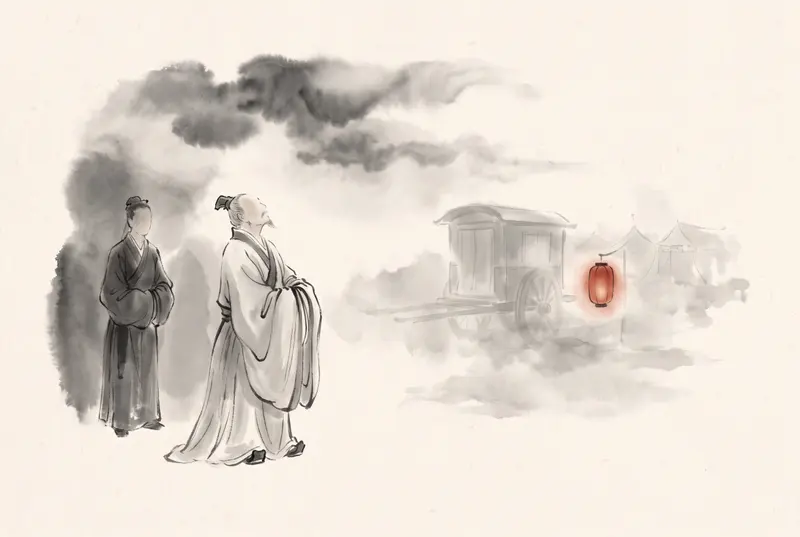
Zhao Gao said, "When those above and below are of one mind, things can last long; when inside and outside are as one, nothing is hidden. If you follow my plan, you will keep your fief forever, your family will be lords for generations, and you will surely have the long life of Wangzi Qiao and Chisongzi and the wisdom of Confucius and Mozi. If you throw this away and refuse, disaster will reach your children and grandchildren; it is enough to chill the heart. A wise man turns disaster into good fortune. Which will you choose?" Li Si looked up to the sky and groaned. Weeping, he heaved a deep sigh and said, "Alas! I alone have met these troubled times, and since I cannot die, where can I entrust my life?" And so Li Si gave in to Zhao Gao. Zhao Gao reported to Huhai, "I have taken the crown prince's command to the chancellor. How could Chancellor Li Si dare to disobey?"
Notes (JA)
- 上下合同: 上の者と下の者が心を一つにする。ここでは胡亥・趙高と李斯のこと。
- 稱孤: 諸侯が自分を「孤」と呼ぶこと。諸侯の身分を保つこと。
- 喬・松: 仙人の王子喬と赤松子。長寿のたとえ。
- 孔・墨: 孔子と墨子。知恵のたとえ。
- 寒心: ぞっとすること。
- 因禍為福: 「禍を転じて福と為す」。
- 既以不能死: 死んで忠義を守ることもできない。李斯の弱さと苦しみが表れた言葉。
- 太子之明命: 趙高はすでに胡亥を「太子」と呼んでいる。
Notes (EN)
- Those above and below: here, Huhai and Zhao Gao on one side, Li Si on the other.
- 稱孤 ("to call oneself the lonely one"): to be a lord, who refers to himself this way.
- Wangzi Qiao and Chisongzi: legendary immortals, symbols of long life.
- Confucius and Mozi: symbols of wisdom.
- 寒心: to chill the heart, to make one shudder.
- 因禍為福: to turn disaster into good fortune, now a common saying.
- "Since I cannot die": he cannot even die to keep faith with his lord, words that show his weakness and his pain.
- "The crown prince's command": Zhao Gao already calls Huhai crown prince.
Word notes
- chill/tʃɪl/verb
to make someone feel afraid; to make cold
In the text: “it is enough to chill the heart”
Similar words: frighten — make afraid · horrify — shock and frighten
- disaster/dɪˈzæstər/noun
a terrible event that causes great harm
In the text: “A wise man turns disaster into good fortune.”
Similar words: catastrophe — a very great disaster · calamity — formal; a terrible event
- groan/ɡroʊn/verb
to make a long, low sound of pain or unhappiness
In the text: “Li Si looked up to the sky and groaned.”
Similar words: moan — a softer sound of pain or pleasure · sigh — breathe out slowly, often sadly
- entrust/ɪnˈtrʌst/verb
to give something to someone to take care of
In the text: “where can I entrust my life”
Similar words: hand over — give to someone else · commit — formal; give into someone's care
Passage 10
Original
使者至,發書,扶蘇泣,入內舍,欲自殺。蒙恬止扶蘇曰:「陛下居外,未立太子,使臣將三十萬眾守邊,公子為監,此天下重任也。今一使者來,即自殺,安知其非詐?請復請,復請而後死,未暮也。」使者數趣之。扶蘇為人仁,謂蒙恬曰:「父而賜子死,尚安復請!」即自殺。蒙恬不肯死,使者即以屬吏,系於陽周。
Kundoku (Japanese reading)
使者至り、書を発く。扶蘇泣き、内舎に入りて自殺せんと欲す。蒙恬扶蘇を止めて曰く、「陛下外に居り、未だ太子を立てず。臣をして三十万の衆を将いて辺を守らしめ、公子を監と為す。此れ天下の重任なり。今一使者来たりて、即ち自殺す。安くんぞ其の詐に非ざるを知らん。請う復た請え。復た請いて後に死するも、未だ暮れず」と。使者数しば之を趣す。扶蘇人と為り仁なり。蒙恬に謂いて曰く、「父にして子に死を賜う。尚お安くんぞ復た請わん」と。即ち自殺す。蒙恬は死するを肯んぜず。使者即ち以て吏に属し、陽周に繫ぐ。
Japanese
使者が着いて手紙を開くと、扶蘇は泣き、奥の部屋に入って自殺しようとした。蒙恬は扶蘇を止めて言った。「陛下は都の外におられ、まだ太子を立てておられません。わたしに三十万の兵を率いて辺境を守らせ、あなたを監督役とされました。これは天下の重い任務です。いま使者が一人来ただけで、すぐに自殺なさるのですか。偽りでないと、どうしてわかりましょう。もう一度確かめてください。確かめてから死んでも、遅くはありません」。使者は何度も扶蘇をせかした。扶蘇は人柄がやさしかった。蒙恬に言った。「父が子に死を命じたのだ。どうしてもう一度確かめたりできよう」。そしてすぐに自殺した。蒙恬は死のうとしなかったので、使者は蒙恬を役人に引き渡し、陽周の牢につないだ。
English
When the envoy arrived and the letter was opened, Fusu wept, went into an inner room and was about to kill himself. Meng Tian stopped him and said, "His Majesty is away from the capital and has not yet named a crown prince. He sent me to guard the frontier with three hundred thousand men and made you their overseer. This is one of the weightiest duties in the realm. Now a single envoy comes, and you kill yourself at once? How do you know this is not a trick? Please ask again. If you ask again and then die, it will not be too late." The envoy kept urging him on. Fusu was a kind man. He said to Meng Tian, "When a father orders his son to die, how can the son ask again?" And he killed himself at once. Meng Tian would not die, so the envoy handed him over to the officials and had him imprisoned at Yangzhou.
Notes (JA)
- この節の前(省略): 李斯と趙高は、始皇帝の詔を受けたと偽って胡亥を太子に立て、扶蘇と蒙恬に死を命じる偽の手紙を送った(巻6の章を参照)。
- 監: 監督役。扶蘇は蒙恬の軍の監督として北方にいた。
- 復請: もう一度確かめる。
- 陽周: 今の陝西省子長市のあたり。蒙恬はのちに毒を飲んで死んだ。
Notes (EN)
- Before this (left out here): Li Si and Zhao Gao falsely claimed to have received the First Emperor's last command, made Huhai crown prince, and sent a forged letter ordering Fusu and Meng Tian to die (see Volume 6).
- Overseer: Fusu was in the north as overseer of Meng Tian's army.
- 復請: to ask again, to check the order.
- Yangzhou (陽周): near Zichang in present-day Shaanxi. Meng Tian later died there by taking poison.
Word notes
- frontier/frʌnˈtɪr/noun
the border of a country, or the land near it
In the text: “He sent me to guard the frontier”
Similar words: border — the line between two countries · boundary — a line that marks the edge
- urge/ɜrdʒ/verb
to try hard to make someone do something quickly (urge on: push someone to act)
In the text: “The envoy kept urging him on.”
Similar words: press — push someone hard · hurry — make someone act fast
- imprison/ɪmˈprɪzən/verb
to put someone in prison
In the text: “had him imprisoned at Yangzhou”
Similar words: jail — put in jail · lock up — informal; put in prison
Passage 11
Original
二世二年七月,具斯五刑,論腰斬咸陽市。斯出獄,與其中子俱執,顧謂其中子曰:「吾欲與若復牽黃犬俱出上蔡東門逐狡兔,豈可得乎!」遂父子相哭,而夷三族。
Kundoku (Japanese reading)
二世の二年七月、斯に五刑を具え、論じて咸陽の市に腰斬す。斯獄を出づるに、其の中子と倶に執えらる。顧みて其の中子に謂いて曰く、「吾若と復た黄犬を牽きて倶に上蔡の東門を出でて狡兎を逐わんと欲するも、豈に得べけんや」と。遂に父子相哭して、三族を夷せらる。
Japanese
二世皇帝の二年(前208年)七月、李斯は五刑をすべて加えられ、咸陽の市場で腰斬の刑と決まった。李斯は牢を出るとき、次男と一緒に引き立てられていった。李斯は振り返って次男に言った。「おまえとまた黄色い犬を連れて、一緒に上蔡の東門を出て、すばしこい兎を追いかけたいと思っても、もうかなわないなあ」。そして父と子は声をあげて泣き、李斯の三族は皆殺しにされた。
English
In the seventh month of the second year of the Second Emperor, Li Si was sentenced to all five punishments and to be cut in two at the waist in the marketplace of Xianyang. As he came out of prison, he was led away together with his second son. He turned to the boy and said, "I would like to take our yellow dog with you again and go out of the east gate of Shangcai to chase the cunning hares. But how could we, now?" Then father and son wept together, and his family to the third degree was wiped out.
Notes (JA)
- この節の前(省略): 二世皇帝の世になると、李斯は趙高に陥れられ、謀反の罪を着せられて牢に入れられた。拷問に耐えられず、罪を認めてしまった。
- 二世二年: 前208年。
- 五刑: 入れ墨・鼻そぎ・足切りなど五つの刑罰。それをすべて加えること。
- 腰斬: 胴を断ち切る、もっとも重い死刑の一つ。
- 中子: 次男。
- 黃犬: 黄色い犬。故郷の上蔡で、庶民として猟をしていたころの暮らし。「黄犬の嘆き」として、栄華をきわめた者が最期に抱く後悔をいう言葉になった。p1の鼠の話と対になる。
- 夷三族: 一族を皆殺しにする刑。
Notes (EN)
- Before this (left out here): under the Second Emperor, Zhao Gao had Li Si charged with rebellion and thrown into prison. Unable to bear the torture, he confessed.
- Second year of the Second Emperor: 208 BCE.
- The five punishments: tattooing, cutting off the nose, cutting off the feet and others, all inflicted together.
- 腰斬: cutting in two at the waist, one of the cruelest death sentences.
- 中子: his second son.
- The yellow dog: the simple life of hunting in his hometown, before his rise. "The sigh over the yellow dog" became a phrase for the regret of a great man at his fall. It pairs with the rats in p1.
- 夷三族: wiping out a whole family.
Word notes
- sentence/ˈsɛntəns/verb
to officially give someone a punishment in court
In the text: “Li Si was sentenced to all five punishments”
Similar words: condemn — give a heavy punishment · punish — make someone suffer for a wrong
As a noun, sentence also means a group of words.
- cunning/ˈkʌnɪŋ/adjective
clever at tricking others; quick and sly
In the text: “chase the cunning hares”
Similar words: sly — clever in a secret way · crafty — clever at tricks
- wipe out/ˌwaɪp ˈaʊt/phrasal verb
to destroy or kill completely
In the text: “his family to the third degree was wiped out”
Similar words: destroy — end completely · exterminate — kill every one