本紀 · 巻 2
夏本紀 夏本紀
禹の治水と夏の興亡 禹治水與夏之興亡
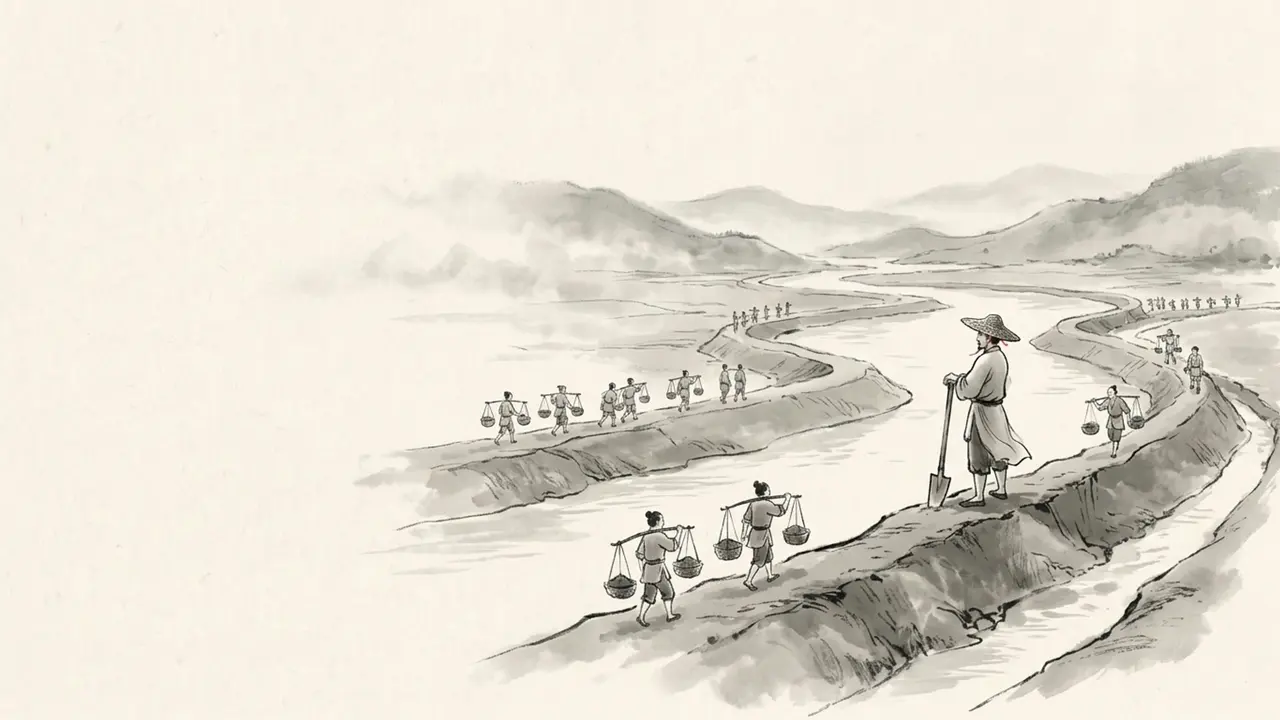
中国最初の王朝とされる夏の物語。堯の時代、大洪水が天にまで達し、民は苦しんだ。治水を任された鯀は九年たっても成果をあげられず、舜によって羽山で殺される。舜はその子の禹に父の仕事を継がせた。禹は父の失敗を悲しみ、十三年のあいだ家の門の前を通っても中に入らず、車や舟やそりに乗って天下をめぐり、山を切り開き川を通して、ついに九つの州を治めた。舜は禹を跡継ぎとし、禹は夏王朝を開く。禹の死後、諸侯は禹の子の啓を選び、ここから王位は親から子へ伝わるようになった。やがて竜を飼うことに熱中した孔甲のころから夏は衰え、暴君の桀は殷の湯王に滅ぼされる。
この巻のうち「禹の治水と夏の興亡」の場面を載せています。巻の全文ではありません。
音声
音声は合成音声です。
動画
節 1
原文
夏禹,名曰文命。禹之父曰鯀,鯀之父曰帝顓頊,顓頊之父曰昌意,昌意之父曰黃帝。禹者,黃帝之玄孫而帝顓頊之孫也。禹之曾大父昌意及父鯀皆不得在帝位,爲人臣。當帝堯之時,鴻水滔天,浩浩懷山襄陵,下民其憂。堯求能治水者,羣臣四嶽皆曰鯀可。堯曰:「鯀爲人負命毀族,不可。」四嶽曰:「等之未有賢於鯀者,願帝試之。」於是堯聽四嶽,用鯀治水。九年而水不息,功用不成。於是帝堯乃求人,更得舜。舜登用,攝行天子之政,巡狩。行視鯀之治水無狀,乃殛鯀於羽山以死。天下皆以舜之誅爲是。於是舜舉鯀子禹,而使續鯀之業。
書き下し文
夏禹、名を文命と曰う。禹の父を鯀と曰い、鯀の父を帝顓頊と曰い、顓頊の父を昌意と曰い、昌意の父を黄帝と曰う。禹なる者は、黄帝の玄孫にして帝顓頊の孫なり。禹の曾大父昌意及び父鯀は皆帝位に在るを得ず、人臣と為る。 帝堯の時に当たり、鴻水天に滔り、浩浩として山を懐き陵に襄り、下民其れ憂う。堯能く水を治むる者を求む。群臣四嶽皆鯀可なりと曰う。堯曰く、「鯀人と為り命に負き族を毀る。不可なり」と。四嶽曰く、「之を等しくするに未だ鯀より賢なる者有らず。願わくは帝之を試みよ」と。是に於いて堯四嶽に聴き、鯀を用いて水を治めしむ。九年にして水息まず、功用成らず。是に於いて帝堯乃ち人を求め、更に舜を得たり。舜登用せられ、天子の政を摂行し、巡狩す。行きて鯀の治水の状無きを視、乃ち鯀を羽山に殛して以て死せしむ。天下皆舜の誅を以て是と為す。是に於いて舜鯀の子禹を挙げ、而して鯀の業を続がしむ。
現代語訳
夏の禹は、名を文命という。禹の父は鯀、鯀の父は帝顓頊、顓頊の父は昌意、昌意の父は黄帝である。禹は黄帝の玄孫(四代目の孫)で、帝顓頊の孫にあたる。禹の曾祖父の昌意と父の鯀は、どちらも帝位につくことはなく、臣下だった。 帝堯の時代、大洪水が天にまで達するほどあふれ、果てしなく広がって山を包み、丘の上まで水がのぼり、民は苦しんでいた。堯は水を治められる者を求めた。家臣たちも四嶽も、みな「鯀がよいでしょう」と言った。堯は言った。「鯀は命令にそむき、仲間をそこなう人間だ。だめだ」。四嶽は言った。「くらべてみても、鯀よりすぐれた者はおりません。どうか帝よ、ためしてみてください」。そこで堯は四嶽の言葉に従い、鯀に治水をさせた。九年たっても水はおさまらず、成果はあがらなかった。そこで帝堯は改めて人を求め、舜を得た。舜は登用されて天子の政治を代行し、天下を巡行した。そして鯀の治水がまったく成果をあげていないのを見て、鯀を羽山に流して死なせた。天下の人々はみな、舜の処罰を正しいと考えた。そこで舜は鯀の子の禹を取り立て、父の仕事を継がせた。
英訳
Yu of Xia was named Wenming. Yu's father was Gun, Gun's father was Emperor Zhuanxu, Zhuanxu's father was Changyi, and Changyi's father was the Yellow Emperor. Yu was the Yellow Emperor's great-great-grandson and Emperor Zhuanxu's grandson. Neither his great-grandfather Changyi nor his father Gun ever held the throne; they were subjects. In the time of Emperor Yao, a great flood rose to the sky. Vast and boundless, it embraced the mountains and climbed the hills, and the people below were in distress. Yao looked for someone who could control the waters, and his ministers and the Chief of the Four Mountains all said that Gun could. Yao said: "Gun defies orders and harms his own kind. He will not do." The Chief of the Four Mountains said: "Compared with the rest, there is no one better than Gun. We beg you to try him." So Yao listened to them and set Gun to control the waters. After nine years the flood had not abated, and his work had come to nothing. Then Emperor Yao looked for someone else and found Shun. Shun was raised up, acted as regent and went on a tour of inspection. Seeing that Gun's work on the waters had no results, he banished Gun to Mount Yu, where he died. The whole realm thought Shun had been right to punish him. Then Shun raised up Gun's son Yu and had him carry on his father's work.
解説(日)
- 禹: 夏王朝の始祖とされる聖王。治水の英雄。
- 鴻水: 大洪水。
- 懷山襄陵: 山を包みこみ、丘の上までのぼる。
- 負命毀族: 命令にそむき、仲間をそこなう。
- 殛: 流して死なせる。罰として遠方に追放する意味とも。
解説(英)
- Yu (禹): the sage founder of Xia, the hero who tamed the flood.
- Embraced the mountains and climbed the hills (懷山襄陵): a phrase from the Book of Documents for the scale of the flood.
- Banished Gun to Mount Yu (殛鯀於羽山): some read it as banishment, others as execution.
英語の語注
- abate/əˈbeɪt/verb
to become less strong
本文では: “the flood had not abated”
似た語と違い: subside — go down · recede — move back
- banish/ˈbænɪʃ/verb
to send someone away as a punishment
本文では: “he banished Gun to Mount Yu”
似た語と違い: exile — force to leave one's country · expel — force out
節 2
原文
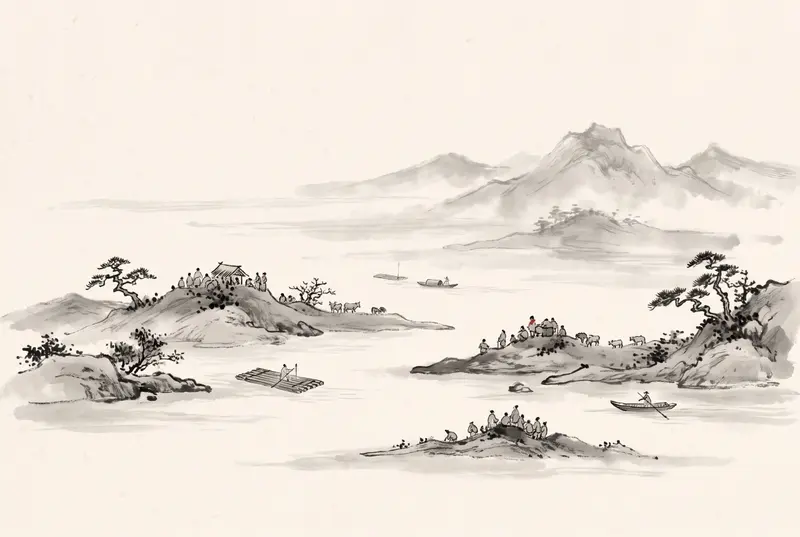
堯崩,帝舜問四嶽曰:「有能成美堯之事者使居官?」皆曰:「伯禹爲司空,可成美堯之功。」舜曰:「嗟,然!」命禹:「女平水土,維是勉之。」禹拜稽首,讓於契、后稷、皋陶。舜曰:「女其往視爾事矣。」禹爲人敏給克勤;其惪不違,其仁可親,其言可信;聲爲律,身爲度,稱以出;亹亹穆穆,爲綱爲紀。
書き下し文
堯崩ず。帝舜四嶽に問いて曰く、「能く堯の事を成美する者有らば官に居らしめん」と。皆曰く、「伯禹を司空と為さば、堯の功を成美すべし」と。舜曰く、「嗟、然り」と。禹に命ずらく、「女水土を平らげよ。維れ是れ之を勉めよ」と。禹拝稽首して、契・后稷・皋陶に譲る。舜曰く、「女其れ往きて爾の事を視よ」と。 禹人と為り敏給克勤なり。其の徳違わず、其の仁親しむべく、其の言信ずべし。声は律と為り、身は度と為り、称りて以て出だす。亹亹穆穆として、綱と為り紀と為る。
現代語訳
堯が亡くなった。帝舜は四嶽に尋ねた。「堯の事業をりっぱに成しとげられる者がいれば、官職につけよう」。皆が言った。「伯禹を司空(土木の長官)にすれば、堯の功業をりっぱに成しとげるでしょう」。舜は言った。「ああ、そうだ」。そして禹に命じた。「おまえは水と土を治めよ。ひたすらこれに励め」。禹はひざまずいて頭を地につけて拝し、契・后稷・皋陶に譲ろうとした。舜は言った。「おまえが行って、自分の仕事を果たせ」。 禹は頭の回転が速く、よく勤勉に働いた。その徳は道にはずれず、その仁愛は人に親しまれ、その言葉は信じられた。声はそのまま音律の基準となり、体はそのまま長さの基準となって、それをはかって物事を定めた。たゆまず努め、おごそかで、人々の手本となった。
英訳
When Yao died, Emperor Shun asked the Chief of the Four Mountains: "Is there anyone who can complete Yao's work? I will give him office." They all said: "Make Earl Yu Minister of Works, and he will complete Yao's achievement." "Ah, yes!" said Shun, and charged Yu: "You shall bring order to the waters and the land. Strive at this alone." Yu bowed and touched his head to the ground and offered to yield to Xie, Hou Ji and Gao Yao. Shun said: "Go and see to your task." Yu was quick, capable and hard-working. His virtue never strayed, his humanity drew people to him, and his word could be trusted. His voice was the standard of pitch, his body the standard of length; he measured things by them and set them forth. Tireless and solemn, he was the rule and the pattern for all.
解説(日)
- 司空: 土地と水利、土木を担当する長官。
- 契・后稷・皋陶: 舜の臣下。契は殷の祖、后稷は周の祖、皋陶は裁判の長官。
- 聲爲律,身爲度: 禹の声が音の高さの、体が長さの基準になったという伝説。
- 亹亹穆穆: たゆまず努め、おごそかなさま。
解説(英)
- Minister of Works (司空): the official in charge of land, water and building.
- Xie, Hou Ji and Gao Yao: ministers of Shun; Xie was the ancestor of Shang, Hou Ji of Zhou, and Gao Yao was the chief judge.
- His voice was the standard of pitch, his body the standard of length: a legend that the measures were set by Yu himself.
英語の語注
- strive/straɪv/verb
to try very hard
本文では: “Strive at this alone.”
似た語と違い: endeavour — make an effort · struggle — try hard against difficulty
- tireless/ˈtaɪərləs/adjective
working hard without getting tired
本文では: “Tireless and solemn”
似た語と違い: untiring — never tiring · industrious — hard-working

節 3
原文
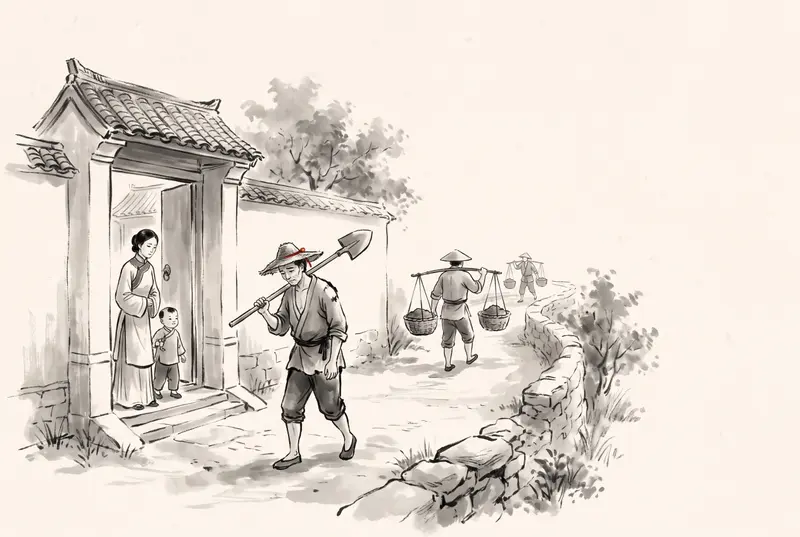
禹乃遂與益、后稷奉帝命,命諸侯百姓興人徒以傅土,行山表木,定高山大川。禹傷先人父鯀功之不成受誅,乃勞身焦思,居外十三年,過家門不敢入。薄衣食,致孝于鬼神。卑宮室,致費於溝淢。陸行乘車,水行乘船,泥行乘橇,山行乘檋。左準繩,右規矩,載四時,以開九州,通九道,陂九澤,度九山。令益予衆庶稻,可種卑溼。命后稷予衆庶難得之食。食少,調有餘相給,以均諸侯。禹乃行相地宜所有以貢,及山川之便利。
書き下し文
禹乃ち遂に益・后稷と帝命を奉じ、諸侯百姓に命じて人徒を興して以て土を傅け、山を行きて木を表し、高山大川を定む。禹先人父鯀の功の成らずして誅を受けしを傷み、乃ち身を労し思いを焦がし、外に居ること十三年、家門を過ぐるも敢えて入らず。衣食を薄くして、孝を鬼神に致す。宮室を卑くして、費を溝淢に致す。陸行には車に乗り、水行には船に乗り、泥行には橇に乗り、山行には檋に乗る。左に準縄、右に規矩、四時を載せて、以て九州を開き、九道を通じ、九沢を陂し、九山を度る。益をして衆庶に稲を予えしめ、卑湿に種うべからしむ。后稷に命じて衆庶に得難きの食を予えしむ。食少なければ、余り有るを調えて相給し、以て諸侯を均しくす。禹乃ち行きて地の宜しく有る所を相て以て貢がしめ、及び山川の便利を相る。
現代語訳
禹は益や后稷とともに帝の命を受け、諸侯や民に命じて人夫を集めさせ、土を盛り、山を歩いて木に目印をつけ、高い山や大きな川の位置を定めた。禹は、父の鯀が仕事を成しとげられずに罰を受けたことを悲しみ、身を粉にして働き、心をくだいて考え、十三年のあいだ外で過ごし、自分の家の門の前を通っても中に入ろうとしなかった。着るものも食べるものも質素にして、祖先の神々を手厚く祭った。住まいは粗末にして、費用は田畑の水路に回した。陸を行くときは車に、水を行くときは舟に、ぬかるみを行くときはそりに、山を行くときはかんじきのような履物に乗った。左手に水準器と墨縄、右手にコンパスと定規を持ち、四季の暦を携えて、九つの州を切り開き、九つの道を通し、九つの沢に堤を築き、九つの山をはかった。益に命じて民に稲の種を与えさせ、低くじめじめした土地に植えられるようにした。后稷に命じて、手に入りにくい食べ物を民に与えさせた。食べ物が足りない所には、余っている所から回して分け合い、諸侯のあいだを平らにした。禹は各地を歩いて、その土地にふさわしい産物を見きわめて貢ぎ物とさせ、また山や川の便利な使い方を調べた。
英訳
So Yu, with Yi and Hou Ji, took up the emperor's command. He ordered the lords and the people to raise work gangs to pile up earth; he walked the mountains marking the trees, and fixed the high mountains and great rivers. Grieving that his father Gun had failed and been punished, he wore out his body and racked his mind; for thirteen years he lived away from home, and when he passed his own gate he did not dare go in. He ate and dressed poorly, but was generous in his offerings to the spirits; he lived in a humble house, but spent freely on the irrigation ditches. On land he rode a cart, on water a boat, in the mud a sledge, in the mountains spiked shoes. With level and plumb line in his left hand, compass and square in his right, and the calendar of the four seasons with him, he opened up the nine provinces, cleared the nine roads, banked the nine marshes and surveyed the nine mountains. He had Yi give the people rice to plant in the low, wet land, and had Hou Ji give them foods that were hard to come by. Where food was short, he moved the surplus from elsewhere so that all shared alike, and evened things out among the lords. Then Yu travelled about to see what each land was suited to produce, so that it could be sent as tribute, and what use could be made of the mountains and rivers.
解説(日)
- 益: 禹の臣下。のちに禹から天下を授けられるが、啓に譲る。
- 行山表木: 山を歩き、木に目印をつけて道や境を定める。
- 居外十三年,過家門不敢入: 禹の献身を示す有名な話。
- 橇・檋: 泥の上をすべるそりと、山道ですべらないよう歯をつけた履物。
- 準繩・規矩: 水準器と墨縄、コンパスと定規。測量の道具。
- 九州: 古代中国を九つに分けた地域。
解説(英)
- Thirteen years away, passing his own gate without going in (居外十三年,過家門不敢入): the famous image of Yu's devotion.
- Level and plumb line, compass and square (準繩・規矩): the surveyor's tools.
- The nine provinces (九州): the traditional division of ancient China.
英語の語注
- rack/ræk/verb
to cause great mental effort or pain
本文では: “racked his mind”
似た語と違い: strain — push to the limit · torment — cause suffering
Usually "rack one's brains".
- surplus/ˈsɜrpləs/noun
an amount left over beyond what is needed
本文では: “he moved the surplus from elsewhere”
似た語と違い: excess — more than enough · extra — additional amount
節 4
原文
於是九州攸同,四奧既居,九山栞旅,九川滌原,九澤既陂,四海會同。六府甚脩,衆土交正,致慎財賦,咸則三壤,成賦中國,賜土、姓:「祗台德先,不距朕行。」東漸于海,西被于流沙,朔、南暨:聲教訖于四海。於是帝錫禹玄圭,以告成功于天下。天下於是大平治。
書き下し文
是に於いて九州攸に同じく、四奥既に居り、九山栞旅し、九川原を滌い、九沢既に陂し、四海会同す。六府甚だ脩まり、衆土交々正しく、慎みを財賦に致し、咸三壌に則り、賦を中国に成す。土・姓を賜う、「祗みて徳を台が先とし、朕が行いに距がざれ」と。 東は海に漸み、西は流沙に被り、朔・南も暨ぶ。声教四海に訖る。是に於いて帝禹に玄圭を錫いて、以て成功を天下に告ぐ。天下是に於いて大いに平治す。
現代語訳
こうして九つの州はみな一つにまとまり、四方の奥地まで人が住めるようになった。九つの山は木を切って道が通じ、九つの川は水源から流れが通り、九つの沢には堤が築かれ、四方の海までがみな一つに集まった。水・火・金・木・土・穀物の六つの財源はよく整い、あらゆる土地はそれぞれ正しく区分され、税はつつしんで定められ、土地の上・中・下の三等級にもとづいて、国の税が定まった。禹は諸侯に土地と姓を与えて言った。「つつしんで私の徳を先として、私の行いにそむかないように」。 禹の教えは、東は海まで、西は流沙の砂漠まで、北も南も行きわたり、その声と教化は四方の海の果てまで届いた。そこで帝舜は禹に黒い玉の圭(礼器)を賜わって、治水の成功を天下に告げた。こうして天下は大いに治まった。
英訳
So the nine provinces were made one, and the lands in all four quarters could be lived in. Paths were cut through the nine mountains, the nine rivers were cleared from their sources, the nine marshes were banked, and all within the four seas came together. The six stores of wealth were well kept, every kind of land was rightly graded, taxes were fixed with care according to three grades of soil, and the tribute of the Middle Kingdom was settled. He granted lands and clan names, saying: "Revere my virtue above all, and do not go against my conduct." His fame and teaching reached the sea in the east and the shifting sands in the west, and north and south as well; they reached to the four seas. Then the emperor gave Yu a black jade tablet to announce his success to the realm, and the realm was at last at peace and well governed.
解説(日)
- 四奧: 四方の奥地。
- 六府: 水・火・金・木・土・穀の、国の六つの財源。
- 三壤: 土地を上・中・下の三等に分けた等級。
- 流沙: 西方の砂漠。
- 玄圭: 黒い玉で作った圭(礼器)。功績の証。
- この段は『書経』の「禹貢」を下敷きにしている。省いた部分では九州それぞれの土地と産物が記される。
解説(英)
- The six stores (六府): water, fire, metal, wood, earth and grain.
- The shifting sands (流沙): the deserts of the far west.
- A black jade tablet (玄圭): a token of honour for his achievement.
- This passage follows the "Tribute of Yu" in the Book of Documents; the omitted part lists the land and products of each province.
英語の語注
- tribute/ˈtrɪbjut/noun
goods paid to a ruler as a sign of loyalty
本文では: “the tribute of the Middle Kingdom”
似た語と違い: levy — a tax · offering — something given
- grade/ɡreɪd/verb
to sort things by quality
本文では: “every kind of land was rightly graded”
似た語と違い: rank — put in order · classify — sort into groups
節 5
原文
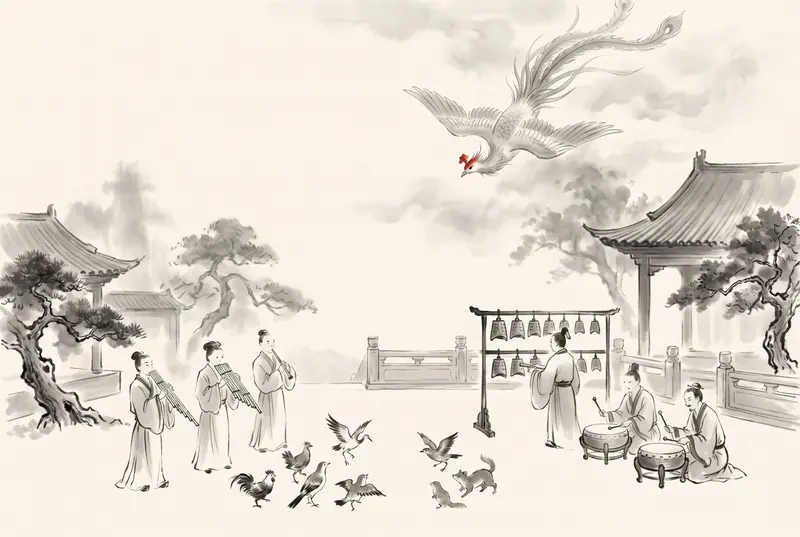
於是夔行樂,祖考至,羣后相讓,鳥獸翔舞,簫韶九成,鳳皇來儀,百獸率舞,百官信諧。帝用此作歌曰:「陟天之命,維時維幾。」乃歌曰:「股肱喜哉,元首起哉,百工熙哉!」皋陶拜手稽首揚言曰:「念哉,率爲興事,慎乃憲,敬哉!」乃更爲歌曰:「元首明哉,股肱良哉,庶事康哉!」又歌曰:「元首叢脞哉,股肱惰哉,萬事墮哉!」帝拜曰:「然,往欽哉!」於是天下皆宗禹之明度數聲樂,爲山川神主。
書き下し文
是に於いて夔楽を行う。祖考至り、群后相譲り、鳥獣翔舞し、簫韶九成して、鳳皇来儀し、百獣率いて舞い、百官信に諧う。帝此を用て歌を作りて曰く、「天の命を陟むるは、維れ時、維れ幾」と。乃ち歌いて曰く、「股肱喜ばば、元首起こり、百工熙まらん」と。皋陶拝手稽首し、言を揚げて曰く、「念えや。率いて事を興し、乃の憲を慎めよ。敬めや」と。乃ち更めて歌を為りて曰く、「元首明らかなれば、股肱良く、庶事康からん」と。又歌いて曰く、「元首叢脞なれば、股肱惰り、万事堕れん」と。帝拝して曰く、「然り。往きて欽めよ」と。是に於いて天下皆禹の度数声楽を明らかにするを宗とし、山川の神主と為す。
現代語訳
そこで楽官の夔が音楽を奏でた。祖先の霊が降りてきて、諸侯はたがいに譲り合い、鳥や獣が舞い飛んだ。簫韶の曲が九たび奏でられると、鳳凰が来て姿を現し、多くの獣がそろって舞い、百官は心から和合した。帝舜はこれにちなんで歌を作った。「天の命をつつしんで受けるには、時を慎み、きざしを慎むことだ」。そして歌った。「手足となる臣下が喜んで働けば、頭である君主も奮い立ち、すべての役人の仕事がさかんになる」。皋陶は手を合わせて頭を地につけて拝し、声をあげて言った。「よくお考えください。人々を率いて事を起こすときは、法をつつしみ、慎重になさいますように」。そして歌を作り直して歌った。「頭である君主が賢明なら、手足の臣下もよく働き、すべてのことが安らかになる」。また歌った。「頭である君主がこまごまとして要領を得なければ、手足の臣下は怠け、すべてのことがくずれてしまう」。帝は拝して言った。「そのとおりだ。行って、つつしんで務めよ」。こうして天下はみな、度量衡と音楽を明らかにした禹を尊び、禹は山や川の祭りの主となった。
英訳
Then Kui performed the music. The spirits of the ancestors came down, the lords yielded to one another, and birds and beasts danced in the air. When the Shao music of the pan-pipes had been played through nine times, the phoenix came and displayed itself, all the beasts danced together, and all the officers were truly in harmony. The emperor made a song on this: "To carry out Heaven's command, mind the time, mind the smallest sign." And he sang: "When the limbs are glad, the head will rise, and all the works will flourish!" Gao Yao bowed with joined hands, touched his head to the ground and spoke out: "Take thought! When you lead men to great works, be careful of your laws. Be reverent!" Then he made a new song: "When the head is wise, the limbs are good, and all is well!" And again: "When the head is fussy and petty, the limbs grow lazy, and all things fall to ruin!" The emperor bowed and said: "Yes! Go and be reverent." From then on the whole realm looked to Yu, who had made clear the measures and the music, and he became the master of the sacrifices to the mountains and rivers.
解説(日)
- 夔: 舜の楽官。
- 簫韶九成: 舜の音楽「韶」を九たび演奏する。孔子は韶を聞いて三か月肉の味がわからなかったという(巻47)。
- 鳳皇來儀: 鳳凰が来て舞う。太平のしるし。
- 股肱・元首: 手足と頭。臣下と君主のたとえ。
- 叢脞: こまごまとして要領を得ない。
解説(英)
- The Shao music (簫韶): Shun's music; Confucius, hearing it, forgot the taste of meat for three months (vol. 47).
- The phoenix came (鳳皇來儀): a sign of perfect peace.
- The head and the limbs (元首・股肱): the ruler and his ministers.
英語の語注
- phoenix/ˈfinɪks/noun
a magical bird, a sign of good fortune in China
本文では: “the phoenix came and displayed itself”
似た語と違い: firebird — a magical bird of fire · fenghuang — the Chinese name
- petty/ˈpɛti/adjective
too concerned with small, unimportant things
本文では: “fussy and petty”
似た語と違い: small-minded — narrow in outlook · trivial — unimportant
節 6
原文
帝舜薦禹於天,爲嗣。十七年而帝舜崩。三年喪畢,禹辭辟舜之子商均於陽城。天下諸侯皆去商均而朝禹。禹於是遂即天子位,南面朝天下,國號曰夏后,姓姒氏。帝禹立而舉皋陶薦之,且授政焉,而皋陶卒。封皋陶之後於英、六,或在許。而后舉益,任之政。十年,帝禹東巡狩,至于會稽而崩。以天下授益。三年之喪畢,益讓帝禹之子啓,而辟居箕山之陽。禹子啓賢,天下屬意焉。及禹崩,雖授益,益之佐禹日淺,天下未洽。故諸侯皆去益而朝啓,曰「吾君帝禹之子也」。於是啓遂即天子之位,是爲夏后帝啓。
書き下し文
帝舜禹を天に薦めて、嗣と為す。十七年にして帝舜崩ず。三年の喪畢わり、禹辞して舜の子商均を陽城に辟く。天下の諸侯皆商均を去りて禹に朝す。禹是に於いて遂に天子の位に即き、南面して天下に朝せしむ。国号を夏后と曰い、姓は姒氏なり。 帝禹立ちて皋陶を挙げて之を薦め、且に政を授けんとす。而して皋陶卒す。皋陶の後を英・六に封じ、或いは許に在り。而る後に益を挙げ、之に政を任ず。 十年、帝禹東に巡狩し、会稽に至りて崩ず。天下を以て益に授く。三年の喪畢わり、益帝禹の子啓に譲りて、辟けて箕山の陽に居る。禹の子啓賢にして、天下意を属す。禹の崩ずるに及び、益に授くと雖も、益の禹を佐くる日浅く、天下未だ洽からず。故に諸侯皆益を去りて啓に朝して曰く、「吾が君帝禹の子なり」と。是に於いて啓遂に天子の位に即く。是れを夏后帝啓と為す。
現代語訳
帝舜は禹を天に推薦して跡継ぎとした。十七年後、帝舜が亡くなった。三年の喪が明けると、禹は位を辞退して、舜の子の商均に譲ろうと陽城に身を引いた。だが天下の諸侯はみな商均のもとを去って禹に朝見した。そこで禹はついに天子の位につき、南を向いて天下の朝見を受けた。国の名を夏后といい、姓は姒氏である。 帝禹は即位すると皋陶を取り立てて天に推薦し、政治を譲ろうとしたが、皋陶は亡くなった。皋陶の子孫は英と六に封じられ、許に封じられた者もいた。そのあと禹は益を取り立てて、政治を任せた。 十年目、帝禹は東方を巡行し、会稽に着いたところで亡くなった。天下は益に授けられた。三年の喪が明けると、益は帝禹の子の啓に位を譲り、自分は箕山の南に身を引いた。禹の子の啓はすぐれていて、天下の人々の心は啓に向いていた。禹が亡くなったとき天下は益に授けられたが、益が禹を補佐した期間は短く、天下の人々にまだなじんでいなかった。そこで諸侯はみな益のもとを去って啓に朝見し、「われらの君は帝禹の子だ」と言った。こうして啓はついに天子の位についた。これが夏后の帝啓である。
英訳
Emperor Shun commended Yu to Heaven as his heir. Seventeen years later Emperor Shun died. When the three years of mourning were over, Yu declined the throne and withdrew to Yangcheng to leave it to Shun's son Shangjun. But all the lords of the realm left Shangjun and came to pay homage to Yu. So Yu took the throne of the Son of Heaven and, facing south, received the homage of the realm. His state was called Xiahou, and his clan name was Si. When Emperor Yu took the throne he raised up Gao Yao and commended him to Heaven, meaning to give him the government, but Gao Yao died. His descendants were enfeoffed at Ying and Liu, and some at Xu. Then Yu raised up Yi and gave him charge of the government. In his tenth year Emperor Yu went on a tour of inspection to the east and died when he reached Kuaiji. He gave the realm to Yi. When the three years of mourning were over, Yi yielded to Emperor Yu's son Qi and withdrew to the south side of Mount Ji. Yu's son Qi was worthy, and the hearts of the realm were with him. Though Yu had given the realm to Yi when he died, Yi had served Yu only a short time and the realm did not yet know him. So the lords all left Yi and came to pay homage to Qi, saying: "Our ruler is the son of Emperor Yu." So Qi took the throne of the Son of Heaven. He became Emperor Qi of Xiahou.
解説(日)
- 南面: 天子は南を向いて座り、臣下は北を向いて仕える。
- 夏后: 夏王朝の正式な呼び名。
- 會稽: 今の浙江省紹興の山。禹の墓があるとされる。
- 吾君帝禹之子也: 「われらの君は帝禹の子だ」。ここから王位が親から子へ伝わる世襲が始まったとされる。
解説(英)
- Facing south (南面): the ruler sits facing south, his subjects facing north.
- Kuaiji (會稽): a mountain near Shaoxing in Zhejiang, where Yu's tomb is said to be.
- "Our ruler is the son of Emperor Yu": with Qi, the throne began to pass from father to son.
英語の語注
- heir/ɛr/noun
the person who will receive a title or throne
本文では: “commended Yu to Heaven as his heir”
似た語と違い: successor — one who follows · inheritor — one who receives
- decline/dɪˈklaɪn/verb
to refuse politely
本文では: “Yu declined the throne”
似た語と違い: turn down — refuse · refuse — say no
節 7
原文
有扈氏不服,啓伐之,大戰於甘。將戰,作甘誓,乃召六卿申之。啓曰:「嗟!六事之人,予誓告女:有扈氏威侮五行,怠棄三正,天用勦絕其命。今予維共行天之罰。左不攻于左,右不攻于右,女不共命。御非其馬之政,女不共命。用命,賞于祖;不用命,僇于社,予則帑僇女。」遂滅有扈氏。天下咸朝。
書き下し文
有扈氏服せず。啓之を伐ち、大いに甘に戦う。将に戦わんとして、甘誓を作り、乃ち六卿を召して之に申ぶ。啓曰く、「嗟、六事の人よ。予誓いて女に告ぐ。有扈氏五行を威侮し、三正を怠棄す。天用て其の命を勦絶す。今予維れ共に天の罰を行う。左左を攻めず、右右を攻めずんば、女命を共まず。御其の馬の政に非ずんば、女命を共まず。命を用うれば、祖に賞し、命を用いずんば、社に僇し、予則ち帑せて女を僇せん」と。遂に有扈氏を滅ぼす。天下咸朝す。
現代語訳
有扈氏は啓に従わなかった。啓はこれを討ち、甘の地で大いに戦った。戦いの前に「甘誓」を作り、六つの軍の将を呼んで申し渡した。啓は言った。「ああ、六軍の者たちよ。私は誓っておまえたちに告げる。有扈氏は五行の道をあなどり、天・地・人の三つの正しい道をおこたり捨てた。天はそのため、その命運を断とうとしている。いま私はつつしんで天の罰を行う。車の左の者が左の敵を攻めず、右の者が右の敵を攻めなければ、おまえたちは命令を守らなかったことになる。御者が馬をうまく操らなければ、命令を守らなかったことになる。命令に従った者は祖先の廟の前で賞し、従わなかった者は土地の神の社の前で罰する。そのときは妻子ともども罰するぞ」。こうして有扈氏を滅ぼした。天下はみな啓に朝見した。
英訳
The Youhu clan would not submit. Qi attacked them and fought a great battle at Gan. Before the battle he composed the Oath at Gan and called the six ministers to declare it. Qi said: "Ah, you men of the six armies! I make an oath and tell you this. The Youhu clan have scorned the five elements and abandoned the three principles, and Heaven is cutting short their destiny. Now I am only carrying out Heaven's punishment. If the man on the left of the chariot does not strike on the left, and the man on the right does not strike on the right, you will have disobeyed my command. If the driver does not drive his horses properly, you will have disobeyed my command. Those who obey will be rewarded before the ancestors; those who do not will be put to death before the altar of the soil, and I will put your wives and children to death with you." So he destroyed the Youhu clan, and the whole realm came to pay him homage.
解説(日)
- 有扈氏: 夏と同じ姓の一族。啓の即位に反対した。
- 甘誓: 『書経』の一篇。出陣前の誓いの言葉。
- 五行: 水・火・木・金・土。万物をなす五つの要素。
- 三正: 天・地・人の正しい道。
- 社: 土地の神を祭るやしろ。罰はここで行われた。
解説(英)
- The Oath at Gan (甘誓): a chapter of the Book of Documents, a speech before battle.
- The five elements (五行): water, fire, wood, metal and earth.
- The altar of the soil (社): where punishments were carried out.
英語の語注
- scorn/skɔrn/verb
to treat with contempt
本文では: “have scorned the five elements”
似た語と違い: despise — look down on · disdain — think unworthy
- disobey/ˌdɪsəˈbeɪ/verb
to refuse to do what one is told
本文では: “you will have disobeyed my command”
似た語と違い: defy — openly resist · flout — openly break a rule
節 8
原文
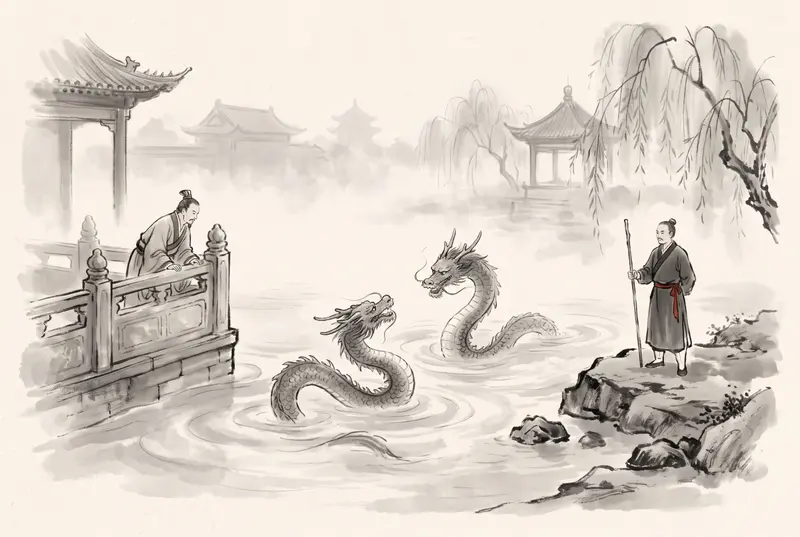
帝孔甲立,好方鬼神,事淫亂。夏后氏德衰,諸侯畔之。天降龍二,有雌雄,孔甲不能食,未得豢龍氏。陶唐既衰,其后有劉累,學擾龍于豢龍氏,以事孔甲。孔甲賜之姓曰御龍氏,受豕韋之後。龍一雌死,以食夏后。夏后使求,懼而遷去。
書き下し文
帝孔甲立ちて、好んで鬼神に方い、淫乱を事とす。夏后氏の徳衰え、諸侯之に畔く。天龍二を降す。雌雄有り。孔甲食う能わず、未だ豢龍氏を得ず。陶唐既に衰え、其の後に劉累有り。龍を擾らすことを豢龍氏に学び、以て孔甲に事う。孔甲之に姓を賜いて御龍氏と曰い、豕韋の後を受けしむ。龍の一雌死す。以て夏后に食わしむ。夏后使いして求めしむ。懼れて遷り去る。
現代語訳
帝孔甲は即位すると、鬼神をまつることを好み、みだらな行いにふけった。夏后氏の徳は衰え、諸侯はそむいた。天は竜を二匹、雄と雌とを降した。孔甲は竜を養うことができなかった。竜飼いの名人である豢竜氏を見つけられなかったのである。堯(陶唐氏)の一族はすでに衰えていたが、その子孫に劉累という者がいた。劉累は豢竜氏から竜の飼いならし方を学んで、孔甲に仕えた。孔甲は劉累に御竜氏という姓を与え、豕韋の国の跡を継がせた。やがて雌の竜が一匹死んだ。劉累はその肉を料理して夏后(孔甲)に食べさせた。夏后はさらに竜の肉を求めさせた。劉累は恐れて、よそへ逃げて行った。
英訳
When Emperor Kong Jia came to the throne he loved to dabble in spirits and gave himself up to excess. The virtue of the house of Xia declined, and the lords turned against it. Heaven sent down two dragons, a male and a female. Kong Jia could not feed them, for he had not found anyone of the Dragon-Keeper clan. The house of Taotang, Yao's line, had long declined, but among its descendants was a man named Liu Lei, who had learned to tame dragons from the Dragon-Keepers. He served Kong Jia, who gave him the clan name Dragon-Driver and made him heir to the state of Shiwei. One of the dragons, the female, died, and Liu Lei served it to the King of Xia to eat. The King of Xia sent for more. Liu Lei was afraid and fled.
解説(日)
- 孔甲: 夏の第十四代の王とされる。この前の段(省略)では、太康から不降までの王の交代が記される。
- 方鬼神: 鬼神をまつる、または鬼神のまねごとをする。
- 豢龍氏: 竜を飼う技をもつ一族。
- 陶唐: 堯の一族の呼び名。
- 竜を食べてしまう話は、夏の徳が衰えたことを示す不吉なしるしとして語られる。
解説(英)
- Kong Jia (孔甲): said to be the fourteenth king of Xia; the omitted passage before this lists the kings from Taikang on.
- The Dragon-Keeper clan (豢龍氏): a family skilled in raising dragons.
- The eaten dragon is an ill omen of Xia's declining virtue.
英語の語注
- dabble/ˈdæbəl/verb
to take part in something in a casual way
本文では: “loved to dabble in spirits”
似た語と違い: tinker — play around with · meddle — interfere
- excess/ˈɛksɛs/noun
behaviour that goes too far, especially in pleasure
本文では: “gave himself up to excess”
似た語と違い: indulgence — giving in to pleasure · debauchery — wild, immoral pleasure
節 9
原文
孔甲崩,子帝皋立。帝皋崩,子帝發立。帝發崩,子帝履癸立,是爲桀。帝桀之時,自孔甲以來而諸侯多畔夏,桀不務德而武傷百姓,百姓弗堪。迺召湯而囚之夏臺,已而釋之。湯修德,諸侯皆歸湯,湯遂率兵以伐夏桀。桀走鳴條,遂放而死。桀謂人曰:「吾悔不遂殺湯於夏臺,使至此。」湯乃踐天子位,代夏朝天下。湯封夏之後,至周封於杞也。
書き下し文
孔甲崩じ、子帝皋立つ。帝皋崩じ、子帝発立つ。帝発崩じ、子帝履癸立つ。是れを桀と為す。帝桀の時、孔甲より以来、諸侯多く夏に畔く。桀徳を務めずして武もて百姓を傷つく。百姓堪えず。迺ち湯を召して之を夏台に囚え、已にして之を釈す。湯徳を修め、諸侯皆湯に帰す。湯遂に兵を率いて以て夏桀を伐つ。桀鳴条に走り、遂に放たれて死す。桀人に謂いて曰く、「吾悔ゆらくは遂に湯を夏台に殺さずして、此に至らしめしことを」と。湯乃ち天子の位を践み、夏に代わりて天下に朝せしむ。湯夏の後を封じ、周に至りて杞に封ぜらる。
現代語訳
孔甲が亡くなると、子の帝皋が立った。帝皋が亡くなると子の帝発が、帝発が亡くなると子の帝履癸が立った。これが桀である。桀の時代、孔甲のころから諸侯の多くが夏にそむいていた。桀は徳を修めようとせず、武力で民を傷つけたので、民は耐えられなかった。桀は湯を呼び寄せて夏台の牢に閉じこめたが、やがて釈放した。湯は徳を修めたので、諸侯はみな湯のもとに集まった。湯はついに兵を率いて夏の桀を討った。桀は鳴条へ逃げ、ついに追放されて死んだ。桀は人に言った。「湯を夏台で殺しておかなかったばかりに、こんなことになってしまった。それが悔やまれる」。湯は天子の位につき、夏に代わって天下の朝見を受けた。湯は夏の子孫を諸侯に封じ、周の時代になると、夏の子孫は杞に封じられた。
英訳
When Kong Jia died, his son Emperor Gao took the throne; when Gao died, his son Emperor Fa; when Fa died, his son Emperor Lügui, who was Jie. In Jie's time, since the days of Kong Jia, many of the lords had turned against Xia. Jie cared nothing for virtue and harmed the people by force, until they could bear no more. He summoned Tang and imprisoned him in the tower of Xia, but later let him go. Tang cultivated virtue, and the lords all turned to him. At last Tang led an army against Jie of Xia. Jie fled to Mingtiao, and in the end was banished and died. Jie said to someone: "I regret that I did not kill Tang in the tower of Xia, so that it came to this." Tang took the throne of the Son of Heaven and received the homage of the realm in place of Xia. Tang enfeoffed the descendants of Xia, and under Zhou they were enfeoffed at Qi.
解説(日)
- 桀: 夏の最後の王。殷の紂王と並ぶ暴君の代表(「桀紂」)。
- 湯: 殷(商)の始祖、成湯(巻3)。
- 夏臺: 夏の牢獄の名。
- 鳴條: 湯と桀が戦った地。
- 杞: 周代に夏の子孫が封じられた国。「杞憂(無用の心配)」の杞である。
解説(英)
- Jie (桀): the last king of Xia, paired with Zhou of Shang as the archetypal tyrant.
- Tang (湯): the founder of Shang (vol. 3).
- Qi (杞): the state of Xia's descendants under Zhou, also known from the proverb of the man of Qi who feared the sky would fall.
英語の語注
- imprison/ɪmˈprɪzən/verb
to put someone in prison
本文では: “imprisoned him in the tower of Xia”
似た語と違い: jail — lock up · detain — hold by force
- regret/rɪˈɡrɛt/verb
to feel sorry about something one did or did not do
本文では: “I regret that I did not kill Tang”
似た語と違い: rue — wish undone · be sorry — feel sorrow
節 10
原文
太史公曰:禹爲姒姓,其後分封,用國爲姓,故有夏后氏、有扈氏、有男氏、斟尋氏、彤城氏、襃氏、費氏、杞氏、繒氏、辛氏、冥氏、斟戈氏。孔子正夏時,學者多傳夏小正云。自虞、夏時,貢賦備矣。或言禹會諸侯江南,計功而崩,因葬焉,命曰會稽。會稽者,會計也。
書き下し文
太史公曰く、禹は姒姓たり。其の後分封せられ、国を用て姓と為す。故に夏后氏・有扈氏・有男氏・斟尋氏・彤城氏・褒氏・費氏・杞氏・繒氏・辛氏・冥氏・斟戈氏有り。孔子夏の時を正し、学者多く夏小正を伝うと云う。虞・夏の時より、貢賦備わる。或いは言う、禹諸侯を江南に会し、功を計りて崩じ、因りて焉に葬る。命じて会稽と曰う。会稽なる者は、会計なりと。
現代語訳
太史公は言う。禹は姒姓である。その子孫は各地に封じられ、国の名を姓とした。それで夏后氏・有扈氏・有男氏・斟尋氏・彤城氏・褒氏・費氏・杞氏・繒氏・辛氏・冥氏・斟戈氏がある。孔子は夏の暦を正しいものとし、学者の多くは『夏小正』(夏の暦)を伝えているという。虞(舜)と夏の時代から、貢ぎ物と税の制度がととのった。ある人は言う。禹は江南で諸侯を集めて、その功績を計算し(会計し)ているうちに亡くなり、そこに葬られた。それでその地を会稽と名づけた。会稽とは会計のことである、と。
英訳
The Grand Historian says: Yu's clan name was Si. His descendants were enfeoffed in many places and took the names of their states as clan names; hence the Xiahou, Youhu, Younan, Zhenxun, Tongcheng, Bao, Fei, Qi, Zeng, Xin, Ming and Zhenge clans. Confucius held the Xia calendar to be correct, and many scholars pass down the Lesser Calendar of Xia. From the time of Yu of Shun and of Xia, tribute and taxes were fully established. Some say that Yu gathered the lords south of the Yangzi to reckon up their merits and died there, and was buried on the spot, which was named Kuaiji: "Kuaiji" means "reckoning up".
解説(日)
- 褒氏: 夏の子孫の一つ。周の幽王の妃、褒姒はこの一族の出(巻4)。
- 孔子正夏時: 孔子は「夏の暦を用いよ」と言った(『論語』)。
- 會稽者,會計也: 会稽と会計は音が通じることから生まれた地名の由来説。
解説(英)
- The Bao clan (褒氏): Bao Si, the queen of King You of Zhou, came from this line (vol. 4).
- Confucius held the Xia calendar correct: "Use the calendar of Xia" (Analects).
- "Kuaiji" means "reckoning up": a folk etymology based on the similar sound of the two words.
英語の語注
- establish/ɪˈstæblɪʃ/verb
to set up something to last
本文では: “tribute and taxes were fully established”
似た語と違い: set up — create · institute — begin officially
- reckon up/ˈrɛkən ʌp/phrasal verb
to count or calculate the total
本文では: “to reckon up their merits”
似た語と違い: tally — add up · count — find the number