世家 · 巻 32
斉太公世家 齊太公世家
太公望と、斉の桓公の最期 太公望與齊桓公
周の建国を助けた太公望呂尚と、彼が開いた斉の国の物語。年老いて貧しかった呂尚は、渭水のほとりで釣りをしていて、狩りに出た周の西伯(文王)に出会う。西伯は「わが祖父の太公が待ち望んでいた人だ」と喜び、「太公望」と呼んで師とした。呂尚は文王・武王を助けて兵法と奇計をめぐらし、牧野で殷の紂王を滅ぼす。斉の営丘に封じられると、宿屋の主人の一言で夜通し急ぎ、土地を狙う莱の人々より先に国に着いた。その数百年後、斉の桓公は管仲を用いて天下の覇者となる。だが管仲の死の床での忠告を聞かず、わが子を殺して料理した易牙や、自ら去勢した豎刀を近づけた。桓公が死ぬと五人の公子が争い、桓公の遺体は六十七日も放置されて、うじが戸口からはい出した。
この巻のうち「太公望と、斉の桓公の最期」の場面を載せています。巻の全文ではありません。
音声
音声は合成音声です。
動画
節 1
原文
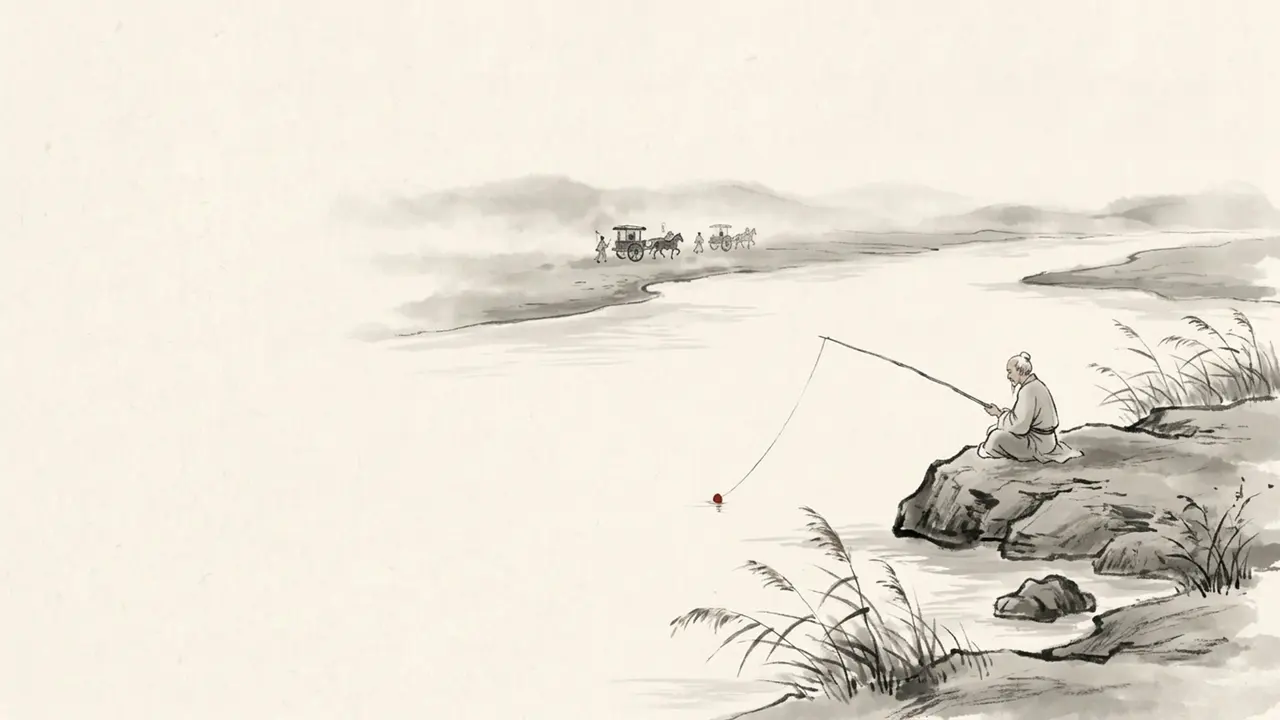
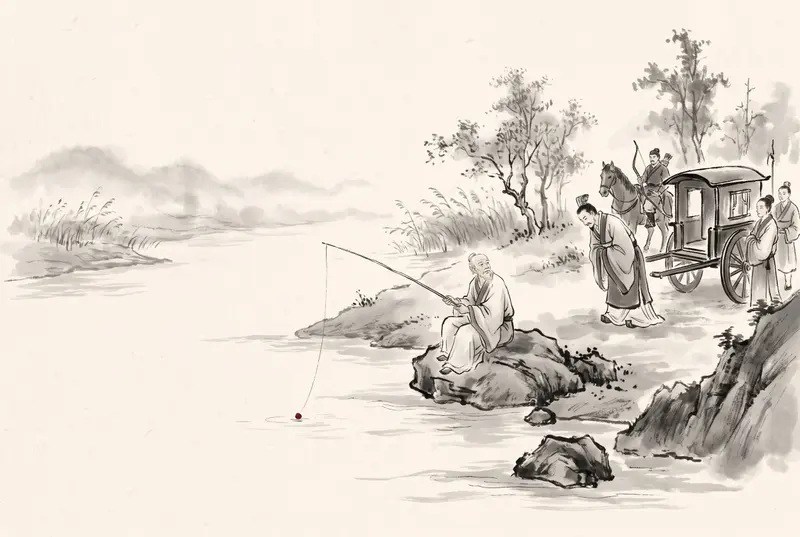
太公望呂尚者,東海上人。其先祖嘗為四嶽,佐禹平水土甚有功。虞夏之際封於呂,或封於申,姓姜氏。夏商之時,申、呂或封枝庶子孫,或為庶人,尚其後苗裔也。本姓姜氏,從其封姓,故曰呂尚。呂尚蓋嘗窮困,年老矣,以漁釣奸周西伯。西伯將出獵,卜之,曰「所獲非龍非彨非虎非羆;所獲霸王之輔」。於是周西伯獵,果遇太公於渭之陽,與語大說,曰:「自吾先君太公曰『當有聖人適周,周以興』。子真是邪?吾太公望子久矣。」故號之曰「太公望」,載與俱歸,立為師。
書き下し文
太公望呂尚なる者は、東海の上の人なり。其の先祖嘗て四嶽と為り、禹を佐けて水土を平らげて甚だ功有り。虞夏の際に呂に封ぜられ、或いは申に封ぜらる。姓は姜氏。夏商の時、申・呂或いは枝庶の子孫を封じ、或いは庶人と為る。尚は其の後の苗裔なり。本姓は姜氏、其の封に従いて姓とす。故に呂尚と曰う。 呂尚蓋し嘗て窮困し、年老いたり。漁釣を以て周の西伯に奸む。西伯将に出でて猟せんとし、之を卜す。曰く、「獲る所は龍に非ず彲に非ず、虎に非ず羆に非ず。獲る所は霸王の輔なり」と。是に於いて周の西伯猟して、果たして太公に渭の陽に遇う。与に語りて大いに説びて曰く、「吾が先君太公より曰く、『当に聖人有りて周に適くべし。周以て興らん』と。子は真に是れか。吾が太公子を望むこと久し」と。故に之を号して「太公望」と曰う。載せて与に倶に帰り、立てて師と為す。
現代語訳
太公望呂尚は、東の海のほとりの人である。その祖先はかつて四嶽となり、禹を助けて水と土地を治め、大きな手柄を立てた。舜や夏の時代に呂に封じられ、あるいは申に封じられた。姓は姜である。夏や殷の時代には、申や呂の土地は分家の子孫に与えられたり、平民になったりした。呂尚はその遠い子孫である。もとの姓は姜だが、封じられた土地の名を姓としたので、呂尚という。 呂尚は貧しく困窮し、年老いていた。釣りをしながら、周の西伯に仕える機会を求めていたらしい。西伯が狩りに出ようとして占わせると、「獲物は竜でもなく、みずちでもなく、虎でもなく、ひぐまでもない。獲物は覇王を助ける者である」と出た。そこで周の西伯が狩りに出ると、はたして渭水の北岸で太公に出会った。いっしょに話してみて大いに喜び、言った。「わが祖父の太公のころから、『聖人が周に来て、周はそれによってさかえるだろう』と言われてきた。あなたこそ、その人ではないか。わが太公は、長いことあなたを待ち望んでいたのだ」。そこで呂尚を「太公望(太公が待ち望んだ人)」と呼び、車に乗せていっしょに帰り、師とした。
英訳
Lü Shang, Taigong Wang, was a man from the shores of the Eastern Sea. One of his ancestors had been Chief of the Four Mountains and had done great service helping Yu bring order to the waters and the land. In the days of Shun and Xia that ancestor was enfeoffed at Lü, or perhaps at Shen, and his clan name was Jiang. Under Xia and Shang, Shen and Lü were sometimes given to junior branches of the family, and sometimes its members became commoners; Shang was one of their distant descendants. His original clan name was Jiang, but he took the name of the fief, and so was called Lü Shang. Lü Shang, it seems, had been poor and in hard straits, and he was old. He went fishing in the hope of catching the eye of the Earl of the West of Zhou. The earl was about to go hunting and had the hunt divined. The answer was: "What you catch will be no dragon, no water-dragon, no tiger, no bear: what you catch will be the helper of a hegemon-king." So the Earl of the West went hunting, and indeed he met Taigong on the north bank of the Wei. He talked with him and was overjoyed. "Ever since my grandfather, the Grand Duke, it has been said: 'A sage will come to Zhou, and through him Zhou will rise.' Are you truly the one? Our Grand Duke hoped for you for a long time." So he called him Taigong Wang, "the one the Grand Duke hoped for", took him home in his carriage, and made him his teacher.
解説(日)
- 東海上: 東の海のほとり。今の山東省の海辺とされる。
- 四嶽: 四方の諸侯をまとめた長官(巻1・巻2)。
- 奸: 「干」に同じ。仕官を求める。
- 彲: みずち。角のない竜。
- 太公望: 「太公(西伯の祖父)が望んだ人」の意。のちに釣り人を「太公望」と呼ぶようになった。
解説(英)
- In the hope of catching the eye of (奸): the character is used for 干, "to seek office".
- Taigong Wang (太公望): "the one the Grand Duke hoped for". In Japan an angler is still jokingly called a "Taikōbō".
この節から生まれた言葉: 太公望
英語の語注
- divine/dɪˈvaɪn/verb
to find out the future by magic signs
本文では: “had the hunt divined”
似た語と違い: foretell — say what will happen · prophesy — predict by inspiration
- descendant/dɪˈsɛndənt/noun
a person who comes from a particular ancestor
本文では: “one of their distant descendants”
似た語と違い: offspring — children · heir — one who inherits
節 2
原文
或曰,太公博聞,嘗事紂。紂無道,去之。游說諸侯,無所遇,而卒西歸周西伯。或曰,呂尚處士,隱海濱。周西伯拘羑里,散宜生、閎夭素知而招呂尚。呂尚亦曰「吾聞西伯賢,又善養老,盍往焉」。三人者為西伯求美女奇物,獻之於紂,以贖西伯。西伯得以出,反國。言呂尚所以事周雖異,然要之為文武師。
書き下し文
或いは曰く、太公博聞にして、嘗て紂に事う。紂無道なれば、之を去る。諸侯に遊説するも、遇わるる所無くして、卒に西のかた周の西伯に帰すと。或いは曰く、呂尚は処士にして、海浜に隠る。周の西伯羑里に拘えらる。散宜生・閎夭素より知りて呂尚を招く。呂尚も亦曰く、「吾聞く、西伯は賢にして、又善く老を養うと。盍ぞ往かざる」と。三人の者西伯の為に美女奇物を求め、之を紂に献じて、以て西伯を贖う。西伯以て出づるを得て、国に反ると。呂尚の周に事うる所以を言うこと異なると雖も、然れども之を要するに文武の師と為る。
現代語訳
一説には、太公は博識で、かつて紂に仕えたが、紂が無道なので去り、諸侯に遊説してまわったが用いられず、ついに西へ行って周の西伯のもとに身を寄せたという。また一説には、呂尚は仕官しない隠者で、海辺に隠れ住んでいた。周の西伯が羑里に捕らえられたとき、もとから呂尚を知っていた散宜生と閎夭が呂尚を招いた。呂尚も「西伯は賢く、また老人を手厚く養うと聞いている。行かないわけにはいくまい」と言った。三人は西伯のために美女やめずらしい品を探し求めて紂に献上し、西伯の身を買い戻した。こうして西伯は牢を出て、国に帰ることができた、という。呂尚が周に仕えたいきさつは話によって違うが、要するに文王・武王の師となったのである。
英訳
Some say that Taigong was a man of wide learning who had once served Zhou of Yin; when Zhou proved lawless he left him, travelled among the lords offering his advice without finding a ruler who would use him, and at last went west to the Earl of the West of Zhou. Others say that Lü Shang was a recluse living hidden by the sea, and that when the Earl of the West was imprisoned at Youli, San Yisheng and Hong Yao, who had long known Lü Shang, called on him to help. Lü Shang said: "I hear that the Earl of the West is a worthy man, and good to the old. Why not go to him?" The three of them sought out beautiful women and rare things for the earl and presented them to Zhou of Yin to ransom him, and so the earl was released and returned to his state. Though the accounts of how Lü Shang came to serve Zhou differ, in sum he became the teacher of King Wen and King Wu.
解説(日)
- 處士: 仕官せずに民間にいる学者や賢人。
- 散宜生・閎夭: 西伯の家臣。紂に財宝を贈って西伯を救った話は巻3にもある。
- 善養老: 老人を手厚く養う。文王の徳として知られた。
- 司馬遷は、異なる伝承を並べたうえで、要点だけを確かなこととしている。
解説(英)
- Recluse (處士): a learned man who stays out of office.
- San Yisheng and Hong Yao: ministers of the Earl of the West; their ransom of the earl also appears in vol. 3.
- Sima Qian sets the different traditions side by side and affirms only what they share.
英語の語注
- worthy/ˈwɜrði/adjective
deserving respect for good qualities
本文では: “is a worthy man”
似た語と違い: virtuous — morally good · admirable — deserving praise
- ransom/ˈrænsəm/verb
to pay to get a prisoner freed
本文では: “to ransom him”
似た語と違い: buy back — pay to free · redeem — win back by payment
節 3
原文
周西伯昌之脫羑里歸,與呂尚陰謀修德以傾商政,其事多兵權與奇計,故後世之言兵及周之陰權皆宗太公為本謀。周西伯政平,及斷虞芮之訟,而詩人稱西伯受命曰文王。伐崇、密須、犬夷,大作豐邑。天下三分,其二歸周者,太公之謀計居多。文王崩,武王即位。九年,欲修文王業,東伐以觀諸侯集否。師行,師尚父左杖黃鉞,右把白旄以誓,曰:「蒼兕蒼兕,總爾眾庶,與爾舟楫,後至者斬!」遂至盟津。諸侯不期而會者八百諸侯。諸侯皆曰:「紂可伐也。」武王曰:「未可。」還師,與太公作此太誓。
書き下し文
周の西伯昌の羑里を脱して帰るや、呂尚と陰かに謀りて徳を修め、以て商の政を傾く。其の事多く兵権と奇計となり。故に後世の兵及び周の陰権を言うものは皆太公を宗として本謀と為す。周の西伯の政平らかにして、虞・芮の訟えを断ずるに及び、而して詩人西伯の命を受くるを称して文王と曰う。崇・密須・犬夷を伐ち、大いに豊邑を作る。天下三分して、其の二周に帰する者は、太公の謀計居ること多し。 文王崩じ、武王即位す。九年、文王の業を修めんと欲し、東のかた伐ちて以て諸侯の集まるや否やを観る。師行く。師尚父左に黄鉞を杖つき、右に白旄を把りて以て誓いて曰く、「蒼兕蒼兕、爾の衆庶を総べ、爾に舟楫を与えん。後れて至る者は斬らん」と。遂に盟津に至る。諸侯期せずして会する者八百諸侯。諸侯皆曰く、「紂伐つべし」と。武王曰く、「未だ可ならず」と。師を還し、太公と此の太誓を作る。
現代語訳
周の西伯昌は羑里を逃れて国に帰ると、呂尚とひそかに計略をめぐらし、徳を修めて、殷の政治を傾けようとした。そのやり方は、多くが兵の駆け引きと奇抜な計略だった。それで後の世に兵法や周の秘策を語る者は、みな太公をその元祖とあがめている。周の西伯の政治は公平で、虞と芮の二国の争いを裁いたことから、詩人たちは西伯が天命を受けたとして文王と呼んだ。西伯は崇・密須・犬夷を討ち、豊の都を大いに築いた。天下を三つに分けて、その二つまでが周に従うようになったのは、太公の計略によるところが大きい。 文王が亡くなり、武王が即位した。九年目、武王は文王の事業を受け継ごうとして、東へ兵を出し、諸侯が集まるかどうかを見た。軍が出発するとき、師尚父(太公)は左手に黄金のまさかりをつき、右手に白い旗を握って誓った。「蒼兕よ、蒼兕よ(水軍の長よ)、おまえの兵をまとめよ。舟とかいを与えよう。遅れて来た者は斬る」。こうして盟津に着いた。約束もしていないのに集まった諸侯は八百にのぼった。諸侯はみな「紂を討つべきです」と言ったが、武王は「まだだ」と言って兵を引き返し、太公とともに「太誓」を作った。
英訳
When Chang, the Earl of the West of Zhou, had escaped from Youli and returned home, he plotted in secret with Lü Shang to cultivate virtue and so topple the rule of Shang. Much of what they did was military strategy and ingenious stratagems, so that in later ages everyone who spoke of warfare or of the secret arts of Zhou honoured Taigong as their founder. The earl governed fairly, and after he settled the quarrel between Yu and Rui, the poets said he had received Heaven's mandate and called him King Wen. He attacked Chong, Mixu and the Quanyi, and built the great city of Feng. That two thirds of the realm came over to Zhou was due largely to Taigong's plans. When King Wen died, King Wu took the throne. In his ninth year, wishing to carry on King Wen's work, he marched east to see whether the lords would rally to him. As the army set out, the Commander, Father Shang, held a golden axe in his left hand and a white yak-tail banner in his right, and swore: "Rhinoceros, rhinoceros! Gather your men; I will give you boats and oars. Whoever comes late will be beheaded!" So they reached the Meng Ford, and eight hundred lords gathered there without being summoned. All the lords said: "Zhou can be attacked." King Wu said: "Not yet." He turned the army back, and with Taigong composed the Great Oath.
解説(日)
- 陰權: 秘密の策略。後世、兵法書『六韜』『三略』は太公の作とされた。
- 虞芮之訟: 虞と芮の君主が土地を争って周に裁きを求めに来たが、周の人々が譲り合うのを見て恥じ、争いをやめた話。
- 天下三分,其二歸周: 天下の三分の二が周に従う。『論語』にも見える言葉。
- 師尚父: 武王が太公を尊んで呼んだ名。「師」は軍の長、「尚父」は父のように尊ぶ人。
- 蒼兕: 水に住むとされる獣。ここでは舟を管理する官の名とされる。
解説(英)
- Secret arts (陰權): later ages credited Taigong with the military classics Six Secret Teachings and Three Strategies.
- The quarrel of Yu and Rui: two rulers who came to Zhou for judgement over a land dispute, saw how the people of Zhou yielded to one another, and went home ashamed.
- Father Shang (師尚父): King Wu's title of honour for Taigong.
- Rhinoceros (蒼兕): said to be the title of the officer in charge of boats.
英語の語注
- stratagem/ˈstrætədʒəm/noun
a clever plan to trick an enemy
本文では: “ingenious stratagems”
似た語と違い: ruse — a trick · ploy — a cunning plan
- summon/ˈsʌmən/verb
to order someone to come
本文では: “without being summoned”
似た語と違い: call — ask to come · muster — gather troops
節 4
原文
居二年,紂殺王子比干,囚箕子。武王將伐紂,卜龜兆,不吉,風雨暴至。群公盡懼,唯太公彊之勸武王,武王於是遂行。十一年正月甲子,誓於牧野,伐商紂。紂師敗績。紂反走,登鹿臺,遂追斬紂。明日,武王立于社,群公奉明水,衛康叔封布采席,師尚父牽牲,史佚策祝,以告神討紂之罪。散鹿臺之錢,發鉅橋之粟,以振貧民。封比干墓,釋箕子囚。遷九鼎,修周政,與天下更始。師尚父謀居多。
書き下し文
居ること二年、紂王子比干を殺し、箕子を囚う。武王将に紂を伐たんとす。亀兆を卜するに、吉ならず、風雨暴かに至る。群公尽く懼る。唯だ太公彊いて之に武王に勧む。武王是に於いて遂に行く。十一年正月甲子、牧野に誓いて、商の紂を伐つ。紂の師敗績す。紂反り走り、鹿台に登る。遂に追いて紂を斬る。明日、武王社に立つ。群公明水を奉じ、衛の康叔封采席を布き、師尚父牲を牽き、史佚策祝して、以て神に紂の罪を討ずるを告ぐ。鹿台の銭を散じ、鉅橋の粟を発して、以て貧民を振う。比干の墓を封じ、箕子の囚を釈す。九鼎を遷し、周の政を修め、天下と更始す。師尚父の謀居ること多し。
現代語訳
二年後、紂は王子比干を殺し、箕子を捕らえた。武王は紂を討とうとして亀の甲羅で占ったが、吉と出ず、激しい風雨がやってきた。諸公はみな恐れたが、ただ太公だけが強く武王に出陣をすすめた。武王はそこでついに出発した。十一年正月甲子の日、牧野で誓いを立てて殷の紂を討った。紂の軍は大敗した。紂は逃げ帰って鹿台に上った。武王は追いかけて紂を斬った。翌日、武王は土地の神の社の前に立った。諸公は清らかな水を捧げ、衛の康叔封は色どりのある敷物を広げ、師尚父はいけにえの牛を引き、史官の史佚は祝詞を読み上げて、神に紂の罪を討ったことを告げた。武王は鹿台の銭をまき、鉅橋の倉の穀物を開いて、貧しい民を救った。比干の墓に土を盛ってたたえ、箕子を牢から出した。九つの鼎を周に移し、周の政治を整えて、天下とともに新しく始めた。これらは師尚父の計略によるところが大きかった。
英訳
Two years later Zhou of Yin killed Prince Bi Gan and imprisoned the Viscount of Ji. King Wu was about to attack him. The tortoise-shell divination was unfavourable, and a violent storm of wind and rain broke. All the lords were afraid; only Taigong urged King Wu on, and so the king set out. On the day jiazi in the first month of the eleventh year, he swore his oath at Muye and attacked Zhou of Shang. Zhou's army was routed. Zhou fled back and climbed the Deer Terrace; King Wu pursued him and cut him down. The next day King Wu stood at the altar of the soil. The lords offered pure water, Feng, Prince Kang of Wey, spread the patterned mats, Father Shang led the sacrificial victim, and the scribe Yi read the prayer, to announce to the spirits that Zhou's crimes had been punished. The king gave out the coin stored at the Deer Terrace and opened the granaries of Juqiao to relieve the poor. He raised a mound over Bi Gan's grave and freed the Viscount of Ji. He moved the Nine Cauldrons, put the government of Zhou in order, and made a new beginning with the whole realm. Much of this was Father Shang's planning.
解説(日)
- 卜龜兆,不吉: 亀の甲羅を焼いて占ったが凶と出た。太公は占いより時勢を重んじた。
- 牧野: 殷の都の郊外(巻3)。
- 明水: 祭りに供える清らかな水。
- 九鼎: 禹が九州の金属で作ったという九つの鼎。天下の支配者のしるし。
- 更始: 改めて新しく始める。
解説(英)
- The divination was unfavourable: Taigong put the moment above the omens.
- The Nine Cauldrons (九鼎): said to have been cast by Yu from the metal of the nine provinces, the symbol of rule over the realm.
- Made a new beginning (更始).
英語の語注
- rout/raʊt/verb
to defeat completely
本文では: “Zhou's army was routed”
似た語と違い: crush — defeat totally · overwhelm — beat by force
- relieve/rɪˈliv/verb
to help people in need
本文では: “to relieve the poor”
似た語と違い: aid — help · succour — give help in hardship
節 5
原文
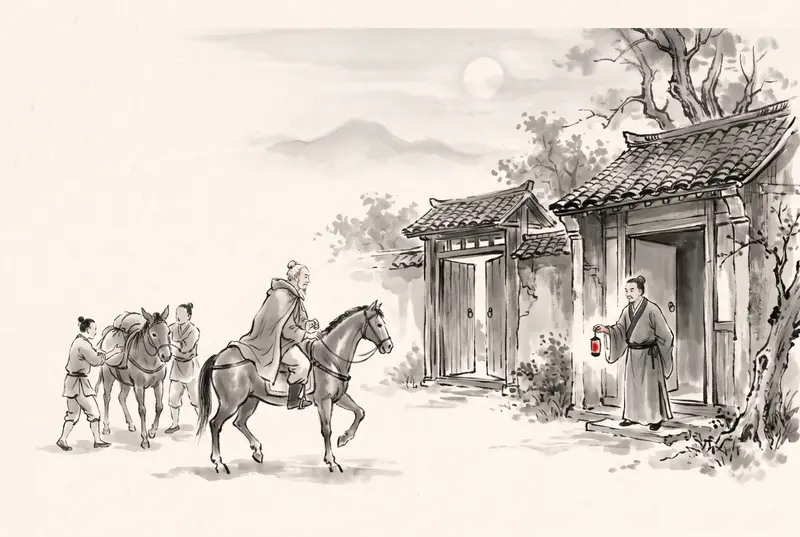
於是武王已平商而王天下,封師尚父於齊營丘。東就國,道宿行遲。逆旅之人曰:「吾聞時難得而易失。客寢甚安,殆非就國者也。」太公聞之,夜衣而行,犁明至國。萊侯來伐,與之爭營丘。營丘邊萊。萊人,夷也,會紂之亂而周初定,未能集遠方,是以與太公爭國。太公至國,修政,因其俗,簡其禮,通商工之業,便魚鹽之利,而人民多歸齊,齊為大國。及周成王少時,管蔡作亂,淮夷畔周,乃使召康公命太公曰:「東至海,西至河,南至穆陵,北至無棣,五侯九伯,實得征之。」齊由此得征伐,為大國。都營丘。
書き下し文
是に於いて武王已に商を平らげて天下に王たり。師尚父を斉の営丘に封ず。東のかた国に就く。道に宿りて行くこと遅し。逆旅の人曰く、「吾聞く、時は得難くして失い易しと。客の寝ぬること甚だ安し。殆ど国に就く者に非ざるなり」と。太公之を聞き、夜衣て行き、犁明に国に至る。莱侯来たり伐ち、之と営丘を争う。営丘は莱に辺す。莱人は、夷なり。紂の乱に会い、而して周初めて定まり、未だ遠方を集むる能わず。是を以て太公と国を争う。 太公国に至り、政を修め、其の俗に因り、其の礼を簡にし、商工の業を通じ、魚塩の利を便にす。而して人民多く斉に帰し、斉大国と為る。周の成王少き時に及び、管蔡乱を作し、淮夷周に畔く。乃ち召康公をして太公に命ぜしめて曰く、「東は海に至り、西は河に至り、南は穆陵に至り、北は無棣に至るまで、五侯九伯、実に之を征するを得」と。斉此れ由り征伐を得て、大国と為る。営丘に都す。
現代語訳
こうして武王は殷を平定して天下の王となり、師尚父を斉の営丘に封じた。太公は東へ向かって国に赴いたが、途中の宿でゆっくり泊まり、進み方が遅かった。宿屋の主人が言った。「時は得がたく、失いやすいものだと聞いております。お客さまはずいぶん安らかにお休みですが、とても領地へ赴く方とは思えません」。太公はそれを聞くと、夜のうちに服を着て出発し、夜明けに国に着いた。そこへ莱の君主が攻めてきて、営丘を奪い合った。営丘は莱と境を接していた。莱の人々は東方の異民族で、紂の乱れた世に乗じ、また周の天下が定まったばかりで遠方までまとめきれていなかったので、太公と国を争ったのである。 太公は国に着くと政治を整えた。土地の風俗に従い、礼儀を簡単にし、商工業を盛んにし、魚や塩の利益を上げやすくした。人々は多く斉に集まり、斉は大国となった。周の成王が幼かったころ、管叔と蔡叔が反乱を起こし、淮水流域の異民族も周にそむいた。そこで成王は召康公を通じて太公に命じた。「東は海まで、西は黄河まで、南は穆陵まで、北は無棣まで、五等の諸侯や九州の長であっても、罪あるものはすべて征伐してよい」。斉はこれによって征伐の権限を得て、大国となった。都は営丘に置いた。
英訳
So King Wu, having conquered Shang, was king of all the realm, and he enfeoffed Father Shang at Yingqiu in Qi. Taigong went east to his state, but he lingered at inns along the way and travelled slowly. An innkeeper said: "I have heard that the right moment is hard to find and easy to lose. Our guest sleeps very soundly. He hardly seems like a man going to take up his state." When Taigong heard this, he dressed in the night and set off, and reached his state at dawn. The Marquis of Lai came to attack and fought him for Yingqiu, which bordered on Lai. The people of Lai were Yi tribes; they had taken advantage of the disorder under Zhou of Yin, and Zhou had only just been established and could not yet bring distant lands under control, so they fought Taigong for the state. When Taigong reached his state he put its government in order. He went along with local customs, simplified the rites, encouraged trade and crafts, and made it easy to profit from fish and salt. Many people came to settle in Qi, and Qi became a great state. When King Cheng of Zhou was young, the Uncles of Guan and Cai rebelled and the Yi tribes of the Huai turned against Zhou. So the king had Duke Kang of Shao give Taigong this charge: "From the sea in the east to the Yellow River in the west, from Muling in the south to Wudi in the north, you may punish any of the lords of the five ranks or the chiefs of the nine provinces." From then on Qi had the right to make war and became a great state, with its capital at Yingqiu.
解説(日)
- 營丘: 斉の最初の都。今の山東省淄博市の臨淄の近く。
- 逆旅: 宿屋。
- 時難得而易失: 「時は得がたく失いやすい」。好機を逃すなという言葉。
- 因其俗,簡其禮: 土地の風俗に合わせ、礼を簡単にする。魯が周の礼をそのまま押しつけたのと対照的とされる。
- 魚鹽之利: 海辺の斉の豊かさの源。のちに管仲も重んじた。
- 五侯九伯: あらゆる諸侯。
解説(英)
- Yingqiu (營丘): the first capital of Qi, in present-day Shandong.
- "The right moment is hard to find and easy to lose" (時難得而易失): a saying still quoted.
- He went along with local customs and simplified the rites: unlike Lu, which imposed the full Zhou ritual.
- Fish and salt: the wealth of seaside Qi, later the basis of Guan Zhong's policies.
この節から生まれた言葉: 時は得難くして失い易し
英語の語注
- linger/ˈlɪŋɡər/verb
to stay longer than needed
本文では: “he lingered at inns along the way”
似た語と違い: dawdle — move slowly · loiter — stand around
- simplify/ˈsɪmpləˌfaɪ/verb
to make easier or less complicated
本文では: “simplified the rites”
似た語と違い: streamline — make more efficient · pare down — reduce
節 6
原文
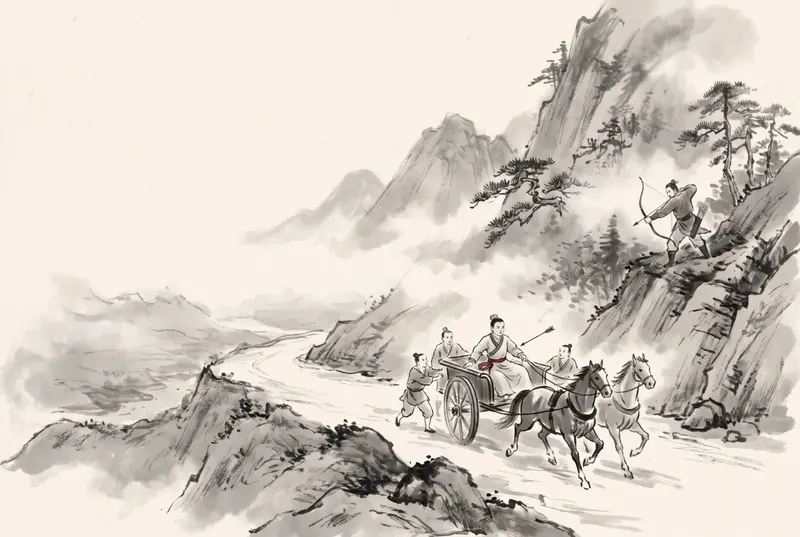
初,襄公之醉殺魯桓公,通其夫人,殺誅數不當,淫於婦人,數欺大臣,群弟恐禍及,故次弟糾奔魯。其母魯女也。管仲、召忽傅之。次弟小白奔莒,鮑叔傅之。小白母,衛女也,有寵於釐公。小白自少好善大夫高傒。及雍林人殺無知,議立君,高、國先陰召小白於莒。魯聞無知死,亦發兵送公子糾,而使管仲別將兵遮莒道,射中小白帶鉤。小白詳死,管仲使人馳報魯。魯送糾者行益遲,六日至齊,則小白已入,高傒立之,是為桓公。
書き下し文
初め、襄公の醉いて魯の桓公を殺し、其の夫人に通じ、殺誅すること数々当たらず、婦人に淫し、数々大臣を欺く。群弟禍の及ばんことを恐る。故に次弟糾魯に奔る。其の母は魯の女なり。管仲・召忽之に傅たり。次弟小白莒に奔る。鮑叔之に傅たり。小白の母は、衛の女にして、釐公に寵有り。小白少きより大夫高傒を好善す。雍林の人の無知を殺すに及び、君を立つるを議す。高・国先ず陰かに小白を莒より召す。魯無知の死を聞き、亦兵を発して公子糾を送り、而して管仲をして別に兵を将いて莒の道を遮らしむ。小白の帯鉤を射中つ。小白詳り死す。管仲人をして馳せて魯に報ぜしむ。魯の糾を送る者行くこと益々遅く、六日にして斉に至れば、則ち小白已に入り、高傒之を立つ。是れを桓公と為す。
現代語訳
それより前(太公から十数代のち)、斉の襄公は、酔わせて魯の桓公を殺し、その夫人(自分の妹)と通じ、たびたび不当に人を殺し、女にふけり、大臣たちをたびたびだました。弟たちはわざわいが自分の身に及ぶのを恐れた。それですぐ下の弟の糾は、母の国である魯へ逃げ、管仲と召忽が守り役としてついていった。その下の弟の小白は莒へ逃げ、鮑叔が守り役としてついていった。小白の母は衛の出身で、父の釐公に寵愛されていた。小白は若いころから大夫の高傒と親しかった。やがて襄公を殺して君主になっていた無知が、雍林の人々に殺されると、誰を君主に立てるかが議論になった。高氏と国氏は、先手を打ってひそかに小白を莒から呼び寄せた。魯も無知の死を聞くと、兵を出して公子糾を送り届けようとし、管仲に別の兵を率いさせて莒からの道をふさがせた。管仲は小白を射て、その帯の留め金に命中させた。小白は死んだふりをした。管仲は人を走らせて、魯に小白の死を知らせた。それで糾を送る魯の一行は安心して進みがますます遅くなり、六日かかって斉に着いたときには、小白はすでに国に入り、高傒が彼を君主に立てていた。これが桓公である。
英訳
Earlier, Duke Xiang of Qi had got Duke Huan of Lu drunk and killed him, had an affair with his wife, put people to death unjustly again and again, gave himself up to women and repeatedly deceived his ministers. His younger brothers feared that disaster would reach them. So the next brother, Jiu, fled to Lu, his mother's state, with Guan Zhong and Shao Hu as his tutors; and the brother after him, Xiaobai, fled to Ju, with Bao Shu as his tutor. Xiaobai's mother was a woman of Wey and had been favoured by Duke Xi, and from his youth Xiaobai had been on good terms with the grandee Gao Xi. When the people of Yonglin killed Wuzhi, who had murdered Duke Xiang and made himself ruler, the question arose of whom to set up as ruler. The Gao and Guo families quickly and secretly sent for Xiaobai from Ju. Lu, hearing that Wuzhi was dead, also sent troops to escort Prince Jiu, and sent Guan Zhong with a separate force to block the road from Ju. Guan Zhong shot Xiaobai and hit the hook of his belt. Xiaobai pretended to be dead, and Guan Zhong sent a rider galloping to tell Lu. So the men escorting Jiu went more slowly than ever and took six days to reach Qi, and by then Xiaobai was already inside and Gao Xi had set him up as ruler. He was Duke Huan.
解説(日)
- 襄公: 太公から十四代目の斉の君主。妹の文姜と通じ、その夫の魯の桓公を殺させた。
- 傅: 守り役、教育係。
- 帶鉤: 帯の留め金。管仲の矢はここに当たり、小白は命拾いした。
- 詳死: 死んだふりをする。
- このあと桓公は、自分を射た管仲を、鮑叔の推薦で宰相に迎えて覇者となる(巻62)。
解説(英)
- Duke Xiang (襄公): a ruler of Qi some fourteen generations after Taigong, notorious for his affair with his own sister, the wife of Duke Huan of Lu.
- The hook of his belt (帶鉤): Guan Zhong's arrow struck the buckle and Xiaobai was saved.
- Afterwards, on Bao Shu's advice, Duke Huan made Guan Zhong, the man who had shot him, his chief minister, and became hegemon (vol. 62).
英語の語注
- tutor/ˈtutər/noun
a private teacher and guardian of a young noble
本文では: “as his tutors”
似た語と違い: mentor — a trusted adviser · guardian — one who protects
- escort/ɪˈskɔrt/verb
to go with someone to protect or guide them
本文では: “to escort Prince Jiu”
似た語と違い: accompany — go with · guard — protect
節 7
原文
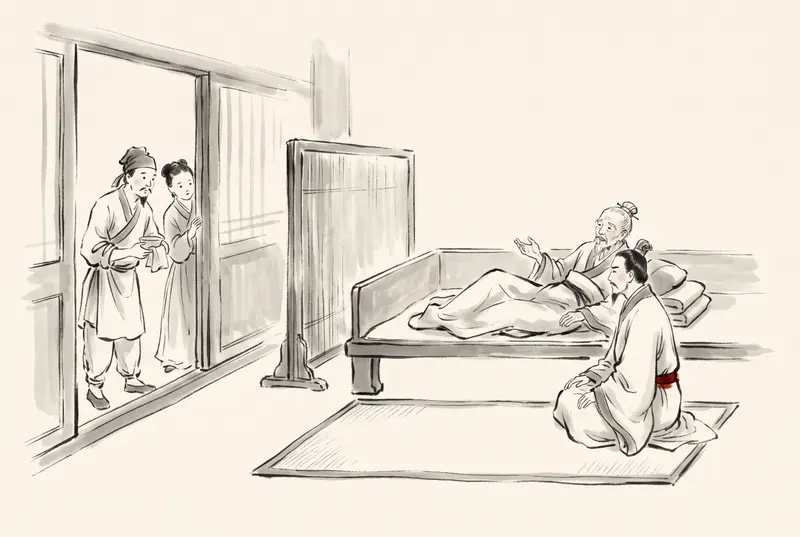
四十一年,秦穆公虜晉惠公,復歸之。是歲,管仲、隰朋皆卒。管仲病,桓公問曰:「群臣誰可相者?」管仲曰:「知臣莫如君。」公曰:「易牙如何?」對曰:「殺子以適君,非人情,不可。」公曰:「開方如何?」對曰:「倍親以適君,非人情,難近。」公曰:「豎刀如何?」對曰:「自宮以適君,非人情,難親。」管仲死,而桓公不用管仲言,卒近用三子,三子專權。
書き下し文
四十一年、秦の穆公晋の恵公を虜にし、復た之を帰す。是の歳、管仲・隰朋皆卒す。管仲病む。桓公問いて曰く、「群臣誰か相たるべき者ぞ」と。管仲曰く、「臣を知るは君に如くは莫し」と。公曰く、「易牙は如何」と。対えて曰く、「子を殺して以て君に適う。人情に非ず。不可なり」と。公曰く、「開方は如何」と。対えて曰く、「親に倍きて以て君に適う。人情に非ず。近づけ難し」と。公曰く、「豎刀は如何」と。対えて曰く、「自ら宮して以て君に適う。人情に非ず。親しみ難し」と。管仲死す。而して桓公管仲の言を用いず、卒に近づけて三子を用う。三子権を専らにす。
現代語訳
桓公の四十一年、秦の穆公は晋の恵公を捕虜にし、また帰した。この年、管仲と隰朋がともに亡くなった。管仲が病に伏すと、桓公は尋ねた。「家臣の中で、誰が宰相にふさわしいか」。管仲は言った。「臣下のことを知るのは、君主にまさる者はおりません」。桓公「易牙はどうか」。管仲は答えた。「わが子を殺して料理し、君のお気に召そうとしました。人の情にはずれています。いけません」。桓公「開方はどうか」。「親にそむいて君のお気に召そうとしました。人の情にはずれています。近づけてはなりません」。桓公「豎刀はどうか」。「自ら去勢して君のお気に召そうとしました。人の情にはずれています。親しくしてはなりません」。管仲が亡くなると、桓公は管仲の言葉に従わず、結局この三人を近づけて用いた。三人は権力をほしいままにした。
英訳
In the forty-first year, Duke Mu of Qin captured Duke Hui of Jin and sent him home again. That year both Guan Zhong and Xi Peng died. When Guan Zhong was ill, Duke Huan asked him: "Which of my ministers could be chancellor?" Guan Zhong said: "No one knows his ministers better than their lord." The duke said: "What about Yi Ya?" Guan Zhong answered: "He killed his own son to please you. That is against human feeling. He will not do." "What about Kai Fang?" "He turned his back on his parents to please you. That is against human feeling. Do not keep him close." "What about Shu Diao?" "He castrated himself to please you. That is against human feeling. Do not trust him." Guan Zhong died, and Duke Huan did not follow his advice. In the end he kept the three men close and employed them, and they seized power for themselves.
解説(日)
- 易牙: 桓公の料理人。人の肉を食べたことがないと言った桓公のために、わが子を蒸して出したという。
- 開方: 衛の公子。親を捨てて斉に仕え、十五年も帰らなかった。
- 豎刀: 自ら去勢して宦官となり、桓公の後宮に仕えた。「豎刁」とも書く。
- 非人情: 人の自然な情にはずれる。そこまでして君に取り入る者は、君をも裏切る、という管仲の見方。
解説(英)
- Yi Ya (易牙): the duke's cook, said to have steamed his own son because the duke had never tasted human flesh.
- Kai Fang (開方): a prince of Wey who abandoned his parents to serve Qi.
- Shu Diao (豎刀): castrated himself to serve in the duke's inner palace.
- Against human feeling (非人情): Guan Zhong's point is that a man who will go that far to please his lord will betray him too.
英語の語注
- castrate/ˈkæsˌtreɪt/verb
to remove the sex organs of a male
本文では: “He castrated himself to please you”
似た語と違い: geld — castrate an animal · emasculate — remove manhood
- seize/siz/verb
to take by force
本文では: “they seized power for themselves”
似た語と違い: grab — take quickly · usurp — take power wrongly
節 8
原文
四十三年。初,齊桓公之夫人三:曰王姬、徐姬、蔡姬,皆無子。桓公好內,多內寵,如夫人者六人,長衛姬,生無詭;少衛姬,生惠公元;鄭姬,生孝公昭;葛嬴,生昭公潘;密姬,生懿公商人;宋華子,生公子雍。桓公與管仲屬孝公於宋襄公,以為太子。雍巫有寵於衛共姬,因宦者豎刀以厚獻於桓公,亦有寵,桓公許之立無詭。管仲卒,五公子皆求立。冬十月乙亥,齊桓公卒。易牙入,與豎刀因內寵殺群吏,而立公子無詭為君。太子昭奔宋。桓公病,五公子各樹黨爭立。及桓公卒,遂相攻,以故宮中空,莫敢棺。桓公尸在床上六十七日,尸蟲出于戶。十二月乙亥,無詭立,乃棺赴。辛巳夜,斂殯。
書き下し文
四十三年。初め、斉の桓公の夫人三。王姬・徐姬・蔡姬と曰う。皆子無し。桓公内を好み、内寵多し。夫人の如き者六人。長衛姬、無詭を生む。少衛姬、恵公元を生む。鄭姬、孝公昭を生む。葛嬴、昭公潘を生む。密姬、懿公商人を生む。宋の華子、公子雍を生む。桓公管仲と孝公を宋の襄公に属して、以て太子と為す。雍巫衛の共姬に寵有り。宦者豎刀に因りて厚く桓公に献じ、亦寵有り。桓公之に無詭を立つるを許す。管仲卒し、五公子皆立たんことを求む。冬十月乙亥、斉の桓公卒す。易牙入り、豎刀と内寵に因りて群吏を殺し、而して公子無詭を立てて君と為す。太子昭宋に奔る。 桓公病みて、五公子各々党を樹てて立たんことを争う。桓公の卒するに及び、遂に相攻む。故を以て宮中空しく、敢えて棺する莫し。桓公の尸床上に在ること六十七日、尸虫戸より出づ。十二月乙亥、無詭立ち、乃ち棺して赴ぐ。辛巳の夜、斂殯す。
現代語訳
桓公の四十三年。これより前、斉の桓公には王姫・徐姫・蔡姫の三人の夫人がいたが、どの夫人にも子がなかった。桓公は女を好み、寵愛する女が多かった。夫人と同じ扱いの者が六人いて、長衛姫は無詭を、少衛姫は恵公元を、鄭姫は孝公昭を、葛嬴は昭公潘を、密姫は懿公商人を、宋の華子は公子雍を産んだ。桓公は管仲と相談して、孝公昭を宋の襄公にたのみ、太子とした。ところが雍巫(易牙)は長衛姫に気に入られており、宦官の豎刀を通じて桓公に手厚く献上品を贈って寵愛を受け、桓公は無詭を跡継ぎにすることを約束してしまった。管仲が亡くなると、五人の公子がみな位を求めた。冬十月乙亥の日、斉の桓公が亡くなった。易牙は宮中に入り、豎刀とともに寵姫の力を借りて役人たちを殺し、公子無詭を君主に立てた。太子昭は宋へ逃げた。 桓公が病気になると、五人の公子はそれぞれ徒党を組んで位を争った。桓公が亡くなると、ついにたがいに攻め合った。そのため宮中には誰もいなくなり、遺体を棺に納めようとする者もいなかった。桓公の遺体は六十七日も寝台の上に置かれたままで、うじが戸口からはい出してきた。十二月乙亥の日、無詭が位につき、ようやく遺体を棺に納めて諸侯に死を知らせた。辛巳の夜、亡骸を納めて仮に葬った。
英訳
The forty-third year. Duke Huan of Qi had three wives, Wang Ji, Xu Ji and Cai Ji, and none of them had sons. The duke loved women and had many favourites; six were treated like wives. The Elder Wey Ji bore Wugui; the Younger Wey Ji bore Yuan, later Duke Hui; Zheng Ji bore Zhao, later Duke Xiao; Ge Ying bore Pan, later Duke Zhao; Mi Ji bore Shangren, later Duke Yi; and Huazi of Song bore Prince Yong. Duke Huan and Guan Zhong had entrusted Zhao to Duke Xiang of Song and made him crown prince. But Yong Wu, that is Yi Ya, was a favourite of the Elder Wey Ji, and through the eunuch Shu Diao he sent rich gifts to Duke Huan and won his favour too, and the duke agreed to make Wugui his heir. When Guan Zhong died, all five princes sought the throne. On the day yihai in the tenth month, winter, Duke Huan of Qi died. Yi Ya went into the palace and, with Shu Diao and the help of the favourite, killed the officials and set up Prince Wugui as ruler. Crown Prince Zhao fled to Song. When Duke Huan fell ill, the five princes each formed a faction to fight for the throne, and when he died they attacked one another. So the palace was left empty, and no one dared to put him in his coffin. His body lay on the bed for sixty-seven days, until the worms from the corpse came crawling out under the door. On the day yihai in the twelfth month, Wugui took the throne; only then was the duke put into his coffin and his death announced. On the night of xinsi he was laid out and placed in the temporary grave.
解説(日)
- 雍巫: 易牙のこと。
- 屬: たのむ、託す。宋の襄公はのちに兵を出して太子昭を斉の君主に立てる。
- 尸蟲出于戶: 遺体からわいたうじが戸の外まではい出す。覇者桓公のみじめな最期。
- 赴: 死を知らせる。
- 管仲の遺言を聞かなかった結果が、ここに描かれている。
解説(英)
- Yong Wu (雍巫): another name for Yi Ya.
- The worms came crawling out under the door (尸蟲出于戶): the wretched end of the first hegemon.
- This is what came of ignoring Guan Zhong's dying advice.
英語の語注
- faction/ˈfækʃən/noun
a small group within a larger one, often in conflict
本文では: “each formed a faction”
似た語と違い: clique — a closed group · camp — a side in a dispute
- corpse/kɔrps/noun
a dead body
本文では: “the worms from the corpse”
似た語と違い: body — a dead person · remains — what is left after death
節 9
原文
太史公曰:吾適齊,自泰山屬之瑯邪,北被于海,膏壤二千里,其民闊達多匿知,其天性也。以太公之聖,建國本,桓公之盛,修善政,以為諸侯會盟,稱伯,不亦宜乎?洋洋哉,固大國之風也!
書き下し文
太史公曰く、吾斉に適く。泰山より之を瑯邪に属け、北のかた海に被る。膏壌二千里、其の民闊達にして知を匿すこと多し。其の天性なり。太公の聖を以て国本を建て、桓公の盛んなるを以て善政を修め、以て諸侯の会盟を為し、伯と称す。亦宜ならずや。洋洋たるかな、固より大国の風なり。
現代語訳
太史公は言う。私は斉へ行ったことがある。泰山から瑯邪まで続き、北は海に面して、肥えた土地が二千里も広がっていた。そこの民はおおらかで、知恵を内に秘めている者が多い。それが生まれつきの気質なのだ。太公の聖なる徳で国の基礎を築き、桓公の盛んな勢いでよい政治を行い、諸侯を集めて盟約を結び、覇者と称したのも、もっともなことではないか。のびのびと広々として、まことに大国の風格がある。
英訳
The Grand Historian says: I have been to Qi. From Mount Tai it stretches to Langya and borders the sea to the north, two thousand li of rich land. Its people are open and broad-minded, and many keep their wisdom to themselves; that is their nature. With Taigong's sagely virtue to lay its foundations, and Duke Huan's greatness to bring good government, it gathered the lords in alliance and was called hegemon. Was that not fitting? Vast and broad: truly the bearing of a great state.
解説(日)
- 泰山・瑯邪: 斉の西と南の境。瑯邪は山東半島南部の海辺。
- 闊達: 心が広く、こせこせしない。
- 洋洋: 広々として、のびやかなさま。
- 司馬遷はここでも、自分の旅の見聞をもとに斉の国柄を語っている。
解説(英)
- Mount Tai and Langya (泰山・瑯邪): the western and southern edges of Qi.
- Once again Sima Qian draws on his own travels.
英語の語注
- broad-minded/ˈbrɔdˌmaɪndɪd/adjective
open to different ideas and ways
本文では: “open and broad-minded”
似た語と違い: tolerant — accepting · liberal — open to new ideas
- fitting/ˈfɪtɪŋ/adjective
right for the situation
本文では: “Was that not fitting?”
似た語と違い: appropriate — suitable · proper — correct