列伝 · 巻 61
伯夷列伝 伯夷列傳
司馬遷が、譲位の逸話と孔子の言葉を手がかりに、飢え死にした兄弟・伯夷と叔斉を語り、「天道は善人に報いるのか」という問いを立てる章。
音声
音声は合成音声です。
動画
節 1
原文
夫學者載籍極博,猶考信於六藝。詩書雖缺,然虞夏之文可知也。堯將遜位,讓於虞舜,舜禹之閒,岳牧咸薦,乃試之於位,典職數十年,功用既興,然後授政。示天下重器,王者大統,傳天下若斯之難也。而說者曰堯讓天下於許由,許由不受,恥之逃隱。及夏之時,有卞隨、務光者。此何以稱焉?太史公曰:余登箕山,其上蓋有許由冢云。孔子序列古之仁聖賢人,如吳太伯、伯夷之倫詳矣。余以所聞由、光義至高,其文辭不少概見,何哉?
書き下し文
そもそも学者の載籍は極めて博きも、なお信を六芸に考う。詩・書は欠くと雖も、然れども虞・夏の文は知るべきなり。堯は位を遜らんとし、虞舜に譲る。舜・禹の間は、岳牧みな薦め、乃ち之を位に試み、職を典ること数十年、功用既に興りて、然る後に政を授く。天下の重器、王者の大統なるを示し、天下を伝うること斯の若く之れ難きなり。而るに説く者曰く、「堯は天下を許由に譲る。許由は受けず、之を恥じて逃れ隠る」と。夏の時に及びて、卞随・務光なる者有り。此れ何を以て称せらるるか。太史公曰く、余、箕山に登るに、其の上に蓋し許由の冢有りと云う。孔子は古の仁聖賢人を序列し、呉の太伯・伯夷の倫の如きは詳らかなり。余、聞く所を以てするに、由・光の義は至高なるも、其の文辞は少しも概見せざること、何ぞや。
現代語訳
そもそも学者が拠りどころとする書物は非常に多いが、それでもなお、六経に照らして真偽を確かめる。『詩』『書』には欠けた部分があるものの、虞・夏の時代の文章は知ることができる。堯は帝位を譲ろうとして、虞の舜に位を譲った。舜と禹の場合は、四岳と十二牧の長がこぞって推薦し、そこで位に就けて試し、職務を数十年あずからせ、功績が現れてから、はじめて政を授けた。天下は重い器であり、王者の大きな系統であって、天下を伝えることがこのように難しいことを示している。ところが、説をなす者は「堯は天下を許由に譲ろうとしたが、許由は受けず、それを恥じて逃げ隠れた」と言う。夏の時代になると、卞随・務光という人物もいた。これらの人々は、いったい何によって称えられているのか。太史公は言う。私は箕山に登ったが、その頂にはどうやら許由の墓があるという。孔子は古の仁者・聖人・賢人を順に挙げ、呉の太伯や伯夷のような人々については詳しく述べている。ところが私が聞くところでは、許由・務光の義は極めて高いのに、その文辞はほとんど見ることができない。これはどうしてだろうか。
英訳
Scholars have a vast body of writings to draw on, yet they still verify what they accept against the Six Classics. Although the Odes and the Documents have gaps, the writings of the Yu and Xia periods can still be known. When Yao was about to yield his throne, he gave it to Shun of Yu. In the cases of Shun and Yu, the Four Peaks and the Twelve Shepherds all recommended them. They were tried in office and handled their duties for decades, and only after their merits were established was authority handed over. This shows that the empire is a weighty vessel and the royal line a great succession, and that passing on the empire was this difficult. Yet some say that Yao offered the empire to Xu You, who would not accept it and, ashamed, fled into hiding. When the Xia era came, there were Bian Sui and Wu Guang. On what basis are they praised? The Grand Historian says: I climbed Mount Ji, and on its summit there is said to be the tomb of Xu You. Confucius ranked the benevolent, the sage, and the worthy of antiquity, and discussed in detail figures such as Taibo of Wu and Boyi. Yet from what I have heard, the righteousness of Xu You and Wu Guang was of the highest order, and still hardly a trace of their writings can be seen. Why is that?
解説(日)
- 六藝: ここでは六経(詩・書・礼・楽・易・春秋)を指す。
- 岳牧: 古注では「四岳」と「十二牧」(諸侯の長)とされる。
- 許由・卞随・務光: 天下を譲られて拒んだと伝えられる伝説上の隠者。『荘子』などに話が見える。
- 此何以稱焉: 読みが分かれる箇所。ここでは「これらの人々は何によって称えられているのか」と訳した。
- 箕山: 許由が隠れたと伝えられる山。
- 太伯: 周の太王の長子で、位を弟に譲って呉へ去ったとされる人物。
- この節のねらい: 司馬遷は、確かな文献(詩・書)に基づいて語る姿勢を示したうえで、文献にほとんど名の残らない義人を取り上げる意義を問い、伯夷の話へつなげる。
解説(英)
- 六藝 (Six Arts): here the Six Classics: Odes, Documents, Rites, Music, Changes, and Spring and Autumn Annals.
- 岳牧: early commentators read this as the "Four Peaks" and the "Twelve Shepherds", the chiefs of the lords.
- Xu You, Bian Sui, Wu Guang: legendary recluses said to have refused the offer of the empire. Stories about them appear in texts such as the Zhuangzi.
- 此何以稱焉: the reading is disputed. This draft takes it as "On what basis are they praised?".
- Mount Ji: the mountain where Xu You is said to have lived in hiding.
- Taibo: the eldest son of Tai Wang of Zhou, said to have yielded the succession to a younger brother and gone to Wu.
- Purpose of the passage: Sima Qian first states that he relies on trustworthy texts (the Odes and Documents), then asks why men who barely appear in them deserve attention. This leads into Boyi.
英語の語注
- verify/ˈvɛrəˌfaɪ/verb
to check carefully that something is true or correct
本文では: “they still verify what they accept against the Six Classics”
似た語と違い: check — everyday word; a quick look is enough · confirm — shows something is definitely true
verify is formal and suggests comparing with a trusted source.
- yield/jiːld/verb
to give something up to another person
本文では: “about to yield his throne”
似た語と違い: surrender — give up under pressure · cede — formal; hand over land or power
yield also means "to produce", as in "the field yields rice".
- merit/ˈmɛrɪt/noun
a good quality or achievement that deserves praise or reward
本文では: “only after their merits were established”
似た語と違い: worth — value in general · virtue — moral goodness of character
- vessel/ˈvɛsəl/noun
a container, especially an important or ceremonial one; here a symbol of power
本文では: “the empire is a weighty vessel”
似た語と違い: container — the general · receptacle — formal; anything that receives or holds
vessel can also mean a ship.
- ashamed/əˈʃeɪmd/adjective
feeling bad because something seems wrong or dishonourable
本文では: “who would not accept it and, ashamed, fled into hiding”
似た語と違い: embarrassed — uncomfortable in front of others · guilty — feeling you did wrong
- basis/ˈbeɪsɪs/noun
the facts or reasons that something is based on
本文では: “On what basis are they praised?”
似た語と違い: grounds — reasons · foundation — also the base of a building
the plural is bases /ˈbeɪsiːz/.
- summit/ˈsʌmɪt/noun
the highest point of a mountain
本文では: “on its summit there is said to be the tomb of Xu You”
似た語と違い: peak — a pointed top; also the highest level · top — the plain
a summit is also a meeting of national leaders.
- antiquity/ænˈtɪkwəti/noun
the distant past, especially ancient times
本文では: “the worthy of antiquity”
似た語と違い: ancient times — plain words for the same idea · the past — any time before now
- righteousness/ˈraɪtʃəsnəs/noun
the quality of doing what is morally right
本文では: “the righteousness of Xu You and Wu Guang”
似た語と違い: virtue — moral goodness in general · integrity — honesty; keeping to your principles
the "t" sounds like "ch". In this text it translates 義.
- trace/treɪs/noun
a very small sign that something existed or happened
本文では: “hardly a trace of their writings can be seen”
似た語と違い: sign — any indication · vestige — formal; a small part left of something
節 2
原文
孔子曰:「伯夷、叔齊,不念舊惡,怨是用希。」「求仁得仁,又何怨乎?」余悲伯夷之意,睹軼詩可異焉。其傳曰:
書き下し文
孔子曰く、「伯夷・叔斉は、旧悪を念わず、怨み是を用て希なり」と。「仁を求めて仁を得たり、又た何ぞ怨みんや」と。余、伯夷の意を悲しみ、軼詩を睹るに異しむべし。其の伝に曰く、
現代語訳
孔子は言った。「伯夷と叔斉は、昔の悪事を心にとどめなかった。そのため恨みは少なかった。」また言った。「仁を求めて仁を得たのだ。どうして恨むことがあろうか。」私は伯夷の心中を思うと悲しいが、世に伝わらなかった詩(軼詩)を見ると、不思議に思われる。その伝にいう、
英訳
Confucius said: "Boyi and Shuqi did not dwell on old grievances, and so resentment toward them was rare." And: "They sought benevolence and found it. What was there to resent?" I grieve for Boyi's heart, and when I look at the lost poem attributed to him, I find it strange. Their biography says:
解説(日)
- 孔子の言葉: 『論語』公冶長篇(怨是用希)と述而篇(求仁得仁、又何怨)に見える。
- 怨是用希: 「(他人から)恨まれることが少なかった」と読む説と、「(彼ら自身が)恨むことが少なかった」と読む説がある。この下訳は、どちらにも読める「恨みは少なかった」とした。
- 軼詩: 『詩経』に収められず伝わった詩。次の節以降に出る「采薇の歌」を指すと考えられる。
- 司馬遷の疑問: 孔子は「怨みがなかった」と言うのに、詩には怨みの響きがある。この食い違いが、章全体の問いにつながると読める。
- 其傳曰: ここから本伝に入る。
解説(英)
- Confucius's words: Analects 5.23 (resentment was rare) and 7.15 (sought benevolence and found it).
- 怨是用希: read either as "others rarely resented them" or "they themselves rarely resented". The draft keeps the neutral "resentment toward them was rare" and flags the ambiguity.
- 軼詩 (lost poem): a poem not included in the Odes. It is probably the "Song of Gathering Ferns" that appears later in the chapter.
- Sima Qian's puzzle: Confucius says they felt no resentment, yet the poem sounds resentful. This tension can be read as the question driving the whole chapter.
- 其傳曰: from here the biography proper begins.
英語の語注
- grievance/ˈɡriːvəns/noun
a wrong that someone feels was done to them
本文では: “did not dwell on old grievances”
似た語と違い: complaint — what you say about a problem · grudge — a lasting bad feeling against someone
"dwell on" means to keep thinking about something.
- benevolence/bəˈnɛvələns/noun
the wish to do good to others; kindness
本文では: “They sought benevolence and found it.”
似た語と違い: kindness — the everyday word · humaneness — another common English rendering of 仁
- attribute/əˈtrɪbjuːt/verb
to say that something was made or said by a certain person
本文では: “the lost poem attributed to him”
似た語と違い: ascribe — formal; almost the same meaning · credit — usually for something good
the verb is at-TRI-bute; the noun (a quality) is AT-tri-bute /ˈætrəˌbjuːt/.
節 3
原文
伯夷、叔齊,孤竹君之二子也。父欲立叔齊,及父卒,叔齊讓伯夷。伯夷曰:「父命也。」遂逃去。叔齊亦不肯立而逃之。國人立其中子。
書き下し文
伯夷・叔斉は、孤竹君の二子なり。父は叔斉を立てんと欲す。父の卒するに及び、叔斉は伯夷に譲る。伯夷曰く、「父の命なり」と。遂に逃げ去る。叔斉も亦た立つを肯んぜずして之を逃る。国人は其の中子を立つ。
現代語訳
伯夷と叔斉は、孤竹君の二人の子である。父は叔斉を後継ぎに立てようとしたが、父が亡くなると、叔斉は位を伯夷に譲ろうとした。伯夷は「父の命令だ」と言って、そのまま逃げ去った。叔斉も位に就くことを承知せず、これも逃げた。国の人々は、その真ん中の子を立てた。
英訳
Boyi and Shuqi were the two sons of the lord of Guzhu. Their father wished to make Shuqi his heir. When the father died, Shuqi yielded the succession to Boyi. Boyi said, "It was Father's command," and fled. Shuqi likewise refused to take the position, and fled as well. The people of the state set up the middle son.
解説(日)
- 孤竹: 殷末周初にあった国。所在地は河北省東北部に比定されることが多い。
- 伯・叔: 兄弟の長幼を示す字。伯は長兄、叔は年下の弟を表す。
- 中子: 真ん中の子。この本文から、孤竹君には少なくとも三人の子がいたことがわかる。
- 「父命也」: 伯夷が位を受けない理由。父の命令(叔斉を立てる)を重んじ、長子相続を主張しない。
- 譲り合い: 二人とも位を避けて立ち去る。第1節の堯・舜の譲位の話と対になる。
解説(英)
- Guzhu: a state of the late Shang and early Zhou period, often located in northeastern Hebei.
- 伯 and 叔: characters marking birth order. 伯 is the eldest brother, 叔 a younger one.
- The "middle son": the text implies that the lord of Guzhu had at least three sons.
- 「父命也」: Boyi's reason for declining. He honors his father's wish for Shuqi instead of claiming the right of the eldest.
- Mutual yielding: both brothers avoid the throne and leave. This mirrors the stories of Yao and Shun yielding in the first passage.
英語の語注
- heir/ɛr/noun
the person who will receive a title, position or property
本文では: “make Shuqi his heir”
似た語と違い: successor — takes a position next; not always family · inheritor — receives property or money
the "h" is silent; heir sounds like "air".
- succession/səkˈsɛʃən/noun
the right to take a position after the person who held it
本文では: “Shuqi yielded the succession to Boyi”
似た語と違い: inheritance — property received after a death · accession — formal; the act of becoming ruler
- likewise/ˈlaɪkˌwaɪz/adverb
in the same way
本文では: “Shuqi likewise refused to take the position”
似た語と違い: similarly — a bit more formal; links two ideas · also — the everyday word; adds information
"Likewise!" is also a reply meaning "the same to you".
節 4
原文
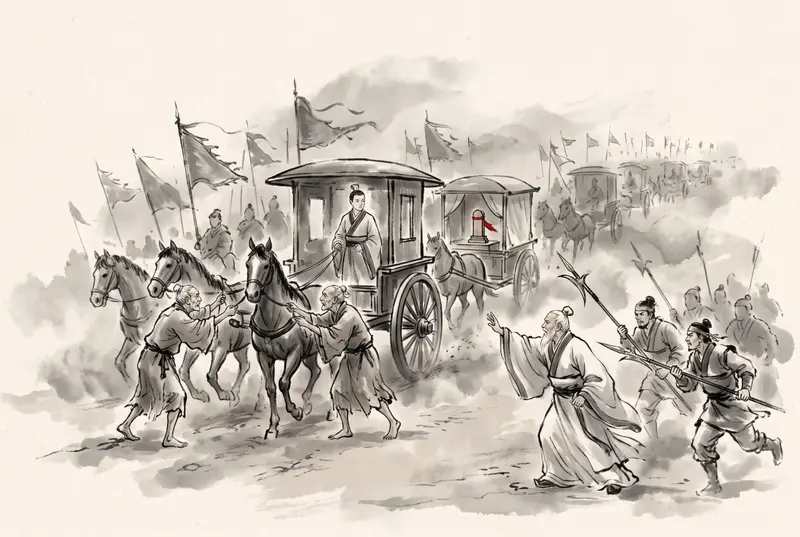
於是伯夷、叔齊聞西伯昌善養老,盍往歸焉。及至,西伯卒,武王載木主,號為文王,東伐紂。伯夷、叔齊叩馬而諫曰:「父死不葬,爰及干戈,可謂孝乎?以臣弒君,可謂仁乎?」左右欲兵之。太公曰:「此義人也。」扶而去之。
書き下し文
ここに於いて伯夷・叔斉、西伯昌の善く老を養うを聞き、「盍ぞ往きて帰せざる」と。至るに及び、西伯は卒し、武王は木主を載せ、号して文王と為し、東のかた紂を伐つ。伯夷・叔斉は馬を叩きて諫めて曰く、「父死して葬らず、爰に干戈に及ぶ、孝と謂うべけんや。臣を以て君を弑す、仁と謂うべけんや」と。左右、之を兵せんと欲す。太公曰く、「此れ義人なり」と。扶けて之を去らしむ。
現代語訳
そこで伯夷と叔斉は、西伯の昌が老人を大切に養っていると聞き、「そこへ行って身を寄せてはどうか」と考えた。到着してみると、西伯は亡くなっており、武王は木の位牌(木主)を載せ、文王と号して、東へ紂を討ちに向かうところだった。伯夷と叔斉は武王の馬を押しとどめて諫めた。「父が亡くなって葬りもしないうちに、戦いを始める。これを孝といえましょうか。臣下の身で主君を殺す。これを仁といえましょうか。」左右の者たちは刃を向けようとした。太公が言った。「この人たちは義人だ。」そして二人を助け起こして立ち去らせた。
英訳
Then Boyi and Shuqi heard that the Count of the West, Chang, cared well for the aged. "Why not go and join him?" they said. When they arrived, the Count of the West had died. King Wu was carrying a wooden spirit tablet, styling it King Wen, and marching east to attack King Zhou of Shang. Boyi and Shuqi seized his horse's bridle and remonstrated: "Your father has died and lies unburied, and you take up shield and spear. Can this be called filial? A subject killing his lord: can this be called benevolent?" The men at his side wanted to cut them down. Taigong said, "These are righteous men." He helped them up and sent them away.
解説(日)
- 西伯昌: 周の文王(姫昌)。殷の紂王のもとで、西方の諸侯の長(西伯)だった。
- 武王: 文王の子(姫発)。のちに殷を討って周を建てる。
- 木主: 位牌。ここでは、武王が亡き父の位牌を載せて出征している様子を描く。
- 叩馬而諫: 馬の轡を押さえて諫める、の意に取る。
- 太公: 太公望呂尚。武王の軍師。
- 「紂」と「周」: 紂(Zhòu)は殷の最後の王で、周(Zhōu)とは別。拼音は声調だけが違う。
解説(英)
- Count of the West, Chang: Ji Chang, later honored as King Wen of Zhou. Under the last Shang king he held the title "Count of the West", chief of the western lords.
- King Wu: King Wen's son (Ji Fa), who went on to overthrow the Shang and found the Zhou.
- 木主 (wooden tablet): a spirit tablet. The scene shows King Wu going to war with his late father's tablet on his chariot.
- 叩馬而諫: taken here as seizing the horse's bridle to stop him and remonstrate.
- Taigong: Taigong Wang, Lü Shang, King Wu's strategist.
- "Zhou" the tyrant and "Zhou" the dynasty: 紂 (Zhòu) is the last Shang king; 周 (Zhōu) is the dynasty. Pinyin differs only in the tone.
英語の語注
- aged/ˈeɪdʒɪd/noun (the aged)
old people as a group
本文では: “cared well for the aged”
似た語と違い: the elderly — the most common polite phrase · seniors — modern and friendly
in "the aged" it has two syllables, AY-jid; in "aged 70" it is one, /eɪdʒd/.
- style/staɪl/verb
to give someone or something an official name or title
本文では: “styling it King Wen”
似た語と違い: call — the everyday word · title — to give a formal title
- remonstrate/rɪˈmɑnˌstreɪt/verb
to protest strongly, especially to someone with more power
本文では: “seized his horse's bridle and remonstrated”
似た語と違い: protest — show strong disagreement · object — simply say you disagree
also pronounced /ˈrɛmənˌstreɪt/.
- filial/ˈfɪliəl/adjective
about the duty and love of children toward their parents
本文では: “Can this be called filial?”
似た語と違い: dutiful — doing one's duty to anyone · devoted — loving and loyal
"filial piety" is the usual English for 孝.
- cut down/ˌkʌt ˈdaʊn/phrasal verb
to kill someone with a sword or other weapon
本文では: “wanted to cut them down”
似た語と違い: kill — the general word · strike down — literary; kill or knock down suddenly
"cut down on" means to use less, as in "cut down on sugar".
節 5
原文
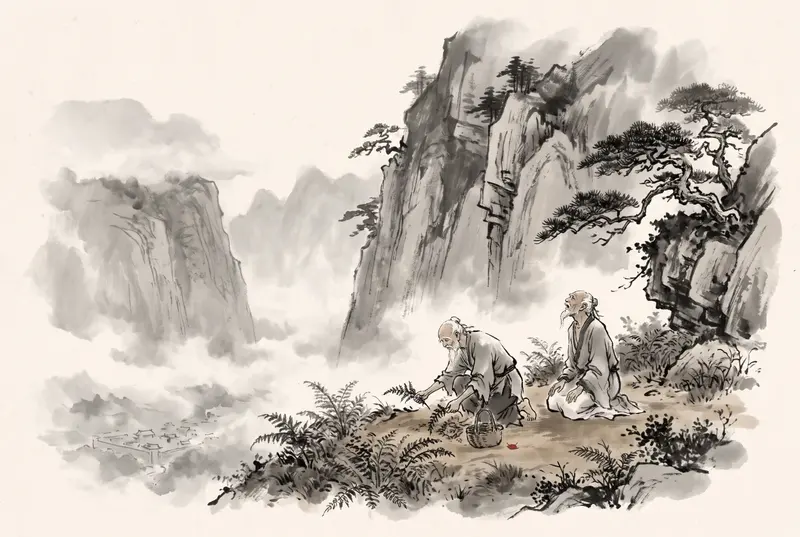
武王已平殷亂,天下宗周,而伯夷、叔齊恥之,義不食周粟,隱於首陽山,采薇而食之。及餓且死,作歌。其辭曰:「登彼西山兮,采其薇矣。以暴易暴兮,不知其非矣。神農、虞、夏忽焉沒兮,我安適歸矣?于嗟徂兮,命之衰矣!」
書き下し文
武王已に殷の乱を平らげ、天下周を宗とす。而るに伯夷・叔斉は之を恥じ、義として周の粟を食らわず、首陽山に隠れ、薇を采りて之を食らう。餓えて且に死なんとするに及び、歌を作る。其の辞に曰く、「彼の西山に登り、其の薇を采る。暴を以て暴に易え、其の非を知らず。神農・虞・夏は忽焉として没す、我安くにか適き帰せん。于嗟徂かん、命の衰えたるかな」と。
現代語訳
武王が殷の乱れを平定すると、天下は周を盟主と仰いだ。しかし伯夷と叔斉はこれを恥とし、義として周の穀物を食べず、首陽山に隠れ、薇(わらび)を採って食べた。飢えて死にそうになったとき、歌を作った。その歌詞はこうである。「あの西の山に登り、薇を摘む。暴力で暴力に取って代わりながら、その非を知らない。神農・虞・夏の世は、たちまち消え去った。私はどこへ行って身を寄せればよいのか。ああ、もう行こう。命の衰えたことよ。」
英訳
When King Wu had put down the disorder of Yin, the whole land honored Zhou as its head. But Boyi and Shuqi were ashamed of this. Holding that it would be wrong, they refused to eat the grain of Zhou, hid on Mount Shouyang, and lived on wild vetch. When they were starving and close to death, they made a song. Its words ran: "We climb that western hill, and pick its vetch. Violence is swapped for violence, and they do not see the wrong. Shennong, Yu and Xia vanished in a moment. Where can I turn for refuge now? Alas, let us go. My fate has faded!"
解説(日)
- 殷乱を平らぐ: 武王が殷の紂王を倒したこと(牧野の戦い)。
- 周粟を食らわず: 新しい王朝の穀物を食べない、という抗議の形。
- 薇: ワラビの類の山菜(野豌豆とする説もある)。
- 神農・虞・夏: 神農は伝説の帝。虞は舜の時代、夏は禹に始まる王朝。いずれも、譲り合いの徳が語られる理想の古代。
- 以暴易暴: 暴力を暴力で取り替える。武王の討伐さえ、二人の目には暴力に映った。
- 于嗟徂兮: 「ああ、行こう」。死へ向かう覚悟とも読める。
解説(英)
- Putting down the disorder of Yin: King Wu's defeat of the last Shang king (the battle of Muye).
- Refusing the grain of Zhou: a protest in the form of fasting. They would not live on the new dynasty's food.
- Vetch (薇): a wild mountain plant. Some scholars identify it as a kind of wild pea.
- Shennong, Yu, Xia: the legendary emperor Shennong, the age of Shun (Yu), and the dynasty begun by Yu the Great (Xia). All are an ideal past of virtue and yielding.
- 以暴易暴: "swap violence for violence". Even King Wu's campaign looked like violence to the two brothers.
- 于嗟徂兮: "Alas, let us go." It can be read as readiness for death.
英語の語注
- vetch/vɛtʃ/noun
a wild climbing plant of the pea family; its young shoots can be eaten
本文では: “lived on wild vetch”
似た語と違い: bracken — a large fern; often meant in Japanese texts by 薇 (warabi)
The original word 薇 is read as warabi (bracken) in Japanese, but some scholars take it to be a wild pea.
- refuge/ˈrɛfjuːdʒ/noun
a place or person that gives protection or shelter
本文では: “Where can I turn for refuge now?”
似た語と違い: shelter — everyday word; protection from weather or danger · sanctuary — a holy or safe place
"take refuge in" is a common pattern.
節 6
原文
遂餓死於首陽山。由此觀之,怨邪非邪?
書き下し文
遂に首陽山に餓死す。此に由りて之を観れば、怨みたるか、非なるか。
現代語訳
こうして二人は首陽山で餓死した。このことから考えると、彼らは怨んだのだろうか、それとも怨まなかったのだろうか。
英訳
And so they starved to death on Mount Shouyang. Seen in this light, did they resent their fate, or did they not?
解説(日)
- 怨邪非邪: 直訳は「怨みか、非か」。孔子は「怨み希なり」(第2節)と言ったが、前節の歌(「命の衰えたるかな」)は怨みの声ではないか、という司馬遷の疑問。
- ここから、章の主題である「天道は是か非か」という議論に入る。
解説(英)
- 怨邪非邪: literally "resentment, or not resentment?" Confucius said they "rarely resented" (passage 2), but the song in the previous passage ("my fate has faded") sounds like a complaint. Sima Qian leaves the question open.
- From here the chapter turns to its real theme: is the Way of Heaven right or wrong?
英語の語注
- resent/rɪˈzɛnt/verb
to feel bitter about something you think is unfair
本文では: “did they resent their fate”
似た語と違い: begrudge — feel unwilling to accept someone else's good luck · complain — say you are unhappy; resent is the feeling inside
節 7
原文
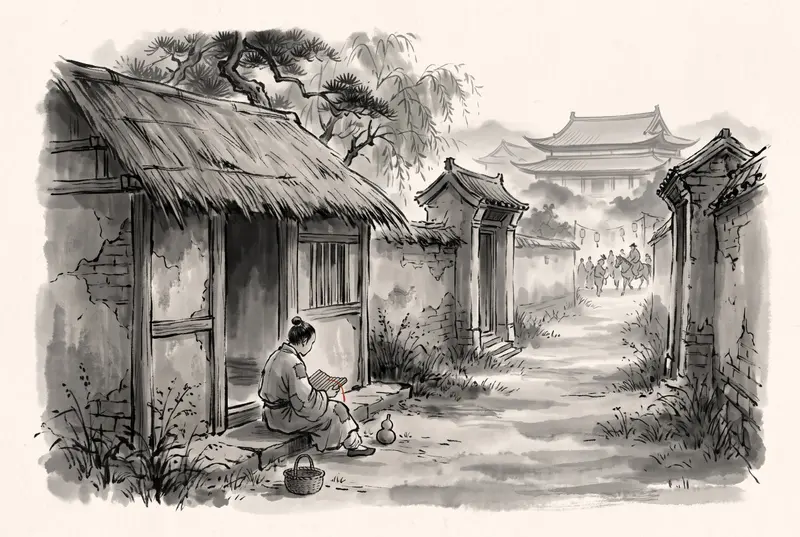
或曰:「天道無親,常與善人。」若伯夷、叔齊,可謂善人者非邪?積仁絜行如此而餓死!且七十子之徒,仲尼獨薦顏淵為好學。然回也屢空,糟糠不厭,而卒蚤夭。天之報施善人,其何如哉?盜蹠日殺不辜,肝人之肉,暴戾恣睢,聚黨數千人橫行天下,竟以壽終。是遵何德哉?此其尤大彰明較著者也。若至近世,操行不軌,專犯忌諱,而終身逸樂,富厚累世不絕。或擇地而蹈之,時然後出言,行不由徑,非公正不發憤,而遇禍災者,不可勝數也。余甚惑焉,儻所謂天道,是邪非邪?
書き下し文
或いは曰く、「天道は親無し、常に善人に与す」と。伯夷・叔斉の若きは、善人なる者と謂うべきに非ずや。仁を積み行いを潔くすること此くの如くして餓死せり。且つ七十子の徒、仲尼は独り顔淵を薦めて学を好むと為す。然るに回や屡しば空しく、糟糠すら厭かず、而して卒に蚤く夭せり。天の善人に報施すること、其れ何如ぞや。盗蹠は日に不辜を殺し、人の肉を肝にし、暴戻恣睢、党を聚むること数千人、天下に横行して、竟に寿を以て終う。是れ何の徳に遵えるや。此れ其の尤も大いに彰明較著なる者なり。近世に至るが若きは、操行軌ならず、専ら忌諱を犯して、而も終身逸楽し、富厚世を累ねて絶えず。或いは地を択びて之を蹈み、時にして然る後に言を出だし、行くに径に由らず、公正に非ざれば発憤せざるに、而も禍災に遇う者は、勝げて数うべからざるなり。余は甚だ惑う。儻し所謂天道なるものは、是なるか非なるか。
現代語訳
ある人は言う。「天の道は特定の人を贔屓せず、いつも善人の味方をする」と。ならば伯夷と叔斉は、善人と呼ぶべきではないのか。これほど仁を積み、行いを清く保ちながら、飢え死にしたのである。また、七十人の弟子のなかで、孔子(仲尼)はただ顔淵だけを学問好きとして推した。ところがその顔回は、いつも貧しく、糟や糠さえ腹いっぱい食べられず、ついに若死にした。天が善人に報いるやり方とは、いったいこの程度のものか。一方、盗蹠は毎日罪のない人を殺し、人の肉を刻んで食らい、凶暴で勝手気ままに振る舞い、数千人の徒党を集めて天下を荒らしまわったのに、結局は天寿をまっとうした。これはどんな徳に従った結果なのか。これはとくに大きくはっきりした例である。近い時代になると、行いが道に外れ、もっぱら禁忌を犯しながら、生涯楽しく暮らし、富が何代も続いて絶えない者がいる。かと思えば、足を踏み出す場所を選び、時機を見てから発言し、近道を通らず、公正でなければ憤りを発しないのに、災難に遭う者は数え切れない。私は大いに戸惑う。もし「天道」というものがあるなら、それは正しいのか、間違っているのか。
英訳
Some say, "The Way of Heaven shows no favorites, but always sides with the good." Can Boyi and Shuqi not be called good men? They piled up benevolence and kept their conduct pure, and yet they starved. Among the seventy disciples, Confucius singled out only Yan Yuan as one who loved learning. Yet Hui was often empty-handed, could not even get his fill of dregs and husks, and died young in the end. Is this how Heaven repays the good? Robber Zhi killed the innocent every day, minced human flesh, ran wild in violence and cruelty, gathered thousands of followers and rampaged across the land, and in the end died of old age. What virtue did he follow? These are the most striking and obvious cases. Coming to recent times, there are those whose conduct breaks every rule and who defy every taboo, yet they enjoy ease all their lives, and their wealth passes down for generations without end. Others choose carefully where to set their feet, speak only when the time is right, never take a shortcut, and show anger only for what is just, yet they meet with disaster in numbers beyond counting. I am deeply troubled. If there is such a thing as the Way of Heaven, is it right, or is it wrong?
解説(日)
- 天道無親、常与善人: 『老子』第79章に近い言葉。「天は誰にも肩入れしないが、いつも善人の側にいる」という考え方。
- 顔淵(顔回): 孔子がもっとも愛した弟子。貧しい暮らしのなか、若くして亡くなった。回は名。
- 盗蹠: 古い書物に出てくる大盗賊。柳下恵の弟とされる。「肝人之肉」は人の肉を刻んで食べた、の意。
- 儻: もし、あるいは。ここでは「もし天道というものがあるなら」と仮定して問う。
- 司馬遷自身の事情: 李陵を弁護して宮刑を受けた司馬遷の、「善人が報われない」という実感が重なる、と読まれることが多い(解釈のひとつ)。
解説(英)
- 天道無親、常與善人: close to a line in the Laozi (chapter 79). The idea: Heaven plays no favorites, yet is always on the side of the good.
- Yan Yuan (Yan Hui): Confucius's most beloved disciple. He lived in poverty and died young. Hui is his personal name.
- Robber Zhi: a famous bandit of early texts, said to be the younger brother of the worthy Liuxia Hui. 「肝人之肉」 means he minced and ate human flesh.
- 儻: "if, supposing". Sima Qian asks: if such a thing as the Way of Heaven exists at all, is it right?
- Sima Qian's own life: many readers link this anguish to his punishment (castration) after defending General Li Ling. This is one common interpretation, not stated in the text.
この節から生まれた言葉: 天道是か非か
英語の語注
- favorite/ˈfeɪvərɪt/noun
a person treated better than others
本文では: “shows no favorites”
似た語と違い: pet — informal; "teacher's pet" is a student the teacher likes best · darling — loved most; warmer than favorite
"play favorites" means to treat some people better without a fair reason.
- rampage/ˈræmpeɪdʒ/verb
to rush about wildly, causing damage or violence
本文では: “rampaged across the land”
似た語と違い: run wild — less violent; lose all control · ravage — to destroy a place badly
As a noun, "go on a rampage" is a common phrase.
節 8
原文
子曰「道不同不相為謀」,亦各從其志也。故曰「富貴如可求,雖執鞭之士,吾亦為之。如不可求,從吾所好」。「歲寒,然後知松柏之後凋」。舉世混濁,清士乃見。豈以其重若彼,其輕若此哉?
書き下し文
子曰く「道同じからざれば相為に謀らず」と、亦た各おの其の志に従うなり。故に曰く「富貴にして如し求むべくんば、執鞭の士と雖も、吾も亦た之を為さん。如し求むべからずんば、吾が好む所に従わん」と。「歳寒くして、然る後に松柏の後に凋むを知る」と。世を挙げて混濁すれば、清士乃ち見る。豈に其の重きこと彼の若く、其の軽きこと此の若きを以てならんや。
現代語訳
孔子は「歩む道が違えば、互いに相談しない」と言った。それぞれが自分の志に従うということである。だから孔子は言った。「富や地位が求めて得られるものなら、鞭を執る下働きでも、私はやろう。求めて得られないのなら、自分の好きな道を行く。」また言った。「寒い季節になって初めて、松や柏が他の木より後まで枯れないことが分かる。」世の中がすべて濁ってこそ、清らかな人がはっきり見える。これは、彼らが(節操を)あれほど重く、(富貴を)これほど軽く見たからではないだろうか。
英訳
Confucius said, "Those whose ways differ do not make plans together," for each follows his own aims. So he also said, "If wealth could be sought, I would do it even as a driver holding the whip. If it cannot be sought, I will follow what I love." And: "Only when the year turns cold do we learn that pine and cypress are the last to fade." When the whole world is muddy, the pure man stands out. Is it not because he weighs the one so heavily and the other so lightly?
解説(日)
- 道不同不相為謀: 『論語』衛霊公篇。
- 富貴如可求…: 『論語』述而篇。「執鞭の士」は、馬車の鞭を執る下級の仕事。
- 歳寒、然後知松柏之後凋: 『論語』子罕篇。厳しい時代にこそ、節操を守る人が分かる、という比喩。
- 最後の問い: 「重きこと彼の若く、軽きこと此の若き」の「彼」と「此」が何を指すかは、解釈が分かれる。ここでは「節操」と「富貴」と取った。
解説(英)
- 道不同不相為謀: Analects, "Wei Ling Gong" chapter.
- 富貴如可求…: Analects, "Shu Er" chapter. 執鞭之士 is a low job, holding the whip for a carriage.
- 歲寒、然後知松柏之後凋: Analects, "Zi Han" chapter. In hard times we see who keeps their integrity.
- The last question: what 彼 ("that") and 此 ("this") refer to is debated. Here they are read as integrity and wealth.
英語の語注
- muddy/ˈmʌdi/adjective
here, morally unclear or corrupt (literally, full of mud)
本文では: “the whole world is muddy”
似た語と違い: murky — dark and unclear; used for water and for unclear situations · corrupt — dishonest or immoral; a direct word with no picture
- weigh/weɪ/verb
to consider how important something is
本文では: “weighs the one so heavily”
似た語と違い: value — think that something is important · consider — think carefully; weigh adds the idea of comparing two things
The gh in "weigh" is silent. It rhymes with "way".
節 9
原文
「君子疾沒世而名不稱焉。」賈子曰:「貪夫徇財,烈士徇名,夸者死權,眾庶馮生。」「同明相照,同類相求。」「雲從龍,風從虎,聖人作而萬物睹。」伯夷、叔齊雖賢,得夫子而名益彰。顏淵雖篤學,附驥尾而行益顯。巖穴之士,趣舍有時若此,類名堙滅而不稱,悲夫!閭巷之人,欲砥行立名者,非附青雲之士,惡能施于後世哉?
書き下し文
「君子は世を没えて名の称せられざるを疾む」と。賈子曰く、「貪夫は財に徇い、烈士は名に徇い、夸者は権に死し、衆庶は生に馮る」と。「同明は相照らし、同類は相求む」と。「雲は竜に従い、風は虎に従い、聖人作りて万物睹る」と。伯夷・叔斉は賢なりと雖も、夫子を得て名益ます彰らかなり。顔淵は学を篤くすと雖も、驥尾に附して行い益ます顕わる。巌穴の士、趣舎に時有ること此の若きも、類ね名堙滅して称せられず、悲しきかな。閭巷の人、行いを砥ぎ名を立てんと欲する者、青雲の士に附くに非ずんば、悪んぞ能く後世に施さんや。
現代語訳
「君子は、死んだあとに名が称えられないことを気に病む」と言う。賈子は言った。「欲深い者は財のために身を投げ出し、烈士は名のために身を投げ出し、権勢を誇る者は権力のために死に、ふつうの人々は命にしがみつく。」「同じ明るさのものは互いに照らし合い、同じ類のものは互いに求め合う。」「雲は竜に従い、風は虎に従い、聖人が起こって万物がはっきり見える。」伯夷と叔斉は賢人ではあったが、孔子に取り上げられて名がいっそう明らかになった。顔淵は学問に篤かったが、駿馬の尾にとりついて、その行いがいっそう世に知られた。岩穴に隠れ住む士は、出処進退に時宜があることが上のとおりであっても、多くは名が埋もれて消え、称えられることがない。悲しいことだ。村里の人で、行いを磨き名を立てたいと願う者が、高い地位にある人に頼らなければ、どうして後世に名を伝えられるだろうか。
英訳
"The gentleman is pained if his name is not praised after he is gone." Master Jia said, "The greedy die for wealth, the heroic for fame, the proud for power, and the common crowd cling to life." "Things of one brightness light each other; things of one kind seek each other." "Clouds follow the dragon, wind follows the tiger; when a sage rises, all things come into view." Boyi and Shuqi were worthy, but their fame shone brighter once the Master took them up. Yan Yuan was devoted to learning, but his conduct became far better known by clinging to the tail of a swift horse. The scholars of the cliffs and caves choose when to serve and when to withdraw, as these men did, yet most of their names are buried and unpraised. How sad! Ordinary people in village lanes who wish to polish their conduct and make a name cannot, unless they attach themselves to a man of high station, hope to leave their mark on later ages.
解説(日)
- 君子疾没世而名不称焉: 『論語』衛霊公篇。
- 賈子: 漢の賈誼。引用は『鵩鳥賦』にある言葉。
- 同明相照…雲従竜…: 『易経』乾卦の文言伝にある言葉。
- 夫子: ここでは孔子。孔子に取り上げられたから名が知られた、という理屈。
- 驥尾に附す: 駿馬(驥)の尾にとりついて遠くへ行く、の意。すぐれた人に付き従って名を成すことのたとえ(成語「驥尾に付す」)。
- 青雲の士: 高い地位や名声のある人。
- 結論: 司馬遷は、名は人に取り上げられて伝わると言う。伯夷・叔斉を記す自分の仕事の意味も、ここに重なる。
解説(英)
- 君子疾沒世而名不稱焉: Analects, "Wei Ling Gong" chapter.
- Master Jia: Jia Yi of the Han; the quotation comes from his "Fu Bird" rhapsody.
- 同明相照… 雲從龍…: lines from the commentary on the first hexagram of the Book of Changes.
- 夫子 ("the Master"): here Confucius. The argument: their names spread because he took them up.
- 附驥尾 ("cling to a swift horse's tail"): to rise by following a great person. It became a set phrase in Chinese and Japanese.
- 青雲之士: a person of high station and fame.
- The conclusion: names survive because someone records them. This also hints at what Sima Qian is doing by writing about Boyi and Shuqi.
この節から生まれた言葉: 青雲の士
英語の語注
- cling/klɪŋ/verb
to hold on tightly to something
本文では: “cling to life”
似た語と違い: grasp — take hold of · hang on — informal; keep holding or keep waiting
Past form is "clung".
- buried/ˈbɛrid/adjective
here, hidden and forgotten (literally, put under the ground)
本文では: “their names are buried”
似た語と違い: forgotten — no longer remembered · obscured — made hard to see or know
"bury" rhymes with "berry", not with "jury".