列伝 · 巻 68
商君列伝 商君列傳
商鞅(木を移した者に五十金) 徙木之信
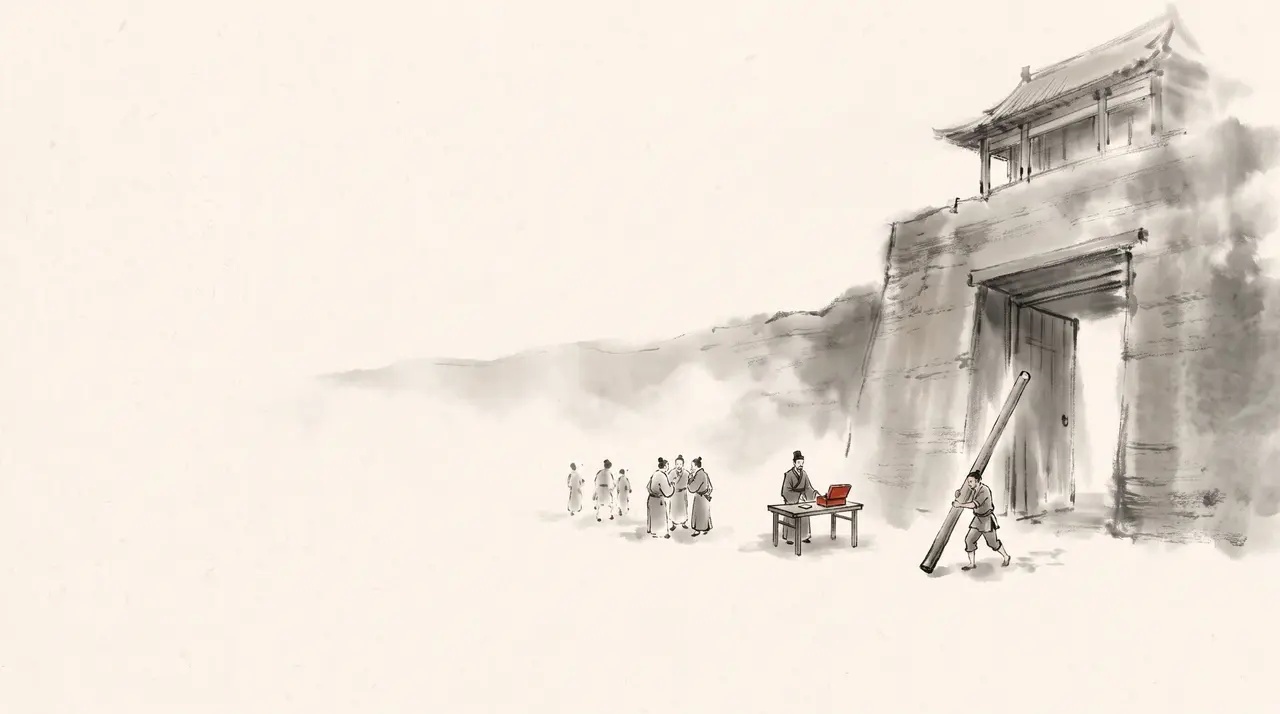
衛の公子の家筋に生まれた商鞅は、魏で用いられず、西の秦に入って孝公に「強い国をつくる術」を説く。孝公のもとで法を大きく改め、民を五軒・十軒の組にして互いに見張らせ、戦の手柄で身分を決める。新しい法を信じさせるため、都の門の木を移した者に五十金を与え、法を犯した太子の守り役まで罰した。秦は豊かで強い国になり、商鞅は商の地を与えられて商君と呼ばれる。だが孝公が亡くなると反乱の罪を着せられ、逃げた先の宿で「自分の作った法に苦しめられるとは」と嘆き、最後は車裂きの刑にされる。
この巻のうち「商鞅(木を移した者に五十金)」の場面を載せています。巻の全文ではありません。
音声
音声は合成音声です。
動画
節 1
原文
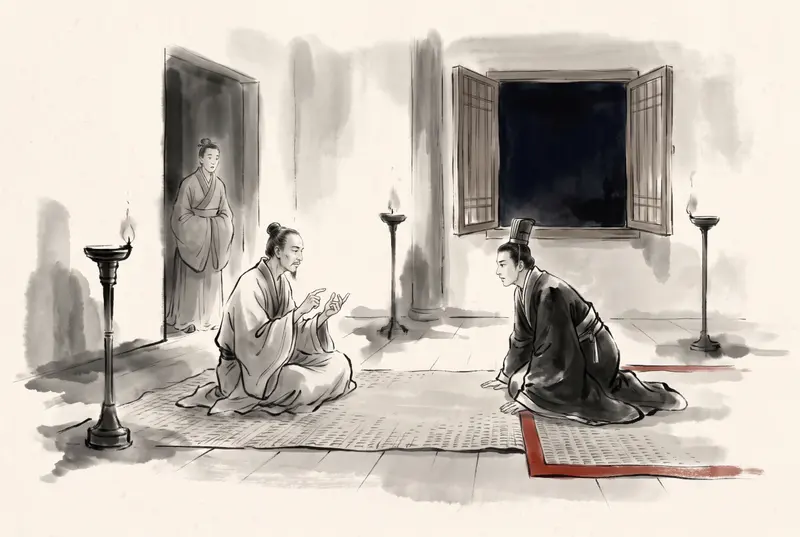
商君者,衛之諸庶孽公子也,名鞅,姓公孫氏,其祖本姬姓也。鞅少好刑名之學,事魏相公叔座為中庶子。公叔座知其賢,未及進。會座病,魏惠王親往問病,曰:「公叔病有如不可諱,將奈社稷何?」公叔曰:「座之中庶子公孫鞅,年雖少,有奇才,願王舉國而聽之。」王嘿然。王且去,座屏人言曰:「王即不聽用鞅,必殺之,無令出境。」王許諾而去。公叔座召鞅謝曰:「今者王問可以為相者,我言若,王色不許我。我方先君後臣,因謂王即弗用鞅,當殺之。王許我。汝可疾去矣,且見禽。」鞅曰:「彼王不能用君之言任臣,又安能用君之言殺臣乎?」卒不去。惠王既去,而謂左右曰:「公叔病甚,悲乎,欲令寡人以國聽公孫鞅也,豈不悖哉!」
書き下し文
商君なる者は、衛の諸庶孽の公子なり。名は鞅、姓は公孫氏、其の祖は本姫姓なり。鞅少くして刑名の学を好み、魏の相公叔座に事えて中庶子と為る。公叔座其の賢なるを知るも、未だ進むるに及ばず。会たま座病む。魏の恵王親ら往きて病を問いて曰く、「公叔の病如し諱むべからざる有らば、将に社稷を奈何せん」と。公叔曰く、「座の中庶子公孫鞅、年少しと雖も、奇才有り。願わくは王国を挙げて之に聴け」と。王嘿然たり。王且に去らんとす。座人を屏けて言いて曰く、「王即し鞅を聴用せずんば、必ず之を殺し、境を出でしむること無かれ」と。王許諾して去る。公叔座鞅を召して謝して曰く、「今者王相と為すべき者を問う。我若を言う。王の色我を許さず。我方に君を先にし臣を後にす。因りて王に謂う、即し鞅を用いずんば、当に之を殺すべし、と。王我に許せり。汝疾く去るべし。且に禽にせられんとす」と。鞅曰く、「彼の王君の言を用いて臣を任ずる能わず。又安くんぞ能く君の言を用いて臣を殺さんや」と。卒に去らず。恵王既に去りて、左右に謂いて曰く、「公叔の病甚だし。悲しいかな。寡人をして国を以て公孫鞅に聴かしめんと欲す。豈に悖らずや」と。
現代語訳
商君は、衛の国の公子の一人で、正妻以外の母から生まれた子の家筋である。名は鞅、姓は公孫といい、先祖はもともと姫姓である。鞅は若いころから、法律と刑罰によって国を治める学問を好み、魏の宰相の公叔座に仕えて中庶子(側近の役)となった。公叔座は鞅がすぐれていることを知っていたが、まだ王に推薦できずにいた。そのうち公叔座が病気になった。魏の恵王が自ら見舞いに来て言った。「もし公叔の病気が万一のことになったら、国をどうしたらよいだろう」。公叔は言った。「わたしの中庶子の公孫鞅は、年は若いですが、並はずれた才能があります。どうか王は国のすべてをこの者に任せてください」。王は黙っていた。王が帰ろうとすると、公叔座は人払いをして言った。「王がもし鞅を用いないのなら、必ず殺して、国境から出さないでください」。王は承知して帰った。公叔座は鞅を呼んでわびた。「さきほど王が宰相にふさわしい者をたずねられたので、わたしはおまえの名をあげたが、王は顔色からして承知されなかった。わたしは主君を先にし、家臣を後にする立場だ。だから王に、鞅を用いないなら殺すべきだと申し上げ、王はそれを承知された。おまえは急いで逃げなさい。捕まってしまうぞ」。鞅は言った。「王はあなたの言葉に従ってわたしを用いることはできませんでした。それなのに、どうしてあなたの言葉に従ってわたしを殺したりするでしょう」。そして結局、逃げなかった。恵王は帰ってから、側近に言った。「公叔の病気はひどいものだ。悲しいことだ。わたしに国を公孫鞅などに任せろと言うのだから。どうかしているではないか」。
英訳
Lord Shang was one of the sons of the ruling house of Wey by a lesser wife. His name was Yang, his surname Gongsun, and his ancestors were originally of the Ji clan. From his youth Yang loved the study of law and punishments. He served Gongshu Cuo, the chief minister of Wei, as his household secretary. Gongshu Cuo knew how able he was but had not yet had a chance to recommend him. Then Cuo fell ill, and King Hui of Wei came in person to ask after him. "If your illness should end in what we dare not name," the king said, "what will become of the state?" Gongshu said, "My secretary Gongsun Yang is young, but he has extraordinary talent. I beg Your Majesty to give him the whole state and follow his advice." The king said nothing. As the king was about to leave, Cuo sent everyone out and said, "If Your Majesty will not use Yang, you must kill him. Do not let him leave the country." The king promised and left. Gongshu Cuo then called Yang in and apologized: "Just now the king asked me who could be chief minister, and I named you. From his face I could see he would not agree. Since I must put my lord first and my servant second, I told him that if he would not use you, he should kill you, and he agreed. You must leave at once, or you will be seized." Yang said, "The king could not take your word and employ me. How could he take your word and kill me?" And in the end he did not leave. After King Hui had gone, he said to his attendants, "Gongshu is very ill. How sad! He wants me to hand the state over to Gongsun Yang. Is that not madness?"
解説(日)
- 商君: 商鞅(前390ごろ〜前338年)。もとの名は衛鞅、公孫鞅。のちに商の地を与えられたので商君と呼ばれる。
- 庶孽: 正妻以外の女性から生まれた子。
- 刑名之學: 法律と刑罰によって国を治める学問。法家の学問。
- 公叔座: 魏の宰相。
- 中庶子: 宰相の家の側近の役。
- 惠王: 魏の恵王(巻65の章を参照)。
- 不可諱: 言うのをはばかること、つまり死ぬこと。
- 社稷: 土地の神と穀物の神。国家のこと。
- 屏人: 人払いをする。
- 先君後臣: 主君(王)のことを先に考え、家臣(鞅)のことは後にする。
- 悖: 道理に合わない、どうかしている。
解説(英)
- Lord Shang: Shang Yang (c. 390–338 BCE), originally called Wey Yang or Gongsun Yang. He was later given the land of Shang, hence "Lord Shang."
- 庶孽: a son by a wife other than the principal one.
- 刑名之學: the study of law and punishments, the school later called Legalism.
- Gongshu Cuo: chief minister of Wei.
- Household secretary (中庶子): a close aide in a great minister's household.
- King Hui of Wei: see Volume 65.
- 不可諱 ("what we dare not name"): death.
- 社稷 ("the altars of soil and grain"): the state.
- 屏人: to send everyone out of the room.
- Put my lord first and my servant second (先君後臣): the king's interests before Yang's.
- 悖: unreasonable, mad.
英語の語注
- secretary/ˈsɛkrəˌtɛri/noun
a person who helps an important person with letters and records
本文では: “his household secretary”
似た語と違い: assistant — someone who helps · aide — a close helper of an official
- apologize/əˈpɑləˌdʒaɪz/verb
to say that you are sorry
本文では: “called Yang in and apologized”
似た語と違い: say sorry — everyday phrase · beg pardon — old; apologize
British spelling: apologise.
- attendant/əˈtɛndənt/noun
a person who serves an important person
本文では: “said to his attendants”
似た語と違い: servant — one who serves · aide — a close helper
- madness/ˈmædnəs/noun
very foolish behavior; mental illness
本文では: “Is that not madness?”
似た語と違い: folly — formal; foolishness · insanity — mental illness, or great foolishness
節 2
原文
公叔既死,公孫鞅聞秦孝公下令國中求賢者,將修繆公之業,東復侵地,乃遂西入秦,因孝公寵臣景監以求見孝公。孝公既見衛鞅,語事良久,孝公時時睡,弗聽。罷而孝公怒景監曰:「子之客妄人耳,安足用邪!」景監以讓衛鞅。衛鞅曰:「吾說公以帝道,其志不開悟矣。」後五日,復求見鞅。鞅復見孝公,益愈,然而未中旨。罷而孝公復讓景監,景監亦讓鞅。鞅曰:「吾說公以王道而未入也。請復見鞅。」鞅復見孝公,孝公善之而未用也。罷而去。孝公謂景監曰:「汝客善,可與語矣。」鞅曰:「吾說公以霸道,其意欲用之矣。誠復見我,我知之矣。」衛鞅復見孝公。公與語,不自知厀之前於席也。語數日不厭。
書き下し文
公叔既に死す。公孫鞅秦の孝公の令を国中に下して賢者を求め、将に繆公の業を修め、東のかた侵地を復さんとするを聞き、乃ち遂に西のかた秦に入り、孝公の寵臣景監に因りて以て孝公に見えんことを求む。孝公既に衛鞅を見て、事を語ること良久し。孝公時時睡りて、聴かず。罷めて孝公景監を怒りて曰く、「子の客は妄人のみ。安くんぞ用うるに足らんや」と。景監以て衛鞅を譲む。衛鞅曰く、「吾公に説くに帝道を以てす。其の志開悟せず」と。後五日、復た鞅に見えんことを求む。鞅復た孝公に見ゆ。益ます愈れるも、然れども未だ旨に中らず。罷めて孝公復た景監を譲め、景監も亦た鞅を譲む。鞅曰く、「吾公に説くに王道を以てして未だ入らざるなり。請う復た鞅を見よ」と。鞅復た孝公に見ゆ。孝公之を善しとするも未だ用いず。罷めて去る。孝公景監に謂いて曰く、「汝の客善し。与に語るべし」と。鞅曰く、「吾公に説くに霸道を以てす。其の意之を用いんと欲す。誠に復た我に見えば、我之を知る」と。衛鞅復た孝公に見ゆ。公与に語り、厀の席に前むを自ら知らず。語ること数日にして厭かず。
現代語訳
公叔座が死ぬと、公孫鞅は、秦の孝公が国中におふれを出して賢い人材を求め、先祖の繆公の偉業を受け継いで、東に奪われた土地を取り戻そうとしていると聞いた。そこで西の秦に入り、孝公のお気に入りの家臣である景監を通じて、孝公にお目通りを願った。孝公は衛鞅(商鞅)に会って、長い間話を聞いたが、ときどき居眠りをして、聞いていなかった。会見が終わると、孝公は景監に腹を立てて言った。「おまえの客はでたらめな男だ。使いものになるものか」。景監は衛鞅を責めた。衛鞅は言った。「わたしは殿に、古の聖天子の道を説いたのですが、殿のお心にはひびきませんでした」。五日後、孝公はまた鞅に会いたいと言った。鞅はふたたび孝公に会った。前よりはよかったが、まだ孝公の望むところにはかなわなかった。会見が終わると、孝公はまた景監を責め、景監もまた鞅を責めた。鞅は言った。「わたしは殿に王者の道を説いたのですが、受け入れられませんでした。どうかもう一度会わせてください」。鞅はまた孝公に会った。孝公は気に入ったが、まだ用いはしなかった。会見が終わって鞅が去ると、孝公は景監に言った。「おまえの客はなかなかよい。話し相手になる」。鞅は言った。「わたしは殿に覇者の道を説きました。殿はそれを用いたいとお考えです。もう一度会ってくだされば、わたしにはもうわかっています」。衛鞅はまた孝公に会った。孝公は話をするうちに、自分のひざが敷物の上で前へ前へと進んでいくのにも気づかないほどだった。何日話しても、飽きることがなかった。
英訳
After Gongshu died, Gongsun Yang heard that Duke Xiao of Qin had issued an order throughout his state seeking able men, intending to carry on the work of Duke Mu and win back the lands lost in the east. So he went west to Qin and, through Jing Jian, a favorite of Duke Xiao, asked for an audience. When Duke Xiao received Wey Yang, they talked about affairs for a long time, but the duke kept dozing off and did not listen. Afterward the duke said angrily to Jing Jian, "Your guest is a fool. What use is he?" Jing Jian reproached Wey Yang, who said, "I spoke to the duke about the way of the ancient emperors, but his mind was not opened to it." Five days later the duke asked to see Yang again. Yang met the duke again and did better, but still did not hit the mark. Afterward the duke again reproached Jing Jian, and Jing Jian again reproached Yang. Yang said, "I spoke to the duke about the way of the true kings, but it did not sink in. Please let me see him once more." Yang met the duke again. The duke liked him but still did not employ him. When Yang had left, the duke said to Jing Jian, "Your guest is good. He is someone I can talk to." Yang said, "I spoke to the duke about the way of the overlords, and he means to use it. If he really sees me again, I know what to say." Wey Yang met Duke Xiao again. As they talked, the duke did not notice that his knees were inching forward across the mat. They talked for several days without tiring.
解説(日)
- 秦孝公: 秦の君主(在位 前361〜前338年)。
- 繆公: 秦の穆公(在位 前659〜前621年)。春秋時代に秦を強国にした君主。
- 景監: 孝公の寵臣。宦官だったとされる。
- 衛鞅: 衛の出身なので衛鞅とも呼ぶ。
- 妄人: でたらめなことを言う者。
- 讓: 責める。
- 帝道・王道・霸道: 古の聖天子の道、徳で天下を治める王者の道、力で諸侯を従える覇者の道。商鞅は相手の好みを探るために、順に説いた。
- 不自知厀之前於席: 話に引きこまれて、座ったひざが自分でも気づかないうちに前へ出ていく。「厀」は「膝」と同じ。
- このあと(省略): 鞅は景監に「孝公は何十年も先の帝王の道より、すぐに国を強くする術を喜んだのだ」と語った。
解説(英)
- Duke Xiao of Qin (r. 361–338 BCE).
- Duke Mu of Qin (r. 659–621 BCE): the ruler who made Qin a great power in the Spring and Autumn period.
- Jing Jian: a favorite of Duke Xiao, said to have been a eunuch.
- Wey Yang: Shang Yang, called after his home state of Wey.
- 妄人: a fool, someone who talks nonsense.
- 讓: to reproach.
- The ways of the emperors, the kings and the overlords (帝道・王道・霸道): rule by the sages of old, rule by virtue, and rule by force. Shang Yang tried each in turn to learn what the duke wanted.
- His knees inching forward (不自知厀之前於席): so absorbed that he leaned closer and closer without noticing. 厀 is the same as 膝, knee.
- After this (left out here): Yang told Jing Jian that the duke would not wait decades for the way of the emperors and kings; what delighted him was the art of making a state strong at once.
英語の語注
- doze off/ˌdoʊz ˈɔf/phrasal verb
to fall into a light sleep without meaning to
本文では: “kept dozing off”
似た語と違い: nod off — informal; fall asleep · drift off — slowly fall asleep
- reproach/rɪˈproʊtʃ/verb
to tell someone you are unhappy with what they did
本文では: “Jing Jian reproached Wey Yang”
似た語と違い: scold — speak angrily to · criticize — point out faults
- inch/ɪntʃ/verb
to move very slowly, a little at a time
本文では: “inching forward across the mat”
似た語と違い: creep — move slowly · edge — move little by little
As a noun, an inch is about 2.5 cm.
- tire/taɪr/verb
to become tired or bored
本文では: “without tiring”
似た語と違い: weary — become tired · flag — become weaker
A tire (British: tyre) is also the rubber ring on a wheel.
節 3
原文
孝公既用衛鞅,鞅欲變法,恐天下議己。衛鞅曰:「疑行無名,疑事無功。且夫有高人之行者,固見非於世;有獨知之慮者,必見敖於民。愚者闇於成事,知者見於未萌。民不可與慮始而可與樂成。論至德者不和於俗,成大功者不謀於眾。是以聖人茍可以彊國,不法其故;茍可以利民,不循其禮。」孝公曰:「善。」
書き下し文
孝公既に衛鞅を用う。鞅法を変えんと欲するも、天下の己を議せんことを恐る。衛鞅曰く、「疑行は名無く、疑事は功無し。且つ夫れ高人の行い有る者は、固より世に非とせられ、独知の慮り有る者は、必ず民に敖らる。愚者は成事に闇く、知者は未萌に見る。民は与に始めを慮るべからずして、与に成るを楽しむべし。至徳を論ずる者は俗に和せず、大功を成す者は衆に謀らず。是を以て聖人は苟も以て国を彊くすべくんば、其の故に法らず。苟も以て民を利すべくんば、其の礼に循わず」と。孝公曰く、「善し」と。
現代語訳
孝公は衛鞅を用いることにした。鞅は法を改めようとしたが、孝公は天下の人々に非難されるのを恐れていた。衛鞅は言った。「ためらいながら行えば名はあがらず、ためらいながら事を進めれば成功はしません。そもそも人並みはずれた行いをする者は、もともと世間から非難されるものですし、ひとりだけ先を見通す考えをもつ者は、必ず民から笑われるものです。愚かな者は、事ができあがってもまだわからず、知恵のある者は、まだ芽も出ないうちに見ぬきます。民とは、物事の始まりを一緒に考えることはできませんが、できあがったものを一緒に楽しむことはできます。最高の徳を論じる者は世間の考えに合わせず、大きな功績をあげる者は人々に相談しません。ですから聖人は、国を強くできるのなら、昔のやり方にこだわらず、民の利益になるのなら、昔の礼に従わないのです」。孝公は言った。「よろしい」。
英訳
Duke Xiao now employed Wey Yang. Yang wanted to change the laws, but the duke was afraid of what the world would say about him. Wey Yang said, "Hesitant action wins no fame, and hesitant affairs bring no success. A man whose conduct rises above others is bound to be condemned by his age, and a man with insight of his own is sure to be mocked by the people. Fools cannot see a thing even when it is done; the wise see it before it sprouts. You cannot plan a beginning with the people, but you can enjoy the result with them. One who speaks of the highest virtue does not fall in with common opinion, and one who achieves great things does not consult the crowd. So the sage, if he can make the state strong, does not copy the old ways, and if he can benefit the people, does not follow the old rites." "Good," said Duke Xiao.
解説(日)
- 變法: 法を改めること。商鞅の改革を「変法」という。
- 疑行無名,疑事無功: ためらいながらの行動は名をあげず、ためらいながらの事業は成功しない。
- 見敖: 笑われる、ばかにされる。
- 未萌: まだ芽が出ないうち。
- 民不可與慮始而可與樂成: 民とは事の始めを相談できないが、できあがったものを一緒に楽しむことはできる。
- 不法其故,不循其禮: 昔のやり方や礼にこだわらない。
- このあと(省略): 家臣の甘竜と杜摯が「昔の法を守るべきだ」と反対したが、商鞅は論破し、孝公は商鞅を左庶長に任じて、新しい法を定めた。
解説(英)
- 變法 ("changing the laws"): the name later given to Shang Yang's reforms.
- 疑行無名,疑事無功: hesitant action wins no fame; hesitant undertakings bring no success.
- 見敖: to be mocked.
- 未萌: before it sprouts.
- 民不可與慮始而可與樂成: you cannot plan a beginning with the people, but you can enjoy the result with them.
- 不法其故,不循其禮: not bound by old ways or old rites.
- After this (left out here): the ministers Gan Long and Du Zhi argued for keeping the old laws, but Shang Yang refuted them, and the duke made him Chief of the Left (左庶長) and decreed the new laws.
英語の語注
- hesitant/ˈhɛzɪtənt/adjective
slow to act because you are not sure
本文では: “Hesitant action wins no fame”
似た語と違い: unsure — not certain · wavering — unable to decide
- sprout/spraʊt/verb
to begin to grow from a seed
本文では: “before it sprouts”
似た語と違い: bud — begin to grow · germinate — formal; start growing from a seed
節 4
原文
令民為什伍,而相牧司連坐。不告姦者腰斬,告姦者與斬敵首同賞,匿姦者與降敵同罰。民有二男以上不分異者,倍其賦。有軍功者,各以率受上爵;為私斗者,各以輕重被刑大小。戮力本業,耕織致粟帛多者復其身。事末利及怠而貧者,舉以為收孥。宗室非有軍功論,不得為屬籍。明尊卑爵秩等級,各以差次名田宅,臣妾衣服以家次。有功者顯榮,無功者雖富無所芬華。
書き下し文
民をして什伍を為さしめて、相牧司連坐せしむ。姦を告げざる者は腰斬し、姦を告ぐる者は敵の首を斬ると賞を同じくし、姦を匿す者は敵に降ると罰を同じくす。民に二男以上有りて分異せざる者は、其の賦を倍にす。軍功有る者は、各おの率を以て上爵を受け、私闘を為す者は、各おの軽重を以て刑の大小を被る。本業に戮力し、耕織して粟帛を致すこと多き者は其の身を復す。末利に事え及び怠りて貧しき者は、挙げて以て収孥と為す。宗室も軍功の論有るに非ずんば、属籍と為すを得ず。尊卑爵秩の等級を明らかにし、各おの差次を以て田宅を名し、臣妾衣服は家の次を以てす。功有る者は顕栄し、功無き者は富むと雖も芬華する所無し。
現代語訳
民を五軒・十軒ずつの組にまとめ、互いに見張らせ、罪を犯す者がいれば組全体で責任を負わせた。悪事を知りながら訴え出ない者は腰斬の刑とし、訴え出た者には、敵の首を取ったのと同じ褒美を与え、悪人をかくまった者には、敵に降参したのと同じ罰を与えた。一家に成人した男子が二人以上いて分家しない者には、税を倍にした。戦で手柄を立てた者には、その程度に応じて上の爵位を与え、私的なけんかをした者には、その軽い重いに応じて刑罰を加えた。農業と機織りという本業に力を尽くし、穀物や布を多く納めた者は、労役を免除した。商業のような末の仕事で利益を求めたり、怠けて貧しくなったりした者は、妻子もろとも奴隷にした。王族であっても、戦の手柄がなければ王族の籍に入れなかった。身分の上下や爵位・俸禄の等級をはっきりさせ、その等級に応じて田畑や屋敷を持たせ、召使いの数や衣服も家の等級によって決めた。手柄のある者は高い地位について栄え、手柄のない者は、たとえ金持ちでも、はなやかに暮らすことはできなかった。
英訳
The people were organized into groups of five and ten households, made to watch over one another and held jointly responsible for crimes. Anyone who failed to report a wrongdoer was cut in two at the waist; anyone who reported one was rewarded as if he had taken an enemy's head; anyone who hid one was punished as if he had surrendered to the enemy. A household with two or more grown sons that did not split up paid double tax. Those with merit in war received higher ranks in proportion to it; those who fought private feuds were punished more or less heavily according to the offense. Those who worked hard at the basic occupations, farming and weaving, and produced plenty of grain and cloth were excused from labor service. Those who pursued profit in trade, or who were idle and poor, were seized along with their wives and children and made slaves. Even members of the ruling house were struck off the clan register if they had no record of merit in war. The grades of rank and salary were made clear, and fields and houses were assigned by grade, and servants and clothing by the family's standing. Those with merit rose to glory, and those without it, however rich, had no way to show off.
解説(日)
- 什伍: 五軒・十軒を一組にした隣組。
- 牧司: 見張る、監視する。
- 連坐: 一人の罪を、組や家族全体に負わせること。
- 腰斬: 胴を断ち切る死刑。
- 二男以上不分異: 成人した息子が二人以上いて分家しない。家を小さく分けさせて、税や兵を出す家の数を増やそうとした。
- 率: 割合、程度。
- 本業: 農業と機織り。
- 復其身: 労役を免除する。
- 末利: 商業など「末」とされた仕事の利益。
- 收孥: 妻子とともに官の奴隷にする。
- 屬籍: 王族の名簿。
- 芬華: はなやかに暮らす、見せびらかす。
解説(英)
- 什伍: groups of five and ten households.
- 牧司: to watch over, keep under surveillance.
- 連坐: holding a group or family jointly responsible for one person's crime.
- 腰斬: execution by cutting the body in two at the waist.
- Two or more sons who did not split up: making families divide increased the number of households paying tax and supplying soldiers.
- 率: proportion, degree.
- The basic occupations (本業): farming and weaving.
- 復其身: exemption from labor service.
- 末利: profit from "secondary" occupations such as trade.
- 收孥: to enslave a man together with his wife and children.
- 屬籍: the register of the ruling clan.
- 芬華: to live in splendor, to show off.
英語の語注
- feud/fjuːd/noun
a long and bitter quarrel between people or families
本文では: “private feuds”
似た語と違い: quarrel — an angry argument · vendetta — a long feud with revenge
- register/ˈrɛdʒɪstər/noun
an official list of names
本文では: “struck off the clan register”
似た語と違い: roll — an official list · record — a written account
節 5
原文
令既具,未布,恐民之不信,已乃立三丈之木於國都市南門,募民有能徙置北門者予十金。民怪之,莫敢徙。復曰「能徙者予五十金」。有一人徙之,輒予五十金,以明不欺。卒下令。
書き下し文
令既に具わるも、未だ布かず。民の信ぜざらんことを恐れ、已にして乃ち三丈の木を国都の市の南門に立て、民の能く徙して北門に置く者有らば十金を予えんと募る。民之を怪しみ、敢えて徙す莫し。復た曰く「能く徙す者には五十金を予えん」と。一人之を徙す有り。輒ち五十金を予え、以て欺かざるを明らかにす。卒に令を下す。
現代語訳
新しい法令はすっかりできあがったが、まだ発布しなかった。民が信じないのではないかと心配したのである。そこで、三丈(約七メートル)の木を都の市場の南門に立て、これを北門に移した者には十金を与える、とおふれを出した。民はあやしんで、だれも動かそうとしなかった。そこでまた、「移した者には五十金を与える」とおふれを出した。ある一人が木を移すと、すぐに五十金を与えて、うそをつかないことをはっきり示した。そうしてから、ついに新しい法令を発布した。
英訳
The new laws were ready but had not yet been proclaimed, for fear that the people would not believe in them. So a log thirty feet long was set up at the south gate of the market in the capital, and it was announced that anyone who could move it to the north gate would be given ten pieces of gold. The people thought this strange, and no one dared to move it. Then it was announced: "Whoever can move it will be given fifty pieces of gold." One man moved it, and he was given fifty pieces of gold on the spot, to show that the state did not deceive. Then at last the laws were proclaimed.
解説(日)
- 三丈: 当時の一丈は約2.3メートルなので、約7メートル。
- 國都: 都。このころの秦の都は櫟陽(今の陝西省西安市の北東)とされる。
- 十金: 「金」は黄金の単位。
- 以明不欺: うそをつかないことをはっきり示す。「徙木の信(移木の信)」として知られる。法は必ず守られると民に信じさせるための策。
解説(英)
- Thirty feet (三丈): about seven meters.
- The capital: at this time probably Yueyang, northeast of present-day Xi'an.
- 金: a unit of gold.
- To show that the state did not deceive (以明不欺): known as "the trust won by moving a log," a way of making the people believe the law would always be kept.
この節から生まれた言葉: 移木の信
英語の語注
- proclaim/proʊˈkleɪm/verb
to announce officially and publicly
本文では: “had not yet been proclaimed”
似た語と違い: announce — make known · declare — say officially
- deceive/dɪˈsiːv/verb
to make someone believe something false
本文では: “did not deceive”
似た語と違い: trick — cheat by a clever plan · mislead — give the wrong idea
節 6
原文
令行於民朞年,秦民之國都言初令之不便者以千數。於是太子犯法。衛鞅曰:「法之不行,自上犯之。」將法太子。太子,君嗣也,不可施刑,刑其傅公子虔,黥其師公孫賈。明日,秦人皆趨令。行之十年,秦民大說,道不拾遺,山無盜賊,家給人足。民勇於公戰,怯於私斗,鄉邑大治。秦民初言令不便者有來言令便者,衛鞅曰「此皆亂化之民也。」,盡遷之於邊城。其後民莫敢議令。
書き下し文
令民に行わるること朞年、秦の民の国都に之きて初令の便ならざるを言う者千を以て数う。是に於いて太子法を犯す。衛鞅曰く、「法の行われざるは、上より之を犯せばなり」と。将に太子を法せんとす。太子は君の嗣なり。刑を施すべからず。其の傅公子虔を刑し、其の師公孫賈を黥す。明日、秦人皆令に趨く。之を行うこと十年、秦の民大いに説び、道に遺ちたるを拾わず、山に盗賊無く、家給し人足る。民公戦に勇に、私闘に怯にして、郷邑大いに治まる。秦の民の初め令の便ならずと言いし者に、来たりて令の便なりと言う者有り。衛鞅曰く「此れ皆化を乱すの民なり」と。尽く之を辺城に遷す。其の後民敢えて令を議する莫し。
現代語訳
新しい法令が民に行われて一年たつと、都に来て「新しい法令は不便だ」と訴える秦の民は千人単位にのぼった。そんなとき、太子が法を犯した。衛鞅は言った。「法が行われないのは、上の者が法を犯すからだ」。そして太子を法によって罰しようとした。だが太子は君主の跡継ぎなので、刑罰を加えるわけにはいかない。そこで太子の守り役の公子虔を罰し、教育係の公孫賈の顔に入れ墨をした。次の日から、秦の人々はみな法令に従うようになった。法令が行われて十年たつと、秦の民は大いに喜んだ。道に落とし物があってもだれも拾わず、山には盗賊がいなくなり、どの家も満ち足りて、だれもが豊かになった。民は国のための戦いには勇ましく、私的なけんかにはおじけづくようになり、村々はよく治まった。初めに法令は不便だと言っていた民の中に、今度は法令は便利だと言いに来る者がいた。衛鞅は「これはみな、教化を乱す民だ」と言って、一人残らず辺境の町に移してしまった。それからは、民のだれも法令をあれこれ言わなくなった。
英訳
When the laws had been in force for a year, people of Qin coming to the capital to complain that the new laws were troublesome numbered in the thousands. Then the crown prince broke the law. Wey Yang said, "The laws are not obeyed because those above break them." He meant to punish the crown prince by law. But the crown prince was the ruler's heir and could not be punished. So Yang punished his guardian, Prince Qian, and had the face of his tutor, Gongsun Jia, tattooed. The next day all the people of Qin obeyed the laws. After ten years the people of Qin were delighted. No one picked up what was dropped on the road, there were no bandits in the hills, and every household and every person had enough. The people were brave in war for the state and timid in private feuds, and the towns and villages were well ordered. Some of those who had first said the laws were troublesome now came to say they were convenient. Wey Yang said, "These are all people who disturb good order," and he moved every one of them to the frontier towns. After that no one dared to discuss the laws.
解説(日)
- 朞年: まる一年。
- 太子: のちの秦の恵文王。
- 法之不行,自上犯之: 法が行われないのは、上の者が法を犯すからだ。
- 傅・師: 太子の守り役と教育係。
- 公子虔: 孝公の兄弟とされる。のちに商鞅を陥れる(p10)。
- 道不拾遺: 道に落ちている物を拾わない。よく治まった世のたとえ。
- 勇於公戰,怯於私斗: 国のための戦いには勇ましく、私的なけんかにはおじけづく。
- 亂化之民: 教化を乱す民。法をほめるのも、けなすのも、民が法を議論すること自体を許さなかった。
解説(英)
- 朞年: a full year.
- The crown prince: later King Huiwen of Qin.
- 法之不行,自上犯之: "The laws are not obeyed because those above break them."
- Guardian and tutor (傅・師): the crown prince's teachers.
- Prince Qian: said to be a brother of Duke Xiao. He later brought Shang Yang down (p10).
- 道不拾遺 ("no one picked up what was dropped on the road"): a picture of a well-ordered society.
- Brave in war for the state, timid in private feuds (勇於公戰,怯於私斗).
- People who disturb good order (亂化之民): whether they praised the laws or criticized them, the people were not to discuss the laws at all.
英語の語注
- obey/oʊˈbeɪ/verb
to do what a law or person tells you
本文では: “The laws are not obeyed”
似た語と違い: follow — act according to · comply with — formal; obey
- guardian/ˈɡɑrdiən/noun
a person who protects and teaches a young person
本文では: “his guardian, Prince Qian”
似た語と違い: protector — one who protects · tutor — a private teacher
- timid/ˈtɪmɪd/adjective
shy and easily frightened
本文では: “timid in private feuds”
似た語と違い: fearful — afraid · shy — nervous with others
- convenient/kənˈviːniənt/adjective
useful and easy
本文では: “they were convenient”
似た語と違い: handy — informal; useful · practical — useful in real life
節 7
原文
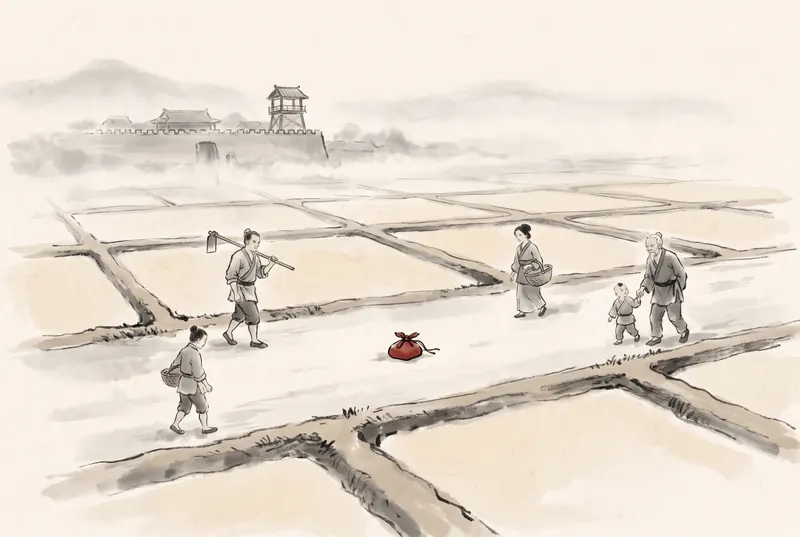
於是以鞅為大良造。將兵圍魏安邑,降之。居三年,作為筑冀闕宮庭於咸陽,秦自雍徙都之。而令民父子兄弟同室內息者為禁。而集小(都)鄉邑聚為縣,置令、丞,凡三十一縣。為田開阡陌封疆,而賦稅平。平斗桶權衡丈尺。行之四年,公子虔復犯約,劓之。居五年,秦人富彊,天子致胙於孝公,諸侯畢賀。
書き下し文
是に於いて鞅を以て大良造と為す。兵を将いて魏の安邑を囲み、之を降す。居ること三年、作為して冀闕・宮庭を咸陽に築き、秦雍より徙りて之に都す。而して民の父子兄弟の室を同じくして内息する者を禁と為す。而して小の郷邑聚を集めて県と為し、令・丞を置く。凡そ三十一県。田を為りて阡陌封疆を開き、而して賦税平らかなり。斗桶権衡丈尺を平らかにす。之を行うこと四年、公子虔復た約を犯し、之を劓す。居ること五年、秦人富彊なり。天子胙を孝公に致し、諸侯畢く賀す。
現代語訳
そこで鞅を大良造(最高の爵位)に任じた。鞅は兵を率いて魏の安邑を包囲し、降伏させた。三年後、咸陽に冀闕という門の楼と宮殿を築き、秦は雍から都を咸陽に移した。また民の父子や兄弟が同じ部屋に寝起きすることを禁じた。小さな村や集落を集めて県とし、長官の令と次官の丞を置いた。全部で三十一の県になった。田畑のあぜ道と境界を新しく開いて、税を公平にした。升・桶・はかり・物差しを統一した。これを行って四年後、公子虔がまた法を犯したので、鼻をそぐ刑に処した。それから五年たつと、秦の人々は豊かで強くなった。周の天子は孝公に祭りの肉を贈り、諸侯もみな祝いを述べた。
英訳
Yang was then made Grand Fashioner, the highest rank. He led an army that besieged Anyi in Wei and forced it to surrender. Three years later he built the Ji Gate towers and a palace at Xianyang, and Qin moved its capital there from Yong. He also forbade fathers and sons, and elder and younger brothers, to live and sleep in the same room. The small towns, villages and hamlets were gathered into counties, each with a magistrate and an assistant, thirty-one counties in all. The fields were laid out anew with paths and boundaries, and taxes were made fair. Measures of capacity, weights and lengths were made uniform. Four years after this, Prince Qian broke the law again, and his nose was cut off. Five years later the people of Qin were rich and strong. The Son of Heaven sent Duke Xiao sacrificial meat, and all the lords offered their congratulations.
解説(日)
- 大良造: 秦の爵位で、最も高い位の一つ。
- 安邑: 魏の古い都。今の山西省夏県のあたり。
- 冀闕: 宮殿の門の左右に建てた高い楼。法令を掲げたとされる。
- 咸陽: 今の陝西省咸陽市。このあと秦が滅びるまで都だった。前350年。
- 雍: 秦の古い都。今の陝西省鳳翔のあたり。
- 同室內息者為禁: 父子や兄弟が一部屋に寝起きすることを禁じる。西方の古い風俗を改めさせた。
- (都): 校訂者が不要とした字。読まない。
- 縣・令・丞: 県と、その長官(令)と次官(丞)。中央から役人を送る郡県制のもとになった。
- 阡陌: 田畑の間の南北と東西のあぜ道。
- 斗桶權衡丈尺: 升・桶・はかり・物差し。度量衡の統一。この時代の「商鞅方升」が今も残っている。
- 劓: 鼻をそぐ刑。
- 天子致胙: 周の天子が祭りの肉を贈る。覇者として認めるしるし。
解説(英)
- Grand Fashioner (大良造): one of the highest ranks in Qin.
- Anyi: the old capital of Wei, near present-day Xia County in Shanxi.
- The Ji Gate towers (冀闕): tall towers on either side of the palace gate, where laws were said to be posted.
- Xianyang: present-day Xianyang in Shaanxi, the Qin capital from 350 BCE until the fall of Qin.
- Yong: an old capital of Qin, near present-day Fengxiang in Shaanxi.
- Forbidding families to sleep in one room: changing an old custom of the western peoples.
- (都): a character the editors mark as extra; it is not read.
- Counties, magistrates and assistants (縣・令・丞): the start of the system of centrally appointed officials.
- 阡陌: the north–south and east–west paths between fields.
- Uniform measures (斗桶權衡丈尺): a bronze measuring vessel of Shang Yang's survives today.
- 劓: cutting off the nose as a punishment.
- The Son of Heaven sent sacrificial meat: the Zhou king's sign of recognizing Qin's leadership.
英語の語注
- magistrate/ˈmædʒɪˌstreɪt/noun
an official who governs a district and judges cases
本文では: “a magistrate and an assistant”
似た語と違い: governor — the ruler of a region · judge — one who decides cases in court
- uniform/ˈjuːnɪˌfɔrm/adjective
the same everywhere
本文では: “were made uniform”
似た語と違い: standard — the same for all · consistent — always the same
As a noun, a uniform is special clothing for a job or school.
節 8
原文
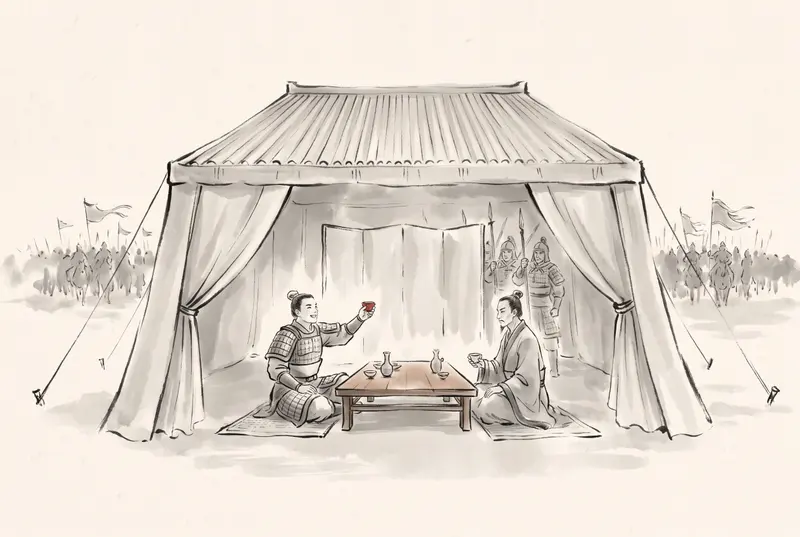
孝公以為然,使衛鞅將而伐魏。魏使公子卬將而擊之。軍既相距,衛鞅遺魏將公子卬書曰:「吾始與公子驩,今俱為兩國將,不忍相攻,可與公子面相見,盟,樂飲而罷兵,以安秦魏。」魏公子卬以為然。會盟已,飲,而衛鞅伏甲士而襲虜魏公子卬,因攻其軍,盡破之以歸秦。魏惠王兵數破於齊秦,國內空,日以削,恐,乃使使割河西之地獻於秦以和。而魏遂去安邑,徙都大梁。梁惠王曰:「寡人恨不用公叔座之言也。」衛鞅既破魏還,秦封之於、商十五邑,號為商君。
書き下し文
孝公以て然りと為し、衛鞅をして将として魏を伐たしむ。魏公子卬をして将として之を撃たしむ。軍既に相距つ。衛鞅魏の将公子卬に書を遺りて曰く、「吾始め公子と驩す。今倶に両国の将と為る。相攻むるに忍びず。公子と面相見え、盟い、楽飲して兵を罷め、以て秦・魏を安んずべし」と。魏の公子卬以て然りと為す。会盟已わりて、飲む。而して衛鞅甲士を伏せて襲いて魏の公子卬を虜にし、因りて其の軍を攻め、尽く之を破りて以て秦に帰る。魏の恵王の兵数しば斉・秦に破られ、国内空しく、日に以て削らる。恐れ、乃ち使いをして河西の地を割きて秦に献じて以て和せしむ。而して魏遂に安邑を去り、都を大梁に徙す。梁の恵王曰く、「寡人公叔座の言を用いざりしを恨む」と。衛鞅既に魏を破りて還る。秦之を於・商の十五邑に封じ、号して商君と為す。
現代語訳
孝公はそのとおりだと考え、衛鞅を将軍にして魏を攻めさせた。魏は公子卬を将軍にして迎え撃たせた。両軍がにらみ合うと、衛鞅は魏の将軍の公子卬に手紙を送った。「わたしはもともと公子と親しくしていました。いま二人とも両国の将軍となりましたが、攻め合うのは忍びません。公子と顔を合わせて盟約を結び、楽しく酒を飲んで兵を引き、秦と魏を安らかにしましょう」。魏の公子卬はそれがよいと思った。盟約を結び終えて酒を飲んでいると、衛鞅は伏せておいた鎧の兵に襲わせて、魏の公子卬をとりこにした。そのまま魏の軍を攻めて、すっかり打ち破り、秦に帰った。魏の恵王は、斉と秦に何度も兵を破られて、国の中は空っぽになり、日に日に領土を削られていった。恐れた恵王は、使いをやって河西の地を秦に差し出し、和睦した。そして魏はとうとう安邑を捨てて、都を大梁に移した。梁の恵王は言った。「公叔座の言葉に従わなかったことが悔やまれる」。衛鞅が魏を破って帰ると、秦は於・商の十五の町を領地として与え、商君と名のらせた。
英訳
Duke Xiao agreed and sent Wey Yang at the head of an army to attack Wei. Wei sent Prince Ang to meet him. When the two armies faced each other, Wey Yang sent a letter to Prince Ang, the Wei general: "I was once your friend. Now we are both generals of our states, but I cannot bear to fight you. Let us meet face to face, swear a covenant, drink together happily and withdraw our troops, so that Qin and Wei can be at peace." Prince Ang of Wei agreed. When the covenant was sworn, they drank, and then Wey Yang's hidden men in armor fell on Prince Ang and took him prisoner. Yang then attacked the Wei army, destroyed it completely and returned to Qin. King Hui of Wei, whose armies had been beaten again and again by Qi and Qin, saw his state emptied and his land shrinking day by day. In fear, he sent envoys to cede the land west of the Yellow River to Qin and make peace. Then Wei abandoned Anyi and moved its capital to Daliang. King Hui of Liang said, "I regret that I did not follow Gongshu Cuo's advice." When Wey Yang returned after defeating Wei, Qin gave him fifteen towns at Yu and Shang as his fief and named him Lord Shang.
解説(日)
- この節の前(省略): 斉が馬陵で魏を破った翌年(巻65の章を参照)、衛鞅は孝公に「秦にとって魏は腹心の病のようなもの。魏が斉に敗れたいまこそ攻めるべきです」と説いた。
- 公子卬: 魏の公子。
- 驩: 「歓」と同じ。親しくする。
- 甲士: 鎧を着た兵。
- 河西之地: 黄河の西の地。今の陝西省東部。かつて呉起が守った土地(巻65の章を参照)。
- 徙都大梁: 大梁は今の河南省開封市。このため魏は「梁」とも呼ばれる。
- 寡人恨不用公叔座之言: p1で公叔座が「鞅を用いないなら殺せ」と言ったことを受ける。
- 於、商: 今の河南省西部から陝西省南東部にかけての地。「於、商」の読点は原文のまま。
解説(英)
- Before this (left out here): the year after Qi crushed Wei at Maling (see Volume 65), Wey Yang told Duke Xiao that Wei was like a disease in Qin's belly, and that now, with Wei beaten by Qi, was the time to strike.
- Prince Ang: a prince of Wei.
- 驩: the same as 歡, friendship.
- 甲士: soldiers in armor.
- The land west of the Yellow River (河西): in present-day eastern Shaanxi, once defended by Wu Qi (see Volume 65).
- Moved its capital to Daliang: present-day Kaifeng in Henan, which is why Wei was also called Liang.
- "I regret that I did not follow Gongshu Cuo's advice": Cuo had told him to use Yang or kill him (p1).
- Yu and Shang (於、商): lands in western Henan and southeastern Shaanxi. The comma between them is as in the source text.
英語の語注
- armor/ˈɑrmər/noun
metal or leather covering worn in battle
本文では: “hidden men in armor”
似た語と違い: mail — armor made of metal rings · plate — armor made of metal sheets
British spelling: armour.
- prisoner/ˈprɪzənər/noun
a person who is caught and held
本文では: “took him prisoner”
似た語と違い: captive — one taken in war · detainee — formal; one held by the authorities
- cede/siːd/verb
to give land or power to another country, usually unwillingly
本文では: “to cede the land”
似た語と違い: surrender — give up · hand over — give to another
- fief/fiːf/noun
land given by a ruler to someone who serves him
本文では: “as his fief”
似た語と違い: estate — a large area of land · domain — land that someone rules
節 9
原文
君之出也,後車十數,從車載甲,多力而駢脅者為驂乘,持矛而操闟戟者旁車而趨。此一物不具,君固不出。《書》曰:『恃德者昌,恃力者亡。』君之危若朝露,尚將欲延年益壽乎?則何不歸十五都,灌園於鄙,勸秦王顯巖穴之士,養老存孤,敬父兄,序有功,尊有德,可以少安。君尚將貪商於之富,寵秦國之教,畜百姓之怨,秦王一旦捐賓客而不立朝,秦國之所以收君者,豈其微哉?亡可翹足而待。」商君弗從。
書き下し文
君の出づるや、後車十数、従車甲を載せ、多力にして駢脅なる者驂乗と為り、矛を持ちて闟戟を操る者車に旁いて趨る。此の一物具わらずんば、君固より出でず。書に曰く、『徳を恃む者は昌え、力を恃む者は亡ぶ』と。君の危うきこと朝露の若し。尚お将に年を延べ寿を益さんと欲するか。則ち何ぞ十五都を帰し、園に鄙に灌ぎ、秦王に勧めて巌穴の士を顕し、老を養い孤を存し、父兄を敬い、有功を序し、有徳を尊ばしめざる。以て少しく安んずべし。君尚お将に商・於の富を貪り、秦国の教えを寵とし、百姓の怨みを畜えんとす。秦王一旦賓客を捐てて朝に立たずんば、秦国の君を収むる所以の者、豈に其れ微ならんや。亡ぶること足を翹げて待つべし」と。商君従わず。
現代語訳
「あなたが外出なさるときは、後ろに十数台の車が続き、従う車には鎧が積まれ、怪力で胸板の厚い男が車に同乗して護衛し、矛や戟を持った兵が車の両側を走ります。このうち一つでも欠ければ、あなたは決して外に出られない。『書経』に『徳を頼む者は栄え、力を頼む者は滅びる』とあります。あなたの身の危うさは、朝の露のようなものです。それでもまだ長生きしたいとお望みですか。それなら、なぜ十五の町を返して、田舎で畑に水をやって暮らし、秦王に勧めて、山の洞穴に隠れている賢者を取り立て、老人を養い、みなしごを助け、年長の者を敬い、手柄のある者を順に用い、徳のある者を尊ばせないのですか。そうすれば、少しは安らかでいられるでしょう。あなたはまだ商・於の富をむさぼり、秦の国を作り変えたことを誇り、民の恨みを積み上げようとしている。秦王がひとたび賓客を見捨てて、朝廷にお立ちにならなくなったら(亡くなったら)、秦の国があなたを捕らえる理由は、決して少なくないでしょう。あなたが滅びるのは、つま先立ちで待つほどの間のことです」。商君は従わなかった。
英訳
"When you go out, a dozen carriages follow behind, the escort carriages carry armor, a man of great strength with a barrel chest rides beside you as your bodyguard, and soldiers with spears and halberds run alongside your carriage. If a single one of these is missing, you will not go out at all. The Book of Documents says, 'He who relies on virtue flourishes; he who relies on force perishes.' Your danger is like that of the morning dew. Do you still hope to live long? Then why not give back your fifteen towns, water your garden in the countryside, and urge the King of Qin to bring forward the worthy men hiding in mountain caves, care for the old and the orphaned, respect fathers and elder brothers, rank men by their merit and honor the virtuous? Then you might be a little safer. But you go on coveting the riches of Shang and Yu, taking pride in your reshaping of Qin, and storing up the people's hatred. The day the King of Qin leaves his guests behind and no longer comes to court, will the reasons Qin has for seizing you be few? Your ruin can be awaited standing on tiptoe." Lord Shang did not follow his advice.
解説(日)
- この節の前(省略): 商君が秦の宰相となって十年、王族や貴族の多くが商君を恨んでいた。趙良という人が商君に会いに来て、春秋時代の秦の名宰相「五羖大夫」百里奚と比べながら、商君のやり方をいさめた。この節はその言葉の終わりの部分。
- 駢脅: あばら骨がつながっているほど胸板が厚い。怪力の男。
- 驂乘: 車に同乗する護衛。
- 闟戟: 戟の一種。
- 恃德者昌,恃力者亡: 徳を頼る者は栄え、力を頼る者は滅びる。
- 危若朝露: 朝の露のように、すぐ消えてしまう危うさ。
- 巖穴之士: 山の洞穴に隠れて住む賢者。
- 秦王: ここでは孝公のこと。
- 捐賓客而不立朝: 賓客を見捨て、朝廷に立たなくなる。君主が死ぬことの遠回しな言い方。
- 翹足而待: つま先立ちして待つ。すぐにやってくること。
解説(英)
- Before this (left out here): after ten years as chief minister of Qin, Lord Shang had many enemies among the royal clan and the nobles. A man named Zhao Liang came to see him and rebuked his ways, comparing him unfavorably with Baili Xi, the great minister of Qin in the Spring and Autumn period. This passage is the end of his speech.
- 駢脅 ("joined ribs"): a barrel-chested strongman.
- 驂乘: a bodyguard riding in the same carriage.
- 闟戟: a kind of halberd.
- 恃德者昌,恃力者亡: "He who relies on virtue flourishes; he who relies on force perishes."
- 危若朝露 ("like the morning dew"): soon to vanish.
- 巖穴之士: worthy men living in mountain caves as hermits.
- The King of Qin: here Duke Xiao.
- Leaves his guests and no longer comes to court: a roundabout way of saying the ruler dies.
- 翹足而待 ("wait on tiptoe"): it will come very soon.
英語の語注
- escort/ˈɛskɔrt/noun
people or vehicles that go with someone to protect them
本文では: “the escort carriages carry armor”
似た語と違い: guard — protection · retinue — people who go with an important person
- covet/ˈkʌvɪt/verb
to strongly want something that belongs to someone else
本文では: “coveting the riches”
似た語と違い: crave — want very much · desire — want strongly
節 10
原文
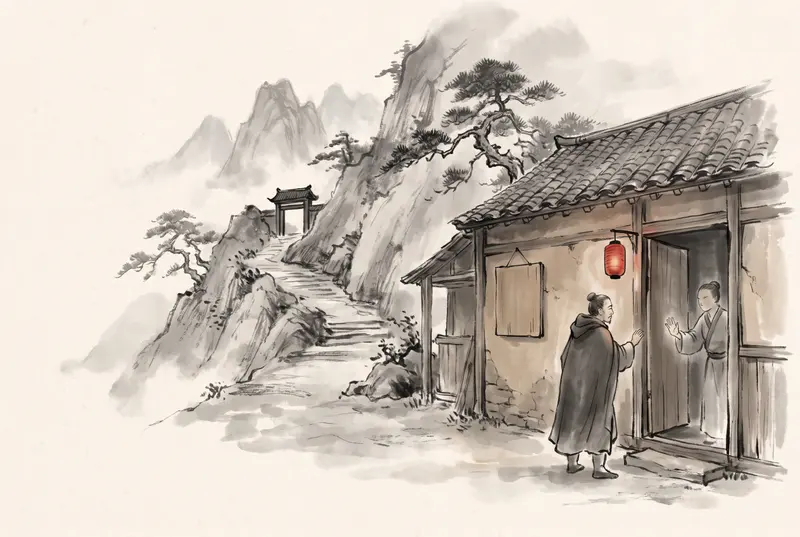
後五月而秦孝公卒,太子立。公子虔之徒告商君欲反,發吏捕商君。商君亡至關下,欲舍客舍。客人不知其是商君也,曰:「商君之法,舍人無驗者坐之。」商君喟然嘆曰:「嗟乎,為法自斃一至此哉!」去之魏。魏人怨其欺公子卬而破魏師,弗受。商君欲之他國。魏人曰:「商君,秦之賊。秦彊而賊入魏,弗歸,不可。」遂內秦。商君既復入秦,走商邑,與其徒屬發邑兵北出擊鄭。秦發兵攻商君,殺之於鄭黽池。秦惠王車裂商君以徇,曰:「莫如商鞅反者!」遂滅商君之家。
書き下し文
後五月にして秦の孝公卒し、太子立つ。公子虔の徒商君の反せんと欲するを告ぐ。吏を発して商君を捕らえんとす。商君亡げて関下に至り、客舎に舎らんと欲す。客人其の是れ商君なるを知らずして曰く、「商君の法に、人を舎して験無き者は之に坐す」と。商君喟然として嘆じて曰く、「嗟乎、法を為りて自ら斃るること、一に此に至るか」と。去りて魏に之く。魏人其の公子卬を欺きて魏の師を破りしを怨み、受けず。商君他国に之かんと欲す。魏人曰く、「商君は秦の賊なり。秦彊くして賊魏に入る。帰さずんば、不可なり」と。遂に秦に内る。商君既に復た秦に入り、商邑に走り、其の徒属と邑兵を発して北のかた出でて鄭を撃つ。秦兵を発して商君を攻め、之を鄭の黽池に殺す。秦の恵王商君を車裂して以て徇えて曰く、「商鞅の如く反する者莫かれ」と。遂に商君の家を滅ぼす。
現代語訳
それから五か月後、秦の孝公が亡くなり、太子が位についた。公子虔の一派が「商君が反乱を起こそうとしている」と訴え出たので、役人が商君を捕らえに向かった。商君は逃げて関所のふもとまで来て、宿屋に泊まろうとした。宿の主人は、それが商君だとは知らずに言った。「商君の法では、身分証明のない客を泊めると、こちらも罰せられるのです」。商君はため息をついて言った。「ああ、自分の作った法の害が、ここまでわが身にふりかかるとは」。商君は秦を去って魏へ行った。魏の人々は、商君が公子卬をだまして魏の軍を破ったことを恨んでいたので、受け入れなかった。商君がほかの国へ行こうとすると、魏の人々は言った。「商君は秦の罪人だ。秦は強国だ。その罪人が魏に入ってきたのに、送り返さないわけにはいかない」。そして秦へ送り返した。秦に戻された商君は、自分の領地の商へ逃げ、家来たちとともに領地の兵を出して、北の鄭を攻めた。秦は兵を出して商君を攻め、鄭の黽池で殺した。秦の恵王は、商君の体を車で引き裂く刑にしてさらし、「商鞅のように反乱を起こす者は許さない」と言った。そして商君の一族を皆殺しにした。
英訳
Five months later Duke Xiao of Qin died and the crown prince came to the throne. Prince Qian's followers accused Lord Shang of plotting rebellion, and officers were sent to arrest him. Lord Shang fled to the foot of the pass and tried to stay at an inn. The innkeeper, not knowing who he was, said, "Under Lord Shang's law, anyone who lodges a guest without papers is punished with him." Lord Shang sighed and said, "Alas! To think that the harm of the laws I made has come to this!" He left and went to Wei. The people of Wei hated him for tricking Prince Ang and destroying their army, and would not take him in. When Lord Shang tried to go on to another state, the people of Wei said, "Lord Shang is a criminal of Qin. Qin is strong, and its criminal has come into Wei. We cannot fail to send him back." So they sent him back into Qin. Back in Qin, Lord Shang fled to his fief of Shang, raised its troops with his followers and marched north to attack Zheng. Qin sent an army against him and killed him at Mianchi in Zheng. King Hui of Qin had his body torn apart by chariots as a warning to all, saying, "Let no one rebel as Shang Yang did!" And he wiped out Lord Shang's family.
解説(日)
- 太子立: 法を犯して守り役が罰せられた、あの太子(p6)。のちの恵文王(ここでは秦の恵王)。前338年。
- 公子虔之徒: p6とp7で刑を受けた公子虔の一派。
- 關下: 関所のふもと。国境の関所とされる。
- 舍人無驗者坐之: 証明書(験)のない人を泊めた者は、罪に問われる。p4の連坐の法。
- 為法自斃: 自分の作った法で、自分が倒れる。「作法自斃(法を作りて自ら斃る)」という言葉のもと。
- 秦之賊: 秦の罪人、反逆者。
- 鄭黽池: 今の河南省澠池県のあたり。
- 車裂: 手足と首を車につないで引き裂く刑。
解説(英)
- The crown prince came to the throne: the same prince whose guardian was punished for his crime (p6), later King Huiwen (here "King Hui of Qin"). This was in 338 BCE.
- Prince Qian's followers: the party of Prince Qian, punished in p6 and p7.
- The pass: a border pass.
- 舍人無驗者坐之: whoever lodges a guest without papers is punished along with him; the group-responsibility law of p4.
- 為法自斃 ("brought down by the law he made"): the source of a Chinese saying for being caught in one's own trap.
- 秦之賊: a criminal or traitor of Qin.
- Mianchi in Zheng: near present-day Mianchi County in Henan.
- 車裂: tearing a body apart with chariots.
この節から生まれた言葉: 法を為りて自ら斃る
英語の語注
- accuse/əˈkjuːz/verb
to say that someone has done something wrong
本文では: “accused Lord Shang of plotting rebellion”
似た語と違い: charge — formally accuse · blame — say someone is responsible
The pattern is accuse someone of something.
- innkeeper/ˈɪnˌkiːpər/noun
a person who runs an inn, a small hotel
本文では: “The innkeeper”
似た語と違い: landlord — British; a person who runs a pub or inn · host — one who receives guests
- rebel/rɪˈbɛl/verb
to fight against the ruler or government
本文では: “Let no one rebel”
似た語と違い: revolt — rise up against · rise up — fight against those in power
The noun rebel is stressed on the first part: REB-el.
- wipe out/ˌwaɪp ˈaʊt/phrasal verb
to destroy completely
本文では: “wiped out Lord Shang's family”
似た語と違い: annihilate — destroy completely · exterminate — kill all of
節 11
原文
商君,其天資刻薄人也。跡其欲干孝公以帝王術,挾持浮說,非其質矣。且所因由嬖臣,及得用,刑公子虔,欺魏將卬,不師趙良之言,亦足發明商君之少恩矣。余嘗讀商君開塞耕戰書,與其人行事相類。卒受惡名於秦,有以也夫!
書き下し文
(太史公曰く、)商君は、其の天資刻薄の人なり。其の孝公に干むるに帝王の術を以てせんと欲せしを跡ぬるに、浮説を挟持す。其の質に非ず。且つ因由する所は嬖臣なり。用いらるるを得るに及びて、公子虔を刑し、魏の将卬を欺き、趙良の言を師とせず。亦た以て商君の恩少なきを発明するに足る。余嘗て商君の開塞・耕戦の書を読むに、其の人の行事と相類す。卒に悪名を秦に受く。以有るかな。
現代語訳
(太史公は言う。)商君は、生まれつき冷酷で情けの薄い人だった。孝公に取り入ろうとして、初めに帝王の道を説いたいきさつをたどってみると、うわべだけの説を持ち出したにすぎず、本心ではなかった。しかも、取り次ぎを頼んだのは王のお気に入りの家臣だった。用いられるようになると、公子虔を罰し、魏の将軍の公子卬をだまし、趙良の忠告に従わなかった。これを見ても、商君が思いやりに欠けていたことは十分にわかる。わたしはかつて商君の「開塞」「耕戦」の書を読んだが、その中身は、彼のしたことによく似ていた。最後には秦で悪名を受けることになったのも、理由のあることだったのだ。
英訳
(The Grand Historian says:) Lord Shang was by nature a harsh and unfeeling man. When we trace how he first tried to win Duke Xiao with the arts of emperors and kings, we see that he was offering empty talk that was not his true nature. Moreover, he got his introduction through a royal favorite. Once he was in power, he punished Prince Qian, tricked the Wei general Ang and would not learn from Zhao Liang's words. That is enough to show how little kindness Lord Shang had. I have read his writings "Opening and Closing" and "Farming and War," and they are much like the man's deeds. That in the end he left an evil name in Qin was not without reason!
解説(日)
- 太史公曰: この節は太史公(司馬遷)の評。原文では「太史公曰」が見出しになっているので、本文には入れていない。
- 天資: 生まれつきの性質。
- 刻薄: 冷酷で思いやりがない。
- 干: 求める、取り入る。
- 浮說: うわべだけの、中身のない説。
- 嬖臣: 王のお気に入りの家臣。景監のこと(p2)。
- 開塞・耕戰: 商鞅の著作とされる『商君書』の篇の名。
- 有以也夫: 理由のあることだ。
解説(英)
- The Grand Historian says: this passage is Sima Qian's comment. In the source text "太史公曰" is a heading, so it is not part of the passage.
- 天資: one's inborn nature.
- 刻薄: harsh and unfeeling.
- 干: to seek favor with.
- 浮說: empty, superficial talk.
- A royal favorite (嬖臣): Jing Jian (p2).
- "Opening and Closing" and "Farming and War": chapters of the Book of Lord Shang, the writings attributed to him.
- 有以也夫: "it was not without reason."
英語の語注
- unfeeling/ʌnˈfiːlɪŋ/adjective
not caring about other people's feelings
本文では: “a harsh and unfeeling man”
似た語と違い: heartless — cruel · callous — not caring about others' pain
- empty talk/ˈɛmpti ˌtɔk/noun
words that sound good but mean nothing
本文では: “offering empty talk”
似た語と違い: hot air — informal; empty talk · lip service — saying you agree without acting