列伝 · 巻 103
万石張叔列伝 萬石張叔列傳
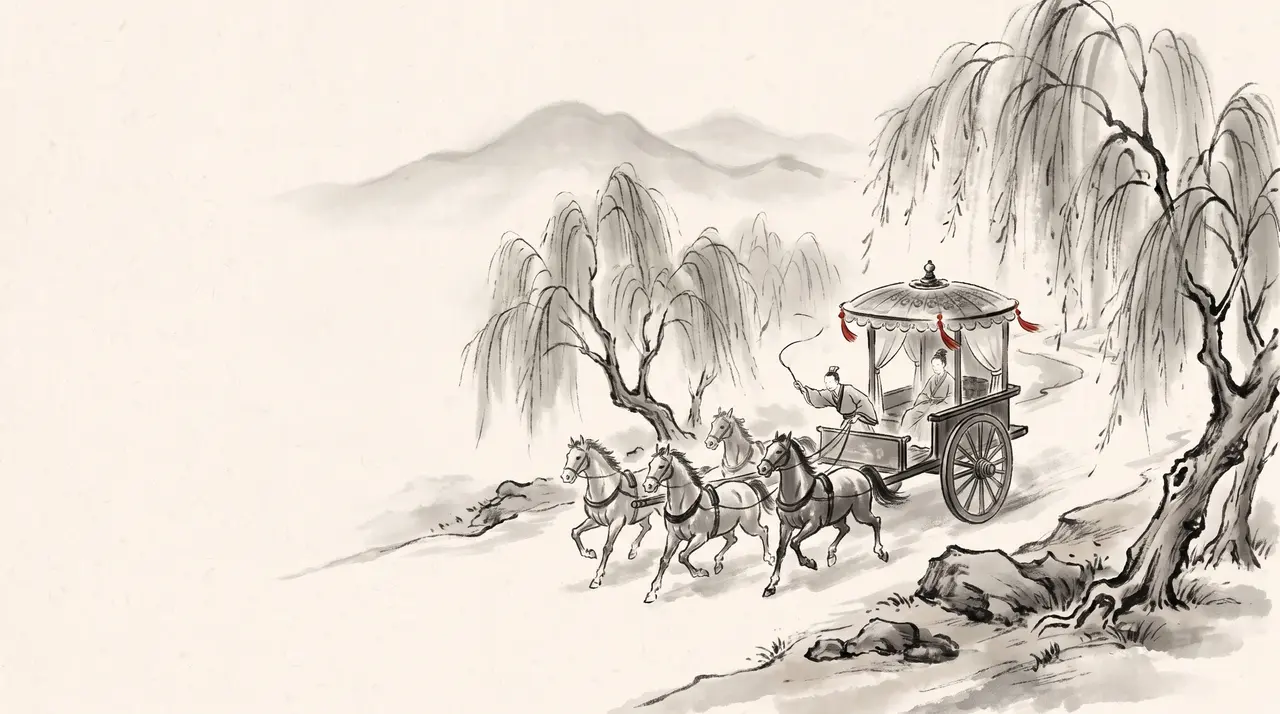
「六頭です」(馬を数え終えて手を挙げる石慶) 六馬
学問も弁舌もないが、つつしみ深さと孝行で出世した人々の伝。石奮は十五歳で高祖に仕え、本人と四人の息子がみな二千石の高官になったので「万石君」と呼ばれた。宮門の前を通るときは必ず車を降り、子や孫が過ちを犯すと叱らずに食事をとらなかった。長男の石建は年老いても父の下着を自分で洗い、上奏文の「馬」の字の点が一つ足りないと知って「死罪になる」と震えた。いちばん大ざっぱだった末っ子の石慶でさえ、帝に車の馬の数を問われると、鞭で一頭ずつ数えてから「六頭です」と答えた。ほかに、先帝からもらった六本の剣を一度も使わずにしまっておいた衛綰、兄嫁と密通していると悪口を言われて「わたしには兄がいない」とだけ言った直不疑、死刑の判決書を泣きながら封じた張欧が描かれる。司馬遷は孔子の「君子は言葉には口べたで、行いには敏くありたい」を引いて、彼らを評した。
この巻のうち「「六頭です」(馬を数え終えて手を挙げる石慶)」の場面を載せています。巻の全文ではありません。
音声
音声は合成音声です。
動画
節 1
原文
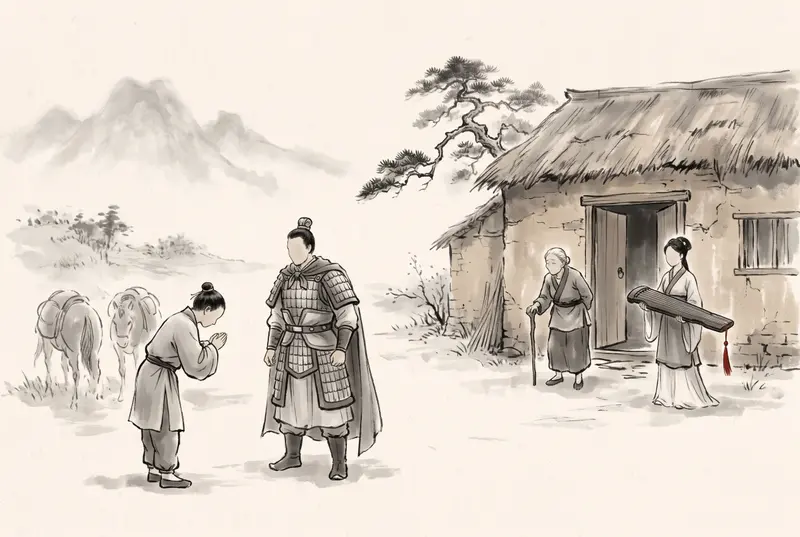
萬石君名奮,其父趙人也,姓石氏。趙亡,徙居温。髙祖東撃項籍,過河内,時奮年十五,爲小吏,侍髙祖。髙祖與語,愛其恭敬,問曰:「若何有?」對曰:「奮獨有母,不幸失明。家貧。有姊,能鼓琴。」髙祖曰:「若能從我乎?」曰:「願盡力。」於是髙祖召其姊爲美人,以奮爲中涓,受書謁,徙其家長安中戚里,以姊爲美人故也。其官至孝文時,積功勞至大中大夫。無文學,恭謹無與比。文帝時,東陽侯張相如爲太子太傅,免。選可爲傅者,皆推奮,奮爲太子太傅。及孝景即位,以爲九卿;迫近,憚之,徙奮爲諸侯相。奮長子建,次子甲,次子乙,次子慶,皆以馴行孝謹,官皆至二千石。於是景帝曰:「石君及四子皆二千石,人臣尊寵乃集其門。」號奮爲萬石君。
書き下し文
万石君、名は奮、其の父は趙の人なり、姓は石氏。趙亡び、徙りて温に居る。高祖東のかた項籍を撃ち、河内を過ぐ。時に奮年十五、小吏と為り、高祖に侍す。高祖与に語り、其の恭敬を愛し、問いて曰く「若は何か有る」と。対えて曰く「奮は独り母有り、不幸にして明を失う。家貧し。姉有り、能く琴を鼓す」と。高祖曰く「若能く我に従わんか」と。曰く「願わくは力を尽くさん」と。是に於いて高祖其の姉を召して美人と為し、奮を以て中涓と為し、書謁を受けしめ、其の家を長安の中の戚里に徙す。姉の美人為るを以ての故なり。其の官孝文の時に至り、功労を積みて大中大夫に至る。文学無く、恭謹にして与に比ぶる無し。文帝の時、東陽侯張相如太子太傅と為り、免ぜらる。傅と為るべき者を選ぶに、皆奮を推す。奮太子太傅と為る。孝景即位するに及び、以て九卿と為す。迫近して之を憚り、奮を徙して諸侯の相と為す。奮の長子は建、次子は甲、次子は乙、次子は慶、皆馴行孝謹を以て、官皆二千石に至る。是に於いて景帝曰く、「石君及び四子皆二千石、人臣の尊寵乃ち其の門に集まる」と。奮を号して万石君と為す。
現代語訳
万石君は名を奮といい、父は趙の人で、姓は石である。趙が滅びると温に移り住んだ。高祖が東へ項籍(項羽)を討ちに行き、河内を通ったとき、奮は十五歳で小役人をしていて、高祖の身の回りに仕えた。高祖は奮と話をして、そのうやうやしさを気に入り、「おまえには家族はいるか」とたずねた。奮は答えた。「わたしには母だけがおりますが、あいにく目が見えません。家は貧しく、姉がひとりいて、琴が上手です」。高祖が「わしについて来るか」と言うと、「力を尽くしたいと思います」と答えた。そこで高祖は姉を召して美人(側室)とし、奮を中涓として文書や面会の取り次ぎをさせ、家族を長安の戚里に移した。姉が美人になったからである。奮は孝文帝のときまでに功労を積んで太中大夫になった。学問はなかったが、うやうやしく慎み深いことでは並ぶ者がなかった。文帝のとき、太子の太傅だった東陽侯張相如がやめたので、教育係にふさわしい者を選ぶと、みなが奮を推し、奮が太子太傅になった。孝景帝が即位すると九卿にしたが、そばにいるとかえって気づまりだったので、諸侯の国の宰相に移した。奮の長男の建、次男の甲、三男の乙、四男の慶は、みな素直で孝行で慎み深い人柄によって、そろって二千石の官に至った。そこで景帝は「石君と四人の息子がみな二千石だ。臣下としての栄誉がその家に集まっている」と言い、奮を万石君と呼んだ。
英訳
The Lord of Ten Thousand Dan was named Fen. His father was a man of Zhao, of the Shi family; when Zhao fell, they moved to live at Wen. When Gaozu marched east against Xiang Ji and passed through Henei, Fen was fifteen and a petty clerk, and waited on Gaozu. Gaozu talked with him, liked his respectful manner, and asked: "What family do you have?" He replied: "I have only my mother, who has had the misfortune to go blind. We are poor. I have an elder sister, who plays the zither well." Gaozu said: "Will you follow me?" "I wish to do my utmost." So Gaozu summoned his sister to be a lady of the palace, made Fen a palace attendant who received letters and visitors, and moved his family to the royal kin quarter in Chang'an, because his sister was a lady of the palace. By Emperor Wen's time he had risen through his services to grand palace grandee. He had no learning, but no one could match him for respect and care. In Emperor Wen's time, when Zhang Xiangru, Marquis of Dongyang, was dismissed as tutor to the crown prince, everyone recommended Fen to take his place, and Fen became the crown prince's tutor. When Emperor Jing came to the throne, he made Fen one of the nine ministers, but found him too awe-inspiring to have close by, and moved him to be chancellor of a vassal kingdom. Fen's eldest son was Jian, then Jia, then Yi, then Qing; all of them, by their gentle conduct, filial devotion and care, rose to offices of two thousand dan. So Emperor Jing said: "Lord Shi and his four sons are all two-thousand-dan officials. The honours a subject can hope for are gathered at his gate." And he called Fen the Lord of Ten Thousand Dan.
解説(日)
- 萬石: 石は俸禄の単位。父と四人の子がそれぞれ二千石なので、合わせて一万石。
- 中涓: 君主の身の回りに仕え、取り次ぎをする役。
- 戚里: 長安で皇帝の外戚が住んだ地区。
- 「迫近,憚之」: そばにいると、あまりに慎み深いので景帝のほうが気づまりだった。
解説(英)
- Ten Thousand Dan (萬石): dan measured salary; five men at two thousand dan each made ten thousand.
- The royal kin quarter (戚里): where the emperor's in-laws lived in Chang'an.
- Too awe-inspiring to have close by: his correctness made even the emperor uneasy.
英語の語注
- respectful/rɪˈspɛktfəl/adjective
showing respect to others
本文では: “liked his respectful manner”
似た語と違い: polite — well-mannered · deferential — humbly respectful
- zither/ˈzɪðər/noun
a stringed instrument played lying flat
本文では: “plays the zither well”
似た語と違い: qin — Chinese zither · lute — stringed instrument
節 2
原文
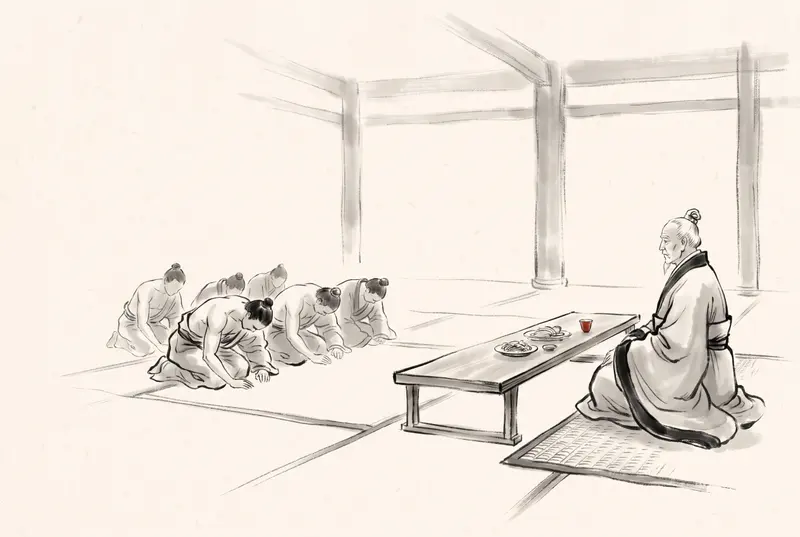
孝景帝季年,萬石君以上大夫祿歸老于家,以歳時爲朝臣。過宮門闕,萬石君必下車趨,見路馬必式焉。子孫爲小吏,來歸謁,萬石君必朝服見之,不名。子孫有過失,不譙讓,爲便坐,對案不食。然後諸子相責,因長老肉袒固謝罪,改之,乃許。子孫勝冠者在側,雖燕居必冠,申申如也。僮仆訢訢如也,唯謹。上時賜食於家,必稽首俯伏而食之,如在上前。其執喪,哀戚甚悼。子孫遵教,亦如之。萬石君家以孝謹聞乎郡國,雖齊魯諸儒質行,皆自以爲不及也。
書き下し文
孝景帝の季年、万石君上大夫の禄を以て家に帰老し、歳時を以て朝臣と為る。宮門の闕を過ぐるに、万石君必ず車を下りて趨り、路馬を見れば必ず式す。子孫小吏と為り、来たりて帰謁すれば、万石君必ず朝服して之に見え、名いわず。子孫過失有れば、譙譲せず、為に便坐し、案に対いて食わず。然る後に諸子相責め、長老に因りて肉袒して固く罪を謝し、之を改むれば、乃ち許す。子孫の冠に勝うる者側に在れば、燕居と雖も必ず冠し、申申如たり。僮僕も訢訢如として、唯だ謹む。上時に食を家に賜えば、必ず稽首俯伏して之を食らうこと、上の前に在るが如し。其の喪を執るや、哀戚甚だ悼む。子孫教えに遵い、亦た之の如し。万石君の家孝謹を以て郡国に聞こえ、斉魯の諸儒の質行と雖も、皆自ら以て及ばずと為す。
現代語訳
孝景帝の晩年、万石君は上大夫の俸禄をもらったまま家に隠居し、季節の行事のときだけ朝廷に出た。宮門の前を通るときは必ず車を降りて小走りに進み、天子の車を引く馬を見かけると必ず車の手すりに手をかけて礼をした。子や孫が小役人になってあいさつに帰って来ると、万石君は必ず朝廷の礼服を着て会い、名を呼び捨てにしなかった。子や孫が過ちを犯すと、叱りはせず、脇の席に座って、食卓に向かったまま食べなかった。そこでほかの子どもたちがその者を責め、一族の年長者を通じて肌脱ぎになってひたすらわび、行いを改めると、ようやく許した。成人した子や孫がそばにいるときは、くつろいでいるときでも必ず冠をつけ、ゆったりと落ち着いていた。召使いたちもにこやかで、ただ慎み深かった。帝がときどき家に食べ物を下さると、必ず頭を地につけてひれ伏してから食べ、まるで帝の前にいるかのようだった。喪に服するときは、たいへん深く悲しんだ。子や孫もこの教えに従い、同じようにした。万石君の家は孝行と慎み深さで国中に知られ、斉や魯の儒者たちの誠実な行いでさえ、みな自分たちは及ばないと思った。
英訳
In Emperor Jing's last years, the Lord of Ten Thousand Dan retired home on the salary of a senior grandee, attending court only for the seasonal ceremonies. Whenever he passed the towers of the palace gate, he always got down from his carriage and hurried past on foot, and whenever he saw the emperor's carriage horses he always bowed over the rail of his carriage. When his sons or grandsons, serving as petty officials, came home to pay their respects, he always put on his court robes to receive them, and never called them by their personal names. When a son or grandson did wrong, he did not scold him; he sat apart, and faced his table without eating. Then the other sons would reproach the one at fault, who, through the elders of the family, would bare his shoulder and beg forgiveness over and over; only when he had mended his ways was he forgiven. When sons or grandsons old enough for the cap of manhood were beside him, he always wore his own cap, even at leisure, and was calm and composed. His servants too were cheerful, and careful in all things. When the emperor sometimes sent him food at home, he always knocked his head to the ground and bowed low before eating it, as if he were in the emperor's presence. When he mourned, his grief was very deep. His sons and grandsons followed his teaching and did the same. The household of the Lord of Ten Thousand Dan was famous throughout the commanderies and kingdoms for filial devotion and care; even the scholars of Qi and Lu, for all their honest conduct, thought themselves no match for it.
解説(日)
- 式: 車の前の横木(軾)に手をかけて身をかがめる礼。
- 不名: 子や孫であっても名を呼び捨てにしない。役人として敬意を払ったのである。
- 肉袒: 肌脱ぎになって罪をわびる作法。
- 齊魯: 孔子の故郷を含む地方で、儒者が多かった。
解説(英)
- Bowing over the rail (式): a salute made from a carriage.
- Baring the shoulder (肉袒): the posture of one begging forgiveness.
- Qi and Lu: the home of Confucius and of many scholars.
英語の語注
- composed/kəmˈpoʊzd/adjective
calm and in control of feelings
本文では: “calm and composed”
似た語と違い: calm — not upset · serene — peaceful
- forgiveness/fərˈɡɪvnəs/noun
the act of forgiving someone
本文では: “beg forgiveness over and over”
似た語と違い: pardon — release from blame · mercy — kindness to wrongdoers
節 3
原文
建元二年,郎中令王臧以文學獲罪。皇太后以爲儒者文多質少,今萬石君家不言而躬行,乃以長子建爲郎中令,少子慶爲内史。建老白首,萬石君尚無恙。建爲郎中令,毎五日洗沐歸謁親,入子舍,竊問侍者,取親中帬廁牏,身自浣滌,復與侍者,不敢令萬石君知,以爲常。建爲郎中令,事有可言,屛人恣言,極切;至廷見,如不能言者。是以上乃親尊禮之。
書き下し文
建元二年、郎中令王臧文学を以て罪を獲。皇太后以為えらく、儒者は文多く質少なし、今万石君の家は言わずして躬ら行うと。乃ち長子建を以て郎中令と為し、少子慶を内史と為す。建老いて白首なるも、万石君尚お恙無し。建郎中令と為り、五日毎に洗沐して帰りて親に謁す。子舎に入り、窃かに侍者に問い、親の中帬・廁牏を取り、身自ら浣滌し、復た侍者に与え、敢えて万石君をして知らしめず、以て常と為す。建郎中令と為り、事の言うべき有れば、人を屏けて恣に言い、極めて切なり。廷見に至りては、言う能わざる者の如し。是を以て上乃ち親ら之を尊礼す。
現代語訳
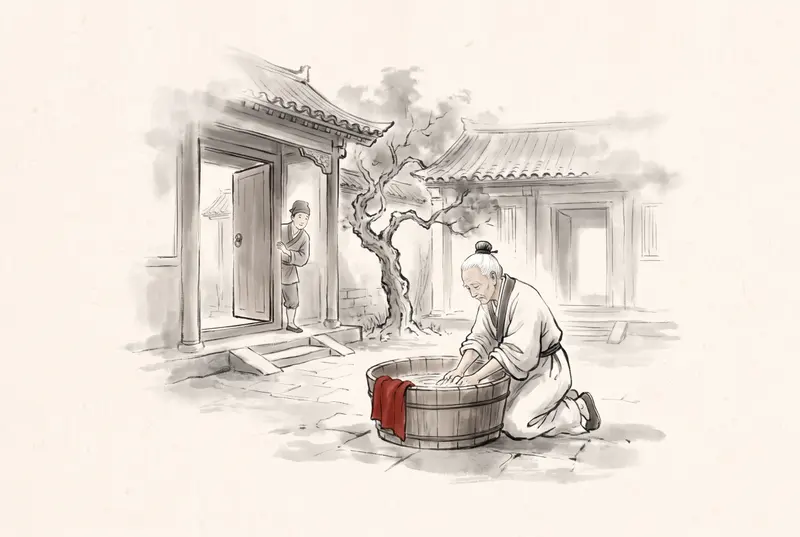
建元二年、郎中令の王臧が儒学のことで罪を得た。皇太后(竇太后)は、儒者は口先ばかりで中身が少ないが、万石君の家は口では言わずに自分で実行していると考え、長男の建を郎中令に、末っ子の慶を内史にした。建は年をとって白髪になっていたが、万石君はまだ元気だった。郎中令になった建は、五日ごとの休みに家に帰って親にあいさつをした。そのとき自分の部屋に入って、こっそり召使いにたずね、親の下着や便器を受け取って自分で洗い、また召使いに返して、万石君には知られないようにした。これがいつものことだった。郎中令としての建は、帝に申し上げるべきことがあると、人払いをして思うままに、きわめて痛切に意見を述べた。ところが朝廷の公の場では、口がきけない人のようだった。それで帝はみずから建を敬い、礼をもって遇した。
英訳
In the second year of Jianyuan, the chief of palace gentlemen Wang Zang was found guilty over Confucian learning. The empress dowager thought that Confucian scholars had much polish and little substance, while the household of the Lord of Ten Thousand Dan did not talk but acted. So she made his eldest son Jian chief of palace gentlemen, and his youngest son Qing governor of the capital. Jian was old and white-haired, but the Lord of Ten Thousand Dan was still in good health. As chief of palace gentlemen, Jian came home every fifth day, on his day off, to pay his respects to his father. He would go into the side rooms, quietly ask the servants for his father's underclothes and chamber pot, wash them himself, and hand them back, never letting the Lord of Ten Thousand Dan know. This was his habit. As chief of palace gentlemen, when there was something to be said, Jian would send everyone away and speak freely and very earnestly; but at audiences in open court he seemed like a man who could not speak. For this the emperor himself honoured him and treated him with respect.
解説(日)
- 王臧: 武帝のはじめに儒学を広めようとした臣。黄老を好む竇太后の怒りを買って自殺した(049-waiqi の章)。
- 文多質少: 飾り(言葉)が多く、中身(実行)が少ない。
- 中帬・廁牏: 肌着と、便器(または便所の掃除道具)。
解説(英)
- Wang Zang: a Confucian minister ruined by Empress Dowager Dou, who preferred Huang-Lao teaching (chapter 049).
- Much polish and little substance (文多質少): many words, few deeds.
英語の語注
- substance/ˈsʌbstəns/noun
real worth or meaning
本文では: “much polish and little substance”
似た語と違い: content — what is inside · depth — seriousness
- earnestly/ˈɜrnɪstli/adverb
in a very serious and sincere way
本文では: “speak freely and very earnestly”
似た語と違い: sincerely — honestly · seriously — with care
節 4
原文
萬石君徙居陵裏。内史慶醉歸,入外門不下車。萬石君聞之,不食。慶恐,肉袒請罪,不許。舉宗及兄建肉袒,萬石君讓曰:「内史貴人,入閭里,里中長老皆走匿,而内史坐車中自如,固當!」乃謝罷慶。慶及諸子弟入里門,趨至家。
書き下し文
万石君徙りて陵里に居る。内史慶酔いて帰り、外門に入りて車を下りず。万石君之を聞き、食わず。慶恐れ、肉袒して罪を請うも、許さず。宗を挙げて及び兄建肉袒す。万石君譲めて曰く、「内史は貴人なり。閭里に入れば、里中の長老皆走りて匿る。而るに内史は車中に坐して自如たり。固より当なり」と。乃ち謝して慶を罷む。慶及び諸子弟里門に入れば、趨りて家に至る。
現代語訳
万石君は陵里に移り住んだ。内史の慶が酒に酔って帰り、村の外門を入っても車から降りなかった。万石君はそれを聞いて、食事をとらなかった。慶はおそれて肌脱ぎになってわびたが、許さなかった。一族みなと兄の建までが肌脱ぎになってわびると、万石君は責めて言った。「内史どのは偉いお方だ。村に入ってこられれば、村の年寄りたちはみな走って隠れる。それなのに内史どのは車に座ったまま平気でおられる。それがふさわしいというわけだな」。そこでようやく許して慶を下がらせた。それからは慶もほかの子や弟たちも、村の門を入ると小走りで家まで行った。
英訳
The Lord of Ten Thousand Dan moved to live in Lingli. Qing, the governor of the capital, came home drunk and passed through the outer gate of the village without getting down from his carriage. When the Lord of Ten Thousand Dan heard of it, he would not eat. Qing was frightened, bared his shoulder and begged forgiveness, but was not forgiven. The whole clan, his elder brother Jian among them, bared their shoulders too. Then the Lord of Ten Thousand Dan rebuked him: "The governor is a great man. When he enters the village, all the elders of the village run and hide, while the governor sits in his carriage as if nothing were amiss. Quite proper, no doubt!" Then he dismissed Qing with forgiveness. After that, whenever Qing and the other sons and younger brothers entered the village gate, they hurried home on foot.
解説(日)
- 内史: 都の長安一帯を治める長官。
- 「固當!」: 「それが当然というわけか」という皮肉。
解説(英)
- Governor of the capital (内史): the official who ran the Chang'an region.
- "Quite proper, no doubt!" (固當): said in irony.
英語の語注
- amiss/əˈmɪs/adjective
wrong or not as it should be
本文では: “as if nothing were amiss”
似た語と違い: wrong — not right · awry — off course
- rebuke/rɪˈbjuk/verb
to speak sharply to someone who has done wrong
本文では: “rebuked him”
似た語と違い: scold — tell off · reprimand — formally criticise
節 5
原文
建爲郎中令,書奏事,事下,建讀之,曰:「誤書!『馬』者與尾當五,今乃四,不足一。上譴死矣!」甚惶恐。其爲謹愼,雖他皆如是。萬石君少子慶爲太仆,御出,上問車中幾馬,慶以策數馬畢,舉手曰:「六馬。」慶於諸子中最爲簡易矣,然猶如此。爲齊相,舉齊國皆慕其家行,不言而齊國大治,爲立石相祠。
書き下し文
建郎中令と為り、書して事を奏す。事下る。建之を読みて曰く、「誤書せり。『馬』なる者は尾と当に五なるべし。今乃ち四、一を足らず。上譴めば死せん」と。甚だ惶恐す。其の謹慎為る、他と雖も皆是くの如し。万石君の少子慶太僕と為り、御して出づ。上車中に幾馬あるかを問う。慶策を以て馬を数え畢り、手を挙げて曰く「六馬」と。慶諸子の中に於いて最も簡易為り。然れども猶お此くの如し。斉の相と為るに、斉国を挙げて皆其の家行を慕い、言わずして斉国大いに治まる。為に石相の祠を立つ。
現代語訳
建が郎中令のとき、文書で上奏したことがあり、その文書が帝の決裁を経て戻ってきた。建はそれを読んで言った。「書きまちがえた。『馬』という字は、下の点と尾を合わせて五つでなければならないのに、四つしかない。一つ足りない。帝にとがめられたら死罪だ」。ひどくおそれおののいた。慎み深さは、ほかのことでもすべてこの調子だった。万石君の末っ子の慶が太僕(帝の車馬係)だったとき、帝の車を御して出かけた。帝が車を引く馬は何頭かとたずねると、慶は鞭で馬を一頭ずつ数え終えてから、手を挙げて「六頭です」と答えた。慶は兄弟の中でいちばん大ざっぱだったが、それでもこのとおりだった。斉の宰相になると、斉の国じゅうの人が石家の行いを慕い、慶が何も言わないうちに斉の国はよく治まった。人々は慶のために「石相祠」を建てた。
英訳
When Jian was chief of palace gentlemen, he once submitted a written memorial, and it came back with the emperor's decision. Reading it, Jian said: "I wrote it wrong! The character 'horse' should have five strokes with its tail, and here there are only four, one short. If the emperor blames me, I am a dead man!" He was terribly afraid. He was just as careful in everything else. When the Lord of Ten Thousand Dan's youngest son Qing was master of the carriage, he drove the emperor out one day. The emperor asked how many horses were drawing the carriage. Qing counted the horses with his whip, one by one, and then raised his hand: "Six horses." Qing was the most easygoing of the sons, and yet he was like this. When he was chancellor of Qi, the whole kingdom of Qi admired the ways of his family; without a word from him, Qi was well governed, and the people set up a shrine to Chancellor Shi.
解説(日)
- 「馬」の字: 下の四つの点(足)と、曲がった尾を合わせて五画。建は一画足りないことに気づいた。
- 太僕: 皇帝の車馬をつかさどる九卿の一つ。天子の車は六頭立てだった。
- 慶はのちに丞相となるが、武帝の政治に口をはさめず、九年間何も正せなかった。
解説(英)
- "Horse" (馬): the four dots of the legs and the curved tail make five strokes; Jian found one missing.
- Master of the carriage (太僕): one of the nine ministers; the emperor's carriage had six horses.
- Qing later became chancellor, but in nine years he could correct nothing in Emperor Wu's government.
英語の語注
- memorial/məˈmɔriəl/noun
a written report or request sent to a ruler
本文では: “a written memorial”
似た語と違い: petition — formal request · report — written account
- easygoing/ˌiziˈɡoʊɪŋ/adjective
relaxed and not worried about rules
本文では: “the most easygoing of the sons”
似た語と違い: relaxed — calm · casual — informal
節 6
原文
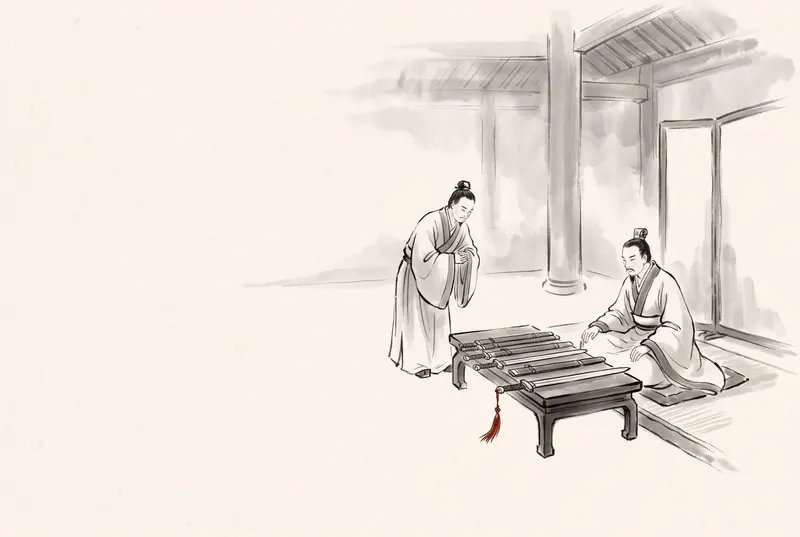
建陵侯衞綰者,代大陵人也。綰以戲車爲郎,事文帝,功次遷爲中郎將,醇謹無他。孝景爲太子時,召上左右飲,而綰稱病不行。文帝且崩時,屬孝景曰:「綰長者,善遇之。」及文帝崩,景帝立,歳餘不噍呵綰,綰日以謹力。景帝幸上林,詔中郎將參乘,還而問曰:「君知所以得參乘乎?」綰曰:「臣從車士幸得以功次遷爲中郎將,不自知也。」上問曰:「吾爲太子時召君,君不肯來,何也?」對曰:「死罪,實病!」上賜之劍。綰曰:「先帝賜臣劍凡六,劍不敢奉詔。」上曰:「劍,人之所施易,獨至今乎?」綰曰:「具在。」上使取六劍,劍尚盛,未嘗服也。郎官有譴,常蒙其罪,不與他將爭;有功,常讓他將。上以爲廉,忠實無他腸,乃拜綰爲河閒王太傅。
書き下し文
建陵侯衛綰は、代の大陵の人なり。綰戯車を以て郎と為り、文帝に事え、功次もて遷りて中郎将と為る。醇謹にして他無し。孝景太子為りし時、上の左右を召して飲む。而るに綰病と称して行かず。文帝且に崩ぜんとする時、孝景に属して曰く、「綰は長者なり。善く之を遇せよ」と。文帝崩じ、景帝立つに及び、歳余綰を噍呵せず。綰日に以て謹力す。景帝上林に幸し、中郎将に詔して参乗せしむ。還りて問いて曰く、「君参乗するを得し所以を知るか」と。綰曰く、「臣は車士より幸いに功次を以て遷りて中郎将と為るを得たり。自ら知らざるなり」と。上問いて曰く、「吾太子為りし時君を召す。君来たるを肯んぜざるは、何ぞや」と。対えて曰く、「死罪、実に病めり」と。上之に剣を賜う。綰曰く、「先帝臣に剣を賜うこと凡そ六。剣は敢えて詔を奉ぜず」と。上曰く、「剣は、人の施易する所なり。独り今に至るか」と。綰曰く「具さに在り」と。上六剣を取らしむ。剣尚お盛にして、未だ嘗て服せざるなり。郎官に譴有れば、常に其の罪を蒙り、他の将と争わず。功有れば、常に他の将に譲る。上以て廉にして、忠実にして他腸無しと為し、乃ち綰を拝して河間王の太傅と為す。
現代語訳
建陵侯衛綰は、代の大陵の人である。曲芸の車の技で郎となって文帝に仕え、功を重ねて中郎将になった。まじめで慎み深く、それ以外に何の取り柄もなかった。孝景帝が太子だったころ、文帝の側近たちを酒に招いたが、衛綰だけは病気だと言って行かなかった。文帝は亡くなる前に孝景帝に言い残した。「衛綰は長者だ。よく遇してやれ」。文帝が亡くなって景帝が即位したが、一年あまり衛綰をとがめることも声をかけることもなかった。衛綰は日々ますます慎んで務めた。景帝が上林苑に出かけたとき、中郎将に同乗を命じた。帰ってから景帝がたずねた。「そなたは、なぜ同乗を許されたか分かるか」。衛綰は答えた。「わたくしは車の曲芸師から、運よく功を重ねて中郎将になりました。自分では分かりません」。景帝はたずねた。「わしが太子だったとき、そなたを招いたのに来なかったのはなぜか」。衛綰は答えた。「死罪にあたりますが、本当に病気だったのです」。景帝は衛綰に剣を与えようとした。衛綰は言った。「先帝からいただいた剣が全部で六本ございます。剣はお受けできません」。景帝は言った。「剣というものは、人がやりとりしたり、取り替えたりするものだ。今まで全部持っているというのか」。衛綰は「すべてございます」と答えた。景帝が六本の剣を取って来させると、剣はまだ鞘に収まったままで、一度も身につけたことがなかった。衛綰は、部下の郎官がとがめを受けると、いつも自分がその罪をかぶり、ほかの将と争わなかった。手柄があると、いつもほかの将に譲った。景帝は、衛綰は欲がなく、誠実で裏表がないと考え、河間王の太傅に任じた。
英訳
Wei Wan, Marquis of Jianling, was a man of Daling in Dai. He became a palace gentleman for his skill at trick driving, served Emperor Wen, and rose through his services to be a general of the palace gentlemen. He was honest and careful, and had nothing else to him. When Emperor Jing was crown prince, he invited the emperor's attendants to drink with him, but Wei Wan said he was ill and did not go. When Emperor Wen was dying, he told Emperor Jing: "Wan is a good man. Treat him well." After Emperor Wen died and Emperor Jing came to the throne, for more than a year Jing neither scolded Wei Wan nor paid him any notice, and Wei Wan worked more carefully every day. When Emperor Jing went to the Shanglin park, he ordered the general of the palace gentlemen to ride with him. On the way back he asked: "Do you know why you were allowed to ride with me?" Wei Wan said: "I was a carriage performer, and was lucky enough to rise through my services to general of the palace gentlemen. I do not know." The emperor asked: "When I was crown prince, I invited you and you would not come. Why?" He replied: "I deserve death, but I really was ill." The emperor offered him a sword. Wei Wan said: "The late emperor gave me six swords in all. I dare not accept another." The emperor said: "Swords are things people give away and trade. Do you still have them all?" "Every one." The emperor had the six swords fetched. They were still in their sheaths, never once worn. When the gentlemen under him were blamed for something, Wei Wan always took the blame himself and never argued with the other generals; when there was credit to be had, he always gave it to the other generals. The emperor thought him honest, loyal and true, with no hidden motive, and made him tutor to the King of Hejian.
解説(日)
- 戲車: 車を使った曲芸。
- 「無他腸」: ほかの腹(下心)がない。
- 衛綰はのちに丞相となったが、「初めて官についてから丞相になるまで、言うべきことは何もなかった」と書かれる。
解説(英)
- Trick driving (戲車): stunts performed with a carriage.
- No hidden motive (無他腸): literally "no other gut".
- Wei Wan later became chancellor, though "from his first post to chancellor, he never had anything to say".
英語の語注
- sheath/ʃiθ/noun
a cover for the blade of a sword or knife
本文では: “still in their sheaths”
似た語と違い: scabbard — sword case · case — cover
- motive/ˈmoʊtɪv/noun
the reason for doing something
本文では: “with no hidden motive”
似た語と違い: reason — cause · aim — purpose
節 7
原文
塞侯直不疑者,南陽人也。爲郎,事文帝。其同舍有告歸,誤持同舍郎金去,已而金主覺,妄意不疑,不疑謝有之,買金償。而告歸者來而歸金,而前郎亡金者大慚,以此稱爲長者。文帝稱舉,稍遷至太中大夫。朝廷見,人或毀曰:「不疑狀貌甚美,然獨無柰其善盜嫂何也!」不疑聞,曰:「我乃無兄。」然終不自明也。
書き下し文
塞侯直不疑は、南陽の人なり。郎と為り、文帝に事う。其の同舎に告帰する有り、誤りて同舎の郎の金を持ちて去る。已にして金の主覚り、妄りに不疑を意う。不疑謝して之有りとし、金を買いて償う。而して告帰せし者来たりて金を帰す。而して前の郎の金を亡いし者大いに慚ず。此れを以て称して長者と為す。文帝称挙し、稍く遷りて太中大夫に至る。朝廷に見ゆるに、人或いは毀りて曰く、「不疑は状貌甚だ美なり。然れども独り其の善く嫂を盗むを奈何ともする無きなり」と。不疑聞きて曰く、「我乃ち兄無し」と。然れども終に自ら明らかにせざるなり。
現代語訳
塞侯直不疑は南陽の人である。郎となって文帝に仕えた。同じ宿舎の者が休暇で家に帰るとき、まちがえて同じ宿舎の郎の金を持って行ってしまった。まもなく金の持ち主が気づき、根拠もなく直不疑を疑った。直不疑は「わたしが取った」とわびて、金を買って弁償した。その後、休暇から戻った者が金を返したので、金をなくしたと思った郎はひどく恥じ入った。このことで直不疑は長者とたたえられた。文帝に推挙されて、しだいに太中大夫まで昇った。朝廷で会ったとき、ある者が悪口を言った。「直不疑は見た目はたいへん立派だが、兄嫁と密通するのが好きなのはどうしようもない」。直不疑はそれを聞いて言った。「わたしには兄がいない」。しかし最後まで、自分から弁明しようとはしなかった。
英訳
Zhi Buyi, Marquis of Sai, was a man of Nanyang. He became a palace gentleman and served Emperor Wen. Once a man who shared his lodging went home on leave and took another lodger's gold by mistake. Soon the owner of the gold noticed, and suspected Zhi Buyi without reason. Zhi Buyi apologised, said he had taken it, and bought gold to repay him. Then the man on leave came back and returned the gold, and the lodger who had lost it was deeply ashamed. For this Zhi Buyi was praised as a good man. Emperor Wen praised and promoted him, and he rose by degrees to grand palace grandee. Once at court someone slandered him: "Zhi Buyi is very handsome, but there is no stopping his love affairs with his elder brother's wife!" Zhi Buyi heard it and said: "But I have no elder brother." Yet he never went further to clear his name.
解説(日)
- 告歸: 休暇をもらって家に帰ること。
- 盜嫂: 兄の妻と密通すること。
- 直不疑は老子の教えを学び、名声を立てることを好まなかった。
解説(英)
- Going home on leave (告歸).
- Affairs with his brother's wife (盜嫂): a common slander.
- Zhi Buyi studied the teachings of Laozi and did not care for fame.
英語の語注
- suspect/səˈspɛkt/verb
to think someone may have done wrong
本文では: “suspected Zhi Buyi without reason”
似た語と違い: distrust — not trust · doubt — question
- slander/ˈslændər/verb
to say false and harmful things about someone
本文では: “someone slandered him”
似た語と違い: defame — damage a name · smear — spread lies about
節 8
原文
御史大夫張叔者,名歐,安丘侯説之庶子也。孝文時以治刑名言事太子。然歐雖治刑名家,其人長者。景帝時尊重,常爲九卿。至武帝元朔四年,韓安國免,詔拜歐爲御史大夫。自歐爲吏,未嘗言案人,專以誠長者處官。官屬以爲長者,亦不敢大欺。上具獄事,有可卻,卻之;不可者,不得已,爲涕泣面對而封之。其愛人如此。
書き下し文
御史大夫張叔は、名は欧、安丘侯説の庶子なり。孝文の時刑名を治むるを以て太子に事う。然れども欧は刑名家を治むと雖も、其の人は長者なり。景帝の時尊重せられ、常に九卿と為る。武帝の元朔四年に至り、韓安国免ぜられ、詔して欧を拝して御史大夫と為す。欧の吏と為りしより、未だ嘗て人を案ずるを言わず、専ら誠長者を以て官に処る。官属以て長者と為し、亦た敢えて大いに欺かず。上獄事を具うるに、卻くべき有れば、之を卻く。不可なる者は、已むを得ず、為に涕泣して面対して之を封ず。其の人を愛すること此くの如し。
現代語訳
御史大夫の張叔は、名を欧といい、安丘侯張説の庶子である。孝文帝のとき、法律の学問をおさめていたことから太子に仕えた。しかし張欧は法家の学問をしていたとはいえ、人柄は長者だった。景帝のときには重んじられて、ずっと九卿の地位にあった。武帝の元朔四年、韓安国がやめると、詔によって御史大夫に任じられた。張欧は役人になってから、人を取り調べて罪にせよと言ったことは一度もなく、ひたすら誠実な長者として務めた。部下たちも張欧を長者と思い、大きくだますようなことはしなかった。帝に裁判の書類を差し出すとき、差し戻せるものは差し戻した。どうしてもできないものは、やむをえず、涙を流しながら書類に向かって封をした。それほど人をいつくしんだのである。
英訳
Zhang Shu, the imperial counsellor, was named Ou, a son of the Marquis of Anqiu, Zhang Yue, by a concubine. In Emperor Wen's time he served the crown prince because he had studied the law. But though Zhang Ou studied the legalist school, he was a kindly man. In Emperor Jing's time he was held in honour and was always one of the nine ministers. In the fourth year of Yuanshuo under Emperor Wu, when Han Anguo was dismissed, Zhang Ou was appointed imperial counsellor by edict. From the time he became an official, he never once called for anyone to be prosecuted; he did his work solely as an honest, kindly man. His subordinates thought him kindly too, and dared not deceive him much. When he sent the emperor the papers of a case, if there was anything that could be sent back, he sent it back; when nothing could be done, he had no choice, and wept as he faced the papers and sealed them. That is how he cared for people.
解説(日)
- 刑名: 法家の学問。名(言葉)と刑(実績)が一致するかで人を賞罰する。
- 御史大夫: 丞相に次ぐ高官。
- 韓安國: 梁孝王に仕えたこともある武帝の重臣(108-han-anguo の章)。
解説(英)
- The law (刑名): the legalist teaching of matching names to results.
- Imperial counsellor (御史大夫): second only to the chancellor.
- Han Anguo: a minister of Emperor Wu who once served King Xiao of Liang (chapter 108).
英語の語注
- prosecute/ˈprɑsɪˌkjut/verb
to accuse someone of a crime in a court
本文では: “called for anyone to be prosecuted”
似た語と違い: charge — formally accuse · try — put on trial
- subordinate/səˈbɔrdənɪt/noun
a person who works under someone else
本文では: “His subordinates thought him kindly”
似た語と違い: assistant — helper · underling — junior worker
節 9
原文
太史公曰:仲尼有言曰「君子欲訥於言而敏於行」,其萬石、建陵、張叔之謂邪?是以其教不肅而成,不嚴而治。塞侯微巧,而周文處讇君子譏之,爲其近於佞也。然斯可謂篤行君子矣!
書き下し文
太史公曰く、仲尼に言有りて曰く「君子は言に訥にして行いに敏ならんと欲す」と。其れ万石・建陵・張叔の謂いか。是を以て其の教え粛ならずして成り、厳ならずして治まる。塞侯は微巧にして、周文は讇に処る。君子之を譏る。其の佞に近きが為なり。然れども斯れ篤行の君子と謂うべし。
現代語訳
太史公は言う。孔子は「君子は言葉には口べたで、行いには敏くありたいと願う」と言った。これは万石君や建陵侯(衛綰)、張叔のことを言っているのだろうか。だから彼らの教えは厳しくしなくても身につき、きびしくしなくても治まったのである。塞侯(直不疑)は少し小ずるく、周文(周文仁)はへつらう立場にいたので、君子は彼らをそしる。佞臣に近いからである。それでも、彼らは行いのあつい君子と言ってよいだろう。
英訳
The Grand Historian says: Confucius said, "A gentleman wishes to be slow in speech and quick in action." Was he speaking of the Lord of Ten Thousand Dan, the Marquis of Jianling and Zhang Shu? So their teaching succeeded without sternness, and their governing worked without severity. The Marquis of Sai was a little crafty, and Zhou Wen stayed in a flatterer's place; gentlemen criticise them for coming close to being mere favourites. Even so, they may be called gentlemen of steady conduct.
解説(日)
- 君子欲訥於言而敏於行: 『論語』里仁篇の言葉。
- 周文: 景帝の郎中令の周文仁。口が固く、佞幸列伝にも名が見える(125-ningxing の章)。
解説(英)
- "Slow in speech and quick in action": from the Analects, Li Ren.
- Zhou Wen: Zhou Wenren, Emperor Jing's discreet chief of palace gentlemen, also in the favourites' chapter (chapter 125).
この節から生まれた言葉: 君子は言に訥にして行いに敏ならんと欲す
英語の語注
- sternness/ˈstɜrnnəs/noun
strictness and seriousness
本文では: “without sternness”
似た語と違い: strictness — firmness · harshness — severity
- severity/səˈvɛrəti/noun
harshness in treatment or punishment
本文では: “without severity”
似た語と違い: harshness — cruelty · rigour — strictness