列伝 · 巻 110
匈奴列伝 匈奴列傳
冒頓の鳴鏑 鳴鏑
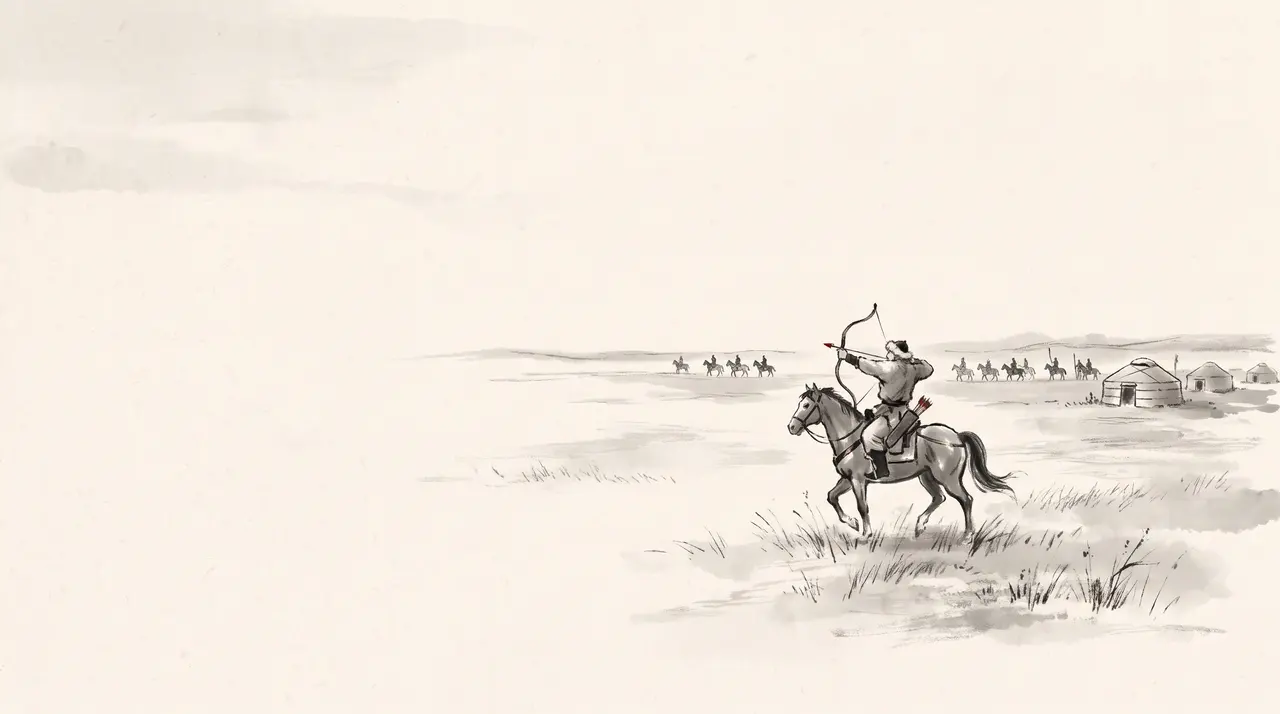
北の草原で馬と羊を追う遊牧の民、匈奴の歴史である。単于の太子冒頓は、自分の鳴鏑が射た的を射ない部下を斬る訓練で、愛馬、愛妻、ついには父を射させて位を奪った。東胡の要求に馬も妃も与えて油断させ、「土地は国の本だ」と一気に滅ぼして、草原を統一する。高祖を白登山に七日間包囲し、漢は屈辱的な和親を結んだ。漢から寝返った宦官の中行説は、匈奴に漢の文物への依存を戒め、漢使を論破する。武帝は馬邑の計から大戦争へ踏み出すが、勝利の代償も大きかった。司馬遷は結びで、言葉を慎みつつ、将と宰相を選ぶことの大切さを繰り返す。
この巻のうち「冒頓の鳴鏑」の場面を載せています。巻の全文ではありません。
音声
音声は合成音声です。
動画
節 1
原文
匈奴,其先祖夏后氏之苗裔也,曰淳維。唐虞以上有山戎、獫狁、葷粥,居于北蠻,隨畜牧而轉移。其畜之所多則馬、牛、羊,其奇畜則橐駞、驢、驘、駃騠、騊駼、騨騱。逐水草遷徙,毋城郭常處耕田之業,然亦各有分地。毋文書,以言語爲約束。兒能騎羊,引弓射鳥鼠;少長則射狐兔:用爲食。士力能毋弓,盡爲甲騎。其俗,寬則隨畜,因射獵禽獸爲生業,急則人習戰攻以侵伐,其天性也。其長兵則弓矢,短兵則刀鋋。利則進,不利則退,不羞遁走。茍利所在,不知禮義。自君王以下,咸食畜肉,衣其皮革,被旃裘。壯者食肥美,老者食其餘。貴壯健,賤老弱。父死,妻其後母;兄弟死,皆取其妻妻之。其俗有名不諱,而無姓字。
書き下し文
匈奴は、其の先祖は夏后氏の苗裔なり、淳維と曰う。唐虞以上に山戎・獫狁・葷粥有り、北蛮に居り、畜牧に随いて転移す。其の畜の多き所は則ち馬・牛・羊、其の奇畜は則ち橐駞・驢・驘・駃騠・騊駼・騨騱。水草を逐いて遷徙し、城郭常処耕田の業毋し。然れども亦各々分地有り。文書毋く、言語を以て約束と為す。児は能く羊に騎り、弓を引きて鳥鼠を射る。少しく長ずれば則ち狐兎を射て、用て食と為す。士の力能く弓を毌く者は、尽く甲騎と為す。其の俗、寛なれば則ち畜に随い、射猟禽獣に因りて生業と為し、急なれば則ち人戦攻を習いて以て侵伐す。其の天性なり。其の長兵は則ち弓矢、短兵は則ち刀鋋。利あれば則ち進み、不利なれば則ち退き、遁走を羞じず。苟くも利の在る所は、礼義を知らず。君王より以下、咸畜肉を食らい、其の皮革を衣、旃裘を被る。壮者は肥美を食らい、老者は其の余を食らう。壮健を貴び、老弱を賤しむ。父死すれば、其の後母を妻とし、兄弟死すれば、皆其の妻を取りて之を妻とす。其の俗名有りて諱まず、而して姓字無し。
現代語訳
匈奴の祖先は夏王朝の子孫で、淳維という。堯や舜より前から山戎、獫狁、葷粥といった民が北方にいて、家畜を追って移動していた。家畜は馬、牛、羊が多く、珍しいものでは、らくだ、ろば、らばや各種の駿馬がいる。水と草を追って移り住み、城郭や定住地、耕作の仕事はないが、それぞれの持ち場はある。文字はなく、言葉で約束を交わす。子どもは羊に乗り、弓を引いて鳥やねずみを射る。少し大きくなると狐や兎を射て食糧にする。弓を引ける力のある男はみな武装した騎兵となる。ふだんは家畜を追い、鳥獣を射て暮らし、危急のときには誰もが戦いに慣れて侵攻する。それが彼らの天性である。長い武器は弓矢、短い武器は刀と短い矛である。有利なら進み、不利なら退き、逃げることを恥としない。利益のあるところでは礼儀を顧みない。君主以下みな家畜の肉を食べ、その皮を着て、毛織物をまとう。壮年の者が良い肉を食べ、老人はその残りを食べる。強い者を尊び、老いて弱い者を軽んじる。父が死ねば継母を妻とし、兄弟が死ねばその妻を自分の妻とする。名はあるが、それを避ける風習はなく、姓や字もない。
英訳
The ancestor of the Xiongnu was a descendant of the Xia dynasty named Chunwei. Before the days of Yao and Shun there were the Mountain Rong, the Xianyun and the Xunyu, living in the northern wilds and moving with their herds. Their animals were mostly horses, cattle and sheep, and they also had rarer beasts: camels, donkeys, mules and several breeds of fine horse. They moved in search of water and grass, with no walled towns, fixed homes or farming, though each group had its own territory. They had no writing, and made their agreements by word of mouth. Their children could ride sheep and shoot birds and rats with a bow. When a little older they shot foxes and hares for food. Every man strong enough to draw a bow became an armored horseman. In easy times they followed their herds and lived by hunting. In times of need every man was trained for war and they went raiding. This was their nature. Their long-range weapon was the bow and arrow, and at close quarters they used swords and short spears. When things went well they advanced, and when they did not they retreated, with no shame in running away. Wherever there was gain, they knew nothing of ritual or right. From the ruler down, all ate the meat of their animals, wore their hides and wrapped themselves in felt and fur. The strong ate the best food, and the old ate what was left. They honored the strong and looked down on the old and weak. When a father died, his son married his stepmother. When a brother died, his brothers took his wife. They used personal names without taboo, and had no family names or courtesy names.
解説(日)
- 匈奴: モンゴル高原を中心とした遊牧国家。
- 夏后氏: 夏王朝。匈奴をその子孫とするのは伝承。
- 駃騠: 駿馬の一種。
- 刀鋋: 刀と短い矛。
- 旃裘: 毛織りの布と毛皮。
- この記述は農耕民の側から見たものである。
解説(英)
- Xiongnu (匈奴): a nomad empire centered on the Mongolian plateau.
- The descent from Xia is a tradition, not established history.
- This description is written from the point of view of a farming civilization.
英語の語注
- herd/hɜrd/noun
a group of animals
本文では: “moving with their herds”
似た語と違い: flock — a group of sheep or birds · drove — animals moving together
- felt/fɛlt/noun
thick cloth made of pressed wool
本文では: “wrapped themselves in felt and fur”
似た語と違い: wool — sheep's hair · fleece — a sheep's coat
節 2
原文
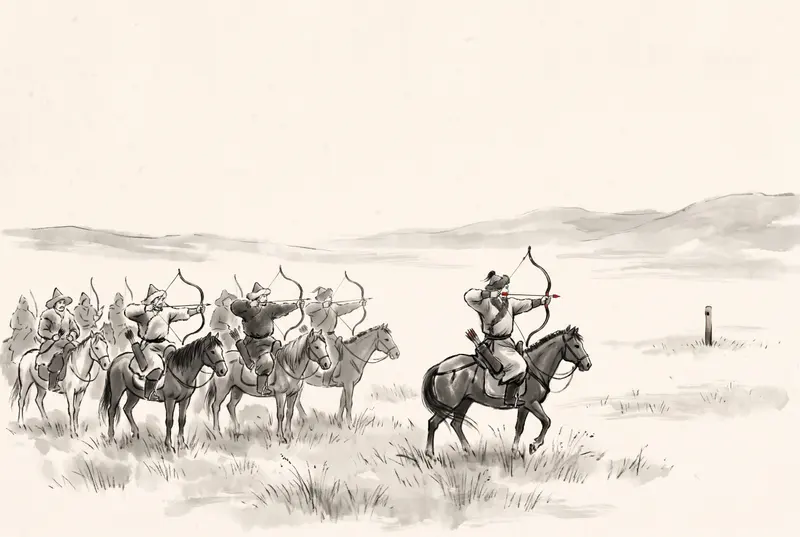
當是之時,東胡彊而月氏盛。匈奴單于曰頭曼,頭曼不勝秦,北徙。十餘年而蒙恬死,諸侯畔秦,中國擾亂,諸秦所徙適戍邊者皆復去,於是匈奴得寬,復稍度河南與中國界於故塞。單于有太子名冒頓。後有所愛閼氏,生少子,而單于欲廢冒頓而立少子,乃使冒頓質於月氏。冒頓既質於月氏,而頭曼急擊月氏。月氏欲殺冒頓,冒頓盜其善馬,騎之亡歸。頭曼以爲壯,令將萬騎。冒頓乃作爲鳴鏑,習勒其騎射,令曰:「鳴鏑所射而不悉射者,斬之。」行獵鳥獸,有不射鳴鏑所射者,輒斬之。已而冒頓以鳴鏑自射其善馬,左右或不敢射者,冒頓立斬不射善馬者。居頃之,復以鳴鏑自射其愛妻,左右或頗恐,不敢射,冒頓又復斬之。居頃之,冒頓出獵,以鳴鏑射單于善馬,左右皆射之。於是冒頓知其左右皆可用。從其父單于頭曼獵,以鳴鏑射頭曼,其左右亦皆隨鳴鏑而射殺單于頭曼,遂盡誅其後母與弟及大臣不聽從者。冒頓自立爲單于。
書き下し文
是の時に当たり、東胡彊くして月氏盛んなり。匈奴の単于を頭曼と曰う。頭曼秦に勝たず、北に徙る。十余年にして蒙恬死し、諸侯秦に畔き、中国擾乱し、諸々の秦の徙して辺を適戍せしむる者皆復た去る。是に於いて匈奴寛なるを得、復た稍く河南に度りて中国と故塞に界す。単于に太子有り、冒頓と名づく。後に愛する所の閼氏有りて少子を生む。而して単于冒頓を廃して少子を立てんと欲し、乃ち冒頓をして月氏に質たらしむ。冒頓既に月氏に質たり。而して頭曼急に月氏を撃つ。月氏冒頓を殺さんと欲す。冒頓其の善馬を盗み、之に騎りて亡げ帰る。頭曼以て壮と為し、万騎を将いしむ。冒頓乃ち鳴鏑を作為し、其の騎射を習勒し、令して曰く、「鳴鏑の射る所にして悉くは射ざる者は、之を斬らん」と。行きて鳥獣を猟するに、鳴鏑の射る所を射ざる者有れば、輒ち之を斬る。已にして冒頓鳴鏑を以て自ら其の善馬を射る。左右或いは敢えて射ざる者あり。冒頓立ちどころに善馬を射ざる者を斬る。居ること頃之、復た鳴鏑を以て自ら其の愛妻を射る。左右或いは頗る恐れ、敢えて射ず。冒頓又復た之を斬る。居ること頃之、冒頓出でて猟し、鳴鏑を以て単于の善馬を射る。左右皆之を射る。是に於いて冒頓其の左右の皆用うべきを知る。其の父単于頭曼に従いて猟し、鳴鏑を以て頭曼を射る。其の左右も亦皆鳴鏑に随いて単于頭曼を射殺す。遂に尽く其の後母と弟及び大臣の聴従せざる者を誅す。冒頓自立して単于と為る。
現代語訳
このころ、東胡は強く月氏は盛んだった。匈奴の単于は頭曼といい、秦に勝てず北へ移っていた。十年あまりして蒙恬が死に、諸侯が秦に背いて中国が乱れると、秦が辺境の守備に送り込んだ者たちはみな去った。匈奴は息をつき、また少しずつ河南へ戻って、もとの国境で中国と接した。単于には冒頓という太子がいた。のちに愛する閼氏に末の子が生まれると、単于は冒頓を廃して末の子を立てようと考え、冒頓を人質として月氏へ送った。そのうえで急に月氏を攻めた。月氏が冒頓を殺そうとすると、冒頓は良馬を盗んで逃げ帰った。頭曼はこれを勇ましいと思い、一万騎を率いさせた。冒頓は音の鳴る矢、鳴鏑を作って騎射の訓練をさせ、命じた。「鳴鏑が射たものを、すべて射ない者は斬る」。狩りに出て鳥獣を射るとき、鳴鏑の的を射ない者がいれば、すぐに斬った。やがて冒頓は鳴鏑で自分の良馬を射た。側近の中に射なかった者がいると、すぐに斬った。しばらくして、今度は愛妻を鳴鏑で射た。側近の中には恐れて射ない者がいて、また斬った。しばらくして狩りに出ると、鳴鏑で単于の良馬を射た。側近はみな射た。これで冒頓は、部下がみな使えると知った。父の頭曼の狩りに従ったとき、鳴鏑で頭曼を射ると、側近はみな鳴鏑に続いて頭曼を射殺した。冒頓は継母と弟、従わない大臣をことごとく誅殺し、自ら単于となった。
英訳
At this time the Donghu were strong and the Yuezhi flourishing. The Xiongnu ruler, the Chanyu, was named Touman. Unable to beat Qin, he moved north. A little over ten years later Meng Tian died, the lords rebelled against Qin, China fell into chaos, and the convicts Qin had sent to guard the frontier all went home. So the Xiongnu could breathe again, and little by little they came back across the River to their old border with China. The Chanyu had a crown prince named Modu. Later a favorite queen bore him a younger son, and he wanted to set Modu aside. So he sent Modu to the Yuezhi as a hostage, and then suddenly attacked them. The Yuezhi were about to kill Modu, but he stole one of their best horses and rode home. Touman thought this brave and gave him ten thousand horsemen. Modu then made a whistling arrow and drilled his riders in archery, ordering: "Whoever does not shoot at what the whistling arrow strikes will be beheaded." When they hunted, anyone who failed to shoot at the target of the whistling arrow was beheaded at once. Then Modu shot his own best horse with the whistling arrow. Some of his men did not dare to shoot, and he beheaded them on the spot. Some time later he shot his beloved wife. Some of his men, horrified, did not dare to shoot, and again he beheaded them. Some time later, out hunting, he shot the Chanyu's best horse, and all his men shot at it. Now Modu knew that every one of them could be used. He went hunting with his father and shot at Touman with the whistling arrow. All his men followed the arrow and shot the Chanyu dead. He then put to death his stepmother, his brother and all the ministers who would not obey him, and made himself Chanyu.
解説(日)
- 東胡: 匈奴の東にいた遊牧民族。
- 蒙恬: 秦の将軍(巻88)。匈奴を北へ追い、長城を築いた。
- 閼氏: 単于の妃。
- 鳴鏑: 飛ぶと音を立てる矢。かぶら矢。
- 冒頓: 読みは「ぼくとつ」。漢代の発音に基づく。
解説(英)
- Donghu (東胡): nomads to the east of the Xiongnu.
- Meng Tian: the Qin general who drove back the Xiongnu and built the Long Wall (Volume 88).
- Whistling arrow (鳴鏑): an arrow with a hollow head that shrieks in flight.
- Modu (冒頓): the name is also read Maodun.
英語の語注
- hostage/ˈhɑstɪdʒ/noun
a person held to force others to keep a promise
本文では: “as a hostage”
似た語と違い: captive — a prisoner · pledge — someone given as a guarantee
- drill/drɪl/verb
to train by repeating
本文では: “drilled his riders in archery”
似た語と違い: train — teach by practice · exercise — practice
- horrified/ˈhɔrəˌfaɪd/adjective
filled with shock and fear
本文では: “Some of his men, horrified”
似た語と違い: appalled — greatly shocked · aghast — filled with horror
節 3
原文
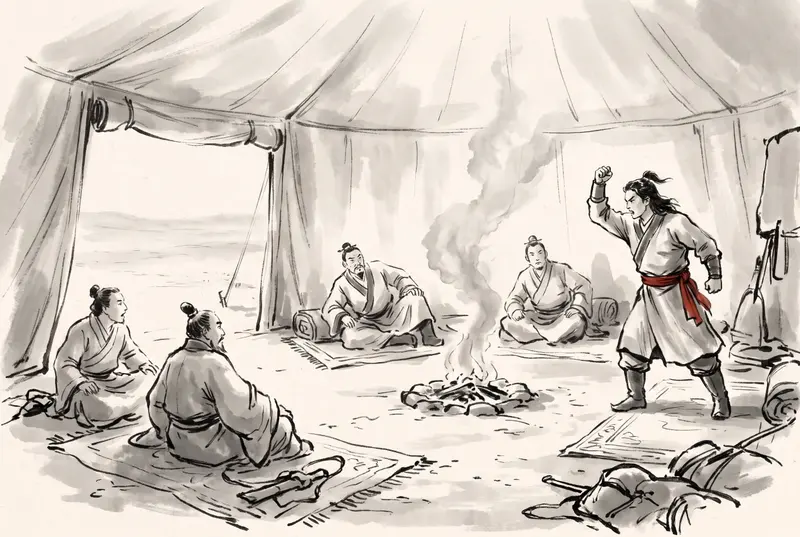
冒頓既立,是時東胡彊盛,聞冒頓殺父自立,乃使使謂冒頓,欲得頭曼時有千里馬。冒頓問群臣,群臣皆曰:「千里馬,匈奴寶馬也,勿與。」冒頓曰:「柰何與人鄰國而愛一馬乎?」遂與之千里馬。居頃之,東胡以爲冒頓畏之,乃使使謂冒頓,欲得單于一閼氏。冒頓復問左右,左右皆怒曰:「東胡無道,乃求閼氏!請擊之。」冒頓曰:「柰何與人鄰國愛一女子乎?」遂取所愛閼氏予東胡。東胡王愈益驕,西侵。與匈奴閒,中有棄地,莫居,千餘里,各居其邊爲甌脫。東胡使使謂冒頓曰:「匈奴所與我界甌脫外棄地,匈奴非能至也,吾欲有之。」冒頓問群臣,群臣或曰:「此棄地,予之亦可,勿予亦可。」於是冒頓大怒曰:「地者,國之本也,柰何予之!」諸言予之者,皆斬之。冒頓上馬,令國中有後者斬,遂東襲擊東胡。東胡初輕冒頓,不爲備。及冒頓以兵至,擊,大破滅東胡王,而虜其民人及畜產。既歸,西擊走月氏,南并樓煩、白羊河南王。[侵燕代]悉復收秦所使蒙恬所奪匈奴地者,與漢關故河南塞,至朝那、膚施,遂侵燕、代。是時漢兵與項羽相距,中國罷於兵革,以故冒頓得自彊,控弦之士三十餘萬。
書き下し文
冒頓既に立つ。是の時東胡彊盛なり。冒頓の父を殺して自立するを聞き、乃ち使いをして冒頓に謂わしめ、頭曼の時有る所の千里馬を得んと欲す。冒頓群臣に問う。群臣皆曰く、「千里馬は、匈奴の宝馬なり。与うる勿かれ」と。冒頓曰く、「柰何ぞ人と国を隣にして一馬を愛しまんや」と。遂に之に千里馬を与う。居ること頃之、東胡以為らく冒頓之を畏ると。乃ち使いをして冒頓に謂わしめ、単于の一閼氏を得んと欲す。冒頓復た左右に問う。左右皆怒りて曰く、「東胡は無道なり。乃ち閼氏を求む。請う之を撃たん」と。冒頓曰く、「柰何ぞ人と国を隣にして一女子を愛しまんや」と。遂に愛する所の閼氏を取りて東胡に予う。東胡王愈々益々驕り、西に侵す。匈奴との間に、中に棄地有り、居る莫きこと千余里、各々其の辺に居りて甌脱と為す。東胡使いをして冒頓に謂わしめて曰く、「匈奴の我と界する所の甌脱外の棄地は、匈奴の能く至るに非ざるなり。吾之を有せんと欲す」と。冒頓群臣に問う。群臣或いは曰く、「此れ棄地なり。之を予うるも亦可なり、予うる勿きも亦可なり」と。是に於いて冒頓大いに怒りて曰く、「地は、国の本なり。柰何ぞ之を予えんや」と。諸々の之を予えよと言う者は、皆之を斬る。冒頓馬に上り、国中に令して後るる者有らば斬らんとし、遂に東して東胡を襲撃す。東胡初め冒頓を軽んじ、備えを為さず。冒頓の兵を以て至り、撃つに及びて、大いに東胡王を破滅し、而して其の民人及び畜産を虜にす。既に帰りて、西して月氏を撃ち走らせ、南して楼煩・白羊河南王を并す。[燕代を侵し]悉く復た秦の蒙恬をして奪わしむる所の匈奴の地を収め、漢と故の河南塞に関し、朝那・膚施に至り、遂に燕・代を侵す。是の時漢の兵項羽と相距ぎ、中国兵革に罷る。故を以て冒頓自ら彊くするを得、控弦の士三十余万。
現代語訳
冒頓が立ったころ、東胡は強大だった。冒頓が父を殺して自立したと聞くと、使者をよこして、頭曼が持っていた千里の馬を求めた。冒頓が群臣に尋ねると、みな言った。「千里の馬は匈奴の宝です。与えてはなりません」。冒頓は言った。「隣り合う国の相手に、馬一頭を惜しむことがあろうか」。そして千里の馬を与えた。まもなく東胡は、冒頓が自分を恐れていると思い、使者をよこして単于の閼氏を一人求めた。冒頓がまた側近に尋ねると、みな怒って言った。「東胡は無道です。閼氏を求めるとは。討たせてください」。冒頓は言った。「隣り合う国の相手に、女一人を惜しむことがあろうか」。そして愛する閼氏を東胡に与えた。東胡の王はますますおごり、西へ侵入してきた。匈奴との間には千里あまりの無人の荒れ地があり、それぞれ端に見張りの地を置いていた。東胡は使者をよこして言った。「見張りの外の荒れ地には、匈奴は来られまい。我々がもらう」。冒頓が群臣に尋ねると、ある者は言った。「これは荒れ地です。与えても、与えなくてもよいでしょう」。すると冒頓は激怒して言った。「土地は国の本である。どうして与えられようか」。与えてよいと言った者をみな斬った。冒頓は馬に乗り、遅れる者は斬ると国中に命じて、東へ東胡を襲った。東胡は冒頓を軽んじて備えをしていなかった。冒頓の軍が攻め寄せると、東胡の王を大いに破って滅ぼし、民と家畜を奪った。帰ると西の月氏を討って追い払い、南の楼煩王と白羊河南王を併合した。秦の蒙恬に奪われた匈奴の地をすべて取り戻し、漢とは河南のもとの国境で接し、朝那と膚施に至り、さらに燕と代へ侵入した。このころ漢軍は項羽と戦っていて、中国は戦に疲れていた。そのおかげで冒頓は強大になり、弓を引く兵は三十万あまりに達した。
英訳
When Modu had taken the throne, the Donghu were at the height of their power. Hearing that he had killed his father, they sent an envoy to ask for the thousand-li horse that Touman had owned. Modu asked his ministers, who all said: "The thousand-li horse is the treasure of the Xiongnu. Do not give it to them." Modu said: "How can I, living next door to them, grudge them one horse?" And he gave it. Soon the Donghu, thinking Modu was afraid of them, sent an envoy to ask for one of the Chanyu's queens. Modu again asked those around him, who all said in fury: "The Donghu are lawless. They dare to ask for a queen! Let us attack them." Modu said: "How can I, living next door to them, grudge them one woman?" And he took the queen he loved and gave her to the Donghu. The Donghu king grew still more arrogant and pushed west. Between him and the Xiongnu lay more than a thousand li of empty wasteland, and each side kept watch posts at its edge. The Donghu sent an envoy to say: "The Xiongnu cannot reach that wasteland beyond the watch posts. We want it." Modu asked his ministers. Some said: "It is only wasteland. You may give it to them or not." At this Modu flew into a rage and said: "Land is the root of the state. How can it be given away?" He beheaded all who had said to give it. He leapt on his horse, ordered that anyone in the country who came late would be beheaded, and struck east at the Donghu. The Donghu had taken him lightly and made no preparations. When Modu's army arrived, it utterly destroyed their king and carried off their people and herds. On his return he drove off the Yuezhi in the west and swallowed up the kings of Loufan and Baiyang to the south. He took back all the Xiongnu land that Meng Tian had seized for Qin, set his border with Han at the old frontier south of the River, reached Chaona and Fushi, and went on to raid Yan and Dai. At that time the Han armies were locked in battle with Xiang Yu, and China was worn out by war. So Modu was able to grow strong, with more than three hundred thousand archers.
解説(日)
- 千里馬: 一日に千里を走るという名馬。
- 甌脱: 国境の見張りの地。
- 地者、國之本也: 冒頓の有名な言葉。
- 控弦: 弓を引く者。兵士。
解説(英)
- Thousand-li horse (千里馬): a horse said to run a thousand li in a day.
- Watch posts (甌脫): the outposts on the edge of no man's land.
- "Land is the root of the state" (地者,國之本也): Modu's most famous saying.
この節から生まれた言葉: 地は国の本なり
英語の語注
- grudge/ɡrʌdʒ/verb
to be unwilling to give
本文では: “grudge them one horse”
似た語と違い: begrudge — give unwillingly · resent — feel bitter about
- wasteland/ˈweɪstˌlænd/noun
empty land that cannot be used
本文では: “empty wasteland”
似た語と違い: desert — dry empty land · wilds — land with no people
節 4
原文
置左右賢王,左右谷蠡王,左右大將,左右大都尉,左右大當戶,左右骨都侯。匈奴謂賢曰「屠耆」,故常以太子爲左屠耆王。自如左右賢王以下至當戶,大者萬騎,小者數千,凡二十四長,立號曰「萬騎」。諸大臣皆世官。呼衍氏,蘭氏,其後有須卜氏,此三姓其貴種也。諸左方王將居東方,直上谷以往者,東接穢貉、朝鮮;右方王將居西方,直上郡以西,接月氏、氐、羌;而單于之庭直代、雲中:各有分地,逐水草移徙。而左右賢王、左右谷蠡王最爲大(國),左右骨都侯輔政。諸二十四長亦各自置千長、百長、什長、裨小王、相、封都尉、當戶、且渠之屬。歳正月,諸長小會單于庭,祠。五月,大會蘢城,祭其先、天地、鬼神。秋,馬肥,大會蹛林,課校人畜計。其法,拔刃尺者死,坐盜者沒入其家;有罪小者軋,大者死。獄久者不過十日,一國之囚不過數人。而單于朝出營,拜日之始生,夕拜月。其坐,長左而北鄉。日上戊己。其送死,有棺槨金銀衣裘,而無封樹喪服;近幸臣妾從死者,多至數千百人。舉事而候星月,月盛壯則攻戰,月虧則退兵。其攻戰,斬首虜賜一卮酒,而所得鹵獲因以予之,得人以爲奴婢。故其戰,人人自爲趣利,善爲誘兵以冒敵。故其見敵則逐利,如鳥之集;其困敗,則瓦解雲散矣。戰而扶輿死者,盡得死者家財。
書き下し文
左右の賢王、左右の谷蠡王、左右の大将、左右の大都尉、左右の大当戸、左右の骨都侯を置く。匈奴は賢を謂いて「屠耆」と曰う。故に常に太子を以て左屠耆王と為す。左右の賢王より以下当戸に至るまで、大なる者は万騎、小なる者は数千、凡そ二十四長、号を立てて「万騎」と曰う。諸大臣は皆世官なり。呼衍氏、蘭氏、其の後須卜氏有り、此の三姓は其の貴種なり。諸々の左方の王将は東方に居り、上谷に直たりて以往、東は穢貉・朝鮮に接す。右方の王将は西方に居り、上郡に直たりて以西、月氏・氐・羌に接す。而して単于の庭は代・雲中に直たる。各々分地有り、水草を逐いて移徙す。而して左右の賢王、左右の谷蠡王最も大(国)たり、左右の骨都侯政を輔く。諸々の二十四長も亦各々自ら千長・百長・什長・裨小王・相・封都尉・当戸・且渠の属を置く。歳の正月、諸長単于の庭に小会して、祠る。五月、蘢城に大会し、其の先・天地・鬼神を祭る。秋、馬肥ゆれば、蹛林に大会し、人畜の計を課校す。其の法、刃を抜くこと尺なる者は死し、盗に坐する者は其の家を没入す。罪有りて小なる者は軋し、大なる者は死す。獄の久しき者も十日に過ぎず、一国の囚は数人に過ぎず。而して単于朝に営を出でて、日の始めて生ずるを拝し、夕に月を拝す。其の坐は、左を長として北郷す。日は戊己を上ぶ。其の死を送るに、棺槨金銀衣裘有るも、而も封樹喪服無し。近幸の臣妾の従死する者、多きは数千百人に至る。事を挙ぐるに星月を候い、月盛壮なれば則ち攻戦し、月虧くれば則ち兵を退く。其の攻戦するや、首虜を斬れば一卮の酒を賜い、而して得る所の鹵獲は因りて以て之に予え、人を得れば以て奴婢と為す。故に其の戦いは、人人自ら利に趣くを為し、善く誘兵を為して以て敵を冒す。故に其の敵を見れば則ち利を逐うこと、鳥の集まるが如く、其の困敗すれば、則ち瓦解雲散す。戦いて死者を扶輿する者は、尽く死者の家財を得。
現代語訳
匈奴には左右の賢王、谷蠡王、大将、大都尉、大当戸、骨都侯が置かれた。匈奴では賢いことを「屠耆」というので、太子を左屠耆王とする。左右の賢王から当戸までの長は、大きいもので一万騎、小さいもので数千騎を率い、全部で二十四人あり、「万騎」と称した。大臣はみな世襲である。呼衍氏、蘭氏、のちに須卜氏の三つが貴い家柄である。左方の王や将は東にいて、上谷から東で穢貉と朝鮮に接する。右方の王や将は西にいて、上郡から西で月氏、氐、羌に接する。単于の本営は代と雲中の北にある。それぞれ持ち場があって、水と草を追って移動した。左右の賢王と谷蠡王が最も大きく、左右の骨都侯が政治を補佐する。二十四人の長もそれぞれ、千人長、百人長、十人長や小王、相などを置く。毎年正月に諸長が単于の本営に小さく集まって祭りをする。五月には竜城に大きく集まって、祖先と天地と鬼神を祭る。秋に馬が肥えると蹛林に大きく集まり、人と家畜の数を調べる。法では、刃を一尺抜いた者は死刑、盗みをした者は家族と財産を没収する。軽い罪は骨を砕く刑、重い罪は死刑である。裁きは長くても十日で、全国の囚人は数人にすぎない。単于は朝に陣営を出て昇る日を拝み、夕方に月を拝む。座るときは左を上位として北を向く。日は戊と己の日を尊ぶ。葬儀では棺や金銀、衣服を納めるが、墳丘も墓の木も喪服もない。近臣や妾で殉死する者は、多いときは数百、数千に達する。事を起こすときは星と月を見て、月が満ちれば攻め、欠ければ兵を引く。戦で敵の首を取れば酒一杯を賜り、奪ったものはその者に与え、捕虜は奴隷とする。だから戦いでは誰もが利益を求めて進み、おとりで敵を誘うのがうまい。敵を見れば鳥が群がるように利を追い、敗れれば瓦が崩れ雲が散るように消える。戦死者の遺体を運んで帰った者は、その家の財産をすべて得る。
英訳
The Xiongnu had Wise Kings of the Left and Right, Luli Kings of the Left and Right, Great Generals, Great Commandants, Great Danghu and Gudu Marquises, each of the Left and Right. Their word for "wise" is tuqi, so the crown prince was always the Tuqi King of the Left. From the Wise Kings down to the Danghu, the greater led ten thousand horsemen and the lesser several thousand. There were twenty-four such chiefs, called "the Ten Thousand Horsemen." All the great offices were hereditary. The clans of Huyan and Lan, and later Xubu, were the noble families. The kings and generals of the left lived in the east, from Shanggu onward, bordering the Huimo and Korea. Those of the right lived in the west, from Shang Commandery westward, bordering the Yuezhi, the Di and the Qiang. The Chanyu's court lay north of Dai and Yunzhong. Each had his own territory and moved in search of water and grass. The Wise Kings and Luli Kings were the greatest, and the Gudu Marquises assisted in government. Each of the twenty-four chiefs appointed his own leaders of thousands, hundreds and tens, lesser kings, ministers and officers. In the first month of the year the chiefs held a small gathering at the Chanyu's court for sacrifice. In the fifth month there was a great gathering at Longcheng to worship their ancestors, Heaven and Earth and the spirits. In autumn, when the horses were fat, there was a great gathering at Dailin to count people and animals. Under their law, anyone who drew a blade a foot out of its sheath died. A thief lost his family and property. Small crimes were punished by crushing the bones and great ones by death. No one was held for more than ten days, and in the whole country there were only a few prisoners. The Chanyu left his camp each morning to bow to the rising sun, and in the evening he bowed to the moon. In seating, the left was the place of honor, and they faced north. Their burials had coffins, gold and silver, clothes and furs, but no grave mounds, trees or mourning dress. As many as hundreds or thousands of favored servants and concubines might follow a ruler in death. They watched the stars and moon before any undertaking, attacking when the moon was full and pulling back when it waned. In war, a man who took a head or a captive was given a cup of wine and kept what he had seized, and captives became his slaves. So every man fought for his own gain, and they were skilled at drawing the enemy with decoys. At the sight of an enemy they swarmed after profit like birds. When beaten, they broke like tiles and scattered like clouds. A man who carried a fallen comrade's body home received all the dead man's property.
解説(日)
- 賢王: 匈奴の最高位の王。左(東)が右(西)より上位。
- 屠耆: 匈奴語の音を写したもの。
- 蘢城: 匈奴の聖地。
- 軋: 骨を砕く刑。
- 瓦解雲散: 崩れ散るたとえ。
解説(英)
- Wise Kings (賢王): the highest of the Xiongnu kings. The left (east) outranked the right (west).
- Longcheng: the sacred gathering place of the Xiongnu.
- Broke like tiles and scattered like clouds (瓦解雲散): a phrase for total collapse.
この節から生まれた言葉: 瓦解雲散
英語の語注
- hereditary/həˈrɛdəˌtɛri/adjective
passed from parent to child
本文では: “All the great offices were hereditary”
似た語と違い: inherited — received from family · family — of a family
- decoy/ˈdikɔɪ/noun
something used to lure others into a trap
本文では: “drawing the enemy with decoys”
似た語と違い: lure — something that attracts · bait — something used to trap
節 5
原文
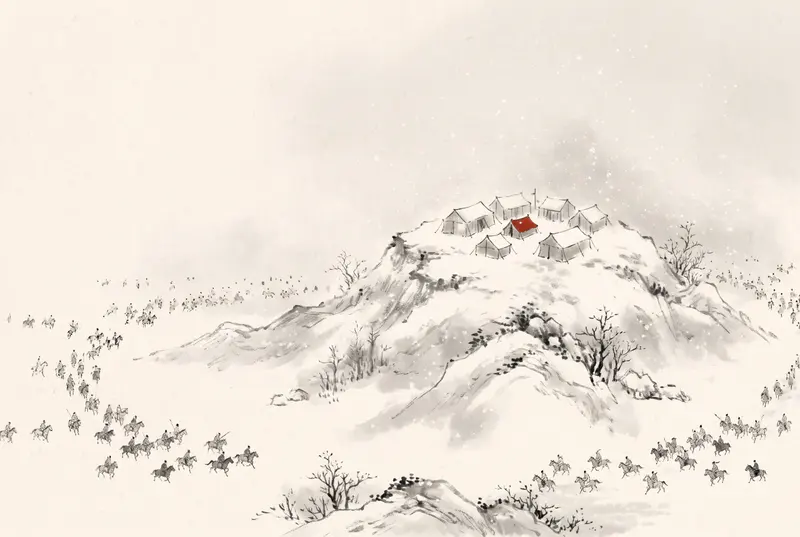
是時漢初定中國,徙韓王信於代,都馬邑。匈奴大攻圍馬邑,韓王信降匈奴。匈奴得信,因引兵南踰句注,攻太原,至晉陽下。高帝自將兵往擊之。會冬大寒雨雪,卒之墮指者十二三,於是冒頓詳敗走,誘漢兵。漢兵逐擊冒頓,冒頓匿其精兵,見其羸弱,於是漢悉兵,多步兵,三十二萬,北逐之。高帝先至平城,步兵未盡到,冒頓縱精兵四十萬騎圍高帝於白登,七日,漢兵中外不得相救餉。匈奴騎,其西方盡白馬,東方盡青駹馬,北方盡烏驪馬,南方盡騂馬。高帝乃使使閒厚遺閼氏,閼氏乃謂冒頓曰:「兩主不相困。今得漢地,而單于終非能居之也。且漢王亦有神,單于察之。」冒頓與韓王信之將王黃、趙利期,而黃、利兵又不來,疑其與漢有謀,亦取閼氏之言,乃解圍之一角。於是高帝令士皆持滿傅矢外鄉,從解角直出,竟與大軍合,而冒頓遂引兵而去。漢亦引兵而罷,使劉敬結和親之約。
書き下し文
是の時漢初めて中国を定め、韓王信を代に徙し、馬邑に都せしむ。匈奴大いに馬邑を攻め囲む。韓王信匈奴に降る。匈奴信を得て、因りて兵を引きて南のかた句注を踰え、太原を攻め、晋陽の下に至る。高帝自ら兵を将いて往きて之を撃つ。会々冬大いに寒く雨雪あり、卒の指を堕とす者十に二三。是に於いて冒頓詳り敗走して、漢の兵を誘う。漢の兵冒頓を逐撃す。冒頓其の精兵を匿し、其の羸弱を見す。是に於いて漢悉く兵を、多くは歩兵を、三十二万、北のかた之を逐う。高帝先ず平城に至り、歩兵未だ尽くは到らず。冒頓精兵四十万騎を縦ちて高帝を白登に囲むこと、七日。漢の兵中外相救餉するを得ず。匈奴の騎、其の西方は尽く白馬、東方は尽く青駹馬、北方は尽く烏驪馬、南方は尽く騂馬なり。高帝乃ち使いをして間に厚く閼氏に遺らしむ。閼氏乃ち冒頓に謂いて曰く、「両主は相困しめず。今漢の地を得るも、而も単于は終に能く之に居るに非ざるなり。且つ漢王も亦神有り。単于之を察せよ」と。冒頓韓王信の将王黄・趙利と期するも、而して黄・利の兵又来たらず。其の漢と謀有るを疑い、亦閼氏の言を取り、乃ち囲みの一角を解く。是に於いて高帝士をして皆満を持し矢を傅けて外に郷わしめ、解角より直ちに出で、竟に大軍と合す。而して冒頓遂に兵を引きて去る。漢も亦兵を引きて罷め、劉敬をして和親の約を結ばしむ。
現代語訳
このころ漢は中国を平定したばかりで、韓王信を代に移し、馬邑を都とさせた。匈奴が大軍で馬邑を囲むと、韓王信は匈奴に降った。匈奴は韓王信を得ると、兵を率いて南へ句注山を越え、太原を攻めて晋陽の城下に至った。高祖は自ら兵を率いて討ちに行った。折しも冬の大寒で雪が降り、兵の十人に二、三人が凍傷で指を失った。冒頓は負けたふりをして逃げ、漢軍を誘った。漢軍が追撃すると、冒頓は精兵を隠して弱った兵だけを見せた。そこで漢は全軍、歩兵を中心に三十二万で北へ追った。高祖が先に平城に着いたとき、歩兵はまだ全部は到着していなかった。冒頓は精兵四十万騎を放って高祖を白登山に七日間包囲し、漢軍は内と外で救援も補給もできなかった。匈奴の騎兵は、西はすべて白馬、東はすべて青毛の馬、北はすべて黒馬、南はすべて赤馬であった。高祖はひそかに使者を送って閼氏に手厚く贈り物をした。閼氏は冒頓に言った。「両国の君主が苦しめ合うものではありません。いま漢の地を得ても、単于はそこに住むことはできません。それに漢王にも神の加護があります。よくお考えください」。冒頓は韓王信の将の王黄、趙利と合流の約束をしていたが、彼らの兵は来なかった。漢と通じているのではと疑い、閼氏の言葉も受け入れて、包囲の一角を解いた。高祖は兵に弓を引きしぼり矢をつがえて外に向かせ、解かれた一角からまっすぐ出て、ついに本隊と合流した。冒頓は兵を引いて去った。漢も兵を引き、劉敬に和親の約を結ばせた。
英訳
At this time Han had only just pacified China. It moved Xin, King of Han, to Dai, with his capital at Mayi. The Xiongnu surrounded Mayi in force, and King Xin went over to them. With him on their side, they led their troops south across Mount Gouzhu, attacked Taiyuan and reached the walls of Jinyang. Emperor Gaozu marched against them himself. It was the dead of winter, bitterly cold and snowing, and two or three soldiers in ten lost fingers to the frost. Modu pretended to be defeated and fled, to draw the Han army on. When the Han troops pursued, he hid his best men and showed them only the weak. So Han sent its whole force north after him, three hundred and twenty thousand men, most of them on foot. Gaozu reached Pingcheng first, before all the infantry had come up. Modu then let loose four hundred thousand picked horsemen and surrounded him on Baideng for seven days, so that the troops inside and outside could neither help nor supply one another. The Xiongnu cavalry on the west all rode white horses, on the east gray-blue horses, on the north black horses and on the south red horses. Gaozu secretly sent an envoy with rich gifts to Modu's queen. She said to Modu: "Two rulers should not hound each other. Even if you take the land of Han, you can never live there. And the King of Han has a god on his side. Think it over." Modu had arranged to meet Wang Huang and Zhao Li, generals of King Xin, but their troops did not come, and he suspected they were plotting with Han. So he took the queen's advice and opened one corner of his ring. Gaozu ordered his men to draw their bows with arrows nocked and aim outward, marched straight out through the gap and at last joined the main army. Modu withdrew, and Han withdrew as well. Han sent Liu Jing to conclude a treaty of peace and marriage.
解説(日)
- 韓王信: 韓信とは別人の韓の王。
- 句注: 今の山西省代県の北の山。
- 白登: 平城の東の山。前200年(巻56 p11)。
- 和親: 漢の公主を単于に嫁がせ、毎年物資を贈る約束。
- 劉敬: 婁敬。和親策を立てた。
解説(英)
- Xin, King of Han (韓王信): not the same man as the great general Han Xin.
- Baideng: a hill east of Pingcheng. The siege was in 200 BCE (see Volume 56, p11).
- Peace and marriage (和親): Han sent a princess and yearly gifts to the Chanyu.
英語の語注
- frost/frɔst/noun
very cold weather or ice crystals
本文では: “lost fingers to the frost”
似た語と違い: ice — frozen water · chill — coldness
- treaty/ˈtriti/noun
a formal agreement between states
本文では: “a treaty of peace and marriage”
似た語と違い: pact — an agreement · accord — a formal agreement
節 6
原文
高祖崩,孝惠、呂太后時,漢初定,故匈奴以驕。冒頓乃爲書遺高后,妄言。高后欲擊之,諸將曰:「以高帝賢武,然尚困於平城。」於是高后乃止,復與匈奴和親。
書き下し文
高祖崩じ、孝恵・呂太后の時、漢初めて定まる。故に匈奴以て驕る。冒頓乃ち書を為りて高后に遺り、妄言す。高后之を撃たんと欲す。諸将曰く、「高帝の賢武を以てして、然も尚お平城に困しむ」と。是に於いて高后乃ち止め、復た匈奴と和親す。
現代語訳
高祖が亡くなり、恵帝と呂太后の時代になると、漢は平定されたばかりだったので、匈奴はおごった。冒頓は呂太后に手紙を送り、無礼な言葉を書いた。呂太后は討とうとしたが、将軍たちは言った。「高祖ほどの賢く武勇のあるお方でさえ、平城で苦しまれたのです」。そこで呂太后は思いとどまり、再び匈奴と和親を結んだ。
英訳
After Gaozu died, in the time of Emperor Hui and Empress Dowager Lü, Han was still newly settled, and the Xiongnu grew arrogant. Modu wrote a letter to the Empress Dowager full of outrageous words. She wanted to attack him. But the generals said: "Even Gaozu, for all his wisdom and might, was trapped at Pingcheng." So she gave up the idea and renewed the peace with the Xiongnu.
解説(日)
- 高后: 呂后。
- 妄言: 無礼な言葉。『漢書』によれば、未亡人どうしで結婚しようと持ちかける内容だった。
解説(英)
- Outrageous words: according to the History of the Former Han, he proposed that, as she was a widow and he was alone, they should marry.
英語の語注
- outrageous/aʊtˈreɪdʒəs/adjective
shocking and unacceptable
本文では: “full of outrageous words”
似た語と違い: shocking — causing surprise and upset · scandalous — causing public outrage
節 7
原文
老上稽粥單于初立,孝文皇帝復遣宗室女公主爲單于閼氏,使宦者燕人中行說傅公主。說不欲行,漢彊使之。說曰:「必我行也,爲漢患者。」中行說既至,因降單于,單于甚親幸之。初,匈奴好漢繒絮食物,中行說曰:「匈奴人眾不能當漢之一郡,然所以彊者,以衣食異,無仰於漢也。今單于變俗好漢物,漢物不過什二,則匈奴盡歸於漢矣。其得漢繒絮,以馳草棘中,衣袴皆裂敝,以示不如旃裘之完善也。得漢食物皆去之,以示不如湩酪之便美也。」於是說教單于左右疏記,以計課其人眾畜物。漢遺單于書,牘以尺一寸,辭曰「皇帝敬問匈奴大單于無恙」,所遺物及言語云云。中行說令單于遺漢書以尺二寸牘,及印封皆令廣大長,倨傲其辭曰「天地所生日月所置匈奴大單于敬問漢皇帝無恙」,所以遺物言語亦云云。
書き下し文
老上稽粥単于初めて立つ。孝文皇帝復た宗室の女を公主として遣わして単于の閼氏と為し、宦者燕人中行説をして公主に傅たらしむ。説行くを欲せず。漢彊いて之を使わす。説曰く、「必ず我行かば、漢の患いと為らん」と。中行説既に至り、因りて単于に降る。単于甚だ之を親幸す。初め、匈奴は漢の繒絮食物を好む。中行説曰く、「匈奴の人衆は漢の一郡に当たる能わず。然れども彊き所以の者は、衣食異なりて、漢に仰ぐ無きを以てなり。今単于俗を変じて漢の物を好む。漢の物什の二に過ぎずして、則ち匈奴尽く漢に帰せん。其の漢の繒絮を得ば、以て草棘の中を馳せ、衣袴皆裂敝せしめ、以て旃裘の完善に如かざるを示せ。漢の食物を得ば皆之を去り、以て湩酪の便美に如かざるを示せ」と。是に於いて説単于の左右に疏記を教え、以て其の人衆畜物を計課せしむ。漢の単于に遺る書は、牘は尺一寸を以てし、辞に曰く「皇帝敬みて匈奴の大単于の恙無きを問う」と、遺る所の物及び言語云云。中行説単于をして漢に遺る書は尺二寸の牘を以てせしめ、及び印封も皆広大長ならしめ、其の辞を倨傲にして曰く「天地の生む所、日月の置く所の匈奴の大単于、敬みて漢の皇帝の恙無きを問う」と、遺る所の物と言語も亦云云。
現代語訳
老上単于が立つと、文帝はまた皇族の娘を公主として単于の閼氏に送り、燕の出身の宦官、中行説を付き添いに命じた。中行説は行きたくなかったが、漢は無理に行かせた。中行説は言った。「私を行かせるなら、きっと漢の災いになるぞ」。到着すると単于に降り、単于は彼を大いに信任した。それまで匈奴は漢の絹や真綿、食べ物を好んでいた。中行説は言った。「匈奴の人口は漢の一郡にも及びません。それでも強いのは、衣食が違い、漢に頼らないからです。いま単于が習俗を変えて漢の物を好めば、漢の物の十分の二も使わないうちに、匈奴はすべて漢になびくでしょう。漢の絹を手に入れたら、着て草やいばらの中を走らせ、衣も袴も破れるのを見せて、毛織りと毛皮に及ばないことを示しなさい。漢の食べ物を手に入れたら捨てて、乳や乳製品のほうが便利でうまいことを示しなさい」。そして単于の側近に記録の取り方を教え、人と家畜の数を計算させた。漢が単于に送る書は一尺一寸の札に「皇帝、つつしんで匈奴の大単于のご無事を問う」と書き、贈り物と言葉を記していた。中行説は、単于が漢へ送る書を一尺二寸の札とし、印と封もすべて大きくして、ごう慢に「天地の生み、日月の置いた匈奴の大単于、つつしんで漢の皇帝のご無事を問う」と書かせ、贈り物と言葉を記させた。
英訳
When the Laoshang Chanyu came to the throne, Emperor Wen again sent a woman of the imperial clan as a princess to be his queen, with a eunuch from Yan named Zhonghang Yue as her guardian. Yue did not want to go, but Han forced him. He said: "If I must go, I will be the ruin of Han." When he arrived he went over to the Chanyu, who trusted him and kept him close. At first the Xiongnu loved Han silk, floss and food. Zhonghang Yue said: "The Xiongnu are not as many as the people of one Han commandery. They are strong because their food and clothes are different and they do not depend on Han. Now if the Chanyu changes these customs and comes to love Han goods, then before Han has given up two tenths of its wealth, all the Xiongnu will have gone over to Han. When you get Han silk, ride through the thorns in it until the coats and trousers are in tatters, to show that it is not as good as felt and fur. When you get Han food, throw it away, to show that it is not as handy or as tasty as milk and curds." He also taught the Chanyu's attendants to keep written accounts, in order to count their people and animals. Letters from Han to the Chanyu were written on tablets a foot and an inch long and began: "The Emperor respectfully asks after the health of the Great Chanyu of the Xiongnu," then listed the gifts and the message. Zhonghang Yue had the Chanyu reply on tablets a foot and two inches long, with a larger seal and wrapping. In haughty words they began: "The Great Chanyu of the Xiongnu, born of Heaven and Earth and set in place by the Sun and Moon, respectfully asks after the health of the Emperor of Han," and then gave the gifts and the message.
解説(日)
- 老上稽粥: 冒頓の子。月氏の王を殺した(巻123)。
- 中行説: 「ちゅうこうえつ」。匈奴に寝返った漢の宦官。
- 繒絮: 絹と真綿。
- 湩酪: 乳と乳製品。
- 牘: 手紙を書く木の札。漢より一寸長い札で対抗した。
解説(英)
- Laoshang Chanyu: the son of Modu, who killed the Yuezhi king (Volume 123).
- Zhonghang Yue (中行說): a Han eunuch who defected. Zhonghang is his family name.
- A foot and two inches: one inch longer than the Han tablet, a calculated insult.
英語の語注
- eunuch/ˈjunək/noun
a castrated man who served at a palace
本文では: “a eunuch from Yan”
似た語と違い: court servant — a palace attendant · chamberlain — an officer of a royal household
- haughty/ˈhɔti/adjective
proud and looking down on others
本文では: “In haughty words”
似た語と違い: arrogant — too proud · disdainful — showing no respect
節 8
原文
漢使或言曰:「匈奴俗賤老。」中行說窮漢使曰:「而漢俗屯戍從軍當發者,其老親豈有不自脫溫厚肥美以齎送飲食行戍乎?」漢使曰:「然。」中行說曰:「匈奴明以戰攻爲事,其老弱不能鬬,故以其肥美飲食壯健者,蓋以自爲守衛,如此父子各得久相保,何以言匈奴輕老也?」漢使曰:「匈奴父子乃同穹廬而臥。父死,妻其後母;兄弟死,盡取其妻妻之。無冠帶之飾,闕庭之禮。」中行說曰:「匈奴之俗,人食畜肉,飲其汁,衣其皮;畜食草飲水,隨時轉移。故其急則人習騎射,寬則人樂無事,其約束輕,易行也。君臣簡易,一國之政猶一身也。父子兄弟死,取其妻妻之,惡種姓之失也。故匈奴雖亂,必立宗種。今中國雖詳不取其父兄之妻,親屬益疏則相殺,至乃易姓,皆從此類。且禮義之敝,上下交怨望,而室屋之極,生力必屈。夫力耕桑以求衣食,築城郭以自備,故其民急則不習戰功,緩則罷於作業。嗟土室之人,顧無多辭,令喋喋而佔佔,冠固何當?」
書き下し文
漢使或いは言いて曰く、「匈奴の俗は老を賤しむ」と。中行説漢使を窮して曰く、「而の漢の俗、屯戍従軍に当たりて発する者は、其の老親豈に自ら温厚肥美を脱して以て飲食を齎し行戍を送らざる有らんや」と。漢使曰く、「然り」と。中行説曰く、「匈奴は明らかに戦攻を以て事と為す。其の老弱は闘う能わず。故に其の肥美の飲食を以て壮健なる者に与う。蓋し以て自ら守衛を為すなり。此くの如くして父子各々久しく相保つを得。何を以てか匈奴は老を軽んずと言わんや」と。漢使曰く、「匈奴は父子乃ち穹廬を同じくして臥す。父死すれば、其の後母を妻とし、兄弟死すれば、尽く其の妻を取りて之を妻とす。冠帯の飾り、闕庭の礼無し」と。中行説曰く、「匈奴の俗、人は畜肉を食らい、其の汁を飲み、其の皮を衣る。畜は草を食らい水を飲み、時に随いて転移す。故に其の急なれば則ち人騎射を習い、寛なれば則ち人事無きを楽しむ。其の約束軽く、行い易きなり。君臣簡易にして、一国の政は猶お一身のごとし。父子兄弟死して、其の妻を取りて之を妻とするは、種姓の失わるるを悪むなり。故に匈奴は乱ると雖も、必ず宗種を立つ。今中国は詳りて其の父兄の妻を取らずと雖も、親属益々疏なれば則ち相殺し、乃ち姓を易うるに至るは、皆此の類に従う。且つ礼義の敝は、上下交々怨望し、而して室屋の極は、生力必ず屈す。夫れ力めて耕桑して以て衣食を求め、城郭を築きて以て自ら備う。故に其の民急なれば則ち戦功を習わず、緩なれば則ち作業に罷る。嗟、土室の人よ、顧みて多辞する無かれ。喋喋として佔佔たらしむるも、冠固より何ぞ当たらん」と。
現代語訳
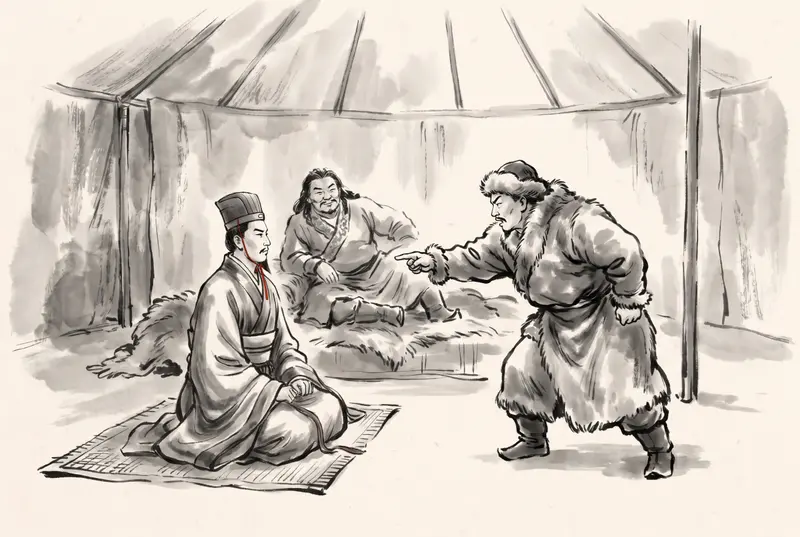
ある漢の使者が言った。「匈奴の風習は老人を軽んじる」。中行説は問いつめた。「漢の風習でも、息子が守備や従軍に出るとき、老いた親は暖かい衣やおいしいものを自分から脱いで、持たせて送り出すではないか」。使者は「そうです」と言った。中行説は言った。「匈奴はあきらかに戦を仕事としている。老人や弱い者は戦えない。だから良い食べ物を強い者に与えるのだ。それで自分たちを守ってもらう。こうして親も子も長く無事でいられる。どうして匈奴が老人を軽んじると言えるのか」。使者は言った。「匈奴は親子が同じテントに寝る。父が死ねば継母を妻とし、兄弟が死ねばその妻をみな自分の妻とする。冠や帯の飾りも、宮廷の礼もない」。中行説は言った。「匈奴の風習では、人は家畜の肉を食べ、その乳を飲み、その皮を着る。家畜は草を食べ水を飲み、季節に応じて移動する。だから危急のときは誰もが騎射に慣れ、平時は何事もなく楽しむ。決まりは軽く、守りやすい。君臣の間も簡素で、一国の政治は一人の体のように動く。父や兄弟が死んでその妻をめとるのは、血統が絶えるのを嫌うからだ。だから匈奴は乱れても、必ず同じ血筋の者を立てる。中国は建前では父や兄の妻をめとらないが、親族が疎遠になれば殺し合い、王朝の姓が変わることさえある。みなこの類である。それに礼義の弊害で上も下も恨み合い、豪華な家を建てれば民の力は尽きる。耕して衣食を求め、城壁を築いて身を守るので、民は危急には戦に慣れておらず、平時には労役で疲れている。ああ、土の家に住む者よ、口数を多くするな。ぺらぺらと口を動かしても、その冠が何の役に立つのか」。
英訳
One Han envoy said: "The custom of the Xiongnu is to despise the old." Zhonghang Yue pressed him: "In your Han customs, when a son is sent off to garrison duty or the army, do not his old parents take off their own warm clothes and give up their good food to send with him?" The envoy said: "Yes." Yue said: "The Xiongnu plainly make war their business. The old and weak cannot fight, so the best food goes to the strong, who protect them. In this way fathers and sons can both survive for a long time. How can you say the Xiongnu despise the old?" The envoy said: "The Xiongnu sleep in the same tent, fathers and sons. When a father dies, the son marries his stepmother, and when a brother dies, his brothers take his wife. They have no caps or sashes and no rituals of court." Yue said: "By Xiongnu custom, people eat the meat of their animals, drink their milk and wear their skins, and the animals eat grass and drink water and move with the seasons. So in times of need everyone is trained to ride and shoot, and in easy times people enjoy having nothing to do. Their rules are few and easy to follow. Between ruler and subject things are simple, and a whole country is governed like one body. They marry the wives of fathers and brothers because they hate to see the bloodline die out. So even in chaos the Xiongnu always set up a ruler of the true line. Now China may pretend not to marry the wives of fathers and brothers, but as kin grow distant they kill one another, until the very name of the ruling house changes. It all comes of this. Moreover, when rites and right go bad, high and low resent each other, and fine houses drain the people's strength. You labor at plowing and silk to get food and clothing, and build walls to protect yourselves. So in danger your people are not trained for war, and in peace they are worn out by work. Ah, you people of the mud houses, spare us your many words! Chatter and whisper as you please: what good is that cap of yours?"
解説(日)
- 穹廬: 円形のテント(ゲル)。
- 冠帶: 冠と帯。中国の礼の文化の象徴。
- 易姓: 王朝が交代すること。
- 土室之人: 土の家に住む者。漢人をあざける言い方。
- 遊牧の側の論理を、司馬遷が中行説の口を借りて記した珍しい箇所。
解説(英)
- Tent (穹廬): the round felt tent of the steppe.
- Cap and sash (冠帶): symbols of Chinese ritual culture.
- This is a rare passage in which the case for nomad life is argued in full, through the mouth of a defector.
英語の語注
- despise/dɪˈspaɪz/verb
to hate and look down on
本文では: “is to despise the old”
似た語と違い: scorn — treat as worthless · look down on — think less of
- bloodline/ˈblʌdˌlaɪn/noun
a family's line of descent
本文では: “see the bloodline die out”
似た語と違い: lineage — a line of ancestors · ancestry — family origin
節 9
原文
自是之後,漢使欲辯論者,中行說輒曰:「漢使無多言,顧漢所輸匈奴繒絮米糱,令其量中,必善美而己矣,何以爲言乎?且所給備善則已;不備,苦惡,則候秋孰,以騎馳蹂而稼穡耳。」日夜教單于候利害處。漢孝文皇帝十四年,匈奴單于十四萬騎入朝那、蕭關,殺北地都尉卬,虜人民畜產甚多,遂至彭陽。使奇兵入燒回中宮,候騎至雍甘泉。於是文帝以中尉周舍、郎中令張武爲將軍,發車千乘,騎十萬,軍長安旁以備胡寇。而拜昌侯盧卿爲上郡將軍,甯侯魏遬爲北地將軍,隆慮侯周灶爲隴西將軍,東陽侯張相如爲大將軍,成侯董赤爲前將軍,大發車騎往擊胡。單于留塞內月餘乃去,漢逐出塞即還,不能有所殺。匈奴日已驕,歳入邊,殺略人民畜產甚多,雲中、遼東最甚,至代郡萬餘人。漢患之,乃使使遺匈奴書。單于亦使當戶報謝,復言和親事。
書き下し文
是より後、漢使の辯論せんと欲する者あれば、中行説輒ち曰く、「漢使多言する無かれ。顧みるに漢の匈奴に輸る所の繒絮米糱、其の量をして中らしめ、必ず善美ならしむるのみ。何を以てか言を為さん。且つ給する所備わりて善ければ則ち已む。備わらず、苦悪ならば、則ち秋孰を候い、騎を以て馳せて稼穡を蹂らんのみ」と。日夜単于に利害の処を候うことを教う。漢の孝文皇帝十四年、匈奴の単于十四万騎もて朝那・蕭関に入り、北地の都尉卬を殺し、人民畜産を虜にすること甚だ多く、遂に彭陽に至る。奇兵をして入りて回中宮を焼かしめ、候騎は雍の甘泉に至る。是に於いて文帝中尉周舍・郎中令張武を以て将軍と為し、車千乗、騎十万を発し、長安の旁に軍して以て胡寇に備う。而して昌侯盧卿を拝して上郡将軍と為し、甯侯魏遬を北地将軍と為し、隆慮侯周灶を隴西将軍と為し、東陽侯張相如を大将軍と為し、成侯董赤を前将軍と為し、大いに車騎を発して往きて胡を撃つ。単于塞内に留まること月余にして乃ち去る。漢逐いて塞を出でて即ち還り、殺す所有る能わず。匈奴日に已に驕り、歳ごとに辺に入り、人民畜産を殺略すること甚だ多く、雲中・遼東最も甚だしく、代郡に至りては万余人。漢之を患え、乃ち使いをして匈奴に書を遺らしむ。単于も亦当戸をして報謝し、復た和親の事を言わしむ。
現代語訳
これより後、漢の使者が議論しようとすると、中行説はいつも言った。「漢の使者よ、多くを言うな。漢が匈奴に送る絹や真綿、米や麹は、量を正しく、質を良くすればよいだけだ。何を言うことがあるか。品がそろって良ければそれでよい。足りなかったり粗悪だったりすれば、秋の実りを待って、騎兵で作物を踏み荒らすまでだ」。そして日夜、単于に漢の急所をうかがうよう教えた。文帝の十四年、単于は十四万騎で朝那と蕭関に侵入し、北地の都尉の卬を殺し、多くの人と家畜をさらって彭陽に至った。別働隊が回中宮を焼き、斥候の騎兵は雍の甘泉まで来た。文帝は中尉の周舍と郎中令の張武を将軍とし、車千台、騎兵十万を出して長安のそばに布陣させ、さらに昌侯の盧卿を上郡将軍、甯侯の魏遬を北地将軍、隆慮侯の周灶を隴西将軍、東陽侯の張相如を大将軍、成侯の董赤を前将軍として、大軍を送った。単于は一か月あまり国境の内にとどまって去った。漢は追って国境を出るとすぐ引き返し、敵を討つことができなかった。匈奴は日ごとにおごり、毎年国境に入って多くの人と家畜を殺し奪った。雲中と遼東が最もひどく、代郡では一万人あまりに及んだ。漢はこれに苦しみ、使者を送って書を届けた。単于も当戸に返礼させ、再び和親の話をした。
英訳
After this, whenever a Han envoy wanted to argue, Zhonghang Yue would say: "Do not talk so much, Han envoy. Just see that the silk, floss, rice and malt that Han sends to the Xiongnu are the right amount and of good quality. What is there to discuss? If the goods are complete and good, that is the end of it. If not, if they are short or poor, we will wait for your autumn harvest and ride our horses over your crops." Day and night he taught the Chanyu to watch for the weak points of Han. In the fourteenth year of Emperor Wen, the Chanyu entered Chaona and Xiao Pass with a hundred and forty thousand horsemen, killed Ang, the commandant of Beidi, carried off great numbers of people and animals, and reached Pengyang. A raiding party burned the Huizhong Palace, and his scouts came as far as Ganquan near Yong. Emperor Wen made the Commandant of the Capital Zhou She and the Superintendent Zhang Wu generals, with a thousand chariots and a hundred thousand horsemen, and camped them beside Chang'an to guard against the invaders. He also appointed five marquises as generals and sent out a great force of chariots and cavalry. The Chanyu stayed inside the frontier for more than a month and then left. Han chased him past the frontier and turned back at once, without killing anyone. The Xiongnu grew more arrogant by the day. Every year they raided the border and killed or carried off great numbers of people and animals. Yunzhong and Liaodong suffered worst, and in Dai more than ten thousand were lost. Han, in distress, sent an envoy with a letter. The Chanyu had a noble reply with thanks, and again spoke of peace.
解説(日)
- 米糱: 米と麹。
- 孝文皇帝十四年: 前166年。李広が従軍した戦い(巻109 p1)。
- 回中宮: 関中の西にあった離宮。
- 候騎: 偵察の騎兵。
解説(英)
- Fourteenth year of Emperor Wen: 166 BCE, the invasion in which Li Guang first fought (Volume 109, p1).
- Huizhong Palace: a detached palace west of the capital region.
英語の語注
- raiding/ˈreɪdɪŋ/noun
sudden attacks to steal or destroy
本文では: “A raiding party”
似た語と違い: plundering — stealing in war · looting — robbing in chaos
節 10
原文
漢使馬邑下人聶翁壹奸蘭出物與匈奴交,詳爲賣馬邑城以誘單于。單于信之,而貪馬邑財物,乃以十萬騎入武州塞。漢伏兵三十餘萬馬邑旁,御史大夫韓安國爲護軍,護四將軍以伏單于。單于既入漢塞,未至馬邑百餘里,見畜布野而無人牧者,怪之,乃攻亭。是時鴈門尉史行徼,見寇,葆此亭,知漢兵謀,單于得,欲殺之,尉史乃告單于漢兵所居。單于大驚曰:「吾固疑之。」乃引兵還。出曰:「吾得尉史,天也,天使若言。」以尉史爲「天王」。漢兵約單于入馬邑而縱,單于不至,以故漢兵無所得。漢將軍王恢部出代擊胡輜重,聞單于還,兵多,不敢出。漢以恢本造兵謀而不進,斬恢。自是之後,匈奴絕和親,攻當路塞,往往入盜於漢邊,不可勝數。然匈奴貪,尚樂關市,嗜漢財物,漢亦尚關市不絕以中之。
書き下し文
漢馬邑の下人聶翁壹をして奸蘭に物を出だして匈奴と交わらしめ、詳りて馬邑城を売ると為して以て単于を誘う。単于之を信じ、而して馬邑の財物を貪り、乃ち十万騎を以て武州塞に入る。漢伏兵三十余万を馬邑の旁らにし、御史大夫韓安国護軍と為り、四将軍を護して以て単于を伏す。単于既に漢の塞に入り、未だ馬邑に至らざること百余里、畜の野に布きて牧する者無きを見て、之を怪しみ、乃ち亭を攻む。是の時鴈門の尉史行徼し、寇を見て、此の亭に葆る。漢の兵謀を知る。単于得て、之を殺さんと欲す。尉史乃ち単于に漢の兵の居る所を告ぐ。単于大いに驚きて曰く、「吾固より之を疑えり」と。乃ち兵を引きて還る。出でて曰く、「吾尉史を得たるは、天なり。天若をして言わしむ」と。尉史を以て「天王」と為す。漢の兵単于の馬邑に入るを約して縦たんとす。単于至らず、故を以て漢の兵得る所無し。漢の将軍王恢の部は代を出でて胡の輜重を撃たんとするも、単于の還り、兵多きを聞き、敢えて出でず。漢恢の本より兵謀を造りて進まざるを以て、恢を斬る。是より後、匈奴和親を絶ち、当路の塞を攻め、往往にして漢の辺に入り盗むこと、数うるに勝うべからず。然れども匈奴は貪り、尚お関市を楽しみ、漢の財物を嗜む。漢も亦尚お関市絶たず、以て之に中てしむ。
現代語訳
漢は馬邑の住民の聶翁壹に、禁を破って物資を運んで匈奴と取り引きさせ、馬邑の町を売り渡すふりをして単于を誘った。単于はこれを信じ、馬邑の財物に目がくらんで、十万騎で武州の塞に入った。漢は三十万あまりの兵を馬邑のそばに伏せ、御史大夫の韓安国が護軍として四人の将軍を統率して、単于を待ち伏せた。単于は漢の塞に入り、馬邑まであと百里あまりのところで、野に家畜が放たれているのに番をする者がいないのを見て怪しみ、見張り台を攻めた。このとき雁門の尉史が巡回中で、敵を見てその見張り台にこもっていた。この尉史は漢の計略を知っていた。単于は彼を捕らえて殺そうとしたので、尉史は漢軍の居場所を告げた。単于は大いに驚いて言った。「やはり怪しいと思っていた」。そして兵を引き返し、塞を出ると言った。「私が尉史を得たのは天の助けだ。天がお前に語らせたのだ」。そして尉史を「天王」とした。漢の兵は単于が馬邑に入ったら襲う手はずだったが、単于が来なかったので、何の手柄もなかった。将軍の王恢の部隊は代を出て匈奴の輜重を討つはずだったが、単于が引き返し、兵が多いと聞いて、出撃しなかった。漢は、王恢がもともとこの計略を立てたのに進まなかったとして斬った。これより匈奴は和親を絶ち、要路の塞を攻め、たびたび国境に侵入して略奪することは数え切れなかった。しかし匈奴は欲深く、なお国境の市を喜び、漢の財物を好んだ。漢もまた市を絶やさず、それで彼らをつないでいた。
英訳
Han had Nie Wengyi, a man of Mayi, smuggle goods to trade with the Xiongnu and pretend he could sell them the city of Mayi, to lure the Chanyu. The Chanyu believed him. Greedy for the riches of Mayi, he came through the Wuzhou frontier with a hundred thousand horsemen. Han had hidden more than three hundred thousand troops near Mayi, with the Imperial Counselor Han Anguo commanding four generals, to ambush him. The Chanyu had crossed the Han frontier and was still over a hundred li from Mayi when he saw animals spread across the fields with no one tending them. This seemed strange, and he attacked a watchtower. A clerk of Yanmen on patrol had seen the raiders and taken shelter in that tower, and he knew of the Han plan. The Chanyu captured him and was about to kill him, and the clerk told him where the Han troops lay. The Chanyu cried in alarm: "I suspected as much!" He led his army back. Once outside he said: "It was Heaven that gave me this clerk. Heaven made you speak." And he gave the clerk the title "Heavenly King." The Han troops had been told to strike when the Chanyu entered Mayi, and since he never came, they won nothing. General Wang Hui's force, which was to go out from Dai and attack the Xiongnu baggage, heard that the Chanyu had turned back with a large army and did not dare to move. Han beheaded Wang Hui, because he had first proposed the plan and then failed to advance. From then on the Xiongnu broke off the peace, attacked the frontier posts on the main roads, and raided the Han border again and again, more often than can be counted. Yet they were greedy, still loved the border markets and craved Han goods, and Han too kept the markets open, to keep them on the hook.
解説(日)
- 奸蘭: 禁を破って出入りする。密貿易。
- 韓安國: 武帝の重臣。
- 馬邑の計: 前133年。李広も伏兵に加わった(巻109 p6)。
- 王恢: 計略を提案した大行。
- 關市: 国境の市場。
解説(英)
- The Mayi trap: 133 BCE. Li Guang was among those lying in wait (Volume 109, p6).
- Border markets (關市): trading posts on the frontier.
英語の語注
- smuggle/ˈsmʌɡəl/verb
to move goods secretly and illegally
本文では: “smuggle goods”
似た語と違い: traffic — trade illegally · run — carry illegal goods
- ambush/ˈæmbʊʃ/verb
to attack from a hidden place
本文では: “to ambush him”
似た語と違い: waylay — stop and attack · trap — catch by a trick
節 11
原文
初,漢兩將軍大出圍單于,所殺虜八九萬,而漢士卒物故亦數萬,漢馬死者十餘萬。匈奴雖病,遠去,而漢亦馬少,無以復往。匈奴用趙信之計,遣使於漢,好辭請和親。天子下其議,或言和親,或言遂臣之。丞相長史任敞曰:「匈奴新破,困,宜可使爲外臣,朝請於邊。」漢使任敞於單于。單于聞敞計,大怒,留之不遣。先是漢亦有所降匈奴使者,單于亦輒留漢使相當。漢方復收士馬,會驃騎將軍去病死,於是漢久不北擊胡。
書き下し文
初め、漢の両将軍大いに出でて単于を囲み、殺虜する所八九万。而して漢の士卒の物故も亦数万、漢の馬の死する者十余万。匈奴病むと雖も、遠く去り、而して漢も亦馬少なく、以て復た往く無し。匈奴趙信の計を用い、使いを漢に遣わし、好辞もて和親を請う。天子其の議を下す。或いは和親を言い、或いは遂に之を臣とせんと言う。丞相長史任敞曰く、「匈奴新たに破れて困しむ。宜しく外臣と為して、辺に朝請せしむべし」と。漢任敞を単于に使いせしむ。単于敞の計を聞き、大いに怒り、之を留めて遣わさず。是より先、漢も亦降る所の匈奴の使者有り。単于も亦輒ち漢使を留めて相当たらしむ。漢方に復た士馬を収むるに、会々驃騎将軍去病死す。是に於いて漢久しく北のかた胡を撃たず。
現代語訳
かつて漢の二人の将軍が大挙して単于を囲んだとき、殺したり捕らえたりした敵は八、九万だったが、漢の兵も数万が死に、馬は十万頭あまりが死んだ。匈奴は痛手を受けて遠くへ去ったが、漢も馬が少なくなって、再び攻めに行くことができなかった。匈奴は趙信の計略を用いて漢へ使者を送り、丁重な言葉で和親を求めた。武帝が議論させると、和親すべきだと言う者もあれば、この機に臣従させるべきだと言う者もあった。丞相長史の任敞は言った。「匈奴は敗れて弱っています。外臣として国境で朝貢させるべきです」。漢は任敞を単于のもとへ送った。単于はその提案を聞いて激怒し、任敞を引き留めて帰さなかった。これより前、漢も降った匈奴の使者を留めていたので、単于も同じ数だけ漢の使者を留めたのである。漢が再び兵と馬を集めていると、折しも霍去病が亡くなった。こうして漢は長い間、北の匈奴を討たなかった。
英訳
When the two Han generals had marched out in force and surrounded the Chanyu, they killed or captured eighty or ninety thousand. But Han also lost tens of thousands of men, and more than a hundred thousand horses died. The Xiongnu, though badly hurt, moved far away, and Han had too few horses to go after them. On Zhao Xin's advice the Xiongnu sent envoys to Han and asked politely for peace. The emperor put it to debate. Some spoke for peace and some for making them subjects at last. Ren Chang, the chancellor's chief of staff, said: "The Xiongnu have just been beaten and are in trouble. They should be made outer subjects and pay court at the border." Han sent Ren Chang to the Chanyu. Hearing his proposal, the Chanyu flew into a rage and held him and would not let him go. Han had already been keeping Xiongnu envoys who had surrendered, and the Chanyu always kept the same number of Han envoys in return. Just as Han was building up its men and horses again, Huo Qubing died. So for a long time Han did not strike north at the Xiongnu.
解説(日)
- 兩將軍: 衛青と霍去病(前119年の漠北の戦い)。
- 物故: 死ぬこと。
- 外臣: 外国の君主で漢に従う者。
解説(英)
- The two generals: Wei Qing and Huo Qubing, in 119 BCE (see Volume 111, p8).
- Outer subjects (外臣): foreign rulers who accept the overlordship of Han.
英語の語注
- proposal/prəˈpoʊzəl/noun
a plan or idea put forward
本文では: “Hearing his proposal”
似た語と違い: suggestion — an idea offered · offer — something put forward
節 12
原文
是時天子巡邊,至朔方,勒兵十八萬騎以見武節,而使郭吉風告單于。郭吉既至匈奴,匈奴主客問所使,郭吉禮卑言好,曰:「吾見單于而口言。」單于見吉,吉曰:「南越王頭已懸於漢北闕。今單于(能)即[能]前與漢戰,天子自將兵待邊;單于即不能,即南面而臣於漢。何徒遠走,亡匿於幕北寒苦無水草之地,毋爲也。」語卒而單于大怒,立斬主客見者,而留郭吉不歸,遷之北海上。而單于終不肯爲寇於漢邊,休養息士馬,習射獵,數使使於漢,好辭甘言求請和親。
書き下し文
是の時天子辺を巡り、朔方に至り、兵十八万騎を勒して以て武節を見し、而して郭吉をして単于に風告せしむ。郭吉既に匈奴に至る。匈奴の主客使いする所を問う。郭吉礼卑しく言好くして、曰く、「吾単于に見えて口言せん」と。単于吉に見ゆ。吉曰く、「南越王の頭已に漢の北闕に懸かる。今単于(能)即し[能く]前みて漢と戦わば、天子自ら兵を将いて辺に待たん。単于即し能わずんば、即ち南面して漢に臣たれ。何ぞ徒らに遠く走り、幕北の寒苦にして水草無きの地に亡匿せん。為す毋かれ」と。語卒わるや単于大いに怒り、立ちどころに主客の見ゆる者を斬り、而して郭吉を留めて帰さず、之を北海の上に遷す。而して単于終に肯えて漢の辺に寇を為さず、士馬を休養息し、射猟を習い、数しば使いを漢に使わし、好辞甘言もて和親を求請す。
現代語訳
このころ武帝は国境を巡行して朔方に至り、十八万騎を整列させて武威を示し、郭吉を遣わして単于にほのめかさせた。郭吉が匈奴に着くと、接待役が用件を尋ねた。郭吉はへりくだって丁重に言った。「単于にお目にかかって直接申し上げます」。単于が会うと、郭吉は言った。「南越王の首はすでに漢の宮殿の北門に掛かっています。いま単于に漢と戦う力があるなら、天子は自ら兵を率いて国境で待っておられます。その力がないなら、南を向いて漢の臣下となりなさい。なぜいたずらに遠くへ逃げ、砂漠の北の、寒くて水も草もない地に隠れているのですか。おやめなさい」。言い終わると単于は激怒し、すぐに取り次いだ接待役を斬り、郭吉を帰さずに北海のほとりへ移した。それでも単于はついに漢の国境を侵そうとせず、兵と馬を休ませ、狩りの訓練をして、たびたび使者を漢へ送り、甘い言葉で和親を求めた。
英訳
At this time the emperor toured the frontier. He reached Shuofang and drew up a hundred and eighty thousand horsemen to display his might, and sent Guo Ji to convey a hint to the Chanyu. When Guo Ji arrived, the Xiongnu officer for guests asked his business. Guo Ji, humble and polite, said: "I will tell the Chanyu in person." The Chanyu received him, and he said: "The head of the King of Southern Yue already hangs at the north gate of the Han palace. If the Chanyu can come forward and fight Han, the Son of Heaven himself is waiting with his army at the border. If you cannot, then turn to the south and be a subject of Han. Why run so far away and hide north of the desert, in a cold, bitter land with no water or grass? Do not do it." When he finished, the Chanyu flew into a rage. He beheaded on the spot the officer who had brought him in, kept Guo Ji from going home and sent him off to the shore of the Northern Sea. Yet in the end the Chanyu would not raid the Han border. He rested his men and horses, had them practice archery and hunting, and often sent envoys to Han to ask for peace in sweet words.
解説(日)
- 南越: 今の広東・ベトナム北部にあった国。前111年に漢が滅ぼした。
- 北闕: 未央宮の北の門。
- 南面而臣: ここでは南の漢に向かって臣従する。
- 北海: バイカル湖とされる。のちに蘇武もここへ流された。
- (能)[能]: 校訂の印。
解説(英)
- Southern Yue (南越): a kingdom in present-day Guangdong and northern Vietnam, destroyed by Han in 111 BCE.
- Northern Sea (北海): usually identified as Lake Baikal.
英語の語注
- hint/hɪnt/noun
an indirect suggestion
本文では: “to convey a hint”
似た語と違い: clue — a small sign · suggestion — an idea offered
節 13
原文
其明年,漢使貳師將軍廣利以三萬騎出酒泉,擊右賢王於天山,得胡首虜萬餘級而還。匈奴大圍貳師將軍,幾不脫。漢兵物故什六七。漢復使因杅將軍敖出西河,與彊弩都尉會涿涂山,毋所得。又使騎都尉李陵將步騎五千人,出居延北千餘里,與單于會,合戰,陵所殺傷萬餘人,兵及食盡,欲解歸,匈奴圍陵,陵降匈奴,其兵遂沒,得還者四百人。單于乃貴陵,以其女妻之。後二歳,復使貳師將軍將六萬騎,步兵十萬,出朔方。彊弩都尉路博德將萬餘人,與貳師會。游擊將軍說將步騎三萬人,出五原。因杅將軍敖將萬騎步兵三萬人,出鴈門。匈奴聞,悉遠其累重於余吾水北,而單于以十萬騎待水南,與貳師將軍接戰。貳師乃解而引歸,與單于連戰十餘日。貳師聞其家以巫蠱族滅,因并眾降匈奴,得來還千人一兩人耳。游擊說無所得。因杅敖與左賢王戰,不利,引歸。是歳漢兵之出擊匈奴者不得言功多少,功不得御。有詔捕太醫令隨但,言貳師將軍家室族滅,使廣利得降匈奴。
書き下し文
其の明年、漢貳師将軍広利をして三万騎を以て酒泉を出で、右賢王を天山に撃たしめ、胡の首虜万余級を得て還る。匈奴大いに貳師将軍を囲み、幾ど脱せず。漢の兵物故すること什に六七。漢復た因杅将軍敖をして西河を出で、彊弩都尉と涿涂山に会せしむるも、得る所毋し。又騎都尉李陵をして歩騎五千人を将いて居延の北千余里に出でしめ、単于と会し、合戦す。陵の殺傷する所万余人。兵及び食尽き、解きて帰らんと欲す。匈奴陵を囲む。陵匈奴に降り、其の兵遂に没す。還るを得る者四百人。単于乃ち陵を貴び、其の女を以て之に妻わす。後二歳、復た貳師将軍をして六万騎、歩兵十万を将いて朔方を出でしむ。彊弩都尉路博德万余人を将いて、貳師と会す。游撃将軍説歩騎三万人を将いて、五原を出づ。因杅将軍敖万騎歩兵三万人を将いて、鴈門を出づ。匈奴聞きて、悉く其の累重を余吾水の北に遠ざけ、而して単于十万騎を以て水南に待ち、貳師将軍と接戦す。貳師乃ち解きて引き帰り、単于と連戦すること十余日。貳師其の家の巫蠱を以て族滅せらるるを聞き、因りて衆を并せて匈奴に降る。来たり還るを得る者千人に一両人のみ。游撃説は得る所無し。因杅敖は左賢王と戦いて利あらず、引き帰る。是の歳漢の兵の出でて匈奴を撃つ者は功の多少を言うを得ず、功御するを得ず。詔有りて太医令随但を捕う。貳師将軍の家室族滅せらると言い、広利をして匈奴に降るを得しめたればなり。
現代語訳
その翌年、漢は弐師将軍の李広利に三万騎で酒泉を出させ、天山で右賢王を討たせて、一万あまりを討ち取って帰った。しかし匈奴は李広利を大軍で包囲し、ほとんど脱出できないところだった。漢の兵は十人に六、七人が死んだ。また因杅将軍の公孫敖を西河から出して彊弩都尉と涿涂山で合流させたが、成果はなかった。さらに騎都尉の李陵に歩兵と騎兵五千人を率いて居延の北千里あまりに出させると、単于と出会って戦った。李陵は一万人あまりを死傷させたが、武器も食糧も尽き、囲みを解いて帰ろうとした。匈奴が李陵を囲み、李陵は匈奴に降って、兵は全滅し、帰れたのは四百人だった。単于は李陵を重んじ、娘を妻に与えた。二年後、再び李広利に六万騎と歩兵十万を率いて朔方を出させた。彊弩都尉の路博德が一万人あまりで合流し、游撃将軍の韓説が歩騎三万で五原を出て、公孫敖が一万騎と歩兵三万で雁門を出た。匈奴はこれを聞くと、家族や荷物をすべて余吾水の北へ遠ざけ、単于は十万騎で川の南に待ち受けて、李広利と戦った。李広利は囲みを解いて引き返し、単于と十日あまり連戦した。そのとき、李広利は家族が巫蠱の事件で一族皆殺しにされたと聞き、全軍を率いて匈奴に降った。帰れた者は千人に一、二人にすぎなかった。韓説は成果がなく、公孫敖は左賢王と戦って不利となり引き返した。この年、匈奴を討ちに出た漢の兵は、功の多少を論じることもできず、功績は認められなかった。詔があって太医令の随但が捕らえられた。李広利の一族が滅ぼされたと告げて、李広利を匈奴に降らせたからである。
英訳
The next year Han sent the Ershi General Li Guangli out from Jiuquan with thirty thousand horsemen against the Wise King of the Right in the Tian Mountains. He took more than ten thousand heads and captives and turned back. But the Xiongnu surrounded him in force, and he barely got away, with six or seven of every ten Han soldiers lost. Han also sent General Gongsun Ao out from Xihe to meet the Commandant of Strong Crossbows at Mount Zhuotu, and they found nothing. It also sent Li Ling, a commandant of cavalry, with five thousand men on foot and horseback more than a thousand li north of Juyan. He met the Chanyu and gave battle, killing or wounding more than ten thousand. When his weapons and food ran out he tried to break away and go home. The Xiongnu surrounded him, and he surrendered. His army was lost, and four hundred men got back. The Chanyu honored Li Ling and gave him his daughter in marriage. Two years later Han again sent the Ershi General out from Shuofang with sixty thousand horsemen and a hundred thousand foot soldiers. Lu Bode, Commandant of Strong Crossbows, joined him with over ten thousand. Han Yue, the Roving General, went from Wuyuan with thirty thousand foot and horse, and Gongsun Ao from Yanmen with ten thousand horsemen and thirty thousand foot soldiers. When the Xiongnu heard, they moved all their families and baggage far north of the Yuwu River, and the Chanyu waited south of it with a hundred thousand horsemen and met the Ershi General in battle. He broke off and withdrew, fighting the Chanyu day after day for more than ten days. Then he heard that his whole family had been wiped out in the witchcraft affair, and he surrendered to the Xiongnu with all his army. Only one or two in a thousand got home. Han Yue achieved nothing. Gongsun Ao fought the Wise King of the Left, did badly and pulled back. That year the Han armies sent against the Xiongnu could claim no merit at all. An edict ordered the arrest of the Imperial Physician Sui Dan, who had told Li Guangli that his family had been destroyed and so caused him to go over to the Xiongnu.
解説(日)
- 其明年: 天漢二年(前99年)。李陵の話は巻109 p15 にも。
- 後二歳: 実際の李広利の降伏は前90年で、後世の加筆とする説がある。
- 巫蠱: 呪いの事件。武帝末期に多くの人が処刑された。
- 余吾水: 匈奴の地の川。
解説(英)
- The next year: 99 BCE. Li Ling's story is also told in Volume 109, p15.
- Li Guangli actually surrendered in 90 BCE, and some scholars think this part was added later.
- Witchcraft affair (巫蠱): the terror at the end of Emperor Wu's reign, in which many were executed.
英語の語注
- witchcraft/ˈwɪtʃˌkræft/noun
the use of magic to do harm
本文では: “the witchcraft affair”
似た語と違い: sorcery — black magic · magic — supernatural power
節 14
原文
孔氏著春秋,隱桓之閒則章,至定哀之際則微,爲其切當世之文而罔褒,忌諱之辭也。世俗之言匈奴者,患其徼一時之權,而務莖讇納其說,以便偏指,不參彼己;將率席中國廣大,氣奮,人主因以決策,是以建功不深。堯雖賢,興事業不成,得禹而九州寧。且欲興聖統,唯在擇任將相哉!唯在擇任將相哉!
書き下し文
孔氏の春秋を著すや、隠桓の間は則ち章らかにして、定哀の際に至りては則ち微なり。其の当世の文に切にして褒むること罔く、忌諱の辞なるが為なり。世俗の匈奴を言う者は、其の一時の権を徼めて、務めて莖讇して其の説を納れ、以て偏指に便にして、彼己を参えざるを患う。将率は中国の広大に席りて、気奮い、人主因りて以て策を決す。是を以て功を建つること深からず。堯は賢なりと雖も、事業を興して成らず、禹を得て九州寧し。且つ聖統を興さんと欲せば、唯だ将相を択び任ずるに在るかな。唯だ将相を択び任ずるに在るかな。
現代語訳
孔子が『春秋』を書いたとき、隠公や桓公の時代のことははっきり記したが、定公や哀公の同時代に近づくとぼかして書いた。今の世に直接関わることは、ほめることも難しく、はばかる言葉になるからである。世の中で匈奴を論じる者たちは、一時の権勢を求めて、へつらって自分の説を受け入れさせ、偏った見方に都合よくして、相手と自分を比べて考えようとしない。将軍たちは中国の広大さを頼みにして意気盛んになり、君主はそれによって政策を決める。だから功業も深くは成らない。堯は賢かったが、治水の事業を成しとげられず、禹を得てはじめて天下が安らいだ。聖なる王統を興そうとするなら、ただ将と宰相を選んで任せることにかかっている。ただ将と宰相を選んで任せることにかかっている。
英訳
When Confucius wrote the Spring and Autumn Annals, he was clear about the reigns of Dukes Yin and Huan, but grew obscure as he came to Ding and Ai. This was because it touched on his own age, could give no easy praise, and had to speak with caution. Those who talk about the Xiongnu today are out for a moment's advantage. They flatter to get their ideas accepted, serve one narrow view, and never weigh the other side against their own. Generals rely on the vastness of China and swell with confidence, and on that basis the ruler makes his decisions. That is why the achievements have not gone deep. Yao was a sage, yet his great work failed until he found Yu, and then the Nine Provinces had peace. If you wish to raise up the line of the sages, all depends on choosing the right generals and ministers. All depends on choosing the right generals and ministers!
解説(日)
- 隱桓・定哀: 『春秋』の初めと終わりの魯の君主。孔子に近い時代ほど筆を控えた。
- 忌諱: はばかって避ける。司馬遷自身も武帝の時代を書く立場にあった。
- 參彼己: 相手と自分を比べる。『孫子』の「彼を知り己を知る」に通じる。
- 同じ句を二度繰り返すのは、『史記』でも異例の強い調子である。
解説(英)
- Yin and Huan, Ding and Ai: the first and last dukes of the Annals. Confucius wrote with more care the nearer he came to his own day.
- Sima Qian, writing under Emperor Wu, is hinting that he must do the same.
- The repetition of the final sentence is unusually strong for the Shiji.
英語の語注
- obscure/əbˈskjʊr/adjective
not clear
本文では: “grew obscure”
似た語と違い: vague — not exact · unclear — hard to understand
- flatter/ˈflætər/verb
to praise too much in order to please
本文では: “They flatter to get their ideas accepted”
似た語と違い: butter up — praise to get something · fawn — try too hard to please