Annals · Vol. 7
Basic Annals of Xiang Yu 項羽本紀
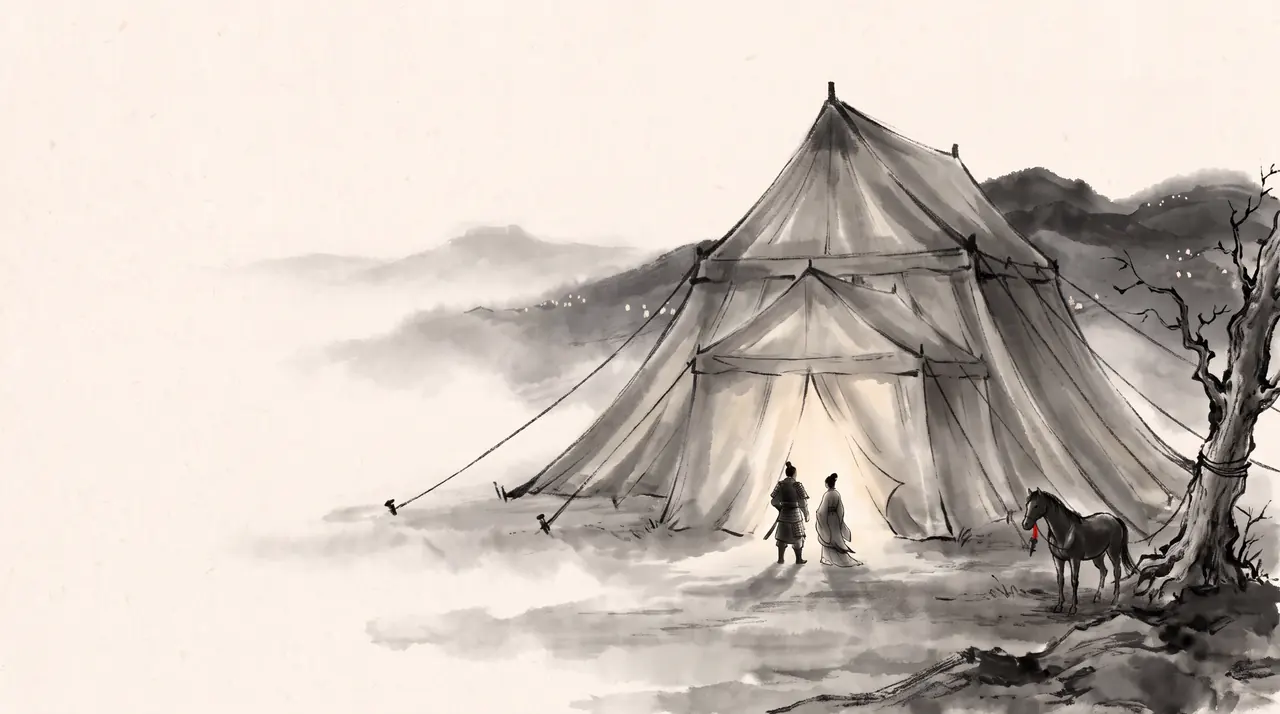
Songs of Chu on Every Side 垓下之圍
Surrounded by the Han army at Gaixia, Xiang Yu hears the songs of Chu on every side and sings his farewell to Lady Yu and his horse Zhui. He breaks out with a handful of riders, fights a last battle at Dongcheng, refuses to cross the Wu River to safety, and takes his own life. The scene behind the saying "songs of Chu on every side".
This page has the scene "Songs of Chu on Every Side" from this volume, not the whole volume.
Audio
The audio is synthetic speech.
Video
Passage 1
Original
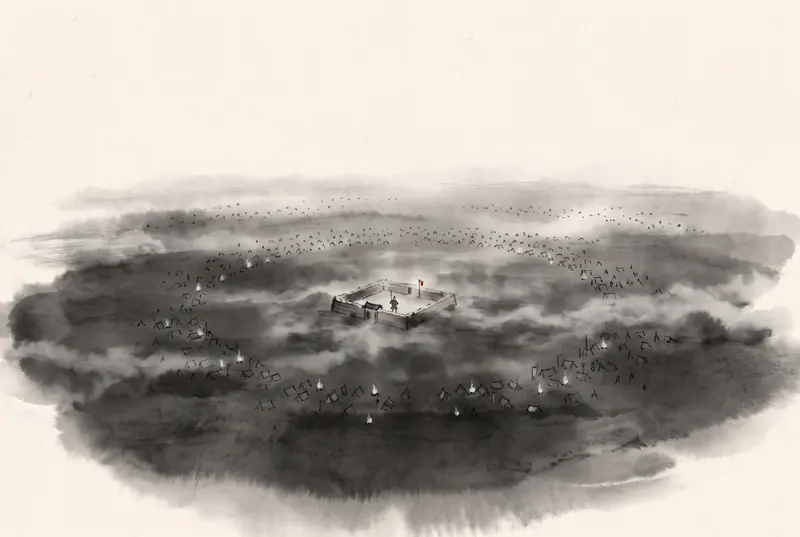
項王軍壁垓下,兵少食盡,漢軍及諸侯兵圍之數重。夜聞漢軍四面皆楚歌,項王乃大驚曰:「漢皆已得楚乎?是何楚人之多也!」
Kundoku (Japanese reading)
項王の軍、垓下に壁す。兵少なく食尽く。漢軍及び諸侯の兵、之を囲むこと数重なり。夜、漢軍の四面皆楚歌するを聞き、項王乃ち大いに驚きて曰く、「漢皆已に楚を得たるか。是れ何ぞ楚人の多きや」と。
Japanese
項王の軍は垓下に陣地を築いて立てこもったが、兵は少なく、食糧も尽きていた。漢軍と諸侯の軍は、これを幾重にも取り囲んだ。夜、漢軍の四方からいっせいに楚の歌が聞こえてくると、項王はひどく驚いて言った。「漢はもう楚の地をすべて手に入れてしまったのか。なんと楚の人の多いことか。」
English
King Xiang's army dug in behind its walls at Gaixia. His men were few and their food was gone, and the armies of Han and the lords surrounded him several rings deep. At night he heard Chu songs being sung on every side of the Han lines. Greatly alarmed, King Xiang said, "Has Han already taken all of Chu? How many men of Chu there are!"
Notes (JA)
- 垓下: 今の安徽省霊璧県の南東とされる。前202年、劉邦の漢軍と諸侯の軍が、項羽をここに追いつめた。
- 四面楚歌: 周りが敵ばかりで孤立することのたとえとして、成語になった。
- 楚歌: 楚の地方の歌。漢軍に楚の出身の兵が多かったため、あるいは項王の心をくじくために歌わせたため、と解される。
- 項王: 項羽のこと。この場面では一貫して「項王」と呼ばれる。
Notes (EN)
- Gaixia: thought to be southeast of present-day Lingbi in Anhui. In 202 BCE Liu Bang's Han army and the lords' armies cornered Xiang Yu here.
- 四面楚歌 ("Chu songs on all four sides"): it became a set phrase for being cut off, surrounded by enemies.
- Chu songs: songs of Xiang Yu's home region. Either many Han soldiers came from Chu, or the songs were sung on purpose to break his spirit.
- King Xiang: Xiang Yu, called "King Xiang" throughout this scene.
Idioms from this passage: Songs of Chu on all sides 四面楚歌
Word notes
- dig in/ˌdɪɡ ˈɪn/phrasal verb
to make a strong defensive position and stay there
In the text: “dug in behind its walls”
Similar words: entrench — formal or military; dig in firmly · hold out — keep resisting an attack
- surround/səˈraʊnd/verb
to be all around someone so that they cannot get away
In the text: “surrounded him several rings deep”
Similar words: encircle — form a circle around · besiege — surround a place with an army
Passage 2
Original
項王則夜起,飲帳中。有美人名虞,常幸從;駿馬名騅,常騎之。於是項王乃悲歌忼慨,自為詩曰:「力拔山兮氣蓋世,時不利兮騅不逝。騅不逝兮可柰何,虞兮虞兮柰若何!」歌數闋,美人和之。項王泣數行下,左右皆泣,莫能仰視。
Kundoku (Japanese reading)
項王則ち夜起きて、帳中に飲む。美人有り、名は虞。常に幸せられて従う。駿馬有り、名は騅。常に之に騎る。是に於いて項王乃ち悲歌忼慨し、自ら詩を為りて曰く、「力は山を抜き、気は世を蓋う。時利あらず、騅逝かず。騅の逝かざる、奈何すべき。虞や虞や、若を奈何せん」と。歌うこと数闋、美人之に和す。項王泣数行下る。左右皆泣き、能く仰ぎ視るもの莫し。
Japanese
項王は夜中に起き上がり、陣幕の中で酒を飲んだ。虞という名の美しい女性がいて、いつも寵愛されて付き従っていた。騅という名の駿馬がいて、いつもこれに乗っていた。そこで項王は悲しみ憤って歌い、自ら詩を作った。「力は山を引き抜き、気概は世を覆うほどだった。だが時の運に恵まれず、騅も進もうとしない。騅が進まないのを、どうしたらよいのか。虞よ、虞よ、おまえをどうしたらよいのか。」何度もくり返して歌うと、虞美人もそれに合わせて歌った。項王の目から涙が幾筋も流れ落ち、そばの者たちもみな泣いて、顔を上げて見ることのできる者はいなかった。
English
King Xiang got up in the night and drank in his tent. He had a beautiful lady named Yu, who was his favorite and always went with him, and a fine horse named Zhui, which he always rode. Then King Xiang sang a sad and stirring song, a poem of his own: "My strength could pull up mountains, my spirit covered the world; but the times are against me, and Zhui will not run. If Zhui will not run, what can I do? Yu, oh Yu, what will become of you?" He sang it several times over, and the lady sang with him. Tears ran down King Xiang's face, and all those around him wept; none could raise their eyes to look at him.
Notes (JA)
- 虞: 虞美人。「虞」が名か姓かは、はっきりしない。
- 騅: 青白まじりの毛の馬。
- 垓下の歌: 「力は山を抜き、気は世を蓋う」として広く知られる。後世の詩や劇(京劇『覇王別姫』など)の題材になった。
- 数闋: 闋は歌の一区切り。何度もくり返して歌った。
- 美人和之: 虞美人の返歌とされる詩が後世の書物に伝わるが、『史記』には載っていない。
Notes (EN)
- Yu: Lady Yu. It is unclear whether Yu was her name or her family name.
- Zhui: a horse with mixed grey and white hair.
- The Song of Gaixia: famous as "my strength could pull up mountains". It inspired later poems and plays, such as the Peking opera "Farewell My Concubine".
- 數闋: 闋 is one round of a song; he sang it over and over.
- 美人和之 ("the lady sang with him"): a reply poem said to be Lady Yu's survives in later books, but it is not in the Shiji.
Idioms from this passage: Strength to pull up mountains 抜山蓋世
Word notes
- fine/faɪn/adjective
of very high quality; excellent
In the text: “a fine horse named Zhui”
Similar words: excellent — very good · splendid — very good and impressive
Fine also means "all right" ("I'm fine") and, as a noun, money paid as a punishment.
- stirring/ˈstɜrɪŋ/adjective
causing strong feelings
In the text: “a sad and stirring song”
Similar words: moving — causing sadness or sympathy · rousing — making people excited or eager to act
- weep/wiːp/verb
to cry, usually quietly and for a long time (past tense: wept)
In the text: “all those around him wept”
Similar words: cry — the everyday word · sob — cry noisily, with short breaths
Passage 3
Original
於是項王乃上馬騎,麾下壯士騎從者八百餘人,直夜潰圍南出,馳走。平明,漢軍乃覺之,令騎將灌嬰以五千騎追之。項王渡淮,騎能屬者百餘人耳。項王至陰陵,迷失道,問一田父,田父紿曰「左」。左,乃陷大澤中。以故漢追及之。
Kundoku (Japanese reading)
是に於いて項王乃ち馬に上りて騎す。麾下の壮士の騎して従う者八百余人、直ちに夜に囲みを潰して南に出で、馳せ走る。平明、漢軍乃ち之を覚り、騎将灌嬰をして五千騎を以て之を追わしむ。項王淮を渡る。騎の能く属する者は百余人のみ。項王陰陵に至り、迷いて道を失い、一田父に問う。田父紿きて曰く「左せよ」と。左すれば、乃ち大沢の中に陥る。故を以て漢追いて之に及ぶ。
Japanese
そこで項王は馬に乗った。旗本の勇士で馬に乗って従う者は八百人あまり。その夜のうちに包囲を突き破って南へ出て、馬を走らせて逃れた。夜が明けて、漢軍はようやくそれに気づき、騎兵の将の灌嬰に五千騎で追わせた。項王が淮水を渡ったとき、ついて来られた騎兵は百人あまりにすぎなかった。項王は陰陵に着いたところで道に迷い、一人の農夫に道を尋ねた。農夫はだまして「左です」と言った。左へ行くと、大きな沼地にはまりこんでしまった。そのために、漢軍に追いつかれた。
English
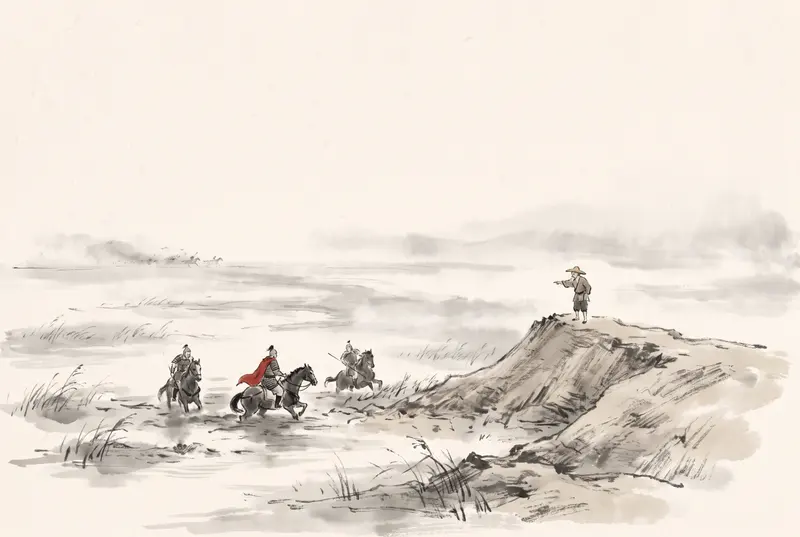
Then King Xiang mounted his horse. Over eight hundred brave men of his own guard rode with him. That very night they broke through the siege, came out to the south and galloped away. At dawn the Han army realized it and sent the cavalry general Guan Ying after them with five thousand horsemen. By the time King Xiang crossed the Huai River, only a hundred or so riders could keep up with him. At Yinling he lost his way and asked a farmer. The farmer deceived him and said, "Left." He went left and sank into a great marsh. Because of this the Han army caught up with him.
Notes (JA)
- 麾下: 将軍の旗のもとにいる直属の部下。
- 灌嬰: 漢の騎兵の将。のちに丞相となる。
- 淮: 淮水。黄河と長江の間を東へ流れる川。
- 陰陵: 今の安徽省定遠県の西北とされる。
- 紿: あざむく。農夫がなぜ項王をだましたのかは書かれていないが、項王が人心を失っていたことを示す、と読まれることが多い。
Notes (EN)
- 麾下: the men directly under a general's banner, his own guard.
- Guan Ying: the Han cavalry general, later a chancellor of Han.
- The Huai River: a river flowing east between the Yellow River and the Yangtze.
- Yinling: thought to be northwest of present-day Dingyuan in Anhui.
- 紿 ("deceived"): the text does not say why the farmer lied. It is often read as a sign that Xiang Yu had lost the people's goodwill.
Word notes
- siege/siːdʒ/noun
an army surrounding a place to force it to give in
In the text: “broke through the siege”
Similar words: blockade — cutting off supplies, often by sea · encirclement — being surrounded on all sides
- cavalry/ˈkævəlri/noun
soldiers who fight on horseback
In the text: “the cavalry general Guan Ying”
Similar words: horsemen — men riding horses · mounted troops — soldiers on horses
Do not confuse it with Calvary, the hill in the Bible.
- deceive/dɪˈsiːv/verb
to make someone believe something that is not true
In the text: “The farmer deceived him”
Similar words: trick — informal; fool someone · mislead — give a wrong idea, perhaps not on purpose
- marsh/mɑrʃ/noun
low, wet land that is often flooded
In the text: “sank into a great marsh”
Similar words: swamp — wet land with trees · bog — soft, wet, muddy ground
Passage 4
Original
項王乃復引兵而東,至東城,乃有二十八騎。漢騎追者數千人。項王自度不得脫。謂其騎曰:「吾起兵至今八歲矣,身七十餘戰,所當者破,所擊者服,未嘗敗北,遂霸有天下。然今卒困於此,此天之亡我,非戰之罪也。今日固決死,願為諸君快戰,必三勝之,為諸君潰圍,斬將,刈旗,令諸君知天亡我,非戰之罪也。」
Kundoku (Japanese reading)
項王乃ち復た兵を引きて東し、東城に至れば、乃ち二十八騎有るのみ。漢騎の追う者数千人。項王自ら度るに脱するを得ず。其の騎に謂いて曰く、「吾兵を起こしてより今に至るまで八歳なり。身ら七十余戦し、当たる所の者は破れ、撃つ所の者は服し、未だ嘗て敗北せず、遂に天下を覇有せり。然れども今卒に此に困しむ。此れ天の我を亡ぼすにして、戦いの罪に非ざるなり。今日固より死を決す。願わくは諸君の為に快戦し、必ず三たび之に勝ち、諸君の為に囲みを潰し、将を斬り、旗を刈り、諸君をして天の我を亡ぼすにして、戦いの罪に非ざるを知らしめん」と。
Japanese
項王はふたたび兵を率いて東へ向かい、東城に着いたときには、わずか二十八騎になっていた。追ってくる漢の騎兵は数千人。項王は、もう逃れられないと悟り、自分の騎兵たちに言った。「私が兵を挙げてから今まで八年になる。自ら七十回あまり戦い、立ち向かう者は打ち破り、攻めた者は従わせ、一度も負けたことがなく、ついに天下の覇者となった。それなのに今、とうとうここで追いつめられた。これは天が私を滅ぼすのであって、戦い方が悪かったのではない。今日はもとより死ぬ覚悟だ。諸君のために思いきり戦い、必ず三度勝ってみせよう。諸君のために包囲を破り、敵将を斬り、旗を切り倒して、天が私を滅ぼすのであって戦いの罪ではないことを、諸君に分からせよう。」
English
King Xiang led his men east again, and when he reached Dongcheng he had only twenty-eight horsemen left. Several thousand Han horsemen were in pursuit. King Xiang knew he could not escape. He said to his riders, "It is eight years since I raised my army. I have fought more than seventy battles myself. Whatever stood against me was broken, whatever I struck submitted. I have never once been defeated, and so I came to rule the world as overlord. Yet now at last I am trapped here. It is Heaven that is destroying me, not any fault of mine in battle. Today I am resolved to die. Let me fight a fine fight for you, gentlemen, and win three times over: for you I will break the siege, cut down a general and cut down a banner, so that you know it is Heaven that destroys me, not any fault in battle."
Notes (JA)
- 東城: 今の安徽省定遠県の東南とされる。
- 八歳: 前209年の挙兵から、前202年のこのときまで。
- 天之亡我、非戦之罪也: 項羽の最期の言葉として名高い。ただし司馬遷は、巻末の「太史公曰く」で、天のせいにするのは誤りだと批判している。
- 刈旗: 敵の旗を切り倒す。
Notes (EN)
- Dongcheng: thought to be southeast of present-day Dingyuan in Anhui.
- Eight years: from raising his army in 209 BCE to this moment in 202 BCE.
- "Heaven is destroying me, not any fault in battle": Xiang Yu's most famous last words. Yet in his own comment at the end of the volume, Sima Qian calls it a mistake to blame Heaven.
- 刈旗: cutting down the enemy's banner.
Word notes
- pursuit/pərˈsuːt/noun
the act of chasing someone
In the text: “were in pursuit”
Similar words: chase — the everyday word · hunt — searching for and chasing
- overlord/ˈoʊvərˌlɔrd/noun
a ruler who has power over other rulers
In the text: “to rule the world as overlord”
Similar words: master — someone in control · hegemon — formal; the leading power among states
- resolved/rɪˈzɑlvd/adjective
having firmly decided to do something
In the text: “Today I am resolved to die.”
Similar words: determined — firm in a decision · decided — having made up one's mind
Passage 5
Original
乃分其騎以為四隊,四嚮。漢軍圍之數重。項王謂其騎曰:「吾為公取彼一將。」令四面騎馳下,期山東為三處。於是項王大呼馳下,漢軍皆披靡,遂斬漢一將。是時,赤泉侯為騎將,追項王,項王瞋目而叱之,赤泉侯人馬俱驚,辟易數里與其騎會為三處。漢軍不知項王所在,乃分軍為三,復圍之。項王乃馳,復斬漢一都尉,殺數十百人,復聚其騎,亡其兩騎耳。乃謂其騎曰:「何如?」騎皆伏曰:「如大王言。」
Kundoku (Japanese reading)
乃ち其の騎を分かちて以て四隊と為し、四嚮す。漢軍之を囲むこと数重。項王其の騎に謂いて曰く、「吾公の為に彼の一将を取らん」と。四面の騎をして馳せ下らしめ、山の東に期して三処と為す。是に於いて項王大呼して馳せ下る。漢軍皆披靡し、遂に漢の一将を斬る。是の時、赤泉侯騎将と為りて、項王を追う。項王目を瞋らして之を叱す。赤泉侯、人馬倶に驚き、辟易すること数里。其の騎と会して三処と為る。漢軍、項王の在る所を知らず、乃ち軍を分かちて三と為し、復た之を囲む。項王乃ち馳せ、復た漢の一都尉を斬り、数十百人を殺し、復た其の騎を聚むるに、其の両騎を亡うのみ。乃ち其の騎に謂いて曰く、「何如」と。騎皆伏して曰く、「大王の言の如し」と。
Japanese
そこで騎兵を四隊に分け、四方へ向かわせた。漢軍はそれを幾重にも取り囲んだ。項王は騎兵たちに言った。「諸君のために、あの将を一人討ち取ってみせよう。」四方の騎兵に山を駆け下らせ、山の東で三か所に分かれて集まることを約束させた。そして項王は大声をあげて駆け下りた。漢軍はみな風になびく草のように崩れ、項王はついに漢の将を一人斬った。このとき赤泉侯が騎兵の将として項王を追ってきたが、項王が目をむいてどなりつけると、赤泉侯は人も馬もおびえて、数里も退いた。項王は自分の騎兵と、三か所に分かれて合流した。漢軍は項王がどこにいるか分からず、軍を三つに分けて、ふたたび取り囲んだ。項王は馬を走らせて、また漢の都尉を一人斬り、数十人から百人ほどを殺した。ふたたび騎兵を集めると、失ったのはわずか二騎だけだった。項王が騎兵たちに「どうだ」と言うと、騎兵たちはみなひれ伏して、「大王のおっしゃったとおりです」と答えた。
English
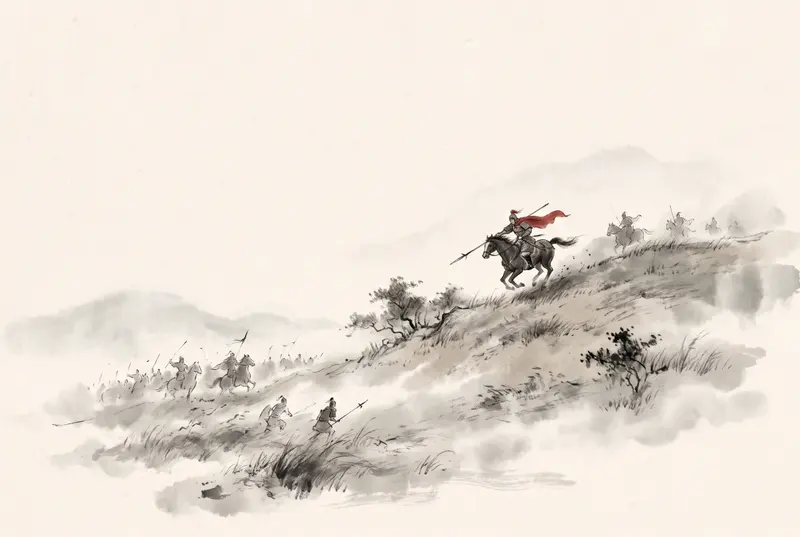
He divided his riders into four groups, facing four ways. The Han army surrounded them several rings deep. King Xiang said to his riders, "I will take one of their generals for you." He ordered the riders on all four sides to charge downhill and to meet again in three places east of the hill. Then King Xiang gave a great shout and charged down. The Han army gave way before him like grass in the wind, and he cut down one of the Han generals. At this time the Marquis of Chiquan, a cavalry commander, was pursuing King Xiang. King Xiang glared and roared at him, and the marquis and his horse were so terrified that they fell back several li. King Xiang joined his riders in the three places. Not knowing where King Xiang was, the Han army split into three and surrounded them again. King Xiang galloped out, cut down a Han commandant and killed scores of men, close to a hundred. When he gathered his riders again, he had lost only two. He said to them, "How was that?" The riders all bowed down and said, "Just as Your Majesty said."
Notes (JA)
- 四嚮: 四方を向く。
- 披靡: 草木が風になびくように、崩れて退く。
- 赤泉侯: 楊喜。のちに項王の遺体の一部を得て赤泉侯に封じられた(第8節)ので、ここでは後の爵位で呼ばれている。
- 辟易: 驚いて退く。日本語の「辟易する」のもと。
- 数十百人: 数十人から百人ほど。
- 「如大王言」: 項王が約束どおり三度勝ってみせたことを、部下が認める。
Notes (EN)
- 四嚮: facing four ways.
- 披靡: to give way like grass bending in the wind.
- The Marquis of Chiquan: Yang Xi. He is called by the title he won later, after taking part of Xiang Yu's body (passage 8).
- 辟易 ("fell back in terror"): the source of the Japanese word hekieki, "to be put off, to shrink back".
- 數十百人: from several dozen to about a hundred.
- "Just as Your Majesty said": his men admit that he has won three times, as he promised.
Word notes
- give way/ˌɡɪv ˈweɪ/phrasal verb
to move back or collapse under pressure
In the text: “gave way before him”
Similar words: collapse — fall down suddenly · retreat — move back from an enemy
- terrified/ˈtɛrəˌfaɪd/adjective
extremely frightened
In the text: “so terrified that they fell back several li”
Similar words: scared — afraid; informal · horrified — shocked and frightened by something terrible
Passage 6
Original
於是項王乃欲東渡烏江。烏江亭長檥船待,謂項王曰:「江東雖小,地方千里,眾數十萬人,亦足王也。願大王急渡。今獨臣有船,漢軍至,無以渡。」項王笑曰:「天之亡我,我何渡為!且籍與江東子弟八千人渡江而西,今無一人還,縱江東父兄憐而王我,我何面目見之?縱彼不言,籍獨不愧於心乎?」乃謂亭長曰:「吾知公長者。吾騎此馬五歲,所當無敵,嘗一日行千里,不忍殺之,以賜公。」
Kundoku (Japanese reading)
是に於いて項王乃ち東のかた烏江を渡らんと欲す。烏江の亭長、船を檥して待ち、項王に謂いて曰く、「江東小なりと雖も、地は方千里、衆は数十万人、亦た王たるに足るなり。願わくは大王急ぎ渡れ。今独り臣のみ船有り。漢軍至るも、以て渡る無からん」と。項王笑いて曰く、「天の我を亡ぼすに、我何ぞ渡ることを為さん。且つ籍、江東の子弟八千人と江を渡りて西せしに、今一人の還るもの無し。縦い江東の父兄憐れみて我を王とすとも、我何の面目ありて之に見えん。縦い彼言わずとも、籍独り心に愧じざらんや」と。乃ち亭長に謂いて曰く、「吾公の長者なるを知る。吾此の馬に騎ること五歳、当たる所敵無く、嘗て一日に千里を行く。之を殺すに忍びず。以て公に賜わん」と。
Japanese
そこで項王は、東へ向かって烏江を渡ろうとした。烏江の宿場の長が船を岸に寄せて待っていて、項王に言った。「江東は小さいとはいえ、土地は千里四方、人口は数十万もあり、王となるには十分です。どうか大王、急いでお渡りください。いま船を持っているのは私だけですから、漢軍が来ても渡ることはできません。」項王は笑って言った。「天が私を滅ぼそうとしているのに、どうして渡る必要があろうか。それに、私(籍)は江東の若者八千人とともに長江を渡って西へ向かったのに、今は一人も帰る者がいない。たとえ江東の父兄が私を哀れんで王にしてくれたとしても、どんな顔をして彼らに会えようか。たとえ彼らが何も言わなくても、私自身が心に恥じずにいられようか。」そして宿場の長に言った。「あなたが立派な人であることは分かる。私はこの馬に五年乗ったが、向かうところ敵なく、一日に千里を駆けたこともある。殺すにしのびないので、あなたに差し上げよう。」
English
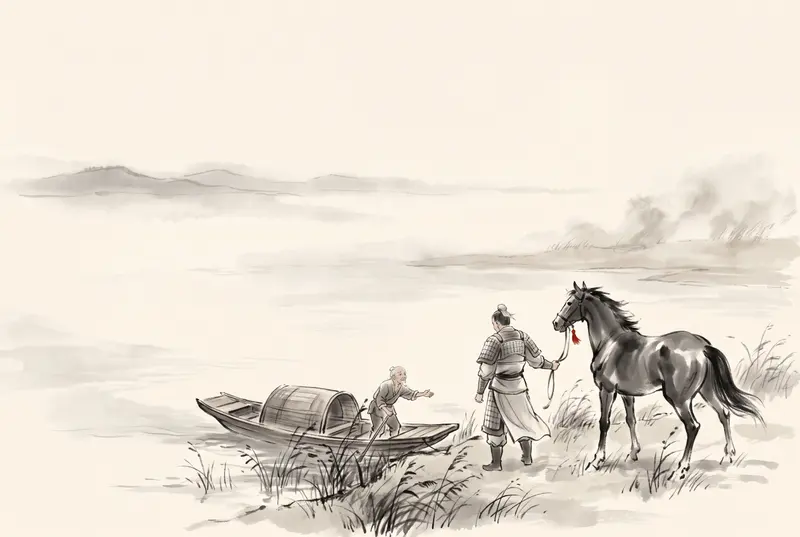
Then King Xiang thought of crossing the Wu River to the east. The head of the Wujiang post station had a boat moored and waiting. He said to King Xiang, "The land east of the river is small, but it is a thousand li square and has several hundred thousand people, enough for a king to rule. I beg Your Majesty to cross at once. Only I have a boat here; when the Han army arrives, they will have no way across." King Xiang laughed and said, "Heaven is destroying me. Why should I cross? Besides, I crossed the river and went west with eight thousand young men from east of the river, and now not one of them comes back. Even if their fathers and elder brothers pitied me and made me their king, how could I face them? Even if they said nothing, could I, Ji, not feel ashamed in my heart?" Then he said to the station head, "I know you are a worthy man. I have ridden this horse for five years. Nothing could stand against it, and it once ran a thousand li in a day. I cannot bear to kill it, so I give it to you."
Notes (JA)
- 烏江: 長江の北岸の渡し場(今の安徽省和県の東北)。対岸の江東は、項羽が挙兵した地。
- 亭長: 宿場の長。劉邦ももとは亭長だった。
- 檥船: 船を岸につけて待つ。
- 江東の子弟八千人: 項羽が挙兵したときに従った江東の若者たち。
- 何面目見之: 「何の面目ありてか之に見えん」。「合わせる顔がない」の意で、成句になった。
- 籍: 項羽の名(羽は字)。
Notes (EN)
- The Wu River (Wujiang): a crossing on the north bank of the Yangtze, northeast of present-day He County in Anhui. Across the river lay Jiangdong, where Xiang Yu had first raised his army.
- 亭長: the head of a post station. Liu Bang too had once been one.
- 檥船: to moor a boat at the bank and wait.
- The eight thousand young men: those from east of the river who followed Xiang Yu when he rose up.
- "How could I face them?": this became a set phrase for being too ashamed to face someone.
- 籍: Xiang Yu's personal name (Yu is his courtesy name).
Idioms from this passage: How could I face the elders east of the river? 江東の父兄に見ゆる面目なし
Word notes
- moored/mʊrd/adjective
tied up so that it does not float away (of a boat)
In the text: “had a boat moored and waiting”
Similar words: tied up — the everyday phrase · anchored — held in place by an anchor
- pity/ˈpɪti/verb
to feel sorry for someone who is suffering
In the text: “pitied me”
Similar words: feel sorry for — the everyday phrase · sympathize — share or understand someone's feelings
- ashamed/əˈʃeɪmd/adjective
feeling bad because of something wrong or embarrassing you did
In the text: “not feel ashamed in my heart”
Similar words: embarrassed — uncomfortable, often about small things · guilty — feeling you have done wrong
- worthy/ˈwɜrði/adjective
good and deserving respect
In the text: “I know you are a worthy man”
Similar words: honorable — honest and fair · deserving — having earned something
- bear/bɛr/verb
to be able to accept something painful (usually with can't)
In the text: “I cannot bear to kill it”
Similar words: stand — informal; tolerate · endure — suffer something for a long time
The noun bear is the animal.
Passage 7
Original
乃令騎皆下馬步行,持短兵接戰。獨籍所殺漢軍數百人。項王身亦被十餘創。顧見漢騎司馬呂馬童,曰:「若非吾故人乎?」馬童面之,指王翳曰:「此項王也。」項王乃曰:「吾聞漢購我頭千金,邑萬戶,吾為若德。」乃自刎而死。
Kundoku (Japanese reading)
乃ち騎をして皆馬を下りて歩行せしめ、短兵を持して接戦す。独り籍の殺す所の漢軍数百人。項王の身も亦た十余創を被る。顧みて漢の騎司馬呂馬童を見て曰く、「若は吾が故人に非ずや」と。馬童之に面し、王翳に指して曰く、「此れ項王なり」と。項王乃ち曰く、「吾聞く、漢我が頭を千金・邑万戸に購うと。吾若の為に徳せん」と。乃ち自刎して死す。
Japanese
そこで騎兵たちにみな馬を下りて歩かせ、刀剣などの短い武器を持って白兵戦をした。項王一人が殺した漢の兵だけで数百人にのぼった。項王の体も十か所あまりの傷を負った。ふと振り返ると、漢の騎司馬の呂馬童がいたので、言った。「おまえは私の昔なじみではないか。」馬童は項王から顔をそむけ、王翳に指さして言った。「これが項王だ。」項王は言った。「漢は私の首に千金と一万戸の領地の賞金をかけていると聞く。おまえに手柄をくれてやろう。」そして自ら首をはねて死んだ。
English
So he had all his riders dismount and go on foot, and they fought hand to hand with short weapons. King Xiang alone killed several hundred Han soldiers, and he himself received more than ten wounds. Looking around, he saw Lü Matong, a Han cavalry officer, and said, "Aren't you an old acquaintance of mine?" Matong turned his face away and, pointing him out to Wang Yi, said, "This is King Xiang." King Xiang said, "I hear Han has put a price on my head of a thousand pieces of gold and a fief of ten thousand households. I will do you a favor." And he cut his own throat and died.
Notes (JA)
- 短兵: 刀剣など、短い武器。
- 呂馬童: 漢の騎司馬。もとは項羽の部下だったと解される。
- 馬童面之: 「顔をそむけた」と読む説と、「向き合った」と読む説がある。ここでは前者を取った。
- 購: 懸賞をかける。
- 為若徳: おまえに恩恵を与えよう。自分の首を取らせて、手柄にさせてやる、という意味。
- 自刎: 自ら首をはねる。項羽はこのとき、数え年で三十一歳だった(前202年)。
Notes (EN)
- 短兵: short weapons such as swords.
- Lü Matong: a Han cavalry officer, usually taken to have once served under Xiang Yu.
- 馬童面之: some read it as "turned his face away", others as "faced him". The first reading is taken here.
- 購: to put a price on someone's head.
- 為若德 ("I will do you a favor"): he lets the man take his head and win the reward.
- 自刎: to cut one's own throat. Xiang Yu was thirty-one by the Chinese count (202 BCE).
Word notes
- acquaintance/əˈkweɪntəns/noun
a person you know, but not a close friend
In the text: “an old acquaintance of mine”
Similar words: friend — someone you know well and like · contact — someone you know who may be useful
Passage 8
Original
王翳取其頭,餘騎相蹂踐爭項王,相殺者數十人。最其後,郎中騎楊喜,騎司馬呂馬童,郎中呂勝、楊武各得其一體。五人共會其體,皆是。故分其地為五:封呂馬童為中水侯,封王翳為杜衍侯,封楊喜為赤泉侯,封楊武為吳防侯,封呂勝為涅陽侯。
Kundoku (Japanese reading)
王翳其の頭を取る。余騎相蹂践して項王を争い、相殺す者数十人。最も其の後に、郎中騎楊喜、騎司馬呂馬童、郎中呂勝・楊武、各おの其の一体を得たり。五人共に其の体を会するに、皆是なり。故に其の地を分かちて五と為し、呂馬童を封じて中水侯と為し、王翳を封じて杜衍侯と為し、楊喜を封じて赤泉侯と為し、楊武を封じて呉防侯と為し、呂勝を封じて涅陽侯と為す。
Japanese
王翳がその首を取った。残りの騎兵たちは互いに踏みつけ合って項王の体を奪い合い、そのために殺し合った者が数十人にのぼった。最後に、郎中騎の楊喜、騎司馬の呂馬童、郎中の呂勝と楊武が、それぞれ体の一部を手に入れた。五人が持ち寄った体を合わせると、すべて項王のものだった。そこで賞として約束の領地を五つに分け、呂馬童を中水侯、王翳を杜衍侯、楊喜を赤泉侯、楊武を呉防侯、呂勝を涅陽侯に封じた。
English
Wang Yi took his head. The other horsemen trampled one another fighting over King Xiang's body, and dozens were killed in the struggle. In the end the cavalry guard Yang Xi, the cavalry officer Lü Matong, and the guards Lü Sheng and Yang Wu each got a part of the body. When the five put the parts together, they were all his. So the promised fief was divided into five: Lü Matong was made Marquis of Zhongshui, Wang Yi Marquis of Duyan, Yang Xi Marquis of Chiquan, Yang Wu Marquis of Wufang, and Lü Sheng Marquis of Nieyang.
Notes (JA)
- 郎中・騎司馬: 漢の官名。護衛や騎兵の将校。
- 会其体: 体の各部を持ち寄って、本人であることを確かめた。
- 五人の封侯: 項王の首にかけられた「邑万戸」の懸賞が、五人に分けられた。赤泉侯(楊喜)は、第5節で項王に叱られて退いた人物。
- この後: 同じ年、劉邦は皇帝となり、漢が天下を治める(巻8 高祖本紀)。
Notes (EN)
- 郎中 and 騎司馬: Han ranks of guards and cavalry officers.
- 會其體: they put the parts together to confirm it was really him.
- The five fiefs: the "fief of ten thousand households" offered for Xiang Yu's head was split among five men. The Marquis of Chiquan (Yang Xi) is the man Xiang Yu scared off in passage 5.
- What came next: that same year Liu Bang became emperor, and the Han ruled the realm (volume 8, the Basic Annals of Emperor Gaozu).
Word notes
- trample/ˈtræmpəl/verb
to step heavily on something or someone and crush them
In the text: “trampled one another”
Similar words: crush — press until broken · stamp on — put your foot down hard
- fief/fiːf/noun
land given by a ruler to a noble, who rules it and receives its income
In the text: “the promised fief was divided into five”
Similar words: estate — a large area of land owned by one person · domain — the land someone rules