Annals · Vol. 8
Basic Annals of Emperor Gaozu 高祖本紀
A Great Wind Rises 大風起兮雲飛揚
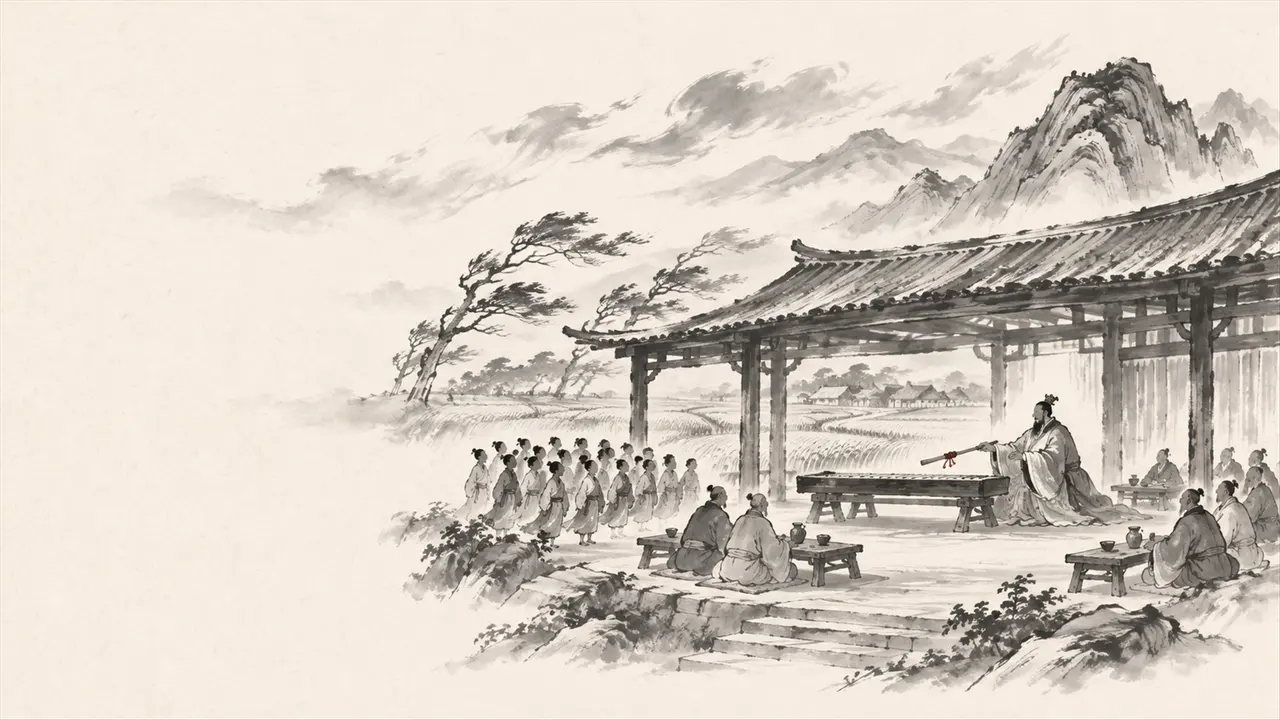
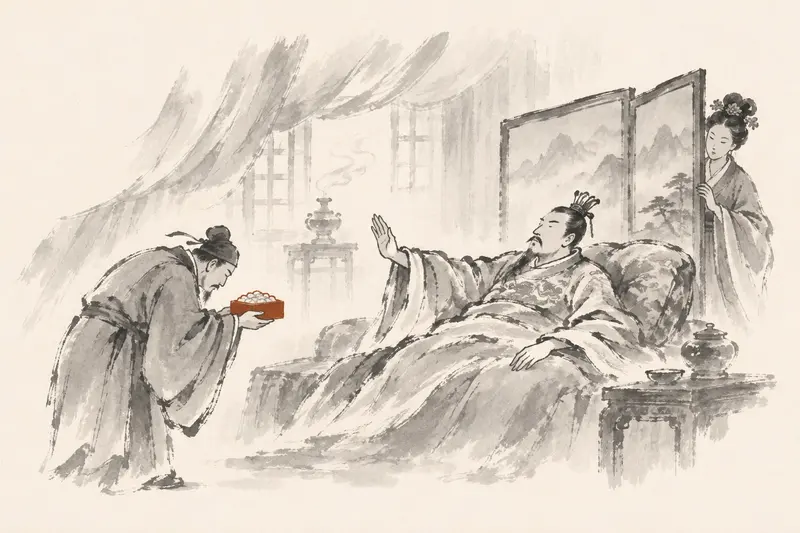
Liu Bang, Gaozu, as emperor after the fall of Xiang Yu. Urged by the lords and ministers, he declined three times before taking the throne. At a banquet in Luoyang he asked why he had won the realm and Xiang Yu lost it, and answered himself: in strategy he was no match for Zhang Liang, in government and supply no match for Xiao He, in command of a million men no match for Han Xin, but he could use them. His father, told by a steward that the emperor's father is still his subject, met his son at the gate holding a broom. At the feast in Xiao He's splendid Weiyang Palace, Gaozu joked that his father had called him a good-for-nothing, and asked whether he or his hard-working brother had built the bigger estate. Coming home to Pei after defeating Qing Bu, he had the village boys sing "A great wind rises, and the clouds fly," and danced in tears. Wounded by a stray arrow, he refused treatment, and told Empress Lü that after Xiao He should come Cao Can, then Wang Ling and Chen Ping, and that Zhou Bo would keep the Liu clan safe.
This page has the scene "A Great Wind Rises" from this volume, not the whole volume.
Audio
The audio is synthetic speech.
Video
Passage 1
Original
正月,諸侯及將相相與共請尊漢王為皇帝。漢王曰:「吾聞帝賢者有也,空言虛語,非所守也,吾不敢當帝位。」群臣皆曰:「大王起微細,誅暴逆,平定四海,有功者輒裂地而封為王侯。大王不尊號,皆疑不信。臣等以死守之。」漢王三讓,不得已,曰:「諸君必以為便,便國家。」甲午,乃即皇帝位汜水之陽。
Kundoku (Japanese reading)
正月、諸侯及び将相相与に共に請いて漢王を尊びて皇帝と為さんとす。漢王曰く、「吾聞く、帝は賢者之を有つと。空言虚語は、守る所に非ざるなり。吾敢えて帝位に当たらず」と。群臣皆曰く、「大王は微細より起こり、暴逆を誅し、四海を平定し、功有る者は輒ち地を裂きて封じて王侯と為す。大王尊号せずんば、皆疑いて信ぜず。臣等死を以て之を守らん」と。漢王三たび譲り、已むを得ずして、曰く、「諸君必ず以て便と為さば、国家に便ならん」と。甲午、乃ち皇帝の位に汜水の陽に即く。
Japanese
漢の五年(前202年)の正月、諸侯と将軍・大臣たちが皆で、漢王を皇帝にしたいと願い出た。漢王は言った。「皇帝の位は賢い者が持つものだと聞いている。中身のないむなしい言葉では守れない。わたしにはとても皇帝の位はつとまらない」。家臣たちは皆言った。「大王は低い身分から身を起こし、暴虐な者たちを討って天下を平定し、手柄のある者にはすぐに土地を分けて王や侯にしてくださいました。大王が尊い位につかれなければ、皆疑って信じないでしょう。わたしたちは命をかけてこのことを守ります」。漢王は三度辞退したが、やむをえず言った。「皆がどうしてもそれがよいと言うなら、それが国のためになるのだろう」。甲午の日、汜水の北岸で皇帝の位についた。
English
In the first month, the lords, generals and ministers all together asked to honour the King of Han as emperor. The King of Han said: "I have heard that the title of emperor belongs to the worthy. Empty words and hollow talk cannot hold it. I do not dare take the imperial throne." The ministers all said: "Great King, you rose from humble beginnings, punished the cruel and rebellious and brought peace to all within the seas, and whenever anyone did good service you at once split off land and made him a king or marquis. If you do not take the title, no one will believe in any of it. We will uphold this with our lives." The King of Han declined three times, then, having no choice, said: "If you are all sure it is best, then it will be best for the state." On the day jiawu he took the throne of emperor on the north bank of the Si River.
Notes (JA)
- 正月: 漢の五年(前202年)の正月。この前に、垓下で項羽を倒している(007-gaixia の章)。
- 三たび譲る: 位につく前に三度辞退するのが礼とされた。沛公となるときも劉邦は何度も辞退した(008-rise の章)。
- 汜水の陽: 汜水は今の山東省を流れる川。陽は川の北岸。
Notes (EN)
- The first month: of the fifth year of Han (202 BCE), just after Xiang Yu's defeat at Gaixia (chapter 007-gaixia).
- Declining three times: the proper courtesy before taking a throne; Liu Bang had declined again and again before becoming Lord of Pei too (chapter 008-rise).
- The north bank of the Si (汜水之陽): a river in present-day Shandong.
Word notes
- decline/dɪˈklaɪn/verb
to say no politely
In the text: “The King of Han declined three times”
Similar words: refuse — say no · turn down — refuse an offer
- humble/ˈhʌmbəl/adjective
low in rank or importance
In the text: “you rose from humble beginnings”
Similar words: lowly — of low rank · modest — not large or grand
Passage 2
Original
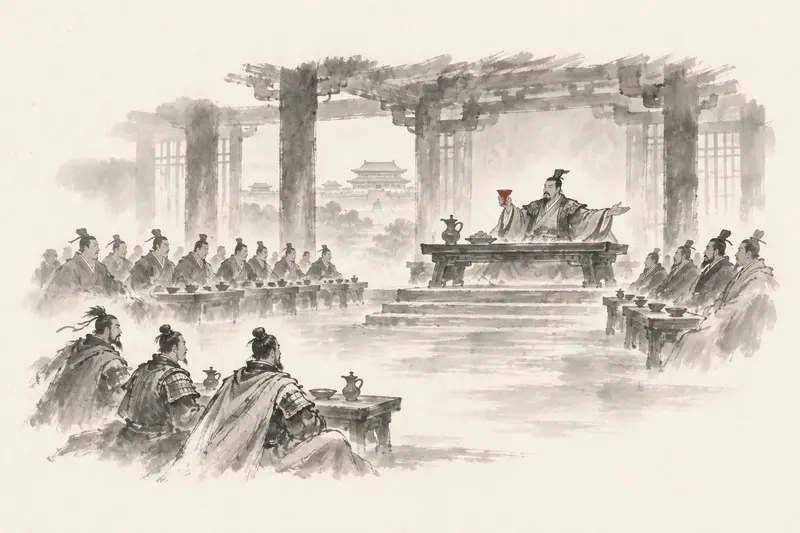
高祖置酒雒陽南宮。高祖曰:「列侯諸將無敢隱朕,皆言其情。吾所以有天下者何?項氏之所以失天下者何?」高起、王陵對曰:「陛下慢而侮人,項羽仁而愛人。然陛下使人攻城略地,所降下者因以予之,與天下同利也。項羽妒賢嫉能,有功者害之,賢者疑之,戰勝而不予人功,得地而不予人利,此所以失天下也。」高祖曰:「公知其一,未知其二。夫運籌策帷帳之中,決勝於千里之外,吾不如子房。鎮國家,撫百姓,給餽馕,不絕糧道,吾不如蕭何。連百萬之軍,戰必勝,攻必取,吾不如韓信。此三者,皆人傑也,吾能用之,此吾所以取天下也。項羽有一范增而不能用,此其所以為我擒也。」
Kundoku (Japanese reading)
高祖酒を雒陽の南宮に置く。高祖曰く、「列侯諸将敢えて朕に隠すこと無く、皆其の情を言え。吾の天下を有つ所以の者は何ぞ。項氏の天下を失う所以の者は何ぞ」と。高起・王陵対えて曰く、「陛下は慢にして人を侮り、項羽は仁にして人を愛す。然れども陛下は人をして城を攻め地を略せしめ、降下する所の者は因りて以て之に予え、天下と利を同じくするなり。項羽は賢を妒み能を嫉み、功有る者は之を害し、賢者は之を疑い、戦い勝ちて人に功を予えず、地を得て人に利を予えず。此れ天下を失う所以なり」と。高祖曰く、「公其の一を知りて、未だ其の二を知らず。夫れ籌策を帷帳の中に運らし、勝ちを千里の外に決するは、吾子房に如かず。国家を鎮め、百姓を撫し、餽饟を給し、糧道を絶たざるは、吾蕭何に如かず。百万の軍を連ね、戦えば必ず勝ち、攻むれば必ず取るは、吾韓信に如かず。此の三者は、皆人傑なり。吾能く之を用う。此れ吾の天下を取る所以なり。項羽は一范増有りて用うる能わず。此れ其の我が擒と為る所以なり」と。
Japanese
高祖は雒陽の南宮で酒宴を開いて言った。「諸侯や将軍たちよ、わたしに遠慮せず、皆思うところを言え。わたしが天下を取れたのはなぜか。項羽が天下を失ったのはなぜか」。高起と王陵が答えた。「陛下は人を見下してばかにしますが、項羽は思いやりがあって人を愛しました。けれども陛下は、人に城を攻めさせて土地を取らせると、降した土地をそのまま与え、天下の人と利益を分かち合いました。項羽はすぐれた者や才能のある者をねたみ、手柄のある者を傷つけ、賢い者を疑い、戦に勝っても人に手柄を与えず、土地を得ても人に利益を与えませんでした。これが天下を失ったわけです」。高祖は言った。「おまえたちは一つを知って、二つ目を知らない。陣営のとばりの中で策をめぐらし、千里の外で勝ちを決めることでは、わたしは張良(子房)に及ばない。国を落ち着かせ、民をいたわり、兵糧を送り、補給の道を絶やさないことでは、わたしは蕭何に及ばない。百万の軍を率い、戦えば必ず勝ち、攻めれば必ず取ることでは、わたしは韓信に及ばない。この三人は皆、人並みすぐれた傑物だ。わたしは彼らを使いこなすことができた。これがわたしが天下を取ったわけだ。項羽には范増が一人いたのに、使いこなせなかった。これが項羽がわたしにとりこにされたわけだ」。
English
Gaozu held a banquet in the Southern Palace at Luoyang. He said: "You marquises and generals, do not hide anything from me; tell me what you really think. Why is it that I won the realm? Why did Xiang Yu lose it?" Gao Qi and Wang Ling answered: "Your Majesty is arrogant and insults people, while Xiang Yu was kind and loved people. Yet Your Majesty sent men to storm cities and seize land, and gave them whatever surrendered, sharing the profit with the whole realm. Xiang Yu was jealous of the worthy and envious of the able; he harmed those who did good service and suspected the wise; when he won a battle he gave no one credit, and when he gained land he gave no one a share. That is why he lost the realm." Gaozu said: "You know the first reason but not the second. In laying plans within the tent and deciding victories a thousand li away, I am no match for Zifang. In steadying the state, caring for the people, supplying provisions and keeping the supply lines open, I am no match for Xiao He. In leading an army of a million men, winning every battle and taking every city I attack, I am no match for Han Xin. These three are all heroes among men, and I was able to use them. That is why I won the realm. Xiang Yu had one Fan Zeng and could not use him. That is why he ended as my captive."
Notes (JA)
- 子房: 張良の字(055-zhang-liang の章)。
- 三人: 張良・蕭何・韓信は「漢の三傑」と呼ばれる。
- 范増: 項羽の軍師。鴻門の会で劉邦を斬るよう合図した(007-hongmen の章)。
- 籌策を帷帳の中に運らす: 「籌を帷幄に運らす」として、陣営の中で作戦を練ることのたとえになった。
Notes (EN)
- Zifang: Zhang Liang's courtesy name (chapter 055).
- These three: Zhang Liang, Xiao He and Han Xin, known as the Three Heroes of Han.
- Fan Zeng: Xiang Yu's adviser, who signalled for Liu Bang's death at Hongmen (chapter 007-hongmen).
- "Laying plans within the tent": became a byword for strategy planned in headquarters.
Idioms from this passage: Planning in the tent, winning a thousand li away 籌を帷幄の中に運らす
Word notes
- arrogant/ˈærəɡənt/adjective
thinking you are better than others
In the text: “Your Majesty is arrogant and insults people”
Similar words: proud — too pleased with yourself · haughty — looking down on others
- captive/ˈkæptɪv/noun
a person who has been captured
In the text: “he ended as my captive”
Similar words: prisoner — someone held against their will · hostage — someone held to force a deal
Passage 3
Original
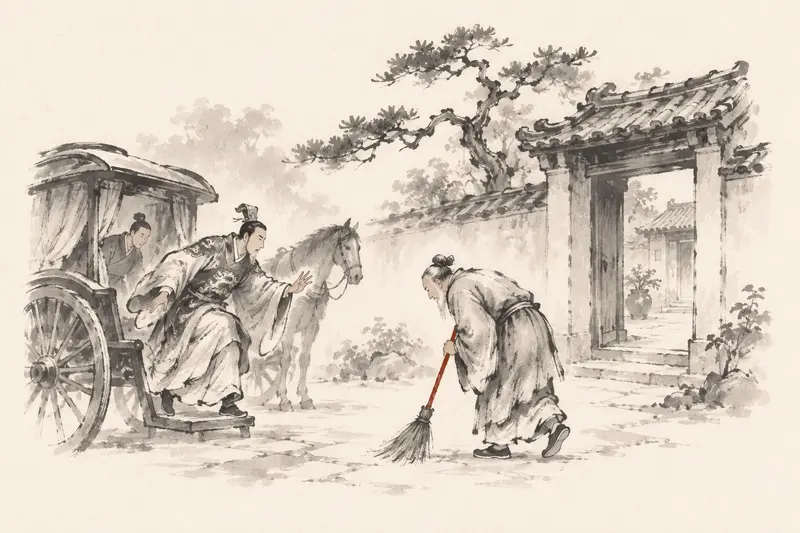
六年,高祖五日一朝太公,如家人父子禮。太公家令說太公曰:「天無二日,土無二王。今高祖雖子,人主也;太公雖父,人臣也。柰何令人主拜人臣!如此,則威重不行。」後高祖朝,太公擁篲,迎門卻行。高祖大驚,下扶太公。太公曰:「帝,人主也,柰何以我亂天下法!」於是高祖乃尊太公為太上皇。心善家令言,賜金五百斤。
Kundoku (Japanese reading)
六年、高祖五日に一たび太公に朝すること、家人の父子の礼の如し。太公の家令太公に説きて曰く、「天に二日無く、土に二王無し。今高祖は子なりと雖も、人主なり。太公は父なりと雖も、人臣なり。柰何ぞ人主をして人臣を拝せしむる。此くの如くんば、則ち威重行われず」と。後に高祖朝するに、太公篲を擁し、門に迎えて卻行す。高祖大いに驚き、下りて太公を扶く。太公曰く、「帝は、人主なり。柰何ぞ我を以て天下の法を乱さん」と。是に於いて高祖乃ち太公を尊びて太上皇と為す。心に家令の言を善しとし、金五百斤を賜う。
Japanese
漢の六年(前201年)、高祖は五日に一度、父の太公にあいさつに行き、ふつうの家の親子と同じ礼をしていた。太公の家令(家の執事)が太公に言った。「天に二つの太陽はなく、地に二人の王はいません。いま高祖はお子さまですが、天下の君主です。太公は父上ですが、臣下です。どうして君主に臣下を拝ませてよいでしょう。これでは君主の威厳が保てません」。その後、高祖があいさつに行くと、太公はほうきを抱えて門で出迎え、後ずさりして道をあけた。高祖はひどく驚き、車を降りて太公を助け起こした。太公は言った。「皇帝は天下の君主です。どうしてわたしのために天下の決まりを乱してよいでしょう」。そこで高祖は太公を尊んで太上皇とした。高祖は家令の言葉を心の中でよしとし、金五百斤を与えた。
English
In the sixth year, Gaozu called on his father the Venerable Sire every five days, with the courtesies of father and son in an ordinary family. The Venerable Sire's steward said to him: "There are not two suns in the sky, nor two kings on earth. Now Gaozu, though your son, is lord of men; you, though his father, are his subject. How can you let the lord of men bow to his subject? If this goes on, his majesty will count for nothing." Later, when Gaozu came to call, the Venerable Sire met him at the gate holding a broom and walked backwards before him. Gaozu was astonished and got down to help him up. The Venerable Sire said: "The emperor is lord of men. How can you upset the laws of the realm for my sake?" At this Gaozu honoured the Venerable Sire as Grand Emperor Emeritus. In his heart he approved of the steward's words, and gave him five hundred catties of gold.
Notes (JA)
- 天に二日無く、土に二王無し: 『孟子』などにも見える言葉。
- 篲を擁す: ほうきを抱える。道を掃き清めて客を迎える、最高の敬意の礼。燕の昭王も騶衍をこうして迎えた(074-mencius の章)。
- 太上皇: 皇帝の父の称号。劉邦の父が初めてこう呼ばれた。
Notes (EN)
- "Not two suns in the sky": a saying also found in the Mencius.
- Holding a broom (擁篲): sweeping the way for a guest, the highest courtesy; King Zhao of Yan greeted Zou Yan the same way (chapter 074).
- Grand Emperor Emeritus (太上皇): the title of an emperor's father, first given to Liu Bang's.
Idioms from this passage: There are not two suns in the sky 天に二日無し
Word notes
- steward/ˈstjuːərd/noun
a person who manages a large household
In the text: “steward said to him”
Similar words: manager — one who runs things · butler — the chief servant of a house
- subject/ˈsʌbdʒɪkt/noun
a person ruled by a king or emperor
In the text: “are his subject”
Similar words: citizen — a member of a state · vassal — one who serves a lord
Passage 4
Original
蕭丞相營作未央宮,立東闕、北闕、前殿、武庫、太倉。高祖還,見宮闕壯甚,怒,謂蕭何曰:「天下匈匈苦戰數歲,成敗未可知,是何治宮室過度也?」蕭何曰:「天下方未定,故可因遂就宮室。且夫天子四海為家,非壯麗無以重威,且無令後世有以加也。」高祖乃說。未央宮成。高祖大朝諸侯群臣,置酒未央前殿。高祖奉玉卮,起為太上皇壽,曰:「始大人常以臣無賴,不能治產業,不如仲力。今某之業所就孰與仲多?」殿上群臣皆呼萬歲,大笑為樂。
Kundoku (Japanese reading)
蕭丞相未央宮を営作し、東闕・北闕・前殿・武庫・太倉を立つ。高祖還り、宮闕の壮なること甚だしきを見て、怒りて、蕭何に謂いて曰く、「天下匈匈として苦戦すること数歳、成敗未だ知るべからず。是れ何ぞ宮室を治むること度を過ぐるや」と。蕭何曰く、「天下方に未だ定まらず。故に因りて遂に宮室を就すべし。且つ夫れ天子は四海を家と為す。壮麗に非ざれば以て威を重くする無し。且つ後世をして以て加うる有らしむる無からん」と。高祖乃ち説ぶ。未央宮成る。高祖大いに諸侯群臣を朝せしめ、酒を未央の前殿に置く。高祖玉卮を奉じ、起ちて太上皇の寿を為して、曰く、「始め大人常に臣を以て無頼にして、産業を治むる能わず、仲の力に如かずと。今某の業の就る所は仲と孰れか多き」と。殿上の群臣皆万歳を呼び、大いに笑いて楽しみと為す。
Japanese
丞相の蕭何は未央宮を造り、東と北の門の楼、正殿、武器庫、大倉庫を建てた。高祖が戦から帰ってきて、宮殿があまりに立派なのを見て怒り、蕭何に言った。「天下はざわめき、何年も苦しい戦が続いて、勝つか負けるかもまだ分からない。それなのに、なぜこんなに度を越して宮殿を造ったのか」。蕭何は言った。「天下がまだ定まっていないからこそ、この機に宮殿を造ってしまうのです。それに、天子は天下を家とするもの。壮麗でなければ威厳を示せません。そのうえ、後の世の人がこれ以上のものを造る必要がないようにしておくのです」。高祖はそこで喜んだ。未央宮ができあがると、高祖は諸侯や家臣たちを大勢集めて、未央宮の正殿で酒宴を開いた。高祖は玉の杯を捧げ持ち、立ち上がって太上皇の長寿を祝って言った。「むかし父上はいつも、わたしのことをろくでなしで、家の財産をつくれず、兄の仲の働きに及ばないとおっしゃっていました。いまわたしの築いた財産と仲のものと、どちらが多いでしょう」。殿上の家臣たちは皆「万歳」と叫び、大笑いして楽しんだ。
English
Chancellor Xiao He built the Weiyang Palace, putting up the eastern and northern gate towers, the front hall, the arsenal and the great granary. When Gaozu came back and saw how splendid the palace was, he was angry and said to Xiao He: "The realm is in uproar; we have fought hard for years and still no one knows how it will end. Why have you built palaces beyond all measure?" Xiao He said: "It is just because the realm is not yet settled that we can take this chance to finish the palaces. Besides, the Son of Heaven has all within the four seas as his home; without splendour, there is no way to show his majesty. And it means that later ages will have nothing to add." Gaozu was pleased. When the Weiyang Palace was finished, Gaozu held a great audience for the lords and ministers and gave a banquet in the front hall. Raising a jade cup, he stood and drank to the long life of the Grand Emperor Emeritus, saying: "Father, you always used to say I was a good-for-nothing who could not make a living, not as hard-working as my brother Zhong. Now which of us has built up the bigger estate, Zhong or I?" All the ministers in the hall shouted "Long life!" and laughed with delight.
Notes (JA)
- 未央宮: 長安に造られた漢の宮殿の中心。
- 闕: 宮門の両側に建てた楼。
- 仲: 劉邦の兄。まじめに家業に励んだ。
- 若いころ家の仕事をしないと書かれた劉邦(008-rise の章)の、晴れがましい冗談。
Notes (EN)
- Weiyang Palace: the main palace of Han at Chang'an.
- Gate towers (闕): towers on either side of a palace gate.
- Zhong: Liu Bang's hard-working elder brother.
- A proud joke from the man who, as a youth, would not do the family's work (chapter 008-rise).
Word notes
- splendid/ˈsplɛndɪd/adjective
very grand and beautiful
In the text: “how splendid the palace was”
Similar words: magnificent — very impressive · grand — large and impressive
- good-for-nothing/ˈɡʊd fər ˌnʌθɪŋ/noun
a lazy or useless person
In the text: “I was a good-for-nothing”
Similar words: idler — someone who does no work · layabout — a lazy person; informal
Passage 5
Original
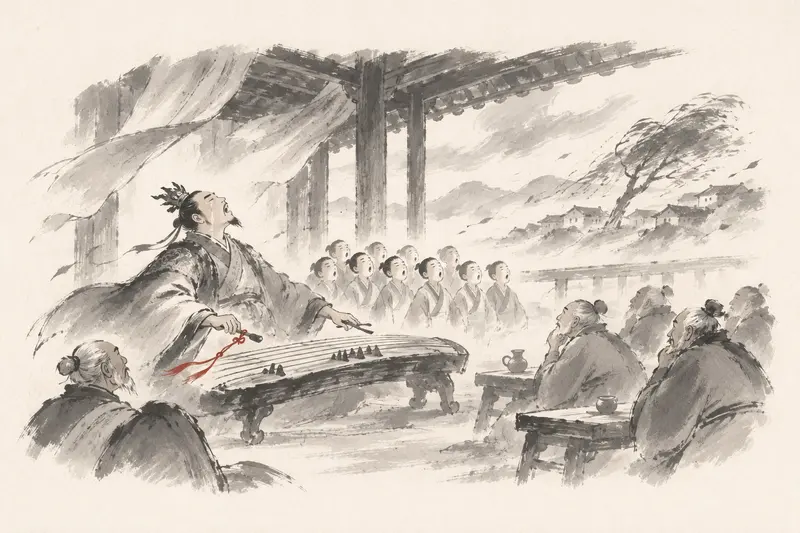
高祖還歸,過沛,留。置酒沛宮,悉召故人父老子弟縱酒,發沛中兒得百二十人,教之歌。酒酣,高祖擊筑,自為歌詩曰:「大風起兮雲飛揚,威加海內兮歸故鄉,安得猛士兮守四方!」令兒皆和習之。高祖乃起舞,慷慨傷懷,泣數行下。謂沛父兄曰:「游子悲故鄉。吾雖都關中,萬歲後吾魂魄猶樂思沛。且朕自沛公以誅暴逆,遂有天下,其以沛為朕湯沐邑,復其民,世世無有所與。」沛父兄諸母故人日樂飲極驩,道舊故為笑樂。十餘日,高祖欲去,沛父兄固請留高祖。高祖曰:「吾人眾多,父兄不能給。」乃去。沛中空縣皆之邑西獻。高祖復留止,張飲三日。沛父兄皆頓首曰:「沛幸得復,豐未復,唯陛下哀憐之。」高祖曰:「豐吾所生長,極不忘耳,吾特為其以雍齒故反我為魏。」沛父兄固請,乃并復豐,比沛。於是拜沛侯劉濞為吳王。
Kundoku (Japanese reading)
高祖還り帰るに、沛を過りて、留まる。酒を沛宮に置き、悉く故人・父老・子弟を召して酒を縦にし、沛中の児を発して百二十人を得て、之に歌を教う。酒酣にして、高祖筑を撃ち、自ら歌詩を為りて曰く、「大風起こりて雲飛揚す。威海内に加わりて故郷に帰る。安くにか猛士を得て四方を守らしめん」と。児をして皆之に和して習わしむ。高祖乃ち起ちて舞い、慷慨して懐いを傷ましめ、泣数行下る。沛の父兄に謂いて曰く、「游子は故郷を悲しむ。吾関中に都すと雖も、万歳の後、吾が魂魄は猶お沛を楽しみ思わん。且つ朕は沛公より以て暴逆を誅し、遂に天下を有つ。其れ沛を以て朕の湯沐邑と為し、其の民を復して、世世与る所有る無からしめん」と。沛の父兄・諸母・故人日に楽しみ飲みて驩を極め、旧故を道いて笑楽を為す。十余日にして、高祖去らんと欲す。沛の父兄固く請いて高祖を留む。高祖曰く、「吾が人衆多し。父兄給する能わざらん」と。乃ち去る。沛中県を空しくして皆邑の西に之きて献ず。高祖復た留止し、飲を張ること三日。沛の父兄皆頓首して曰く、「沛は幸いに復するを得たるも、豊は未だ復せず。唯だ陛下之を哀憐せよ」と。高祖曰く、「豊は吾の生長する所なり。極めて忘れざるのみ。吾特に其の雍歯の故を以て我に反きて魏の為にせしが為なり」と。沛の父兄固く請い、乃ち并せて豊を復し、沛に比す。是に於いて沛侯劉濞を拝して呉王と為す。
Japanese
黥布を討って帰る途中、高祖は沛に立ち寄ってとどまった。沛の宮で酒宴を開き、昔なじみや長老、若者たちを残らず呼び集めて存分に酒を飲み、沛の子ども百二十人を集めて歌を教えた。宴たけなわになると、高祖は筑(琴に似た楽器)を打ち、自分で歌を作って歌った。「大風が起こって、雲が飛び舞う。威光は天下にゆきわたり、ふるさとに帰ってきた。どうにかして勇ましい者たちを得て、四方を守らせたいものだ」。そして子どもたちに声を合わせて歌わせ、覚えさせた。高祖は立ち上がって舞い、胸がいっぱいになり、悲しみがこみ上げて、涙がいく筋も流れた。高祖は沛の長老たちに言った。「旅に出た者は、ふるさとを思って悲しくなるものだ。わたしは関中に都を置いたが、死んだあとも、わたしの魂はきっと沛をなつかしく思うだろう。それにわたしは沛公として暴虐な秦を討ち、とうとう天下を手にした。沛をわたしの湯沐邑とし、民の税と労役を免除して、代々負担がないようにしよう」。沛の長老やおばたち、昔なじみたちは毎日楽しく飲んで喜びを尽くし、昔話をしては笑い合った。十日あまりたって、高祖が去ろうとすると、沛の長老たちはしきりに引きとめた。高祖は言った。「わたしの供の者は大勢だ。皆さんには世話をしきれまい」。そして出発した。沛の人々は県をからにして皆、町の西まで見送りに出て、ごちそうを差し出した。高祖はまたとどまり、三日間酒宴を開いた。沛の長老たちは皆頭を地につけて言った。「沛は幸いにも免除をいただきましたが、豊はまだです。どうか陛下、豊をあわれんでください」。高祖は言った。「豊はわたしの生まれ育った所だ。決して忘れはしない。ただ、雍歯のために、豊の者たちがわたしに背いて魏についたことがあったからだ」。沛の長老たちがしきりに願うので、豊も沛と同じように免除した。このとき、沛侯の劉濞を呉王に任じた。
English
On his way home, Gaozu passed through Pei and stayed there. He held a banquet in the palace at Pei, summoned all his old friends, the elders and the young men to drink their fill, and gathered a hundred and twenty boys of Pei and taught them a song. When the drinking was at its height, Gaozu struck the zhu and sang a song he had made himself: "A great wind rises, and the clouds fly; my might fills all within the seas, and I come home to my village; where shall I find brave men to guard the four quarters?" He had the boys all sing it after him and learn it. Then Gaozu rose and danced, his heart full and aching, and tears ran down his face. He said to the elders of Pei: "The wanderer grieves for his old home. Though I have made my capital within the passes, after I am gone my soul will still delight in thinking of Pei. Besides, it was as Lord of Pei that I began punishing the cruel and rebellious, and in the end I won the realm. Let Pei be my bath-town estate; I free its people from taxes and labour, generation after generation." The elders, the aunts and the old friends of Pei drank happily day after day, enjoying themselves to the full, and laughed over old times. After ten days or more Gaozu wanted to leave, but the elders of Pei begged him to stay. Gaozu said: "My people are many; you cannot feed them all." And he left. The whole county emptied out to go west of the town and present him with gifts. Gaozu stopped again and feasted for three more days. The elders of Pei all bowed to the ground and said: "Pei has been fortunate enough to be freed, but Feng has not. We beg Your Majesty to have pity on it." Gaozu said: "Feng is where I was born and grew up; I could never forget it. It is only that, because of Yong Chi, it turned against me and went over to Wei." The elders begged and begged, and so Feng too was freed, like Pei. At this time he made Liu Bi, Marquis of Pei, King of Wu.
Notes (JA)
- 還り帰る: 前196年に反乱した淮南王黥布を自ら討って帰る途中(091-qing-bu の章)。
- 筑: 竹で打って鳴らす、琴に似た楽器。荊軻を見送った高漸離も筑を打った(086-jing-ke の章)。
- 大風の歌: 「大風歌」として知られる。天下を取った喜びと、天下を守ることの難しさをうたう。
- 雍歯: 劉邦が沛公となったとき豊を守らせたが、魏に寝返った。
- 劉濞: 劉邦の兄の子。のちに呉楚七国の乱を起こす(106-liu-pi の章)。
Notes (EN)
- On his way home: from crushing the rebellion of Qing Bu, King of Huainan, in 196 BCE (chapter 091).
- Zhu (筑): a zither struck with a bamboo stick; Gao Jianli played one when Jing Ke set out (chapter 086-jing-ke).
- The song: known as the Song of the Great Wind, about the joy of winning the realm and the difficulty of keeping it.
- Yong Chi: left to hold Feng when Liu Bang became Lord of Pei, he went over to Wei.
- Liu Bi: Liu Bang's nephew, who later led the Revolt of the Seven States (chapter 106).
Word notes
- ache/eɪk/verb
to feel a dull pain or a deep sadness
In the text: “his heart full and aching”
Similar words: hurt — feel pain · yearn — long for something deeply
- generation/ˌdʒɛnəˈreɪʃən/noun
all the people born at about the same time
In the text: “generation after generation”
Similar words: age — a period of time · descendants — children, grandchildren and so on
Passage 6
Original
高祖擊布時,為流矢所中,行道病。病甚,呂后迎良醫,醫入見,高祖問醫,醫曰:「病可治。」於是高祖嫚罵之曰:「吾以布衣提三尺劍取天下,此非天命乎?命乃在天,雖扁鵲何益!」遂不使治病,賜金五十斤罷之。已而呂后問:「陛下百歲後,蕭相國即死,令誰代之?」上曰:「曹參可。」問其次,上曰:「王陵可。然陵少憨,陳平可以助之。陳平智有餘,然難以獨任。周勃重厚少文,然安劉氏者必勃也,可令為太尉。」呂后復問其次,上曰:「此後亦非而所知也。」
Kundoku (Japanese reading)
高祖布を撃ちし時、流矢の中る所と為り、行道に病む。病甚だし。呂后良医を迎う。医入りて見ゆ。高祖医に問う。医曰く、「病治むべし」と。是に於いて高祖之を嫚罵して曰く、「吾布衣を以て三尺の剣を提げて天下を取る。此れ天命に非ずや。命は乃ち天に在り。扁鵲と雖も何の益かあらん」と。遂に病を治めしめず、金五十斤を賜いて之を罷む。已にして呂后問う、「陛下百歳の後、蕭相国即し死せば、誰をして之に代わらしめん」と。上曰く、「曹参可なり」と。其の次を問う。上曰く、「王陵可なり。然れども陵は少しく憨なり。陳平以て之を助くべし。陳平は智余り有り、然れども以て独り任じ難し。周勃は重厚にして文少なし。然れども劉氏を安んずる者は必ず勃なり。太尉為らしむべし」と。呂后復た其の次を問う。上曰く、「此の後は亦た而の知る所に非ざるなり」と。
Japanese
高祖は黥布を討ったとき、流れ矢に当たり、帰る途中で病気になった。病は重かった。呂后がよい医者を迎えると、医者が入って高祖に会った。高祖がたずねると、医者は「治ります」と言った。すると高祖は医者をののしって言った。「わたしは無位無官の身から、三尺の剣をひっさげて天下を取った。これが天命でなくて何だ。命は天にあるのだ。たとえ扁鵲でも何の役に立とう」。そして治療をさせず、金五十斤を与えて帰らせた。そのあと呂后がたずねた。「陛下が亡くなられたあと、宰相の蕭何も亡くなったら、誰を代わりにしましょう」。高祖は言った。「曹参がよい」。その次をたずねると、高祖は言った。「王陵がよい。だが王陵は少し愚直すぎるから、陳平に助けさせるがよい。陳平は知恵がありあまるが、一人に任せるのは難しい。周勃は重々しく誠実だが、学がない。それでも劉氏を安泰にするのは、必ず周勃だ。太尉(軍の長)にするがよい」。呂后がさらにその次をたずねると、高祖は言った。「その先は、もうおまえの知ることではない」。
English
When Gaozu attacked Qing Bu he was struck by a stray arrow, and on the road home he fell ill. The illness grew serious. Empress Lü brought in a good doctor, and the doctor came in to see him. Gaozu asked the doctor, who said: "The illness can be cured." At this Gaozu cursed him, saying: "I took the realm as a commoner with a three-foot sword in my hand. Was that not the mandate of Heaven? My fate lies with Heaven. What good would even Bian Que be?" So he would not let him treat the illness, gave him fifty catties of gold and sent him away. Afterwards Empress Lü asked: "When Your Majesty is gone, and if Chancellor Xiao He dies, who should take his place?" The emperor said: "Cao Can will do." She asked who should come after him. The emperor said: "Wang Ling will do. But Wang Ling is a little too simple-hearted; Chen Ping can help him. Chen Ping has wits to spare but is hard to trust on his own. Zhou Bo is weighty and steady but has little learning; yet it is surely Zhou Bo who will keep the Liu clan safe. Make him Grand Commandant." Empress Lü asked again who should come after that. The emperor said: "After that, it is not for you to know."
Notes (JA)
- 布: 黥布(091-qing-bu の章)。
- 三尺の剣: 庶民の身から剣一本で天下を取ったという自負の言葉。
- 扁鵲: 古の名医(105-bian-que の章)。
- 高祖の言葉どおり、蕭何のあとは曹参・王陵・陳平が宰相となり、呂氏を滅ぼして劉氏を守ったのは周勃だった(054-cao-can、057-zhou-bo、052-qi-daohui の章)。
Notes (EN)
- Bu: Qing Bu (chapter 091).
- A three-foot sword: his proud claim to have won the realm from nothing, with only a sword.
- Bian Que: the legendary physician (chapter 105).
- It happened as he said: Cao Can, Wang Ling and Chen Ping followed Xiao He as chancellors, and Zhou Bo destroyed the Lü clan to save the Liu (chapters 054, 057 and 052).
Word notes
- stray/streɪ/adjective
having gone away from where it was meant to go
In the text: “struck by a stray arrow”
Similar words: random — without a plan or aim · wandering — moving with no fixed path
- mandate/ˈmændeɪt/noun
the authority to rule, here given by Heaven
In the text: “the mandate of Heaven”
Similar words: authority — the right to command · commission — a duty given to someone
Passage 7
Original
太史公曰:夏之政忠。忠之敝,小人以野,故殷人承之以敬。敬之敝,小人以鬼,故周人承之以文。文之敝,小人以僿,故救僿莫若以忠。三王之道若循環,終而復始。周秦之閒,可謂文敝矣。秦政不改,反酷刑法,豈不繆乎?故漢興,承敝易變,使人不倦,得天統矣。朝以十月。車服黃屋左纛。葬長陵。
Kundoku (Japanese reading)
太史公曰く、夏の政は忠なり。忠の敝は、小人以て野なり。故に殷人之を承くるに敬を以てす。敬の敝は、小人以て鬼なり。故に周人之を承くるに文を以てす。文の敝は、小人以て僿なり。故に僿を救うは忠を以てするに若くは莫し。三王の道は循環するが若く、終われば復た始まる。周秦の間は、文の敝と謂うべし。秦の政は改めず、反って刑法を酷にす。豈に繆らずや。故に漢興り、敝を承けて変を易え、人をして倦まざらしむ。天統を得たり。朝するに十月を以てす。車服は黄屋左纛。長陵に葬る。
Japanese
太史公は言う。夏の政治は誠実(忠)を重んじた。誠実の弊害は、民が粗野になることである。だから殷の人々はこれを受けついで、敬(つつしみ)を重んじた。つつしみの弊害は、民が鬼神にばかり頼ることである。だから周の人々はこれを受けついで、文(礼儀や飾り)を重んじた。文の弊害は、民がうわべばかりで誠がなくなることである。うわべばかりの弊害を救うには、誠実に戻るのがいちばんである。夏・殷・周の三王の道は輪のようにめぐり、終わればまた始まる。周から秦にかけては、文の弊害の時代と言える。秦の政治はそれを改めず、かえって刑罰を厳しくした。誤りではなかったか。だから漢が興ると、その弊害を受けついで改め、民を疲れさせなかった。天の正しい筋道を得たのである。新年の朝見は十月に行った。皇帝の車は黄色い屋根で、左に旗飾りを立てた。高祖は長陵に葬られた。
English
The Grand Historian says: The government of Xia valued loyalty. The fault of loyalty is that common people become rough, so the men of Shang took it over and valued reverence. The fault of reverence is that common people turn to spirits, so the men of Zhou took it over and valued refinement. The fault of refinement is that common people become insincere, and nothing cures insincerity like loyalty. The ways of the Three Kings go round like a wheel, ending and beginning again. The time from Zhou to Qin can be called the age of the fault of refinement. Qin did not change its government but made its punishments harsher instead. Was that not a mistake? So when Han arose, it took over the faults and changed them, so that the people were not worn out. It won the true succession of Heaven. Its court was held at the start of the tenth month. The imperial carriage had a yellow canopy with a plume on the left. Gaozu was buried at Changling.
Notes (JA)
- 忠・敬・文: 夏・殷・周の三つの王朝が、それぞれ重んじたもの。
- 循環: 歴史は同じ型をくり返す、という司馬遷の歴史観の一つ。
- 十月: 漢の初めは、秦にならって十月を年の始めとした。
- 長陵: 高祖の陵墓。長安の北にある。
Notes (EN)
- Loyalty, reverence, refinement: the values of Xia, Shang and Zhou.
- Going round like a wheel: one of Sima Qian's views of history, that its patterns repeat.
- The tenth month: early Han followed Qin in starting the year with the tenth month.
- Changling: Gaozu's tomb, north of Chang'an.
Word notes
- refinement/rɪˈfaɪnmənt/noun
elegance and polished manners
In the text: “valued refinement”
Similar words: elegance — graceful style · polish — fine, careful manners
- insincere/ˌɪnsɪnˈsɪər/adjective
not really meaning what you say
In the text: “common people become insincere”
Similar words: false — not true or honest · hollow — empty of real feeling