Biographies · Vol. 70
Biography of Zhang Yi 張儀列傳
Zhang Yi: Is My Tongue Still There? 吾舌尚在
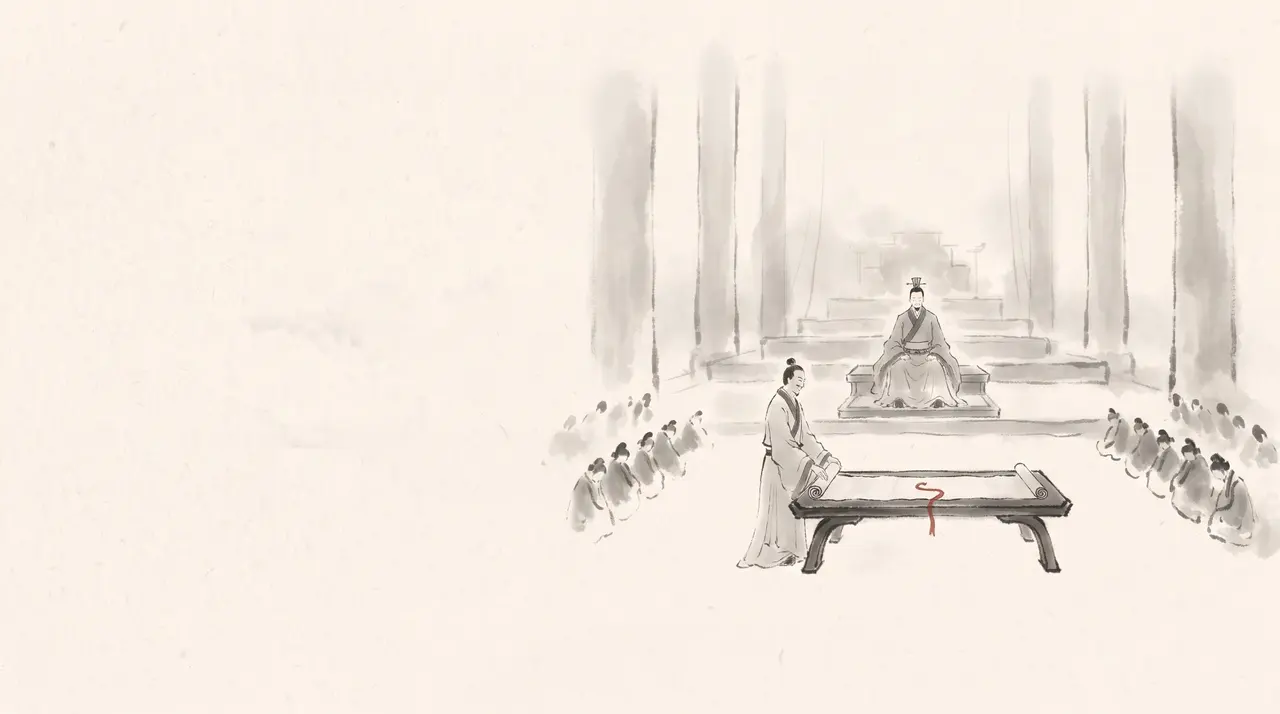
Zhang Yi of Wei studied with Su Qin under Master Guigu. Beaten in Chu on suspicion of stealing a jade disc, he said, "As long as my tongue is still there, that is enough." Deliberately humiliated by his old classmate Su Qin, he was spurred on, and with Su Qin's secret help he entered the service of King Hui of Qin. As chancellor of Qin he built the "horizontal" alliances that tied each state to Qin one by one, and he tricked King Huai of Chu into breaking with Qi with a promise of six hundred li of land. When the furious King Huai seized him, he saved his life through the king's favorite, Zheng Xiu, and in the end brought Chu into alliance with Qin.
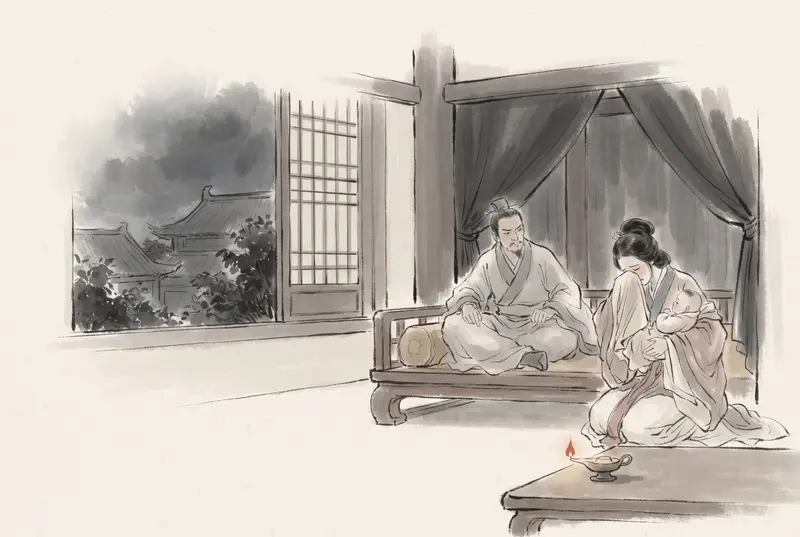
This page has the scene "Zhang Yi: Is My Tongue Still There?" from this volume, not the whole volume.
Audio
The audio is synthetic speech.
Video
Passage 1
Original
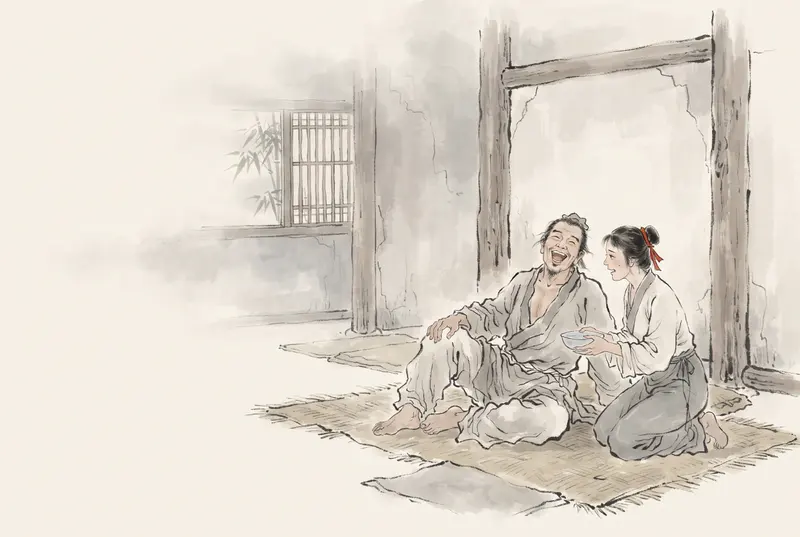
張儀者,魏人也。始嘗與蘇秦俱事鬼谷先生,學術,蘇秦自以不及張儀。張儀已學游說諸侯。嘗從楚相飲,已而楚相亡璧,門下意張儀,曰:「儀貧無行,必此盜相君之璧。」共執張儀,掠笞數百,不服,醳之。其妻曰:「嘻!子毋讀書游說,安得此辱乎?」張儀謂其妻曰:「視吾舌尚在不?」其妻笑曰:「舌在也。」儀曰:「足矣。」
Kundoku (Japanese reading)
張儀なる者は、魏の人なり。始め嘗て蘇秦と俱に鬼谷先生に事えて、術を学ぶ。蘇秦自ら以て張儀に及ばずと為す。張儀已に学びて諸侯に游説す。嘗て楚の相に従いて飲む。已にして楚の相璧を亡う。門下張儀を意いて、曰く、「儀は貧にして行い無し。必ず此れ相君の璧を盗まん」と。共に張儀を執え、掠笞すること数百。服せず。之を醳す。其の妻曰く、「嘻、子書を読み游説すること毋くんば、安くんぞ此の辱めを得んや」と。張儀其の妻に謂いて曰く、「吾が舌を視よ、尚お在りや不や」と。其の妻笑いて曰く、「舌は在り」と。儀曰く、「足れり」と。
Japanese
張儀は魏の人である。若いころ、蘇秦とともに鬼谷先生に仕えて遊説の術を学んだが、蘇秦は自分は張儀に及ばないと思っていた。張儀は学び終えると、諸侯のもとを回って遊説した。あるとき楚の宰相の酒宴に招かれたが、そのあと宰相の璧がなくなった。宰相の家来たちは張儀を疑って言った。「張儀は貧しくて品行が悪い。宰相の璧を盗んだのはきっとこいつだ」。みなで張儀を捕らえ、数百回も鞭で打ったが、張儀は罪を認めなかったので、放してやった。妻が言った。「ああ、あなたが本を読んで遊説などしなければ、こんな恥をかくこともなかったのに」。張儀は妻に言った。「わたしの舌を見てくれ。まだあるか」。妻は笑って言った。「舌はありますよ」。張儀は言った。「それで十分だ」。
English
Zhang Yi was a man of Wei. When he was young he served Master Guigu together with Su Qin and learned the art of persuasion, and Su Qin thought himself no match for Zhang Yi. When his studies were done, Zhang Yi went around persuading the lords. Once he was drinking with the chancellor of Chu, and afterward the chancellor lost a jade disc. The chancellor's men suspected Zhang Yi: "Zhang Yi is poor and has no morals. He must be the one who stole Your Excellency's jade." They seized him together and flogged him several hundred times, but he would not confess, and they let him go. His wife said, "Ah! If you had never read books and gone persuading, how would you have come to such disgrace?" Zhang Yi said to her, "Look and see: is my tongue still there?" His wife laughed and said, "Your tongue is there." "Then that is enough," said Zhang Yi.
Notes (JA)
- 張儀: 戦国時代の遊説家(?〜前309年)。秦の宰相として「連衡」の策を進めた。屈原の章にも出てくる。
- 鬼谷先生: 伝説的な縦横家(遊説家)の師。
- 蘇秦: 「合従」を説いた遊説家(巻69の章を参照)。
- 璧: 円盤形の玉。宝物。
- 意: 疑う。
- 掠笞: 鞭で打って取り調べる。
- 醳: 「釈」と同じ。放す。
- 視吾舌尚在不: わたしの舌はまだあるか見てくれ。舌さえあれば遊説で身を立てられるという自信。
Notes (EN)
- Zhang Yi (d. 309 BCE): a persuader of the Warring States who, as chancellor of Qin, built the "horizontal" alliances. He also appears in the chapter on Qu Yuan.
- Master Guigu: the legendary teacher of the persuaders.
- Su Qin: the persuader who preached the "vertical" alliance (see Volume 69).
- 璧: a jade disc, a treasure.
- 意: to suspect.
- 掠笞: to flog in interrogation.
- 醳: the same as 釋, to release.
- 視吾舌尚在不 ("is my tongue still there?"): as long as he could talk, he could still make his fortune.
Idioms from this passage: Look, is my tongue still there? 吾が舌を視よ、尚お在りや不や
Word notes
- flog/flɑɡ/verb
to beat someone hard with a whip or stick
In the text: “flogged him several hundred times”
Similar words: whip — hit with a whip · lash — hit with a whip
- confess/kənˈfɛs/verb
to admit that you did something wrong
In the text: “he would not confess”
Similar words: admit — say it is true · own up — informal; confess
Passage 2
Original
蘇秦已說趙王而得相約從親,然恐秦之攻諸侯,敗約後負,念莫可使用於秦者,乃使人微感張儀曰:「子始與蘇秦善,今秦已當路,子何不往游,以求通子之願?」張儀於是之趙,上謁求見蘇秦。蘇秦乃誡門下人不為通,又使不得去者數日。已而見之,坐之堂下,賜僕妾之食。因而數讓之曰:「以子之材能,乃自令困辱至此。吾寧不能言而富貴子,子不足收也。」
Kundoku (Japanese reading)
蘇秦已に趙王に説きて相約して従親するを得たり。然れども秦の諸侯を攻めて、約を敗りて後負かんことを恐れ、秦に用いらるべき者莫しと念い、乃ち人をして微かに張儀を感ぜしめて曰く、「子始め蘇秦と善し。今秦已に路に当たる。子何ぞ往きて游び、以て子の願いを通ずることを求めざる」と。張儀是に於いて趙に之き、謁を上りて蘇秦に見えんことを求む。蘇秦乃ち門下の人を誡めて為に通ぜず、又去るを得ざらしむること数日。已にして之に見え、之を堂下に坐せしめ、僕妾の食を賜う。因りて数しば之を譲めて曰く、「子の材能を以て、乃ち自ら困辱せしむること此に至る。吾寧ろ言いて子を富貴にする能わざらんや。子は収むるに足らざるなり」と。
Japanese
蘇秦はすでに趙王を説いて、諸国が同盟する合従を結ばせていた。しかし、秦が諸侯を攻めて同盟が破れてしまうのではないかと心配し、秦に送りこんで用いさせられる者はほかにいないと考えた。そこで人をやって、それとなく張儀をけしかけさせた。「あなたは昔、蘇秦と仲がよかった。いま蘇秦は権力の座にいます。訪ねていって、望みをかなえてもらってはどうですか」。張儀は趙へ行き、名刺を差し出して蘇秦に面会を求めた。ところが蘇秦は門番に命じて取り次がせず、しかも何日も帰らせなかった。やっと会ったと思うと、張儀を堂の下に座らせ、召使いと同じ食事を与えた。そして何度も責めて言った。「おまえほどの才能がありながら、自分をこんなみじめな目にあわせているとは。わたしが一言いえば、おまえを富ませ出世させることもできなくはない。だが、おまえなど取り立てる値打ちもない」。
English
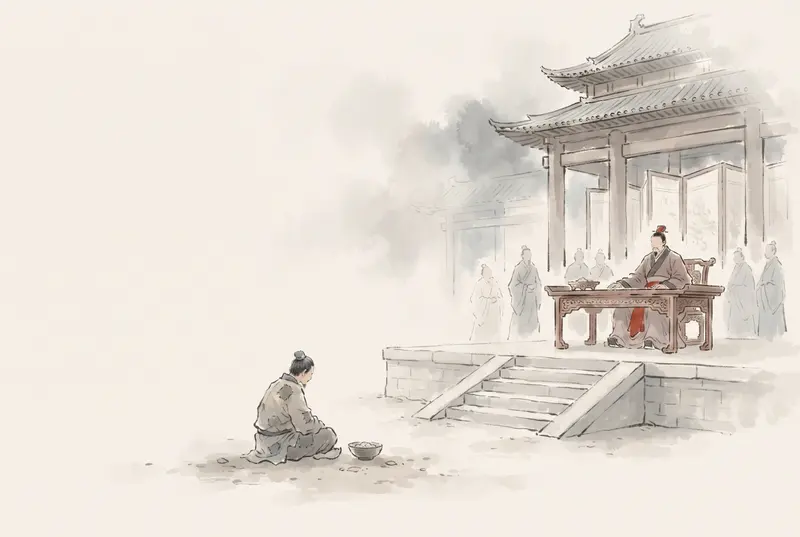
Su Qin had already persuaded the King of Zhao and brought the states into a "vertical" alliance. But he feared that Qin would attack the lords and break the alliance, and he thought there was no one he could have taken into Qin's service. So he sent someone to stir Zhang Yi up quietly: "You and Su Qin were friends once. Now Su Qin is in power. Why not go to him and see if he can make your wishes come true?" So Zhang Yi went to Zhao and sent in his name asking to see Su Qin. But Su Qin told his gatekeepers not to announce him, and for several days kept him from leaving. When at last he received him, he seated him below the hall and gave him the food of servants and maids. Then he reproached him again and again: "With talent like yours, you have brought yourself to this misery. Could I not say a word and make you rich and honored? But you are not worth taking in."
Notes (JA)
- 從親: 合従の同盟(巻69の章を参照)。
- 敗約後負: 同盟を破り、のちに裏切る。
- 微感: それとなくけしかける。
- 當路: 権力の座にいる。
- 上謁: 名刺(謁)を差し出して面会を求める。
- 坐之堂下,賜僕妾之食: 堂の下に座らせ、召使いの食事を与える。わざと辱めた。
- 讓: 責める。
Notes (EN)
- 從親: the "vertical" alliance of the states (see Volume 69).
- 敗約後負: to break the alliance and betray it.
- 微感: to stir up quietly.
- 當路: to be in power.
- 上謁: to send in one's name card asking for an audience.
- 坐之堂下,賜僕妾之食: seated below the hall and fed like a servant, a deliberate insult.
- 讓: to reproach.
Word notes
- gatekeeper/ˈɡeɪtˌkiːpər/noun
a person who guards a gate
In the text: “told his gatekeepers not to announce him”
Similar words: porter — a doorkeeper · doorman — a man who guards a door
- reproach/rɪˈproʊtʃ/verb
to tell someone you are disappointed with them
In the text: “he reproached him again and again”
Similar words: rebuke — speak sharply · chide — scold gently
Passage 3
Original
蘇秦已而告其舍人曰:「張儀,天下賢士,吾殆弗如也。今吾幸先用,而能用秦柄者,獨張儀可耳。然貧,無因以進。吾恐其樂小利而不遂,故召辱之,以激其意。子為我陰奉之。」乃言趙王,發金幣車馬,使人微隨張儀,與同宿舍,稍稍近就之,奉以車馬金錢,所欲用,為取給,而弗告。張儀遂得以見秦惠王。惠王以為客卿,與謀伐諸侯。蘇秦之舍人乃辭去。張儀曰:「賴子得顯,方且報德,何故去也?」舍人曰:「臣非知君,知君乃蘇君。蘇君憂秦伐趙敗從約,以為非君莫能得秦柄,故感怒君,使臣陰奉給君資,盡蘇君之計謀。今君已用,請歸報。」張儀曰:「嗟乎,此在吾術中而不悟,吾不及蘇君明矣!吾又新用,安能謀趙乎?為吾謝蘇君,蘇君之時,儀何敢言。且蘇君在,儀寧渠能乎!」
Kundoku (Japanese reading)
蘇秦已にして其の舎人に告げて曰く、「張儀は天下の賢士なり。吾殆ど如かざるなり。今吾幸いに先に用いらる。而して能く秦の柄を用うる者は、独り張儀のみ可なり。然れども貧しく、因りて以て進む無し。吾其の小利を楽しみて遂げざらんことを恐る。故に召して之を辱め、以て其の意を激す。子我が為に陰かに之に奉ぜよ」と。乃ち趙王に言い、金幣車馬を発し、人をして微かに張儀に随わしめ、与に宿舎を同じくし、稍稍近づきて之に就き、奉ずるに車馬金銭を以てし、用いんと欲する所は、為に取りて給し、而して告げず。張儀遂に以て秦の恵王に見ゆるを得たり。恵王以て客卿と為し、与に諸侯を伐たんことを謀る。蘇秦の舎人乃ち辞して去らんとす。張儀曰く、「子に頼りて顕わるるを得たり。方に且に徳に報いんとす。何の故に去るや」と。舎人曰く、「臣は君を知るに非ず。君を知るは乃ち蘇君なり。蘇君秦の趙を伐ちて従約を敗らんことを憂い、以為えらく君に非ずんば能く秦の柄を得る莫しと。故に君を感怒せしめ、臣をして陰かに君の資を奉給せしむ。尽く蘇君の計謀なり。今君已に用いらる。請う帰りて報ぜん」と。張儀曰く、「嗟乎、此れ吾が術中に在りて悟らず。吾蘇君に及ばざること明らかなり。吾又新たに用いらる。安くんぞ能く趙を謀らんや。吾が為に蘇君に謝せよ。蘇君の時、儀何ぞ敢えて言わん。且つ蘇君在らば、儀寧渠ぞ能くせんや」と。
Japanese
そのあと蘇秦は、自分の家来に言った。「張儀は天下の賢人で、わたしはとてもかなわない。いま、わたしは運よく先に用いられたが、秦の権力を動かせる者は張儀しかいない。しかし張儀は貧しくて、出世の手づるがない。小さな利益に満足して大きな志をとげないのではないかと心配なので、わざと呼びつけて辱め、奮起させたのだ。おまえはわたしのために、ひそかに張儀の世話をしてくれ」。そこで蘇秦は趙王に話して、金や車馬を出してもらい、家来にそっと張儀のあとをつけさせた。家来は同じ宿に泊まって少しずつ近づき、車馬や金銭を出してやり、張儀が必要なものはすべて用意したが、誰の援助かは告げなかった。こうして張儀は秦の恵王に会うことができた。恵王は張儀を客卿に取り立て、ともに諸侯を攻める計画を練った。すると蘇秦の家来は、別れを告げて去ろうとした。張儀は言った。「あなたのおかげで出世できた。これから恩返しをしようというのに、なぜ去るのですか」。家来は言った。「わたしはあなたを見こんだのではありません。あなたを見こんだのは蘇秦さまです。蘇秦さまは、秦が趙を攻めて合従の同盟が破れることを心配し、秦の権力を握れるのはあなたしかいないと考えました。だからわざとあなたを怒らせ、わたしにひそかにあなたの費用を出させたのです。すべて蘇秦さまの計略です。あなたはもう用いられましたので、帰って報告いたします」。張儀は言った。「ああ、わたしは蘇秦の術中にはまっていながら、気づかなかった。わたしが蘇秦に及ばないのは明らかだ。わたしは新しく用いられたばかりで、どうして趙を攻める計略など立てられよう。わたしのかわりに、蘇秦にお礼を言ってくれ。蘇秦が生きているあいだは、わたしは何も言うまい。蘇秦がいるかぎり、わたしに何ができようか」。
English
Later Su Qin told one of his retainers, "Zhang Yi is one of the ablest men in the world; I am hardly his equal. I was lucky enough to be employed first, but the only man who can take the reins in Qin is Zhang Yi. He is poor, though, and has no way to advance. I was afraid he would be content with small gains and never achieve his ambition, so I called him here and humiliated him to rouse his spirit. Look after him for me in secret." Then he spoke to the King of Zhao, who provided gold, gifts, carriages and horses, and he had the retainer follow Zhang Yi quietly, stay at the same inns and draw close to him little by little, giving him carriages, horses and money, and getting whatever he needed, without telling him where it came from. And so Zhang Yi was able to see King Hui of Qin. King Hui made him a guest minister and planned with him how to attack the lords. Then Su Qin's retainer took his leave. Zhang Yi said, "I owe my rise to you, and I was just about to repay your kindness. Why are you leaving?" The retainer said, "It was not I who saw your worth; it was Master Su. Master Su feared that Qin would attack Zhao and break the alliance, and he believed that no one but you could take the reins in Qin. So he angered you on purpose and had me pay your expenses in secret. It was all Master Su's plan. Now that you are employed, let me go back and report." Zhang Yi said, "Ah! I was inside his scheme and never saw it. Plainly I am no match for Master Su. And I have only just been employed; how could I plot against Zhao? Thank Master Su for me. As long as Master Su lives, how would I dare to say a word? While Master Su is there, what could I do?"
Notes (JA)
- 舍人: 家来、食客。
- 秦柄: 秦の権力。
- 激其意: 志をかきたてる。
- 陰奉之: ひそかに世話をする。
- 客卿: 他国出身の大臣(巻79の章の范雎も同じ)。
- 在吾術中而不悟: 相手の術中にはまっていながら気づかない。
- 寧渠: どうして。反語。
- この話は、のちの蘇秦の伝(巻69)にも「張儀を激怒させて秦に入れた」と記される。
Notes (EN)
- 舍人: a retainer.
- 秦柄: the reins of power in Qin.
- 激其意: to rouse his ambition.
- 陰奉之: to look after him in secret.
- 客卿: a guest minister from another state (as Fan Ju was in Volume 79).
- 在吾術中而不悟: caught in another's scheme without knowing it.
- 寧渠: "how could…?"
- Su Qin's biography (Volume 69) also records that he angered Zhang Yi to get him into Qin.
Word notes
- employ/ɪmˈplɔɪ/verb
to give someone a job
In the text: “Now that you are employed”
Similar words: hire — give a job to · engage — formal; hire
- plot/plɑt/verb
to make secret plans to do something harmful
In the text: “how could I plot against Zhao?”
Similar words: conspire — plan secretly together · scheme — make secret plans
Passage 4
Original
苴蜀相攻擊,各來告急於秦。秦惠王欲發兵以伐蜀,以為道險狹難至,而韓又來侵秦,秦惠王欲先伐韓,後伐蜀,恐不利,欲先伐蜀,恐韓襲秦之敝。猶豫未能決。司馬錯與張儀爭論於惠王之前,司馬錯欲伐蜀,張儀曰:「不如伐韓。」王曰:「請聞其說。」儀曰:「親魏善楚,下兵三川,塞什谷之口,當屯留之道,魏絕南陽,楚臨南鄭,秦攻新城、宜陽,以臨二周之郊,誅周王之罪,侵楚、魏之地。周自知不能救,九鼎寶器必出。據九鼎,案圖籍,挾天子以令於天下,天下莫敢不聽,此王業也。今夫蜀,西僻之國而戎翟之倫也,敝兵勞眾不足以成名,得其地不足以為利。臣聞爭名者於朝,爭利者於市。今三川、周室,天下之朝市也,而王不爭焉,顧爭於戎翟,去王業遠矣。」
Kundoku (Japanese reading)
苴・蜀相攻撃し、各おの来たりて急を秦に告ぐ。秦の恵王兵を発して以て蜀を伐たんと欲するも、以為えらく道険狭にして至り難しと。而して韓又来たりて秦を侵す。秦の恵王先に韓を伐ち、後に蜀を伐たんと欲するも、利あらざらんことを恐れ、先に蜀を伐たんと欲するも、韓の秦の敝を襲わんことを恐る。猶予して未だ決する能わず。司馬錯張儀と恵王の前に争論す。司馬錯蜀を伐たんと欲す。張儀曰く、「韓を伐つに如かず」と。王曰く、「請う其の説を聞かん」と。儀曰く、「魏に親しみ楚に善くし、兵を三川に下し、什谷の口を塞ぎ、屯留の道に当たり、魏は南陽を絶ち、楚は南鄭に臨み、秦は新城・宜陽を攻め、以て二周の郊に臨み、周王の罪を誅し、楚・魏の地を侵さん。周自ら救う能わざるを知り、九鼎の宝器必ず出でん。九鼎に拠り、図籍を案じ、天子を挟みて以て天下に令せば、天下敢えて聴かざる莫し。此れ王業なり。今夫れ蜀は、西僻の国にして戎翟の倫なり。兵を敝し衆を労するも以て名を成すに足らず、其の地を得るも以て利と為すに足らず。臣聞く、名を争う者は朝に於いてし、利を争う者は市に於いてすと。今三川・周室は、天下の朝市なり。而るに王争わず、顧って戎翟に争う。王業を去ること遠し」と。
Japanese
苴と蜀が互いに攻め合い、それぞれ秦に助けを求めてきた。秦の恵王は兵を出して蜀を攻めようとしたが、道が険しく狭くてたどり着くのが難しいと思った。しかも韓が秦に攻めこんできた。恵王は、先に韓を攻めてから蜀を攻めようと思えば、うまくいかないのではと心配し、先に蜀を攻めようと思えば、韓が秦の疲れたところを襲うのではと心配して、決められずにいた。司馬錯と張儀が恵王の前で論争した。司馬錯は蜀を攻めるべきだと言い、張儀は「韓を攻めるほうがよいでしょう」と言った。王が「その理由を聞かせよ」と言うと、張儀は言った。「魏と親しくし楚と仲よくして、三川に兵を進め、什谷の入口をふさぎ、屯留の道を押さえ、魏に南陽を断たせ、楚に南鄭へ迫らせ、秦は新城と宜陽を攻めて、東西の周の都の近くまで迫り、周王の罪を責めて、楚と魏の土地を侵すのです。周は自分では身を守れないと知って、かならず九鼎などの宝物を差し出すでしょう。九鼎を手にして地図と戸籍を押さえ、天子を擁して天下に号令すれば、天下で従わない者はありません。これこそ王者の事業です。ところで蜀は西の果ての国で、異民族の仲間です。兵を疲れさせ民を苦しめても名をあげることはできず、その土地を得ても利益にはなりません。名誉を争うなら朝廷で、利益を争うなら市場で、と聞いています。いま三川と周王室は、天下の朝廷であり市場です。それなのに王はそこを争わず、異民族の地を争おうとなさる。王者の事業から遠ざかるばかりです」。
English
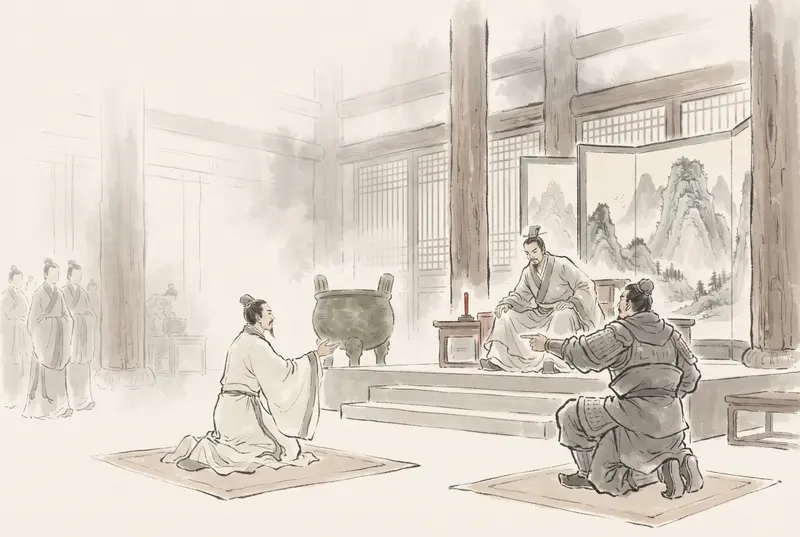
Ju and Shu were fighting each other, and each came to Qin asking urgently for help. King Hui of Qin wanted to send an army against Shu, but thought the road too steep and narrow to get there. Then Hann came and attacked Qin. King Hui thought of attacking Hann first and Shu afterward, but feared it would go badly; he thought of attacking Shu first, but feared Hann would strike Qin while it was worn out. He hesitated and could not decide. Sima Cuo and Zhang Yi argued it out before King Hui. Sima Cuo wanted to attack Shu, but Zhang Yi said, "Better to attack Hann." "Let me hear your reasons," said the king. Zhang Yi said, "Make friends with Wei and get on good terms with Chu, then send our troops down to the Three Rivers. Block the mouth of the Shigu valley and hold the road to Tunliu; let Wei cut off Nanyang and Chu bear down on Nanzheng, while Qin attacks Xincheng and Yiyang. Then we stand at the outskirts of the two Zhou capitals, punish the King of Zhou for his crimes and take land from Chu and Wei. Zhou will know it cannot save itself and will surely hand over the Nine Cauldrons and its treasures. Holding the Nine Cauldrons, with the maps and registers in hand, we can take hold of the Son of Heaven and give orders to the world, and no one in the world will dare to disobey. That is the work of a true king. Shu, on the other hand, is a remote western state, one of the barbarians. Wearing out our army and our people there will not make our name, and taking its land will bring no profit. I have heard that one competes for fame at court and for profit in the market. The Three Rivers and the house of Zhou are the court and the market of the world. Yet Your Majesty would not compete there, but among the barbarians instead. That is a long way from the work of a king."
Notes (JA)
- 苴・蜀: 今の四川省にあった国。
- 司馬錯: 秦の将軍。司馬遷の祖先にあたる(巻130の章を参照)。
- 三川: 黄河・洛水・伊水の流れる地。周の都のあたり。
- 二周: 東周と西周の二つの小国に分かれた周王室。
- 九鼎: 夏の禹が作ったと伝えられる九つの鼎。天下の王の象徴。
- 圖籍: 地図と戸籍。
- 挾天子以令於天下: 天子を擁して天下に号令する。のちに三国時代の曹操について使われる言葉の古い形。
- 戎翟: 異民族。
- 爭名者於朝,爭利者於市: 名誉を争うなら朝廷で、利益を争うなら市場で。
Notes (EN)
- Ju and Shu: states in present-day Sichuan.
- Sima Cuo: a general of Qin, an ancestor of Sima Qian (see Volume 130).
- The Three Rivers: the land of the Yellow, Luo and Yi rivers, around the Zhou capital.
- The two Zhou: the royal house of Zhou had split into two small states, Eastern and Western Zhou.
- The Nine Cauldrons: said to have been cast by Yu the Great; the symbol of rule over the world.
- 圖籍: maps and household registers.
- 挾天子以令於天下 ("take hold of the Son of Heaven and give orders to the world"): a phrase later used of Cao Cao in the Three Kingdoms period.
- 戎翟: barbarians.
- 爭名者於朝,爭利者於市 ("fame at court, profit in the market").
Word notes
- outskirts/ˈaʊtˌskɜrts/noun
the outer parts of a city
In the text: “the outskirts of the two Zhou capitals”
Similar words: edge — outer part · suburbs — areas around a city
- barbarian/bɑrˈbɛriən/noun
an old word for a person from outside a "civilized" country
In the text: “one of the barbarians”
Similar words: savage — old; an uncivilized person · outsider — someone not from the group
Barbarian is an old, insulting word; today we say "foreign peoples".
Passage 5
Original
司馬錯曰:「不然。臣聞之,欲富國者務廣其地,欲彊兵者務富其民,欲王者務博其德,三資者備而王隨之矣。今王地小民貧,故臣願先從事於易。夫蜀,西僻之國也,而戎翟之長也,有桀紂之亂。以秦攻之,譬如使豺狼逐群羊。得其地足以廣國,取其財足以富民繕兵,不傷眾而彼已服焉。拔一國而天下不以為暴,利盡西海而天下不以為貪,是我一舉而名實附也,而又有禁暴止亂之名。今攻韓,劫天子,惡名也,而未必利也,又有不義之名,而攻天下所不欲,危矣。臣請謁其故:周,天下之宗室也;齊,韓之與國也。周自知失九鼎,韓自知亡三川,將二國并力合謀,以因乎齊、趙而求解乎楚、魏,以鼎與楚,以地與魏,王弗能止也。此臣之所謂危也。不如伐蜀完。」惠王曰:「善,寡人請聽子。」卒起兵伐蜀,十月,取之,遂定蜀,貶蜀王更號為侯,而使陳莊相蜀。蜀既屬秦,秦以益彊,富厚,輕諸侯。
Kundoku (Japanese reading)
司馬錯曰く、「然らず。臣之を聞く、国を富まさんと欲する者は務めて其の地を広くし、兵を彊くせんと欲する者は務めて其の民を富まし、王たらんと欲する者は務めて其の徳を博くす。三資の者備わりて王之に随う。今王の地は小にして民は貧し。故に臣願わくは先に易きに従事せん。夫れ蜀は西僻の国なり。而して戎翟の長なり。桀紂の乱有り。秦を以て之を攻むるは、譬えば豺狼をして群羊を逐わしむるが如し。其の地を得れば以て国を広くするに足り、其の財を取れば以て民を富まし兵を繕うに足る。衆を傷つけずして彼已に服す。一国を抜くも天下以て暴と為さず、利西海を尽くすも天下以て貪と為さず。是れ我一挙して名実附くなり。而して又暴を禁じ乱を止むるの名有り。今韓を攻め、天子を劫かすは、悪名なり。而して未だ必ずしも利あらず。又不義の名有り。而して天下の欲せざる所を攻むるは、危し。臣請う其の故を謁さん。周は天下の宗室なり。斉は韓の与国なり。周自ら九鼎を失うを知り、韓自ら三川を亡うを知らば、将に二国力を并せ謀を合わせ、以て斉・趙に因りて解を楚・魏に求め、鼎を以て楚に与え、地を以て魏に与えんとす。王止むる能わじ。此れ臣の所謂危きなり。蜀を伐つの完きに如かず」と。恵王曰く、「善し。寡人請う子に聴かん」と。卒に兵を起こして蜀を伐ち、十月にして之を取り、遂に蜀を定め、蜀王を貶して号を更めて侯と為し、而して陳荘をして蜀に相たらしむ。蜀既に秦に属し、秦以て益ます彊く、富厚にして、諸侯を軽んず。
Japanese
司馬錯は言った。「そうではありません。国を富ませたい者はまず領土を広げ、兵を強くしたい者はまず民を富ませ、天下の王になりたい者はまず徳を広めるべきだ、と聞いています。この三つがそろえば、王者の地位は自然についてきます。いま王の領土は小さく、民は貧しいので、わたしはまずたやすいことから手をつけたいのです。蜀は西の果ての国で、異民族の頭ですが、桀や紂のような乱れた政治をしています。秦がそれを攻めるのは、山犬や狼に羊の群れを追わせるようなものです。その土地を得れば国を広げるのに十分で、その財宝を取れば民を富ませ兵を整えるのに十分です。人を傷つけずに相手は降伏するでしょう。一つの国を落としても天下は乱暴とは言わず、西の果てまでの利益を取りつくしても天下は欲張りとは言いません。一度の行動で、名誉と実利の両方が得られるのです。しかも乱暴をやめさせ乱れを鎮めたという評判まで得られます。いっぽう、いま韓を攻めて天子をおどせば、悪い評判が立つうえに、利益があるとはかぎりません。不義だという評判も立ちます。天下が望まないことをするのは危険です。そのわけを申し上げましょう。周は天下の王室であり、斉は韓の同盟国です。周が九鼎を失うと知り、韓が三川を失うと知れば、二つの国は力を合わせて策をめぐらし、斉や趙を頼りに、楚や魏に助けを求めるでしょう。鼎を楚に与え、土地を魏に与えるようなことになれば、王には止められません。これがわたしの言う危険です。蜀を攻めるほうが万全です」。恵王は言った。「よろしい。そなたの意見に従おう」。そしてとうとう兵を起こして蜀を攻め、十か月で取り、蜀を平定した。蜀王の位を下げて侯と名のらせ、陳荘を蜀の宰相にした。蜀が秦のものになると、秦はますます強く、豊かになり、諸侯を見下すようになった。
English
Sima Cuo said, "Not so. I have heard that one who would enrich his state must first widen his lands; one who would strengthen his army must first enrich his people; and one who would be king must first spread his virtue. When these three are in place, kingship follows. Now Your Majesty's lands are small and your people poor, so I would rather begin with what is easy. Shu is a remote western state and the chief of the barbarians, and it suffers disorder like that under the tyrants Jie and Zhou. For Qin to attack it would be like sending wolves after a flock of sheep. Taking its land would be enough to widen the state; taking its wealth would be enough to enrich the people and equip the army. Without harming our own people, we would have its submission. Taking one state, the world would not call us brutal; drawing all the profit of the western lands, the world would not call us greedy. With one move we would gain both name and substance, and the credit for ending cruelty and disorder besides. To attack Hann now and threaten the Son of Heaven would bring a bad name and not necessarily any profit. It would be called unjust, and to attack what the world does not want attacked is dangerous. Let me explain why. Zhou is the royal house of the world, and Qi is Hann's ally. When Zhou knows it will lose the Nine Cauldrons and Hann knows it will lose the Three Rivers, the two will join forces and plans, turn to Qi and Zhao, and seek help from Chu and Wei. If they give the Cauldrons to Chu and the land to Wei, Your Majesty will not be able to stop them. That is the danger I speak of. Attacking Shu is the safer course." King Hui said, "Good. I will follow your advice." In the end he raised an army and attacked Shu, took it in ten months and pacified it. He demoted the King of Shu to marquis and made Chen Zhuang chancellor of Shu. Once Shu belonged to Qin, Qin grew ever stronger and richer and thought little of the other lords.
Notes (JA)
- 三資: 三つの元手(領土・民の富・徳)。
- 桀紂之亂: 夏の桀王、殷の紂王のような暴政。
- 豺狼逐群羊: 山犬や狼に羊の群れを追わせる。力の差がはっきりしていること。
- 名實附: 名誉と実利の両方がついてくる。
- 宗室: 王の一族。天下の本家。
- 與國: 同盟国。
- 完: 万全。
- 定蜀: 前316年。蜀を取ったことで、のちに秦は豊かな四川盆地を手に入れた。張儀の意見ではなく、司馬錯の意見が採られた。
Notes (EN)
- 三資: the three foundations (land, wealth of the people, virtue).
- Jie and Zhou: the last, tyrannical kings of the Xia and Shang.
- 豺狼逐群羊 ("wolves after a flock of sheep"): an easy, one-sided fight.
- 名實附: gaining both name and substance.
- 宗室: the royal house, the senior line of the world.
- 與國: an ally.
- 完: safe, sure.
- Shu pacified: in 316 BCE, giving Qin the rich Sichuan basin. Here it was Sima Cuo's advice, not Zhang Yi's, that was taken.
Word notes
- tyrant/ˈtaɪrənt/noun
a cruel ruler with total power
In the text: “the tyrants Jie and Zhou”
Similar words: despot — a ruler with total power · dictator — a ruler who rules alone
- demote/dɪˈmoʊt/verb
to move someone to a lower rank
In the text: “He demoted the King of Shu to marquis”
Similar words: downgrade — lower in rank · relegate — move to a lower place
Passage 6
Original
「臣聞之,積羽沈舟,群輕折軸,眾口鑠金,積毀銷骨,故願大王審定計議,且賜骸骨辟魏。」哀王於是乃倍從約而因儀請成於秦。張儀歸,復相秦。
Kundoku (Japanese reading)
「臣之を聞く、羽を積めば舟を沈め、群軽も軸を折り、衆口は金を鑠かし、積毀は骨を銷かすと。故に願わくは大王計議を審定し、且つ骸骨を賜いて魏を辟らしめよ」と。哀王是に於いて乃ち従約に倍きて儀に因りて成を秦に請う。張儀帰りて、復た秦に相たり。
Japanese
(張儀は魏の宰相として、魏の哀王に秦に仕えるよう説き、最後にこう言った。)「羽でも積もれば舟を沈め、軽いものでも集まれば車軸を折り、大勢の口は金をも溶かし、悪口が積もれば骨をも溶かす、と聞いております。どうか大王は、しっかりと方針をお定めください。そして、わたしには辞職をお許しいただき、魏を去らせてください」。魏の哀王はそこで合従の同盟にそむき、張儀を通じて秦に和睦を申し入れた。張儀は秦に帰って、再び宰相になった。
English
(As chancellor of Wei, Zhang Yi urged King Ai of Wei to serve Qin, and ended:) "I have heard that feathers piled up will sink a boat, light things in a heap will break an axle, many mouths can melt metal, and slander piled up can dissolve bones. So I beg Your Majesty to settle your policy firmly, and to let me retire and leave Wei." Then King Ai broke the vertical alliance and, through Zhang Yi, sought peace with Qin. Zhang Yi went home and became chancellor of Qin again.
Notes (JA)
- この節の前(省略): 張儀は秦の宰相を退いて魏の宰相となり、魏を秦に従わせようとした。魏が従わないので、ひそかに秦に魏を攻めさせ、そのうえで魏王に「魏の地は四方から攻められる戦場だ」「合従の同盟は兄弟でも財産を争うようなもので頼りにならない」と説いた。
- 積羽沈舟,群輕折軸: 羽でも積もれば舟を沈め、軽いものでも集まれば車軸を折る。小さなことも積み重なれば大事になる。
- 眾口鑠金,積毀銷骨: 大勢の口は金をも溶かし、悪口が積もれば骨をも溶かす。うわさや悪口の恐ろしさ。合従派の言葉に惑わされるな、という意味。
- 賜骸骨: 辞職を許す。
- 哀王: 魏の王。年代には諸説ある(今は「襄王」とする説が有力)。
- 倍: 「背」と同じ。そむく。
- 請成: 和睦を求める。
Notes (EN)
- Before this (left out here): Zhang Yi had left his post in Qin to become chancellor of Wei, meaning to bring Wei over to Qin. When Wei refused, he secretly had Qin attack it, then told the king that Wei was a battlefield open on every side and that the alliance was as unreliable as brothers quarrelling over money.
- 積羽沈舟,群輕折軸 ("feathers piled up sink a boat, light things in a heap break an axle"): small things add up.
- 眾口鑠金,積毀銷骨 ("many mouths melt metal, slander piled up dissolves bones"): the power of talk and slander; here, a warning not to be swayed by the alliance-makers.
- 賜骸骨 ("grant me my bones"): permission to retire.
- King Ai: a king of Wei (many scholars think this was King Xiang).
- 倍: the same as 背, to turn against.
- 請成: to seek peace.
Word notes
- axle/ˈæksəl/noun
the rod on which a cart's wheels turn
In the text: “light things in a heap will break an axle”
Similar words: shaft — a rod · spindle — a rod that turns
- retire/rɪˈtaɪr/verb
to leave your job, usually because of age
In the text: “let me retire and leave Wei”
Similar words: step down — leave a position · resign — leave a job
Passage 7
Original
秦欲伐齊,齊楚從親,於是張儀往相楚。楚懷王聞張儀來,虛上舍而自館之。曰:「此僻陋之國,子何以教之?」儀說楚王曰:「大王誠能聽臣,閉關絕約於齊,臣請獻商於之地六百里,使秦女得為大王箕帚之妾,秦楚娶婦嫁女,長為兄弟之國。此北弱齊而西益秦也,計無便此者。」楚王大說而許之。群臣皆賀,陳軫獨弔之。楚王怒曰:「寡人不興師發兵得六百里地,群臣皆賀,子獨弔,何也?」陳軫對曰:「不然,以臣觀之,商於之地不可得而齊秦合,齊秦合則患必至矣。」楚王曰:「有說乎?」陳軫對曰:「夫秦之所以重楚者,以其有齊也。今閉關絕約於齊,則楚孤。秦奚貪夫孤國,而與之商於之地六百里?張儀至秦,必負王,是北絕齊交,西生患於秦也,而兩國之兵必俱至。善為王計者,不若陰合而陽絕於齊,使人隨張儀。茍與吾地,絕齊未晚也;不與吾地,陰合謀計也。」楚王曰:「願陳子閉口毋復言,以待寡人得地。」乃以相印授張儀,厚賂之。於是遂閉關絕約於齊,使一將軍隨張儀。
Kundoku (Japanese reading)
秦斉を伐たんと欲す。斉楚従親す。是に於いて張儀往きて楚に相たり。楚の懐王張儀の来たるを聞き、上舎を虚しくして自ら之を館す。曰く、「此の僻陋の国、子何を以てか之に教えん」と。儀楚王に説きて曰く、「大王誠に能く臣に聴き、関を閉じ約を斉に絶たば、臣請う商於の地六百里を献じ、秦の女をして大王の箕帚の妾為るを得しめ、秦楚婦を娶り女を嫁し、長く兄弟の国と為らん。此れ北のかた斉を弱めて西のかた秦を益すなり。計此より便なる者無し」と。楚王大いに説びて之を許す。群臣皆賀す。陳軫独り之を弔す。楚王怒りて曰く、「寡人師を興し兵を発せずして六百里の地を得たり。群臣皆賀す。子独り弔するは何ぞや」と。陳軫対えて曰く、「然らず。臣を以て之を観るに、商於の地は得べからずして斉秦合せん。斉秦合せば則ち患い必ず至らん」と。楚王曰く、「説有りや」と。陳軫対えて曰く、「夫れ秦の楚を重んずる所以の者は、其の斉有るを以てなり。今関を閉じ約を斉に絶たば、則ち楚は孤なり。秦奚ぞ夫の孤国を貪りて、之に商於の地六百里を与えんや。張儀秦に至らば、必ず王に負かん。是れ北は斉の交わりを絶ち、西は患いを秦に生ずるなり。而して両国の兵必ず俱に至らん。善く王の為に計る者は、陰かに合して陽に斉に絶ち、人をして張儀に随わしむるに若かず。苟も吾に地を与えば、斉を絶つも未だ晩からず。吾に地を与えずんば、陰かに合して謀計せん」と。楚王曰く、「願わくは陳子口を閉じて復た言うこと毋く、以て寡人の地を得るを待て」と。乃ち相印を以て張儀に授け、厚く之に賂う。是に於いて遂に関を閉じ約を斉に絶ち、一将軍をして張儀に随わしむ。
Japanese
秦は斉を攻めようとしたが、斉と楚は同盟を結んでいた。そこで張儀は楚へ行き、楚の宰相となった。楚の懐王は張儀が来ると聞くと、最上の宿舎をあけて自ら迎えて言った。「こんな片田舎の国に、何を教えてくださるのか」。張儀は楚王を説いて言った。「大王がもしわたしの言うことを聞いて、関所を閉ざして斉との同盟を断ってくだされば、商・於の地六百里を献上し、秦の王女を大王の妻として差し上げ、秦と楚は嫁をやり取りして、長く兄弟の国となりましょう。これで北の斉を弱め、西の秦を益することになります。これ以上の策はありません」。楚王は大喜びして承知した。家臣たちはみな祝ったが、陳軫だけがお悔やみを言った。楚王は怒って言った。「わたしは兵を出さずに六百里の土地を得たのだ。家臣たちはみな祝っているのに、おまえだけがお悔やみを言うのはなぜだ」。陳軫は答えた。「そうではありません。わたしの見るところ、商・於の地は手に入らず、斉と秦が手を結ぶでしょう。斉と秦が手を結べば、かならずわざわいが来ます」。楚王「わけがあるのか」。陳軫は答えた。「秦が楚を重んじているのは、楚に斉という味方がいるからです。いま関所を閉ざして斉との同盟を断てば、楚は孤立します。秦がどうして孤立した国のために、商・於の地六百里も与えるでしょうか。張儀は秦に帰れば、かならず王を裏切ります。そうなれば、北では斉との交わりを断ち、西では秦とのあいだにわざわいを生むことになり、両国の兵がかならずそろって攻めてきます。王のためを思うなら、ひそかに斉と手を結んだまま、表向きだけ斉と縁を切り、人を張儀につけてやるのがよいでしょう。もし土地をくれたら、斉と縁を切っても遅くありません。くれなければ、ひそかに斉と組んで策を練ればよいのです」。楚王は言った。「陳軫よ、口を閉じて、もう何も言うな。わたしが土地を手に入れるのを待っておれ」。そして宰相の印を張儀に授け、手厚い贈り物をした。こうして関所を閉ざして斉との同盟を断ち、将軍を一人、張儀につけて秦へ行かせた。
English
Qin wanted to attack Qi, but Qi and Chu were allies. So Zhang Yi went to Chu and became its chancellor. When King Huai of Chu heard that Zhang Yi was coming, he cleared the best guesthouse and lodged him there himself. "What can you teach this poor, remote state of mine?" he asked. Zhang Yi said, "If Your Majesty will truly listen to me, close the passes and break your alliance with Qi, I will offer you six hundred li of land at Shang and Yu, and let a daughter of Qin serve as Your Majesty's handmaid with broom and dustpan. Qin and Chu will exchange brides and be brother states forever. That would weaken Qi in the north and strengthen Qin in the west; no plan could be better." The King of Chu was delighted and agreed. All his ministers congratulated him; Chen Zhen alone offered condolences. The King of Chu said angrily, "Without raising an army I have gained six hundred li of land. All my ministers congratulate me. Why do you alone offer condolences?" Chen Zhen answered, "Not so. As I see it, you will never get the land at Shang and Yu, and Qi and Qin will join together. Once Qi and Qin join together, disaster will surely come." "Why do you say so?" asked the king. Chen Zhen said, "Qin values Chu because Chu has Qi on its side. If you close the passes and break with Qi, Chu will be alone. Why would Qin covet a lone state enough to give it six hundred li of land? When Zhang Yi gets back to Qin, he will surely betray you. Then you will have cut off Qi in the north and made trouble with Qin in the west, and the armies of both will come. If I were planning for Your Majesty, I would stay allied with Qi in secret while breaking with it in public, and send a man with Zhang Yi. If they give us the land, it will not be too late to break with Qi. If they do not, we can make our plans with Qi in secret." The King of Chu said, "I wish you would shut your mouth, Master Chen, and say no more. Wait and see me get the land." Then he gave Zhang Yi the seal of chancellor and loaded him with gifts. He closed the passes and broke the alliance with Qi, and sent a general along with Zhang Yi.
Notes (JA)
- 從親: 合従の同盟。
- 虛上舍而自館之: 最上の宿舎をあけて、自ら迎え入れる。
- 商於之地六百里: 商・於の地六百里(屈原の章を参照)。
- 箕帚之妾: ちりとりとほうきを持つ妻。妻をへりくだって言う言葉。
- 陳軫: 楚の遊説家。もと秦に仕え、張儀と寵を争った。
- 弔: お悔やみを言う。
- 陰合而陽絕: ひそかに手を結んだまま、表向きだけ縁を切る。
- 屈原の章(巻84)にも同じ話があるが、ここでは張儀の側から、陳軫の警告を加えて詳しく語られる。
Notes (EN)
- 從親: the alliance (of Qi and Chu).
- 虛上舍而自館之: cleared the best guesthouse and lodged him there himself.
- Six hundred li at Shang and Yu: see the chapter on Qu Yuan.
- 箕帚之妾 ("handmaid with broom and dustpan"): a humble word for a wife.
- Chen Zhen: a persuader in Chu's service who had once served Qin and competed with Zhang Yi for favor.
- 弔: to offer condolences.
- 陰合而陽絕: stay allied in secret while breaking off in public.
- The same story is told in the chapter on Qu Yuan (Volume 84); here it is told from Zhang Yi's side, with Chen Zhen's warning.
Word notes
- condolences/kənˈdoʊlənsɪz/noun
words of sympathy for someone who has lost something
In the text: “Chen Zhen alone offered condolences”
Similar words: sympathy — sharing sorrow · commiseration — formal; sympathy
- covet/ˈkʌvɪt/verb
to want very much something that belongs to someone else
In the text: “Why would Qin covet a lone state”
Similar words: crave — want very much · desire — want
Passage 8
Original
張儀至秦,詳失綏墮車,不朝三月。楚王聞之,曰:「儀以寡人絕齊未甚邪?」乃使勇士至宋,借宋之符,北罵齊王。齊王大怒,折節而下秦。秦齊之交合,張儀乃朝,謂楚使者曰:「臣有奉邑六里,願以獻大王左右。」楚使者曰:「臣受令於王,以商於之地六百里,不聞六里。」還報楚王,楚王大怒,發兵而攻秦。陳軫曰:「軫可發口言乎?攻之不如割地反以賂秦,與之并兵而攻齊,是我出地於秦,取償於齊也,王國尚可存。」楚王不聽,卒發兵而使將軍屈丐擊秦。秦齊共攻楚,斬首八萬,殺屈丐,遂取丹陽、漢中之地。楚又復益發兵而襲秦,至藍田,大戰,楚大敗,於是楚割兩城以與秦平。
Kundoku (Japanese reading)
張儀秦に至り、詳りて綏を失いて車より墮ち、朝せざること三月。楚王之を聞きて、曰く、「儀は寡人の斉を絶つこと未だ甚だしからずと以うか」と。乃ち勇士をして宋に至り、宋の符を借りて、北のかた斉王を罵らしむ。斉王大いに怒り、節を折りて秦に下る。秦斉の交わり合す。張儀乃ち朝し、楚の使者に謂いて曰く、「臣奉邑六里有り。願わくは以て大王の左右に献ぜん」と。楚の使者曰く、「臣令を王に受くるに、商於の地六百里を以てす。六里を聞かず」と。還りて楚王に報ず。楚王大いに怒り、兵を発して秦を攻む。陳軫曰く、「軫口を発して言うべきか。之を攻むるは、地を割きて反って以て秦に賂い、之と兵を并せて斉を攻むるに如かず。是れ我地を秦に出だし、償いを斉に取るなり。王の国尚お存すべし」と。楚王聴かず、卒に兵を発して将軍屈丐をして秦を撃たしむ。秦斉共に楚を攻め、斬首八万、屈丐を殺し、遂に丹陽・漢中の地を取る。楚又復た益ます兵を発して秦を襲い、藍田に至りて大いに戦う。楚大いに敗れ、是に於いて楚両城を割きて以て秦と平らぐ。
Japanese
張儀は秦に着くと、車の引き綱をつかみそこねて落ちたふりをして、けがを理由に三か月も朝廷に出なかった。楚王はそれを聞いて言った。「張儀は、わたしの斉との絶交がまだ足りないと思っているのか」。そこで勇士を宋に行かせ、宋の通行証を借りて北の斉へ入らせ、斉王をののしらせた。斉王は激怒し、自分を曲げて秦に頭を下げた。秦と斉の交わりが結ばれると、張儀はやっと朝廷に出て、楚の使者に言った。「わたしの領地が六里あります。それを大王に献上したいと思います」。楚の使者は言った。「わたしが王から受けた命令は、商・於の地六百里を受け取ることです。六里とは聞いていません」。使者が帰って報告すると、楚王は激怒し、兵を出して秦を攻めようとした。陳軫が言った。「わたしが口を開いてもよろしいでしょうか。秦を攻めるより、むしろ土地を割いて秦に贈り、秦と兵を合わせて斉を攻めるほうがよいでしょう。そうすれば、秦に出した土地の埋め合わせを斉から取れるので、王の国はまだ保てます」。楚王は聞き入れず、とうとう兵を出して将軍屈丐に秦を攻めさせた。秦と斉はともに楚を攻め、八万の首を取って屈丐を殺し、丹陽と漢中の地を奪った。楚はさらに兵を出して秦を襲い、藍田まで攻めこんで大いに戦ったが、大敗し、二つの城を割いて秦と和睦した。
English
When Zhang Yi got back to Qin, he pretended to have missed the strap, fallen from his carriage and hurt himself, and did not appear at court for three months. When the King of Chu heard of it, he said, "Does Zhang Yi think I have not broken with Qi thoroughly enough?" So he sent a brave man to Song, who borrowed a Song travel pass, went north and cursed the King of Qi to his face. The King of Qi was furious, swallowed his pride and submitted to Qin. Once Qin and Qi were allied, Zhang Yi came to court and said to the envoy of Chu, "I have a fief of six li. I would like to present it to His Majesty." The envoy of Chu said, "My orders from the king were to receive six hundred li of land at Shang and Yu. I never heard of six li." He went back and reported to the King of Chu, who flew into a rage and raised an army to attack Qin. Chen Zhen said, "May I open my mouth and speak? Rather than attack Qin, it would be better to cede it some land as a bribe and join forces with it against Qi. That way we would give land to Qin and take our compensation from Qi, and Your Majesty's state could still survive." The King of Chu would not listen, and at last sent his general Qu Gai against Qin. Qin and Qi attacked Chu together, took eighty thousand heads, killed Qu Gai and seized the land of Danyang and Hanzhong. Chu raised still more troops and struck at Qin, reaching Lantian, where a great battle was fought. Chu was badly beaten, and it ceded two cities to Qin to make peace.
Notes (JA)
- 詳失綏墮車: 車に乗るときにつかむ綱(綏)をつかみそこねて落ちたふりをする。
- 借宋之符: 宋の通行証を借りる。楚から斉へ入るため。
- 折節而下秦: 自分を曲げて秦に頭を下げる。
- 奉邑六里: わたしの領地六里。張儀の有名な言い逃れ。
- 取償於齊: 斉から埋め合わせを取る。
- 屈丐: 楚の将軍。
- 丹陽、漢中: 今の河南省西部から陝西省南部。前312年。屈原の章を参照。
Notes (EN)
- 詳失綏墮車: pretending to have missed the strap one grasps to climb into a carriage, and fallen.
- 借宋之符: borrowing a Song travel pass, so as to get from Chu into Qi.
- 折節而下秦: swallowing his pride to submit to Qin.
- 奉邑六里 ("a fief of six li"): Zhang Yi's famous evasion.
- 取償於齊: taking compensation from Qi.
- Qu Gai: a general of Chu.
- Danyang and Hanzhong: from western Henan to southern Shaanxi; 312 BCE. See the chapter on Qu Yuan.
Word notes
- pretend/prɪˈtɛnd/verb
to act as if something is true when it is not
In the text: “he pretended to have missed the strap”
Similar words: feign — pretend · fake — pretend to have
- compensation/ˌkɑmpənˈseɪʃən/noun
something given to make up for a loss
In the text: “take our compensation from Qi”
Similar words: amends — making up for a wrong · indemnity — payment for loss
Passage 9
Original
秦要楚欲得黔中地,欲以武關外易之。楚王曰:「不願易地,願得張儀而獻黔中地。」秦王欲遣之,口弗忍言。張儀乃請行。惠王曰:「彼楚王怒子之負以商於之地,是且甘心於子。」張儀曰:「秦彊楚弱,臣善靳尚,尚得事楚夫人鄭袖,袖所言皆從。且臣奉王之節使楚,楚何敢加誅。假令誅臣而為秦得黔中之地,臣之上願。」遂使楚。楚懷王至則囚張儀,將殺之。靳尚謂鄭袖曰:「子亦知子之賤於王乎?」鄭袖曰:「何也?」靳尚曰:「秦王甚愛張儀而不欲出之,今將以上庸之地六縣賂楚,美人聘楚,以宮中善歌謳者為媵。楚王重地尊秦,秦女必貴而夫人斥矣。不若為言而出之。」於是鄭袖日夜言懷王曰:「人臣各為其主用。今地未入秦,秦使張儀來,至重王。王未有禮而殺張儀,秦必大怒攻楚。妾請子母俱遷江南,毋為秦所魚肉也。」懷王後悔,赦張儀,厚禮之如故。
Kundoku (Japanese reading)
秦楚に要めて黔中の地を得んと欲し、武関の外を以て之に易えんと欲す。楚王曰く、「地を易うるを願わず。張儀を得て黔中の地を献ぜんことを願う」と。秦王之を遣らんと欲するも、口言うに忍びず。張儀乃ち行かんことを請う。恵王曰く、「彼の楚王は子の負くに商於の地を以てするを怒る。是れ且に心を子に甘んぜんとす」と。張儀曰く、「秦は彊く楚は弱し。臣靳尚に善し。尚は楚の夫人鄭袖に事うるを得たり。袖の言う所は皆従わる。且つ臣は王の節を奉じて楚に使いす。楚何ぞ敢えて誅を加えん。仮令臣を誅して秦の為に黔中の地を得ば、臣の上願なり」と。遂に楚に使いす。楚の懐王至れば則ち張儀を囚え、将に之を殺さんとす。靳尚鄭袖に謂いて曰く、「子も亦た子の王に賤しまれんとするを知るか」と。鄭袖曰く、「何ぞや」と。靳尚曰く、「秦王甚だ張儀を愛して之を出だすを欲せず。今将に上庸の地六県を以て楚に賂い、美人を楚に聘せしめ、宮中の善く歌謳する者を以て媵と為さんとす。楚王は地を重んじ秦を尊ぶ。秦の女必ず貴くして夫人は斥けられん。為に言いて之を出だすに若かず」と。是に於いて鄭袖日夜懐王に言いて曰く、「人臣は各おの其の主の為に用う。今地未だ秦に入らざるに、秦張儀をして来たらしむ。王を重んずるに至れり。王未だ礼有らずして張儀を殺さば、秦必ず大いに怒りて楚を攻めん。妾請う子母俱に江南に遷り、秦の魚肉とする所と為る毋からん」と。懐王後悔し、張儀を赦し、厚く之を礼すること故の如し。
Japanese
秦は楚に、黔中の地を譲ってほしいと求め、武関の外の土地と交換しようとした。楚王は言った。「土地の交換などいらない。張儀をくれるなら、黔中の地を献上しよう」。秦王は張儀を行かせたいと思ったが、口に出しては言えなかった。すると張儀が自分から行かせてほしいと願い出た。恵王は言った。「あの楚王は、そなたが商・於の地のことで約束を破ったのを怒っている。そなたを殺して恨みを晴らすつもりだぞ」。張儀は言った。「秦は強く、楚は弱いのです。わたしは靳尚と親しく、靳尚は楚王の夫人の鄭袖に仕えていて、鄭袖の言うことは何でも通ります。しかもわたしは王の使者のしるしを持って楚へ行くのですから、楚がどうしてわたしを殺せましょう。たとえ殺されても、それで秦が黔中の地を手に入れられるなら、それこそわたしの本望です」。こうして張儀は楚へ使いした。楚の懐王は張儀が着くとすぐに捕らえ、殺そうとした。靳尚は鄭袖に言った。「あなたは、自分が王に見捨てられようとしているのをご存じですか」。鄭袖「どういうことですか」。靳尚は言った。「秦王は張儀をたいへんかわいがっていて、取り戻したいと思っています。いま上庸の地六県を楚に贈り、美女を楚王に嫁がせ、宮中の歌の上手な女たちをお付きにつけようとしています。楚王は土地をありがたがり秦を尊んでいますから、秦の女はきっと大事にされ、あなたは退けられるでしょう。それよりは、王に話して張儀を出してやるほうがよいでしょう」。そこで鄭袖は夜も昼も懐王に言った。「家臣はそれぞれ自分の主人のために働くものです。まだ土地も秦に渡していないのに、秦は張儀をよこしてきました。それほど王を重んじているのです。王が礼を尽くさずに張儀を殺せば、秦はかならず激怒して楚を攻めるでしょう。どうか、わたしと子どもを江南へ移らせてください。秦に魚や肉のように切り刻まれたくはありません」。懐王は後悔し、張儀を許して、もとのように手厚くもてなした。
English
Qin pressed Chu for the land of Qianzhong, offering land outside the Wu Pass in exchange. The King of Chu said, "I do not want an exchange of land. I want Zhang Yi, and then I will give you Qianzhong." The King of Qin wanted to send him but could not bring himself to say so. Then Zhang Yi asked to go. King Hui said, "That King of Chu is furious that you cheated him over the land at Shang and Yu. He means to take his revenge on you." Zhang Yi said, "Qin is strong and Chu is weak. I am on good terms with Jin Shang, and Jin Shang serves the king's wife, Zheng Xiu, whose every word the king follows. Besides, I go to Chu carrying Your Majesty's tally as envoy; how would Chu dare to kill me? And even if it kills me and Qin gains Qianzhong, that is all I could wish for." So he went to Chu as envoy. As soon as he arrived, King Huai of Chu threw him into prison, meaning to kill him. Jin Shang said to Zheng Xiu, "Do you know that you are about to lose the king's favor?" "Why?" asked Zheng Xiu. Jin Shang said, "The King of Qin loves Zhang Yi dearly and wants him back. He is about to bribe Chu with six counties of land at Shangyong and send a beauty to marry the King of Chu, with the best singers of his palace as her attendants. The King of Chu values land and respects Qin, so the woman from Qin will surely be honored and you will be cast aside. You had better speak up and get him released." So Zheng Xiu spoke to King Huai day and night: "Every minister works for his own master. Before you have even handed over the land, Qin has sent you Zhang Yi; that is how highly it regards you. If you kill Zhang Yi before showing him any courtesy, Qin will surely be furious and attack Chu. I beg you to let my son and me move south of the Yangzi, so that we are not cut up like fish and meat by Qin." King Huai regretted it, pardoned Zhang Yi and treated him as generously as before.
Notes (JA)
- 要: 求める。
- 黔中: 楚の地。今の湖南省西部。
- 甘心: 恨みを晴らして満足する。
- 靳尚: 楚の家臣。
- 鄭袖: 懐王の寵姫(屈原の章を参照)。
- 節: 使者のしるし。
- 上庸: 今の湖北省竹山県のあたり。
- 媵: 嫁にお付きとしてついて行く女。
- 魚肉: 魚や肉のように切り刻まれる。ほしいままに扱われること。
- 屈原の章(巻84)では、このあと斉から帰った屈原が「なぜ張儀を殺さなかったのか」と懐王をいさめる。
Notes (EN)
- 要: to demand.
- Qianzhong: a region of Chu in present-day western Hunan.
- 甘心: to satisfy a grudge.
- Jin Shang: a minister of Chu.
- Zheng Xiu: King Huai's favorite (see the chapter on Qu Yuan).
- 節: an envoy's tally of office.
- Shangyong: near present-day Zhushan in Hubei.
- 媵: women who accompanied a bride.
- 魚肉 ("cut up like fish and meat"): to be at another's mercy.
- In the chapter on Qu Yuan (Volume 84), Qu Yuan returns from Qi at this point and asks King Huai, "Why did you not kill Zhang Yi?"
Word notes
- revenge/rɪˈvɛndʒ/noun
harm done to someone in return for harm they did
In the text: “He means to take his revenge on you”
Similar words: vengeance — revenge · payback — informal; revenge
- pardon/ˈpɑrdən/verb
to officially forgive someone and free them from punishment
In the text: “pardoned Zhang Yi”
Similar words: forgive — stop being angry · release — set free
Passage 10
Original
於是楚王已得張儀而重出黔中地與秦,欲許之。屈原曰:「前大王見欺於張儀,張儀至,臣以為大王烹之;今縱弗忍殺之,又聽其邪說,不可。」懷王曰:「許儀而得黔中,美利也。後而倍之,不可。」故卒許張儀,與秦親。
Kundoku (Japanese reading)
是に於いて楚王已に張儀を得て重ねて黔中の地を出だして秦に与うるを重んじ、之を許さんと欲す。屈原曰く、「前に大王張儀に欺かる。張儀至らば、臣以為えらく大王之を烹んと。今縦い之を殺すに忍びずとも、又其の邪説を聴くは、不可なり」と。懐王曰く、「儀に許して黔中を得るは、美利なり。後に之に倍くは、不可なり」と。故に卒に張儀に許し、秦と親しむ。
Japanese
(張儀は懐王に、秦と結ぶよう長々と説いた。)楚王はすでに張儀を手に入れていたが、黔中の地を秦に差し出すのは惜しかったので、張儀の言うことを受け入れようとした。屈原は言った。「先に大王は張儀にだまされました。張儀が来たら、大王は煮殺しにするものと思っていました。たとえ殺すのは忍びないとしても、またそのよこしまな説を聞き入れるのはいけません」。懐王は言った。「張儀の言うことを聞いて黔中を手放さずにすむなら、けっこうな利益だ。いったん約束しておいてあとで破るわけにはいかない」。こうして懐王はとうとう張儀の言うことを聞き入れ、秦と親しくした。
English
(Zhang Yi then urged King Huai at length to ally with Qin.) The King of Chu had Zhang Yi in his hands, but he was reluctant to hand over the land of Qianzhong to Qin, so he was inclined to agree. Qu Yuan said, "Your Majesty was deceived by Zhang Yi before. When he came, I thought Your Majesty would boil him alive. Even if you cannot bring yourself to kill him, you must not listen to his wicked arguments again." King Huai said, "If I agree with Zhang Yi and keep Qianzhong, that is a fine profit. Having agreed, I cannot go back on it." So in the end he agreed with Zhang Yi and made friends with Qin.
Notes (JA)
- この節の前(省略): 張儀は蘇秦が殺されたと聞くと、懐王に「秦は虎、合従は羊の群れだ」「秦の船は巴蜀から十日で楚に着く」と説き、太子を互いに人質にして兄弟の国になろうと持ちかけた。
- 重出黔中地: 黔中の地を差し出すのを惜しむ(重は「はばかる、惜しむ」)。
- 烹: 煮殺す。
- 邪說: よこしまな説。
- 倍: 「背」と同じ。約束を破る。
- 屈原: 巻84の章を参照。張儀の伝にも、屈原がここで登場する。
Notes (EN)
- Before this (left out here): hearing that Su Qin had been killed, Zhang Yi told King Huai that Qin was a tiger and the alliance a flock of sheep, that Qin's boats could reach Chu from Ba and Shu in ten days, and proposed that the two states exchange crown princes as hostages and become brothers.
- 重出黔中地: reluctant to hand over Qianzhong.
- 烹: to boil alive.
- 邪說: wicked arguments.
- 倍: the same as 背, to go back on.
- Qu Yuan: see Volume 84; he appears in Zhang Yi's biography too.
Word notes
- reluctant/rɪˈlʌktənt/adjective
not wanting to do something
In the text: “he was reluctant to hand over the land”
Similar words: unwilling — not wanting · hesitant — slow to act because unsure
- wicked/ˈwɪkɪd/adjective
evil, morally bad
In the text: “his wicked arguments”
Similar words: evil — very bad · vile — very unpleasant
Passage 11
Original
儀歸報,未至咸陽而秦惠王卒,武王立。武王自為太子時不說張儀,及即位,群臣多讒張儀曰:「無信,左右賣國以取容。秦必復用之,恐為天下笑。」諸侯聞張儀有卻武王,皆畔衡,復合從。張儀相魏一歲,卒於魏也。
Kundoku (Japanese reading)
儀帰りて報ぜんとするに、未だ咸陽に至らずして秦の恵王卒し、武王立つ。武王太子為りし時より張儀を説ばず。即位するに及び、群臣多く張儀を讒して曰く、「信無く、左右国を売りて以て容れられんことを取る。秦必ず復た之を用いば、恐らくは天下の笑いと為らん」と。諸侯張儀の武王と卻有るを聞き、皆衡に畔きて、復た合従す。張儀魏に相たること一歳、魏に卒するなり。
Japanese
(張儀はさらに韓・斉・趙・燕を説いて、秦と結ばせた。)張儀は帰って報告しようとしたが、咸陽に着かないうちに秦の恵王が亡くなり、武王が位についた。武王は太子のころから張儀を嫌っていた。武王が即位すると、家臣たちの多くが張儀を悪く言った。「張儀は信用できません。あちこちで国を売って、気に入られようとしているのです。秦がまた張儀を用いれば、天下の笑いものになるでしょう」。諸侯は張儀が武王と不仲だと聞くと、みな連衡にそむいて、再び合従を結んだ。張儀は魏の宰相を一年務め、魏で亡くなった。
English
(Zhang Yi went on to persuade Hann, Qi, Zhao and Yan to ally with Qin.) He was on his way back to report when, before he reached Xianyang, King Hui of Qin died and King Wu came to the throne. King Wu had disliked Zhang Yi ever since he was crown prince. Once he took the throne, many ministers slandered Zhang Yi: "He cannot be trusted. He sells out states left and right to win favor. If Qin employs him again, it will be the laughingstock of the world." When the lords heard that Zhang Yi had fallen out with King Wu, they all turned against the horizontal alliances and joined the vertical alliance once more. Zhang Yi served a year as chancellor of Wei and died in Wei.
Notes (JA)
- 武王: 秦の武王(在位前310〜前307年)。
- 不說: 好まない(說は「悦」)。
- 賣國以取容: 国を売って、気に入られようとする。
- 卻: 仲たがい(隙)。
- 畔衡,復合從: 連衡にそむき、再び合従する。
- このあとの省いた部分で、張儀は斉の怒りを利用する策を武王に出して魏へ移った。
- 卒於魏: 前309年ごろ。
Notes (EN)
- King Wu: King Wu of Qin (r. 310–307 BCE).
- 不說: to dislike (說 is the same as 悦).
- 賣國以取容: selling out states to win favor.
- 卻: a falling-out.
- 畔衡,復合從: turning against the horizontal alliances and rejoining the vertical one.
- In the part left out, Zhang Yi offered King Wu a scheme using Qi's anger against him and moved to Wei.
- Died in Wei: around 309 BCE.
Word notes
- dislike/dɪsˈlaɪk/verb
to not like someone or something
In the text: “King Wu had disliked Zhang Yi”
Similar words: detest — hate · loathe — hate very much
- fall out/ˌfɔl ˈaʊt/phrasal verb
to have a quarrel and stop being friends
In the text: “Zhang Yi had fallen out with King Wu”
Similar words: quarrel — argue angrily · break with — end a friendship
Passage 12
Original
太史公曰:三晉多權變之士,夫言從衡彊秦者大抵皆三晉之人也。夫張儀之行事甚於蘇秦,然世惡蘇秦者,以其先死,而儀振暴其短以扶其說,成其衡道。要之,此兩人真傾危之士哉!
Kundoku (Japanese reading)
太史公曰く、三晋には権変の士多し。夫の従衡を言いて秦を彊くする者は、大抵皆三晋の人なり。夫れ張儀の行事は蘇秦より甚だし。然れども世の蘇秦を悪む者は、其の先に死するを以て、儀其の短を振暴して以て其の説を扶け、其の衡道を成せばなり。之を要するに、此の両人は真に傾危の士なるかな。
Japanese
太史公(司馬遷)は言う。韓・魏・趙の三晋には、策略にたけた者が多い。合従や連衡を説いて秦を強くした者は、たいてい三晋の人である。張儀のしたことは蘇秦よりもひどい。それなのに世の人が蘇秦のほうを嫌うのは、蘇秦が先に死に、張儀が蘇秦の欠点をあばき立てて自分の説を支え、連衡の道を成しとげたからである。要するに、この二人はまことに、国を危うくする人物であった。
English
The Grand Historian says: the three Jin states produced many men skilled in shifting schemes. Nearly all those who preached the vertical and horizontal alliances and made Qin strong were men of the three Jin. Zhang Yi's deeds were worse than Su Qin's. Yet the world hates Su Qin more, because Su Qin died first, and Zhang Yi exposed his faults to support his own arguments and carry through his horizontal strategy. In short, these two were truly men who put states in peril.
Notes (JA)
- 三晉: 韓・魏・趙。張儀は魏、蘇秦は東周の人だが、三晋の地で活躍した。
- 權變: その場に応じた策略。
- 從衡: 合従と連衡。
- 振暴其短: 欠点をあばき立てる。
- 傾危之士: 国を傾け危うくする人物。
Notes (EN)
- The three Jin states: Hann, Wei and Zhao. Zhang Yi was from Wei; Su Qin was from Eastern Zhou but worked in the Jin lands.
- 權變: shifting schemes suited to the moment.
- 從衡: the vertical and horizontal alliances.
- 振暴其短: to expose his faults.
- 傾危之士: men who put states in peril.
Idioms from this passage: Vertical and horizontal alliances 合従連衡
Word notes
- expose/ɪkˈspoʊz/verb
to show something bad that was hidden
In the text: “Zhang Yi exposed his faults”
Similar words: reveal — make known · uncover — find something hidden
- peril/ˈpɛrəl/noun
serious danger
In the text: “men who put states in peril”
Similar words: danger — risk of harm · jeopardy — danger of loss