Biographies · Vol. 71
The Biographies of Chuli Ji and Gan Mao 樗里子甘茂列傳
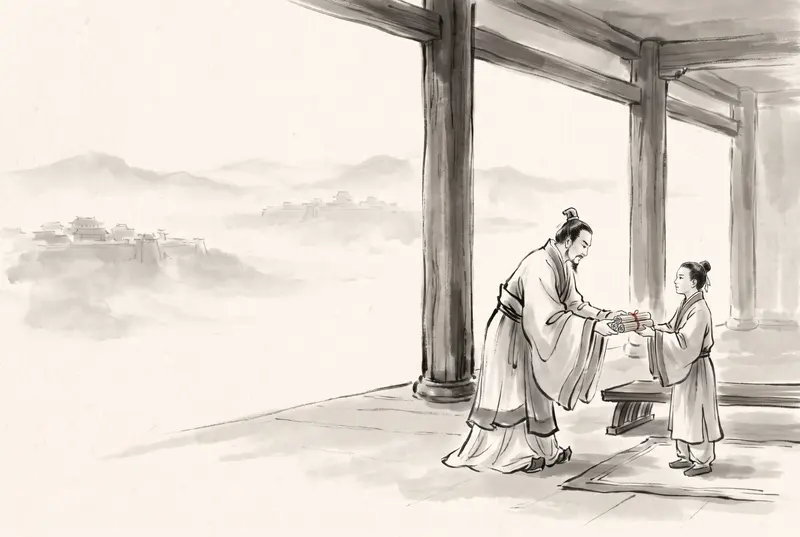
Gan Luo, a Minister at Twelve 甘羅十二
The stories of three clever men who served Qin in the Warring States period. Chuli Ji, half-brother of King Hui, was called "the Bag of Wisdom"; on his deathbed he foretold that in a hundred years his tomb would lie between the palaces of a Son of Heaven, and under the Han it came true. When King Wu ordered Gan Mao to take the great Han city of Yiyang, Gan Mao first told him the story of Zeng Shen's mother, who ran for her life when three people in a row told her that her son had killed a man. "If my siege goes slowly," he said, "far more than three will slander me." So the king swore an oath with him at Xirang, and when the siege dragged on and the critics spoke up, Gan Mao reminded him, "Xirang is still there", and went on to take the city. His grandson Gan Luo served the chancellor Lü Buwei at the age of twelve. He talked the general Zhang Tang into a journey he dreaded by reminding him how Bai Qi had died, and then went himself as envoy to Zhao, and without a battle persuaded its king to hand five cities to Qin. For this he was made a high minister.
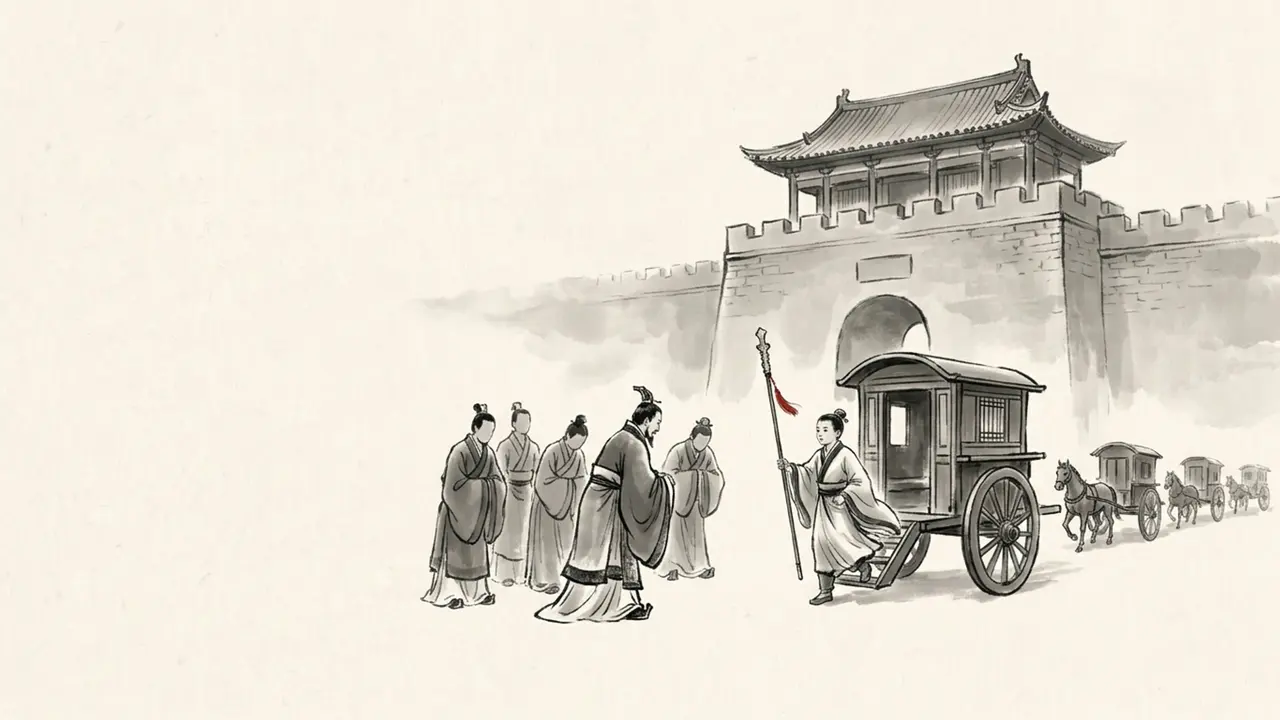
This page has the scene "Gan Luo, a Minister at Twelve" from this volume, not the whole volume.
Audio
The audio is synthetic speech.
Video
Passage 1
Original
樗里子者,名疾,秦惠王之弟也,與惠王異母。母,韓女也。樗里子滑稽多智,秦人號曰「智囊」。秦惠王八年,爵樗里子右更,使將而伐曲沃,盡出其人,取其城,地入秦。秦惠王二十五年,使樗里子為將伐趙,虜趙將軍莊豹,拔藺。明年,助魏章攻楚,敗楚將屈丐,取漢中地。秦封樗里子,號為嚴君。
Kundoku (Japanese reading)
樗里子は、名は疾、秦の恵王の弟なり。恵王と母を異にす。母は韓の女なり。樗里子滑稽にして智多く、秦人号して「智嚢」と曰う。秦の恵王の八年、樗里子に右更を爵し、将として曲沃を伐たしむ。尽く其の人を出だし、其の城を取り、地秦に入る。秦の恵王の二十五年、樗里子をして将として趙を伐たしむ。趙の将軍荘豹を虜にし、藺を抜く。明年、魏章を助けて楚を攻め、楚の将屈丐を敗り、漢中の地を取る。秦、樗里子を封じ、号して厳君と為す。
Japanese
樗里子は名を疾といい、秦の恵王の弟で、恵王とは母が違った。母は韓の公女である。樗里子は弁が立って知恵が多く、秦の人々は彼を「智囊(知恵袋)」と呼んだ。秦の恵王の八年、樗里子は右更の爵位を与えられ、将軍として魏の曲沃を討った。住民をすべて追い出して城を取り、その地は秦のものとなった。恵王の二十五年、樗里子は将軍として趙を討ち、趙の将軍荘豹を捕らえ、藺を落とした。翌年には魏章を助けて楚を攻め、楚の将軍屈丐を破り、漢中の地を取った。秦は樗里子に領地を与え、厳君と号させた。
English
Chuli Ji, whose given name was Ji, was a younger brother of King Hui of Qin, by a different mother, a lady of Han. Chuli Ji was witty and full of wisdom, and the people of Qin called him "the Bag of Wisdom". In King Hui's eighth year, Chuli Ji was given the rank of Yougeng and sent as general to attack Quwo. He drove out all its people and took the city, and the land became part of Qin. In King Hui's twenty-fifth year, Chuli Ji was sent as general against Zhao. He captured the Zhao general Zhuang Bao and took Lin. The next year he helped Wei Zhang attack Chu, defeated the Chu general Qu Gai and took the land of Hanzhong. Qin gave Chuli Ji a fief with the title Lord Yan.
Notes (JA)
- 滑稽: 口が達者で、言葉がよどみなく出ること。いまの「こっけい」とは少し違う。
- 智囊: 知恵の袋。知恵者のたとえ。
- 右更: 秦の二十等の爵位のうち、第十四級。
Notes (EN)
- Witty (滑稽): quick and fluent in speech, rather than simply funny.
- The Bag of Wisdom (智囊): a name later used for any brilliant adviser.
- Yougeng rank (右更): the fourteenth of Qin's twenty grades of rank.
Idioms from this passage: A bag of wisdom 智嚢
Word notes
- witty/ˈwɪti/adjective
clever and amusing with words
In the text: “Chuli Ji was witty and full of wisdom”
Similar words: clever — quick to understand · quick-witted — fast to think and reply
- fief/fif/noun
land given by a ruler to a noble
In the text: “gave Chuli Ji a fief”
Similar words: estate — a large piece of land · domain — land under a lord's rule
Passage 2
Original
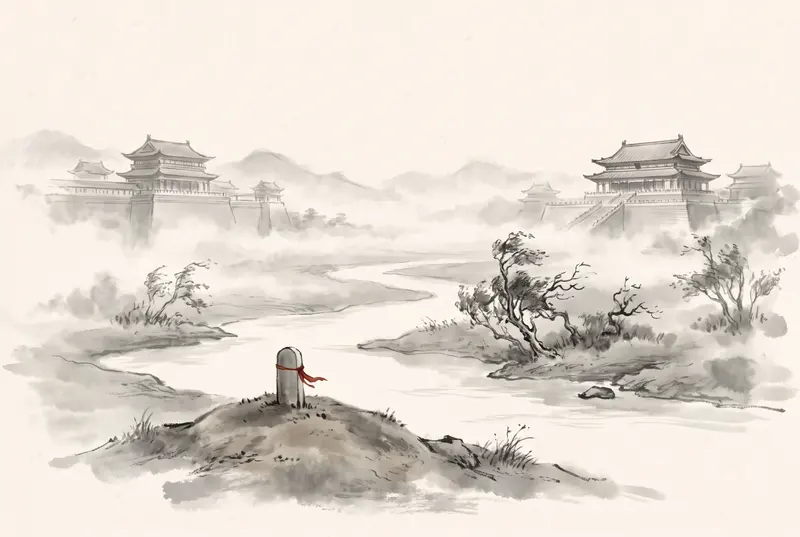
昭王七年,樗里子卒,葬于渭南章臺之東。曰:「後百歲,是當有天子之宮夾我墓。」樗里子疾室在於昭王廟西渭南陰鄉樗裏,故俗謂之樗里子。至漢興,長樂宮在其東,未央宮在其西,武庫正直其墓。秦人諺曰:「力則任鄙,智則樗裏。」
Kundoku (Japanese reading)
昭王の七年、樗里子卒し、渭南の章台の東に葬る。曰く、「後百歳、是れ当に天子の宮の我が墓を夾む有るべし」と。樗里子疾の室は昭王の廟の西、渭南の陰郷の樗里に在り。故に俗に之を樗里子と謂う。漢の興るに至り、長楽宮其の東に在り、未央宮其の西に在り、武庫正しく其の墓に直る。秦人の諺に曰く、「力は則ち任鄙、智は則ち樗里」と。
Japanese
昭王の七年(前300年)、樗里子は亡くなり、渭水の南、章台の東に葬られた。死に際に彼は「百年後には、天子の宮殿がわしの墓を両側からはさむだろう」と言った。樗里子の屋敷は昭王の廟の西、渭水の南の陰郷の樗里という所にあったので、世間では彼を樗里子と呼んだのである。漢が興ると、長楽宮がその墓の東に、未央宮が西に建てられ、武器庫がちょうど墓の真上にあたった。秦の人々のことわざに「力なら任鄙、知恵なら樗里」というのがある。
English
In the seventh year of King Zhao, Chuli Ji died and was buried east of the Zhangtai Palace, south of the Wei River. He said: "In a hundred years there will be palaces of a Son of Heaven on either side of my tomb." Chuli Ji's house stood west of the temple of King Zhao, in the hamlet of Chuli in the township of Yin, south of the Wei; that is why people called him Chuli Ji. When the Han arose, the Changle Palace stood to the east of his tomb and the Weiyang Palace to the west, and the arsenal lay right over the tomb itself. The people of Qin had a saying: "For strength, Ren Bi; for wisdom, Chuli."
Notes (JA)
- 長樂宮・未央宮: 漢の都長安の二つの大宮殿。長楽宮は太后の、未央宮は皇帝の宮殿。
- 任鄙: 秦の武王に仕えた力持ちの武人。
- 樗里: 樗(ニワウルシ)の木のある村、という意味の地名。
Notes (EN)
- The Changle and Weiyang Palaces (長樂宮・未央宮): the two great palaces of Han Chang'an.
- Ren Bi (任鄙): a famous strongman who served King Wu of Qin.
- Chuli (樗里): "the hamlet of the tree of heaven", the place name from which he got his name.
Word notes
- arsenal/ˈɑrsənəl/noun
a building where weapons are kept
In the text: “the arsenal lay right over the tomb”
Similar words: armoury — a store of weapons · magazine — a store of arms
British spelling in the synonym: armoury (US: armory).
- saying/ˈseɪɪŋ/noun
a well-known short phrase that people often repeat
In the text: “The people of Qin had a saying”
Similar words: proverb — a short wise saying · motto — a short phrase of belief
Passage 3
Original
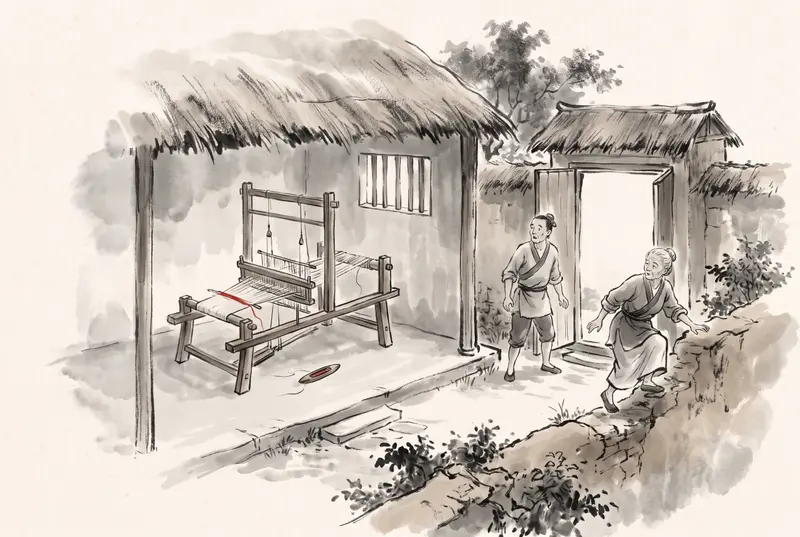
甘茂者,下蔡人也。事下蔡史舉先生,學百家之說。因張儀、樗里子而求見秦惠王。王見而說之,使將,而佐魏章略定漢中地。秦武王三年,謂甘茂曰:「寡人欲容車通三川,以窺周室,而寡人死不朽矣。」甘茂曰:「請之魏,約以伐韓,而令向壽輔行。」甘茂至,謂向壽曰:「子歸,言之於王曰『魏聽臣矣,然願王勿伐』。事成,盡以為子功。」向壽歸,以告王,王迎甘茂於息壤。甘茂至,王問其故。對曰:「宜陽,大縣也,上黨、南陽積之久矣。名曰縣,其實郡也。今王倍數險,行千里攻之,難。昔曾參之處費,魯人有與曾參同姓名者殺人,人告其母曰『曾參殺人』,其母織自若也。頃之,一人又告之曰『曾參殺人』,其母尚織自若也。頃又一人告之曰『曾參殺人』,其母投杼下機,踰墻而走。夫以曾參之賢與其母信之也,三人疑之,其母懼焉。今臣之賢不若曾參,王之信臣又不如曾參之母信曾參也,疑臣者非特三人,臣恐大王之投杼也。
Kundoku (Japanese reading)
甘茂は、下蔡の人なり。下蔡の史挙先生に事え、百家の説を学ぶ。張儀・樗里子に因りて秦の恵王に見えんことを求む。王見て之を説び、将として魏章を佐けて漢中の地を略定せしむ。秦の武王の三年、甘茂に謂いて曰く、「寡人車を容れて三川に通じ、以て周室を窺わんと欲す。而らば寡人死すとも朽ちず」と。甘茂曰く、「請う、魏に之きて、約して以て韓を伐たん。而して向寿をして輔けて行かしめよ」と。甘茂至り、向寿に謂いて曰く、「子帰りて、之を王に言いて曰え、『魏臣に聴けり。然れども願わくは王伐つ勿かれ』と。事成らば、尽く以て子の功と為さん」と。向寿帰り、以て王に告ぐ。王甘茂を息壌に迎う。甘茂至る。王其の故を問う。対えて曰く、「宜陽は大県なり。上党・南陽の積むこと久し。名は県と曰うも、其の実は郡なり。今王数々の険に倍き、千里を行きて之を攻むるは、難し。昔曾参の費に処るや、魯人に曾参と姓名を同じくする者有りて人を殺す。人其の母に告げて曰く『曾参人を殺せり』と。其の母織ること自若たり。頃之くして、一人又之に告げて曰く『曾参人を殺せり』と。其の母尚お織ること自若たり。頃くして又一人告げて曰く『曾参人を殺せり』と。其の母杼を投じ機を下り、墻を踰えて走る。夫れ曾参の賢と其の母の之を信ずるとを以てすら、三人之を疑えば、其の母懼る。今臣の賢は曾参に若かず、王の臣を信ずるも又曾参の母の曾参を信ずるに如かず。臣を疑う者は特に三人のみに非ず。臣恐る、大王の杼を投ぜんことを。
Japanese
甘茂は下蔡の人である。下蔡の史挙先生に師事して、諸子百家の学説を学んだ。張儀と樗里子のつてで秦の恵王に会いたいと願い出ると、王は会って気に入り、将軍として魏章を助けて漢中の地を平定させた。秦の武王の三年、王は甘茂に言った。「わたしは車が通れる道を三川まで開いて、周の王室をのぞいてみたい。そうできたら、死んでも名は朽ちないだろう」。甘茂は言った。「魏へ行って、ともに韓を討つ約束をとりつけてまいります。向寿をわたしの補佐としてつけてください」。甘茂は魏へ着くと、向寿に言った。「あなたは帰って王に申し上げてください。『魏はわたしの話を聞き入れました。けれども、王には攻めないでいただきたい』と。事が成れば、すべてあなたの手柄にしましょう」。向寿は帰って、そのとおり王に伝えた。王は息壌まで甘茂を出迎え、甘茂が着くとわけをたずねた。甘茂は答えた。「宜陽は大きな県です。上党と南陽の物資が長年蓄えられ、名は県でも、実は郡ほどの大きさがあります。いま王が、いくつもの険しい地を背にして千里を進んで攻めるのは、難しいことです。昔、曾参が費にいたとき、魯に曾参と同姓同名の者がいて、人を殺しました。ある人が曾参の母に『曾参が人を殺した』と告げましたが、母は平気で機を織り続けました。しばらくして、別の一人がまた『曾参が人を殺した』と告げても、母はまだ平気で織っていました。しばらくしてさらにもう一人が『曾参が人を殺した』と告げると、母は杼(ひ)を投げ捨てて機から降り、垣根を乗り越えて逃げ出しました。曾参ほどの賢者で、母がこれほど信じていても、三人が疑えば母は恐れたのです。いまわたしは曾参ほど賢くなく、王がわたしを信じる心も曾参の母ほどではありません。わたしを疑う者は三人どころではないでしょう。わたしは、大王が杼を投げ捨てられるのではないかと心配なのです。
English
Gan Mao was a man of Xiacai. He studied the teachings of the hundred schools under Master Shi Ju of Xiacai. Through Zhang Yi and Chuli Ji he asked to see King Hui of Qin. The king met him, liked him, and made him a general to help Wei Zhang conquer the land of Hanzhong. In his third year King Wu of Qin said to Gan Mao: "I would like to open a road wide enough for chariots to the Three Rivers, and take a look at the house of Zhou. Then my name would never die." Gan Mao said: "Let me go to Wei and make a pact with them to attack Han. And let Xiang Shou go with me as my second." When Gan Mao arrived in Wei, he said to Xiang Shou: "Go home and tell the king: 'Wei has agreed to what I said, but I beg Your Majesty not to attack.' If it succeeds, all the credit will be yours." Xiang Shou went home and told the king, and the king went out to meet Gan Mao at Xirang. When Gan Mao arrived, the king asked him why. He answered: "Yiyang is a great county. For years the stores of Shangdang and Nanyang have been piled up there. In name it is a county, but in truth it is a commandery. Now Your Majesty would have to put many passes at your back and march a thousand li to attack it. It will be hard. Long ago, when Zeng Shen was living at Fei, a man of Lu with the same name as Zeng Shen killed someone. Someone told his mother: 'Zeng Shen has killed a man.' His mother went on weaving calmly. After a while another man told her: 'Zeng Shen has killed a man.' His mother still went on weaving calmly. A little later a third man told her: 'Zeng Shen has killed a man.' His mother threw down her shuttle, left the loom, climbed over the wall and ran. Zeng Shen was a man of worth, and his mother trusted him; yet when three people cast doubt on him, even his mother was afraid. Now I am not as worthy as Zeng Shen, and Your Majesty does not trust me as much as Zeng Shen's mother trusted him. Those who will cast doubt on me will be far more than three. I fear that Your Majesty will throw down the shuttle."
Notes (JA)
- 三川: 黄河・洛水・伊水の流れる地方(今の洛陽一帯)。周の王都があった。
- 宜陽: 韓の西の大都市(今の河南省宜陽県)。三川へ向かう道をふさいでいた。
- 曾參: 孔子の弟子で、孝行で名高い(067-disciples の章)。この話から、うそも何人もが言えば信じられてしまうことを「曾参人を殺す」「三人市虎を成す」などという。
- 杼: 機織りで横糸を通す道具(ひ)。
Notes (EN)
- The Three Rivers (三川): the land around Luoyang, where the Zhou royal court still stood.
- Yiyang (宜陽): a great city of Han that blocked the road to the Three Rivers.
- Zeng Shen (曾參): a disciple of Confucius famous for his devotion to his parents (chapter 067).
- The story became a proverb: a lie repeated by enough people will be believed.
Idioms from this passage: Zeng Shen has killed a man 曾参人を殺す
Word notes
- shuttle/ˈʃʌtəl/noun
the tool that carries the thread across a loom
In the text: “threw down her shuttle”
Similar words: bobbin — a reel for thread · spindle — a stick for spinning
- cast doubt on/kæst daʊt ɑn/phrase
to make people less sure about something
In the text: “three people cast doubt on him”
Similar words: question — raise doubts about · undermine — weaken
Passage 4
Original
始張儀西并巴蜀之地,北開西河之外,南取上庸,天下不以多張子而以賢先王。魏文侯令樂羊將而攻中山,三年而拔之。樂羊返而論功,文侯示之謗書一篋。樂羊再拜稽首曰:『此非臣之功也,主君之力也。』今臣,羈旅之臣也。樗里子、公孫奭二人者挾韓而議之,王必聽之,是王欺魏王而臣受公仲侈之怨也。」王曰:「寡人不聽也,請與子盟。」卒使丞相甘茂將兵伐宜陽。五月而不拔,樗里子、公孫奭果爭之。武王召甘茂,欲罷兵。甘茂曰:「息壤在彼。」王曰:「有之。」因大悉起兵,使甘茂擊之。斬首六萬,遂拔宜陽。韓襄王使公仲侈入謝,與秦平。
Kundoku (Japanese reading)
始め張儀西のかた巴蜀の地を并せ、北のかた西河の外を開き、南のかた上庸を取る。天下は以て張子を多とせずして、以て先王を賢とす。魏の文侯、楽羊をして将として中山を攻めしむ。三年にして之を抜く。楽羊返りて功を論ず。文侯之に謗書一篋を示す。楽羊再拝稽首して曰く、『此れ臣の功に非ざるなり、主君の力なり』と。今臣は羈旅の臣なり。樗里子・公孫奭の二人の者、韓を挟みて之を議せば、王必ず之を聴かん。是れ王魏王を欺きて、臣公仲侈の怨みを受くるなり」と。王曰く、「寡人聴かざるなり。請う、子と盟わん」と。卒に丞相甘茂をして兵を将いて宜陽を伐たしむ。五月にして抜けず。樗里子・公孫奭果たして之を争う。武王甘茂を召し、兵を罷めんと欲す。甘茂曰く、「息壌彼に在り」と。王曰く、「之れ有り」と。因りて大いに悉く兵を起こし、甘茂をして之を撃たしむ。斬首六万、遂に宜陽を抜く。韓の襄王、公仲侈をして入りて謝せしめ、秦と平らぐ。
Japanese
「かつて張儀は、西では巴と蜀の地を併せ、北では西河の外を切り開き、南では上庸を取りました。それでも天下の人は張儀をほめず、先王(恵王)を賢君とたたえました。魏の文侯が楽羊を将軍にして中山を攻めさせたとき、三年かかってようやく落としました。楽羊が帰ってきて手柄を論じると、文侯は、楽羊を中傷する手紙がいっぱい詰まった箱を見せました。楽羊は二度拝んで頭を地につけ、『これはわたしの手柄ではありません。殿のお力です』と言いました。いまわたしはよそから来た身です。樗里子と公孫奭の二人が韓の肩をもって異を唱えれば、王はきっと聞き入れられるでしょう。そうなれば、王は魏王をあざむき、わたしは韓の宰相公仲侈の恨みを買うことになります」。王は言った。「わたしは聞き入れない。そなたと誓おう」。こうして、ついに丞相甘茂に兵を率いさせて宜陽を討たせた。五か月たっても落とせず、樗里子と公孫奭は案の定、反対を唱えた。武王が甘茂を呼びもどして兵を引かせようとすると、甘茂は「息壌はあそこにございますよ」と言った。王は「そうであった」と言い、そこで兵を総動員して甘茂に攻めさせた。首を斬ること六万、ついに宜陽を落とした。韓の襄王は公仲侈を秦に送ってわびさせ、秦と和睦した。
English
"Once Zhang Yi took the lands of Ba and Shu in the west, opened up the lands beyond the Western River in the north, and took Shangyong in the south. Yet the realm did not praise Zhang Yi; it praised the late king's wisdom. Marquis Wen of Wei sent Yue Yang as general to attack Zhongshan, and it took him three years to capture it. When Yue Yang came back and his deeds were being discussed, Marquis Wen showed him a whole chest full of letters slandering him. Yue Yang bowed twice, touched his head to the ground and said: 'This was not my doing, but my lord's strength.' Now I am a stranger here. If Chuli Ji and Gongsun Shi take Han's side and argue against me, Your Majesty is sure to listen to them. Then Your Majesty will have deceived the king of Wei, and I shall have earned the hatred of Gongzhong Chi of Han." The king said: "I will not listen to them. Let me swear an oath with you." So at last the chancellor Gan Mao was sent with an army to attack Yiyang. After five months it had not fallen, and Chuli Ji and Gongsun Shi did indeed argue against it. King Wu called Gan Mao back and wanted to stop the campaign. Gan Mao said: "Xirang is still there." "So it is," said the king. He raised every soldier he had and sent Gan Mao to attack. Sixty thousand heads were cut off, and at last Yiyang fell. King Xiang of Han sent Gongzhong Chi to Qin to apologise, and made peace with Qin.
Notes (JA)
- 樂羊: 魏の将軍。中山を攻めたとき、中山にいた自分の子を殺されてそのスープを送られても、それを飲んで攻撃を続けたという話もある。
- 謗書一篋: 悪口を書いた手紙が箱いっぱい。文侯がそれを信じなかったから、楽羊は手柄を立てられた。
- 息壤在彼: 「息壌はあそこにある」。息壌で交わした誓いを忘れるなという意味。約束を思い出させる言葉として使われる。
- 公仲侈: 韓の宰相。
Notes (EN)
- Yue Yang (樂羊): a general of Wei; it was said he even drank the soup made of his own son to show his loyalty during the siege.
- A chest full of slanders (謗書一篋): his ruler's trust, not his own skill, let him win.
- "Xirang is still there" (息壤在彼): a reminder of a sworn promise.
Idioms from this passage: Xirang is still there 息壌彼に在り
Word notes
- slander/ˈslændər/noun
false spoken statements that damage a person's name
In the text: “a whole chest full of letters slandering him”
Similar words: defamation — damage to someone's good name · calumny — false charges (formal)
Here used as a verb: "letters slandering him".
- swear/swɛr/verb
to make a very serious promise
In the text: “Let me swear an oath with you”
Similar words: vow — promise solemnly · pledge — promise formally
Passage 5
Original
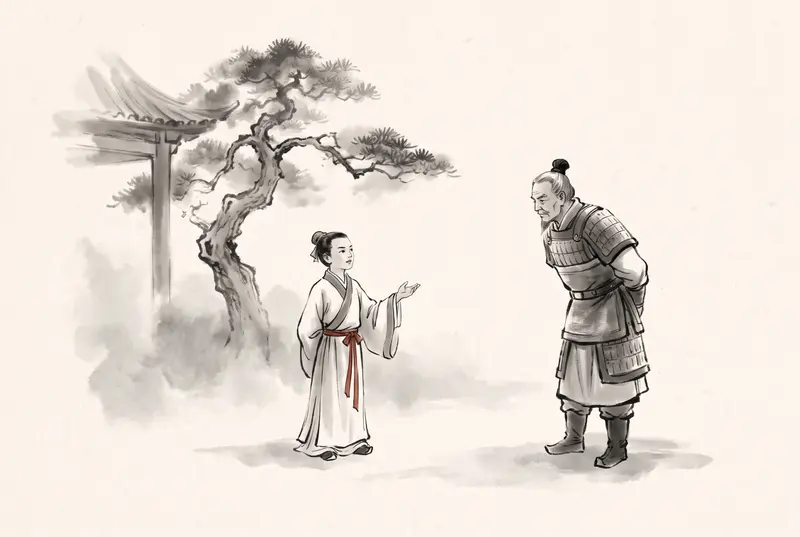
甘茂有孫曰甘羅。甘羅者,甘茂孫也。茂既死後,甘羅年十二,事秦相文信侯呂不韋。秦始皇帝使剛成君蔡澤於燕,三年而燕王喜使太子丹入質於秦。秦使張唐往相燕,欲與燕共伐趙以廣河閒之地。張唐謂文信侯曰:「臣嘗為秦昭王伐趙,趙怨臣,曰:『得唐者與百里之地。』今之燕必經趙,臣不可以行。」文信侯不快,未有以彊也。甘羅曰:「君侯何不快之甚也?」文信侯曰:「吾令剛成君蔡澤事燕三年,燕太子丹已入質矣,吾自請張卿相燕而不肯行。」甘羅曰:「臣請行之。」文信侯叱曰:「去!我身自請之而不肯,女焉能行之?」甘羅曰:「大項橐生七歲為孔子師。今臣生十二歲於茲矣,君其試臣,何遽叱乎?」於是甘羅見張卿曰:「卿之功孰與武安君?」卿曰:「武安君南挫彊楚,北威燕、趙,戰勝攻取,破城墮邑,不知其數,臣之功不如也。」甘羅曰:「應侯之用於秦也,孰與文信侯專?」張卿曰:「應侯不如文信侯專。」甘羅曰:「卿明知其不如文信侯專與?」曰:「知之。」甘羅曰:「應侯欲攻趙,武安君難之,去咸陽七里而立死於杜郵。今文信侯自請卿相燕而不肯行,臣不知卿所死處矣。」張唐曰:「請因孺子行。」令裝治行。
Kundoku (Japanese reading)
甘茂に孫有り、甘羅と曰う。甘羅は、甘茂の孫なり。茂既に死せし後、甘羅年十二、秦の相文信侯呂不韋に事う。秦の始皇帝、剛成君蔡沢をして燕に使いせしむ。三年にして燕王喜、太子丹をして入りて秦に質たらしむ。秦、張唐をして往きて燕に相たらしめ、燕と共に趙を伐ちて以て河間の地を広めんと欲す。張唐文信侯に謂いて曰く、「臣嘗て秦の昭王の為に趙を伐つ。趙臣を怨みて曰く、『唐を得る者には百里の地を与えん』と。今燕に之くには必ず趙を経。臣以て行くべからず」と。文信侯快からず、未だ以て彊うる有らず。甘羅曰く、「君侯何ぞ快からざるの甚だしきや」と。文信侯曰く、「吾剛成君蔡沢をして燕に事えしむること三年、燕の太子丹已に入りて質たり。吾自ら張卿に燕に相たらんことを請うも、肯えて行かず」と。甘羅曰く、「臣請う、之を行かしめん」と。文信侯叱りて曰く、「去れ。我身自ら之に請うも肯えてせず。女焉んぞ能く之を行かしめん」と。甘羅曰く、「大項橐は生まれて七歳にして孔子の師と為る。今臣生まれて茲に十二歳なり。君其れ臣を試みよ。何ぞ遽かに叱るや」と。是に於いて甘羅張卿に見えて曰く、「卿の功は武安君に孰与ぞ」と。卿曰く、「武安君は南のかた彊楚を挫き、北のかた燕・趙を威し、戦えば勝ち攻むれば取り、城を破り邑を墮すこと、其の数を知らず。臣の功は如かざるなり」と。甘羅曰く、「応侯の秦に用いらるるや、文信侯の専らなるに孰与ぞ」と。張卿曰く、「応侯は文信侯の専らなるに如かず」と。甘羅曰く、「卿明らかに其の文信侯の専らなるに如かざるを知るか」と。曰く、「之を知る」と。甘羅曰く、「応侯趙を攻めんと欲す。武安君之を難ず。咸陽を去ること七里にして立ちどころに杜郵に死す。今文信侯自ら卿に燕に相たらんことを請うも、肯えて行かず。臣卿の死する所を知らず」と。張唐曰く、「請う、孺子に因りて行かん」と。装を治め行を治めしむ。
Japanese
甘茂には孫がいて、甘羅といった。甘羅は甘茂の孫で、甘茂が死んだあと、十二歳で秦の宰相文信侯呂不韋に仕えていた。秦の始皇帝は剛成君蔡沢を燕に送り、三年たって、燕王喜は太子丹を人質として秦に送ってきた。秦は張唐を燕の宰相にして、燕とともに趙を討ち、河間の地を広げようとした。ところが張唐は文信侯に言った。「わたしはかつて昭王のために趙を討ったので、趙はわたしを恨んで『張唐を捕らえた者には百里の土地を与える』と言っています。燕へ行くには、どうしても趙を通らねばなりません。わたしは行けません」。文信侯は不機嫌だったが、無理じいすることもできなかった。甘羅が「殿はどうしてそんなに不機嫌なのですか」とたずねると、文信侯は言った。「わたしは剛成君蔡沢を三年も燕に仕えさせて、燕の太子丹もやっと人質に来た。そこでわたし自ら張卿に燕の宰相になってくれと頼んだのに、行こうとしないのだ」。甘羅は言った。「わたしに行かせてみてください」。文信侯はしかりつけた。「下がれ。わたし自ら頼んでも聞かないのだ。お前などにどうしてできよう」。甘羅は言った。「項橐は七歳で孔子の先生になりました。わたしは生まれてもう十二歳です。どうか試してみてください。いきなりしかりつけることはないでしょう」。そこで甘羅は張唐に会って言った。「あなたの手柄は、武安君(白起)と比べてどうですか」。張唐は言った。「武安君は南では強い楚をくじき、北では燕と趙をおびえさせ、戦えば勝ち、攻めれば取り、落とした城や町は数えきれない。わたしの手柄はとても及ばない」。甘羅は言った。「応侯(范雎)が秦で用いられた力は、いまの文信侯の権勢と比べてどうですか」。張唐は「応侯は文信侯ほどの権勢はなかった」と言った。甘羅が「文信侯ほどでなかったことを、はっきりご存じですね」と念を押すと、「知っている」と答えた。甘羅は言った。「応侯が趙を攻めようとしたとき、武安君は反対しました。その武安君は、咸陽を出て七里の杜郵で、たちどころに死を命じられました。いま文信侯がご自身で、あなたに燕の宰相になってくれと頼んでいるのに、あなたは行こうとしない。あなたがどこで死ぬことになるか、わたしには分かりません」。張唐は「では、坊やの言うとおりに行こう」と言い、旅の支度をさせた。
English
Gan Mao had a grandson named Gan Luo. Gan Luo was Gan Mao's grandson. After Gan Mao died, Gan Luo, at the age of twelve, served the chancellor of Qin, Lü Buwei, Marquis Wenxin. The First Emperor of Qin had sent Cai Ze, Lord Gangcheng, to Yan, and after three years Xi, the king of Yan, sent his crown prince Dan to Qin as a hostage. Qin wanted to send Zhang Tang to be chancellor of Yan, and to join Yan in attacking Zhao, so as to widen its lands in Hejian. Zhang Tang said to Marquis Wenxin: "I once attacked Zhao for King Zhao of Qin. Zhao hates me, and has said: 'Whoever takes Zhang Tang shall have a hundred li of land.' To get to Yan I would have to pass through Zhao. I cannot go." Marquis Wenxin was displeased, but he had no way to force him. Gan Luo said: "Why is my lord so very displeased?" Marquis Wenxin said: "I had Lord Gangcheng serve in Yan for three years, and now Crown Prince Dan of Yan has come here as a hostage. I asked Minister Zhang myself to be chancellor of Yan, and he will not go." Gan Luo said: "Let me make him go." Marquis Wenxin shouted at him: "Be off! I asked him myself and he refused. How could you make him go?" Gan Luo said: "Xiang Tuo was only seven when he taught Confucius. I have lived twelve years now. Let my lord give me a try. Why shout at me so quickly?" So Gan Luo went to see Minister Zhang and said: "How do your achievements compare with those of Lord Wu'an?" The minister said: "Lord Wu'an crushed mighty Chu in the south and struck fear into Yan and Zhao in the north. Whenever he fought he won, whenever he attacked he took, and the cities and towns he broke are past counting. My achievements are not as great as his." Gan Luo said: "And when the Marquis of Ying held power in Qin, how did his power compare with that of Marquis Wenxin?" Minister Zhang said: "The Marquis of Ying did not have so much power as Marquis Wenxin." "You are quite sure that he had less power than Marquis Wenxin?" asked Gan Luo. "I am," he said. Gan Luo said: "The Marquis of Ying wanted to attack Zhao, and Lord Wu'an argued against it. Seven li from Xianyang, at Duyou, he was made to die on the spot. Now Marquis Wenxin himself has asked you to be chancellor of Yan, and you will not go. I do not know where you will die." Zhang Tang said: "Then let me go, as the boy says." And he had his baggage packed and his journey prepared.
Notes (JA)
- 項橐: 七歳で孔子を言い負かし、孔子の師となったと伝えられる神童。
- 武安君: 秦の将軍白起。応侯范雎と対立し、杜郵で自害を命じられた(073-bai-qi、079-fan-ju の章)。
- 孺子: 子ども、坊や。
Notes (EN)
- Xiang Tuo (項橐): a legendary child prodigy said to have out-argued Confucius at seven.
- Lord Wu'an (武安君): the general Bai Qi, who quarrelled with the Marquis of Ying, Fan Ju, and was ordered to kill himself at Duyou (chapters 073 and 079).
- The boy (孺子): a child; Zhang Tang gives in to a twelve-year-old.
Idioms from this passage: At seven, Xiang Tuo was Confucius's teacher 項橐は七歳にして孔子の師と為る
Word notes
- hostage/ˈhɑstɪdʒ/noun
a person held as a guarantee of a promise
In the text: “sent his crown prince Dan to Qin as a hostage”
Similar words: captive — a prisoner · pledge — a person given as security
- displeased/dɪsˈplizd/adjective
annoyed and not happy
In the text: “Marquis Wenxin was displeased”
Similar words: annoyed — a little angry · put out — upset (informal)
Passage 6
Original
行有日,甘羅謂文信侯曰:「借臣車五乘,請為張唐先報趙。」文信侯乃入言之於始皇曰:「昔甘茂之孫甘羅,年少耳,然名家之子孫,諸侯皆聞之。今者張唐欲稱疾不肯行,甘羅說而行之。今願先報趙,請許遣之。」始皇召見,使甘羅於趙。趙襄王郊迎甘羅。甘羅說趙王曰:「王聞燕太子丹入質秦歟?」曰:「聞之。」曰:「聞張唐相燕歟?」曰:「聞之。」「燕太子丹入秦者,燕不欺秦也。張唐相燕者,秦不欺燕也。燕、秦不相欺者,伐趙,危矣。燕、秦不相欺無異故,欲攻趙而廣河閒。王不如齎臣五城以廣河閒,請歸燕太子,與彊趙攻弱燕。」趙王立自割五城以廣河閒。秦歸燕太子。趙攻燕,得上谷三十城,令秦有十一。甘羅還報秦,乃封甘羅以為上卿,復以始甘茂田宅賜之。
Kundoku (Japanese reading)
行くに日有り。甘羅文信侯に謂いて曰く、「臣に車五乗を借せ。請う、張唐の為に先に趙に報ぜん」と。文信侯乃ち入りて之を始皇に言いて曰く、「昔甘茂の孫甘羅、年少きのみ。然れども名家の子孫にして、諸侯皆聞く。今者張唐疾と称して肯えて行かんとせざるに、甘羅説きて之を行かしむ。今願わくは先に趙に報ぜん。請う、許して之を遣れ」と。始皇召し見え、甘羅をして趙に使いせしむ。趙の襄王、郊に甘羅を迎う。甘羅趙王に説きて曰く、「王燕の太子丹の入りて秦に質たるを聞けるか」と。曰く、「之を聞く」と。曰く、「張唐の燕に相たるを聞けるか」と。曰く、「之を聞く」と。「燕の太子丹の秦に入るは、燕秦を欺かざるなり。張唐の燕に相たるは、秦燕を欺かざるなり。燕・秦相欺かざるは、趙を伐たんとするなり。危うし。燕・秦の相欺かざるは異故無し。趙を攻めて河間を広めんと欲するなり。王臣に五城を齎して以て河間を広むるに如かず。請う、燕の太子を帰し、彊趙と弱燕を攻めん」と。趙王立ちどころに自ら五城を割きて以て河間を広む。秦燕の太子を帰す。趙燕を攻め、上谷の三十城を得、秦をして十一を有たしむ。甘羅還りて秦に報ず。乃ち甘羅を封じて以て上卿と為し、復た始めの甘茂の田宅を以て之に賜う。
Japanese
出発の日が決まると、甘羅は文信侯に言った。「わたしに車を五台お貸しください。張唐どののために、先に趙へ知らせに行ってまいります」。文信侯は宮中に入って始皇帝に申し上げた。「かつての甘茂の孫の甘羅は、まだ子どもですが、名家の子孫で、諸侯にも名が知られております。このたび張唐が病と称して行こうとしなかったのを、甘羅が説得して行かせました。今度は先に趙へ知らせに行きたいと申しております。どうかお許しを」。始皇帝は甘羅を呼んで会い、趙への使者とした。趙の襄王は都の郊外まで甘羅を出迎えた。甘羅は趙王に説いた。「王は、燕の太子丹が秦に人質として入ったことをお聞きですか」。「聞いている」。「張唐が燕の宰相になることをお聞きですか」。「聞いている」。「燕の太子丹が秦に入ったのは、燕が秦をあざむかないしるしです。張唐が燕の宰相になるのは、秦が燕をあざむかないしるしです。燕と秦がたがいにあざむかないのは、ともに趙を討とうとしているからです。趙は危ういですぞ。燕と秦が手を結ぶのは、ほかでもない、趙を攻めて河間の地を広げたいからです。それより、王はわたしに五つの城をお与えになって、秦の河間の地を広げさせたほうがよろしい。そうすれば、燕の太子を帰らせ、強い趙とともに弱い燕を攻めるよう、わたしからお願いしましょう」。趙王はその場で自ら五つの城を割いて秦に与え、秦の河間を広げさせた。秦は燕の太子を帰した。趙は燕を攻めて上谷の三十の城を手に入れ、そのうち十一を秦に分け与えた。甘羅は帰って秦に報告した。秦は甘羅を上卿(大臣)に取り立て、かつての甘茂の田地と屋敷を、あらためて甘羅に与えた。
English
The day of departure was set. Gan Luo said to Marquis Wenxin: "Lend me five chariots, and let me go ahead to Zhao to prepare the way for Zhang Tang." Marquis Wenxin went in and told the First Emperor: "Gan Luo, the grandson of the late Gan Mao, is only a boy, but he comes of a famous family, and all the lords have heard of him. Just now, when Zhang Tang pleaded illness and would not go, Gan Luo talked him into going. Now he would like to go ahead to Zhao. Please allow him to go." The First Emperor called him in and sent Gan Luo as envoy to Zhao. King Xiang of Zhao came out of the city to meet him. Gan Luo said to the king of Zhao: "Has Your Majesty heard that Crown Prince Dan of Yan has gone to Qin as a hostage?" "I have," he said. "Have you heard that Zhang Tang is to be chancellor of Yan?" "I have," he said. "Prince Dan going to Qin means that Yan will not cheat Qin. Zhang Tang becoming chancellor of Yan means that Qin will not cheat Yan. When Yan and Qin do not cheat each other, it is because they mean to attack Zhao, and Zhao is in danger. There is only one reason why Yan and Qin are not cheating each other: they want to attack Zhao and widen Qin's lands in Hejian. Your Majesty would do better to give me five cities to widen Hejian. Then I will ask Qin to send the crown prince of Yan home, and let mighty Zhao attack weak Yan." The king of Zhao at once cut off five cities himself to widen Hejian. Qin sent the crown prince of Yan home. Zhao attacked Yan and took thirty cities in Shanggu, and gave eleven of them to Qin. Gan Luo came back and reported to Qin. He was made a high minister, and was given back the fields and house that had once been Gan Mao's.
Notes (JA)
- 河閒: 黄河と漳水のあいだの地。秦はここに飛び地をもち、それを広げようとしていた。
- 上谷: 燕の郡(今の河北省北部)。
- 上卿: 最高位の大臣。十二歳での上卿は、のちに少年の早い出世のたとえとなった。
- 張唐は結局、燕へ行かずにすんだ。甘羅の一計で、秦は戦わずに趙の五城と燕の十一城を得た。
Notes (EN)
- Hejian (河閒): the land between the Yellow River and the Zhang, where Qin held territory it wanted to enlarge.
- Shanggu (上谷): a commandery of Yan in northern Hebei.
- High minister (上卿): the highest rank of minister; Gan Luo became a byword for early success.
- In the end Zhang Tang never had to go: Qin gained sixteen cities without a fight.
Word notes
- envoy/ˈɛnvɔɪ/noun
a person sent to speak for a ruler
In the text: “sent Gan Luo as envoy to Zhao”
Similar words: ambassador — an official sent abroad · messenger — a person who carries messages
- widen/ˈwaɪdən/verb
to make larger
In the text: “to widen Hejian”
Similar words: enlarge — make bigger · expand — grow larger
Passage 7
Original
太史公曰:樗里子以骨肉重,固其理,而秦人稱其智,故頗采焉。甘茂起下蔡閭閻,顯名諸侯,重彊齊楚。甘羅年少,然出一奇計,聲稱後世。雖非篤行之君子,然亦戰國之策士也。方秦之彊時,天下尤趨謀詐哉。
Kundoku (Japanese reading)
太史公曰く、樗里子は骨肉を以て重きこと、固より其の理なり。而して秦人其の智を称す。故に頗る焉を采る。甘茂は下蔡の閭閻より起こり、名を諸侯に顕し、彊き斉・楚に重んぜらる。甘羅は年少きも、然れども一奇計を出だし、声後世に称せらる。篤行の君子に非ずと雖も、然れども亦た戦国の策士なり。秦の彊き時に方たりて、天下尤も謀詐に趨くかな。
Japanese
太史公は言う。樗里子が肉親として重んじられたのは、当然のことである。それに加えて、秦の人々はその知恵をたたえた。だから、その話をかなり取り上げた。甘茂は下蔡の町の路地から身を起こし、諸侯に名を知られ、強い斉や楚にも重んじられた。甘羅は年若かったが、一つの奇抜な計略を出して、その名を後の世まで伝えた。誠実に道を行う君子ではないが、やはり戦国時代の策士である。秦が強かった時代には、天下の人々はとりわけ計略やごまかしに走ったものだ。
English
The Grand Historian says: It was only natural that Chuli Ji should be honoured as a kinsman of the king; but the people of Qin also praised his wisdom, and so I have taken a good deal about him. Gan Mao rose from the back streets of Xiacai to make his name among the lords, and was respected by mighty Qi and Chu. Gan Luo was young, yet he produced one brilliant scheme, and his fame has come down to later ages. These were not gentlemen of steadfast virtue, but they were the strategists of the Warring States. In the days when Qin was strong, the whole realm ran after plots and trickery!
Notes (JA)
- 閭閻: 村や町の門と路地。庶民の住む所。
- 策士: 計略にたけた人。
- 司馬遷は、三人の知恵をたたえつつも、道徳の手本ではないと冷静に評している。
Notes (EN)
- Back streets (閭閻): the lanes where common people lived.
- Strategists (策士): men who lived by their schemes.
- Sima Qian admires their cleverness but does not hold them up as models of virtue.
Word notes
- steadfast/ˈstɛdˌfæst/adjective
firm and not changing
In the text: “gentlemen of steadfast virtue”
Similar words: unwavering — never changing · constant — staying the same
- trickery/ˈtrɪkəri/noun
the use of tricks to cheat people
In the text: “plots and trickery”
Similar words: deceit — dishonest behaviour · cunning — clever but dishonest planning