世家 · 巻 55
留侯世家 留侯世家
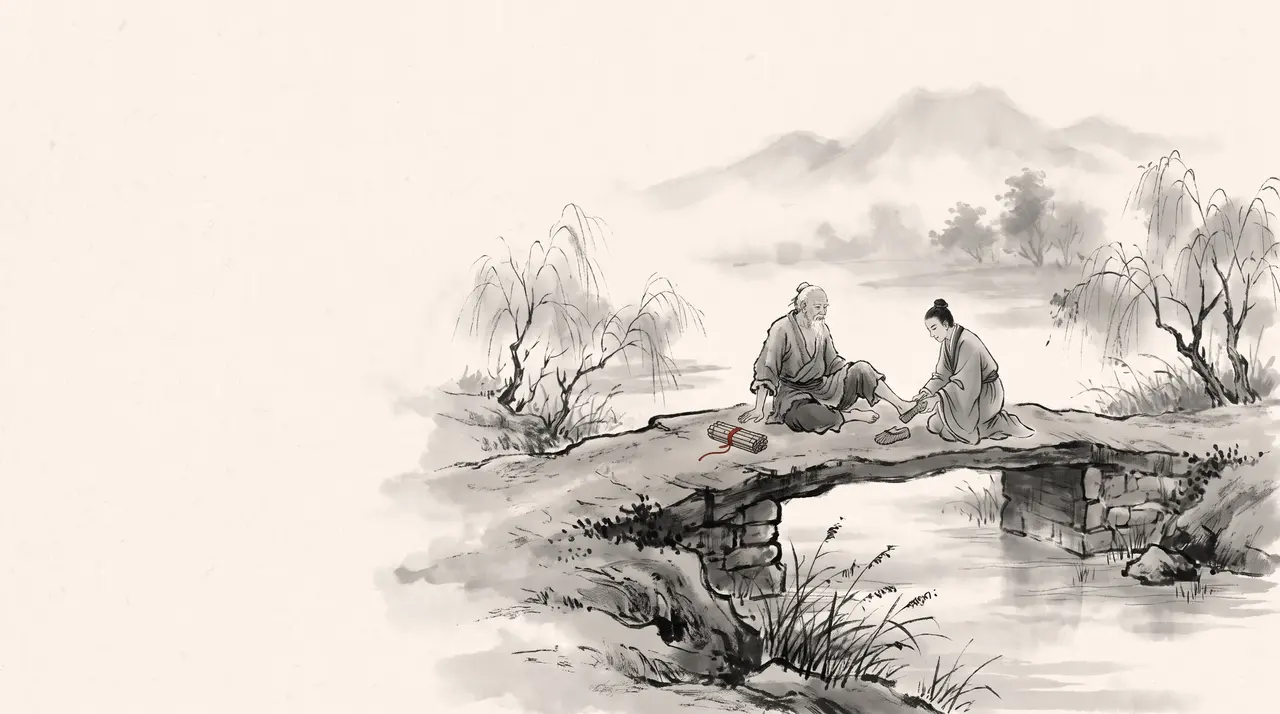
張良(博浪沙と黄石公) 圯上受書
韓の宰相の家に生まれた張良は、祖国を滅ぼした秦に仇を討とうと、博浪沙で始皇帝を襲うが失敗し、下邳に身を隠す。そこで土橋の上の老人に履を拾わされ、何度も試された末に、太公望の兵法の書を授けられる。やがて沛公(劉邦)に出会って「天授の人」と見込み、「籌を帷帳の中に運らし、勝ちを千里の外に決する」軍師となった。
この巻のうち「張良(博浪沙と黄石公)」の場面を載せています。巻の全文ではありません。
音声
音声は合成音声です。
動画
節 1
原文
留侯張良者,其先韓人也。大父開地,相韓昭侯、宣惠王、襄哀王。父平,相釐王、悼惠王。悼惠王二十三年,平卒。卒二十歲,秦滅韓。良年少,未宦事韓。韓破,良家僮三百人,弟死不葬,悉以家財求客刺秦王,為韓報仇,以大父、父五世相韓故。
書き下し文
留侯張良なる者は、其の先は韓の人なり。大父開地は、韓の昭侯・宣恵王・襄哀王に相たり。父平は、釐王・悼恵王に相たり。悼恵王の二十三年、平卒す。卒して二十歳にして、秦韓を滅ぼす。良年少くして、未だ韓に宦事せず。韓破るるや、良の家僮三百人、弟死するも葬らず、悉く家財を以て客を求めて秦王を刺し、韓の為に仇に報いんとす。大父・父五世韓に相たりしを以ての故なり。
現代語訳
留侯の張良は、先祖が韓の人である。祖父の開地は、韓の昭侯・宣恵王・襄哀王の宰相をつとめた。父の平は、釐王・悼恵王の宰相をつとめた。悼恵王の二十三年に父の平が死に、その二十年後に秦が韓を滅ぼした。張良はまだ若く、韓に仕えてはいなかった。韓が滅びたとき、張良の家にはまだ召使いが三百人いたが、弟が死んでも葬式を出さず、家の財産をすべて使って刺客を探し、秦王を刺して韓の仇を討とうとした。祖父と父が、五代の韓の君主に宰相として仕えたからである。
英訳
Zhang Liang, the Marquis of Liu, came from a family of Hann. His grandfather Kaidi was chancellor to Marquis Zhao, King Xuanhui and King Xiang'ai of Hann. His father Ping was chancellor to King Li and King Daohui. In the twenty-third year of King Daohui, Ping died, and twenty years after his death Qin destroyed Hann. Zhang Liang was young and had not yet held office in Hann. When Hann fell, his household still had three hundred servants. But when his younger brother died, he did not give him a funeral; he spent all the family's wealth looking for an assassin to kill the King of Qin and avenge Hann, because his grandfather and father had served five rulers of Hann as chancellor.
解説(日)
- 留侯: 張良がのちに封じられた称号(p8)。留は今の江蘇省沛県の南。
- 韓: 戦国七雄の一つ。前230年に秦に滅ぼされた。漢王朝の「漢」とは別の国。
- 大父: 祖父。
- 家僮: 召使い。
- 五世相韓: 祖父と父で、五代の君主の宰相をつとめた。
- 秦王: のちの始皇帝。
解説(英)
- Marquis of Liu: the title Zhang Liang was later given (p8). Liu lay south of present-day Pei County in Jiangsu.
- Hann (韓): one of the seven warring states, destroyed by Qin in 230 BCE. Spelled with two n's here to tell it from the Han dynasty (漢).
- 大父: grandfather.
- 家僮: household servants.
- Five rulers: between them, his grandfather and father served five rulers of Hann.
- The King of Qin: the later First Emperor.
英語の語注
- chancellor/ˈtʃænsələr/noun
the highest minister of a state, who runs the government for the ruler
本文では: “His grandfather Kaidi was chancellor”
似た語と違い: prime minister — the modern title for a head of government · minister — any high official
- hold office/ˌhoʊld ˈɔfɪs/phrase
to have an official position in government
本文では: “had not yet held office in Hann”
似た語と違い: serve — work for a ruler or state · hold a post — have an official job
- assassin/əˈsæsən/noun
a person who murders an important person, often for money or politics
本文では: “looking for an assassin”
似た語と違い: killer — the general word · hit man — informal; a paid killer
- avenge/əˈvɛndʒ/verb
to punish someone in return for a wrong done to you or your people
本文では: “avenge Hann”
似た語と違い: take revenge for — hurt someone because they hurt you · pay back — informal; return harm for harm
節 2
原文
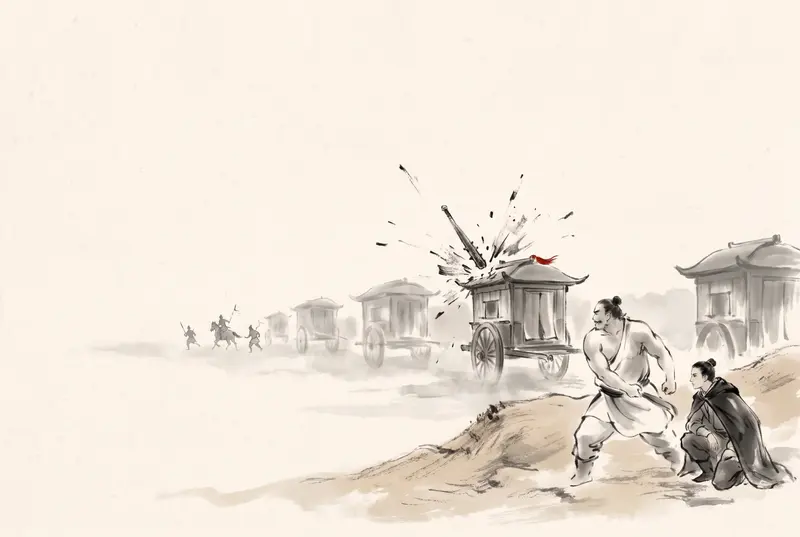
良嘗學禮淮陽。東見倉海君。得力士,為鐵椎重百二十斤。秦皇帝東游,良與客狙擊秦皇帝博浪沙中,誤中副車。秦皇帝大怒,大索天下,求賊甚急,為張良故也。良乃更名姓,亡匿下邳。
書き下し文
良嘗て礼を淮陽に学ぶ。東のかた倉海君に見ゆ。力士を得て、鉄椎の重さ百二十斤なるを為る。秦の皇帝東游す。良、客と秦の皇帝を博浪沙中に狙撃し、誤りて副車に中つ。秦の皇帝大いに怒り、大いに天下を索め、賊を求むること甚だ急なり。張良の為の故なり。良乃ち名姓を更え、亡げて下邳に匿る。
現代語訳
張良は以前、淮陽で礼を学んだことがある。東の方で倉海君に会って力の強い男を見つけ、重さ百二十斤の鉄のつちを作らせた。秦の始皇帝が東方を巡行したとき、張良はその男とともに、博浪沙で始皇帝をねらって襲ったが、まちがえて供の車に当ててしまった。始皇帝は大いに怒り、天下じゅうを大がかりに捜索して、犯人を厳しく追い求めた。張良のせいである。張良は名前を変え、下邳に逃げて隠れた。
英訳
Zhang Liang had once studied the rites at Huaiyang. In the east he met the Lord of Canghai, found a strongman, and had an iron club made for him weighing a hundred and twenty catties. When the First Emperor of Qin toured the east, Zhang Liang and the strongman lay in wait for him at Bolangsha and struck, but they hit the wrong carriage, one of the escort carriages. The emperor was furious and had the whole realm searched, hunting hard for the attackers; this was because of Zhang Liang. So Zhang Liang changed his name and fled into hiding at Xiapi.
解説(日)
- 淮陽: 今の河南省周口市淮陽区。陳勝が都を置いた陳と同じ町(巻48の章)。
- 倉海君: 東方の首長とされる人物。くわしくはわからない。
- 百二十斤: 秦の一斤は約250グラムで、約30キログラム。
- 博浪沙: 今の河南省原陽県のあたり。前218年、始皇帝の三度目の巡行のときとされる。
- 副車: 皇帝の乗る車と同じ形をした、予備の車。皇帝がどの車に乗っているかわからないようにしていた。
- 下邳: 今の江蘇省睢寧県のあたり。
解説(英)
- Huaiyang: present-day Huaiyang in Henan, the same town as Chen, Chen Sheng's capital (Volume 48).
- The Lord of Canghai: a chief in the east; little is known of him.
- A hundred and twenty catties: a Qin catty was about 250 g, so about 30 kg.
- Bolangsha: near Yuanyang in present-day Henan. Said to be in 218 BCE, on the First Emperor's third tour.
- 副車 ("escort carriages"): spare carriages that looked just like the emperor's, so no one could tell which one he was in.
- Xiapi: near Suining in present-day Jiangsu.
英語の語注
- strongman/ˈstrɔŋˌmæn/noun
a man of very great physical strength
本文では: “found a strongman”
似た語と違い: giant — a very big, strong person · champion — someone who wins contests of strength
Strongman also means a ruler who uses force (a dictator).
- catty/ˈkæti/noun
a Chinese unit of weight; in Qin times about 250 grams
本文では: “weighing a hundred and twenty catties”
似た語と違い: jin — the Chinese name for the unit · pound — a Western unit, about 450 grams
- lie in wait/ˌlaɪ ɪn ˈweɪt/phrase
to hide and wait in order to attack someone
本文では: “lay in wait for him at Bolangsha”
似た語と違い: ambush — attack from a hiding place · lurk — wait hidden, often to do harm
- escort/ˈɛskɔrt/noun
a group of people or vehicles that go with someone to protect them
本文では: “one of the escort carriages”
似た語と違い: guard — a person or group that protects · convoy — a group of vehicles traveling together
As a verb (to escort) it is stressed on the second syllable: /ɪˈskɔrt/.
節 3
原文
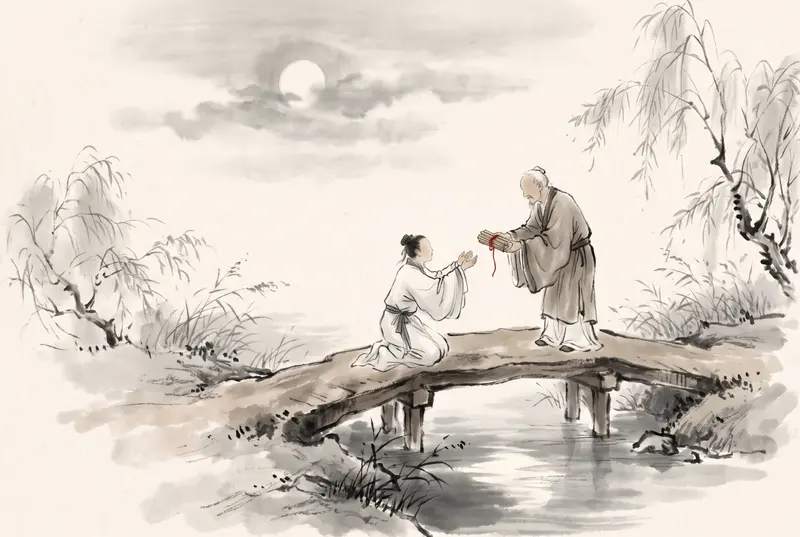
良嘗間從容步游下邳圯上,有一老父,衣褐,至良所,直墮其履圯下,顧謂良曰:「孺子,下取履!」良鄂然,欲毆之。為其老,彊忍,下取履。父曰:「履我!」良業為取履,因長跪履之。父以足受,笑而去。
書き下し文
良嘗て間に従容として下邳の圯上に歩游す。一老父有り、褐を衣、良の所に至り、直ちに其の履を圯下に堕とし、顧みて良に謂いて曰く、「孺子、下りて履を取れ」と。良鄂然として之を殴たんと欲す。其の老いたるが為に彊いて忍び、下りて履を取る。父曰く、「我に履かせよ」と。良業に為に履を取る。因りて長跪して之に履かしむ。父足を以て受け、笑いて去る。
現代語訳
あるとき張良が、ひまにまかせて下邳の土橋の上をぶらぶら歩いていると、粗末な着物を着た一人の老人がやって来た。老人は張良のそばまで来ると、わざと自分の履(くつ)を橋の下に落とし、振り返って張良に言った。「小僧、下りて履を取ってこい」。張良はあっけにとられ、殴ってやろうかと思ったが、相手が老人なので、ぐっとこらえて橋の下へ下り、履を取ってきた。老人は言った。「わしに履かせろ」。張良は、もう取ってきたのだからと、ひざまずいて履かせてやった。老人は足を出して履かせてもらうと、笑って去っていった。
英訳
Once, when Zhang Liang was strolling at leisure on an earthen bridge at Xiapi, an old man in coarse clothes came up to him, dropped his shoe straight down under the bridge, turned to Zhang Liang and said, "Boy, go down and get my shoe!" Zhang Liang was startled and wanted to hit him. But because the man was old, he forced himself to hold back, went down and fetched the shoe. The old man said, "Put it on me!" Since he had already fetched the shoe, Zhang Liang knelt down and put it on him. The old man took it on his foot, laughed and went away.
解説(日)
- 圯: 土の橋。「圯上」は土橋の上。
- 老父: 老人。のちに「黄石公」と呼ばれる。
- 褐: 粗末な毛織物の着物。
- 孺子: 小僧、若者。
- 鄂然: 驚くようす。「愕然」と同じ。
- 長跪: 両ひざをつき、腰を伸ばした姿勢。
解説(英)
- 圯: an earthen bridge.
- The old man: later called Huang Shigong, "the Old Man of the Yellow Stone."
- 褐: coarse woollen clothing, worn by the poor.
- 孺子 ("boy"): a young man, said with a touch of contempt.
- 鄂然: startled (the same as 愕然).
- 長跪: kneeling upright, with the back straight.
英語の語注
- stroll/stroʊl/verb
to walk slowly and calmly, for pleasure
本文では: “Zhang Liang was strolling at leisure”
似た語と違い: wander — walk without a clear direction · amble — walk slowly and relaxed
- startled/ˈstɑrtəld/adjective
suddenly surprised or frightened
本文では: “Zhang Liang was startled”
似た語と違い: surprised — the general word · taken aback — shocked by something unexpected
- kneel/niːl/verb
to go down on your knees (past tense: knelt)
本文では: “Zhang Liang knelt down”
似た語と違い: bow — bend the head or body forward · crouch — bend your legs low, not touching the ground
- fetch/fɛtʃ/verb
to go and get something and bring it back
本文では: “Since he had already fetched the shoe”
似た語と違い: bring — carry something to a place · retrieve — get something back
節 4
原文
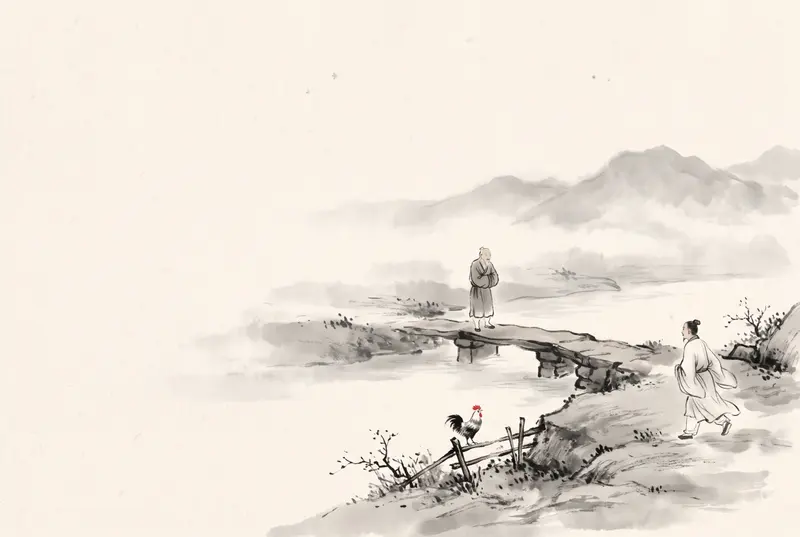
良殊大驚,隨目之。父去里所,復還,曰:「孺子可敎矣。後五日平明,與我會此。」良因怪之,跪曰:「諾。」五日平明,良往。父已先在,怒曰:「與老人期,後,何也?」去,曰:「後五日早會。」五日雞鳴,良往。父又先在,復怒曰:「後,何也?」去,曰:「後五日復早來。」
書き下し文
良殊に大いに驚き、随いて之を目す。父去ること里所にして、復た還りて曰く、「孺子教うべし。後五日の平明、我と此に会せよ」と。良因りて之を怪しみ、跪きて曰く、「諾」と。五日の平明、良往く。父已に先に在り、怒りて曰く、「老人と期して後るるは何ぞや」と。去りて曰く、「後五日早く会せよ」と。五日の鶏鳴、良往く。父又た先に在り、復た怒りて曰く、「後るるは何ぞや」と。去りて曰く、「後五日復た早く来たれ」と。
現代語訳
張良はすっかり驚いて、目で老人のあとを追った。老人は一里ほど行くと、また戻ってきて言った。「この小僧は教えがいがある。五日後の夜明けに、ここでわしと会え」。張良は不思議に思いながら、ひざまずいて「はい」と答えた。五日後の夜明けに張良が行くと、老人はもう先に来ていて、怒って言った。「年寄りと約束しておいて遅れて来るとは、何ごとだ」。そして立ち去りながら言った。「五日後、もっと早く会おう」。五日後、鶏が鳴くころに張良が行くと、老人はまた先に来ていて、また怒って言った。「遅れて来るとは、何ごとだ」。そして立ち去りながら言った。「五日後、もう一度早く来い」。
英訳
Zhang Liang was astonished and followed him with his eyes. When the old man had gone about a li, he came back and said, "This boy can be taught. Five days from now, at dawn, meet me here." Zhang Liang thought this strange, but knelt and said, "Yes." Five days later, at dawn, Zhang Liang went. The old man was already there. He said angrily, "You make an appointment with an old man and come late? Why?" As he left, he said, "Five days from now, come earlier." Five days later, at cockcrow, Zhang Liang went. Again the old man was there first. Again he said angrily, "Late again? Why?" As he left, he said, "Five days from now, come earlier still."
解説(日)
- 里所: 一里ほど。秦漢の一里は約400メートル。
- 可敎: 教えるだけの値打ちがある。
- 平明: 夜明け。
- 雞鳴: 鶏が鳴くころ。夜明け前。
- 老人は、張良の忍耐と誠意を試している。
解説(英)
- 里所 ("about a li"): a Qin-Han li was about 400 m.
- 可敎 ("can be taught"): worth teaching.
- 平明: dawn.
- 雞鳴 ("cockcrow"): before dawn.
- The old man is testing Zhang Liang's patience and sincerity.
この節から生まれた言葉: 孺子教うべし
英語の語注
- astonished/əˈstɑnɪʃt/adjective
very surprised
本文では: “Zhang Liang was astonished”
似た語と違い: amazed — very surprised, often pleased · stunned — too surprised to react
- appointment/əˈpɔɪntmənt/noun
an arrangement to meet someone at a certain time and place
本文では: “You make an appointment with an old man”
似た語と違い: meeting — a time when people meet · engagement — formal; an arranged meeting
Appointment also means being chosen for a job.
- cockcrow/ˈkɑkˌkroʊ/noun
the time very early in the morning when roosters crow
本文では: “Five days later, at cockcrow”
似た語と違い: dawn — the first light of day · daybreak — the time when day begins
節 5
原文
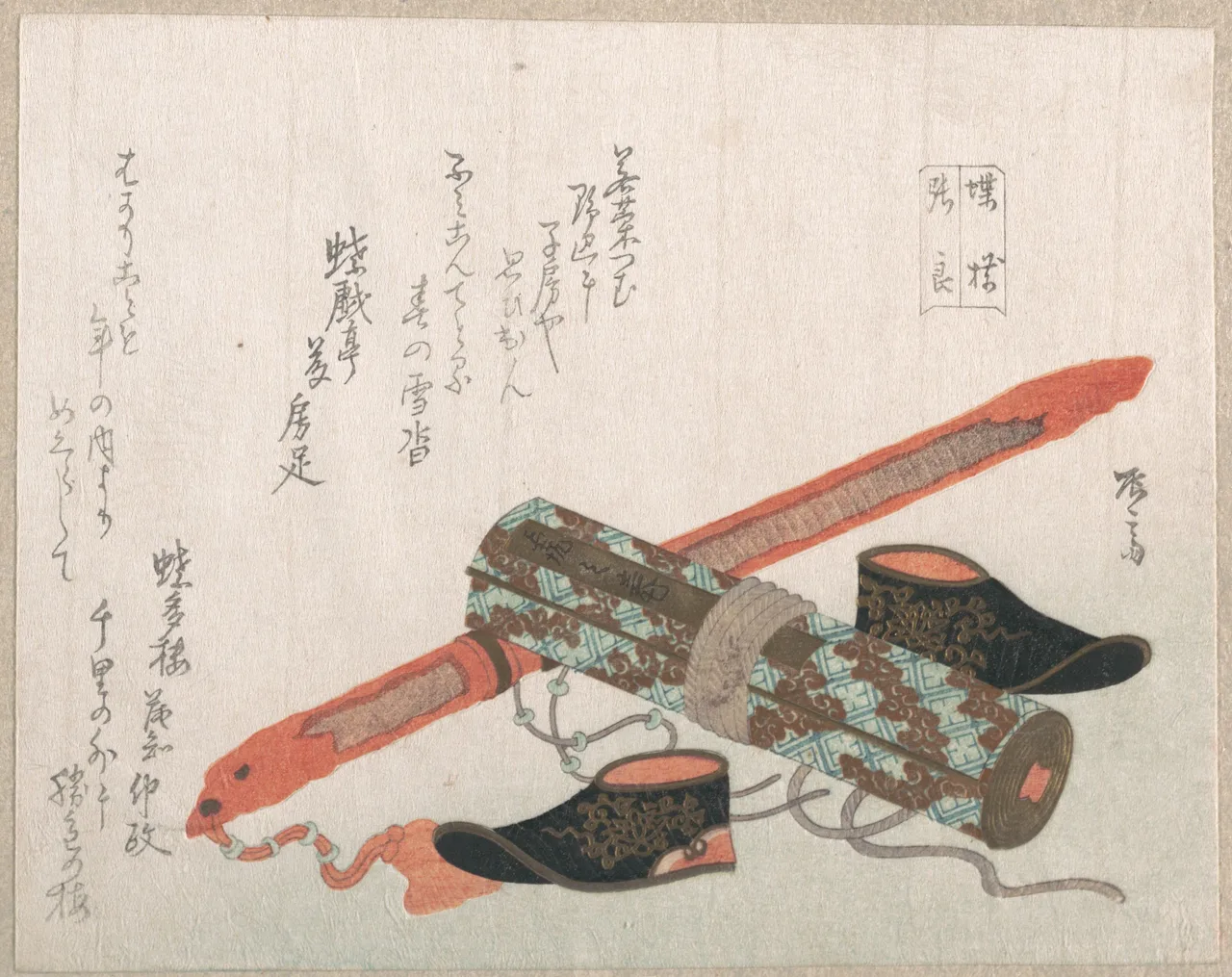
五日,良夜未半往。有頃,父亦來,喜曰:「當如是。」出一編書,曰:「讀此則為王者師矣。後十年興。十三年孺子見我濟北,穀城山下黃石即我矣。」遂去,無他言,不復見。旦日視其書,乃太公兵法也。良因異之,常習誦讀之。
書き下し文
五日、良夜未だ半ばならずして往く。頃く有りて、父も亦た来たり、喜びて曰く、「当に是くの如くなるべし」と。一編の書を出だして曰く、「此を読めば則ち王者の師と為らん。後十年にして興らん。十三年、孺子我を済北に見ん。穀城山下の黄石は即ち我なり」と。遂に去りて、他の言無く、復た見えず。旦日其の書を視れば、乃ち太公の兵法なり。良因りて之を異とし、常に習いて之を誦読す。
現代語訳
五日後、張良はまだ夜中にならないうちに出かけた。しばらくすると老人もやって来て、喜んで言った。「こうでなくてはならん」。そして一巻の書物を取り出して言った。「これを読めば、王者の師となれるだろう。十年後に世が動く。十三年後、おまえはわしに済北で会うだろう。穀城山のふもとの黄色い石が、わしだ」。そして立ち去り、ほかには何も言わず、二度と姿を見せなかった。夜が明けてからその書物を見ると、太公望の兵法の書であった。張良はこれを不思議なことと思い、いつもくり返し読んで学んだ。
英訳
Five days later, Zhang Liang went before midnight. After a while the old man came too, and said happily, "That is how it should be." He took out a book and said, "Read this, and you will be the teacher of a king. In ten years there will be a rising. In thirteen years, boy, you will see me north of the Ji River: the yellow stone at the foot of Mount Gucheng will be me." Then he left without another word and was never seen again. When day broke, Zhang Liang looked at the book. It was the Art of War of Taigong. Zhang Liang thought this a marvel, and studied and recited it constantly.
解説(日)
- 一編書: 竹簡を編んだ一巻の書物。
- 王者師: 王者の師、軍師。
- 後十年興: 十年後に事が起こる。陳勝の乱(前209年)のことと解される。
- 濟北: 済水の北。今の山東省のあたり。
- 穀城山: 今の山東省平陰県の山。
- 黃石: 黄色い石。この老人は「黄石公」と呼ばれる。
- 太公兵法: 周の太公望(呂尚)の兵法とされる書物。太公望は伯夷列伝の章にも出てくる。
解説(英)
- 一編書: a book of bamboo slips bound together.
- The teacher of a king: a king's strategist.
- In ten years there will be a rising: taken to mean Chen Sheng's revolt (209 BCE).
- North of the Ji River: in present-day Shandong.
- Mount Gucheng: a hill in Pingyin, Shandong.
- The yellow stone: the old man is called Huang Shigong, "the Old Man of the Yellow Stone."
- The Art of War of Taigong: a book said to be by Taigong (Lü Shang), adviser to King Wu of Zhou, who also appears in the Biography of Boyi.
英語の語注
- rising/ˈraɪzɪŋ/noun
a rebellion; people taking up arms against rulers
本文では: “In ten years there will be a rising.”
似た語と違い: uprising — a revolt by ordinary people · revolt — a sudden rebellion
- marvel/ˈmɑrvəl/noun
something wonderful and surprising
本文では: “Zhang Liang thought this a marvel”
似た語と違い: wonder — something that causes amazement · miracle — something impossible that happens
- recite/rɪˈsaɪt/verb
to say a text aloud from memory
本文では: “studied and recited it constantly”
似た語と違い: repeat — say again · memorize — learn by heart
節 6
原文
居下邳,為任俠。項伯嘗殺人,從良匿。
書き下し文
下邳に居りて、任侠を為す。項伯嘗て人を殺し、良に従いて匿る。
現代語訳
張良は下邳に住み、男だての侠客として振る舞った。項伯が人を殺したとき、張良のもとに身を寄せて隠れたことがある。
英訳
Living at Xiapi, Zhang Liang acted as a knight-errant. Xiang Bo once killed a man and hid with him.
解説(日)
- 任俠: 弱い者を助け、義理を重んじる男だて。
- 項伯: 項羽の叔父。このときの恩が、鴻門の会の前夜に項伯が張良に危険を知らせる理由になった(巻7「鴻門の会」の章)。
解説(英)
- 任俠 ("knight-errant"): a man who protects the weak and keeps his word, often outside the law.
- Xiang Bo: Xiang Yu's uncle. Because of this debt, Xiang Bo rides through the night to warn Zhang Liang before the Feast at Hongmen (Volume 7).
英語の語注
- knight-errant/ˌnaɪt ˈɛrənt/noun
a man who travels around doing brave deeds and helping the weak
本文では: “acted as a knight-errant”
似た語と違い: adventurer — someone who seeks danger and excitement · champion — someone who fights for others
The term comes from medieval Europe; it is used here for the Chinese youxia.
節 7
原文
後十年,陳涉等起兵,良亦聚少年百餘人。景駒自立為楚假王,在留。良欲往從之,道還沛公。沛公將數千人,略地下邳西,遂屬焉。沛公拜良為廄將。良數以太公兵法說沛公,沛公善之,常用其策。良為他人者,皆不省。良曰:「沛公殆天授。」故遂從之,不去見景駒。
書き下し文
後十年、陳渉等兵を起こす。良も亦た少年百余人を聚む。景駒自ら立ちて楚の仮王と為り、留に在り。良往きて之に従わんと欲し、道に沛公に還う。沛公数千人を将い、地を下邳の西に略す。遂に焉に属す。沛公、良を拝して廐将と為す。良数しば太公の兵法を以て沛公に説く。沛公之を善しとし、常に其の策を用う。良、他人の為にする者は、皆省みず。良曰く、「沛公は殆ど天授ならん」と。故に遂に之に従いて、去りて景駒に見えず。
現代語訳
十年後、陳渉らが兵を挙げると、張良も若者を百人あまり集めた。景駒が自ら楚の仮の王を名のって留にいたので、張良はそこへ行って従おうとしたが、途中で沛公に出会った。沛公は数千人を率いて、下邳の西の地を攻め取っていた。張良はそのまま沛公の配下に加わり、沛公は張良を厩将に任じた。張良はたびたび太公望の兵法を用いて沛公に説いたが、沛公はそれを良いと思い、いつもその策を用いた。ほかの人に説いても、だれも理解しなかった。張良は言った。「沛公は、きっと天から授かった人だ」。こうして張良は沛公に従い、景駒のもとへは行かなかった。
英訳
Ten years later, Chen She and others rose in arms, and Zhang Liang too gathered over a hundred young men. Jing Ju had made himself acting King of Chu and was at Liu. Zhang Liang meant to go and join him, but on the way he met the Lord of Pei, who was leading a few thousand men and taking the land west of Xiapi. So Zhang Liang joined him, and the Lord of Pei made him a cavalry officer. Zhang Liang often advised the Lord of Pei with the Art of War of Taigong. The Lord of Pei thought well of it and always used his plans. When Zhang Liang explained them to others, no one understood. Zhang Liang said, "The Lord of Pei must be sent by Heaven." So he stayed with him and never went to see Jing Ju.
解説(日)
- 後十年: 前209年。陳渉(陳勝)の蜂起(巻48の章)。黄石公の「十年後に世が動く」という言葉どおり。
- 景駒: 楚の王族。陳勝の死後に楚の仮の王に立てられたが、まもなく項梁に滅ぼされた。
- 留: 今の江蘇省沛県の南。のちに張良が封じられる地。
- 沛公: 劉邦。
- 廄將: 馬を管理する将、騎兵の将。
- 不省: 理解しない。
- 天授: 天から授かったもの。韓信も高祖を「天授」と言った(巻92「韓信の最期」の章)。
解説(英)
- Ten years later: 209 BCE, when Chen She (Chen Sheng) rose (Volume 48), just as the old man had said.
- Jing Ju: a member of the Chu royal house, made acting king after Chen Sheng's death and soon destroyed by Xiang Liang.
- Liu: south of present-day Pei County in Jiangsu, later Zhang Liang's fief.
- The Lord of Pei: Liu Bang.
- 廄將: an officer in charge of horses or cavalry.
- 不省: did not understand.
- "Sent by Heaven" (天授): Han Xin says the same of the emperor (Volume 92, "The End of Han Xin").
英語の語注
- think well of/ˌθɪŋk ˈwɛl əv/phrase
to have a good opinion of something or someone
本文では: “The Lord of Pei thought well of it”
似た語と違い: approve of — think something is good · admire — respect and like
節 8
原文
漢六年正月,封功臣。良未嘗有戰鬬功,高帝曰:「運籌策帷帳中,決勝千里外,子房功也。自擇齊三萬戶。」良曰:「始臣起下邳,與上會留,此天以臣授陛下。陛下用臣計,幸而時中,臣願封留足矣,不敢當三萬戶。」乃封張良為留侯,與蕭何等俱封。
書き下し文
漢の六年正月、功臣を封ず。良未だ嘗て戦闘の功有らず。高帝曰く、「籌策を帷帳の中に運らし、勝ちを千里の外に決するは、子房の功なり。自ら斉の三万戸を択べ」と。良曰く、「始め臣下邳より起こり、上と留に会す。此れ天臣を以て陛下に授くるなり。陛下臣の計を用い、幸いにして時に中る。臣願わくは留に封ぜらるれば足れり。敢えて三万戸に当たらず」と。乃ち張良を封じて留侯と為し、蕭何等と倶に封ず。
現代語訳
漢の六年(前201年)正月、功臣たちに領地が与えられた。張良は戦場で戦った手柄は一度もなかったが、高帝は言った。「本陣の幕の中ではかりごとをめぐらし、千里の外で勝利を決めたのは、子房(張良)の手柄だ。斉の地から三万戸を自分で選ぶがよい」。張良は言った。「わたしははじめ下邳で兵を起こし、陛下と留で出会いました。これは、天がわたしを陛下に授けたのです。陛下がわたしの計略を用いてくださり、幸いにも時に当たりました。わたしは留に封じていただければ十分です。三万戸など、とても受けられません」。そこで張良を留侯に封じ、蕭何らとともに領地を与えた。
英訳
In the first month of the sixth year of Han, the meritorious servants were given fiefs. Zhang Liang had never won merit in battle, but the emperor said, "Making plans inside the command tent and deciding victory a thousand li away: that was Zifang's work. Choose thirty thousand households in Qi for yourself." Zhang Liang said, "I first rose at Xiapi and met Your Majesty at Liu. This was Heaven giving me to Your Majesty. Your Majesty used my plans, and by good fortune they sometimes worked. To be given Liu is enough for me. I would not dare to accept thirty thousand households." So Zhang Liang was made Marquis of Liu, and was given his fief along with Xiao He and others.
解説(日)
- この節の前(省略): 張良は、秦の都に入った沛公をいさめ、鴻門の会で沛公を救い(巻7、巻8の章)、楚漢の戦いでも多くの策を立てた。
- 漢六年: 前201年。
- 運籌策帷帳中、決勝千里外: 本陣の幕の中で作戦を練り、遠い戦場の勝利を決める。軍師の働きをたたえる有名な言葉。高祖本紀では、高祖が張良・蕭何・韓信を「三傑」としてたたえる場面にも出てくる。
- 子房: 張良の字(あざな)。
- 三萬戶: 三万戸の領地。非常に大きい。張良はあえて小さな留を望み、欲のないことを示した。
解説(英)
- Before this (left out here): Zhang Liang advised the Lord of Pei to leave the Qin palace, saved him at the Feast at Hongmen (Volumes 8 and 7), and made many plans in the war against Chu.
- Sixth year of Han: 201 BCE.
- "Making plans inside the command tent and deciding victory a thousand li away": famous words of praise for a strategist. In the Annals of Gaozu the emperor uses them when he names Zhang Liang, Xiao He and Han Xin as his three heroes.
- Zifang: Zhang Liang's courtesy name.
- Thirty thousand households: a huge fief. Zhang Liang chose small Liu instead, showing he was not greedy.
この節から生まれた言葉: 籌を帷幄の中に運らす
英語の語注
- meritorious/ˌmɛrɪˈtɔriəs/adjective
deserving praise or reward
本文では: “the meritorious servants were given fiefs”
似た語と違い: deserving — having earned reward · praiseworthy — worthy of praise
- household/ˈhaʊsˌhoʊld/noun
all the people who live together in one home; here, a family that pays taxes to a lord
本文では: “Choose thirty thousand households”
似た語と違い: family — parents and children · home — the place where people live
- good fortune/ˌɡʊd ˈfɔrtʃən/phrase
good luck
本文では: “by good fortune they sometimes worked”
似た語と違い: luck — chance that brings good things · chance — something that happens by accident
- dare/dɛr/verb
to be brave or rude enough to do something
本文では: “I would not dare to accept”
似た語と違い: venture — formal; dare to do or say · risk — do something that may be dangerous
節 9
原文
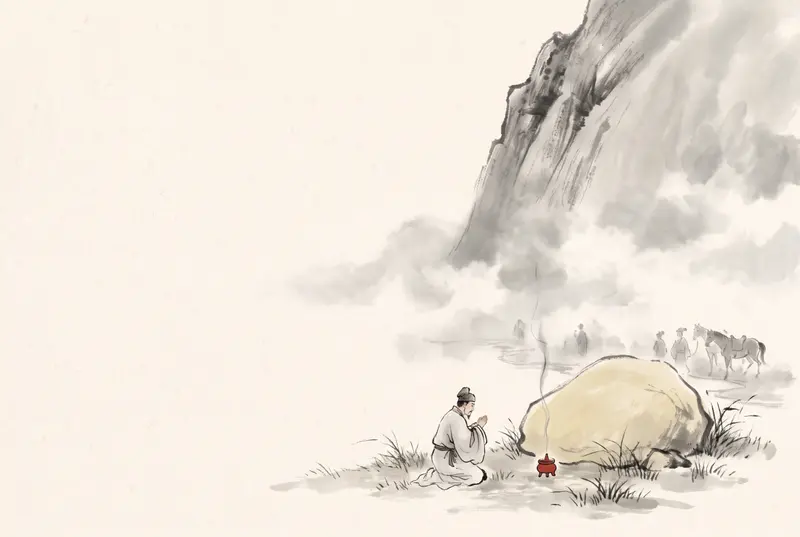
子房始所見下邳圯上老父與太公書者,後十三年從高帝過濟北,果見穀城山下黃石,取而葆祠之。留侯死,并葬黃石冢。每上冢伏臘,祠黃石。
書き下し文
子房始め見る所の下邳の圯上の老父の太公の書を与えし者は、後十三年、高帝に従いて済北を過ぎ、果たして穀城山下の黄石を見、取りて之を葆祠す。留侯死するや、黄石を并せて冢に葬る。冢に上る伏臘の毎に、黄石を祠る。
現代語訳
子房がはじめに下邳の土橋の上で会い、太公望の兵法の書を授けてくれた老人について言えば、十三年後、張良が高帝に従って済北を通ったとき、はたして穀城山のふもとに黄色い石を見つけた。張良はそれを持ち帰って、大切に祭った。留侯が死ぬと、その黄色い石も一緒に墓に葬った。毎年、夏と冬の祭りで墓参りをするたびに、黄色い石も祭った。
英訳
As for the old man on the bridge at Xiapi who first gave Zifang the book of Taigong: thirteen years later, Zhang Liang passed north of the Ji River with the emperor and did find a yellow stone at the foot of Mount Gucheng. He took it, kept it as a treasure and made offerings to it. When the Marquis of Liu died, the yellow stone was buried with him in his tomb. At every summer and winter festival, when people went up to his tomb, they made offerings to the yellow stone too.
解説(日)
- この節の前(省略): 天下統一の後、張良は都を関中に定めることや、太子を守ることなどで劉邦を助けた。晩年は病が多く、穀物を断って仙人の術を学んだ。
- 葆祠: 宝として大切にし、祭る。
- 伏臘: 夏の伏日と冬の臘日の祭り。
解説(英)
- Before this (left out here): after the realm was united, Zhang Liang helped Liu Bang decide to make the land within the passes his capital and protected the crown prince. In his last years he was often ill, gave up grain and studied the arts of the immortals.
- 葆祠: to treasure something and make offerings to it.
- 伏臘: the summer and winter festivals.
英語の語注
- offering/ˈɔfərɪŋ/noun
something given to the gods or the dead as part of a ceremony
本文では: “made offerings to it”
似た語と違い: sacrifice — something killed or given to the gods · gift — something given freely
- festival/ˈfɛstəvəl/noun
a special day or time of celebration, often religious
本文では: “At every summer and winter festival”
似た語と違い: holiday — a day of rest or celebration · feast day — a religious day of celebration
節 10
原文
太史公曰:學者多言無鬼神,然言有物。至如留侯所見老父予書,亦可怪矣。高祖離困者數矣,而留侯常有功力焉,豈可謂非天乎?上曰:「夫運籌筴帷帳之中,決勝千里外,吾不如子房。」余以為其人計魁梧奇偉,至見其圖,狀貌如婦人好女。蓋孔子曰:「以貌取人,失之子羽。」留侯亦云。
書き下し文
太史公曰く、学者多く鬼神無しと言う。然れども物有りと言う。留侯の見る所の老父の書を予うるが如きに至りては、亦た怪しむべし。高祖困に離ること数しばなるも、留侯常に功力有り。豈に天に非ずと謂うべけんや。上曰く、「夫れ籌筴を帷帳の中に運らし、勝ちを千里の外に決するは、吾子房に如かず」と。余以為えらく、其の人は計るに魁梧奇偉ならんと。其の図を見るに至れば、状貌は婦人好女の如し。蓋し孔子曰く、「貌を以て人を取れば、之を子羽に失う」と。留侯も亦た云う。
現代語訳
太史公は言う。学者の多くは鬼神などいないと言うが、それでも不思議なものはあると言う。留侯が会った老人が書物を授けたことなどは、まことに不思議である。高祖は何度も危機に陥ったが、そのたびに留侯が力を尽くした。これを天の働きでないと言えようか。高祖は「本陣の幕の中ではかりごとをめぐらし、千里の外で勝利を決めることでは、わたしは子房に及ばない」と言った。わたしは、張良はきっと体の大きな、堂々とした人物だろうと思っていた。ところが肖像画を見ると、その姿かたちは美しい女性のようであった。孔子は「見た目で人を判断すると、子羽を見誤る」と言った。留侯についても、同じことが言えよう。
英訳
The Grand Historian says: Many scholars say there are no ghosts or spirits, yet they also say that strange things exist. The old man who gave the Marquis of Liu a book is strange indeed. Emperor Gaozu was in danger many times, and each time the Marquis of Liu served him well. Can we say this was not Heaven's doing? The emperor said, "In making plans inside the command tent and deciding victory a thousand li away, I am no match for Zifang." I imagined that he must have been a big, imposing man. But when I saw his portrait, he looked like a beautiful woman. Confucius said, "If I had judged men by their looks, I would have been wrong about Ziyu." The same may be said of the Marquis of Liu.
解説(日)
- 鬼神: 死者の霊や神々。
- 物: 怪しいもの、霊的なもの。
- 魁梧奇偉: 体が大きく、立派なようす。
- 圖: 肖像画。司馬遷の時代には、張良の肖像画が残っていたらしい。
- 婦人好女: 美しい女性。
- 子羽: 孔子の弟子の澹台滅明。容貌は醜かったが、行いは立派だったとされる(仲尼弟子列伝)。
解説(英)
- 鬼神: ghosts and spirits.
- 物: strange or uncanny things.
- 魁梧奇偉: tall, sturdy and impressive.
- 圖: a portrait. A portrait of Zhang Liang seems to have survived in Sima Qian's time.
- Ziyu: Tantai Mieming, a disciple of Confucius, said to have been ugly but of fine conduct (Biographies of Confucius's Disciples).
この節から生まれた言葉: 籌を帷幄の中に運らす
英語の語注
- spirit/ˈspɪrɪt/noun
a being without a body, such as a ghost or god
本文では: “there are no ghosts or spirits”
似た語と違い: ghost — the spirit of a dead person · deity — a god or goddess
- imposing/ɪmˈpoʊzɪŋ/adjective
large and impressive in appearance
本文では: “a big, imposing man”
似た語と違い: impressive — causing admiration · grand — large and splendid
- portrait/ˈpɔrtrət/noun
a painting or drawing of a person
本文では: “when I saw his portrait”
似た語と違い: picture — the general word · likeness — a picture that looks like someone