列伝 · 巻 76
平原君虞卿列伝 平原君虞卿列傳
平原君(毛遂自薦) 毛遂自薦
趙の公子・平原君は数千人の客を養った。側室が足の不自由な男を笑ったのに首を斬らずにいると、客の半分が去ってしまい、平原君はあわてて側室を斬る。秦に都の邯鄲を囲まれると、平原君は楚に援軍を頼みに行く。お供の二十人目に、三年間まったく目立たなかった毛遂が名乗り出る。「すぐれた人は袋の中の錐のように、先がすぐに突き出る」と言う平原君に、毛遂は「だから今日、袋に入れてほしいのです」と答える。楚の宮殿で毛遂は剣を手に楚王に迫って同盟を結ばせ、平原君は「毛先生の三寸の舌は、百万の軍より強い」と感嘆する。
この巻のうち「平原君(毛遂自薦)」の場面を載せています。巻の全文ではありません。
音声
音声は合成音声です。
動画
節 1
原文
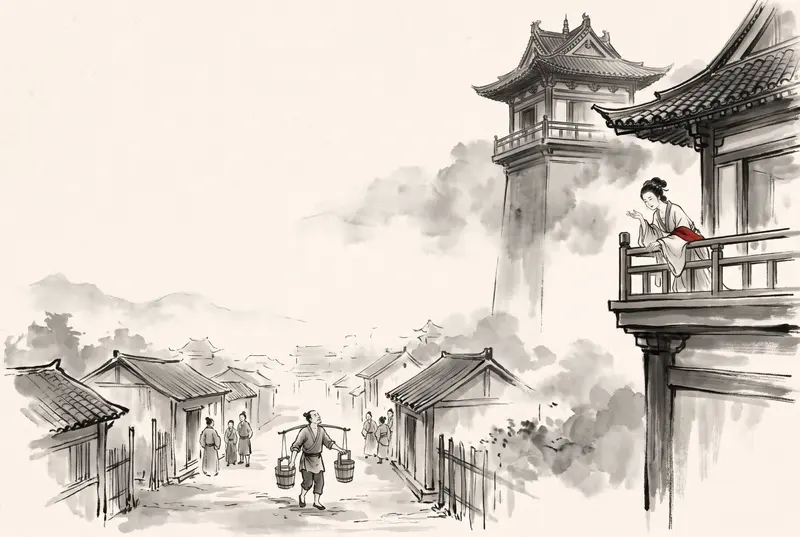
平原君趙勝者,趙之諸公子也。諸子中勝最賢,喜賓客,賓客蓋至者數千人。平原君相趙惠文王及孝成王,三去相,三復位,封於東武城。平原君家樓臨民家。民家有躄者,槃散行汲。平原君美人居樓上,臨見,大笑之。明日,躄者至平原君門,請曰:「臣聞君之喜士,士不遠千里而至者,以君能貴士而賤妾也。臣不幸有罷癃之病,而君之後宮臨而笑臣,臣願得笑臣者頭。」平原君笑應曰:「諾。」躄者去,平原君笑曰:「觀此豎子,乃欲以一笑之故殺吾美人,不亦甚乎!」終不殺。
書き下し文
平原君趙勝なる者は、趙の諸公子なり。諸子の中にて勝最も賢にして、賓客を喜ぶ。賓客の蓋し至る者数千人。平原君趙の恵文王及び孝成王に相たり。三たび相を去り、三たび位に復し、東武城に封ぜらる。平原君の家の楼、民家に臨む。民家に躄者有り、槃散として行きて汲む。平原君の美人楼上に居り、臨み見て、大いに之を笑う。明日、躄者平原君の門に至り、請いて曰く、「臣聞く、君の士を喜ぶや、士の千里を遠しとせずして至る者は、君の能く士を貴びて妾を賤しむを以てなり、と。臣不幸にして罷癃の病有り。而るに君の後宮臨みて臣を笑う。臣願わくは臣を笑う者の頭を得ん」と。平原君笑いて応えて曰く、「諾」と。躄者去る。平原君笑いて曰く、「此の豎子を観よ。乃ち一笑の故を以て吾が美人を殺さんと欲す。亦た甚だしからずや」と。終に殺さず。
現代語訳
平原君趙勝は、趙の公子の一人である。公子たちの中で勝がいちばんすぐれており、客を好んだので、集まった客は数千人にのぼったという。平原君は趙の恵文王と孝成王の宰相を務め、三度宰相を辞め、三度復帰して、東武城を領地として与えられた。平原君の屋敷の高殿は、民家を見下ろしていた。その民家に足の不自由な男がいて、よろよろと歩いて水をくみに行っていた。平原君の側室が高殿の上からそれを見て、大笑いした。翌日、その男が平原君の門にやって来て願い出た。「あなたが士を好まれ、士が千里の道も遠いと思わずに集まってくるのは、あなたが士を重んじ、女を軽く見ておられるからだと聞いています。わたしは不幸にも足の病を抱えていますが、あなたの奥の女性が上から見下ろしてわたしを笑いました。わたしを笑った者の首をいただきたい」。平原君は笑って「よかろう」と答えた。男が去ると、平原君は笑って言った。「あの小僧を見ろ。一度笑われたくらいで、わたしの愛する女を殺せと言う。ひどすぎるではないか」。そして結局、殺さなかった。
英訳
Lord Pingyuan, Zhao Sheng, was one of the princes of Zhao. Of all the princes, Sheng was the most able. He loved guests, and those who came to him numbered several thousand. He served Kings Huiwen and Xiaocheng of Zhao as chief minister, left office three times and was restored three times, and was given Dongwucheng as his fief. Lord Pingyuan's mansion had a tower that looked down on the houses of the common people. In one of those houses lived a lame man who hobbled out to draw water. One of Lord Pingyuan's beauties, looking down from the tower, saw him and laughed out loud. The next day the lame man came to Lord Pingyuan's gate and said, "I have heard that you love gentlemen, and that gentlemen come to you from a thousand li away because you honor gentlemen and think little of your women. I have the misfortune to be crippled, and a lady of your household looked down and laughed at me. I ask for the head of the woman who laughed at me." Lord Pingyuan smiled and said, "Very well." When the lame man had gone, Lord Pingyuan laughed and said, "Look at that fellow! He wants me to kill my beauty over a single laugh. Isn't that going too far?" And in the end he did not kill her.
解説(日)
- 平原君: 趙勝(?〜前251年)。趙の武霊王の子で、恵文王の弟。戦国四君の一人(巻75の章を参照)。
- 惠文王・孝成王: 趙の王。恵文王は藺相如の章に出てくる王(巻81の章を参照)。
- 東武城: 今の河北省清河県のあたり。
- 躄者: 足の不自由な人。
- 槃散: よろめきながら歩くさま。
- 美人: 側室。
- 罷癃: 体の障害や病気。
解説(英)
- Lord Pingyuan: Zhao Sheng (d. 251 BCE), son of King Wuling of Zhao and brother of King Huiwen; one of the Four Lords of the Warring States (see Volume 75).
- Kings Huiwen and Xiaocheng: kings of Zhao. King Huiwen is the king in the story of Lin Xiangru (see Volume 81).
- Dongwucheng: near present-day Qinghe in Hebei.
- 躄者: a lame man.
- 槃散: hobbling, unsteady on the feet.
- 美人 ("beauty"): a concubine.
- 罷癃: a disability or chronic illness.
英語の語注
- misfortune/mɪsˈfɔrtʃən/noun
bad luck, or something bad that happens to you
本文では: “I have the misfortune to be crippled”
似た語と違い: bad luck — everyday; misfortune · adversity — formal; hard times
- hobble/ˈhɑbəl/verb
to walk with difficulty, because of a bad leg
本文では: “a lame man who hobbled out to draw water”
似た語と違い: limp — walk unevenly because one leg hurts · shuffle — walk slowly without lifting the feet
節 2
原文
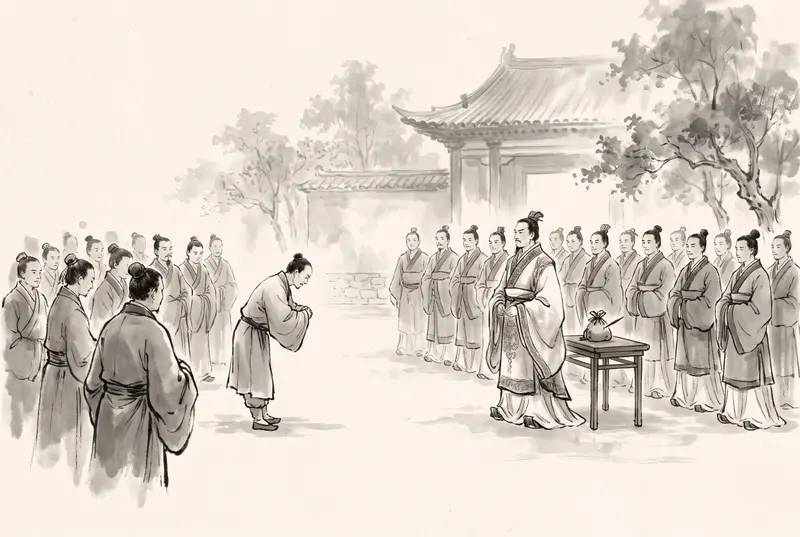
居歲餘,賓客門下舍人稍稍引去者過半。平原君怪之,曰:「勝所以待諸君者未嘗敢失禮,而去者何多也?」門下一人前對曰:「以君之不殺笑躄者,以君爲愛色而賤士,士即去耳。」於是平原君乃斬笑躄者美人頭,自造門進躄者,因謝焉。其後門下乃復稍稍來。是時齊有孟嘗,魏有信陵,楚有春申,故爭相傾以待士。
書き下し文
居ること歳余、賓客門下舎人の稍稍引き去る者半ばを過ぐ。平原君之を怪しみて曰く、「勝の諸君を待する所以の者は、未だ嘗て敢えて礼を失わず。而るに去る者何ぞ多きや」と。門下の一人前みて対えて曰く、「君の躄者を笑いし者を殺さざるを以て、君を以て色を愛して士を賤しむと為す。士即ち去るのみ」と。是に於いて平原君乃ち躄者を笑いし美人の頭を斬り、自ら門に造りて躄者に進め、因りて謝す。其の後門下乃ち復た稍稍来たる。是の時斉に孟嘗有り、魏に信陵有り、楚に春申有り。故に争いて相傾けて以て士を待す。
現代語訳
一年あまりたつと、客や門下の者たちが少しずつ去っていき、半分以上いなくなった。平原君はふしぎに思って言った。「わたしは諸君をもてなすのに、一度も礼を欠いたことはないはずだ。それなのに、どうしてこんなに去る者が多いのか」。門下の一人が進み出て答えた。「あなたが、足の不自由な人を笑った女を殺さなかったので、あなたは女を愛して士を軽んじる方だと思われたのです。だから士は去っていくのです」。そこで平原君は、足の不自由な人を笑った側室の首を斬り、自ら男の家の門まで出向いてそれを差し出し、わびた。それからは門下の者たちも、また少しずつ戻ってきた。このころ、斉には孟嘗君、魏には信陵君、楚には春申君がいて、互いに競い合って士を手厚くもてなしていた。
英訳
A year or so later, more than half of his guests, followers and retainers had gradually drifted away. Lord Pingyuan was puzzled and said, "I have never once failed in courtesy toward any of you. Why are so many leaving?" One of his followers stepped forward and answered, "Because you did not kill the woman who laughed at the lame man, people think you love women and look down on gentlemen. So the gentlemen are leaving." Then Lord Pingyuan had the head of the beauty who had laughed at the lame man cut off, went himself to the man's door to present it, and apologized. After that his followers gradually came back. At this time Qi had Lord Mengchang, Wei had Lord Xinling and Chu had Lord Chunshen, and they all competed with one another in treating gentlemen well.
解説(日)
- 稍稍: 少しずつ。
- 引去: 立ち去る。
- 自造門: 自分で相手の家の門まで出向く。最大限のわびの表し方。
- 孟嘗・信陵・春申: 孟嘗君(巻75)、信陵君(巻77)、春申君(巻78)。平原君とあわせて「戦国四君」と呼ぶ。
- 爭相傾: 競い合って、人材を自分の方になびかせようとする。
解説(英)
- 稍稍: little by little.
- 引去: to leave, withdraw.
- Went himself to the man's door: the deepest possible apology.
- Mengchang, Xinling, Chunshen: Lord Mengchang (Volume 75), Lord Xinling (Volume 77) and Lord Chunshen (Volume 78). With Lord Pingyuan they are the "Four Lords" of the Warring States.
- 爭相傾: competing to draw able men to their own side.
英語の語注
- drift away/ˌdrɪft əˈweɪ/phrasal verb
to leave slowly, a few at a time
本文では: “had gradually drifted away”
似た語と違い: trickle away — leave in small numbers · fall away — become fewer
- apologize/əˈpɑləˌdʒaɪz/verb
to say that you are sorry for something
本文では: “went himself to the man's door to present it, and apologized”
似た語と違い: say sorry — everyday; apologize · make amends — do something to make up for a wrong
- compete/kəmˈpiːt/verb
to try to do better than others
本文では: “they all competed with one another in treating gentlemen well”
似た語と違い: vie — formal; compete hard · rival — try to equal or beat
節 3
原文
秦之圍邯鄲,趙使平原君求救,合從於楚,約與食客門下有勇力文武備具者二十人偕。平原君曰:「使文能取勝,則善矣。文不能取勝,則歃血於華屋之下,必得定從而還。士不外索,取於食客門下足矣。」得十九人,餘無可取者,無以滿二十人。
書き下し文
秦の邯鄲を囲むや、趙平原君をして救いを求め、従を楚に合わせしむ。食客門下の勇力有りて文武備具する者二十人と偕にせんと約す。平原君曰く、「文をして能く勝ちを取らしめば、則ち善し。文能く勝ちを取らずんば、則ち血を華屋の下に歃り、必ず従を定むるを得て還らん。士は外に索めず、食客門下に取りて足れり」と。十九人を得たり。余は取るべき者無く、以て二十人を満たす無し。
現代語訳
秦が趙の都の邯鄲を包囲すると、趙は平原君を楚に送って救援を求め、合従の同盟を結ばせようとした。平原君は、食客や門下の中から、勇気と力があり、学問にも武芸にも通じた者を二十人選んで、ともに行くことにした。平原君は言った。「話し合いで目的を果たせればそれでよい。話し合いで果たせなければ、宮殿の中で血をすすって誓わせ、必ず同盟をまとめて帰る。供の者はよそに求めるまでもない。食客や門下から選べば十分だ」。ところが十九人までは選んだが、残りに選べる者がおらず、二十人にならなかった。
英訳
When Qin besieged Handan, Zhao sent Lord Pingyuan to ask Chu for help and to form an alliance with it. He agreed to take along twenty of his retainers and followers who had courage and strength and were skilled in both letters and arms. Lord Pingyuan said, "If we can win by words, so much the better. If words cannot win, then we will smear our lips with blood in the palace hall and come home with the alliance sealed. I need not look outside for men; my own retainers and followers will be enough." He found nineteen, but there was no one else worth choosing, and he could not make up twenty.
解説(日)
- 秦之圍邯鄲: 前258〜前257年。長平の戦い(前260年)で趙の大軍が敗れたあと、秦が都の邯鄲を包囲した。
- 合從: 合従。東方の国々が南北に連合して秦に対抗すること。
- 文武備具: 学問と武芸の両方を備える。
- 歃血: いけにえの血を口に塗って(すすって)誓いを立てること。盟約の儀式。
- 華屋: 華やかな宮殿。
解説(英)
- When Qin besieged Handan: 258–257 BCE, after the great defeat of Zhao at Changping (260 BCE).
- 合從 ("vertical alliance"): an alliance of the eastern states against Qin.
- 文武備具: skilled in both letters and arms.
- 歃血: smearing the lips with the blood of a sacrifice to seal an oath.
- 華屋: a splendid palace hall.
英語の語注
- besiege/bɪˈsiːdʒ/verb
to surround a city with an army to make it surrender
本文では: “When Qin besieged Handan”
似た語と違い: surround — be all around · blockade — stop people and goods going in or out
- alliance/əˈlaɪəns/noun
an agreement between states to help each other
本文では: “to form an alliance with it”
似た語と違い: pact — a formal agreement · league — a group of states working together
節 4
原文
門下有毛遂者,前,自贊於平原君曰:「遂聞君將合從於楚,約與食客門下二十人偕,不外索。今少一人,願君即以遂備員而行矣。」平原君曰:「先生處勝之門下幾年於此矣?」毛遂曰:「三年於此矣。」平原君曰:「夫賢士之處世也,譬若錐之處囊中,其末立見。今先生處勝之門下三年於此矣,左右未有所稱誦,勝未有所聞,是先生無所有也。先生不能,先生留。」毛遂曰:「臣乃今日請處囊中耳。使遂蚤得處囊中,乃穎脫而出,非特其末見而已。」平原君竟與毛遂偕。十九人相與目笑之而未廢也。
書き下し文
門下に毛遂なる者有り。前みて、自ら平原君に賛して曰く、「遂聞く、君将に従を楚に合わせんとし、食客門下二十人と偕にせんと約して、外に索めずと。今一人を少く。願わくは君即ち遂を以て員に備えて行かん」と。平原君曰く、「先生勝の門下に処ること幾年にして此に於けるか」と。毛遂曰く、「三年にして此に於けり」と。平原君曰く、「夫れ賢士の世に処るや、譬えば錐の嚢中に処るが若し。其の末立ちどころに見る。今先生勝の門下に処ること三年にして此に於けり。左右未だ称誦する所有らず、勝未だ聞く所有らず。是れ先生有する所無きなり。先生能わず。先生留まれ」と。毛遂曰く、「臣乃ち今日嚢中に処らんことを請うのみ。遂をして蚤く嚢中に処るを得しめば、乃ち穎脱して出でん。特だ其の末の見るるのみに非ざるなり」と。平原君竟に毛遂と偕にす。十九人相与に目して之を笑うも、未だ廃せざるなり。
現代語訳
門下に毛遂という者がいた。進み出て、自分を平原君に売りこんだ。「あなたは楚と同盟を結びに行くにあたり、食客や門下から二十人を連れていき、よそには求めないと聞きました。いま一人足りません。どうかわたしを数に加えて、お連れください」。平原君は言った。「先生はわたしの門下に来て何年になりますか」。毛遂は言った。「三年になります」。平原君は言った。「すぐれた人物がこの世にいるのは、たとえば錐が袋の中にあるようなもので、その先はすぐに外に突き出て見えるものです。先生はわたしの門下に三年もいるのに、まわりの者がほめるのを聞いたこともなく、わたしも何の評判も聞いていません。つまり先生には取り柄がないのです。先生には無理です。残っていてください」。毛遂は言った。「だから今日、袋の中に入れてほしいとお願いしているのです。もっと早く袋に入れていただいていたら、先どころか、柄まで突き出ていたでしょう」。平原君はとうとう毛遂を連れていくことにした。ほかの十九人は互いに目くばせして毛遂を笑ったが、やめさせはしなかった。
英訳
Among his followers was a man named Mao Sui. He stepped forward and recommended himself to Lord Pingyuan: "I hear that you are going to make an alliance with Chu, that you have agreed to take twenty of your retainers and followers, and that you will not look outside. Now you are one short. I beg you to take me to make up the number." Lord Pingyuan said, "How many years have you been among my followers, sir?" "Three years," said Mao Sui. Lord Pingyuan said, "A worthy man in the world is like an awl in a bag: its point shows at once. You have been among my followers for three years, yet no one around me has praised you, and I have heard nothing of you. So you have nothing to offer. You cannot do it, sir. Stay here." Mao Sui said, "Then today I ask to be put in the bag. If I had been put in the bag earlier, the whole blade would have come out, not just the point." In the end Lord Pingyuan took Mao Sui along. The other nineteen exchanged glances and laughed at him, but said nothing.
解説(日)
- 毛遂: 平原君の食客。
- 自贊: 自分で自分を推薦する。「毛遂自薦」という言葉のもと。
- 錐之處囊中,其末立見: 錐が袋の中にあれば、先がすぐに突き出る。すぐれた人はすぐに頭角を現すというたとえ。「嚢中の錐」として知られる。
- 穎脫而出: 錐の先だけでなく、柄の部分まで袋から突き出る。才能をすっかり現すこと。「穎」は錐の先、またはその根もと。
- 目笑: 目くばせして笑う。
解説(英)
- Mao Sui: one of Lord Pingyuan's retainers.
- 自贊 ("recommending himself"): the source of the Chinese idiom "Mao Sui puts himself forward."
- An awl in a bag (錐之處囊中,其末立見): a talented man soon stands out, just as an awl's point pokes through a bag.
- 穎脫而出: not only the point but the whole blade sticking out; showing one's full talent.
- 目笑: exchanging glances and laughing.
英語の語注
- recommend/ˌrɛkəˈmɛnd/verb
to say that someone is good for a job
本文では: “recommended himself to Lord Pingyuan”
似た語と違い: put forward — suggest someone for a role · propose — suggest formally
To recommend yourself is the meaning of the saying 毛遂自薦.
- awl/ɔl/noun
a small pointed tool for making holes in leather or wood
本文では: “is like an awl in a bag”
似た語と違い: bradawl — a small awl for wood · spike — a thin pointed piece of metal
- blade/bleɪd/noun
the flat cutting part of a knife or tool
本文では: “the whole blade would have come out”
似た語と違い: edge — the sharp side of a blade · point — the sharp end
- exchange glances/ɪksˈtʃeɪndʒ ˈɡlænsɪz/phrase
to look quickly at each other, often to share a feeling without words
本文では: “exchanged glances and laughed at him”
似た語と違い: look at each other — everyday; exchange glances · trade looks — informal; exchange glances
節 5
原文
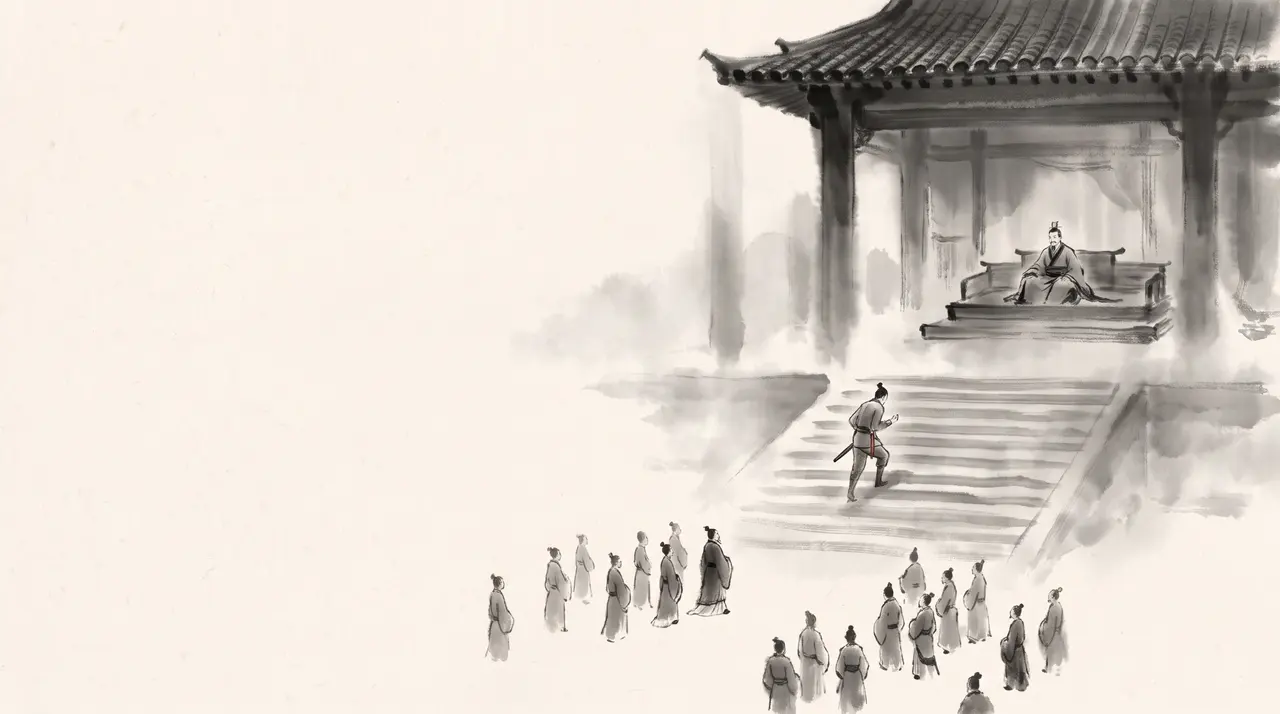
毛遂比至楚,與十九人論議,十九人皆服。平原君與楚合從,言其利害,日出而言之,日中不決。十九人謂毛遂曰:「先生上。」毛遂按劍歷階而上,謂平原君曰:「從之利害,兩言而決耳。今日出而言從,日中不決,何也?」楚王謂平原君曰:「客何爲者也?」平原君曰:「是勝之舍人也。」楚王叱曰:「胡不下!吾乃與而君言,汝何爲者也!」
書き下し文
毛遂楚に至るに比んで、十九人と論議す。十九人皆服す。平原君楚と従を合わせんとし、其の利害を言う。日出でて之を言い、日中して決せず。十九人毛遂に謂いて曰く、「先生上れ」と。毛遂剣を按じて階を歴て上り、平原君に謂いて曰く、「従の利害は、両言にして決するのみ。今日出でて従を言い、日中して決せず。何ぞや」と。楚王平原君に謂いて曰く、「客は何為る者ぞや」と。平原君曰く、「是れ勝の舎人なり」と。楚王叱して曰く、「胡ぞ下らざる。吾乃ち而の君と言う。汝何為る者ぞや」と。
現代語訳
楚に着くまでのあいだ、毛遂は十九人と議論をかわし、十九人はみな毛遂に感服した。平原君は楚王と同盟について、その利害を話し合った。日の出から話し始めたが、昼になってもまとまらなかった。十九人は毛遂に言った。「先生、上がってください」。毛遂は剣の柄に手をかけて階段を上り、平原君に言った。「同盟の利害など、ふた言で決まることです。日の出から話して昼になっても決まらないとは、どういうことですか」。楚王が平原君に言った。「この客は何者だ」。平原君は「わたしの家来です」と答えた。楚王はどなった。「さっさと下がれ。わたしはおまえの主人と話しているのだ。おまえなど何者だというのか」。
英訳
By the time they reached Chu, Mao Sui had debated with the nineteen, and all of them had come to respect him. Lord Pingyuan discussed the alliance with Chu, setting out its advantages and dangers. They talked from sunrise, and by noon nothing was decided. The nineteen said to Mao Sui, "Go up, sir." Mao Sui, his hand on his sword hilt, climbed the steps and said to Lord Pingyuan, "The advantages and dangers of the alliance can be settled in two words. You began talking about the alliance at sunrise and it is still not settled at noon. Why?" The King of Chu said to Lord Pingyuan, "Who is this guest?" "He is one of my retainers," said Lord Pingyuan. The King of Chu shouted, "Get down! I am talking with your lord. Who do you think you are?"
解説(日)
- 比至楚: 楚に着くころまでに。
- 按劍: 剣の柄に手をかける。
- 歷階而上: 階段を一段ずつ上る。本来、家来が王のいる堂に上がるのは無礼なこと。
- 兩言而決: ふた言で決まる。「利」か「害」かの二つだけで決まる、という意味ともいう。
- 楚王: 楚の考烈王。
- 而: 「汝」と同じ。おまえの。
解説(英)
- 比至楚: by the time they reached Chu.
- 按劍: with his hand on his sword hilt.
- 歷階而上: climbing the steps one by one; a retainer had no right to enter the hall where the king sat.
- 兩言而決 ("settled in two words"): perhaps meaning simply "advantage" or "harm."
- The King of Chu: King Kaolie of Chu.
- 而: the same as 汝, "your."
英語の語注
- debate/dɪˈbeɪt/verb
to discuss a question, giving different opinions
本文では: “Mao Sui had debated with the nineteen”
似た語と違い: argue — give reasons for or against · discuss — talk about something
- hilt/hɪlt/noun
the handle of a sword
本文では: “his hand on his sword hilt”
似た語と違い: handle — the part you hold · grip — the part a hand holds
節 6
原文
毛遂按劍而前曰:「王之所以叱遂者,以楚國之眾也。今十步之內,王不得恃楚國之眾也,王之命縣於遂手。吾君在前,叱者何也?且遂聞湯以七十里之地王天下,文王以百里之壤而臣諸侯,豈其士卒眾多哉,誠能據其勢而奮其威。今楚地方五千里,持戟百萬,此霸王之資也。以楚之彊,天下弗能當。白起,小豎子耳,率數萬之眾,興師以與楚戰,一戰而舉鄢郢,再戰而燒夷陵,三戰而辱王之先人。此百世之怨而趙之所羞,而王弗知惡焉。合從者爲楚,非爲趙也。吾君在前,叱者何也?」
書き下し文
毛遂剣を按じて前みて曰く、「王の遂を叱する所以の者は、楚国の衆きを以てなり。今十歩の内、王は楚国の衆きを恃むを得ず。王の命は遂の手に県る。吾が君前に在り。叱するは何ぞや。且つ遂聞く、湯は七十里の地を以て天下に王たり、文王は百里の壌を以て諸侯を臣とす、と。豈に其の士卒の衆多ならんや。誠に能く其の勢いに拠りて其の威を奮えばなり。今楚は地方五千里、戟を持つもの百万。此れ霸王の資なり。楚の彊きを以てすれば、天下能く当たる弗し。白起は小豎子のみ。数万の衆を率い、師を興して以て楚と戦い、一戦して鄢郢を挙げ、再戦して夷陵を焼き、三戦して王の先人を辱む。此れ百世の怨みにして趙の羞ずる所なり。而るに王悪むを知らず。従を合わす者は楚の為にして、趙の為に非ざるなり。吾が君前に在り。叱するは何ぞや」と。
現代語訳
毛遂は剣の柄に手をかけたまま進み出て言った。「王がわたしをどなりつけるのは、楚の国の人の多さを頼みにしているからです。しかしいま、十歩の内では、王は楚の国の人の多さを頼みにはできません。王の命は、わたしの手にかかっているのです。わたしの主人が目の前にいるのに、どなりつけるとはどういうことですか。それに、殷の湯王はわずか七十里の土地から天下の王となり、周の文王は百里の土地から諸侯を従えたと聞いています。兵が多かったからでしょうか。いいえ、勢いをつかんで、その威力を存分にふるったからです。いま楚は五千里四方の土地をもち、戟を持つ兵は百万。これは覇王となる元手です。楚の強さには、天下のだれもかないません。ところが白起などという小僧が、数万の兵を率いて楚と戦い、一戦目で都の鄢と郢を奪い、二戦目で夷陵を焼き、三戦目で王のご先祖をはずかしめました。これは百代たっても消えない恨みで、趙でさえ恥ずかしく思っているのに、王はそれを憎むことも知らないのです。同盟は楚のためであって、趙のためではありません。わたしの主人が目の前にいるのに、どなりつけるとはどういうことですか」。
英訳
Mao Sui, his hand still on his sword hilt, stepped forward and said, "Your Majesty shouts at me because you rely on the great numbers of Chu. But within ten paces, Your Majesty cannot rely on the numbers of Chu. Your Majesty's life hangs in my hand. My lord is right here; why do you shout? Besides, I have heard that Tang became king of the realm from a land of seventy li, and King Wen made the lords his subjects from a territory of a hundred li. Was it because they had so many soldiers? No; it was because they could seize the moment and wield their power. Now Chu has land five thousand li square and a million men bearing halberds. This is the making of an overlord. Against the strength of Chu, no one in the realm could stand. Yet Bai Qi, a mere boy, led a few tens of thousands of men against Chu: in the first battle he took Yan and Ying, in the second he burned Yiling, and in the third he disgraced Your Majesty's ancestors. This is a grudge that should last a hundred generations, a shame that even Zhao feels, and yet Your Majesty does not know enough to hate it. The alliance is for the sake of Chu, not of Zhao. My lord is right here; why do you shout?"
解説(日)
- 十步之內: 十歩の内。王と毛遂の間合い。剣で王を刺せる距離であることを示した脅し。
- 縣: 「懸」と同じ。かかっている。
- 湯・文王: 殷を開いた湯王と、周の基礎を築いた文王。小さな国から天下を取った例。
- 白起: 秦の名将(武安君)。前278年に楚の都の郢を落とし、前260年の長平の戦いで趙軍を破った。
- 鄢郢・夷陵: 楚の都と、楚の王たちの墓所があった地。「先人を辱む」は王の墓を焼いたこと。
- 小豎子: 小僧。
解説(英)
- 十步之內 ("within ten paces"): close enough to stab the king; a threat.
- 縣: the same as 懸, to hang.
- Tang and King Wen: founders of the Shang and the Zhou, who won the realm from small states.
- Bai Qi: the great general of Qin (Lord Wu'an), who took Ying, the capital of Chu, in 278 BCE, and crushed Zhao at Changping in 260 BCE.
- Yan, Ying and Yiling: the capitals of Chu and the place of its royal tombs; "disgraced your ancestors" means he burned the royal tombs.
- 小豎子: a mere boy.
英語の語注
- rely on/rɪˈlaɪ ɑn/phrasal verb
to depend on something for help or strength
本文では: “because you rely on the great numbers of Chu”
似た語と違い: depend on — need for support · count on — trust to help you
- pace/peɪs/noun
one step, or the length of one step
本文では: “within ten paces”
似た語と違い: step — one movement of the foot · stride — a long step
- halberd/ˈhælbərd/noun
a long weapon with an axe blade and a spike on top
本文では: “a million men bearing halberds”
似た語と違い: pike — a long spear · spear — a pole with a pointed blade
- grudge/ɡrʌdʒ/noun
a feeling of anger you keep because someone hurt you in the past
本文では: “This is a grudge that should last a hundred generations”
似た語と違い: resentment — bitter feeling about unfair treatment · enmity — formal; lasting hatred
節 7
原文
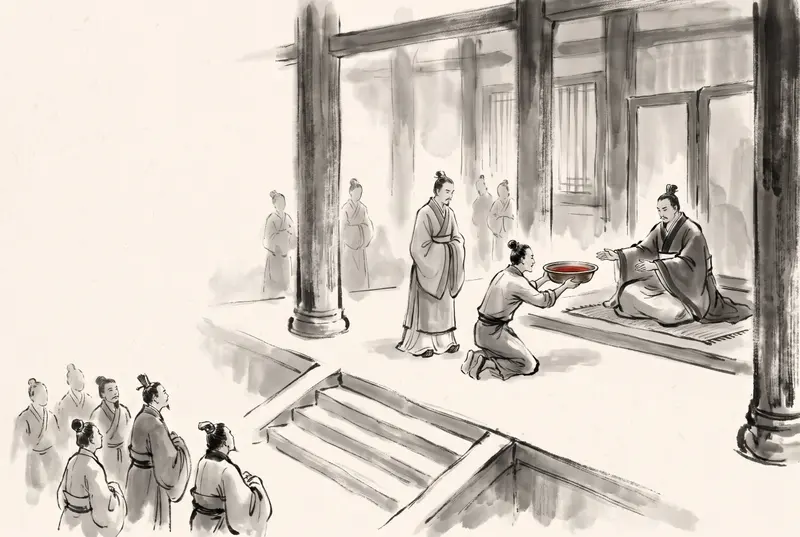
楚王曰:「唯唯,誠若先生之言,謹奉社稷而以從。」毛遂曰:「從定乎?」楚王曰:「定矣。」毛遂謂楚王之左右曰:「取雞狗馬之血來。」毛遂奉銅槃而跪進之楚王曰:「王當歃血而定從,次者吾君,次者遂。」遂定從於殿上。毛遂左手持槃血而右手招十九人曰:「公相與歃此血於堂下。公等錄錄,所謂因人成事者也。」
書き下し文
楚王曰く、「唯唯。誠に先生の言の若し。謹んで社稷を奉じて以て従わん」と。毛遂曰く、「従定まれるか」と。楚王曰く、「定まれり」と。毛遂楚王の左右に謂いて曰く、「鶏狗馬の血を取り来たれ」と。毛遂銅槃を奉じて跪きて之を楚王に進めて曰く、「王当に血を歃りて従を定むべし。次は吾が君、次は遂なり」と。遂に従を殿上に定む。毛遂左手に槃の血を持ちて、右手もて十九人を招きて曰く、「公相与に此の血を堂下に歃れ。公等は録録たり。所謂人に因りて事を成す者なり」と。
現代語訳
楚王は言った。「わかった、わかった。まことに先生の言うとおりだ。謹んで国をあげて同盟に加わろう」。毛遂は言った。「同盟は決まりましたか」。楚王は言った。「決まった」。毛遂は楚王の側近に言った。「鶏と犬と馬の血を持ってきなさい」。毛遂は銅の皿を捧げ持ち、ひざまずいて楚王に差し出して言った。「王が最初に血をすすって同盟を定めてください。次はわたしの主人、その次はわたしです」。こうして宮殿の上で同盟が定まった。毛遂は左手に血の皿を持ち、右手で十九人を手招きして言った。「あなたがたも、堂の下でこの血をすすりなさい。あなたがたは平凡で、いわゆる人の力に頼って事をなしとげる者たちですな」。
英訳
The King of Chu said, "Yes, yes. It is truly as you say, sir. I will respectfully pledge my state to the alliance." "Is the alliance settled?" asked Mao Sui. "It is settled," said the king. Mao Sui said to the king's attendants, "Bring the blood of a cock, a dog and a horse." Holding up a bronze basin, he knelt and offered it to the King of Chu, saying, "Your Majesty should smear your lips with the blood to seal the alliance. Next my lord, and next myself." So the alliance was sealed in the palace hall. Holding the basin of blood in his left hand, Mao Sui beckoned to the nineteen with his right and said, "You gentlemen can smear the blood together down below the hall. You are ordinary men, the kind who get things done by relying on others."
解説(日)
- 唯唯: 「はい、はい」。相手の言うことを受け入れる返事。
- 社稷: 国家(巻68の章を参照)。
- 雞狗馬之血: 鶏・犬・馬の血。身分によって使う動物が違ったとされる。
- 銅槃: 銅の大皿。
- 錄錄: 平凡で取り柄がない。「碌碌」とも書く。
- 因人成事: 人の力に頼って事をなしとげる。人まかせの者をさす言葉として今も使う。
解説(英)
- 唯唯: "Yes, yes," an answer of agreement.
- 社稷: the state (see Volume 68).
- The blood of a cock, a dog and a horse: different animals were said to be used for people of different ranks.
- 銅槃: a bronze basin.
- 錄錄: ordinary, undistinguished (also written 碌碌).
- 因人成事: getting things done by relying on others; still used for people who let others do the work.
この節から生まれた言葉: 人に因りて事を成す
英語の語注
- pledge/plɛdʒ/verb
to promise seriously and formally
本文では: “I will respectfully pledge my state to the alliance”
似た語と違い: vow — promise solemnly · commit — promise to support
- basin/ˈbeɪsən/noun
a wide, open bowl for holding liquid
本文では: “Holding up a bronze basin”
似た語と違い: bowl — a round deep dish · vessel — formal; a container for liquid
- beckon/ˈbɛkən/verb
to signal to someone with your hand to come nearer
本文では: “beckoned to the nineteen with his right”
似た語と違い: wave over — call someone over with a wave · summon — formal; call someone to come
- ordinary/ˈɔrdəˌnɛri/adjective
not special or unusual in any way
本文では: “You are ordinary men”
似た語と違い: common — found everywhere; not special · mediocre — only average, not good
節 8
原文
平原君已定從而歸,歸至於趙,曰:「勝不敢復相士。勝相士多者千人,寡者百數,自以爲不失天下之士,今乃於毛先生而失之也。毛先生一至楚,而使趙重於九鼎大呂。毛先生以三寸之舌,彊於百萬之師。勝不敢復相士。」遂以爲上客。
書き下し文
平原君已に従を定めて帰り、帰りて趙に至りて曰く、「勝敢えて復た士を相せず。勝の士を相すること多き者は千人、寡き者は百数。自ら以為えらく天下の士を失わずと。今乃ち毛先生に於いて之を失えり。毛先生一たび楚に至りて、趙をして九鼎大呂より重からしむ。毛先生三寸の舌を以て、百万の師より彊し。勝敢えて復た士を相せず」と。遂に以て上客と為す。
現代語訳
平原君は同盟をまとめて帰国し、趙に着くと言った。「わたしはもう二度と、人物を見定めるなどとは言うまい。わたしが見定めてきた人物は、多いときは千人、少ないときでも数百人にのぼり、天下の士を見逃したことはないと思っていた。それなのに、毛先生を見逃してしまった。毛先生は一度楚に行っただけで、趙の重みを九鼎や大呂の鐘よりも重くした。毛先生の三寸の舌は、百万の軍よりも強い。わたしはもう二度と、人物を見定めるなどとは言うまい」。そして毛遂を上客とした。
英訳
Lord Pingyuan, the alliance sealed, returned home. When he reached Zhao he said, "I will never again presume to judge men. I have judged gentlemen by the thousand, or at least by the hundred, and I thought I had never overlooked a single gentleman in the realm. Yet I overlooked Master Mao. With one trip to Chu, Master Mao made Zhao weigh more than the Nine Tripods and the Great Lü bell. Master Mao's three-inch tongue is stronger than an army of a million. I will never again presume to judge men." And he made Mao Sui an honored guest.
解説(日)
- 相士: 人物を見定める。人相を見るように人を見ぬくこと。
- 九鼎大呂: 九鼎は、禹が作ったと伝えられる、天下の宝の九つの鼎。大呂は周の王室の大きな鐘。どちらも国家の重み・権威の象徴。
- 三寸之舌: 三寸の舌。弁舌の力のたとえとして今も使う。
- 上客: 最上の待遇の客。
- このあと(省略): 毛遂の話は『史記』ではここで終わる。
解説(英)
- 相士: judging a man's worth, as if reading his face.
- The Nine Tripods and the Great Lü bell (九鼎大呂): the nine sacred cauldrons said to have been cast by Yu, and the great bell of the Zhou court; symbols of a state's weight and authority.
- 三寸之舌 ("a three-inch tongue"): still a common phrase for the power of eloquence.
- 上客: an honored guest of the highest rank.
この節から生まれた言葉: 三寸の舌
英語の語注
- presume/prɪˈzuːm/verb
to dare to do something you have no right to do
本文では: “I will never again presume to judge men”
似た語と違い: dare — be brave or rude enough to · venture — formal; dare to say or do
- overlook/ˌoʊvərˈlʊk/verb
to fail to notice or value someone
本文では: “Yet I overlooked Master Mao”
似た語と違い: miss — fail to notice · underrate — think someone is less good than they are
節 9
原文
平原君既返趙,楚使春申君將兵赴救趙,魏信陵君亦矯奪晉鄙軍往救趙,皆未至。秦急圍邯鄲,邯鄲急,且降,平原君甚患之。邯鄲傳舍吏子李同説平原君曰:「君不憂趙亡邪?」平原君曰:「趙亡則勝爲虜,何爲不憂乎?」李同曰:「邯鄲之民,炊骨易子而食,可謂急矣,而君之後宮以百數,婢妾被綺縠,餘粱肉,而民褐衣不完,糟糠不厭。民困兵盡,或剡木爲矛矢,而君器物鐘磬自若。使秦破趙,君安得有此?使趙得全,君何患無有?今君誠能令夫人以下編於士卒之閒,分功而作,家之所有盡散以饗士,士方其危苦之時,易德耳。」於是平原君從之,得敢死之士三千人。李同遂與三千人赴秦軍,秦軍爲之卻三十里。亦會楚、魏救至,秦兵遂罷,邯鄲復存。李同戰死,封其父爲李侯。
書き下し文
平原君既に趙に返る。楚春申君をして兵を将いて赴きて趙を救わしめ、魏の信陵君も亦た晋鄙の軍を矯奪して往きて趙を救わんとするも、皆未だ至らず。秦急に邯鄲を囲む。邯鄲急にして、且に降らんとす。平原君甚だ之を患う。邯鄲の伝舎の吏の子李同平原君に説きて曰く、「君は趙の亡ぶるを憂えざるか」と。平原君曰く、「趙亡ぶれば則ち勝は虜と為る。何為れぞ憂えざらんや」と。李同曰く、「邯鄲の民は、骨を炊ぎ子を易えて食らう。急なりと謂うべし。而るに君の後宮は百を以て数え、婢妾は綺縠を被り、粱肉を余す。而して民は褐衣完からず、糟糠に厭かず。民困しみ兵尽き、或いは木を剡りて矛矢と為す。而るに君の器物鐘磬は自若たり。秦をして趙を破らしめば、君安くんぞ此を有するを得ん。趙をして全きを得しめば、君何ぞ有る無きを患えん。今君誠に能く夫人以下をして士卒の間に編せしめ、功を分かちて作さしめ、家の有する所は尽く散じて以て士を饗せば、士は其の危苦の時に方りて、徳とし易きのみ」と。是に於いて平原君之に従い、敢死の士三千人を得たり。李同遂に三千人と秦軍に赴く。秦軍之が為に卻くこと三十里。亦た会たま楚・魏の救い至り、秦兵遂に罷め、邯鄲復た存す。李同戦死す。其の父を封じて李侯と為す。
現代語訳
平原君が趙に戻ると、楚は春申君に兵を率いさせて趙の救援に向かわせ、魏の信陵君も、晋鄙の軍をいつわって奪い、趙を救いに向かったが、どちらもまだ着かなかった。秦は邯鄲を激しく攻め立て、邯鄲は追いつめられて、いまにも降伏しそうになり、平原君はひどく心配した。邯鄲の宿場の役人の子の李同が、平原君に説いた。「あなたは趙が滅びるのを心配していないのですか」。平原君は言った。「趙が滅べば、わたしは捕虜になる。どうして心配しないことがあろう」。李同は言った。「邯鄲の民は、骨を燃やして煮炊きし、子どもを取り替えて食べるほどです。まさに危急のときです。それなのに、あなたの奥には何百人もの女性がいて、召使いまで美しい絹を着て、上等の米や肉を食べ残しています。民は粗末な着物さえそろわず、酒かすや米ぬかも満足に食べられません。民は苦しみ、武器も尽きて、木を削って矛や矢にしている者もいるのに、あなたの器や鐘や磬は、まったく元のままです。もし秦が趙を破ったら、あなたはこれらを持っていられるでしょうか。趙が無事なら、何がなくなるのを心配することがありましょう。いまあなたが、奥方から下の者まで兵の中に組み入れて仕事を分担させ、家の財産をすべて分け与えて兵をもてなせば、兵は危険と苦しみの最中ですから、その恩に深く感じるでしょう」。そこで平原君はそのとおりにし、死をおそれない兵三千人を得た。李同は三千人とともに秦軍に突撃し、秦軍は三十里も退いた。ちょうど楚と魏の救援も着いたので、秦軍はとうとう引き上げ、邯鄲は救われた。李同は戦死したので、その父を李侯に封じた。
英訳
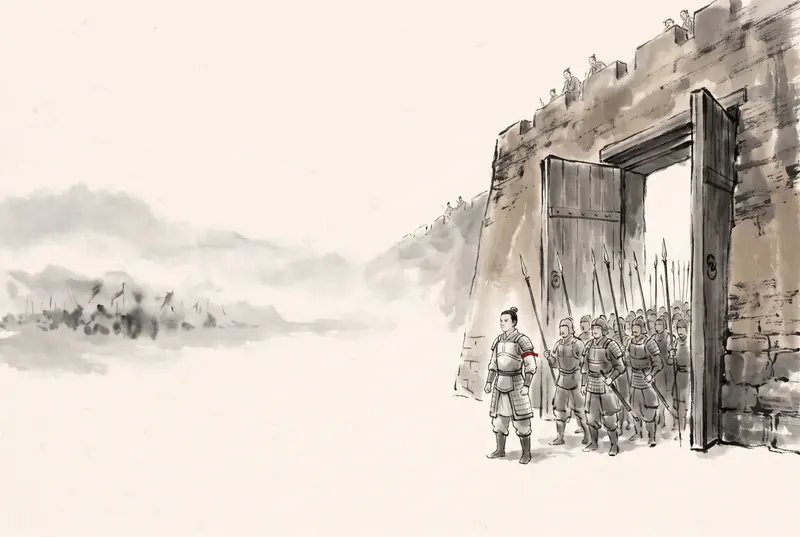
After Lord Pingyuan returned to Zhao, Chu sent Lord Chunshen at the head of an army to rescue Zhao, and Lord Xinling of Wei also seized Jin Bi's army by a forged order and set out to save Zhao, but neither had yet arrived. Qin pressed its siege of Handan hard; the city was desperate and about to surrender, and Lord Pingyuan was deeply worried. Li Tong, the son of an official of the Handan post station, said to Lord Pingyuan, "Are you not worried that Zhao will be destroyed?" Lord Pingyuan said, "If Zhao is destroyed, I will be taken prisoner. How could I not be worried?" Li Tong said, "The people of Handan are burning bones for fuel and exchanging children to eat. You could call that desperate. Yet the women of your household number in the hundreds, your maids and concubines wear fine silks, and they leave good millet and meat uneaten, while the people cannot even find whole clothes of coarse cloth or enough dregs and husks to eat. The people are worn out and their weapons are gone; some sharpen sticks for spears and arrows, while your vessels, bells and chime stones stay just as they were. If Qin breaks Zhao, how will you keep any of this? If Zhao is saved, why worry about losing anything? If you will now put everyone from your wife down to work among the soldiers, share in the labor, and give away everything your house has to feast the soldiers, then at this moment of danger and hardship they will be easily moved to gratitude." Lord Pingyuan did as he said and gained three thousand men ready to die. Li Tong led the three thousand against the Qin army, and Qin fell back thirty li. Just then the armies of Chu and Wei arrived, the Qin troops withdrew, and Handan was saved. Li Tong died in battle, and his father was made Marquis Li.
解説(日)
- 矯奪晉鄙軍: 魏王の命令といつわって、将軍晋鄙の軍を奪う(巻77の章を参照)。
- 傳舍吏: 宿場の役人。
- 炊骨易子而食: 骨を燃やして煮炊きし、自分の子は食べられないので他人と子を取り替えて食べる。包囲された町の極限の飢えを表す言葉。
- 綺縠・粱肉・褐衣・糟糠: 美しい絹、上等の米と肉、粗末な毛織りの着物、酒かすと米ぬか。
- 剡木: 木を削ってとがらせる。
- 鐘磬: 鐘と磬(石の打楽器)。貴族の宴の楽器。
- 敢死之士: 死を恐れない兵。決死隊。
- 邯鄲復存: 前257年、邯鄲は救われた。
解説(英)
- 矯奪晉鄙軍: seizing General Jin Bi's army with a forged royal order (see Volume 77).
- 傳舍吏: an official of a post station.
- 炊骨易子而食: burning bones for fuel and exchanging children to eat, since no one could eat their own; the depths of famine in a besieged city.
- Silks, millet and meat, coarse cloth, dregs and husks (綺縠・粱肉・褐衣・糟糠).
- 剡木: sharpening sticks.
- 鐘磬: bells and stone chimes, instruments for noble feasts.
- 敢死之士: men ready to die, a forlorn hope.
- Handan was saved: in 257 BCE.
英語の語注
- forged/fɔrdʒd/adjective
false, but made to look real
本文では: “by a forged order”
似た語と違い: fake — not genuine · counterfeit — copied to deceive
- surrender/səˈrɛndər/verb
to stop fighting and accept defeat
本文では: “about to surrender”
似た語と違い: give in — stop resisting · yield — formal; give up
- fuel/ˈfjuːəl/noun
something that is burned to give heat
本文では: “burning bones for fuel”
似た語と違い: firewood — wood for burning · kindling — small pieces for starting a fire
- gratitude/ˈɡrætɪˌtuːd/noun
the feeling of being thankful
本文では: “easily moved to gratitude”
似た語と違い: thankfulness — being thankful · appreciation — feeling grateful for something
- withdraw/wɪðˈdrɔ/verb
to move an army back, away from the enemy
本文では: “the Qin troops withdrew”
似た語と違い: retreat — move back after defeat · pull back — move away from a position
- marquis/ˈmɑrkwɪs/noun
a noble title, in Chinese history usually given with a fief
本文では: “his father was made Marquis Li”
似た語と違い: lord — a man of high rank · noble — a person of high birth or rank
節 10
原文
太史公曰:平原君,翩翩濁世之佳公子也,然未睹大體。鄙語曰「利令智昏」,平原君貪馮亭邪説,使趙陷長平兵四十餘萬眾,邯鄲幾亡。
書き下し文
太史公曰く、平原君は、翩翩たる濁世の佳公子なり。然れども未だ大体を睹ず。鄙語に曰く「利は智をして昏からしむ」と。平原君馮亭の邪説を貪り、趙をして長平の兵四十余万の衆を陥らしめ、邯鄲幾ど亡ぶ。
現代語訳
太史公(司馬遷)は言う。平原君は、濁った世の中にあって、軽やかで風雅な、すぐれた公子だった。しかし、大きなところが見えていなかった。ことわざに「利は人の知恵を曇らせる」という。平原君は馮亭のよこしまな説に飛びついて欲を出し、そのために趙は長平で四十万あまりの兵を失い、邯鄲は危うく滅びるところだった。
英訳
The Grand Historian says: Lord Pingyuan was an elegant, graceful prince in a muddied age, but he could not see the larger picture. As the common saying goes, "Profit clouds the mind." Lord Pingyuan, greedy for the land offered in Feng Ting's wicked scheme, led Zhao to lose more than four hundred thousand men at Changping, and Handan very nearly fell.
解説(日)
- 翩翩: 軽やかで風雅なさま。
- 濁世: 乱れた世。
- 大體: 大局、大きな道理。
- 利令智昏: 利益は人の知恵を曇らせる。よく知られたことわざ。
- 馮亭邪說: 前262年、韓の上党の守の馮亭が、秦に攻められて上党の地を趙に差し出そうとした。平原君はこれを受けるよう王に勧め、怒った秦が趙を攻めて、長平の戦い(前260年)が起きた。
- このあと(省略): 虞卿についての評が続く。
解説(英)
- 翩翩: graceful, elegant.
- 濁世: a troubled, muddied age.
- 大體: the larger picture, the main principle.
- 利令智昏 ("profit clouds the mind"): a well-known saying.
- Feng Ting's scheme: in 262 BCE Feng Ting, governor of Shangdang in Hann, offered the region to Zhao rather than surrender it to Qin. Lord Pingyuan urged the king to accept, Qin attacked Zhao in anger, and the battle of Changping (260 BCE) followed.
- After this (left out here): a comment on Yu Qing.
英語の語注
- elegant/ˈɛlɪɡənt/adjective
graceful and stylish in looks or manner
本文では: “an elegant, graceful prince”
似た語と違い: refined — well-mannered and cultured · polished — smooth and elegant
- scheme/skiːm/noun
a clever, often dishonest plan
本文では: “Feng Ting's wicked scheme”
似た語と違い: plot — a secret plan to do harm · ploy — a clever trick