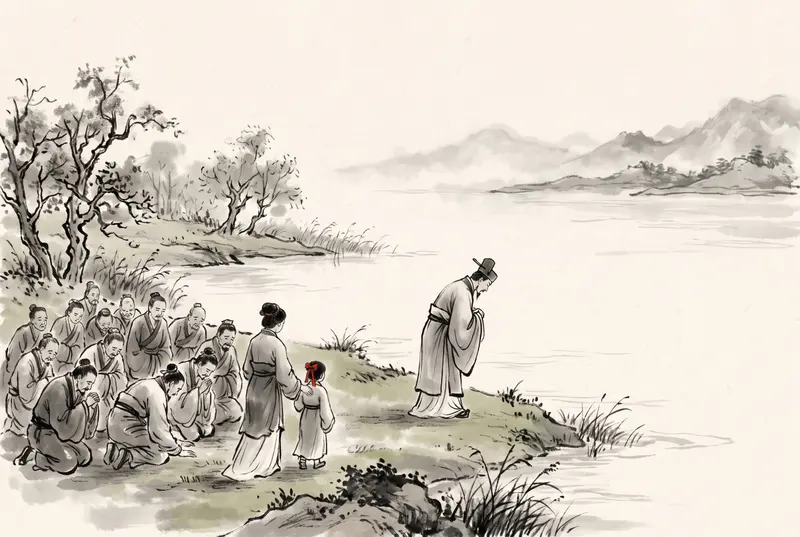
列伝 · 巻 126
滑稽列伝 滑稽列傳
談言微中 談言微中
王の前で冗談を言い、笑いの中に真実を忍ばせて国を救った者たちの伝である。斉の淳于髡は「三年飛ばず鳴かずの鳥」のなぞかけで怠けた王を目覚めさせ、豚の足一つで大きな願いをかける農民の話で援軍の費用を十倍にさせた。楚の優孟は愛馬を大夫の礼で葬ろうとする王を「いっそ君主の礼で」と皮肉って止め、名宰相の貧しい遺児を救う。秦の優旃は雨に濡れる衛兵を笑いで休ませ、城を漆で塗ろうとする二世皇帝を思いとどまらせた。後半には後世の補筆として、東方朔の機知と、河の神の花嫁を取りやめさせた西門豹の話を収める。
この巻のうち「談言微中」の場面を載せています。巻の全文ではありません。
音声
音声は合成音声です。
動画
節 1
原文
孔子曰:「六藝於治一也。禮以節人,樂以發和,書以道事,詩以達意,易以神化,春秋以義。」太史公曰:天道恢恢,豈不大哉!談言微中,亦可以解紛。
書き下し文
孔子曰く、「六芸の治に於けるは一なり。礼は以て人を節し、楽は以て和を発し、書は以て事を道い、詩は以て意を達し、易は以て神化し、春秋は以て義あり」と。太史公曰く、天道恢恢、豈に大ならずや。談言微かに中れば、亦以て紛れを解くべし。
現代語訳
孔子は言った。「六芸は、世を治めるという点では一つである。礼は人を節度づけ、楽は和をもたらし、書は事柄を語り、詩は思いを伝え、易は神妙な変化を示し、春秋は義を明らかにする」。太史公は言う。天の道は広大で、なんと大きいことか。冗談の中の言葉でも、かすかに急所を突けば、もつれた問題を解くことができる。
英訳
Confucius said: "The Six Arts are one in their use for government. The rites give people measure, music brings harmony, the Documents tell of events, the Songs express feeling, the Changes show the workings of the divine, and the Annals teach what is right." The Grand Historian says: The Way of Heaven is vast. How great it is! Even a word spoken in jest, if it subtly hits the mark, can untangle a dispute.
解説(日)
- 滑稽: もとは言葉がなめらかで機知に富むこと。のちに「おかしいこと」の意になった。
- 恢恢: 広大なさま。
- 談言微中: 談笑の言葉がひそかに要点に当たる。
解説(英)
- Jester (滑稽): originally a person of quick, smooth wit. Only later did the word come to mean "funny".
- Subtly hits the mark (談言微中): a joke that quietly reaches the point.
英語の語注
- untangle/ʌnˈtæŋɡəl/verb
to free from knots or confusion
本文では: “can untangle a dispute”
似た語と違い: sort out — solve · unravel — undo
- jest/dʒɛst/noun
a joke
本文では: “a word spoken in jest”
似た語と違い: joke — something said to amuse · quip — a witty remark
節 2
原文
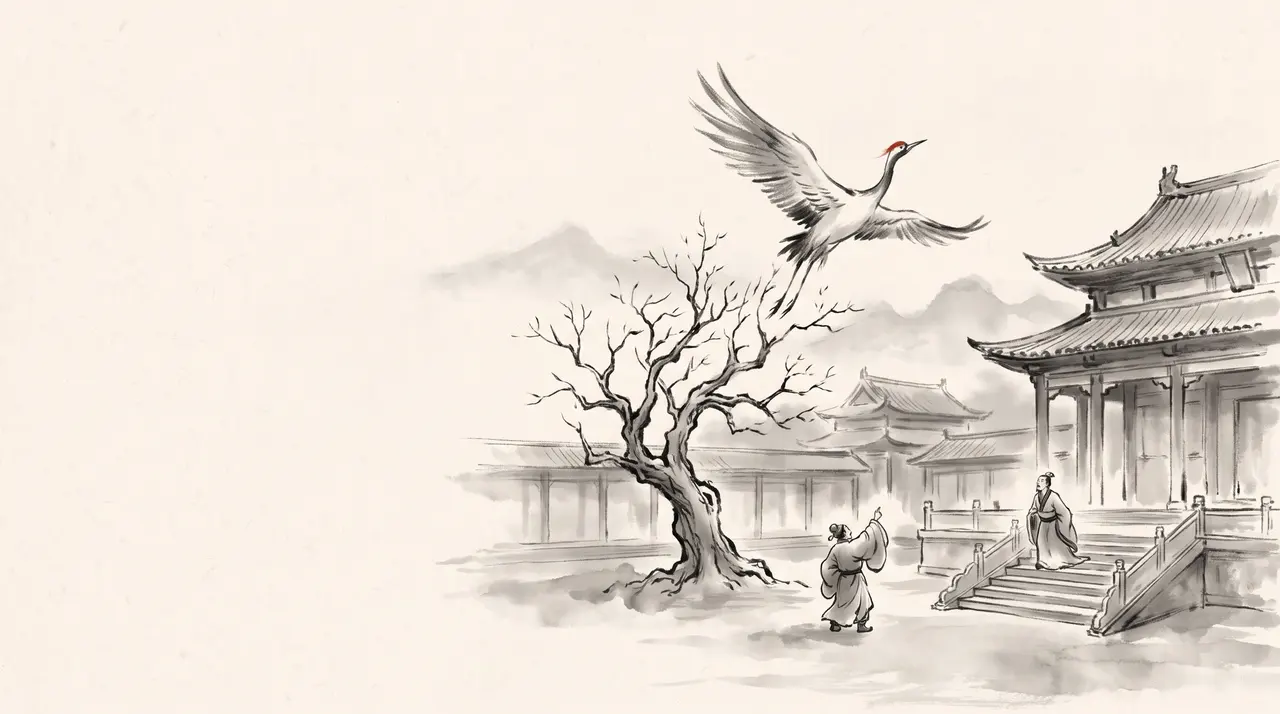
淳于髡者,齊之贅婿也。長不滿七尺,滑稽多辯,數使諸侯,未嘗屈辱。齊威王之時喜隱,好為淫樂長夜之飲,沈湎不治,委政卿大夫。百官荒亂,諸侯并侵,國且危亡,在於旦暮,左右莫敢諫。淳于髡說之以隱曰:「國中有大鳥,止王之庭,三年不蜚又不鳴,不知此鳥何也?」王曰:「此鳥不飛則已,一飛沖天;不鳴則已,一鳴驚人。」於是乃朝諸縣令長七十二人,賞一人,誅一人,奮兵而出。諸侯振驚,皆還齊侵地。威行三十六年。語在田完世家中。
書き下し文
淳于髡なる者は、斉の贅婿なり。長七尺に満たず、滑稽にして辯多く、数しば諸侯に使いして、未だ嘗て屈辱せられず。斉の威王の時隠を喜み、淫楽長夜の飲を為すを好み、沈湎して治めず、政を卿大夫に委ぬ。百官荒乱し、諸侯并び侵し、国且に危亡せんとすること、旦暮に在り。左右敢えて諫むる莫し。淳于髡之に説くに隠を以てして曰く、「国中に大鳥有り、王の庭に止まる。三年蜚ばず又鳴かず。此の鳥の何ぞやを知らず」と。王曰く、「此の鳥飛ばずんば則ち已む、一たび飛べば天に沖る。鳴かずんば則ち已む、一たび鳴けば人を驚かす」と。是に於いて乃ち諸県の令長七十二人を朝せしめ、一人を賞し、一人を誅し、兵を奮いて出づ。諸侯振驚し、皆斉の侵地を還す。威行わるること三十六年。語は田完世家の中に在り。
現代語訳
淳于髡は斉の入り婿である。背丈は七尺に満たないが、機知に富んで弁が立ち、たびたび諸侯への使者となって、一度も恥をかかなかった。斉の威王はなぞかけを好み、夜通しの酒宴にふけって政治をかえりみず、大臣に任せきりだった。役人は乱れ、諸侯は次々と攻め込み、国は今にも滅びそうだったが、側近は誰も諫めなかった。淳于髡はなぞかけで説いた。「国の中に大きな鳥がいて、王の庭にとまっています。三年の間、飛びもせず鳴きもしません。この鳥は何でしょう」。王は言った。「この鳥は飛ばなければそれまでだが、ひとたび飛べば天まで突き抜ける。鳴かなければそれまでだが、ひとたび鳴けば人を驚かす」。そこで各県の長官七十二人を朝廷に呼び、一人を賞し、一人を処刑して、兵を奮って出陣した。諸侯は震え上がり、奪った土地をみな斉に返した。その威光は三十六年続いた。この話は田完世家にも見える。
英訳
Chunyu Kun was a son-in-law who had married into a family of Qi. He was under seven feet tall, but quick-witted and a fine talker. He often went as envoy to the other states and was never put to shame. King Wei of Qi loved riddles and all-night drinking parties. Sunk in wine, he did not govern, and left everything to his ministers. The officials fell into disorder, the other states invaded together, and the country might fall any day, yet no one around him dared to object. Chunyu Kun approached him with a riddle: "There is a great bird in this country, perched in the king's courtyard. For three years it has neither flown nor sung. What kind of bird is this?" The king said: "If this bird does not fly, so be it. But once it flies, it will soar to heaven. If it does not sing, so be it. But once it sings, it will astonish the world." He then summoned all seventy-two county magistrates to court, rewarded one, executed one, and marched out with his army. The other states were shaken and gave back all the land they had taken from Qi. His authority lasted for thirty-six years. The story is told in the House of Tian Wan.
解説(日)
- 贅婿: 入り婿。当時は身分が低いとされた。
- 隱: なぞかけ。
- 沈湎: 酒におぼれる。
- 一飛沖天、一鳴驚人: 「鳴かず飛ばず」「一鳴人を驚かす」の出典。楚の荘王の話としても伝わる。
解説(英)
- Son-in-law who married in (贅婿): a man who joined his wife's family, a position of low status.
- "Once it flies..." (一飛沖天,一鳴驚人): a famous phrase for someone who does nothing for a long time and then astonishes everyone. The same tale is told of King Zhuang of Chu.
この節から生まれた言葉: 一鳴驚人
英語の語注
- riddle/ˈrɪdəl/noun
a puzzling question
本文では: “approached him with a riddle”
似た語と違い: puzzle — a difficult problem · brainteaser — a hard question
- soar/sɔr/verb
to fly high
本文では: “it will soar to heaven”
似た語と違い: climb — go up · rise — move upward
節 3
原文
威王八年,楚大發兵加齊。齊王使淳于髡之趙請救兵,齎金百斤,車馬十駟。淳于髡仰天大笑,冠纓索絕。王曰:「先生少之乎?」髡曰:「何敢!」王曰:「笑豈有說乎?」髡曰:「今者臣從東方來,見道傍有禳田者,操一豚蹄,酒一盂,祝曰:『甌窶滿篝,汙邪滿車,五穀蕃熟,穰穰滿家。』臣見其所持者狹而所欲者奢,故笑之。」於是齊威王乃益齎黃金千溢,白璧十雙,車馬百駟。髡辭而行,至趙。趙王與之精兵十萬,革車千乘。楚聞之,夜引兵而去。
書き下し文
威王の八年、楚大いに兵を発して斉に加う。斉王淳于髡をして趙に之きて救兵を請わしめ、金百斤、車馬十駟を齎らす。淳于髡天を仰ぎて大いに笑い、冠の纓索絶ゆ。王曰く、「先生之を少なしとするか」と。髡曰く、「何ぞ敢えてせん」と。王曰く、「笑うこと豈に説有りや」と。髡曰く、「今者臣東方より来たるに、道傍に田を禳う者有るを見る。一豚蹄、酒一盂を操り、祝して曰く、『甌窶は篝に満ち、汙邪は車に満ち、五穀蕃熟し、穣穣として家に満てよ』と。臣其の持する所の者狭くして欲する所の者奢るを見る。故に之を笑う」と。是に於いて斉の威王乃ち益して黄金千溢、白璧十双、車馬百駟を齎らす。髡辞して行き、趙に至る。趙王之に精兵十万、革車千乗を与う。楚之を聞き、夜兵を引きて去る。
現代語訳
威王の八年、楚が大軍で斉に攻めてきた。斉王は淳于髡を趙へ遣わして援軍を求めさせ、黄金百斤と馬車十台を持たせようとした。淳于髡は天を仰いで大笑いし、冠のひもが切れた。王は言った。「先生は少ないと思うのか」。淳于髡は「とんでもない」と言った。「それなら、笑うわけがあるのか」。淳于髡は言った。「今日、東から来る途中、道ばたで田の豊作を祈る者を見ました。豚の足一本と酒一杯を持って、こう祈っていました。『高い畑はかごいっぱいに、低い田は車いっぱいに、五穀がよく実って、家にあふれますように』。手にしたものはこんなに少ないのに、願うことはこんなに多い。それで笑ったのです」。そこで威王は贈り物を増やして、黄金千溢、白璧十対、馬車百台とした。淳于髡は辞して趙へ行った。趙王は精兵十万と戦車千台を与えた。楚はこれを聞き、夜のうちに兵を引いて去った。
英訳
In King Wei's eighth year, Chu sent a great army against Qi. The king ordered Chunyu Kun to go to Zhao for help, with a hundred catties of gold and ten four-horse carriages as gifts. Chunyu Kun looked up at the sky and laughed so hard that the strings of his cap snapped. The king said: "Do you think it too little, sir?" Kun said: "How would I dare?" The king said: "Then is there a reason for your laughter?" Kun said: "On my way here from the east today I saw a man by the road praying for his field. He held one pig's trotter and one cup of wine, and prayed: 'May the high plots fill my baskets, the low fields fill my carts, may the five grains ripen in abundance and my house overflow!' I saw how little he was holding and how much he was asking for, and so I laughed." So King Wei raised the gift to a thousand yi of gold, ten pairs of white jade discs and a hundred carriages. Kun took his leave and went to Zhao. The king of Zhao gave him a hundred thousand picked troops and a thousand war chariots. When Chu heard this, it withdrew in the night.
解説(日)
- 駟: 四頭立ての馬車。
- 纓索: 冠のひも。
- 禳田: 田の災いを払い豊作を祈る。
- 甌窶・汙邪: 高くやせた土地と、低い土地。
解説(英)
- Catty (斤): a unit of weight, about a quarter of a kilogram in this period.
- Trotter (豚蹄): a pig's foot, a very small offering.
英語の語注
- trotter/ˈtrɑtər/noun
a pig's foot used as food
本文では: “one pig's trotter”
似た語と違い: hoof — an animal's hard foot · pig's foot — the foot of a pig
- abundance/əˈbʌndəns/noun
a very large amount
本文では: “ripen in abundance”
似た語と違い: plenty — more than enough · wealth — a large quantity
節 4
原文
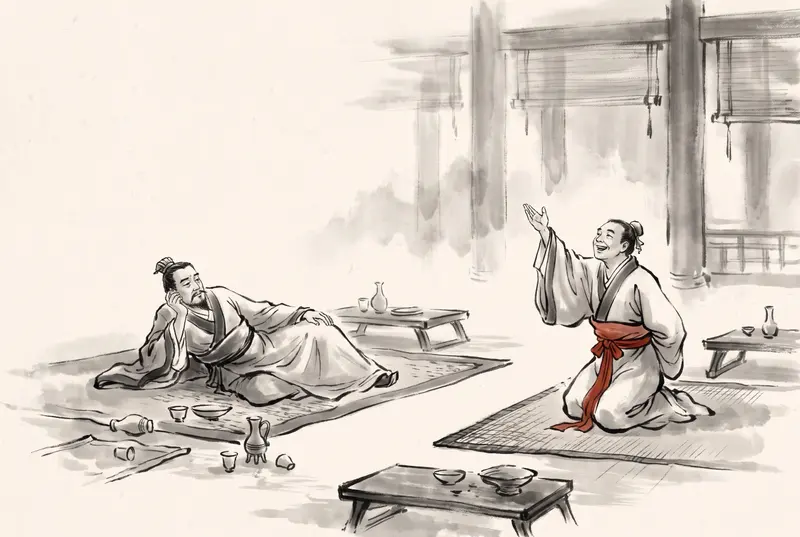
威王大說,置酒後宮,召髡賜之酒。問曰:「先生能飲幾何而醉?」對曰:「臣飲一斗亦醉,一石亦醉。」威王曰:「先生飲一斗而醉,惡能飲一石哉!其說可得聞乎?」髡曰:「賜酒大王之前,執法在傍,御史在後,髡恐懼俯伏而飲,不過一斗徑醉矣。若親有嚴客,髡帣韝鞠跽,待酒於前,時賜餘瀝,奉觴上壽,數起,飲不過二斗徑醉矣。若朋友交遊,久不相見,卒然相睹,歡然道故,私情相語,飲可五六斗徑醉矣。若乃州閭之會,男女雜坐,行酒稽留,六博投壺,相引為曹,握手無罰,目眙不禁,前有墮珥,后有遺簪,髡竊樂此,飲可八斗而醉二參。日暮酒闌,合尊促坐,男女同席,履舄交錯,杯盤狼藉,堂上燭滅,主人留髡而送客,羅襦襟解,微聞薌澤,當此之時,髡心最歡,能飲一石。故曰酒極則亂,樂極則悲;萬事盡然,言不可極,極之而衰。」以諷諫焉。齊王曰:「善。」乃罷長夜之飲,以髡為諸侯主客。宗室置酒,髡嘗在側。
書き下し文
威王大いに説び、酒を後宮に置き、髡を召して之に酒を賜う。問いて曰く、「先生能く飲むこと幾何にして酔うか」と。対えて曰く、「臣飲むこと一斗にして亦酔い、一石にして亦酔う」と。威王曰く、「先生一斗を飲みて酔わば、悪くんぞ能く一石を飲まんや。其の説聞くを得べきか」と。髡曰く、「酒を大王の前に賜わり、執法傍らに在り、御史後ろに在らば、髡恐懼して俯伏して飲み、一斗に過ぎずして径ちに酔う。若し親に厳客有りて、髡帣韝鞠跽し、酒を前に待し、時に余瀝を賜わり、觴を奉じて寿を上り、数しば起たば、飲むこと二斗に過ぎずして径ちに酔う。若し朋友交遊、久しく相見ず、卒然として相睹、歓然として故を道い、私情相語らば、飲むこと五六斗可りにして径ちに酔う。若し乃ち州閭の会、男女雑坐し、行酒稽留し、六博投壺、相引きて曹を為し、手を握るも罰無く、目眙するも禁ぜず、前に堕珥有り、后に遺簪有らば、髡窃かに此を楽しみ、飲むこと八斗可りにして酔うこと二参なり。日暮れ酒闌にして、尊を合わせ坐を促し、男女席を同じくし、履舄交錯し、杯盤狼藉として、堂上の燭滅し、主人髡を留めて客を送り、羅襦の襟解け、微かに薌沢を聞く。此の時に当たりて、髡の心最も歓び、能く一石を飲む。故に曰く、酒極まれば則ち乱れ、楽しみ極まれば則ち悲しむ。万事尽く然り。言うこころは極むべからず、之を極むれば衰う」と。以て諷諫す。斉王曰く、「善し」と。乃ち長夜の飲を罷め、髡を以て諸侯の主客と為す。宗室の酒を置くに、髡嘗て側に在り。
現代語訳
威王は大いに喜び、後宮で酒宴を開いて淳于髡を招いた。王は尋ねた。「先生はどれほど飲めば酔うのか」。淳于髡は答えた。「私は一斗でも酔いますし、一石でも酔います」。王は言った。「一斗で酔うなら、どうして一石も飲めるのか。わけを聞かせてくれ」。淳于髡は言った。「大王の前でお酒を賜り、そばに法の役人、後ろに監察官がいれば、恐れ入ってひれ伏して飲むので、一斗も飲まずに酔います。親のもとに大事な客があって、私が袖をからげてひざまずき、お酌をし、時に飲み残しをいただき、杯をささげて長寿を祝って何度も立つなら、二斗も飲まずに酔います。久しく会わなかった友と不意に出会い、喜んで昔話をし、心を打ち明けて語り合えば、五、六斗で酔います。村の集まりで、男女が入りまじって座り、酒をゆっくり回し、すごろくや投壺に興じて組を作り、手を握っても罰がなく、見つめ合っても咎められず、前には落ちた耳飾り、後ろには忘れたかんざしがあるようなら、私はこれがうれしくて、八斗飲んでほろ酔いです。日が暮れて酒も尽きかけ、残りの酒を寄せ合って膝をつめ、男女が同じ席に座り、履物が入り乱れ、杯や皿が散らかり、広間の灯が消え、主人が客を帰して私だけを引きとめ、薄絹の襟がほどけて、ほのかな香りが漂う。このときこそ私の心は最も喜び、一石でも飲めるのです。ですから、酒が極まれば乱れ、楽しみが極まれば悲しみになるというのです。万事がそうです。何事も極めてはならず、極めれば衰えます」。こうして遠回しに諫めたのである。王は「よくわかった」と言い、夜通しの酒宴をやめ、淳于髡を諸侯の接待役とした。王族の酒宴には、いつも淳于髡がそばに控えた。
英訳
King Wei, delighted, held a feast in the inner palace and offered Kun wine. He asked: "How much can you drink before you are drunk, sir?" Kun answered: "I get drunk on one measure, and I get drunk on ten." The king said: "If one measure makes you drunk, how can you drink ten? May I hear the explanation?" Kun said: "If you give me wine in your presence, with the officer of the law at my side and the inspector behind me, I bow down in fear as I drink, and I am drunk before I finish one measure. If my parents have an important guest, and I roll up my sleeves and kneel to serve the wine, sipping what they leave, offering toasts and getting up again and again, I am drunk within two. If I meet an old friend I have not seen in years, and we are overjoyed and talk of old times and open our hearts, I am drunk after five or six. But at a village party, where men and women sit all mixed together, the cup goes slowly round, there are board games and pitch-pot, people pair off, no one is fined for holding hands or stopped from making eyes, and there are dropped earrings in front of you and lost hairpins behind you, I enjoy myself quietly. I can drink eight measures and be only a little tipsy. And when the sun has set and the wine is low, the jars are put together and people sit closer, men and women on the same mat, with shoes all in a jumble and cups and plates in disorder. The lamp in the hall goes out, the host sees the guests off and keeps me behind, a silk collar comes loose, and a faint perfume drifts by. At such a moment my heart is at its happiest, and I can drink ten measures. So it is said: when wine reaches its limit there is chaos, and when joy reaches its limit there is sorrow. So it is with all things. Nothing should be taken to the limit, for at the limit it begins to fail." In this way he gently warned the king. The king of Qi said: "Good." He gave up his all-night drinking and made Kun the officer who received the lords. Whenever the royal family held a feast, Kun was at the king's side.
解説(日)
- 一斗・一石: 十斗で一石。
- 帣韝鞠跽: 袖をからげ、身をかがめてひざまずく。
- 六博・投壺: すごろくの一種と、壺に矢を投げ入れる遊び。
- 杯盤狼藉: 宴の後の散らかったさま。「狼藉」の語の代表的な用例。
- 酒極則亂、樂極則悲: 「楽しみ極まれば悲しみ生ず」の類。
- 諷諫: 遠回しに諫める。
解説(英)
- One and ten measures (斗, 石): ten dou made one shi.
- Pitch-pot (投壺): a game of throwing arrows into a jar.
- Cups and plates in disorder (杯盤狼藉): still the classic phrase for the mess after a party.
この節から生まれた言葉: 杯盤狼藉
英語の語注
- tipsy/ˈtɪpsi/adjective
slightly drunk
本文では: “only a little tipsy”
似た語と違い: merry — a little drunk and happy · woozy — dizzy from drink
- perfume/pərˈfjum/noun
a pleasant-smelling liquid
本文では: “a faint perfume drifts by”
似た語と違い: scent — a pleasant smell · fragrance — a sweet smell
節 5
原文
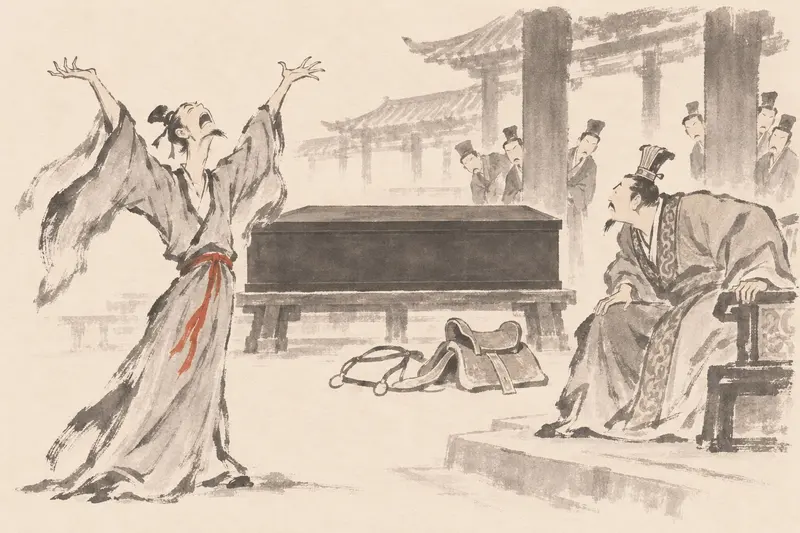
其後百餘年,楚有優孟。優孟,故楚之樂人也。長八尺,多辯,常以談笑諷諫。楚莊王之時,有所愛馬,衣以文繡,置之華屋之下,席以露床,啗以棗脯。馬病肥死,使群臣喪之,欲以棺槨大夫禮葬之。左右爭之,以為不可。王下令曰:「有敢以馬諫者,罪至死。」優孟聞之,入殿門。仰天大哭。王驚而問其故。優孟曰:「馬者王之所愛也,以楚國堂堂之大,何求不得,而以大夫禮葬之,薄,請以人君禮葬之。」王曰:「何如?」對曰:「臣請以彫玉為棺,文梓為槨,楩楓豫章為題湊,發甲卒為穿壙,老弱負土,齊趙陪位於前,韓魏翼衛其后,廟食太牢,奉以萬戶之邑。諸侯聞之,皆知大王賤人而貴馬也。」王曰:「寡人之過一至此乎!為之柰何?」優孟曰:「請為大王六畜葬之。以壟灶為槨,銅歷為棺,齎以薑棗,薦以木蘭,祭以糧稻,衣以火光,葬之於人腹腸。」於是王乃使以馬屬太官,無令天下久聞也。
書き下し文
其の後百余年にして、楚に優孟有り。優孟は、故の楚の楽人なり。長八尺、辯多く、常に談笑を以て諷諫す。楚の荘王の時、愛する所の馬有り、衣するに文繡を以てし、之を華屋の下に置き、席するに露牀を以てし、啗わすに棗脯を以てす。馬肥に病みて死す。群臣をして之を喪せしめ、棺槨大夫の礼を以て葬らんと欲す。左右之を争い、以て不可と為す。王令を下して曰く、「敢えて馬を以て諫むる者有らば、罪死に至る」と。優孟之を聞き、殿門に入り、天を仰ぎて大いに哭す。王驚きて其の故を問う。優孟曰く、「馬は王の愛する所なり。楚国堂堂の大を以て、何をか求めて得ざらん。而るに大夫の礼を以て葬るは、薄し。請う人君の礼を以て之を葬らん」と。王曰く、「何如」と。対えて曰く、「臣請う彫玉を以て棺と為し、文梓を槨と為し、楩楓豫章を題湊と為し、甲卒を発して壙を穿たしめ、老弱に土を負わしめ、斉趙前に陪位し、韓魏其の后に翼衛し、廟食は太牢、奉ずるに万戸の邑を以てせん。諸侯之を聞かば、皆大王の人を賤しみて馬を貴ぶを知らん」と。王曰く、「寡人の過ち一に此に至るか。之を為すこと柰何」と。優孟曰く、「請う大王の為に六畜もて之を葬らん。壟竈を以て槨と為し、銅歴を棺と為し、齎らすに薑棗を以てし、薦むるに木蘭を以てし、祭るに糧稲を以てし、衣するに火光を以てし、之を人の腹腸に葬らん」と。是に於いて王乃ち馬を以て太官に属せしめ、天下をして久しく聞かしむる無からしむ。
現代語訳
それから百年あまりして、楚に優孟が現れた。優孟はもと楚の楽人である。背丈は八尺で弁が立ち、いつも笑い話で遠回しに諫めた。楚の荘王には愛馬がいて、刺繍の衣を着せ、立派な建物に住まわせ、寝台に寝かせ、干したなつめを食べさせていた。馬は太りすぎて病気で死んだ。王は群臣に喪に服させ、大夫の礼で棺に入れて葬ろうとした。側近が反対すると、王は命令を下した。「馬のことで諫める者は死罪とする」。優孟はこれを聞くと、宮殿の門を入り、天を仰いで大声で泣いた。王が驚いてわけを尋ねると、優孟は言った。「あの馬は王の愛馬です。堂々たる大国の楚で、手に入らぬものはありません。それを大夫の礼で葬るとは、けちくさい。どうか君主の礼で葬ってください」。王が「どのように」と言うと、優孟は答えた。「彫刻した玉で棺を作り、美しい梓で外棺を作り、良材で墓室を組み、兵士に穴を掘らせ、老人や子どもに土を運ばせ、斉と趙の使者を前に並べ、韓と魏の使者を後ろに控えさせ、廟では最高の供え物で祭り、一万戸の領地を祭祀のために与えましょう。諸侯がこれを聞けば、大王が人を軽んじて馬を尊ぶことを誰もが知るでしょう」。王は言った。「私の過ちはそれほどか。どうすればよいのか」。優孟は言った。「家畜として葬ってさしあげましょう。かまどを外棺とし、銅の釜を棺とし、しょうがとなつめを添え、木蘭で香りをつけ、穀物を供え、火の光を衣として、人のお腹の中に葬るのです」。そこで王は馬を宮中の料理番に下げ渡し、この話が長く世に広まらないようにした。
英訳
More than a hundred years later, there was You Meng in Chu. You Meng had been a musician of Chu. He was eight feet tall, a fine talker, and always gave advice in the form of a joke. In the time of King Zhuang of Chu, the king had a favorite horse. He dressed it in embroidered silk, kept it in a splendid hall, bedded it on a couch and fed it dried dates. The horse grew too fat, fell ill and died. The king ordered his ministers to mourn it, and wanted to bury it in a double coffin with the honors of a minister. Those around him argued that this could not be done. The king issued an order: "Anyone who dares to object about the horse will die." When You Meng heard this, he came in through the palace gate, looked up to heaven and wailed. The king, startled, asked why. You Meng said: "That horse was the king's beloved. Great Chu in all its glory can have anything it wants. To bury it with a minister's rites is mean. Let it be buried with the rites of a king!" The king said: "How?" He answered: "Let us make its inner coffin of carved jade and its outer coffin of patterned catalpa, line the tomb with the finest timber, send soldiers to dig the grave and the old and weak to carry the earth. Let Qi and Zhao attend in front and Han and Wei stand guard behind. Let it have a temple with the great sacrifice and a fief of ten thousand households. When the lords hear of it, they will all know that Your Majesty despises people and honors horses." The king said: "Is my error as great as that? What should I do?" You Meng said: "Let me bury it for you as one buries livestock. Use the stove for an outer coffin and a bronze pot for an inner one. Send it off with ginger and dates, perfume it with magnolia, offer it rice, dress it in firelight, and bury it in people's stomachs." So the king handed the horse over to the palace kitchen, so that the world would not hear of it for long.
解説(日)
- 優: 歌や笑いを演じる宮廷の芸人。
- 楚莊王: 春秋時代の覇者の一人。
- 棺槨: 内棺と外棺。
- 題湊: 木材を組み重ねて作る墓室。
- 六畜: 馬・牛・羊・豚・犬・鶏。
- 太官: 宮中の料理をつかさどる官。
解説(英)
- You (優): a court entertainer. Meng and Zhan are their personal names.
- King Zhuang of Chu: one of the hegemons of the Spring and Autumn period.
- Palace kitchen (太官): the office that prepared the ruler's food.
英語の語注
- embroidered/ɪmˈbrɔɪdərd/adjective
decorated with sewn patterns
本文では: “dressed it in embroidered silk”
似た語と違い: stitched — sewn · decorated — made more beautiful
- livestock/ˈlaɪvˌstɑk/noun
animals kept on a farm
本文では: “as one buries livestock”
似た語と違い: cattle — cows · farm animals — animals raised for food
節 6
原文
楚相孫叔敖知其賢人也,善待之。病且死,屬其子曰:「我死,汝必貧困。若往見優孟,言我孫叔敖之子也。」居數年,其子窮困負薪,逢優孟,與言曰:「我,孫叔敖子也。父且死時,屬我貧困往見優孟。」優孟曰:「若無遠有所之。」即為孫叔敖衣冠,抵掌談語。歲餘,像孫叔敖,楚王及左右不能別也。莊王置酒,優孟前為壽。莊王大驚,以為孫叔敖復生也,欲以為相。優孟曰:「請歸與婦計之,三日而為相。」莊王許之。三日後,優孟復來。王曰:「婦言謂何?」孟曰:「婦言慎無為,楚相不足為也。如孫叔敖之為楚相,盡忠為廉以治楚,楚王得以霸。今死,其子無立錐之地,貧困負薪以自飲食。必如孫叔敖,不如自殺。」因歌曰:「山居耕田苦,難以得食。起而為吏,身貪鄙者餘財,不顧恥辱。身死家室富,又恐受賕枉法,為姦觸大罪,身死而家滅。貪吏安可為也!念為廉吏,奉法守職,竟死不敢為非。廉吏安可為也!楚相孫叔敖持廉至死,方今妻子窮困負薪而食,不足為也!」於是莊王謝優孟,乃召孫叔敖子,封之寢丘四百戶,以奉其祀。后十世不絕。此知可以言時矣。
書き下し文
楚の相孫叔敖其の賢人なるを知り、善く之を待す。病みて且に死せんとするに、其の子に属して曰く、「我死せば、汝必ず貧困せん。若往きて優孟に見え、我は孫叔敖の子なりと言え」と。居ること数年、其の子窮困して薪を負い、優孟に逢い、与に言いて曰く、「我は孫叔敖の子なり。父且に死せんとする時、我に貧困せば往きて優孟に見えよと属す」と。優孟曰く、「若遠く之く所有ること無かれ」と。即ち孫叔敖の衣冠を為り、掌を抵ちて談語す。歳余にして、孫叔敖に像り、楚王及び左右別つ能わず。荘王酒を置く。優孟前みて寿を為す。荘王大いに驚き、以て孫叔敖復た生けりと為し、以て相と為さんと欲す。優孟曰く、「請う帰りて婦と之を計り、三日にして相と為らん」と。荘王之を許す。三日の後、優孟復た来たる。王曰く、「婦の言は何と謂うか」と。孟曰く、「婦言う、慎んで為す無かれ、楚の相は為すに足らず。孫叔敖の楚の相たるが如き、忠を尽くし廉を為して以て楚を治め、楚王以て覇たるを得たり。今死して、其の子は立錐の地無く、貧困して薪を負いて以て自ら飲食す。必ず孫叔敖の如くならば、自殺するに如かず」と。因りて歌いて曰く、「山に居りて田を耕すは苦しく、以て食を得難し。起ちて吏と為れば、身貪鄙なる者は財を余し、恥辱を顧みず。身死して家室富むも、又恐る賕を受け法を枉げ、姦を為して大罪に触れ、身死して家滅びんことを。貪吏安くんぞ為すべけんや。念いて廉吏と為り、法を奉じ職を守り、竟に死するまで敢えて非を為さず。廉吏安くんぞ為すべけんや。楚の相孫叔敖は廉を持して死に至り、方今妻子窮困し薪を負いて食らう。為すに足らざるなり」と。是に於いて荘王優孟に謝し、乃ち孫叔敖の子を召し、之を寝丘四百戸に封じ、以て其の祀を奉ぜしむ。后十世絶えず。此れ知の以て時を言うべきなり。
現代語訳
楚の宰相の孫叔敖は、優孟が賢いことを知って大切にしていた。病で死にかけると、息子に言い残した。「私が死ねば、お前はきっと貧しくなる。そうなったら優孟に会って、孫叔敖の子だと言いなさい」。数年後、息子は貧しさのあまり薪を背負って暮らしていて、優孟に出会い、言った。「私は孫叔敖の子です。父は死に際に、貧しくなったら優孟に会えと申しました」。優孟は言った。「遠くへ行かないでいなさい」。そして孫叔敖の衣冠をあつらえ、そのしぐさや話しぶりをまねて稽古した。一年あまりたつと孫叔敖そっくりになり、楚王も側近も見分けがつかなくなった。荘王が酒宴を開いたとき、優孟が進み出て杯をささげると、王は大いに驚き、孫叔敖が生き返ったと思って宰相にしようとした。優孟は言った。「帰って妻と相談し、三日後に宰相になりましょう」。王は許した。三日後、優孟がまた来た。王が「奥方は何と言ったか」と尋ねると、優孟は言った。「妻は言いました。『絶対におやめなさい。楚の宰相などなるものではありません。孫叔敖さまは忠を尽くし清廉に楚を治め、楚王を覇者にしました。それなのに亡くなると、子には錐を立てるほどの土地もなく、薪を背負って食いつないでいます。孫叔敖さまのようになるくらいなら、自殺したほうがましです』」。そして歌った。「山で田を耕すのは苦しく、食べるのも難しい。役人になれば、欲深い者は財を残し、恥を顧みない。死んで家は富むが、賄賂で法を曲げ、悪事が大罪にふれて、身は死に家は滅びるのが恐ろしい。汚れた役人などなれようか。清い役人になろうと思い、法を守り職を守って、死ぬまで悪事をしなかった。清い役人もまたなれようか。楚の宰相孫叔敖は清廉のまま死に、今や妻子は貧しく薪を負って食べている。なるものではない」。そこで荘王は優孟にわびて孫叔敖の子を召し、寝丘の四百戸に封じて父の祭りを続けさせた。それから十代の間、絶えなかった。これこそ、知恵をもって時に応じて語ったということである。
英訳
Sunshu Ao, the chancellor of Chu, knew You Meng for a worthy man and treated him well. When he lay dying he told his son: "After I am dead you are sure to be poor. Then go to You Meng and tell him you are the son of Sunshu Ao." Several years later the son, reduced to carrying firewood, met You Meng and said: "I am the son of Sunshu Ao. When my father was dying he told me that if I grew poor I should come to you." You Meng said: "Do not go far away." Then he had a robe and cap made like Sunshu Ao's, and practiced his gestures and his way of talking. After more than a year he had become so like Sunshu Ao that the king and his attendants could not tell the difference. At a feast given by King Zhuang, You Meng came forward to offer a toast. The king was astounded, thought that Sunshu Ao had come back to life and wanted to make him chancellor. You Meng said: "Let me go home and talk it over with my wife. In three days I will take the post." The king agreed. Three days later You Meng returned. The king said: "What did your wife say?" He said: "My wife says, 'Be careful and do not do it. Being chancellor of Chu is not worth it. Sunshu Ao, as chancellor, was loyal and honest in governing Chu, and made its king a hegemon. Now he is dead, and his son has not enough land to stand an awl in, and lives by carrying firewood. If you would end up like Sunshu Ao, you might as well kill yourself.'" Then he sang: "To live in the hills and till the fields is hard, and food is scarce. If you rise to be an official, the greedy pile up wealth and know no shame. They die with their households rich, but fear the bribes and the bent laws, the crimes that bring death and the ruin of the house. How can one be a greedy official? So you think to be an honest one, to keep the law and do your duty, and do no wrong until you die. But how can one be an honest official? Sunshu Ao of Chu kept his honesty until death, and now his wife and son are poor and carry firewood to eat. It is not worth it!" King Zhuang apologized to You Meng, summoned the son of Sunshu Ao, and gave him four hundred households at Qinqiu to keep up his father's sacrifices. They continued unbroken for ten generations. This is wisdom that knows when to speak.
解説(日)
- 孫叔敖: 楚の名宰相。清廉で知られる(巻119 循吏列伝)。
- 抵掌: 手を打つ。身ぶりをまねて語ること。
- 立錐之地: 錐を立てるほどの土地。「立錐の余地」の出典の一つ。
- 寢丘: 楚の地。やせた土地とされる。
解説(英)
- Sunshu Ao: a chancellor of Chu famous for his honesty (Volume 119).
- Land to stand an awl in (立錐之地): the source of a phrase still used in Japanese for having no room at all.
この節から生まれた言葉: 立錐の地
英語の語注
- awl/ɔl/noun
a small pointed tool for making holes
本文では: “enough land to stand an awl in”
似た語と違い: spike — a thin pointed piece · punch — a tool that makes holes
- astounded/əˈstaʊndɪd/adjective
very surprised
本文では: “The king was astounded”
似た語と違い: amazed — greatly surprised · stunned — too shocked to react
節 7
原文
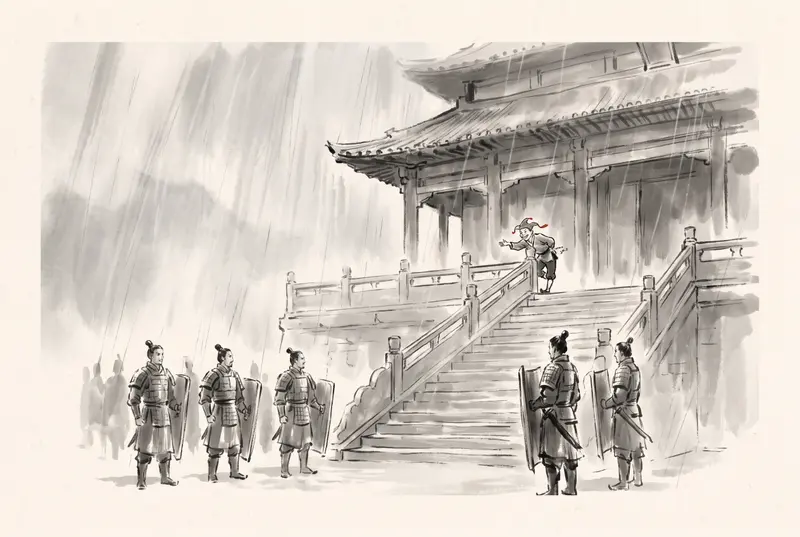
其後二百餘年,秦有優旃。優旃者,秦倡侏儒也。善為笑言,然合於大道,秦始皇時,置酒而天雨,陛楯者皆沾寒。優旃見而哀之,謂之曰:「汝欲休乎?」陛楯者皆曰:「幸甚。」優旃曰:「我即呼汝,汝疾應曰諾。」居有頃,殿上上壽呼萬歲。優旃臨檻大呼曰:「陛楯郎!」郎曰:「諾。」優旃曰:「汝雖長,何益,幸雨立。我雖短也,幸休居。」於是始皇使陛楯者得半相代。
書き下し文
其の後二百余年にして、秦に優旃有り。優旃なる者は、秦の倡の侏儒なり。善く笑言を為し、然れども大道に合う。秦の始皇の時、酒を置きて天雨ふり、陛楯の者皆沾れて寒ゆ。優旃見て之を哀しみ、之に謂いて曰く、「汝休まんと欲するか」と。陛楯の者皆曰く、「幸甚なり」と。優旃曰く、「我即ち汝を呼ばば、汝疾く応えて諾と曰え」と。居ること頃有りて、殿上寿を上り万歳を呼ぶ。優旃檻に臨みて大いに呼びて曰く、「陛楯郎」と。郎曰く、「諾」と。優旃曰く、「汝長しと雖も、何の益かあらん、幸いに雨に立つ。我短しと雖も、幸いに休み居る」と。是に於いて始皇陛楯の者をして半ば相代わるを得しむ。
現代語訳
それから二百年あまりして、秦に優旃が現れた。優旃は秦の宮廷の小人の芸人である。笑い話がうまく、それでいて大きな道理にかなっていた。秦の始皇帝のとき、酒宴の最中に雨が降り、階段の下で盾を持って立つ衛兵たちはみな濡れて凍えていた。優旃はこれを見て気の毒に思い、言った。「休みたいか」。衛兵たちは「ぜひとも」と言った。優旃は言った。「私が呼んだら、すぐに『はい』と答えろ」。しばらくして、宮殿の上で杯をささげて万歳を唱えた。優旃は手すりから身を乗り出して大声で呼んだ。「衛兵ども」。衛兵は「はい」と答えた。優旃は言った。「お前たちは背が高くても何の得がある。雨の中に立っていられるだけだ。私は背が低いが、おかげでこうして休んでいられる」。そこで始皇帝は、衛兵を半数ずつ交代させることにした。
英訳
More than two hundred years later, there was You Zhan in Qin. You Zhan was a dwarf entertainer of the Qin court. He was good at making jokes that were in keeping with the great Way. In the time of the First Emperor, a banquet was being held when it began to rain, and the guards standing with their shields below the steps were all soaked and cold. You Zhan saw them and felt sorry. He said to them: "Would you like a rest?" The guards all said: "We would be most grateful." You Zhan said: "When I call you, answer 'Yes!' at once." A little later, up in the hall, a toast was offered and everyone shouted "Ten thousand years!" You Zhan leaned over the railing and shouted: "Guards!" The guards said: "Yes!" You Zhan said: "You may be tall, but what good does it do you? You get to stand out in the rain. I may be short, but I get to rest in here." At that, the First Emperor ordered the guards to take turns, half at a time.
解説(日)
- 倡: 歌や踊りの芸人。侏儒: 背の低い人。宮廷の芸人として仕えた。
- 陛楯: 宮殿の階段の下で盾を持つ衛兵。
- 檻: 手すり。
解説(英)
- Guards with shields (陛楯): soldiers posted below the palace steps.
- Ten thousand years (萬歲): the traditional cheer for a ruler.
英語の語注
- soaked/soʊkt/adjective
completely wet
本文では: “were all soaked and cold”
似た語と違い: drenched — very wet · sodden — full of water
- railing/ˈreɪlɪŋ/noun
a fence of bars
本文では: “leaned over the railing”
似た語と違い: banister — a rail on stairs · barrier — something that blocks
節 8
原文
始皇嘗議欲大苑囿,東至函谷關,西至雍、陳倉。優旃曰:「善。多縱禽獸於其中,寇從東方來,令麋鹿觸之足矣。」始皇以故輟止。二世立,又欲漆其城。優旃曰:「善。主上雖無言,臣固將請之。漆城雖於百姓愁費,然佳哉!漆城蕩蕩,寇來不能上。即欲就之,易為漆耳,顧難為蔭室。」於是二世笑之,以其故止。居無何,二世殺死,優旃歸漢,數年而卒。
書き下し文
始皇嘗て議して大いに苑囿を為し、東は函谷関に至り、西は雍・陳倉に至らんと欲す。優旃曰く、「善し。多く禽獣を其の中に縦ち、寇東方より来たらば、麋鹿をして之に触れしめば足らん」と。始皇故を以て輟め止む。二世立ち、又其の城に漆せんと欲す。優旃曰く、「善し。主上言う無しと雖も、臣固より将に之を請わんとす。城に漆するは百姓愁費すと雖も、然れども佳いかな。漆城蕩蕩として、寇来たるも上る能わず。即し之に就かんと欲せば、漆を為すは易きのみ、顧みるに蔭室を為し難し」と。是に於いて二世之を笑い、其の故を以て止む。居ること何も無くして、二世殺され死す。優旃漢に帰し、数年にして卒す。
現代語訳
始皇帝はあるとき、東は函谷関から西は雍と陳倉まで、広大な狩り場を造ろうと議論した。優旃は言った。「結構です。たくさんの獣を放しておけば、敵が東から攻めてきても、大鹿に角で突かせれば十分でしょう」。始皇帝はこのためにとりやめた。二世皇帝が立つと、今度は城壁を漆で塗ろうとした。優旃は言った。「結構です。陛下がおっしゃらなくても、私からお願いするつもりでした。漆塗りは民には負担で嘆かわしいですが、なんとも見事です。つるつるの漆の城なら、敵が来ても登れません。ただ、塗るのは簡単ですが、乾かすための日陰の部屋を造るのが難しいですね」。二世は笑って、そのためにとりやめた。まもなく二世は殺された。優旃は漢に帰し、数年後に亡くなった。
英訳
The First Emperor once proposed a vast hunting park reaching east to the Hangu Pass and west to Yong and Chencang. You Zhan said: "Splendid! Fill it with plenty of animals, and if invaders come from the east, the deer can butt them with their antlers. That should be enough." For that reason the First Emperor dropped the plan. When the Second Emperor came to the throne, he wanted to lacquer the city wall. You Zhan said: "Splendid! Even if Your Majesty had not mentioned it, I was about to ask for it myself. A lacquered wall may be a grief and an expense to the people, but how fine it will be! So smooth and gleaming that when invaders come they cannot climb it! If you wish to do it, the lacquering is easy. The hard part is building a shed big enough to dry it in." The Second Emperor laughed, and for that reason he gave it up. Not long after, the Second Emperor was killed. You Zhan went over to the Han and died a few years later.
解説(日)
- 苑囿: 君主の狩り場。
- 雍・陳倉: 関中の西部の地。
- 蔭室: 漆を乾かすための日の当たらない部屋。漆は湿気のある暗所で固まる。
解説(英)
- Hunting park (苑囿): a royal game preserve.
- A shed to dry it in (蔭室): lacquer hardens in a dark, damp room, so a whole city wall would need an impossible building.
英語の語注
- lacquer/ˈlækər/verb
to coat with a hard shiny finish
本文では: “he wanted to lacquer the city wall”
似た語と違い: varnish — coat with a clear finish · glaze — give a shiny surface
- antlers/ˈæntlərz/noun
the branched horns of a deer
本文では: “butt them with their antlers”
似た語と違い: horns — hard growths on an animal's head · tines — points of an antler
節 9
原文
太史公曰:淳于髡仰天大笑,齊威王橫行。優孟搖頭而歌,負薪者以封。優旃臨檻疾呼,陛楯得以半更。豈不亦偉哉!
書き下し文
太史公曰く、淳于髡天を仰ぎて大いに笑い、斉の威王横行す。優孟頭を揺らして歌い、薪を負う者以て封ぜらる。優旃檻に臨みて疾呼し、陛楯以て半ば更わるを得たり。豈に亦偉ならずや。
現代語訳
太史公は言う。淳于髡が天を仰いで大笑いすると、斉の威王は天下に威を振るった。優孟が頭を揺らして歌うと、薪を背負っていた者が領地を得た。優旃が手すりから叫ぶと、衛兵は半数ずつ交代できるようになった。なんと偉大なことではないか。
英訳
The Grand Historian says: Chunyu Kun looked up to heaven and laughed, and King Wei of Qi strode across the land. You Meng shook his head and sang, and a seller of firewood was given a fief. You Zhan shouted from the railing, and the guards won their turns of rest. Is this not greatness too?
解説(日)
- 橫行: 思いのままに振る舞う。ここでは天下に威を示す。
- ここまでが司馬遷の本文。以下は後世の補筆。
解説(英)
- This is the end of Sima Qian's own text. What follows was added later by Chu Shaosun.
英語の語注
- fief/fif/noun
land given by a ruler
本文では: “was given a fief”
似た語と違い: domain — an area of land under control · estate — a large property
節 10
原文
武帝時,齊人有東方生名朔,以好古傳書,愛經術,多所博觀外家之語。朔初入長安,至公車上書,凡用三千奏牘。公車令兩人共持舉其書,僅然能勝之。人主從上方讀之,止,輒乙其處,讀之二月乃盡。詔拜以為郎,常在側侍中。數召至前談語,人主未嘗不說也。時詔賜之食於前。飯已,盡懷其餘肉持去,衣盡汙。數賜縑帛,檐揭而去。徒用所賜錢帛,取少婦於長安中好女。率取婦一歲所者即棄去,更取婦。所賜錢財盡索之於女子。人主左右諸郎半呼之「狂人」。人主聞之,曰:「令朔在事無為是行者,若等安能及之哉!」朔任其子為郎,又為侍謁者,常持節出使。朔行殿中,郎謂之曰:「人皆以先生為狂。」朔曰:「如朔等,所謂避世於朝廷閒者也。古之人,乃避世於深山中。」時坐席中,酒酣,據地歌曰:「陸沈於俗,避世金馬門。宮殿中可以避世全身,何必深山之中,蒿廬之下。」金馬門者,宦者署門也,門傍有銅馬,故謂之曰「金馬門」。
書き下し文
武帝の時、斉人に東方生、名は朔なるもの有り。古の伝書を好み、経術を愛するを以て、多く外家の語を博観す。朔初めて長安に入り、公車に至りて上書す。凡そ三千の奏牘を用う。公車令両人共に持ちて其の書を挙げ、僅然として能く之に勝う。人主上方より之を読み、止まれば、輒ち其の処に乙し、之を読むこと二月にして乃ち尽く。詔して拝して以て郎と為し、常に側に在りて侍中す。数しば召して前に至らしめて談語するに、人主未だ嘗て説ばずんばあらず。時に詔して之に食を前に賜う。飯已わるや、尽く其の余肉を懐きて持ち去り、衣尽く汙る。数しば縑帛を賜うに、檐揭して去る。徒だ賜わる所の銭帛を用て、少婦を長安中の好女に取る。率ね婦を取ること一歳所にして即ち棄て去り、更に婦を取る。賜わる所の銭財は尽く之を女子に索す。人主の左右の諸郎半ば之を「狂人」と呼ぶ。人主聞きて、曰く、「朔をして事に在りて是の行い無からしめば、若等安くんぞ能く之に及ばんや」と。朔其の子を任じて郎と為し、又侍謁者と為し、常に節を持して出使せしむ。朔殿中を行くに、郎之に謂いて曰く、「人皆先生を以て狂と為す」と。朔曰く、「朔等の如きは、所謂世を朝廷の間に避くる者なり。古の人は、乃ち世を深山の中に避く」と。時に席中に坐し、酒酣にして、地に拠りて歌いて曰く、「俗に陸沈し、世を金馬門に避く。宮殿の中以て世を避け身を全うすべし。何ぞ必ずしも深山の中、蒿廬の下ならん」と。金馬門なる者は、宦者署の門なり。門の傍らに銅馬有り、故に之を謂いて「金馬門」と曰う。
現代語訳
武帝の時代、斉の人に東方朔という者がいた。古い書物と経学を好み、諸家の書を広く読んでいた。東方朔は初めて長安に来ると、公車の役所に上書したが、それは竹の札三千枚にも及び、役人二人でやっと持ち上げるほどだった。武帝は宮中で読み進め、中断するたびに印をつけ、二か月かかって読み終えた。東方朔は郎に任じられ、常にそばに仕えた。たびたび召し出されて話をすると、武帝はいつも喜んだ。あるとき食事を賜ると、食べ終えたあと残りの肉をすべて懐に入れて持ち帰り、衣はすっかり汚れた。絹を賜ると、肩にかついで帰った。もらった銭や絹で長安の若くて美しい女性を妻にし、一年ほどで離縁してはまた別の女性をめとり、賜り物をすべて女性に使った。周りの郎たちの半分は彼を「狂人」と呼んだ。武帝はこれを聞いて言った。「朔が仕事のうえでこんなことをしなければ、お前たちなど及びもつかないだろう」。東方朔は息子を郎にし、さらに侍謁者にして、節を持って使者として出させた。東方朔が宮殿を歩いていると、郎が言った。「みな先生を狂人だと思っていますよ」。東方朔は言った。「私のような者は、朝廷の中で世を避けている者だ。昔の人は深い山の中で世を避けたものだが」。あるとき宴席で酒がまわると、地面に手をついて歌った。「俗世に沈み、金馬門に世を避ける。宮殿の中でも世を避けて身を全うできる。どうして深い山の中、草の庵の下でなくてはならないのか」。金馬門とは宦官の役所の門で、そばに銅の馬があるのでこう呼ばれた。
英訳
In the time of Emperor Wu there was a man of Qi named Dongfang Shuo. He loved ancient writings and the classics, and had read widely in other schools. When he first came to Chang'an he went to the Office of Official Carriages and submitted a memorial on three thousand wooden slips. It took two officers together to lift it, and they could barely manage. The emperor read it in his quarters, marking his place whenever he stopped, and took two months to finish. He appointed Shuo a palace gentleman, always in attendance. He often called him in to talk, and it never failed to please him. Sometimes the emperor would give him a meal in his presence. When he had finished, Shuo would stuff all the leftover meat into his robe and carry it off, staining his clothes. Given rolls of silk, he would haul them away on his shoulders. With the money and silk he was given he took young wives from among the pretty girls of Chang'an. After about a year he would send each one away and take another, and all that he was given was spent on these women. Half of the gentlemen around the emperor called him "the madman." When the emperor heard, he said: "If Shuo did not behave this way in his duties, none of you could come near him." Shuo had his son made a gentleman and then an attendant, who often traveled as an envoy. As Shuo walked through the palace, a gentleman said to him: "Everyone thinks you are mad, sir." Shuo said: "People like me are what you call hermits of the court. The men of old hid from the world deep in the mountains." Once at a party, when the wine was flowing, he sat on the floor and sang: "Sunk on dry land among the crowd, I hide from the world at the Gate of the Bronze Horse. In the palace a man can hide from the world and keep himself whole. Why must it be deep in the hills, in a hut of weeds?" The Gate of the Bronze Horse was the gate of the eunuchs' office. It had a bronze horse beside it, and that was how it got its name.
解説(日)
- ここから褚少孫の補筆。
- 東方朔: 武帝の側近。のちに仙人の伝説が加わった。
- 公車: 上書や人材の受付をする役所。
- 奏牘: 上奏文を書く木の札。
- 陸沈: 陸にいながら沈む。俗世の中に身を隠すこと。
解説(英)
- From here on, the text was added by Chu Shaosun.
- Dongfang Shuo: a companion of Emperor Wu, who later became a figure of immortal legend.
- Hermits of the court (避世於朝廷): those who hide from the world while still at court.
英語の語注
- memorial/məˈmɔriəl/noun
a written statement to a ruler
本文では: “submitted a memorial”
似た語と違い: petition — a formal request · report — a written account
- hermit/ˈhɜrmɪt/noun
a person who lives alone away from society
本文では: “hermits of the court”
似た語と違い: recluse — someone who lives alone · loner — someone who avoids others
節 11
原文
時會聚宮下博士諸先生與論議,共難之曰:「蘇秦、張儀一當萬乘之主,而都卿相之位,澤及後世。今子大夫修先王之術,慕聖人之義,諷誦詩書百家之言,不可勝數。著於竹帛,自以為海內無雙,即可謂博聞辯智矣。然悉力盡忠以事聖帝,曠日持久,積數十年,官不過侍郎,位不過執戟,意者尚有遺行邪?其故何也?」東方生曰:「是固非子所能備也。彼一時也,此一時也,豈可同哉!夫張儀、蘇秦之時,周室大壞,諸侯不朝,力政爭權,相禽以兵,并為十二國,未有雌雄,得士者彊,失士者亡,故說聽行通,身處尊位,澤及後世,子孫長榮。今非然也。聖帝在上,德流天下,諸侯賓服,威振四夷,連四海之外以為帶,安於覆盂,天下平均,合為一家,動發舉事,猶如運之掌中。賢與不肖,何以異哉?方今以天下之大,士民之眾,竭精馳說,并進輻湊者,不可勝數。悉力慕義,困於衣食,或失門戶。使張儀、蘇秦與仆并生於今之世,曾不能得掌故,安敢望常侍侍郎乎!傳曰:『天下無害菑,雖有聖人,無所施其才;上下和同,雖有賢者,無所立功。』故曰時異則事異;雖然,安可以不務修身乎?《詩》曰:『鼓鐘于宮,聲聞于外。鶴鳴九皋,聲聞于天。』苟能修身,何患不榮!太公躬行仁義七十二年,逢文王,得行其說,封於齊,七百歲而不絕。此士之所以日夜孜孜,修學行道,不敢止也。今世之處士,時雖不用,崛然獨立,塊然獨處,上觀許由,下察接輿,策同范蠡,忠合子胥,天下和平,與義相扶,寡偶少徒,固其常也。子何疑於余哉!」於是諸先生默然無以應也。
書き下し文
時に宮下の博士諸先生を会聚して与に論議せしむ。共に之を難じて曰く、「蘇秦・張儀は一たび万乗の主に当たりて、卿相の位に都り、沢後世に及ぶ。今子大夫は先王の術を修め、聖人の義を慕い、詩書百家の言を諷誦すること、数うるに勝うべからず。竹帛に著し、自ら以為らく海内に双び無しと。即ち博聞辯智と謂うべし。然るに力を悉くし忠を尽くして以て聖帝に事え、曠日持久、数十年を積むも、官は侍郎に過ぎず、位は執戟に過ぎず。意者尚お遺行有るか。其の故は何ぞや」と。東方生曰く、「是れ固より子の能く備わる所に非ざるなり。彼も一時なり、此も一時なり。豈に同じかるべけんや。夫れ張儀・蘇秦の時、周室大いに壊れ、諸侯朝せず、力政権を争い、相禽にするに兵を以てし、并せて十二国と為り、未だ雌雄有らず。士を得る者は彊く、士を失う者は亡ぶ。故に説聴かれ行い通じ、身は尊位に処り、沢後世に及び、子孫長く栄ゆ。今は然らず。聖帝上に在り、徳天下に流れ、諸侯賓服し、威四夷に振るい、四海の外を連ねて以て帯と為し、覆盂よりも安く、天下平均にして、合して一家と為り、動発事を挙ぐること、猶お之を掌中に運らすがごとし。賢と不肖と、何を以て異ならんや。方今天下の大、士民の衆を以て、精を竭くし説を馳せ、並び進みて輻湊する者、数うるに勝うべからず。力を悉くして義を慕うも、衣食に困しみ、或いは門戸を失う。張儀・蘇秦をして僕と並びて今の世に生まれしめば、曾ち掌故を得る能わず。安くんぞ敢えて常侍侍郎を望まんや。伝に曰く、『天下害菑無ければ、聖人有りと雖も、其の才を施す所無し。上下和同すれば、賢者有りと雖も、功を立つる所無し』と。故に曰く、時異なれば則ち事異なると。然りと雖も、安くんぞ以て身を修むるを務めざるべけんや。詩に曰く、『鐘を宮に鼓すれば、声外に聞こゆ。鶴九皋に鳴けば、声天に聞こゆ』と。苟くも能く身を修むれば、何ぞ栄えざるを患えん。太公は身づから仁義を行うこと七十二年、文王に逢い、其の説を行うを得て、斉に封ぜられ、七百歳にして絶えず。此れ士の日夜孜孜として、学を修め道を行い、敢えて止まざる所以なり。今世の処士は、時に用いられずと雖も、崛然として独立し、塊然として独処し、上は許由を観、下は接輿を察し、策は范蠡に同じく、忠は子胥に合い、天下和平にして、義と相扶け、寡偶少徒なること、固より其の常なり。子何ぞ余を疑わんや」と。是に於いて諸先生黙然として以て応うる無きなり。
現代語訳
あるとき宮中に博士や学者たちが集まって論議し、東方朔を問いつめた。「蘇秦や張儀は一度大国の君主に会うだけで大臣の位につき、その恩沢は子孫に及んだ。あなたは先王の道を修め、聖人の義を慕い、詩書や諸子の言葉を数え切れないほど暗誦し、書物にも著して、天下に並ぶ者はないと思っている。博識で弁も立つと言えるだろう。それなのに全力で忠義を尽くして聖帝に仕えて数十年、官は侍郎どまり、位は戟を持つ護衛どまりだ。何か行いに足りないところがあるのか。なぜなのか」。東方朔は言った。「それはあなたがたにはわからないことだ。あの時はあの時、この時はこの時である。同じにできようか。張儀や蘇秦の時代は、周王室が崩れ、諸侯は朝貢せず、力で権力を争い、兵で互いを呑み込み、十二国に集まって、まだ勝負がつかなかった。人材を得た国は強く、失った国は滅びる。だから説けば聞かれ、高い位につき、恩沢は後世に及んで、子孫は長く栄えた。今は違う。聖帝が上にあり、徳は天下に流れ、諸侯は服従し、威光は四方に及び、海の外まで帯のようにつながり、伏せた鉢よりも安定して、天下は一つの家となった。何をするにも掌の上で転がすようなものだ。賢い者も愚かな者も、何の違いがあろう。今は天下が広く人が多く、精魂を尽くして意見を述べに集まる者が数え切れない。全力で義を慕っても、衣食に困り、家を失う者さえある。もし張儀や蘇秦が私と一緒に今の世に生まれたら、下級の書記の職すら得られまい。どうして侍郎など望めよう。古い書に『天下に災いがなければ、聖人がいても才能を施す場がない。上下が和していれば、賢者がいても功を立てる場がない』とある。だから、時が変われば事も変わるという。それでも、身を修めることを怠ってよかろうか。『詩経』に『宮中で鐘を打てば、音は外に聞こえる。鶴が深い沢で鳴けば、声は天に届く』とある。身を修めさえすれば、栄えないことを心配する必要があろうか。太公望は七十二年の間、仁義を実践して、文王に出会い、その説を行うことができ、斉に封じられて七百年続いた。これこそ士が日夜努めて学び、道を行うことをやめない理由である。今の世の在野の士は、用いられなくても毅然として独り立ち、上は許由を、下は接輿を手本とし、計略は范蠡に、忠義は伍子胥に等しい。天下が平和なときに義を支えとして生きれば、仲間が少ないのは当然のことだ。何を疑うことがあろう」。学者たちは黙り込み、答える言葉がなかった。
英訳
Once the court scholars were gathered below the palace for a debate, and together they challenged him: "Su Qin and Zhang Yi had only to meet a great ruler once to reach the highest office, and their blessings reached later generations. Now you, sir, have studied the ways of the former kings and love the principles of the sages. You can recite more of the Songs, the Documents and the hundred schools than anyone could count. You have written it all on bamboo and silk, and you think you have no equal in the world. You may truly be called learned and clever. Yet after serving our sage emperor with all your strength and loyalty for decades, your office is no higher than attendant, and your rank no higher than a guard with a halberd. Is there some flaw in your conduct? What is the reason?" Master Dongfang said: "This is surely beyond you. That was one time, and this is another. How could they be the same? In the days of Zhang Yi and Su Qin the house of Zhou had collapsed and the lords no longer came to court. They fought for power by force, devoured each other with their armies, and were reduced to twelve states, with no winner yet. Those who won able men grew strong, and those who lost them perished. So their advice was heard, they rose to high places, their blessings reached later ages and their descendants long prospered. It is not so today. A sage emperor is on the throne. His virtue flows through the world, the lords submit, his might shakes the four barbarians, and all the lands beyond the seas are bound like a sash. The empire is more stable than an overturned bowl, level and even, one single household, and any undertaking can be turned in the palm of his hand. What difference is there now between the worthy and the worthless? In so great an empire, with so many people, those who wear themselves out in rushing forward with their ideas are beyond counting. They strive with all their might for what is right, yet go short of food and clothes, and some lose their homes. If Zhang Yi and Su Qin had been born today alongside me, they could not have got even a minor clerk's post. How could they dare hope to be attendants? The old text says: 'If the world has no disasters, even a sage has nowhere to use his talent. If high and low are in harmony, even a worthy man has no way to win merit.' So it is said: when the times differ, affairs differ. Even so, how can one fail to cultivate oneself? The Book of Songs says: 'Strike the bell in the palace, and its sound is heard outside. When the crane cries in the deep marsh, its voice is heard in heaven.' If you can only cultivate yourself, why worry about glory? The Grand Duke practiced goodness and right for seventy-two years before he met King Wen and could carry out his teaching. He was given Qi, and his line lasted seven hundred years. That is why a scholar works day and night at his studies and his Way and does not dare to stop. The unemployed scholar of today, though the times have no use for him, stands up alone and lives alone. He looks up to Xu You and looks to Jieyu, plans like Fan Li and is as loyal as Wu Zixu. In a world at peace, with right conduct to lean on, it is only natural that he has few companions. Why do you question me?" And the scholars fell silent and had no answer.
解説(日)
- 蘇秦・張儀: 戦国の縦横家(巻69、巻70)。
- 執戟: 戟を持つ宮中の護衛。
- 彼一時也、此一時也: 「あの時はあの時、今は今」。よく知られた言葉。
- 掌故: 礼制の事例を扱う下級の官。
- 鶴鳴九皋: 『詩経』小雅「鶴鳴」の句。
解説(英)
- Su Qin and Zhang Yi: the great persuaders of the Warring States (Volumes 69 and 70).
- "That was one time, and this is another" (彼一時也,此一時也): a line still in common use.
- "When the crane cries...": from the Book of Songs, Ode 184.
この節から生まれた言葉: 彼も一時、此も一時
英語の語注
- recite/rɪˈsaɪt/verb
to say aloud from memory
本文では: “You can recite more”
似た語と違い: repeat — say again · quote — say another's words
節 12
原文
魏文侯時,西門豹為鄴令。豹往到鄴,會長老,問之民所疾苦。長老曰:「苦為河伯娶婦,以故貧。」豹問其故,對曰:「鄴三老、廷掾常歲賦斂百姓,收取其錢得數百萬,用其二三十萬為河伯娶婦,與祝巫共分其餘錢持歸。當其時,巫行視小家女好者,云是當為河伯婦,即娉取。洗沐之,為治新繒綺縠衣,閒居齋戒;為治齋宮河上,張緹絳帷,女居其中。為具牛酒飯食,行十餘日。共粉飾之,如嫁女床席,令女居其上,浮之河中。始浮,行數十里乃沒。其人家有好女者,恐大巫祝為河伯取之,以故多持女遠逃亡。以故城中益空無人,又困貧,所從來久遠矣。民人俗語曰『即不為河伯娶婦,水來漂沒,溺其人民』云。」西門豹曰:「至為河伯娶婦時,願三老、巫祝、父老送女河上,幸來告語之,吾亦往送女。」皆曰:「諾。」
書き下し文
魏の文侯の時、西門豹鄴の令と為る。豹往きて鄴に到り、長老に会し、之に民の疾苦する所を問う。長老曰く、「河伯の為に婦を娶るに苦しみ、故を以て貧し」と。豹其の故を問う。対えて曰く、「鄴の三老・廷掾常に歳々百姓に賦斂し、其の銭を収め取ること数百万を得、其の二三十万を用いて河伯の為に婦を娶り、祝巫と共に其の余銭を分かちて持ち帰る。其の時に当たり、巫行きて小家の女の好き者を視、是れ当に河伯の婦と為るべしと云い、即ち娉して取る。之を洗沐し、為に新しき繒綺縠の衣を治め、閒居して斎戒せしむ。為に斎宮を河上に治め、緹絳の帷を張り、女其の中に居る。為に牛酒飯食を具え、行くこと十余日。共に之を粉飾し、女を嫁する牀席の如くし、女をして其の上に居らしめ、之を河中に浮かぶ。始め浮かびて、行くこと数十里にして乃ち没す。其の人家の好女有る者は、大巫祝の河伯の為に取らんことを恐れ、故を以て多く女を持して遠く逃亡す。故を以て城中益々空しくして人無く、又困貧す。従来する所久遠なり。民人の俗語に曰く、『即し河伯の為に婦を娶らずんば、水来たりて漂没し、其の人民を溺らさん』と云う」と。西門豹曰く、「河伯の為に婦を娶る時に至らば、願わくは三老・巫祝・父老女を河上に送り、幸いに来たりて之を告語せよ。吾も亦往きて女を送らん」と。皆曰く、「諾」と。
現代語訳
魏の文侯のとき、西門豹が鄴の県令になった。鄴に着くと長老たちを集め、民の苦しみを尋ねた。長老は言った。「河の神に嫁を取ることに苦しめられ、そのために貧しいのです」。わけを尋ねると、長老は答えた。「鄴の三老と役人が毎年民から税を取り立てて数百万銭を集め、二、三十万で河の神の嫁取りをして、残りは巫女たちと山分けして持ち帰ります。その時期になると、巫女が貧しい家の美しい娘を見て回り、この娘が河の神の妻になるべきだと言って連れて行きます。身を清めさせ、新しい絹の衣を作り、こもって身を慎ませます。河のほとりに斎宮を建て、赤い幕を張って娘をその中に置き、牛と酒と食事を用意して十日あまり過ごします。花嫁の寝台のように飾りつけ、娘をその上に乗せて河に浮かべます。はじめは浮かんで数十里流れ、やがて沈みます。美しい娘のいる家は、巫女に取られるのを恐れて、多くが娘を連れて遠くへ逃げました。だから町はますます人がいなくなり、貧しくなりました。これはずっと昔からのことです。民の間では『河の神に嫁を取らないと、水があふれて人々がおぼれる』と言われています」。西門豹は言った。「河の神の嫁取りのときには、三老や巫女、父老が河まで娘を送るだろう。知らせてほしい。私も見送りに行こう」。みな「承知しました」と答えた。
英訳
In the time of Marquis Wen of Wei, Ximen Bao became magistrate of Ye. When he arrived, he met with the elders and asked what troubled the people. The elders said: "We suffer from having to find a bride for the River God, and it has made us poor." He asked why. They answered: "Every year the Three Elders and the county officers of Ye tax the people and collect millions of cash. They use two or three hundred thousand of it to marry off a bride to the River God, and share the rest with the shamans. When the time comes, a shaman goes round looking for pretty girls in poor households and declares that this one shall be the River God's wife. They take her away. They wash her, make her new clothes of fine silk, and shut her away to fast. They build a fasting hall on the riverbank and hang it with red curtains, and the girl stays inside. They provide beef, wine and food for more than ten days. Then they decorate a couch like a bride's bed, set her on it and float it out on the river. It floats for some miles and then sinks. Families with pretty daughters, afraid the great shaman will take them for the River God, have mostly fled far away with their girls. So the town grows ever emptier, and poorer too. This has gone on for a very long time. The people have a saying: 'If we do not find the River God a bride, the waters will come and drown us all.'" Ximen Bao said: "When the time comes for the bride to be given, when the Three Elders, shamans and village elders are sending the girl to the river, please come and let me know. I will go and see her off as well." They all said: "Yes."
解説(日)
- 魏文侯: 戦国時代初期の魏の名君。
- 鄴: 今の河北省臨漳県付近。
- 河伯: 黄河の神。
- 三老: 地方の教化をつかさどる長老。廷掾: 県の下役。
- 祝巫: 神に仕える巫女。
解説(英)
- Marquis Wen of Wei: an able ruler at the start of the Warring States.
- Ye: near present-day Linzhang in Hebei.
- Three Elders (三老): local elders responsible for moral guidance.
英語の語注
- shaman/ˈʃɑmən/noun
a person believed to speak with spirits
本文では: “share the rest with the shamans”
似た語と違い: medium — one who talks to spirits · sorcerer — a person with magic powers
- magistrate/ˈmædʒəˌstreɪt/noun
a local official and judge
本文では: “became magistrate of Ye”
似た語と違い: governor — a local ruler · judge — one who decides cases
節 13
原文
至其時,西門豹往會之河上。三老、官屬、豪長者、裏父老皆會,以人民往觀之者三二千人。其巫,老女子也,已年七十。從弟子女十人所,皆衣繒單衣,立大巫后。西門豹曰:「呼河伯婦來,視其好醜。」即將女出帷中,來至前。豹視之,顧謂三老、巫祝、父老曰:「是女子不好,煩大巫嫗為入報河伯,得更求好女,后日送之。」即使吏卒共抱大巫嫗投之河中。有頃,曰:「巫嫗何久也?弟子趣之!」復以弟子一人投河中。有頃,曰:「弟子何久也?復使一人趣之!」復投一弟子河中。凡投三弟子。西門豹曰:「巫嫗弟子是女子也,不能白事,煩三老為入白之。」復投三老河中。西門豹簪筆磬折,向河立待良久。長老、吏傍觀者皆驚恐。西門豹顧曰:「巫嫗、三老不來還,柰之何?」欲復使廷掾與豪長者一人入趣之。皆叩頭,叩頭且破,額血流地,色如死灰。西門豹曰:「諾,且留待之須臾。」須臾,豹曰:「廷掾起矣。狀河伯留客之久,若皆罷去歸矣。」鄴吏民大驚恐,從是以後,不敢復言為河伯娶婦。西門豹即發民鑿十二渠,引河水灌民田,田皆溉。當其時,民治渠少煩苦,不欲也。豹曰:「民可以樂成,不可與慮始。今父老子弟雖患苦我,然百歲後期令父老子孫思我言。」至今皆得水利,民人以給足富。十二渠經絕馳道,到漢之立,而長吏以為十二渠橋絕馳道,相比近,不可。欲合渠水,且至馳道合三渠為一橋。鄴民人父老不肯聽長吏,以為西門君所為也,賢君之法式不可更也。長吏終聽置之。故西門豹為鄴令,名聞天下,澤流後世,無絕已時,幾可謂非賢大夫哉!
書き下し文
其の時に至り、西門豹往きて之に河上に会す。三老・官属・豪長者・裏の父老皆会し、人民の往きて之を観る者三二千人を以てす。其の巫は、老女子なり、已に年七十。弟子女十人所を従え、皆繒の単衣を衣て、大巫の后に立つ。西門豹曰く、「河伯の婦を呼びて来たれ、其の好醜を視ん」と。即ち女を帷中より出だし、来たりて前に至らしむ。豹之を視て、顧みて三老・巫祝・父老に謂いて曰く、「是の女子は好からず。煩わすらくは大巫嫗入りて河伯に報じ、更に好女を求むるを得て、后日之を送らんと為せ」と。即ち吏卒をして共に大巫嫗を抱きて之を河中に投ぜしむ。頃有りて、曰く、「巫嫗何ぞ久しきや。弟子之を趣せ」と。復た弟子一人を以て河中に投ず。頃有りて、曰く、「弟子何ぞ久しきや。復た一人をして之を趣さしめよ」と。復た一弟子を河中に投ず。凡そ三弟子を投ず。西門豹曰く、「巫嫗の弟子は是れ女子なり、事を白す能わず。煩わすらくは三老入りて之を白せ」と。復た三老を河中に投ず。西門豹筆を簪し磬折して、河に向かいて立ち待つこと良久し。長老・吏の傍らに観る者皆驚き恐る。西門豹顧みて曰く、「巫嫗・三老来たり還らず、之を柰何せん」と。復た廷掾と豪長者一人とをして入りて之を趣さしめんと欲す。皆叩頭し、叩頭して且に破れんとし、額の血地に流れ、色死灰の如し。西門豹曰く、「諾。且く留まりて之を待つこと須臾せよ」と。須臾にして、豹曰く、「廷掾起て。状は河伯の客を留むること之れ久し。若皆罷め去りて帰れ」と。鄴の吏民大いに驚き恐れ、是より以後、敢えて復た河伯の為に婦を娶ると言わず。西門豹即ち民を発して十二渠を鑿ち、河水を引きて民田に灌ぐ。田皆溉がる。其の時に当たり、民渠を治むるに少しく煩苦し、欲せず。豹曰く、「民は以て成るを楽しむべく、与に始めを慮るべからず。今父老子弟我に患苦すと雖も、然れども百歳の後期して父老の子孫をして我が言を思わしめん」と。今に至るまで皆水利を得、民人以て給足し富む。十二渠は馳道を経絶す。漢の立つに到り、而して長吏以為らく十二渠の橋馳道を絶ち、相比近して、不可なりと。渠水を合わせ、且に馳道に至りて三渠を合わせて一橋と為さんと欲す。鄴の民人父老長吏に聴くを肯ぜず、以為らく西門君の為す所なり、賢君の法式は更むべからずと。長吏終に聴きて之を置く。故に西門豹は鄴の令と為り、名は天下に聞こえ、沢は後世に流れ、絶ゆる時有る無し。幾ぞ賢大夫に非ずと謂うべけんや。
現代語訳
その日、西門豹は河のほとりへ出向いた。三老、役人、有力者、村の父老が集まり、見物の民も二、三千人いた。巫女は七十歳の老女で、十人ほどの女の弟子を従え、みな絹の単衣を着て後ろに立っていた。西門豹は言った。「河の神の花嫁を連れてこい。器量を見よう」。娘を幕の中から連れて来させると、西門豹はこれを見て、三老や巫女、父老に言った。「この娘は美しくない。ご苦労だが大巫女どの、河に入って河の神に伝えてくれ。もっと美しい娘を探して、後日送りますと」。そして兵たちに命じて大巫女を抱えて河に投げ込ませた。しばらくして言った。「巫女はなぜこんなに遅いのか。弟子よ、急がせてこい」。弟子を一人、河に投げ込んだ。しばらくして言った。「弟子も遅いな。もう一人急がせに行け」。また一人投げ込み、全部で三人の弟子を投げ込んだ。西門豹は言った。「巫女の弟子は女だから、うまく報告できないのだろう。ご苦労だが三老に行ってもらおう」。三老も河に投げ込んだ。西門豹は冠に筆を挿し、身をかがめて河に向かい、長い間立って待っていた。そばで見ている長老や役人はみな恐れおののいた。西門豹は振り返って言った。「巫女も三老も帰ってこない。どうしたものか」。そして役人と有力者を一人ずつ行かせようとした。彼らはみな額を地に打ちつけて、皮が破れて血が流れ、顔は死灰のようになった。西門豹は言った。「よかろう。少し待ってみよう」。しばらくして言った。「役人よ、立て。どうやら河の神は客を長く引きとめているようだ。みな帰ってよい」。鄴の役人も民も大いに恐れ、これ以後、河の神の嫁取りを口にする者はいなくなった。西門豹はすぐに民を動員して十二の水路を掘り、河の水を引いて田に注いだので、田はすべて潤った。当時は工事が少々つらいので、民は嫌がった。西門豹は言った。「民は出来上がったものを楽しむことはできるが、始めるときに一緒に考えることはできない。今は父老も子弟も私を恨んでいるが、百年後には、きっとその子孫が私の言葉を思い出すだろう」。今に至るまで水の恵みを受け、民は豊かである。十二の水路は皇帝の道を横切っていた。漢になって、地方の長官は、十二の橋が近すぎて道を断つのでよくないと考え、水路を合わせて、三つの水路で一つの橋にしようとした。鄴の民や父老は承知せず、「西門さまのお作りになったものだ。賢い方の定めを変えてはならない」と言った。長官もついに従い、そのままにした。西門豹は鄴の県令としてその名を天下に知られ、恩沢は後の世まで絶えることがない。賢い大夫でないと言えようか。
英訳
When the day came, Ximen Bao went to the riverbank. The Three Elders, the officials, the wealthy men and the village elders had all gathered, and two or three thousand people had come to watch. The shaman was an old woman of seventy, followed by about ten female disciples, all in silk gowns, who stood behind her. Ximen Bao said: "Bring the River God's bride here, and let me see whether she is pretty." The girl was brought out from the curtains and led before him. He looked at her, turned to the Three Elders, the shamans and the elders, and said: "This girl is not pretty. Would the great shaman kindly go in and tell the River God that we will find a prettier one and send her another day?" And he had his soldiers pick up the old shaman and throw her into the river. After a while he said: "Why is the shaman taking so long? Let a disciple go and hurry her up." One disciple was thrown in. After a while he said: "Why is the disciple taking so long? Send another to hurry her." Another was thrown in, until three disciples had gone. Ximen Bao said: "These disciples are only women and cannot explain the matter properly. Would the Three Elders kindly go in and report?" And the Three Elders were thrown in too. Ximen Bao, with a writing brush in his cap, bowed deeply and stood facing the river for a long time. The elders and officials looking on were terrified. He turned and said: "The shaman and the Three Elders have not come back. What shall we do?" He was about to send a county officer and one of the wealthy men in to hurry them. They all knocked their heads on the ground until their skin split, blood ran from their brows to the earth, and their faces were the color of dead ash. Ximen Bao said: "Very well. Let us wait a little longer." After a moment he said: "Rise, officers. It seems the River God is keeping his guests a long time. You may all go home." The officials and people of Ye were badly frightened, and from then on no one dared speak of a bride for the River God again. Ximen Bao then called out the people to dig twelve canals, which brought river water to all their fields. At the time the people found the digging a burden and did not want to do it. He said: "The people can enjoy the results, but they cannot share in planning the start. The elders and youths may curse me now, but a hundred years from now their descendants will remember what I said." To this day everyone benefits from the water, and the people are well off. The twelve canals cut across the imperial highway. When the Han came, the local officials thought that twelve bridges so close together were a nuisance, and planned to merge the canals so that three would share one bridge. But the people of Ye refused. They said these were the work of Lord Ximen, and that a worthy man's arrangements must not be changed. In the end the officials gave way and left them alone. So Ximen Bao, as magistrate of Ye, became known throughout the world, and his blessing flows down to later ages without end. Who could say he was not a worthy minister?
解説(日)
- 簪筆: 冠に筆を挿す。役人の姿。
- 磬折: 身を深くかがめる礼。
- 叩頭: 額を地に打ちつけて礼をする。
- 十二渠: 漳水から引いた用水路。西門渠とも呼ばれる。
- 民可以樂成、不可與慮始: 商鞅も同じ趣旨の言葉を語っている(巻68)。
- 馳道: 秦以来の皇帝専用の幹線道路。
解説(英)
- A writing brush in his cap (簪筆): the dress of an official on duty.
- Twelve canals (十二渠): irrigation channels drawn from the Zhang River.
- "The people can enjoy the results...": Lord Shang says much the same in Volume 68.
英語の語注
- disciples/dɪˈsaɪpəlz/noun
followers of a teacher
本文では: “three disciples”
似た語と違い: followers — people who follow · students — people who learn
- canal/kəˈnæl/noun
a man-made waterway
本文では: “to dig twelve canals”
似た語と違い: channel — a passage for water · ditch — a narrow trench